
Westminster, London
Westminster: The Heart of Power and Pageantry in London
Westminster is a central London district entirely located within the City of Westminster borough. It stretches along the north bank of the River Thames and is bordered by St James's and Mayfair to the west, Covent Garden and Soho to the north, and Lambeth (across the river) to the south.To its east lies Whitehall, a corridor of government offices, and beyond that, the City of London. Westminster is the core of governmental activity in the UK and is often synonymous with British politics.
Size and Demographics
Westminster is a relatively compact area, approximately 1.5 square miles (3.9 square kilometres) in size. Despite its prominence, it has a modest residential population. Estimates suggest that around 10,000 to 12,000 people live in the Westminster area proper, though the broader City of Westminster borough has a much larger population.The population density is low here largely due to the dominance of government buildings, offices, historic sites, and institutions rather than residential housing.
In terms of income, the City of Westminster ranks among the wealthiest boroughs in London. While data for Westminster as a sub-area is limited, its per capita income is likely higher than the London average, thanks to the proximity to government, business headquarters, and luxury properties in adjacent neighbourhoods.
Historical Background
Westminster has a storied history dating back to the early medieval period. The area began to rise in prominence in the 11th century when Edward the Confessor built Westminster Abbey and the original Palace of Westminster nearby.By the 12th century, Westminster was becoming the de facto seat of English government, separate from the City of London to the east. Over time, Westminster grew to encompass not only religious and political institutions but also royal palaces and courts.
The area saw substantial development in the 17th and 18th centuries with the expansion of Whitehall, the construction of new government buildings, and improvements in transport and city planning. Today, Westminster remains the symbolic and functional heart of the UK's political and ceremonial life.
Origin of the Name "Westminster"
The name "Westminster" originates from the combination of "west" and "minster" (a type of church or monastery). The name was used to distinguish the Abbey Church of St Peter (now known as Westminster Abbey) from St Paul's Cathedral in the City of London, which was referred to as the "East Minster" in early medieval documents.The term "Westminster" began to be widely used in the 11th century after Edward the Confessor established the royal palace and abbey here. Over the centuries, the name came to represent not just the abbey but the entire surrounding district.
Major Roads in Westminster
Several significant roads pass through Westminster, facilitating movement and connecting it to other parts of London. Notable thoroughfares include:- Whitehall - The famous street of government offices running from Trafalgar Square to Parliament Square.
- Victoria Street - A major east-west route linking Westminster Abbey with Victoria Station.
- Birdcage Walk - A scenic road bordering St James's Park to the north.
- Millbank - Running along the Thames, home to the Tate Britain and various office buildings.
- Parliament Street - Continuation of Whitehall, leading directly into Parliament Square.
Landmarks and Iconic Buildings
Westminster boasts some of the most recognisable landmarks in the UK, and indeed the world. Key attractions include:- The Palace of Westminster - Home to the UK Parliament, including the House of Commons and the House of Lords.
- Big Ben - Technically the name of the bell, but commonly used to refer to the Elizabeth Tower.
- Westminster Abbey - A royal church and UNESCO World Heritage Site, the setting for coronations and royal weddings.
- Westminster Cathedral - The mother church of the Catholic Church in England and Wales, known for its neo-Byzantine architecture.
- 10 Downing Street - The official residence of the British Prime Minister.
- Churchill War Rooms - The secret underground command centre used during World War II.
- St James's Park - A beautiful royal park just to the west, popular for walks and views of Buckingham Palace.
London Underground Connections
Westminster is well-served by the London Underground, making it highly accessible for both residents and visitors. The key stations are:- Westminster Station - Served by the District, Circle, and Jubilee lines. This is the most convenient stop for the Abbey, Parliament, and Big Ben.
- St James's Park Station - Also served by the District and Circle lines, close to Birdcage Walk and the eastern end of Victoria Street.
- Victoria Station - Served by the Victoria, District, and Circle lines, and offers National Rail connections.
A Few Fun Facts About Westminster
- Only Royalty Can Ride Through Certain Gates - In St James's Park, the "Queen's Gate" near Horse Guards Parade is traditionally only used by the monarch.
- There's a Hidden Nose - Near Admiralty Arch, there is a small sculpted nose on the wall, part of a modern urban art installation. Some say it was to mock Napoleon.
- The Oldest Door in Britain - Inside Westminster Abbey, there is a door dating back over 900 years, believed to be the oldest in the UK still in place.
Conclusion
Westminster is far more than just the seat of British government - it's a district where history, power, and culture intersect. From medieval roots and royal ceremonies to the everyday workings of a modern democracy, Westminster continues to play a vital role in shaping the UK's identity. Whether you're marvelling at the Gothic grandeur of the Abbey, watching the Changing of the Guard nearby, or simply taking in views along the Thames, Westminster offers something truly special for both Londoners and visitors alike.Map of Westminster, London
Streets of Westminster
- Abbey Orchard Street
- Abingdon Street
- Ambrosden Avenue
- Artillery Row
- Ashley Place
- Atterbury Street
- Birdcage Walk
- Bressenden Place
- Bridge Street
- Broad Sanctuary
- Broadway
- Buckingham Gate
- Buckingham Palace Road
- Buckingham Place
- Canon Row
- Carlisle Place
- Carteret Street
- Castle Lane
- Catherine Place
- Caxton Street
- Chadwick Street
- Chapter Street
- Charing Cross
- Corner House Street
- Cureton Street
- Dacre Street
- Dartmouth Street
- Dean Bradley Street
- Dean Farrar Street
- Dean Ryle Street
- Dean Stanley Street
- Dean Trench Street
- Dean's Yard
- Derby Gate
- Downing Street
- Elverton Street
- Emery Hill Street
- Erasmus Street
- Francis Street
- Fynes Street
- Gayfere Street
- Great College Street
- Great George Street
- Great Peter Street
- Great Scotland Yard
- Great Smith Street
- Greycoat Place
- Greycoat Street
- Herrick Street
- Horse Guards Avenue
- Horse Guards Road
- Horseferry Road
- Howick Place
- John Islip Street
- K Quinn Street
- King Charles Street
- King's Scholars' Passage
- Little Sanctuary
- Lord North Street
- Lower Grosvenor Place
- Marsham Street
- Matthew Parker Street
- Maunsel Street
- Millbank
- Monck Street
- Medway Street
- Morpeth Terrace
- Northumberland Avenue
- Northumberland Street
- Old Pye Street
- Old Queen Street
- Page Street
- Palace Street
- Parliament Square
- Parliament Street
- Perkin's Rents
- Petty France
- Queen Anne's Gate
- Rochester Row
- Rochester Street
- Romney Street
- Rutherford Street
- Scotland Place
- Smith Square
- St Ann's Street
- St Margaret Street
- St Matthew Street
- Stafford Place
- Stillington Street
- Storey's Gate
- The Sanctuary
- Thirleby Road
- Thorney Street
- Tothill Street
- Tufton Street
- Vauxhall Bridge Road
- Victoria Embankment
- Vincent Square
- Vincent Street
- Warwick Row
- Whitehall
- Whitehall Court
- Whitehall Place
- Wilfred Street
- Willow Place
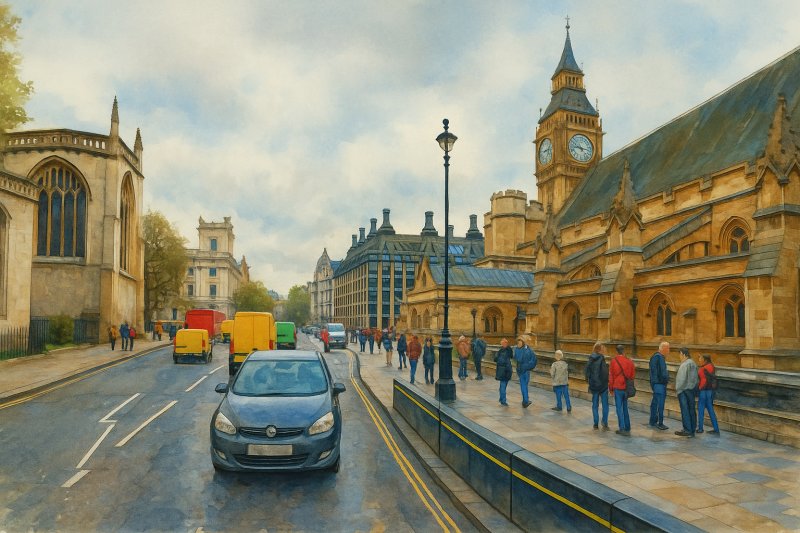
Painting of Westminster (View full-size image here)
List of Places in London, Map of Places in London
Want to share your London travel experiences or get tips from fellow travellers?
Join the London Travel Tips Facebook GroupMore information for visiting London
Here are some related articles to help you get to know London better.- Cost of Living in London: Discover the true cost of living in London, including housing, transport, groceries, and more - plus tips for budgeting in one of the world's most expensive cities.
- Driving in London: Planning to drive in London? Learn about roads, car rentals, parking, tolls, and key tips for tourists and visitors from outside the capital.
- Driving Tips for Visiting London: Thinking of driving to London? Discover the best times to travel, congestion tips, parking apps, breakdown help, and petrol advice for a smoother journey.
- Evolution of London's Streets: Discover the fascinating history of how London's streets developed from ancient footpaths to today's complex network of roads across the capital.
- History of Immigration to London: Discover the rich history of immigration to London, from Huguenots to Bangladeshis, and how diverse communities have shaped the city's vibrant identity.
- How Big Is London Compared to Other World Cities?
- How London's Streets Measure Up: A Global Comparison of Road Widths
- How Streets of London are Named: Discover how London streets get their names, who decides them, and how historic, political, and public influences shape street naming in the capital.
- How the Grosvenor Family Came to Own Much of Mayfair, Belgravia and Pimlico: Explore how the Grosvenor family came to own much of Mayfair, Belgravia, and Pimlico, and learn about their historical connection (or lack thereof) with the British royal family and government.
- Living and working in London
- London's Quiet Collapse: How Living Standards Fell as Costs Skyrockted (1975-2025): Explore how London residents endured rising costs and falling living standards from 1975 to 2025 - from rocketing rents to wage stagnation and inflation.
- Marvel of the London Underground: Discover the history, challenges, and triumphs of the London Underground - the world's first underground railway and a vital transport lifeline for the UK capital since 1863.
- Moving to London: Expat Tips for Settling in Westminster: Essential advice for expats moving to London's Westminster: neighborhood insights, cost of living, transportation, housing, healthcare, schools, and tips to help you feel at home in the heart of the city.
- Places in London that aren't pronounced the way they're spelled
- Shopping in London: Discover London's diverse shopping scene
- Taking the bus in London: This is your complete guide to taking the bus when in London.
- The Anglican Faith: A Visitor's Guide to the Church of England: Learn about the Anglican faith and its deep ties to London's landmarks like Westminster Abbey and St Paul's Cathedral.
- Top 10 London Streets Every Visitor Must See: Discover London through its most iconic thoroughfares - 10 streets every visitor must experience. From historic Abbey Road to vibrant Camden High Street, explore culture, shopping, and hidden gems.
- Why are most roads in Central London so narrow? Learn why there are so few multi-lane roads and elevated highways in the heart of the city.
 Latest Pages & Updates
Buy Me A Coffee
If you enjoy the information I provide and want to support the work I do, please buy me a coffee! I appreciate it immensely, thank you so much!
