
Covent Garden, London
Covent Garden, London: A Cultural Heart with Historic Charm
Covent Garden is a district located primarily within the City of Westminster, though a small portion of its eastern fringe crosses into the London Borough of Camden. It lies on the eastern edge of the West End, just west of Drury Lane and north of the Strand. It is surrounded by several well-known London neighbourhoods:- To the west is Leicester Square and Soho
- To the south lies the Strand and the Thames Embankment
- To the north is Bloomsbury
- To the east is Holborn
Size, Population, and Affluence
Covent Garden covers a relatively compact area of just under 0.2 square miles (around 0.5 square kilometres). Due to its central location and commercial nature, the resident population is relatively small, estimated at around 1,000 to 2,000 people. Most of the buildings are either retail, hospitality-related, or cultural institutions, with a limited number of residential properties, especially in the heart of the district.The per capita income in Covent Garden is well above the London average, reflecting the area's status as a high-end destination. While not dominated by government buildings (as in nearby Whitehall), the area's high commercial density and tourism-based economy contribute to the low residential numbers.
A Brief History of Covent Garden
Covent Garden has its roots in the early 13th century, when it was the "Convent Garden" of Westminster Abbey - a plot of land used to grow fruits and vegetables for the monks.In the 17th century, the area underwent a major transformation. The 4th Earl of Bedford, Francis Russell, commissioned Inigo Jones to design a new residential square in the Italian style, making Covent Garden the first modern square in London. The elegant piazza, completed in the 1630s, became a fashionable residential area.
By the 18th century, the district became famous for its fruit and vegetable market, which operated for over 300 years and gave the area its lasting identity. Though the wholesale market moved to Nine Elms in 1974, the central market buildings remain and have been repurposed into a thriving shopping and entertainment hub.
What's in a Name?
The name "Covent Garden" comes from the Middle English term "covent", meaning convent. It was originally known as the "Convent Garden" of Westminster Abbey. Over time, the name was shortened to Covent Garden.Pronunciation: Covent is pronounced "Cov-ent"
 , not "Co-vent" (rhyming with "oven", not "event"). Although the spelling suggests a soft "o", the proper British pronunciation drops the second vowel.
The Character of Covent Garden
Covent Garden today is a vibrant commercial and cultural district, known for its mix of retail, dining, theatre, and street entertainment. Residential properties exist mostly on the quieter side streets and upper storeys of buildings, but the area is largely driven by tourism and the creative industries.It is considered an affluent area, home to designer boutiques, high-end restaurants, and world-class theatres. It draws both international visitors and Londoners looking for culture, fashion, and food in one compact, walkable neighbourhood.
Major Roads in the Area
Several significant roads and thoroughfares frame and criss-cross Covent Garden, including:- Long Acre - A main east-west road through the district, lined with shops and cafes
- The Strand - Running along the southern edge of Covent Garden, connecting the area to the City and Westminster
- Drury Lane - A historic north-south street on the eastern side
- Bow Street - Home to the former Bow Street Magistrates' Court and Police Station
- Floral Street - Known for fashion boutiques and the back entrance to the Royal Opera House
Map of Covent Garden, London
Index of Streets at Covent Garden
- Bedford Street
- Bow Street
- Catherine Street
- Floral Street
- Garrick Street
- Henrietta Street
- King Street
- Langley Street
- Long Acre
- Maiden Lane
- Mercer Street
- New Row
Major Sights and Attractions
Covent Garden is packed with sights that appeal to a wide variety of interests. Some of the most iconic include:- Covent Garden Market - A covered market filled with artisan goods, fashion, and cafes
- The Royal Opera House - A world-famous venue for opera and ballet performances
- London Transport Museum - Located in the old flower market building, it's a favourite for families and history buffs
- St. Paul's Church (The Actor's Church) - A historic church on the piazza known for its theatrical connections
- Jubilee Market - A lively market hall that hosts antiques, crafts, and general goods
Nearest London Underground Stations
Covent Garden is well-connected by the London Underground:- Covent Garden Station - On the Piccadilly Line, right in the heart of the district
- Leicester Square - Served by the Piccadilly and Northern lines, a short walk to the west
- Holborn - On the Central and Piccadilly lines, northeast of Covent Garden
- Charing Cross - Served by the Bakerloo and Northern lines, and a National Rail station
Fun Fact: The Elevators Are for Emergencies Only!
Covent Garden Underground Station is famous for something peculiar - it doesn't have escalators, only lifts and a spiral staircase of 193 steps (the equivalent of a 15-storey building!). Tourists unaware of this sometimes take the stairs and get a workout they didn't expect!Additionally, the Royal Opera House has its own beehives on the roof! The honey is harvested and occasionally used in the venue's restaurants.
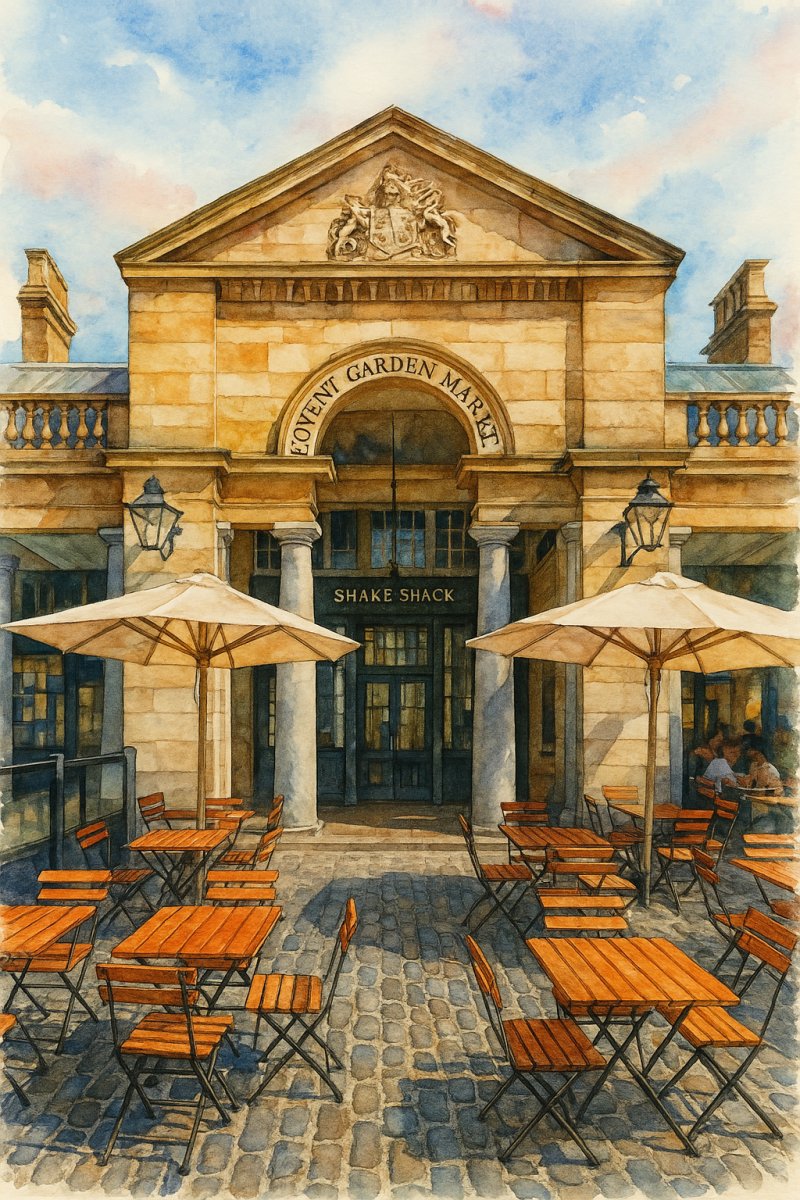
Painting of Covent Garden (View full-size image here)
List of Places in London, Map of Places in London
Want to share your London travel experiences or get tips from fellow travellers?
Join the London Travel Tips Facebook GroupMore information for visiting London
Here are some related articles to help you get to know London better.- Cost of Living in London: Discover the true cost of living in London, including housing, transport, groceries, and more - plus tips for budgeting in one of the world's most expensive cities.
- Driving in London: Planning to drive in London? Learn about roads, car rentals, parking, tolls, and key tips for tourists and visitors from outside the capital.
- Driving Tips for Visiting London: Thinking of driving to London? Discover the best times to travel, congestion tips, parking apps, breakdown help, and petrol advice for a smoother journey.
- Evolution of London's Streets: Discover the fascinating history of how London's streets developed from ancient footpaths to today's complex network of roads across the capital.
- History of Immigration to London: Discover the rich history of immigration to London, from Huguenots to Bangladeshis, and how diverse communities have shaped the city's vibrant identity.
- How Big Is London Compared to Other World Cities?
- How London's Streets Measure Up: A Global Comparison of Road Widths
- How Streets of London are Named: Discover how London streets get their names, who decides them, and how historic, political, and public influences shape street naming in the capital.
- How the Grosvenor Family Came to Own Much of Mayfair, Belgravia and Pimlico: Explore how the Grosvenor family came to own much of Mayfair, Belgravia, and Pimlico, and learn about their historical connection (or lack thereof) with the British royal family and government.
- Living and working in London
- London's Quiet Collapse: How Living Standards Fell as Costs Skyrockted (1975-2025): Explore how London residents endured rising costs and falling living standards from 1975 to 2025 - from rocketing rents to wage stagnation and inflation.
- Marvel of the London Underground: Discover the history, challenges, and triumphs of the London Underground - the world's first underground railway and a vital transport lifeline for the UK capital since 1863.
- Moving to London: Expat Tips for Settling in Westminster: Essential advice for expats moving to London's Westminster: neighborhood insights, cost of living, transportation, housing, healthcare, schools, and tips to help you feel at home in the heart of the city.
- Places in London that aren't pronounced the way they're spelled
- Shopping in London: Discover London's diverse shopping scene
- Taking the bus in London: This is your complete guide to taking the bus when in London.
- The Anglican Faith: A Visitor's Guide to the Church of England: Learn about the Anglican faith and its deep ties to London's landmarks like Westminster Abbey and St Paul's Cathedral.
- Top 10 London Streets Every Visitor Must See: Discover London through its most iconic thoroughfares - 10 streets every visitor must experience. From historic Abbey Road to vibrant Camden High Street, explore culture, shopping, and hidden gems.
- Why are most roads in Central London so narrow? Learn why there are so few multi-lane roads and elevated highways in the heart of the city.
 Latest Pages & Updates
Buy Me A Coffee
If you enjoy the information I provide and want to support the work I do, please buy me a coffee! I appreciate it immensely, thank you so much!
