
London Underground
Map of the London Underground
London Underground Lines
- Bakerloo Line has 25 stations over a length of 23.2 km (14.4 miles).
- Central Line has 49 stations over a length of 74 km (46 miles).
- Circle Line has 35 stations in a loop of 27 km (17 miles).
- District Line has 60 stations over a length of 64 km (40 miles).
- Hammersmith & City Line has 29 stations over a length of 25.5 km.
- Jubilee Line has 27 stations over a length of 36.2 km.
- Metropolitan Line has 34 stations over a length of 66.7 km.
- Northern Line has 50 stations over a length of 58 km.
- Piccadilly Line has 53 stations over a length of 71 km.
- Victoria Line has 16 stations over a length of 21 km.
- Waterloo & City Line has only two stations over a length of 2.37 km.
- Docklands Light Railway (DLR) has 40 stations over a length of 19 km in five branches.
- Elizabeth Line is a rapid transit service that began operations on 24 May 2022.
How big is the London Underground
The London Underground is one of the largest metro systems in the world by route length, surpassed only by systems like the Shanghai Metro and Beijing Subway. It comprises:- 272 stations
- 11 lines
- Over 402 kilometres (250 miles) of track
A Glimpse into History: The Oldest and the Newest Lines
The London Underground holds the distinction of being the world's first underground railway.- Oldest Line: The Metropolitan Line
- Opened on 10 January 1863
- Initially ran between Paddington (Bishop's Road) and Farringdon
- Used steam locomotives before electrification
- Newest Line: The Elizabeth Line (formerly known as Crossrail)
- Officially opened on 24 May 2022
- Operates as a high-capacity hybrid between Underground and National Rail
- Though not technically a Tube line, it integrates with the Underground system and appears on the iconic Tube map
How many people use it?
For Londoners, the Tube is the most reliable and fastest way to navigate the city. Commuters use it to get to work, attend events, and connect with bus, rail, and Overground services. Trains typically run from around 5:00 AM until midnight, with Night Tube services on some lines during weekends.Tourists rely on the Tube to access London's major sights - whether it's hopping off at Westminster to see Big Ben or heading to South Kensington for the museums.
Fares Oyster Cards, Travel Options
What is an Oyster Card?An Oyster card is a smart travel card used to pay fares on the Underground, Overground, buses, DLR, trams, and even some river services. It's a pay-as-you-go system that caps your daily spend, making it economical for most users.
- Where to Get One:
- Available at any Tube station ticket machine
- Visitor Oyster Cards can be ordered online and shipped overseas
- Can also be purchased at Heathrow and Gatwick airports, some newsagents, and travel centres
- Is it the only way to pay?
No, you can also use:- Contactless payment cards (including Apple Pay, Google Pay, and other digital wallets)
- Travelcards (daily, weekly, monthly, or yearly paper tickets)
- Visitor Oyster Cards, which offer the same convenience as standard Oyster cards with optional discounts at attractions
Tourist Specials and Tips
- Travel Off-Peak: Fares are lower outside rush hours - typically after 9:30 AM on weekdays and all day on weekends.
- Use the Tube Map: It's iconic for a reason. Easy to read and available for free at every station.
- Save with Visitor Oyster or Travelcards: If you're in town for more than a few days, consider a Visitor Oyster Card or a 7-day Travelcard.
- Kids Travel Free: Children under 11 travel free with a paying adult on the Tube and most public transport.
Fun Facts about the London Underground
- The term "Tube" comes from the cylindrical shape of the tunnels on deep-level lines.
- The famous Underground roundel and Harry Beck's Tube map are internationally recognized symbols of London.
- The system includes the longest escalator in Western Europe at Angel Station (60 metres long and 27.5 metres high).
- Aldgate Station sits atop a huge plague pit where thousands of Londoners were buried during the Black Death.
- There are hidden "ghost stations" - such as Down Street and Brompton Road - no longer in use but sometimes accessible via tours.
- The Underground has appeared in countless films, including James Bond, Harry Potter, and The Bourne Ultimatum.
- Despite the name, over half of the network is actually above ground.
Timeline of Key Milestones in the History of the London Underground
- 1863 - The World's First Underground Railway Opens. The Metropolitan Railway opens between Paddington (Bishop's Road) and Farringdon. Operated with steam locomotives - a groundbreaking innovation in public transport.
- 1868 - District Railway Begins Service. The District Railway (now part of the District Line) starts operations, later connecting to the Metropolitan to form the Circle.
- 1890 - First Deep-Level Electric Railway. The City & South London Railway (now part of the Northern Line) becomes the first deep-level tube railway using electric trains.
- 1900 - Central London Railway Opens. The Central Line begins operations, soon nicknamed the "Twopenny Tube" due to its flat fare.
- 1906-1907 - More Deep Lines Launch. Baker Street & Waterloo Railway (Bakerloo Line); Great Northern, Piccadilly & Brompton Railway (Piccadilly Line); Charing Cross, Euston & Hampstead Railway (also part of today's Northern Line) all open.
- 1908 - The Term "Underground" Is Officially Adopted. The iconic Underground roundel first appears. The word "Underground" is used consistently in branding.
- 1933 - London Transport Is Formed. Multiple independent railways unified under the London Passenger Transport Board (LPTB). This marks the start of coordinated Tube development and expansion.
- 1968 - Victoria Line Opens. The first new Tube line in over 60 years. Fully automatic operation with high-frequency service.
- 1979 - Jubilee Line Opens. Created by combining parts of the Bakerloo and other lines. Named to mark Queen Elizabeth II's Silver Jubilee (1977).
- 1994 - Privatization and Public-Private Partnerships (PPP), Parts of London Underground's maintenance and operations handed to private consortia - later reversed due to controversy.
- 2003 - Introduction of the Oyster Card. The Oyster smartcard system launches, revolutionising how people pay for travel.
- 2016 - Night Tube Service Begins. 24-hour weekend service launched on selected lines, making late-night travel safer and easier.
- 2022 - Elizabeth Line Opens. Formerly known as Crossrail, it becomes one of Europe's largest infrastructure projects. Opens in stages, with full services connecting Heathrow, Reading, and Shenfield by May 2023.
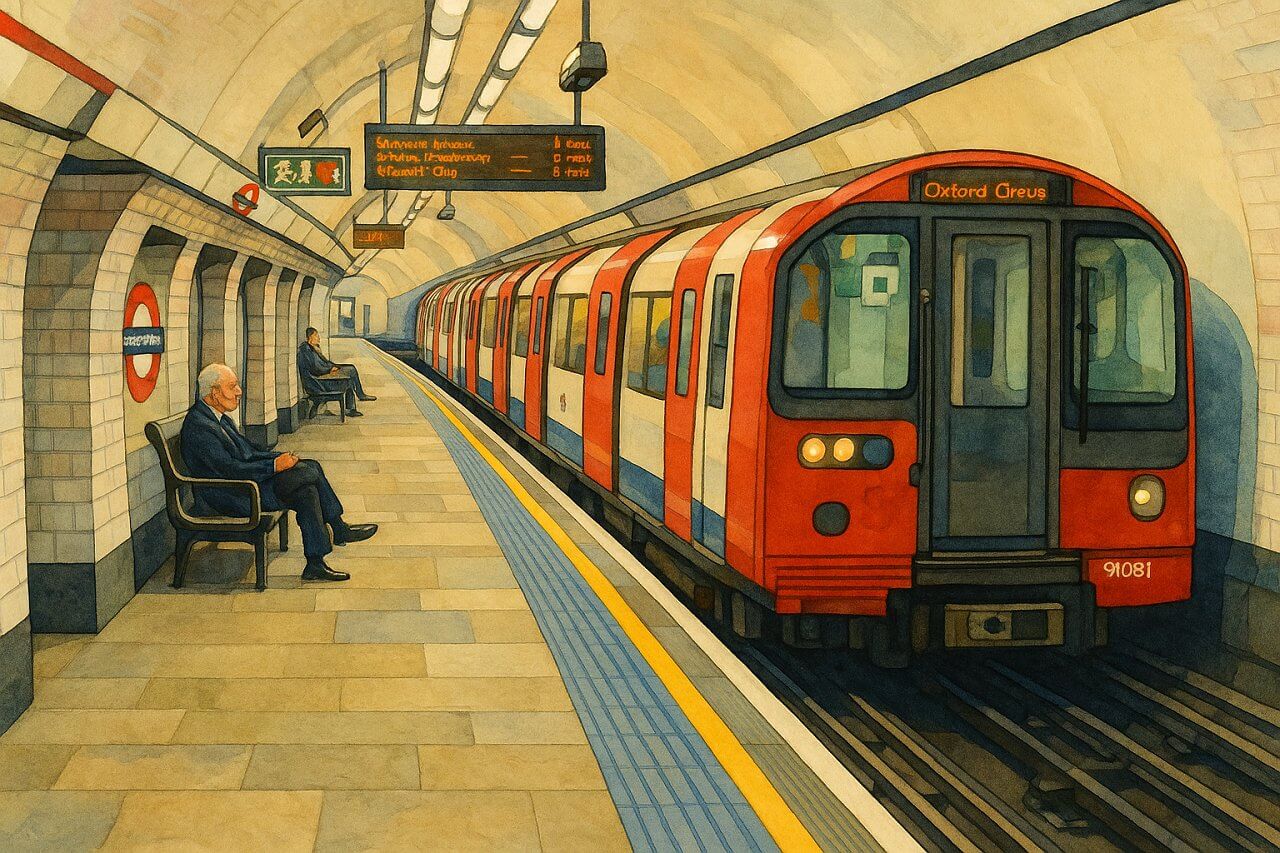
Painting of a London Underground platform (View image in full size)

Further Reading
Get to know the , and get a full list of the stations on this page.Future Metro Development in the UK
The London Underground continues to evolve, but it's not the only metro system with big plans. From new lines and extensions in the capital to ambitious proposals in cities like Leeds, Manchester, and Bristol, the future of urban rail transport across the UK is shaping up to be transformative.Explore future metro developments across the UK
Page Details
This page was created/modified on 1 May 2025. Hi, my name is Timothy and created it from my research, for my own entertainment, knowledge and to satisfy my curiosity. I am providing the information to you in good faith and hope it is useful. I try to get the details as accurate as possible. I also try to update the page whenever I stumble on new details. So this and all my other pages are perpetual work in progress. If you discover any error, please politely inform me, pointing out where the error lies, and I will correct it as soon as possible. Your helpfulness will keep this page accurate, relevant and helpful to those who need the information.Want to share your London travel experiences or get tips from fellow travellers?
Join the London Travel Tips Facebook GroupMore information for visiting London
Here are some related articles to help you get to know London better.- Cost of Living in London: Discover the true cost of living in London, including housing, transport, groceries, and more - plus tips for budgeting in one of the world's most expensive cities.
- Driving in London: Planning to drive in London? Learn about roads, car rentals, parking, tolls, and key tips for tourists and visitors from outside the capital.
- Driving Tips for Visiting London: Thinking of driving to London? Discover the best times to travel, congestion tips, parking apps, breakdown help, and petrol advice for a smoother journey.
- Evolution of London's Streets: Discover the fascinating history of how London's streets developed from ancient footpaths to today's complex network of roads across the capital.
- History of Immigration to London: Discover the rich history of immigration to London, from Huguenots to Bangladeshis, and how diverse communities have shaped the city's vibrant identity.
- How Big Is London Compared to Other World Cities?
- How London's Streets Measure Up: A Global Comparison of Road Widths
- How Streets of London are Named: Discover how London streets get their names, who decides them, and how historic, political, and public influences shape street naming in the capital.
- How the Grosvenor Family Came to Own Much of Mayfair, Belgravia and Pimlico: Explore how the Grosvenor family came to own much of Mayfair, Belgravia, and Pimlico, and learn about their historical connection (or lack thereof) with the British royal family and government.
- Living and working in London
- London's Quiet Collapse: How Living Standards Fell as Costs Skyrockted (1975-2025): Explore how London residents endured rising costs and falling living standards from 1975 to 2025 - from rocketing rents to wage stagnation and inflation.
- Marvel of the London Underground: Discover the history, challenges, and triumphs of the London Underground - the world's first underground railway and a vital transport lifeline for the UK capital since 1863.
- Moving to London: Expat Tips for Settling in Westminster: Essential advice for expats moving to London's Westminster: neighborhood insights, cost of living, transportation, housing, healthcare, schools, and tips to help you feel at home in the heart of the city.
- Places in London that aren't pronounced the way they're spelled
- Shopping in London: Discover London's diverse shopping scene
- Taking the bus in London: This is your complete guide to taking the bus when in London.
- The Anglican Faith: A Visitor's Guide to the Church of England: Learn about the Anglican faith and its deep ties to London's landmarks like Westminster Abbey and St Paul's Cathedral.
- Top 10 London Streets Every Visitor Must See: Discover London through its most iconic thoroughfares - 10 streets every visitor must experience. From historic Abbey Road to vibrant Camden High Street, explore culture, shopping, and hidden gems.
- Why are most roads in Central London so narrow? Learn why there are so few multi-lane roads and elevated highways in the heart of the city.
 Latest Pages & Updates
Buy Me A Coffee
If you enjoy the information I provide and want to support the work I do, please buy me a coffee! I appreciate it immensely, thank you so much!
