
Mayfair, London
Mayfair - London's Prestigious and Historic District
Mayfair is an affluent district located in the heart of the City of Westminster, part of central London. It sits strategically between Hyde Park to the west, Oxford Street to the north, Regent Street to the east, and Piccadilly to the south. This prime location places Mayfair at the intersection of London's most luxurious and historic zones, making it one of the city's most desirable addresses.The northern boundary of Mayfair is at Oxford Street. I describe it in more detail over here.
Size and Population
Mayfair covers approximately 1.3 square kilometres (0.5 square miles), making it a relatively compact district by London standards. Despite its modest size, Mayfair has a notable population due to the mix of residents, office workers, and visitors.The residential population of Mayfair is estimated at around 5,200 people. However, the daytime population is significantly higher due to the area's commercial and hospitality sectors.
Mayfair is known for its extreme affluence. According to recent statistics, the average income per capita in Mayfair is considerably higher than the London average. While the average annual income in London hovers around £35,000-£40,000, the average in Mayfair can exceed £100,000, reflecting the district's status as one of the wealthiest areas in the UK.
History of Mayfair
Mayfair's development began in earnest during the late 17th and early 18th centuries. Originally, the area was part of the open fields to the west of London. In the 1680s, wealthy aristocratic families, notably the Grosvenor family, began to develop the land into a prestigious residential district.By the 18th century, Mayfair had become synonymous with wealth and refinement. Elegant Georgian townhouses lined its streets, and it attracted members of the upper classes, foreign embassies, and exclusive clubs. The 19th and 20th centuries saw further development, with luxury hotels, art galleries, and high-end retail establishments reinforcing Mayfair's elite status.
Origin of the Name "Mayfair"
Mayfair takes its name from the "May Fair," a lively annual event that was held in the area each spring from the late 1600s until the 1760s. The fair originally took place near Haymarket but moved to the site that is now Shepherd Market in 1686. Although popular, the May Fair developed a reputation for rowdy behaviour and attracted criticism from the upper classes. It was eventually suppressed in the 1760s. However, the name stuck, and by then, the neighbourhood had become a fashionable district for the elite, solidifying "Mayfair" as the area's permanent name.Map of Mayfair, London
Streets in Mayfair
- Adam's Row
- Albemarle Street
- Aldford Street
- Balfour Mews
- Balfour Place
- Barlow Place
- Berkeley Square
- Berkeley Street
- Binney Street
- Blackburne's Mews
- Bolton Street
- Bourdon Street
- Boyle Street
- Brick Street
- Brook Street
- Brook's Mews
- Brown Hart Gardens
- Bruton Lane
- Bruton Place
- Bruton Street
- Burlington Gardens
- Carlos Place
- Carpenter Street
- Carrington Street
- Charles Street
- Chesterfield Gardens
- Chesterfield Hill
- Chesterfield Street
- Clarges Mews
- Clarges Street
- Clifford Street
- Coach and Horses Yard
- Conduit Street
- Cork Street
- Culross Street
- Curzon Street
- Balderton Street
- Davies Mews
- Davies Street
- Deanery Street
- Dover Street
- Down Street
- Duke Street
- Duke's Yard
- Farm Street
- Fitzmaurice Place
- George Yard
- Gilbert Street
- Grafton Street
- Green Street
- Grosvenor Hill
- Grosvenor Square
- Grosvenor Street
- Half Moon Street
- Hamilton Place
- Hanover Square
- Hanover Street
- Harewood Place
- Hay Hill
- Hay's Mews
- Hertford Street
- Hill Street
- Lees Place
- Maddox Street
- Market Mews
- Mayfair Place
- Mill Street
- Mount Row
- Mount Street
- New Bond Street
- New Burlington Place
- New Burlington Street
- North Audley Street
- North Row
- Old Bond Street
- Old Burlington Street
- Old Park Lane
- Oxford Street
- Park Lane
- Park Street
- Piccadilly
- Pitt's Head Mews
- Princes Street
- Providence Court
- Queen Street
- Reeves Mews
- Regent Street
- Sackville Street
- Shepherd Market
- Shepherd Street
- South Audley Street
- St Anselm's Place
- St George Street
- Stafford Street
- Stanhope Gate
- Stanhope Row
- Stratton Street
- South Street
- Swallow Passage
- Swallow Place
- Swallow Street
- Three Kings' Yard
- Tilney Street
- Upper Brook Street
- Upper Grosvenor Street
- Vigo Street
- Vine Street
- Waverton Street
- Weighhouse Street
- White Horse Street
- Wood's Mews
Notable Buildings and Sights
Mayfair is home to some of London's most prestigious buildings and cultural landmarks. Key sights include:- Grosvenor Square - Often called the heart of Mayfair, this historic square was once home to the American Embassy and now features luxury residences and a commemorative statue of Franklin D. Roosevelt.
- Berkeley Square - A beautiful green space surrounded by elegant 18th-century buildings.
- The Royal Academy of Arts - Located just outside the eastern edge of Mayfair on Piccadilly, this cultural institution is closely associated with the area.
- Claridge's Hotel - An iconic 5-star hotel on Brook Street, known for its opulence and celebrity guests.
- Shepherd Market - A charming and somewhat hidden area with boutiques, restaurants, and historic pubs, preserving a village-like atmosphere in the midst of central London.
London Underground Stations Serving Mayfair
Mayfair does not have its own dedicated Tube station, but it is well-served by several stations on its edges:- Green Park Station - Serves the Jubilee, Piccadilly, and Victoria lines. It's located on the southeastern side of Mayfair, near The Ritz and Green Park.
- Bond Street Station - Serves the Central and Jubilee lines. Located to the northeast, near Oxford Street and the entrance to New Bond Street.
- Oxford Circus Station - Serves the Bakerloo, Central, and Victoria lines. Positioned at the northeast corner of Mayfair.
- Hyde Park Corner Station - Serves the Piccadilly line. Found on the southwestern side, giving access to Park Lane and Hyde Park.
A Fun Fact About Mayfair
One of the most well-known fun facts about Mayfair is its prestigious place on the British version of the Monopoly board. It is the most expensive property in the game, highlighting its reputation for exclusivity and wealth. In the original 1935 UK edition of Monopoly, Mayfair cost £400 - a fortune in Monopoly terms - and today it still represents the pinnacle of London real estate in pop culture.Conclusion
Mayfair stands out as one of the most elegant and historically rich districts in London. From its aristocratic origins and prestigious squares to its luxury boutiques and iconic hotels, Mayfair has long symbolised refined living. Whether you're walking through its quiet, leafy streets or shopping along Bond Street, the neighbourhood offers a unique blend of history, elegance, and contemporary culture.For both locals and tourists, exploring Mayfair is a journey into the luxurious heart of London.
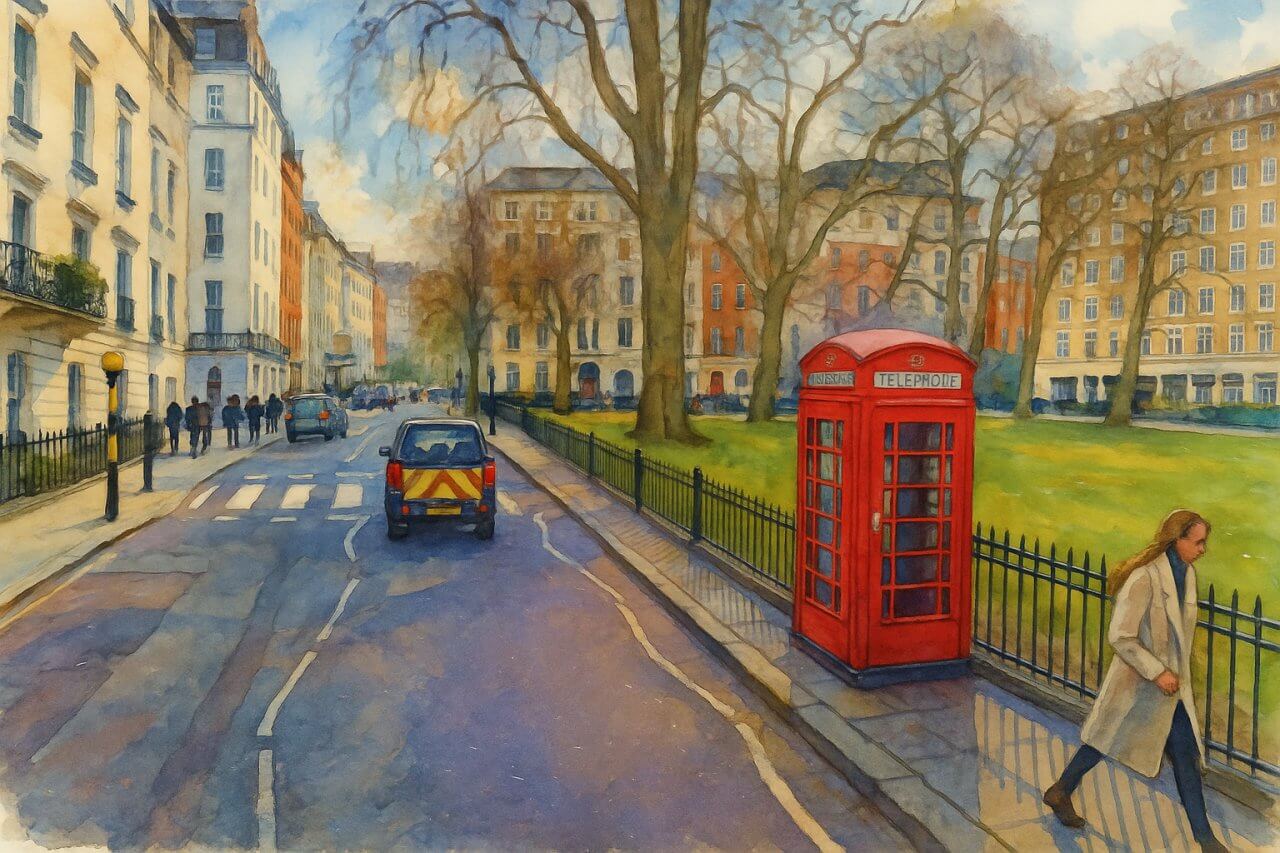 Painting of Mayfair, London
Mayfair, London
Mayfair Self-Guided Walking Tour
List of Places in London, Map of Places in London
Want to share your London travel experiences or get tips from fellow travellers?
Join the London Travel Tips Facebook GroupMore information for visiting London
Here are some related articles to help you get to know London better.- Cost of Living in London: Discover the true cost of living in London, including housing, transport, groceries, and more - plus tips for budgeting in one of the world's most expensive cities.
- Driving in London: Planning to drive in London? Learn about roads, car rentals, parking, tolls, and key tips for tourists and visitors from outside the capital.
- Driving Tips for Visiting London: Thinking of driving to London? Discover the best times to travel, congestion tips, parking apps, breakdown help, and petrol advice for a smoother journey.
- Evolution of London's Streets: Discover the fascinating history of how London's streets developed from ancient footpaths to today's complex network of roads across the capital.
- History of Immigration to London: Discover the rich history of immigration to London, from Huguenots to Bangladeshis, and how diverse communities have shaped the city's vibrant identity.
- How Big Is London Compared to Other World Cities?
- How London's Streets Measure Up: A Global Comparison of Road Widths
- How Streets of London are Named: Discover how London streets get their names, who decides them, and how historic, political, and public influences shape street naming in the capital.
- How the Grosvenor Family Came to Own Much of Mayfair, Belgravia and Pimlico: Explore how the Grosvenor family came to own much of Mayfair, Belgravia, and Pimlico, and learn about their historical connection (or lack thereof) with the British royal family and government.
- Living and working in London
- London's Quiet Collapse: How Living Standards Fell as Costs Skyrockted (1975-2025): Explore how London residents endured rising costs and falling living standards from 1975 to 2025 - from rocketing rents to wage stagnation and inflation.
- Marvel of the London Underground: Discover the history, challenges, and triumphs of the London Underground - the world's first underground railway and a vital transport lifeline for the UK capital since 1863.
- Moving to London: Expat Tips for Settling in Westminster: Essential advice for expats moving to London's Westminster: neighborhood insights, cost of living, transportation, housing, healthcare, schools, and tips to help you feel at home in the heart of the city.
- Places in London that aren't pronounced the way they're spelled
- Shopping in London: Discover London's diverse shopping scene
- Taking the bus in London: This is your complete guide to taking the bus when in London.
- The Anglican Faith: A Visitor's Guide to the Church of England: Learn about the Anglican faith and its deep ties to London's landmarks like Westminster Abbey and St Paul's Cathedral.
- Top 10 London Streets Every Visitor Must See: Discover London through its most iconic thoroughfares - 10 streets every visitor must experience. From historic Abbey Road to vibrant Camden High Street, explore culture, shopping, and hidden gems.
- Why are most roads in Central London so narrow? Learn why there are so few multi-lane roads and elevated highways in the heart of the city.
 Latest Pages & Updates
Buy Me A Coffee
If you enjoy the information I provide and want to support the work I do, please buy me a coffee! I appreciate it immensely, thank you so much!
