
Park Lane, London
Park Lane, Westminster: Grand Boulevards and Historic Luxury in Central London
Park Lane is a famous road in the City of Westminster, Central London. It forms the eastern boundary of Hyde Park and is one of the capital's most iconic and luxurious thoroughfares.How Long is Park Lane?
Park Lane stretches for approximately 0.7 miles (1.1 km) from Hyde Park Corner in the south to Marble Arch in the north. Despite its relatively short length, it holds immense cultural, historical, and commercial significance.The History of Park Lane
Originally a simple country lane bordering the eastern edge of Hyde Park, Park Lane was laid out in the early 18th century. For much of the 18th and 19th centuries, it became one of London's most fashionable residential addresses, lined with large mansions and townhouses for the wealthy elite.Its character began to change in the 20th century when some of these residences were replaced by commercial buildings and hotels. Road widening projects in the 1960s further transformed Park Lane into a major traffic artery, creating a dual carriageway and altering its pedestrian friendliness.
Why is it Called Park Lane?
As its name suggests, Park Lane derives from its location alongside Hyde Park. The term "lane" originally referred to its character as a minor road bordering the park, before it evolved into the grand boulevard we see today. Unlike many other London streets, it was not named after an individual, but rather its proximity to the royal park.Map of Park Lane, London
Roads Connected to Park Lane
- Achilles Way
- Aldford Street
- Culross Street
- Curzon Gate
- Curzon Street
- Deanery Street
- Green Street
- Mount Street
- North Row
- Old Park Lane
- Piccadilly
- South Street
- Stanhope Gate
- Tilney Street
- Upper Brook Street
- Upper Grosvenor Street
- Wood's Mews
Character of the Street and Surrounding Area
Today, Park Lane is known for its luxury character. It runs along the western edge of Mayfair, one of London's most affluent neighbourhoods, and offers stunning views of Hyde Park across the road. The street is lined with five-star hotels, luxury car showrooms, embassies, high-end offices, and residential apartments. Though traffic is heavy due to its role as part of the A4202 route, Park Lane remains a symbol of wealth and status.Notable Buildings and Sights Along Park Lane
Park Lane is home to a number of notable buildings and landmarks:- The Dorchester Hotel - A world-famous five-star hotel known for its elegance and celebrity guests
- InterContinental London Park Lane - Another prestigious hotel situated at Hyde Park Corner
- Grosvenor House - Once a private residence, now a JW Marriott hotel with a rich history
- Queen Elizabeth Gate - A striking modern gateway to Hyde Park, opened in 1993 to mark the Queen Mother's 90th birthday
- Animals in War Memorial - A poignant tribute to animals who served in war, located on the east side of the street
- Speakers' Corner - Technically in Hyde Park but adjacent to Park Lane's northern tip, this is a famous site of free speech and protest
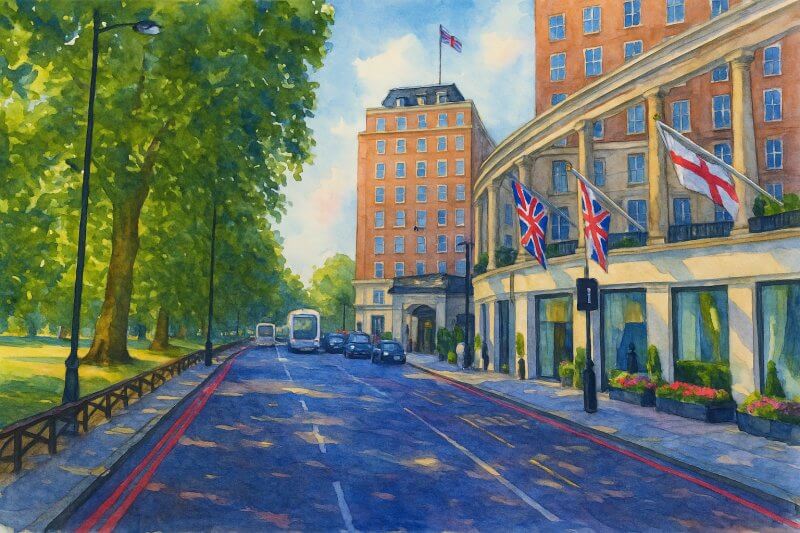
Painting of Park Lane View full-size image
Nearest London Underground Stations
Visitors to Park Lane are well served by several nearby Underground stations:- Hyde Park Corner - Located at the southern end of Park Lane, served by the Piccadilly line
- Marble Arch - Located at the northern end of the street, served by the Central line
- Green Park - A short walk away, served by the Jubilee, Victoria, and Piccadilly lines
Fun Fact: The Monopoly Connection
Park Lane has a special place in British culture as one of the most expensive properties on the UK edition of the Monopoly board game. It's second only to Mayfair in value, reflecting its real-life association with wealth, luxury, and prestige. Additionally, it was once the preferred address of aristocrats, including Prime Ministers and royalty. Though many of the grand houses have disappeared, the legacy of opulence remains.Conclusion
Park Lane may be just under a mile long, but its cultural weight in London is immense. It blends historic charm with modern sophistication, offering a snapshot of London's evolving identity - from aristocratic retreat to a glamorous urban showcase. Whether you're admiring the luxury hotels, visiting nearby Hyde Park, or simply passing through on your way to Mayfair or Oxford Street, Park Lane is a quintessential part of London's landscape.Moving to London?
New to London and need a place to live? Read our Renting A Flat Guide. This guide covers everything you need to know about renting a flat in London, from viewing to signing.Streets of London
Come, let's explore and discover the streets of London together! Listed here afre the Streets of London that I have documented. Dive in and discover!Map of Streets in London
View all the streets that I have documented on Google Maps in this Map of Streets in London.Want to share your London travel experiences or get tips from fellow travellers?
Join the London Travel Tips Facebook GroupMore information for visiting London
Here are some related articles to help you get to know London better.- Cost of Living in London: Discover the true cost of living in London, including housing, transport, groceries, and more - plus tips for budgeting in one of the world's most expensive cities.
- Driving in London: Planning to drive in London? Learn about roads, car rentals, parking, tolls, and key tips for tourists and visitors from outside the capital.
- Driving Tips for Visiting London: Thinking of driving to London? Discover the best times to travel, congestion tips, parking apps, breakdown help, and petrol advice for a smoother journey.
- Evolution of London's Streets: Discover the fascinating history of how London's streets developed from ancient footpaths to today's complex network of roads across the capital.
- History of Immigration to London: Discover the rich history of immigration to London, from Huguenots to Bangladeshis, and how diverse communities have shaped the city's vibrant identity.
- How Big Is London Compared to Other World Cities?
- How London's Streets Measure Up: A Global Comparison of Road Widths
- How Streets of London are Named: Discover how London streets get their names, who decides them, and how historic, political, and public influences shape street naming in the capital.
- How the Grosvenor Family Came to Own Much of Mayfair, Belgravia and Pimlico: Explore how the Grosvenor family came to own much of Mayfair, Belgravia, and Pimlico, and learn about their historical connection (or lack thereof) with the British royal family and government.
- Living and working in London
- London's Quiet Collapse: How Living Standards Fell as Costs Skyrockted (1975-2025): Explore how London residents endured rising costs and falling living standards from 1975 to 2025 - from rocketing rents to wage stagnation and inflation.
- Marvel of the London Underground: Discover the history, challenges, and triumphs of the London Underground - the world's first underground railway and a vital transport lifeline for the UK capital since 1863.
- Moving to London: Expat Tips for Settling in Westminster: Essential advice for expats moving to London's Westminster: neighborhood insights, cost of living, transportation, housing, healthcare, schools, and tips to help you feel at home in the heart of the city.
- Places in London that aren't pronounced the way they're spelled
- Shopping in London: Discover London's diverse shopping scene
- Taking the bus in London: This is your complete guide to taking the bus when in London.
- The Anglican Faith: A Visitor's Guide to the Church of England: Learn about the Anglican faith and its deep ties to London's landmarks like Westminster Abbey and St Paul's Cathedral.
- Top 10 London Streets Every Visitor Must See: Discover London through its most iconic thoroughfares - 10 streets every visitor must experience. From historic Abbey Road to vibrant Camden High Street, explore culture, shopping, and hidden gems.
- Why are most roads in Central London so narrow? Learn why there are so few multi-lane roads and elevated highways in the heart of the city.
 Latest Pages & Updates
Buy Me A Coffee
If you enjoy the information I provide and want to support the work I do, please buy me a coffee! I appreciate it immensely, thank you so much!
