
Shepherd Market, London
Shepherd Market is a hidden gem in the heart of the City of Westminster, nestled within the elegant district of Mayfair in London. This charming pedestrian enclave lies between Shepherd Street and Curzon Street and is renowned for its atmospheric passageways, boutique shops, quaint cafés, and historic pubs.
Overview and Setting
Located in central London, Shepherd Market is a small, self-contained square with connecting alleyways that transport visitors back in time. Tucked away from the hustle of nearby Piccadilly and the West End, it offers a more intimate and village-like feel, despite its proximity to the glitz of St James's and the prestige of Mayfair.
The square and its immediate surroundings form a labyrinth of passageways, featuring an eclectic mix of boutiques, art galleries, fine restaurants, and traditional British pubs. Though compact, the area is bursting with character, and it remains one of London's best-kept secrets.
History of Shepherd Market
The origins of Shepherd Market date back to the 18th century. The area takes its name from Edward Shepherd, a local architect and developer who designed and constructed the market between 1735 and 1746. It was intended to be the centrepiece of the old Mayfair Fair, a lively annual event held here until the 1700s. After the fair was outlawed for its rowdiness, the area was redeveloped into an upmarket residential and commercial enclave.
The square retained the name "Shepherd Market" in honour of its creator. The name remains a direct nod to its historic transformation—from an open fairground into an elegant market square integrated into the urban fabric of Westminster.
A Colourful Past
While today it exudes elegance and old-world charm, Shepherd Market was once better known for its bohemian undercurrents. In the 20th century, it became associated with artists, writers, and political figures, as well as for its reputation as a discreet haunt for romantic rendezvous. In the 1920s, literary figures such as Anthony Powell and Michael Arlen frequented the area, the latter setting parts of his bestselling novel "The Green Hat" here.
What to See and Do
Despite its small size, there is plenty to discover in Shepherd Market. Its narrow lanes are filled with:
- Independent boutiques offering fashion, fine jewellery, and bespoke tailoring
- Historic pubs, including Ye Grapes and The King's Arms, popular with locals and visitors alike
- Cafés and restaurants that range from casual coffee stops to fine dining experiences
- Art galleries and antiques shops catering to refined tastes
The area's cobbled lanes and softly glowing lamplight in the evenings make it a particularly romantic spot for evening strolls or alfresco dinners. Its unique atmosphere combines cosmopolitan flair with a distinctly local charm.
Surrounding Roads and Access
Shepherd Market is enclosed by Shepherd Street to the south and Curzon Street to the north. It is bounded on other sides by White Horse Street and Trebeck Street, both quaint roads that feed into the market's mews-like layout.
Despite its tranquillity, the area is highly accessible. Nearby thoroughfares such as Piccadilly and Park Lane provide arterial routes through Mayfair and connect to major destinations across Greater London.
Nearest Transport Links
The nearest London Underground stations are:
- Green Park Station (served by the Jubilee Line, Piccadilly Line, and Victoria Line) – approximately a 5-minute walk
- Bond Street Station (on the Central Line and Jubilee Line) – about a 10-minute walk
- Piccadilly Circus Station – roughly 12 minutes on foot
Several bus stops are located on Piccadilly and Park Lane, providing connections to Oxford Circus Station, the City, and beyond. Routes such as the 9, 14, 19, 22, and 38 offer frequent service throughout the day.
Real Estate and Living
Shepherd Market and the surrounding Mayfair area are among the most desirable and expensive residential zones in London. As of 2025, property prices in the immediate vicinity typically range between £2,500 and £3,500 per square foot (£26,900–£37,700 per sq m), depending on condition and views.
Flats in the area are often luxurious one- or two-bedroom residences, with sizes ranging from around 600 sq ft (56 sq m) to over 1,500 sq ft (139 sq m). There are also some mews houses and penthouses tucked discreetly into surrounding streets, often boasting private courtyards or terraces. Rents can easily exceed £6,000 per month for well-appointed flats.
Character and Ambience
Shepherd Market is defined by its intimate, village-like atmosphere. While Mayfair is known for its formality and wealth, this square feels more relaxed and personal. Its cobblestones and lamplight evoke a bygone era, and its preserved architecture—mostly Georgian and early Victorian—adds to the storybook aesthetic.
Despite its secluded air, the market remains vibrant and cosmopolitan, frequented by local residents, office workers, and a steady stream of in-the-know tourists. It's a place to sip a cappuccino, browse a gallery, or enjoy a quiet moment off the beaten path.
Fun Fact
Shepherd Market is often said to be one of the inspirations for "Downing Street"-like settings in fiction and spy thrillers. Its discreet entrances and mews-style layout have made it a popular choice for film crews and authors seeking a quintessentially British backdrop.
Quick Facts
- Location: Between Shepherd Street and Curzon Street, Mayfair, City of Westminster
- Nearest Tube Stations: Green Park (Jubilee, Piccadilly, Victoria), Bond Street (Central, Jubilee)
- Bus Routes: Nearby routes include 9, 14, 19, 22, and 38
- Property Prices (2025): £2,500–£3,500 per sq ft (£26,900–£37,700 per sq m)
- Average Flat Sizes: 600–1,500 sq ft (56–139 sq m)
- Known For: Historic pubs, boutique shopping, secluded ambience
- Architect: Edward Shepherd (built 1735–1746)
- Former Use: Site of the May Fair festival until early 1700s
- Atmosphere: Romantic, secluded, village-like with a cosmopolitan flair
Map of Shepherd Market, London
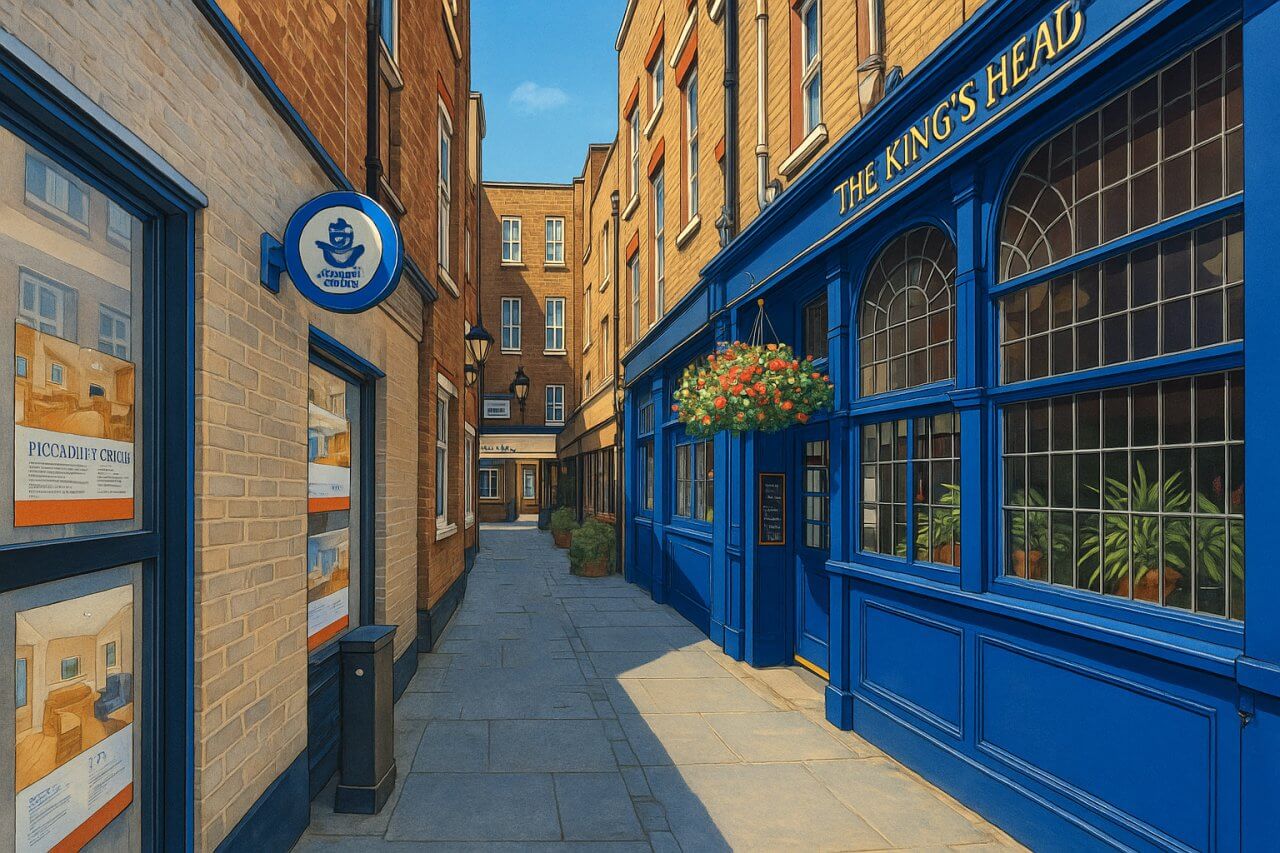
Painting of Shepherd Market, London (View image in full size)

Page Details
This page was created on 31 May 2025. Hi, my name is Timothy and created it from my research, for my own entertainment, knowledge and to satisfy my curiosity. I am providing the information to you in good faith and hope it is useful. I try to get the details as accurate as possible. I also try to update the page whenever I stumble on new details. So this and all my other pages are perpetual work in progress. If you discover any error, please politely inform me, pointing out where the error lies, and I will correct it as soon as possible. Your helpfulness will keep this page accurate, relevant and helpful to those who need the information.Moving to London?
New to London and need a place to live? Read our Renting A Flat Guide. This guide covers everything you need to know about renting a flat in London, from viewing to signing.Streets of London
Come, let's explore and discover the streets of London together! Listed here afre the Streets of London that I have documented. Dive in and discover!Map of Streets in London
View all the streets that I have documented on Google Maps in this Map of Streets in London.Want to share your London travel experiences or get tips from fellow travellers?
Join the London Travel Tips Facebook GroupMore information for visiting London
Here are some related articles to help you get to know London better.- Cost of Living in London: Discover the true cost of living in London, including housing, transport, groceries, and more - plus tips for budgeting in one of the world's most expensive cities.
- Driving in London: Planning to drive in London? Learn about roads, car rentals, parking, tolls, and key tips for tourists and visitors from outside the capital.
- Driving Tips for Visiting London: Thinking of driving to London? Discover the best times to travel, congestion tips, parking apps, breakdown help, and petrol advice for a smoother journey.
- Evolution of London's Streets: Discover the fascinating history of how London's streets developed from ancient footpaths to today's complex network of roads across the capital.
- History of Immigration to London: Discover the rich history of immigration to London, from Huguenots to Bangladeshis, and how diverse communities have shaped the city's vibrant identity.
- How Big Is London Compared to Other World Cities?
- How London's Streets Measure Up: A Global Comparison of Road Widths
- How Streets of London are Named: Discover how London streets get their names, who decides them, and how historic, political, and public influences shape street naming in the capital.
- How the Grosvenor Family Came to Own Much of Mayfair, Belgravia and Pimlico: Explore how the Grosvenor family came to own much of Mayfair, Belgravia, and Pimlico, and learn about their historical connection (or lack thereof) with the British royal family and government.
- Living and working in London
- London's Quiet Collapse: How Living Standards Fell as Costs Skyrockted (1975-2025): Explore how London residents endured rising costs and falling living standards from 1975 to 2025 - from rocketing rents to wage stagnation and inflation.
- Marvel of the London Underground: Discover the history, challenges, and triumphs of the London Underground - the world's first underground railway and a vital transport lifeline for the UK capital since 1863.
- Moving to London: Expat Tips for Settling in Westminster: Essential advice for expats moving to London's Westminster: neighborhood insights, cost of living, transportation, housing, healthcare, schools, and tips to help you feel at home in the heart of the city.
- Places in London that aren't pronounced the way they're spelled
- Shopping in London: Discover London's diverse shopping scene
- Taking the bus in London: This is your complete guide to taking the bus when in London.
- The Anglican Faith: A Visitor's Guide to the Church of England: Learn about the Anglican faith and its deep ties to London's landmarks like Westminster Abbey and St Paul's Cathedral.
- Top 10 London Streets Every Visitor Must See: Discover London through its most iconic thoroughfares - 10 streets every visitor must experience. From historic Abbey Road to vibrant Camden High Street, explore culture, shopping, and hidden gems.
- Why are most roads in Central London so narrow? Learn why there are so few multi-lane roads and elevated highways in the heart of the city.
 Latest Pages & Updates
Buy Me A Coffee
If you enjoy the information I provide and want to support the work I do, please buy me a coffee! I appreciate it immensely, thank you so much!
