
Market Mews, London
Market Mews is a tucked-away backlane located in the distinguished district of Mayfair within the City of Westminster, London. It runs from the western end at Pitt's Head Mews to the eastern outlet onto Hertford Street, a notable thoroughfare that brushes close to the heart of Westminster and the broader West End area.
Overview and Surroundings
Though modest in length, Market Mews offers a charming glimpse into the historic and architectural layers of central London. It functions primarily as a service lane and access route for the grander properties around Hertford Street, yet retains a unique character all its own—quiet, discreet, and remarkably well-preserved.
The mews is lined with a mixture of cobblestones and paving, flanked by low-rise buildings and converted stables, most of which have been turned into upscale residential and commercial properties. Market Mews represents the type of hidden gem that Greater London is so good at preserving in plain sight.
History and Name Origin
The name “Market Mews” is somewhat deceptive, as there was no notable market operating directly within the lane. The term “mews” originally referred to royal stables, and later came to denote service alleys or backlanes behind large homes, often where horses and carriages were kept. Market Mews likely dates back to the 18th or early 19th century when the surrounding streets of Mayfair saw extensive residential development, and the name may refer either to its support function for nearby market trade or, more probably, to marketing in the broader sense associated with its proximity to the bustling trading districts nearby.
Character and Atmosphere
Market Mews has a classic mews-like atmosphere—secluded, narrow, and lined with compact structures that once housed grooms, carriages, or tradespeople. Today, those buildings have been converted into high-end residences and boutique office spaces, and it is not uncommon to spot a luxury vehicle parked quietly outside a mews house. The street offers a rare slice of tranquility amidst the fast pace of Mayfair and is attractive to those seeking a discreet address in one of London's most desirable locations.
Nearby Streets and Access
Market Mews connects directly with Hertford Street, which itself branches off the major route of Piccadilly. This places the lane very close to St James's and the diplomatic quarter of Westminster, home to various embassies and historic clubs.
Nearby streets of interest include:
- Pitt's Head Mews – a continuation of the mews network, serving as a western entry point.
- Hertford Street – linking to the upscale lanes around Shepherd Market and Curzon Street.
- Down Street – a notable address, once home to a secret wartime bunker and disused tube station.
Real Estate and Property Values
Market Mews is considered prime residential territory, nestled within one of the wealthiest neighbourhoods of Greater London. As of early 2025, mews houses on Market Mews typically range in price from £2.5 million to £4 million, depending on their size, refurbishment level, and period features. This translates to an average of roughly £2,500 to £3,000 per square foot (approx. £26,900 to £32,300 per sq metre).
Typical properties are between 1,000 and 1,500 square feet (approx. 93–140 sq metres), offering 2–3 bedrooms, private garages or courtyards, and multi-level living spaces. The prices reflect Mayfair's status as one of the most expensive areas not just in London, but in the world.
Transport Links
Nearest Underground Stations
The closest London Underground stations to Market Mews are:
- Green Park Station – served by the Jubilee Line, Piccadilly Line, and Victoria Line.
- Hyde Park Corner Station – served by the Piccadilly Line.
- Bond Street Station – on the Central Line and Jubilee Line.
These stations offer rapid transit to destinations throughout City of London, the West End, and major railway terminals.
Nearby Bus Stops
Several Transport for London (TfL) bus routes serve nearby Piccadilly and Park Lane. The nearest major bus stops are along:
- Piccadilly – with routes to Oxford Circus, Trafalgar Square, and Knightsbridge.
- Park Lane – offering north-south connections toward Marble Arch and Victoria.
Local Attractions and Points of Interest
While Market Mews itself is quiet and residential, it is within walking distance of many of London's most iconic sights:
- Hyde Park: One of London's largest and most beloved green spaces.
- Green Park: A tranquil royal park bordering Buckingham Palace.
- Shepherd Market: A hidden Mayfair village of pubs, restaurants, and independent shops.
- The Ritz Hotel: A luxury landmark on Piccadilly, just minutes away.
- Royal Academy of Arts: An institution of visual arts, located on Piccadilly.
Fun Fact
Despite its small size and discreet nature, Market Mews has reportedly been home to several high-profile residents over the years—including diplomats and fashion designers—drawn by its privacy and proximity to central business and entertainment districts. The street is also occasionally used for photo shoots and film scenes due to its quintessential London mews aesthetic.
Quick Facts
- Location: Market Mews, Mayfair, City of Westminster, Central London
- Connects: Pitt's Head Mews (west) to Hertford Street (east)
- Character: Quiet, residential mews with cobbled charm and luxury homes
- Historical Use: Former stables and service buildings; now converted residences
- Property Prices (2025): £2.5M–£4M for 1,000–1,500 sq ft homes
- Nearest Tube Stations: Green Park, Hyde Park Corner, Bond Street
- Nearby Bus Routes: On Piccadilly and Park Lane
- Nearby Attractions: Hyde Park, Shepherd Market, Royal Academy of Arts
- Fun Fact: Market Mews is often used in fashion shoots and film scenes due to its classic look
Map of Market Mews, London
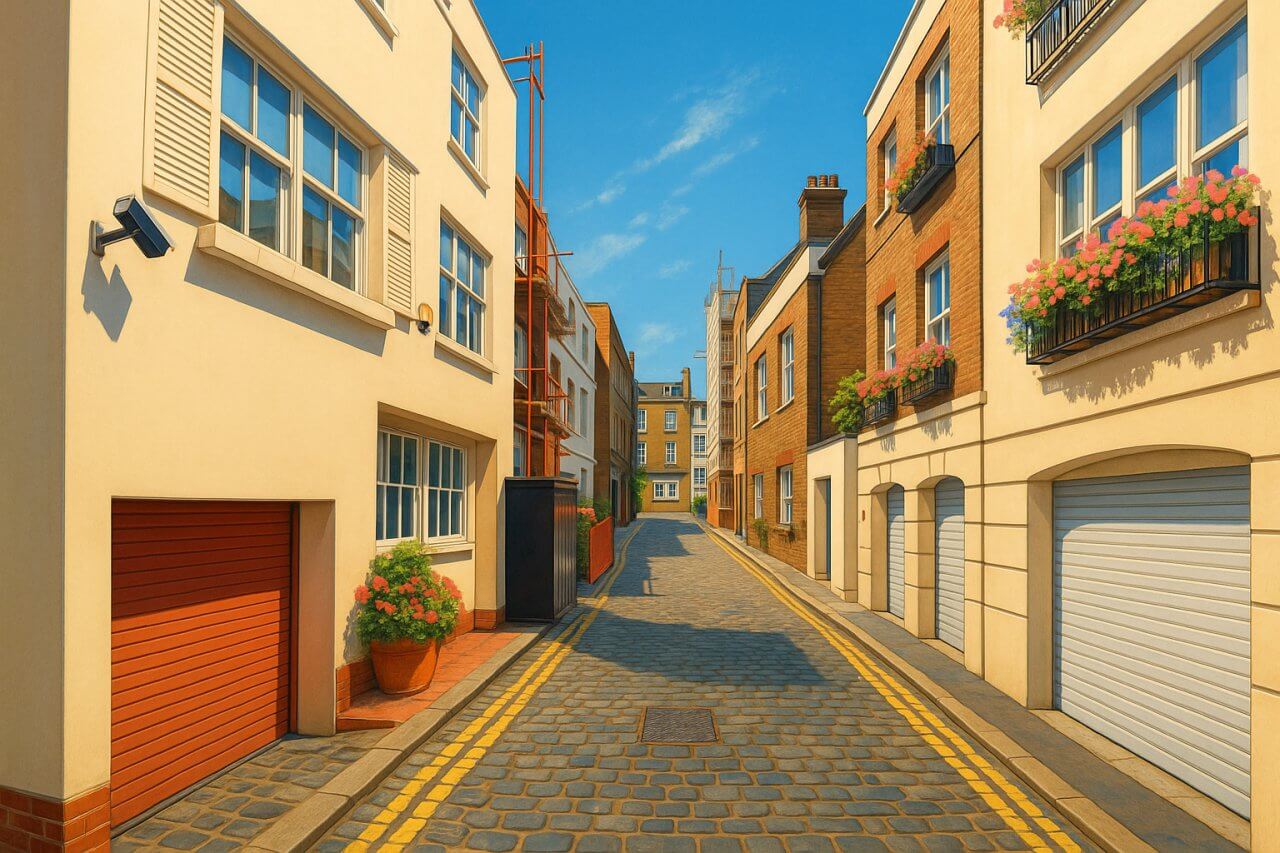 Painting of Market Mews, London
Page Details
This page was created on 1 June 2025. Hi, my name is Timothy and created it from my research, for my own entertainment, knowledge and to satisfy my curiosity. I am providing the information to you in good faith and hope it is useful. I try to get the details as accurate as possible. I also try to update the page whenever I stumble on new details. So this and all my other pages are perpetual work in progress. If you discover any error, please politely inform me, pointing out where the error lies, and I will correct it as soon as possible. Your helpfulness will keep this page accurate, relevant and helpful to those who need the information.Moving to London?
New to London and need a place to live? Read our Renting A Flat Guide. This guide covers everything you need to know about renting a flat in London, from viewing to signing.Streets of London
Come, let's explore and discover the streets of London together! Listed here afre the Streets of London that I have documented. Dive in and discover!Map of Streets in London
View all the streets that I have documented on Google Maps in this Map of Streets in London.Want to share your London travel experiences or get tips from fellow travellers?
Join the London Travel Tips Facebook GroupMore information for visiting London
Here are some related articles to help you get to know London better.- Cost of Living in London: Discover the true cost of living in London, including housing, transport, groceries, and more - plus tips for budgeting in one of the world's most expensive cities.
- Driving in London: Planning to drive in London? Learn about roads, car rentals, parking, tolls, and key tips for tourists and visitors from outside the capital.
- Driving Tips for Visiting London: Thinking of driving to London? Discover the best times to travel, congestion tips, parking apps, breakdown help, and petrol advice for a smoother journey.
- Evolution of London's Streets: Discover the fascinating history of how London's streets developed from ancient footpaths to today's complex network of roads across the capital.
- History of Immigration to London: Discover the rich history of immigration to London, from Huguenots to Bangladeshis, and how diverse communities have shaped the city's vibrant identity.
- How Big Is London Compared to Other World Cities?
- How London's Streets Measure Up: A Global Comparison of Road Widths
- How Streets of London are Named: Discover how London streets get their names, who decides them, and how historic, political, and public influences shape street naming in the capital.
- How the Grosvenor Family Came to Own Much of Mayfair, Belgravia and Pimlico: Explore how the Grosvenor family came to own much of Mayfair, Belgravia, and Pimlico, and learn about their historical connection (or lack thereof) with the British royal family and government.
- Living and working in London
- London's Quiet Collapse: How Living Standards Fell as Costs Skyrockted (1975-2025): Explore how London residents endured rising costs and falling living standards from 1975 to 2025 - from rocketing rents to wage stagnation and inflation.
- Marvel of the London Underground: Discover the history, challenges, and triumphs of the London Underground - the world's first underground railway and a vital transport lifeline for the UK capital since 1863.
- Moving to London: Expat Tips for Settling in Westminster: Essential advice for expats moving to London's Westminster: neighborhood insights, cost of living, transportation, housing, healthcare, schools, and tips to help you feel at home in the heart of the city.
- Places in London that aren't pronounced the way they're spelled
- Shopping in London: Discover London's diverse shopping scene
- Taking the bus in London: This is your complete guide to taking the bus when in London.
- The Anglican Faith: A Visitor's Guide to the Church of England: Learn about the Anglican faith and its deep ties to London's landmarks like Westminster Abbey and St Paul's Cathedral.
- Top 10 London Streets Every Visitor Must See: Discover London through its most iconic thoroughfares - 10 streets every visitor must experience. From historic Abbey Road to vibrant Camden High Street, explore culture, shopping, and hidden gems.
- Why are most roads in Central London so narrow? Learn why there are so few multi-lane roads and elevated highways in the heart of the city.
 Latest Pages & Updates
Buy Me A Coffee
If you enjoy the information I provide and want to support the work I do, please buy me a coffee! I appreciate it immensely, thank you so much!
