
 Go Back
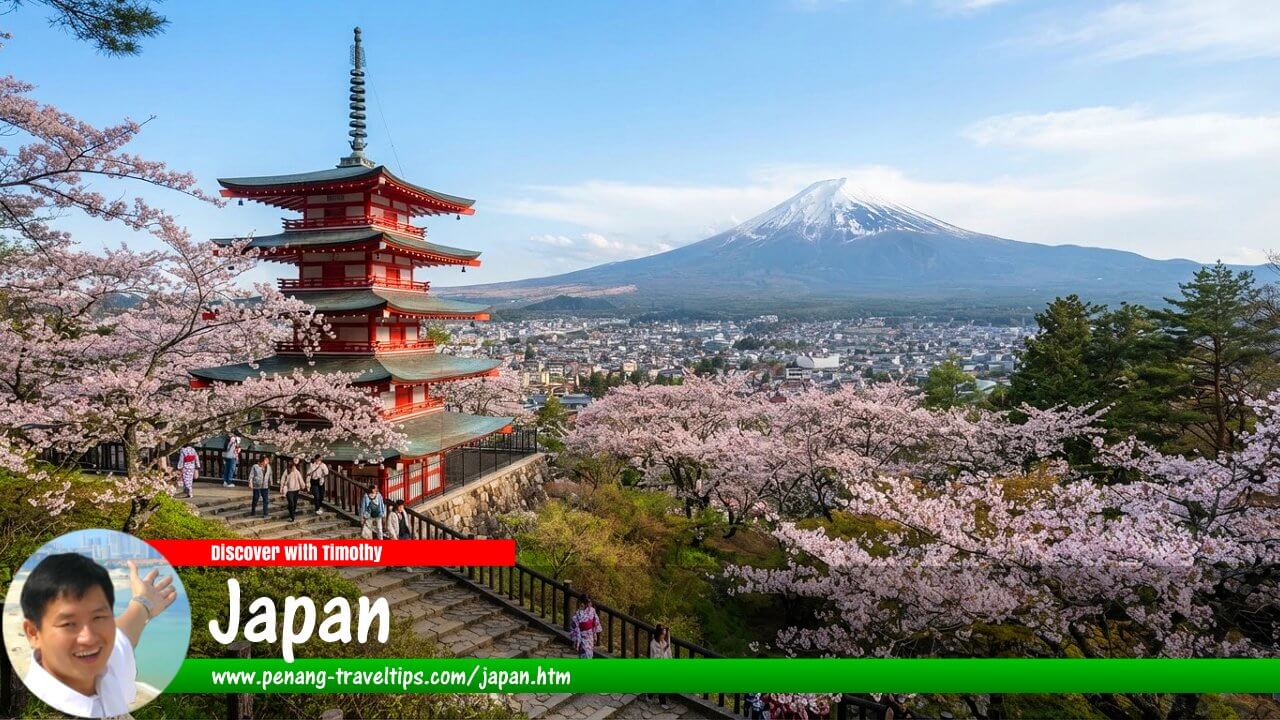 Japan Travel Guide (AI Image generated on 20 August 2026)
Also available: Panduan Melawat Jepun
Introduction to Japan
Japan is one of Asia's most fascinating travel destinations, combining ancient traditions with highly modern cities, efficient transportation, distinctive cuisine and remarkably varied landscapes. From the neon-lit streets of Tokyo to the historic temples of Kyoto, the snow-covered mountains of Hokkaido and the subtropical islands of Okinawa, Japan offers an extraordinary range of experiences within a single country.
For a first-time visitor, Japan can seem overwhelming because there is so much to see and do. The country stretches from the northern island of Hokkaido to the subtropical islands of Okinawa, with major regions including Tohoku, Kanto, Hokuriku, Tokai, Kansai, Chugoku, Shikoku and Kyushu. Each region has its own character, attractions, food and traditions. 1
The most popular first-time itinerary usually concentrates on the so-called Golden Route, linking Tokyo, Kyoto and Osaka, with possible stops at places such as Mount Fuji, Hakone, Nara and Hiroshima. However, Japan has many destinations beyond this well-established route, including historic towns, national parks, hot-spring resorts, traditional villages and islands. 2
Why Visit Japan?
Japan appeals to a remarkably wide range of travellers. History enthusiasts can explore ancient temples, shrines, castles and preserved towns. Nature lovers can visit mountains, forests, lakes, beaches and national parks. Food lovers can enjoy everything from sushi and ramen to regional specialities found in small local restaurants.
Japan is also famous for its changing seasons. Cherry blossoms in spring, summer festivals, autumn foliage and snowy winter landscapes each give the country a different appearance. Even destinations that you have visited before can feel completely different when experienced in another season. 3
Japan's Main Regions
Japan consists of four main islands—Hokkaido, Honshu, Shikoku and Kyushu—together with numerous smaller islands. Okinawa and its surrounding islands form a distinctive subtropical region in the far south.
For tourism purposes, Japan is commonly divided into several broader regions. These include Hokkaido, Tohoku, Kanto, Hokuriku Shinetsu, Tokai, Kansai, Chugoku, Shikoku, Kyushu and Okinawa. 1
- Islands of Japan
Regions of Japan
Travel Tips to Major Cities in Japan
- Tokyo (capital)
- Fukuoka
- Hakone
- Hiroshima
- Kagoshima
- Kamakura
- Kawasaki
- Kobe
- Kyoto
- Nagasaki
- Nagoya
- Nara
- Nikko
- Osaka
- Sapporo
- Sendai
- Yokohama
Map of the Prefectures of Japan
Prefectures of Japan
- Aichi Prefecture

- Akita Prefecture

- Aomori Prefecture

- Chiba Prefecture

- Ehime Prefecture

- Fukui Prefecture

- Fukuoka Prefecture

- Fukushima Prefecture

- Gifu Prefecture

- Gunma Prefecture

- Hiroshima Prefecture

- Hokkaido

- Hyogo Prefecture

- Ibaraki Prefecture

- Ishikawa Prefecture

- Iwate Prefecture

- Kagawa Prefecture

- Kagoshima Prefecture

- Kochi Prefecture

- Kumamoto Prefecture

- Kyoto Prefecture

- Mie Prefecture

- Miyagi Prefecture

- Miyazaki Prefecture

- Nagano Prefecture

- Nagasaki Prefecture

- Nara Prefecture

- Niigata Prefecture

- Oita Prefecture

- Okayama Prefecture

- Okinawa Prefecture

- Osaka Prefecture

- Saga Prefecture

- Saitama Prefecture

- Shiga Prefecture

- Shimane Prefecture

- Shizuoka Prefecture

- Tochigi Prefecture

- Tokushima Prefecture

- Tottori Prefecture

- Toyama Prefecture

- Wakayama Prefecture

- Yamagata Prefecture

- Yamaguchi Prefecture

- Yamanashi Prefecture

Minor Cities of Japan
- Aizuwakamatsu
- Akita
- Aomori
- Asahikawa
- Asakura
- Atami
- Beppu
- Chiba
- Daisen
- Date
- Dazaifu
- Echizen
- Iwaki
- Fujikawaguchiko
- Fukui City
- Fukushima
- Furano
- Gifu City
- Goshogawara
- Hachinohe
- Hakodate
- Hakuba
- Hamamatsu
- Hida
- Hirakawa
- Hirosaki
- Ichinomiya
- Inuyama
- Imabari
- Ise City
- Ishigaki
- Ito
- Iyo
- Kanazawa
- Kashiwa
- Katagami
- Katori
- Katsuura
- Kawagoe
- Kazuno
- Kisarazu
- Kitaakita
- Kitakyushu
- Koriyama
- Koyasan
- Kuroishi
- Kurume
- Matsudo
- Matsuyama
- Minamisoma
- Misawa
- Motomiya
- Mutsu
- Nagakute
- Narita City
- Niihama
- Nikaho
- Noshiro
- Obama
- Odate
- Oga
- Okazaki
- Onjuku
- Ono
- Ozu
- Sabae
- Saijo
- Sakai
- Seiyo
- Semboku
- Seto
- Shikokuchuo
- Shirakawa
- Sukagawa
- Takayama
- Toon
- Towada
- Toyohashi
- Toyota
- Tsugaru
- Tsuruga
- Uwajima
- Yachimata
- Yanagawa
- Yawatahama
- Yokote
- Yurihonjo
- Yuzawa
Hokkaido
Hokkaido is Japan's northernmost major island and is particularly famous for its wide-open landscapes, national parks, winter sports, seafood and hot springs. Sapporo is its largest city and an important base for exploring the island.
Winter brings heavy snow to many parts of Hokkaido, making it especially popular with skiers and snowboarders. In summer, the island offers cooler weather, flower fields, hiking and outdoor activities.
Tohoku
The Tohoku region occupies the northeastern part of Honshu and is known for mountains, lakes, hot springs, traditional festivals and rural landscapes. It receives fewer international visitors than Tokyo, Kyoto and Osaka, making it an interesting option for travellers looking beyond the usual tourist route.
Kanto
Kanto is home to Tokyo, Japan's capital and largest metropolitan area. The region also includes destinations such as Yokohama, Kamakura, Nikko and Hakone.
Tokyo itself offers an enormous variety of experiences, from historic temples and gardens to shopping districts, museums, restaurants, entertainment and futuristic architecture.
Hokuriku and Shinetsu
This region on the Sea of Japan side includes destinations such as Kanazawa, Toyama and Nagano. It is known for traditional culture, historic towns, mountain scenery, seafood and winter landscapes.
Tokai
Tokai includes Nagoya and surrounding areas and lies between the Kanto and Kansai regions. Mount Fuji dominates parts of the landscape, while cities and towns in the region provide access to historic, cultural and industrial attractions.
Kansai
Kansai is one of Japan's most important tourist regions. It includes Kyoto, Osaka and Nara, as well as Kobe and numerous other destinations.
Kyoto is renowned for temples, shrines, traditional neighbourhoods and gardens, while Osaka is famous for food, shopping and entertainment. Nara is known for its historic temples and free-roaming deer.
Chugoku
Western Honshu forms the Chugoku region. Among its best-known destinations are Hiroshima and Miyajima, while the region also contains historic towns, gardens, castles and scenic coastal areas.
Shikoku
Shikoku is the smallest of Japan's four main islands. It is known for its temples, pilgrimage routes, traditional landscapes, mountains and regional cuisine.
Travellers who want to experience a quieter side of Japan may find Shikoku particularly rewarding.
Kyushu
Kyushu lies in southwestern Japan and is known for its volcanic landscapes, hot springs, historic cities and distinctive food. Fukuoka, Nagasaki, Kumamoto, Kagoshima and Beppu are among its better-known destinations.
Okinawa
Okinawa is very different from mainland Japan. Its subtropical climate, beaches, coral reefs and island culture make it especially attractive to travellers looking for a relaxing seaside holiday.
The region also has a distinctive history and cultural identity that developed separately from the main Japanese islands.
Tokyo
Tokyo is the natural starting point for many first-time visitors. The city combines historic districts with some of the world's most densely developed urban neighbourhoods.
Among the places commonly visited are Asakusa and Senso-ji, the Imperial Palace area, Shibuya, Shinjuku, Ueno, Ginza, Akihabara and Tokyo Skytree. Tokyo also has an enormous selection of museums, gardens, restaurants and shopping areas.
Kyoto
Kyoto served as Japan's imperial capital for more than a thousand years and remains one of the country's most important cultural destinations. Its temples, shrines, gardens and traditional neighbourhoods provide a glimpse into Japan's historical heritage.
Popular sights include Kiyomizu-dera, Fushimi Inari Taisha, Kinkaku-ji, Ginkaku-ji, Arashiyama and the historic districts around Gion and Higashiyama. 4
Osaka
Osaka is Japan's major commercial city in the Kansai region and is particularly well known for its food and lively atmosphere. Dotonbori, Shinsaibashi, Osaka Castle and the Umeda district are among its best-known attractions.
Osaka is also a convenient base for day trips to Kyoto, Nara and other destinations in Kansai.
Mount Fuji
Mount Fuji is Japan's most iconic mountain and one of the country's most recognisable symbols. The 3,776-metre volcano can be viewed from several locations around the surrounding region, including the Fuji Five Lakes, Hakone and parts of Tokyo on clear days.
Mount Fuji is also a popular climbing destination during its designated climbing season. Weather conditions can change rapidly at high elevations, so anyone planning to climb should check current conditions and official guidance before setting out.
Japan's Historic Heritage
Japan's cultural heritage extends far beyond Kyoto. Historic castles, temples, shrines, gardens and traditional settlements can be found throughout the country.
Nikko, Nara, Kamakura, Kanazawa, Takayama, Matsumoto and many other destinations offer different perspectives on Japanese history and culture. Japan also has numerous properties inscribed on the UNESCO World Heritage List.
Japanese Temples and Shrines
Temples are generally associated with Buddhism, while shrines are associated with Shinto, Japan's indigenous religious tradition. Visitors will encounter both throughout the country.
Travellers should observe local etiquette when visiting religious sites. Depending on the location, this may include washing your hands at a purification fountain, bowing respectfully, removing your shoes or following restrictions on photography.
Japanese Gardens
Japanese gardens are an important part of the country's cultural heritage. They are designed to create carefully composed landscapes using elements such as water, rocks, plants, bridges and buildings.
Some of the most famous gardens include Kenroku-en in Kanazawa, Kairaku-en in Mito and Korakuen in Okayama. Kyoto also has numerous celebrated temple gardens.
Japanese Food
Japanese cuisine is one of the country's greatest attractions. Sushi, sashimi, ramen, tempura, udon, soba, yakitori, okonomiyaki and numerous regional specialities are available throughout the country.
Food also varies considerably from one region to another. Travelling around Japan therefore provides an opportunity to discover dishes that may not be commonly found outside their places of origin.
Japan's Four Seasons
Japan experiences four distinct seasons, although the climate varies considerably from north to south. Spring and autumn are generally popular for sightseeing because of their comfortable temperatures and seasonal scenery, while summer and winter offer their own attractions. 3
Spring
Spring is famous for cherry blossoms, or sakura. The blossoms appear at different times across Japan, beginning in the warmer south and eventually reaching northern areas. The exact timing varies from year to year.
Spring is one of the most popular periods for tourism, so accommodation and transport can become busy during the cherry blossom season.
Summer
Summer is generally hot and humid in much of Japan. It is also the season for fireworks, festivals, mountain activities and visits to beaches and cooler highland areas.
Summer can be particularly hot in major cities, so travellers should stay hydrated and protect themselves from excessive heat.
Autumn
Autumn brings colourful foliage to many parts of Japan. The changing leaves create spectacular scenery in mountains, gardens, temple grounds and historic towns.
Autumn is another highly popular travel season, especially in Kyoto and other destinations known for their autumn colours.
Winter
Winter transforms northern and mountainous Japan into a major destination for snow sports. Hokkaido and areas along the Sea of Japan receive substantial snowfall, while Tokyo and Osaka generally experience much milder winters.
Winter is also an excellent time to experience Japanese hot springs, or onsen, particularly in mountain resorts.
When Is the Best Time to Visit Japan?
There is no single best time to visit the whole of Japan. The ideal period depends on what you want to experience. Spring is attractive for cherry blossoms, autumn for colourful foliage, winter for snow and skiing, and summer for festivals and outdoor activities. 3
Travellers should also be aware of Japan's major domestic holiday periods. Golden Week in late April and early May, the Obon period in August and the New Year holidays can be particularly busy, with crowded transport and accommodation and potentially higher prices. 5
How Long Should You Spend in Japan?
For a trip of one week or less, it is generally better to concentrate on one main base such as Tokyo or Osaka and explore nearby destinations rather than attempting to cross a large part of the country.
For around 10 days to two weeks, a first-time visitor can comfortably explore the classic Tokyo–Kyoto–Osaka route and include additional destinations such as Mount Fuji, Nara or Hiroshima. 5
Travellers with two or three weeks can venture farther into Japan and consider destinations in Tohoku, Hokkaido, Shikoku, Kyushu or Okinawa.
Getting Around Japan
Japan has an extensive public transportation network. Trains, including high-speed Shinkansen services, make it possible to travel efficiently between many major cities. Local trains, subways and buses provide extensive coverage within cities and regions. 6
For many first-time visitors, public transportation is sufficient for most of the journey. Renting a car becomes more useful when exploring rural areas where train and bus services are less frequent.
Japan for First-Time Visitors
Japan can initially appear complicated because of its railway network, unfamiliar writing systems and social customs. In practice, however, the country's tourism infrastructure makes independent travel relatively straightforward.
Signs at major railway stations and airports commonly include English, while navigation and translation apps can make travelling considerably easier. Tourist information centres are also available in many destinations.
Japan for Malaysian Travellers
Japan is a particularly popular destination for Malaysians because it offers direct air connections from Malaysia to major Japanese gateways and has a highly developed tourism infrastructure. Malaysian travellers can also enjoy a wide variety of attractions, from modern cities and shopping to historical sites, nature and seasonal experiences.
Malaysia and Japan also have established tourism links, and the Japan National Tourism Organization maintains a Malaysia-focused website with travel information for visitors from the region. 7
Visa Requirements for Malaysians
Malaysian citizens holding an ICAO-compliant ePassport are generally exempt from obtaining a visa for short-term visits to Japan, subject to the conditions of Japan's visa exemption arrangement. Malaysian passport holders without a qualifying ePassport are advised to obtain a visa in advance. 8
Because immigration requirements can change, always verify the latest requirements with the Japanese authorities before travelling.
Japan: A Country of Contrasts
Perhaps the most remarkable feature of Japan is the way seemingly contrasting elements exist together. A centuries-old shrine can stand beside a modern railway station; a traditional ryokan can be found in a town served by one of the world's most sophisticated railway systems; and a quiet mountain village can be reached from a major city within a few hours.
This combination of tradition, technology, nature and modern urban life is what makes Japan such a rewarding destination to explore.
Places to Visit in Japan
Japan has an extraordinary variety of places to visit, ranging from enormous modern cities and ancient capitals to mountain villages, castles, gardens, beaches and national parks. For a first visit, it is sensible to concentrate on a few regions rather than trying to cover the entire country.
Tokyo
Tokyo is the largest city in Japan and usually the starting point for international visitors. The city is enormous, but its excellent railway and subway systems make it possible to explore many different neighbourhoods in a single visit.
Senso-ji Temple
Senso-ji in Asakusa is one of Tokyo's oldest and best-known Buddhist temples. Its famous Kaminarimon Gate, with its enormous red lantern, leads to Nakamise-dori, a traditional shopping street approaching the temple's main hall.
Asakusa provides a particularly interesting contrast between old Tokyo and the modern city surrounding it.
Tokyo Skytree
Tokyo Skytree is one of the city's most recognisable landmarks and one of the world's tallest freestanding broadcast towers. Its observation decks provide panoramic views across Tokyo and the surrounding Kanto region.
Shibuya
Shibuya is famous for its enormous pedestrian crossing, busy shopping streets and youthful atmosphere. The area is particularly lively after dark and has become one of the most recognisable images of modern Tokyo.
Shinjuku
Shinjuku is another major commercial and entertainment district. Its enormous railway station is one of the busiest transport hubs in the world, while the surrounding area contains department stores, restaurants, offices, hotels and entertainment venues.
Meiji Jingu
Meiji Jingu is a major Shinto shrine surrounded by a large wooded area in the heart of Tokyo. The contrast between the peaceful shrine grounds and the surrounding city makes it one of Tokyo's most interesting places to visit.
Tokyo Imperial Palace
The Imperial Palace is located in the centre of Tokyo and is the principal residence of the Emperor of Japan. Much of the palace grounds are not open to the public, but parts of the surrounding area and East Gardens can be visited.
Ueno Park
Ueno Park is home to museums, temples, shrines and other attractions. It is also one of Tokyo's popular cherry-blossom viewing locations during spring.
Akihabara
Akihabara is famous for electronics, anime, manga, video games and other aspects of Japanese popular culture. It is particularly interesting for visitors who want to experience a very different side of contemporary Japan.
Mount Fuji
Mount Fuji is Japan's highest mountain at 3,776 metres and is one of the country's most important cultural and visual symbols. The mountain and surrounding area are recognised as a UNESCO World Heritage cultural site. 9
Visitors do not need to climb Mount Fuji to appreciate it. There are numerous viewpoints around the mountain, particularly around the Fuji Five Lakes and Hakone.
Fuji Five Lakes
The Fuji Five Lakes region lies north of Mount Fuji and provides some of the most attractive views of the mountain. Lake Kawaguchiko is particularly accessible from Tokyo and is a popular destination for visitors wanting to see Fuji without climbing it.
Hakone
Hakone is a popular mountain resort within relatively easy reach of Tokyo. It is known for hot springs, traditional accommodation, museums, Lake Ashi and views of Mount Fuji when weather conditions are favourable.
Kyoto
Kyoto was Japan's imperial capital for more than a thousand years and remains the country's leading destination for traditional culture. Its temples, shrines, gardens, tea houses and historic neighbourhoods attract visitors throughout the year.
Fushimi Inari Taisha
Fushimi Inari Taisha is famous for its thousands of vermilion torii gates climbing the wooded slopes of Mount Inari. It is one of Kyoto's most recognisable attractions.
The shrine grounds can be visited without charge, and visitors who continue farther up the mountain encounter progressively quieter sections of the torii-gate trail.
Kiyomizu-dera
Kiyomizu-dera is one of Kyoto's most celebrated Buddhist temples. Its wooden stage overlooking the surrounding landscape is particularly impressive during spring and autumn.
Kinkaku-ji
Kinkaku-ji, commonly known as the Golden Pavilion, is a Zen Buddhist temple whose upper floors are covered in gold leaf. The pavilion is reflected in a pond surrounded by a carefully landscaped garden.
Arashiyama
Arashiyama is known for its bamboo grove, temples, gardens and riverside scenery. The area can become extremely crowded, particularly during peak seasons, so visiting early in the morning is often more enjoyable.
Gion
Gion is one of Kyoto's best-known traditional districts, with preserved wooden buildings, tea houses and narrow streets. Visitors should behave respectfully because Gion remains a living neighbourhood rather than a theme park.
Osaka
Osaka is Japan's third-largest metropolitan area and one of the country's most important commercial centres. It is also famous for its food and lively nightlife.
Osaka Castle
Osaka Castle is one of the city's most recognisable landmarks. The present castle tower is a modern reconstruction, while the surrounding park provides a pleasant place to walk and is especially popular during cherry-blossom season.
Dotonbori
Dotonbori is Osaka's most famous entertainment and food district. The illuminated signs along the canal and the famous Glico Running Man sign have become symbols of the city.
Kuromon Market
Kuromon Market is a popular food market where visitors can find seafood, fruit, meat and other Japanese specialities. It is often called "Osaka's Kitchen" because of its long association with the city's food culture.
Universal Studios Japan
Universal Studios Japan in Osaka is one of the country's most popular theme parks. It is particularly suitable for families and visitors who enjoy rides, entertainment and major film and entertainment franchises.
Nara
Nara was one of Japan's earliest permanent capitals and is home to some of the country's most important Buddhist monuments. It is easily accessible as a day trip from Kyoto or Osaka.
Todai-ji
Todai-ji is famous for its enormous bronze Great Buddha statue housed within the Daibutsuden, or Great Buddha Hall. The temple forms part of the Historic Monuments of Ancient Nara UNESCO World Heritage property. 10
Nara Park
Nara Park is famous for its large population of free-roaming deer. The deer have become one of Nara's most recognisable attractions.
Visitors should remember that these are still wild animals. Do not tease them or attempt to force them to interact with you, and follow local guidance when feeding them special deer crackers.
Hiroshima
Hiroshima is a significant destination for understanding the history of the Second World War and the atomic bombing of 1945. The city has since become internationally associated with peace and nuclear disarmament.
Hiroshima Peace Memorial Park
Hiroshima Peace Memorial Park contains monuments, memorials and museums dedicated to the victims of the atomic bombing and to the pursuit of lasting peace.
Atomic Bomb Dome
The Atomic Bomb Dome is one of the few structures that remained standing near the hypocentre of the atomic bombing. It is preserved as a memorial and forms part of the UNESCO World Heritage property Hiroshima Peace Memorial. 11
Miyajima
Miyajima, officially known as Itsukushima, is an island near Hiroshima famous for Itsukushima Shrine and its great torii gate standing in the sea.
The island also has forested mountains, temples, walking trails and views across the Seto Inland Sea. Itsukushima Shrine is part of the UNESCO World Heritage property of Itsukushima Shinto Shrine. 12
Himeji
Himeji is home to Himeji Castle, widely regarded as one of Japan's finest surviving original castles. Its elegant white exterior has earned it the nickname White Heron Castle.
Unlike many Japanese castles that have been reconstructed in modern times, much of Himeji Castle's historic structure survives. The castle is recognised as a UNESCO World Heritage site. 13
Kanazawa
Kanazawa is an excellent destination for travellers who want to experience traditional Japanese culture without the scale and crowds of Kyoto. The city is known for its historic districts, traditional crafts, gardens and cuisine.
Kenroku-en
Kenroku-en is one of Japan's most famous landscape gardens and is traditionally regarded as one of the country's three great gardens. Its carefully designed ponds, streams, bridges, trees and seasonal scenery make it a highlight of Kanazawa.
Higashi Chaya District
Higashi Chaya is a preserved traditional entertainment district characterised by wooden buildings and narrow streets. It provides a glimpse into the atmosphere of old Japan.
Nikko
Nikko is located north of Tokyo and is famous for ornate shrines and temples surrounded by forested mountains. It makes an excellent excursion from Tokyo for visitors interested in history and nature.
Toshogu Shrine
Toshogu is the elaborate mausoleum of Tokugawa Ieyasu, founder of the Tokugawa shogunate. The shrine is part of the UNESCO World Heritage property Shrines and Temples of Nikko. 14
Kamakura
Kamakura is a historic coastal city south of Tokyo. It was the political centre of Japan during the Kamakura shogunate and today is known for Buddhist temples, Shinto shrines and its seaside setting.
Kotoku-in Great Buddha
The Great Buddha of Kamakura is a monumental bronze statue of Amida Buddha. It is one of the city's most recognisable attractions and a popular excursion from Tokyo.
Takayama
Takayama is a historic mountain town in Gifu Prefecture known for its traditional wooden houses, morning markets and distinctive festivals. Its old town provides a more intimate experience of traditional Japan.
Takayama is also a convenient base for visiting nearby Shirakawa-go.
Shirakawa-go
Shirakawa-go is famous for traditional farmhouses with steeply pitched thatched roofs known as gassho-zukuri. The historic villages of Shirakawa-go and Gokayama are recognised as a UNESCO World Heritage site. 15
The villages are especially beautiful when covered in snow during winter, although winter travel requires careful preparation because of heavy snowfall.
Matsumoto
Matsumoto is home to one of Japan's most impressive original castles. Matsumoto Castle is often called the Black Castle because of its dark exterior.
The city is also a useful base for exploring the Japanese Alps and surrounding mountain areas.
Hokkaido
Hokkaido offers a very different experience from Tokyo and Kyoto. Its spacious landscapes, mountains, forests and relatively cool climate make it attractive for outdoor activities.
Sapporo
Sapporo is Hokkaido's capital and largest city. It is famous for its winter snow festival, beer, ramen and wide boulevards.
Otaru
Otaru is a picturesque port city near Sapporo known for its historic canal, warehouses, glassware and seafood.
Furano and Biei
Furano and Biei are particularly attractive in summer when flower fields are in bloom. The rolling countryside provides some of Hokkaido's most scenic landscapes.
Okinawa
Okinawa is the main destination in Japan for travellers seeking a tropical environment. The islands have beaches, coral reefs, clear waters and a culture influenced by the historical Ryukyu Kingdom.
Naha, the prefectural capital, is the principal gateway for many visitors exploring the Okinawa Islands.
Fukuoka
Fukuoka is one of the largest cities in Kyushu and an important gateway to southern Japan. It is particularly famous for its local ramen, known as Hakata ramen, as well as its food stalls called yatai.
The city is also a convenient base for exploring other parts of Kyushu.
Nagasaki
Nagasaki has a distinctive international history because of its long-standing role as a trading port. The city also has important Christian heritage and memorials connected with the atomic bombing of 1945.
Its hilly landscape and waterfront setting make Nagasaki one of the most visually distinctive cities in Kyushu.
Kumamoto
Kumamoto is best known for its impressive castle and its proximity to Mount Aso. The city provides a useful introduction to the history and natural landscapes of central Kyushu.
Mount Aso
Mount Aso is one of the world's largest volcanic calderas and forms the centrepiece of the Aso region. The surrounding landscape consists of grasslands, volcanic peaks and rural scenery.
Access to volcanic areas can be restricted when volcanic activity or weather conditions make them unsafe, so check local information before visiting.
Shikoku
Shikoku is an excellent choice for travellers seeking a quieter side of Japan. The island is famous for the Shikoku Pilgrimage, a route connecting 88 Buddhist temples associated with the monk Kukai, also known as Kobo Daishi.
Other attractions include Matsuyama Castle, Dogo Onsen and the scenic Iya Valley.
Japanese Alps
The Japanese Alps stretch across central Honshu and offer some of the country's most impressive mountain scenery. The region is popular for hiking, skiing, hot springs and scenic drives.
Travellers can explore destinations such as Nagano, Matsumoto, Kamikochi and the Tateyama-Kurobe Alpine Route.
Koya-san
Koya-san, or Mount Koya, is an important centre of Japanese Shingon Buddhism. The mountain is home to numerous temples, forests and the vast Okunoin cemetery.
Visitors can stay overnight in some temple lodgings, providing an opportunity to experience a quieter and more traditional side of Japan.
Japanese Onsen Towns
Japan has thousands of hot springs and numerous towns built around them. Staying at a traditional ryokan with an onsen can be one of the most memorable experiences of a trip to Japan.
Popular onsen destinations include Hakone, Kusatsu, Beppu, Yufuin, Kinosaki Onsen and Noboribetsu.
Beyond the Major Tourist Routes
Japan rewards travellers who venture beyond Tokyo, Kyoto and Osaka. Smaller cities and rural areas often provide a slower pace, fewer international tourists and opportunities to experience local traditions.
Travellers with more time should consider adding at least one less-visited destination to their itinerary. This can provide a more balanced picture of Japan beyond its most famous attractions.
Choosing Where to Go
For a first trip, Tokyo, Kyoto and Osaka provide an excellent introduction to Japan. Add Mount Fuji or Hakone for mountain scenery, Nara for history, and Hiroshima and Miyajima if you have additional time.
If you have already visited these destinations, consider exploring Hokkaido, Tohoku, the Japanese Alps, Shikoku, Kyushu or Okinawa. Japan is large enough that each additional region can provide a distinctly different travel experience.
Getting to and Around Japan
Japan has one of the world's most extensive and efficient public transportation networks. For most visitors, especially those following the major tourist routes, it is possible to travel around the country without renting a car. Trains, subways, buses, ferries and domestic flights provide connections between the major cities and tourist destinations.
Getting to Japan
Most international visitors arrive in Japan by air. The country has several major international airports, with the busiest gateways serving the Tokyo, Osaka and other major metropolitan areas.
Tokyo Airports
Tokyo is served by two major airports: Haneda Airport and Narita International Airport. Haneda is considerably closer to central Tokyo and handles a large number of domestic and international flights, while Narita is farther from the city but remains an important international gateway. 16
Haneda Airport
Haneda Airport is located in Ota, Tokyo, approximately 15 kilometres south of Tokyo Station. Its relatively close location makes it particularly convenient for visitors staying in central Tokyo.
The airport is connected to Tokyo by railway and monorail services. Visitors can reach major areas such as Shinagawa, Hamamatsucho and other parts of the city without having to travel a long distance by road.
Narita International Airport
Narita International Airport is located in Chiba Prefecture, east of central Tokyo. Despite its distance from the city centre, it has extensive international connections.
Several railway services connect Narita Airport with Tokyo, including the Narita Express and Keisei services. Airport buses are another option for travellers carrying large amounts of luggage.
Kansai International Airport
Kansai International Airport serves Osaka and the wider Kansai region. It is built on an artificial island in Osaka Bay and is a major gateway for visitors heading to Osaka, Kyoto, Kobe and Nara.
Rail services connect the airport with Osaka and other destinations in Kansai. Visitors heading to Kyoto can also use direct or connecting railway services.
Chubu Centrair International Airport
Chubu Centrair International Airport serves Nagoya and the surrounding Tokai region. It can be a useful entry point for travellers planning to visit Nagoya, Takayama, Shirakawa-go or other destinations in central Japan.
Flights from Malaysia to Japan
Malaysia has established air links with Japan, making the country relatively convenient for Malaysian travellers. Direct services may be available from Kuala Lumpur and other Malaysian airports to Japanese gateways, depending on the airline and season.
Flight schedules change over time, so travellers should check current services and fares directly with airlines or flight-search services when planning their journey.
Japan's Railway Network
For most tourists, the railway system is the backbone of travel in Japan. The network includes high-speed Shinkansen trains, limited express services, ordinary intercity trains, local trains and urban railways.
Japan's railways are generally punctual and reliable, although major stations can initially seem complicated because several railway companies and lines may operate from the same station.
Shinkansen
The Shinkansen, commonly known as the bullet train, is Japan's high-speed railway system. It connects many of the country's major cities and makes it possible to travel long distances much faster than by conventional rail.
For example, the Tokaido Shinkansen connects Tokyo with Nagoya, Kyoto and Osaka, while other Shinkansen routes extend toward northern and western Japan.
Tokyo to Kyoto
The Tokaido Shinkansen is the most convenient way for many travellers to travel between Tokyo and Kyoto. The fastest Nozomi services take roughly two hours and fifteen minutes, although journey times vary according to the service used. 17
Tokyo to Osaka
Travellers going from Tokyo to Osaka can also use the Tokaido Shinkansen. The journey takes approximately two and a half hours on the fastest services.
Kyoto to Osaka
Kyoto and Osaka are close to each other and are connected by several railway services. The journey is short enough that visitors can easily stay in one city and visit the other as a day trip.
Should You Buy a Japan Rail Pass?
The Japan Rail Pass is a nationwide rail pass designed for foreign visitors and provides unlimited travel on eligible Japan Railways services for a selected period. However, its price structure was substantially revised in 2023, making it less attractive for some travellers than it was in the past. 18
Whether a Japan Rail Pass is worthwhile depends on your itinerary. A visitor making several long-distance Shinkansen journeys may find a pass useful, while someone staying mainly in Tokyo and Kyoto may save money by purchasing individual tickets or using regional passes.
Do not automatically buy the nationwide pass simply because you are travelling around Japan. Compare the expected cost of your actual journeys first.
Regional Rail Passes
Japan Railways is divided into several regional companies, and some offer passes covering particular areas. These can sometimes provide better value than the nationwide Japan Rail Pass when your itinerary is concentrated in one region.
Examples include passes covering Kansai, Hokkaido, Kyushu and other regions. The conditions, prices and eligibility requirements vary, so check the latest information before purchasing.
Buying Train Tickets
Train tickets can be purchased at ticket machines and ticket offices in railway stations. Major stations generally provide English-language instructions, making the process easier for international visitors.
For long-distance journeys, particularly during busy travel periods, reserving a seat in advance can be worthwhile.
Reserved and Non-Reserved Seats
Many long-distance trains have both reserved and non-reserved seating. A reserved ticket guarantees a seat in a specified carriage and seat, while a non-reserved ticket allows you to board an eligible non-reserved carriage and take an available seat.
During peak travel periods, reserved seating is often preferable because popular trains can become crowded.
IC Cards
Prepaid IC cards are extremely useful for everyday travel in Japan. Cards such as Suica, PASMO and ICOCA can be used on many trains, subways and buses in major cities and regions.
Instead of purchasing a separate ticket for every short journey, travellers can generally tap the card at the ticket gate when entering and leaving the station.
IC cards can also be used at many convenience stores, vending machines and other participating shops.
Using Mobile IC Cards
Travellers with compatible smartphones may be able to add certain Japanese IC cards to a mobile wallet. This can be convenient because the phone can be used instead of a physical card.
Compatibility depends on the phone, operating system and payment configuration, so visitors should check their device before relying entirely on a mobile IC card.
Tokyo Subway
Tokyo has an extensive subway network operated mainly by Tokyo Metro and Toei Subway. Together with JR lines and private railways, these services provide access to virtually every major tourist area.
For visitors staying in Tokyo, an IC card is generally the simplest way to pay for ordinary journeys.
Osaka Transportation
Osaka has an extensive subway and railway network. The subway is particularly useful for reaching attractions within the city, while JR and private railway lines connect Osaka with Kyoto, Nara, Kobe and other destinations in Kansai.
Kyoto Transportation
Kyoto has trains, subways and buses, but buses are particularly important because many famous temples and attractions are not located directly beside railway stations.
During busy periods, however, buses can become crowded and slow because of traffic. In some cases, combining trains with walking can be faster and more comfortable.
Buses
Buses are an important part of Japan's transportation system, especially in smaller cities and rural areas where railway services are limited.
In some places passengers board from the rear and pay when leaving through the front, while other systems require passengers to board at the front. The system varies, so follow the instructions displayed on the bus or ask the driver if you are unsure.
Domestic Flights
Domestic flights can be useful when travelling between distant regions. Japan is a long country, and flying can save considerable time when travelling, for example, between Tokyo and Hokkaido, Okinawa or Kyushu.
Low-cost carriers also operate domestic routes, although luggage allowances and additional charges should be checked carefully before booking.
Ferries
Ferries provide an alternative way of travelling between some Japanese islands and coastal regions. They are particularly useful in places such as Okinawa, Seto Inland Sea and parts of Hokkaido and Kyushu.
For some journeys, an overnight ferry can also provide accommodation while travelling.
Renting a Car in Japan
Renting a car is usually unnecessary when visiting Tokyo, Kyoto, Osaka and other major cities. Public transportation is generally more convenient in these areas.
A car becomes more useful when exploring rural regions, mountain areas and destinations where trains and buses operate infrequently.
Driving in Japan
Japan drives on the left-hand side of the road, which is familiar to Malaysian drivers. Road signs and navigation systems are generally well organised, although visitors should take particular care on narrow rural roads and mountain routes.
Drivers should also be aware that Japan has strict rules regarding alcohol and driving. Never drive after consuming alcohol.
International Driving Permit
Foreign visitors who intend to drive in Japan need to meet Japan's requirements for recognition of their driving licence. For travellers from countries that are parties to the 1949 Geneva Convention on Road Traffic, this generally involves carrying an International Driving Permit issued under that convention together with the original driving licence. 19
Requirements can differ according to the country where the driving licence was issued. Malaysian travellers should confirm the current requirements with the relevant Japanese authorities and their car-rental company before travelling.
Navigation Apps
Navigation apps are extremely useful when travelling around Japan. Google Maps and other mapping applications can provide train routes, departure times, station information and walking directions.
Because Japanese railway stations can have numerous entrances and platforms, always check the station name, line, platform number and direction before boarding.
Luggage Forwarding
Japan has an excellent luggage-delivery service known as takkyubin. Travellers can send suitcases from airports, hotels and convenience stores to another hotel or destination.
This can be particularly useful when travelling through several cities. Instead of carrying large suitcases onto crowded trains, you can send your main luggage ahead and travel with a smaller overnight bag.
Coin Lockers
Coin lockers are widely available at major railway stations and other transport hubs. They are useful for storing luggage temporarily while sightseeing.
Large lockers can be in high demand at busy stations, particularly during peak travel periods, so do not assume that a large locker will always be available.
Travelling During Peak Periods
Japan's public transportation system handles enormous numbers of passengers, but trains and stations can become particularly crowded during Golden Week, Obon and the New Year holiday. 20
If travelling during these periods, book accommodation and long-distance transport as early as possible. Avoid travelling during the busiest commuting hours when practical, especially if you have large luggage.
Etiquette on Trains
Japanese train etiquette places considerable emphasis on keeping noise to a minimum. Speaking quietly is appreciated, and passengers generally avoid making telephone calls inside train carriages.
Do not block the doors or occupy seats with luggage. At busy stations, follow the marked queues and allow passengers to leave the train before boarding.
Eating and Drinking on Trains
Eating and drinking etiquette varies according to the type of train. Eating is generally acceptable on long-distance trains such as the Shinkansen, where passengers may purchase an ekiben or railway bento box.
On ordinary commuter trains, eating is generally discouraged, particularly during crowded periods.
Accessibility
Japan has made substantial improvements to accessibility at railway stations, airports and other public facilities. Major stations commonly have elevators, accessible toilets and other facilities for travellers with mobility needs.
However, older stations and smaller rural destinations may still have limited facilities. Travellers requiring specific assistance should check accessibility information before travelling.
Travelling Around Japan Without a Car
For a typical first-time itinerary covering Tokyo, Mount Fuji, Kyoto, Osaka and Nara, a car is unnecessary. The railway system provides fast and convenient connections between all these destinations.
For more remote areas, however, a combination of trains, buses and occasional car rental may provide greater flexibility.
Recommended Transport Strategy
For most visitors, the simplest approach is to use an IC card for local transport, purchase individual Shinkansen or limited-express tickets for long-distance journeys, and consider a regional rail pass only when it offers genuine savings.
Plan the major intercity journeys before leaving home, but leave some flexibility for local sightseeing. Japan's transportation system makes it relatively easy to adjust your itinerary as you travel.
Accommodation, Food and Shopping in Japan
Japan offers an enormous range of accommodation and dining options, from modern international hotels and compact business hotels to traditional Japanese inns, temple lodgings and family-run guesthouses. Food is equally diverse, with regional specialities found throughout the country. Understanding the different choices can help visitors select accommodation and meals that suit their budget and travel style.
Where to Stay in Japan
For most visitors, the best place to stay depends on the itinerary rather than simply the city. In Tokyo, staying near a major railway station can save considerable time. In Kyoto, visitors may prefer to stay near Kyoto Station or in the central areas around Kawaramachi and Gion. In Osaka, Namba and Umeda are particularly convenient bases.
Hotels
Japan has a large selection of hotels ranging from international five-star properties to smaller independent establishments. International hotel chains are widely available in major cities, while smaller local hotels can provide a more distinctly Japanese experience.
Business Hotels
Business hotels are among the most practical accommodation options in Japan. They are generally designed for short stays and typically provide compact private rooms with an en-suite bathroom, television, refrigerator, Wi-Fi and other basic amenities.
Business hotels are often located near railway stations and can offer excellent value for solo travellers and couples who intend to spend most of their time sightseeing.
Capsule Hotels
Capsule hotels provide very compact sleeping spaces, usually consisting of an enclosed sleeping pod rather than a conventional private room. Shared bathrooms and other facilities are common.
They can be an inexpensive and novel accommodation choice, particularly for solo travellers, although they may not be suitable for people who prefer spacious rooms or complete privacy.
Hostels and Guesthouses
Hostels and guesthouses are available in many Japanese cities and can be particularly attractive to budget travellers. Some offer dormitory beds while others have private rooms.
They can also provide opportunities to meet other travellers and obtain recommendations from local staff.
Ryokan
A ryokan is a traditional Japanese inn. Staying in one can be one of the highlights of a trip because guests may sleep on futons laid over tatami mats, wear yukata robes and enjoy traditional Japanese meals.
Many ryokan are located in hot-spring towns and include access to communal baths or private bathing facilities.
Minshuku
A minshuku is generally a smaller, family-run Japanese-style guesthouse. It can provide a more personal and informal experience than a large hotel or ryokan.
Temple Lodging
Some Buddhist temples offer overnight accommodation known as shukubo. Temple stays can provide visitors with an opportunity to experience a quieter side of Japanese Buddhist culture, sometimes including vegetarian meals and participation in morning activities.
Choosing a Hotel Location
When booking accommodation in Japan, proximity to a railway or subway station is often more important than choosing a hotel based solely on its distance from a particular attraction.
A hotel that is five or ten minutes' walk from a major station can make a significant difference when you are travelling with luggage and making several journeys each day.
Accommodation in Tokyo
Tokyo is enormous, so choosing the right neighbourhood can have a major effect on the convenience of your trip.
Shinjuku
Shinjuku is one of the most convenient areas for visitors because of its extensive railway connections, restaurants, shopping and nightlife. It is particularly suitable for travellers who want easy access to different parts of Tokyo.
Shibuya
Shibuya is a lively choice for younger travellers and those interested in shopping, fashion, entertainment and contemporary Tokyo.
Asakusa
Asakusa provides a more traditional atmosphere and is particularly convenient for visitors interested in Senso-ji and the historic side of Tokyo.
Tokyo Station and Ginza
The Tokyo Station and Ginza areas are convenient for travellers who want excellent transport connections and easy access to central Tokyo. They also contain many higher-end hotels and restaurants.
Accommodation in Kyoto
Kyoto offers everything from luxury hotels to traditional ryokan and small guesthouses. Kyoto Station is convenient for travellers making day trips to Osaka, Nara and other destinations, while central Kyoto and Gion provide easier access to many traditional neighbourhoods.
Because Kyoto can become extremely busy during cherry-blossom and autumn-foliage seasons, accommodation should be reserved well in advance during these periods.
Accommodation in Osaka
Osaka's two major accommodation hubs are Namba and Umeda.
Namba is particularly convenient for Dotonbori, Shinsaibashi and the southern part of central Osaka. Umeda, around Osaka Station, is an important transport hub with extensive connections to Kyoto, Kobe and other parts of Kansai.
Japanese Rooms and Tatami
Traditional Japanese rooms may have tatami flooring made from woven rush. Guests normally remove their shoes before entering tatami rooms.
Futons are often stored in cupboards during the day and laid out by staff in ryokan rooms. This means that a traditional Japanese room may look surprisingly spacious during the daytime.
Japanese Onsen
An onsen is a Japanese hot spring. Many traditional inns and resort hotels have communal bathing facilities supplied by naturally heated mineral water.
Visitors should wash thoroughly before entering the communal bath. The bath itself is intended for soaking rather than washing.
Traditionally, guests enter communal baths without swimwear. Visitors who have tattoos should check the policy of an individual facility because tattoo restrictions vary, although an increasing number of establishments have introduced more accommodating policies.
Japanese Food
Food is an important part of travelling in Japan. Japanese cuisine is highly regional, and many cities and prefectures are associated with particular dishes and ingredients.
Sushi
Sushi is probably the most internationally recognised Japanese food. It generally consists of vinegared rice combined with ingredients such as raw or cooked seafood, egg or vegetables.
Japan offers everything from inexpensive conveyor-belt sushi restaurants to highly specialised sushi establishments.
Sashimi
Sashimi consists of thinly sliced raw fish or seafood served without rice. Freshness and quality are particularly important, and the dish is often accompanied by soy sauce and wasabi.
Ramen
Ramen is a noodle soup with countless regional variations. Tokyo, Hakata, Sapporo and other areas have developed distinctive styles using different broths, noodles and toppings.
Udon
Udon consists of thick wheat noodles served in broth or with dipping sauce. It is found throughout Japan, with different regions developing their own styles.
Soba
Soba noodles are made primarily from buckwheat. They can be served either hot in broth or cold with a dipping sauce.
Tempura
Tempura consists of seafood or vegetables coated in a light batter and deep-fried. Good tempura is valued for its crisp coating and the quality of the ingredients inside.
Yakitori
Yakitori consists of pieces of chicken grilled on skewers, usually over charcoal. Different parts of the chicken can be used, and the skewers are commonly seasoned with salt or a sweet-savoury sauce.
Okonomiyaki
Okonomiyaki is a savoury Japanese pancake containing ingredients such as cabbage, meat, seafood and other toppings. Osaka and Hiroshima are particularly famous for their own distinct styles.
Takoyaki
Takoyaki are round batter-based snacks traditionally filled with octopus and cooked in a special mould. They are strongly associated with Osaka and are commonly served with sauce, mayonnaise and other toppings.
Japanese Curry
Japanese curry is generally milder and thicker than many South and Southeast Asian curries. It is commonly served with rice and may include chicken, beef, pork or vegetables.
Wagyu
Wagyu refers to Japanese cattle breeds known for highly marbled beef. Kobe beef is one of the best-known examples, but there are several other famous regional varieties.
Regional Japanese Cuisine
One of the pleasures of travelling around Japan is discovering regional food. Hokkaido is famous for seafood and dairy products, Osaka for dishes such as okonomiyaki and takoyaki, Hiroshima for its layered style of okonomiyaki, Fukuoka for Hakata ramen, and Nagoya for distinctive dishes such as miso katsu.
Rather than looking only for internationally famous Japanese dishes, travellers should try local specialities wherever they go.
Convenience Stores
Japan's convenience stores, commonly known as konbini, are extremely useful for travellers. Major chains include 7-Eleven, FamilyMart and Lawson.
They sell ready-to-eat meals, rice balls, sandwiches, drinks, snacks, toiletries and many other everyday necessities. Some also provide ATMs, luggage services and other facilities.
Japanese Department Stores
Large department stores are excellent places to discover Japanese food and products. Their basement food halls, often known as depachika, can contain an impressive selection of prepared food, sweets, fruit, seafood and gift items.
Street Food and Food Markets
Japanese cities and tourist destinations have numerous food markets and streets lined with small restaurants. Tsukiji Outer Market in Tokyo, Nishiki Market in Kyoto and Kuromon Market in Osaka are among the better-known examples.
Visitors should remember that some markets are working commercial areas rather than simply tourist attractions. Be considerate of vendors and avoid obstructing narrow walkways.
Vegetarian and Vegan Food
Vegetarian and vegan travellers can find suitable food in Japan, particularly in larger cities. However, visitors should not assume that a dish is vegetarian simply because it contains no meat, because fish-based stock such as dashi is widely used in Japanese cuisine.
It is therefore useful to learn a few Japanese food terms or carry a clearly written dietary statement explaining your requirements.
Halal Food in Japan
The availability of halal food has increased considerably in Japan, particularly in Tokyo, Kyoto, Osaka and other major tourist destinations. A growing number of restaurants offer halal-certified or Muslim-friendly meals.
However, halal food is still much less widespread than in Malaysia. Travellers should research suitable restaurants before visiting an area, particularly when travelling outside the major cities.
Ingredients to Watch
Muslim travellers should be aware that some apparently ordinary Japanese dishes may contain pork, pork-derived ingredients, alcohol or non-halal meat. Ingredients such as mirin and certain cooking sauces may also contain alcohol.
When in doubt, ask the restaurant about the ingredients and preparation method rather than assuming that a seafood or vegetable dish is automatically halal.
Muslim-Friendly Facilities
Major Japanese airports, shopping centres and tourist attractions increasingly provide prayer rooms or prayer spaces. Tokyo, Osaka and Kyoto generally offer the widest choice of Muslim-friendly facilities.
Travellers should nevertheless plan ahead because prayer facilities can be limited in smaller cities and rural areas.
Japanese Tea
Tea is deeply associated with Japanese culture. Matcha, a finely powdered green tea, is particularly famous and is used both as a beverage and as an ingredient in sweets and other foods.
Visitors can experience traditional tea ceremonies in Kyoto and other historic destinations, while modern cafés throughout Japan offer matcha drinks and desserts.
Japanese Sweets
Japan has an enormous variety of traditional and modern sweets. Wagashi refers to traditional Japanese confectionery, often made from ingredients such as rice flour, red bean paste and agar.
Different regions also have their own speciality sweets, making them popular souvenirs.
Shopping in Japan
Japan is an excellent shopping destination, with everything from luxury brands and electronics to traditional crafts, stationery, clothing and food.
Electronics
Tokyo's Akihabara is famous for electronics, cameras, computers, games and Japanese pop culture. Large electronics retailers also operate in Shinjuku, Ikebukuro, Osaka and other major cities.
Japanese Crafts
Visitors interested in traditional crafts can find ceramics, lacquerware, textiles, knives, woodwork and other locally produced items throughout Japan.
Buying directly from a traditional craft shop can be a memorable way to take home something connected to the region you have visited.
Souvenirs
Popular souvenirs include Japanese sweets, tea, ceramics, chopsticks, stationery, textiles and regional food products. Many railway stations and airports also have shops selling local speciality products.
Tax-Free Shopping
Eligible foreign visitors may be able to purchase goods at participating tax-free shops without paying Japan's consumption tax, subject to the applicable rules and procedures.
Requirements and procedures can change, and the tax-free system has been undergoing changes in preparation for a revised refund system. Travellers should check the latest rules before making significant purchases. 21
Souvenirs and Luggage
Japanese shopping can quickly add weight to your luggage. Travellers using the luggage-forwarding service can send purchases or suitcases ahead to their next hotel, subject to the service's conditions.
When buying food products, check the expiry date and any restrictions that may apply when bringing food back into your home country.
Accommodation and Food for Budget Travellers
Japan does not have to be prohibitively expensive. Budget travellers can reduce costs by staying in business hotels, hostels or guesthouses, eating at casual restaurants and convenience stores, and using ordinary trains rather than always choosing the fastest services.
At the same time, Japan offers some exceptional luxury experiences, including high-end ryokan, Michelin-starred restaurants, luxury hotels and private hot-spring resorts.
A Japanese Experience Worth Trying
If your budget allows, consider spending at least one night in a traditional ryokan, preferably in a hot-spring town. The combination of a tatami room, Japanese dinner, communal or private bath and traditional breakfast provides an experience that is difficult to replicate outside Japan.
For visitors who prefer urban travel, staying in a well-located hotel near a railway station and exploring local restaurants can be equally rewarding.
Practical Information for Travelling in Japan
Japan is generally an easy and safe country for independent travel, but a little preparation will make your journey considerably smoother. Understanding money, communications, etiquette, weather, health and everyday customs can help you avoid unnecessary difficulties.
Money in Japan
The currency of Japan is the Japanese yen (¥, JPY). Banknotes are issued in several denominations, while coins range from ¥1 to ¥500.
Japan is often thought of as a completely cash-based country, but card and contactless payments are now widely accepted, particularly in major cities, hotels, department stores and larger restaurants. Nevertheless, travellers should still carry some cash because smaller businesses, rural establishments and some local transport services may not accept cards.
Using Credit and Debit Cards
Visa and Mastercard are widely accepted in tourist areas, while American Express and other international cards are also accepted at many larger establishments. Acceptance can be less reliable at small restaurants, family-run shops and rural businesses.
Before travelling, inform your bank that you will be using your card in Japan if your bank requires travel notification. It is also sensible to carry a second payment card separately from your main card.
ATMs in Japan
International cards can be used at many ATMs in Japan. ATMs operated by Japan Post Bank and Seven Bank are among the options commonly used by foreign visitors, including at many convenience stores.
Not every ATM accepts every foreign card, so if one machine does not work, try another network rather than assuming that your card is unusable in Japan.
How Much Cash Should You Carry?
There is no need to carry a large amount of cash at one time. Having enough yen for small meals, local transport, vending machines and smaller establishments is generally sufficient.
Keep larger amounts of cash and important documents securely stored, and avoid displaying large quantities of money in public.
Currency Exchange
Currency can be exchanged at airports, banks, authorised exchange counters and some hotels. ATMs may be more convenient for many travellers, although foreign-exchange fees and the exchange rate offered by your bank or card provider should be considered.
Credit Card versus Cash
A practical approach is to use a credit or debit card whenever it is accepted while keeping a reasonable amount of Japanese yen for smaller purchases. This avoids the inconvenience of being unable to pay at a cash-only establishment.
Internet Access
Internet access is widely available throughout Japan. Hotels, airports, cafés and many public facilities offer Wi-Fi, while travellers can also use a Japanese SIM card, eSIM or portable Wi-Fi device.
SIM Cards and eSIMs
A SIM card or eSIM can be particularly useful for travellers who intend to use navigation, translation and transport apps throughout the day.
eSIMs are convenient because they can be installed before departure without requiring you to replace the physical SIM card in your phone. However, your phone must support eSIM functionality and be unlocked for use with another network.
Portable Wi-Fi
Portable Wi-Fi devices provide internet access for several devices simultaneously and can be useful for couples or families travelling together. The main disadvantage is having to carry and recharge another device.
Free Wi-Fi
Free Wi-Fi is available at many hotels, airports, cafés and public facilities, but it should not be your only means of staying connected. Having mobile data available is particularly useful when navigating unfamiliar railway stations or rural areas.
Japanese Language
The official language of Japan is Japanese. English is taught in schools, but English proficiency varies considerably, particularly outside major tourist areas.
In Tokyo, Kyoto, Osaka and other major tourist destinations, visitors can generally manage with English, especially at hotels, airports and major railway stations. In smaller towns, however, knowing a few Japanese expressions can be extremely helpful.
Useful Japanese Expressions
- Arigatou gozaimasu — Thank you.
- Sumimasen — Excuse me / Sorry.
- Onegaishimasu — Please.
- Ohayou gozaimasu — Good morning.
- Konnichiwa — Hello / Good afternoon.
- Konbanwa — Good evening.
- Hai — Yes.
- Iie — No.
- Eigo wa hanasemasu ka? — Do you speak English?
Even a few Japanese words can make interactions more pleasant, particularly when dealing with people who do not regularly communicate with foreign visitors.
Translation Apps
Translation applications can be extremely useful in Japan. Google Translate and other translation tools can translate written Japanese using a phone camera, which is particularly helpful for menus, signs and instructions.
However, machine translation is not always perfect. For important matters such as allergies, medical conditions or dietary restrictions, use a clearly written explanation and confirm the information with the person serving you.
Time Zone
Japan Standard Time is UTC+9. Japan does not observe daylight saving time.
Malaysia is on UTC+8, so Japan is normally one hour ahead of Malaysia.
Electricity
Japan uses electricity at 100 volts. The country has two electrical frequencies: 50 Hz in eastern Japan, including Tokyo, and 60 Hz in western Japan, including Osaka and Kyoto.
Japan generally uses Type A electrical plugs with two flat parallel pins. Malaysian travellers should therefore bring a suitable travel adaptor for Malaysian plugs.
Before using electrical appliances, check whether they support the Japanese voltage. Many modern phone and laptop chargers are designed for a range of voltages, but not all appliances are.
Weather and Climate
Japan has considerable climatic variation because the country stretches from the northern latitudes of Hokkaido to the subtropical islands of Okinawa.
Tokyo, Kyoto and Osaka experience hot summers and relatively cold winters, while Hokkaido has much colder winters. Okinawa remains considerably warmer throughout the year.
Rainy Season
Much of Japan experiences a rainy season known as tsuyu, generally occurring between late spring and early summer, although its timing varies by region and year.
Rain can be persistent during this period, but it does not necessarily mean that a trip to Japan should be avoided. Crowds can sometimes be smaller, and rainy weather can create beautiful scenery in gardens, forests and temple grounds.
Typhoons
Japan can be affected by tropical cyclones, particularly during the summer and early autumn. Typhoons can bring strong winds, heavy rain, flooding and disruption to flights and trains.
Travellers should monitor weather forecasts when visiting during typhoon season and be prepared to modify their plans if necessary.
Earthquakes
Japan is located in a seismically active part of the world and experiences earthquakes relatively frequently. Most earthquakes are minor, but visitors should know what to do in the event of a stronger earthquake.
If an earthquake occurs indoors, protect your head, stay away from windows and follow instructions from hotel staff or local authorities. Do not rush outside while objects may be falling.
Tsunamis
Large undersea earthquakes can generate tsunamis. If you are near the coast and experience a strong or prolonged earthquake, follow official evacuation instructions and move to higher ground when advised.
Japan has extensive earthquake and tsunami warning systems, and emergency alerts may be delivered directly to compatible mobile phones.
Emergency Numbers
Japan has separate emergency telephone numbers for police and fire or ambulance services.
- 110 — Police.
- 119 — Fire and ambulance.
- 118 — Maritime emergencies.
Visitors who need emergency assistance should state their location as clearly as possible. Hotel staff, station staff and tourist information centres can also help foreign visitors communicate with emergency services.
Safety in Japan
Japan is generally regarded as a safe destination for tourists, with relatively low levels of violent crime. Nevertheless, visitors should use normal precautions, especially in crowded railway stations, nightlife districts and busy tourist areas.
Keep passports, wallets, phones and other valuables secure and be cautious when using ATMs or handling large amounts of cash.
Lost Property
Japan has an excellent reputation for its lost-and-found system. If you lose something, report it promptly to the nearest police station, railway staff, hotel or establishment where you believe you left it.
Items lost on trains can often be traced through the railway company's lost-property system, particularly if you can provide details such as the train, station, carriage and approximate time.
Smoking
Smoking is increasingly restricted in public areas in Japan. Many cities prohibit smoking while walking on certain streets, and designated smoking areas are provided instead.
Always look for designated smoking areas and follow local regulations. Do not assume that smoking outdoors is permitted simply because you are outside.
Alcohol
Alcohol is widely consumed in Japan, particularly beer, sake and whisky. Visitors who drink should do so responsibly and remember that driving after drinking is strictly prohibited.
Travellers who do not drink alcohol will generally find plenty of non-alcoholic beverages available at restaurants, convenience stores and vending machines.
Japanese Etiquette
Japanese society places considerable emphasis on courtesy, consideration for others and maintaining harmony in public spaces. Visitors are not expected to know every Japanese custom, but observing a few basic principles will make interactions smoother.
Bow When Appropriate
Bowing is an important part of Japanese etiquette. Visitors do not need to master every type of bow, but a small bow accompanied by a polite greeting is usually appropriate when meeting or thanking someone.
Remove Your Shoes
Shoes are commonly removed before entering homes, some traditional restaurants, temples, ryokan rooms and other establishments. If you see shoes arranged at an entrance or a raised tatami area, check whether you should remove yours.
Keep Your Voice Down
Speaking quietly in trains and other public spaces is appreciated. Loud conversations, especially on mobile phones, can disturb other passengers.
Do Not Litter
Japan is known for its clean streets, although public rubbish bins can sometimes be surprisingly difficult to find. Carry your rubbish with you until you find a suitable disposal point.
Do Not Tip
Tipping is generally not part of Japanese culture. In restaurants, taxis and most ordinary services, simply paying the stated amount is normally sufficient.
Attempting to leave a tip may cause confusion. Exceptional service is generally regarded as part of the expected service rather than something requiring an additional gratuity.
Queueing
Japanese people generally queue in an orderly manner for trains, buses, lifts, restaurants and other services. Follow the markings on station platforms and wait your turn rather than pushing ahead.
Escalator Etiquette
Escalator etiquette varies somewhat between regions. In general, one side is kept clear for people who want to walk, although practices differ between Tokyo and Osaka and some authorities now encourage everyone to stand still for safety.
The safest approach is to observe the local practice and follow the signs at the particular station.
Photography
Japan offers countless opportunities for photography, but visitors should be considerate. Do not photograph people without permission in situations where privacy would reasonably be expected.
Some temples, museums, gardens and other attractions prohibit photography in particular areas. Always follow the signs and instructions of staff.
Geisha and Maiko
Kyoto's geisha and maiko are working performers rather than public attractions. Visitors should never chase them, block their path, touch their clothing or photograph them without permission.
Respectful behaviour is particularly important in Gion and other traditional neighbourhoods where residents and businesses have experienced problems caused by inappropriate tourist behaviour.
Public Toilets
Clean public toilets are widely available in Japan, including at railway stations, shopping centres, parks and convenience stores.
Japanese toilets may have many functions that are unfamiliar to visitors, including heated seats, bidets and automatic flushing. Instructions are often provided using internationally recognisable symbols.
Toilet Etiquette
In Japanese-style toilets, visitors should follow the instructions displayed at the facility. In a Western-style toilet, use the seat normally and keep the surrounding area clean.
Some traditional establishments may provide slippers specifically for use in the toilet. If so, change into them before entering and remember to change back afterward.
Travelling with Children
Japan is generally family-friendly, with excellent public transportation, clean facilities and numerous attractions suitable for children. Major railway stations and shopping centres often have baby-changing facilities and family toilets.
Parents travelling with young children should nevertheless expect some crowded trains and extensive walking, particularly in Tokyo and Kyoto.
Travelling with Elderly Family Members
Japan can be comfortable for older travellers, but some railway stations and historic attractions involve substantial walking, stairs or uneven surfaces.
Plan routes carefully and check whether lifts and accessible entrances are available. Allowing extra time between attractions can make the journey much more enjoyable.
Health and Medical Care
Japan has a high standard of medical care, but medical treatment can be expensive for foreign visitors. Travellers should obtain comprehensive travel insurance that covers medical treatment and, where appropriate, emergency evacuation.
Keep a list of any regular medicines you take and carry them in their original packaging. Some medicines that are commonly available in other countries may be restricted in Japan, so check the regulations before bringing prescription or over-the-counter medication into the country. 22
Travel Insurance
Travel insurance is strongly recommended. A suitable policy should cover medical expenses, hospitalisation, trip cancellation or interruption, lost or delayed luggage and other risks relevant to your itinerary.
For activities such as skiing, snowboarding, hiking or diving, check that the policy specifically covers the activity you intend to undertake.
Food Allergies
Travellers with serious food allergies should take extra care in Japan. Common ingredients such as soy, fish, shellfish, wheat and sesame appear in many dishes, while broths and sauces may contain ingredients that are not immediately obvious.
Carry a written explanation of your allergies in Japanese and confirm the ingredients before ordering. Do not rely solely on visual appearance.
Drinking Water
Tap water in Japan is generally safe to drink. Bottled water is also widely available from convenience stores and vending machines.
Travellers can therefore normally refill a reusable bottle rather than purchasing bottled water throughout the day.
Staying Hydrated
Summer in Japan can be extremely hot and humid, particularly in Tokyo, Kyoto and Osaka. Visitors should drink water regularly, take breaks from the heat and avoid prolonged exposure to direct sunlight.
Heatstroke can be a serious concern during very hot weather, so adjust outdoor activities according to the conditions.
Public Holidays
Japan has numerous national holidays throughout the year. The most important periods for tourists to be aware of are New Year, Golden Week and Obon, when domestic travel increases substantially.
During these periods, popular attractions, railway stations and hotels can become extremely busy. Advance planning is especially important.
Golden Week
Golden Week is a cluster of national holidays occurring from late April into early May. It is one of Japan's busiest domestic travel periods.
Visitors travelling during Golden Week should expect crowded trains, busy attractions and higher accommodation demand.
Obon
Obon is a traditional period when many Japanese people return to their hometowns to honour ancestors. The exact holiday arrangements vary, but the middle of August is generally an extremely busy period for domestic travel.
New Year
The New Year period is one of the most important holidays in Japan. Many businesses close for several days, while transport and accommodation can become very busy as people travel to visit family and return home.
Planning Around Holidays
If your itinerary coincides with one of these major holiday periods, reserve accommodation and long-distance transportation as early as possible. If you have flexibility, travelling just before or after the busiest period can provide a more comfortable experience.
Japan for Independent Travellers
Japan is well suited to independent travel. The country's reliable transportation, extensive accommodation choices, excellent infrastructure and generally safe environment make it possible for visitors to organise their own journeys without joining a tour.
At the same time, guided tours can be worthwhile for specialised experiences such as food tours, traditional crafts, hiking, sake tasting or visits to places where local knowledge adds significant value.
Practical Checklist Before Departure
- Check your passport validity and entry requirements.
- Arrange travel insurance.
- Confirm your flights and first-night accommodation.
- Prepare a suitable payment card and some Japanese yen.
- Arrange an eSIM, SIM card or other internet solution if required.
- Download useful navigation and translation applications.
- Check whether your electrical devices require a travel adaptor.
- Check the latest weather forecast before travelling between regions.
- Reserve important long-distance train journeys during busy periods.
- Check the Japanese regulations if you are bringing prescription or other medication.
A Comfortable Way to Travel in Japan
The key to enjoying Japan is not trying to see everything. Choose a manageable itinerary, stay near convenient transport, allow sufficient time for walking and accept that some journeys will take longer than they appear on a map.
Japan rewards travellers who slow down occasionally. Leave time to wander through a neighbourhood, eat at a small local restaurant, visit a quiet temple or simply watch everyday life from a railway station. These unscheduled moments can become some of the most memorable parts of the journey.
Suggested Itineraries for Japan
Japan is a large and geographically diverse country, so it is better to concentrate on a few regions rather than trying to cover the entire country in one trip. For a first visit, the classic route through Tokyo, Mount Fuji, Kyoto and Osaka provides a good introduction to modern Japan, traditional culture, food and scenery.
The itineraries below are suggestions rather than fixed programmes. They can be shortened or extended according to the amount of time available and the interests of the traveller.
5-Day Japan Itinerary
Five days is enough for a brief introduction to Japan, but it is not enough to see everything. For a first visit, concentrating on Tokyo is the least rushed option.
Day 1: Arrive in Tokyo
Arrive at Haneda or Narita Airport and travel to your hotel. Keep the first day relatively light, especially if you have travelled overnight from Malaysia.
After checking in, explore the neighbourhood around your hotel. Depending on your location, you could visit Shinjuku, Shibuya or Asakusa and have your first Japanese dinner.
Day 2: Traditional Tokyo
Begin the day at Asakusa, where you can visit Senso-ji and walk through Nakamise-dori. Continue towards the Sumida River and explore the surrounding neighbourhood.
In the afternoon, visit Ueno or Akihabara. In the evening, head to Shibuya to experience one of Tokyo's best-known entertainment and shopping districts.
Day 3: Modern Tokyo
Explore Meiji Jingu and the fashionable Harajuku area before continuing to Omotesando and Shibuya.
In the evening, explore Shinjuku. The area offers countless restaurants, shops and entertainment venues.
Day 4: Tokyo at Leisure
Use your fourth day to visit places that match your interests. Options include the Imperial Palace area, Ginza, Tokyo Skytree, teamLab attractions, museums or additional shopping.
Day 5: Departure
Depending on your flight time, enjoy a final Japanese breakfast or visit a nearby shopping area before travelling to the airport.
7-Day Tokyo and Kansai Itinerary
With one week, you can combine Tokyo with Kyoto and Osaka, although the schedule will be relatively fast-paced.
Days 1–3: Tokyo
Spend three days exploring Tokyo. Include a mixture of historic attractions such as Asakusa and modern districts such as Shibuya and Shinjuku.
Day 4: Tokyo to Kyoto
Take the Tokaido Shinkansen from Tokyo to Kyoto. After checking into your hotel, spend the afternoon exploring central Kyoto or the Gion area.
Day 5: Kyoto
Visit major attractions such as Fushimi Inari, Kiyomizu-dera and the historic streets of Higashiyama.
Try to begin early because Kyoto's most famous attractions can become crowded later in the day.
Day 6: Kyoto and Osaka
Spend the morning visiting another Kyoto attraction before travelling to Osaka. Explore Dotonbori, Shinsaibashi and Namba in the evening.
Day 7: Osaka and Departure
Depending on your departure time, visit Osaka Castle, the Umeda area or another attraction before heading to the airport.
If you are flying home from Kansai International Airport, staying in Osaka on your final night can be more convenient than returning to Kyoto.
10-Day Japan Itinerary
Ten days provides enough time for a more comfortable first trip. A popular route is Tokyo, Hakone or Mount Fuji, Kyoto, Nara and Osaka.
Days 1–3: Tokyo
Explore Tokyo's major neighbourhoods, including Asakusa, Ueno, Shibuya, Harajuku, Shinjuku and Ginza.
Day 4: Mount Fuji or Hakone
Travel from Tokyo to the Mount Fuji area. Hakone is particularly popular because of its hot springs, mountain scenery and views towards Mount Fuji when weather conditions are favourable.
An overnight stay in a ryokan with an onsen can make this a memorable part of the journey.
Days 5–7: Kyoto
Travel to Kyoto and spend three days exploring its temples, shrines, gardens and historic districts.
Allow time for Fushimi Inari, Kiyomizu-dera, Arashiyama, the Golden Pavilion and the Gion area, but avoid trying to visit all of them in a single day.
Day 8: Nara
Take a day trip to Nara, one of Japan's historic capitals. Visit Todai-ji, Nara Park and Kasuga Taisha before returning to Kyoto or continuing to Osaka.
Days 9–10: Osaka
Explore Osaka's food and entertainment districts, including Dotonbori, Shinsaibashi and Umeda. Depending on your interests, you can also visit Osaka Castle or Universal Studios Japan.
14-Day Japan Itinerary
Two weeks allows you to expand the classic route and include another region. A possible itinerary is Tokyo, Hakone, Kyoto, Nara, Osaka, Hiroshima and Miyajima.
Days 1–4: Tokyo
Spend four days exploring Tokyo at a comfortable pace. Use one day for the historic eastern side of the city and another for modern western Tokyo.
Day 5: Hakone or Mount Fuji
Travel to Hakone or another destination around Mount Fuji. Stay overnight in a ryokan or hotel with an onsen if your budget permits.
Days 6–8: Kyoto
Spend three days exploring Kyoto's temples, shrines, gardens and traditional neighbourhoods.
Day 9: Nara
Take a day trip to Nara before continuing to Osaka.
Days 10–11: Osaka
Explore Osaka's food, shopping and entertainment districts. Allocate an additional day if you want to visit Universal Studios Japan.
Day 12: Hiroshima
Travel to Hiroshima and visit the Peace Memorial Park and Atomic Bomb Dome. Hiroshima provides an important historical perspective on modern Japan.
Day 13: Miyajima
Take the short journey to Miyajima, officially known as Itsukushima, and visit Itsukushima Shrine with its famous torii gate. Explore the island and, if time and weather permit, consider taking the ropeway or hiking on Mount Misen.
Day 14: Departure
Return to your departure city or fly home from an airport convenient to your final destination. If your international flight departs from Tokyo, allow sufficient time for the journey back from western Japan.
Japan for Nature Lovers
Travellers who prefer scenery and outdoor activities can design an itinerary around mountains, lakes, forests and national parks rather than major cities.
Suggested Route
- Tokyo
- Hakone and Mount Fuji
- Matsumoto
- Kamikochi
- Takayama
- Shirakawa-go
- Kanazawa
- Kyoto
This route combines mountain scenery with traditional towns and historic architecture. It is particularly attractive during spring and autumn.
Japan for History and Culture
Travellers interested in history can concentrate on Kyoto, Nara, Kamakura, Kanazawa, Takayama and Hiroshima.
These destinations provide different perspectives on Japanese history, from ancient Buddhist temples and Shinto shrines to samurai districts, traditional houses and the events of the 20th century.
Japan for Food Lovers
Food enthusiasts should consider an itinerary that deliberately includes regional specialities rather than simply eating at well-known international restaurants.
Suggested Food Route
- Tokyo — sushi, ramen and modern Japanese cuisine
- Hakone — traditional ryokan cuisine
- Kyoto — kaiseki, tofu and traditional sweets
- Osaka — okonomiyaki and takoyaki
- Hiroshima — Hiroshima-style okonomiyaki
- Fukuoka — Hakata ramen
- Hokkaido — seafood, dairy products and regional dishes
Food is one of the best ways to experience the differences between Japanese regions.
Japan for Muslim Travellers
Muslim travellers can plan a successful trip to Japan, but food and prayer arrangements require more advance planning than they would in Malaysia.
Tokyo
Tokyo has the greatest concentration of halal and Muslim-friendly restaurants, mosques and prayer facilities. Travellers can find halal Japanese cuisine as well as restaurants serving food from other Muslim-majority countries.
Kyoto
Kyoto has a growing selection of halal and Muslim-friendly restaurants, particularly in areas visited by international tourists. Prayer facilities are also available at some tourist attractions and commercial establishments.
Osaka
Osaka has a diverse Muslim-friendly food scene and several facilities catering to Muslim visitors. Namba and other major tourist areas are particularly convenient.
Rural Japan
Outside the major cities, halal food and prayer facilities can become considerably more difficult to find. Muslim travellers visiting rural Japan should research restaurants and prayer arrangements before leaving the city.
Japan for Families
Families can easily spend two weeks in Japan without running out of attractions. Tokyo Disneyland, Tokyo DisneySea, Universal Studios Japan, aquariums, museums and interactive attractions are popular with children.
However, do not make the itinerary entirely about theme parks. Children may also enjoy riding the Shinkansen, visiting traditional villages, feeding deer in Nara or experiencing a Japanese hot-spring town.
Japan for Older Travellers
Older travellers may prefer a slower itinerary with fewer hotel changes. Instead of visiting a new city every day, consider spending several nights in Tokyo, Kyoto and Osaka and taking day trips from these bases.
This reduces the need to repeatedly pack and unpack luggage and makes it easier to rest between sightseeing days.
Japan for First-Time Visitors
If this is your first trip to Japan, there is no need to venture into remote regions simply to say that you have travelled beyond the usual tourist route. Tokyo, Kyoto and Osaka offer an enormous variety of experiences and can easily fill a two-week holiday.
Once you become familiar with Japan, a second trip can explore Hokkaido, Tohoku, the Japanese Alps, Shikoku, Kyushu or Okinawa.
Slow Travel in Japan
Japan is particularly rewarding when experienced slowly. Instead of checking attractions off a list, spend a morning exploring a neighbourhood, stop at a local café, visit a small temple or take a scenic train ride.
Travellers who try to visit too many places often spend much of their holiday in railway stations and hotels. A slightly shorter itinerary usually produces a more enjoyable experience.
Day Trips from Tokyo
Tokyo is an excellent base for several day trips because of its extensive railway connections.
Nikko
Nikko is known for its ornate shrines and temples surrounded by forested mountains. Toshogu Shrine is the area's best-known attraction.
Kamakura
Kamakura is a former political centre known for Buddhist temples, Shinto shrines and the Great Buddha. It can be reached from Tokyo relatively easily.
Yokohama
Yokohama is Japan's second-largest city and offers a waterfront, Chinatown, museums and shopping districts. It is close enough to Tokyo to visit as a day trip.
Day Trips from Kyoto
Nara
Nara is one of the easiest and most rewarding day trips from Kyoto. The city's historic temples and Nara Park can be explored within a day.
Uji
Uji is famous for green tea and historic temples, particularly Byodo-in. It is located between Kyoto and Nara and can be combined with other attractions in the area.
Osaka
Osaka is close enough to Kyoto that visitors can easily make a day trip. However, because Osaka has its own extensive attractions and food scene, staying overnight may be preferable.
Day Trips from Osaka
Kobe
Kobe is a port city known for its waterfront, international history and famous beef. It is easily accessible from Osaka by train.
Himeji
Himeji is home to Himeji Castle, one of Japan's most famous and best-preserved castles. It makes an excellent day trip from Osaka or Kyoto.
When to Travel
The best itinerary also depends on the season. Cherry blossoms attract enormous crowds in spring, while autumn foliage makes Kyoto and other historic destinations particularly beautiful later in the year.
Summer is hot and humid in much of Japan, but it is an excellent season for Hokkaido and some mountain destinations. Winter is ideal for skiing, snow scenery and hot springs, while Okinawa remains much warmer than the rest of Japan.
Cherry Blossom Season
Cherry blossom dates vary by location and year. Tokyo and Kyoto generally experience flowering earlier than northern Japan, while Hokkaido's season arrives later.
Visitors hoping to see the blossoms should avoid planning their entire trip around a single predicted date because weather conditions can cause the flowering period to shift.
Autumn Foliage
Autumn is one of the most attractive seasons for travelling around Japan. The timing of peak foliage varies according to latitude and elevation, so travellers can sometimes extend the experience by moving from warmer to colder regions or from lower to higher elevations.
Winter Itinerary
Winter travellers can combine Tokyo and Kyoto with destinations such as Hokkaido, the Japanese Alps or snow-country towns.
Ski resorts around Niseko and Hakuba are particularly popular with international visitors, while towns such as Takayama and mountain hot-spring resorts can offer beautiful snowy scenery.
Summer Itinerary
Summer is suitable for exploring northern Japan, Hokkaido and mountain areas. Travellers should take precautions against heat and humidity when visiting Tokyo, Kyoto and Osaka.
Summer also provides opportunities to experience Japanese festivals and fireworks displays, although popular events can attract very large crowds.
Combining Japan with Other Countries
Japan is sometimes combined with other destinations in East Asia, particularly South Korea, Taiwan or China. Tokyo, Osaka and other Japanese cities have extensive international air connections.
However, adding another country to a short Japanese holiday can make the itinerary unnecessarily rushed. If you have only one week in Japan, concentrating on Japan itself is usually more rewarding.
How Long Should You Spend in Japan?
A week is enough for a taste of Japan, ten days provides a good introduction to Tokyo and Kansai, and two weeks allows a more relaxed first visit with additional destinations.
If you have three weeks or more, consider venturing beyond the classic Tokyo-Kyoto-Osaka route and exploring another region.
Suggested Duration
- 5 days: Tokyo and one short day trip.
- 7 days: Tokyo, Kyoto and Osaka at a fast pace.
- 10 days: Tokyo, Mount Fuji or Hakone, Kyoto, Nara and Osaka.
- 14 days: Tokyo, Hakone, Kyoto, Nara, Osaka, Hiroshima and Miyajima.
- 21 days: The classic route plus one additional region such as Hokkaido, the Japanese Alps or Kyushu.
Planning Your Own Japan Trip
When planning your itinerary, start by deciding which regions you want to visit, then arrange your international flights and accommodation around that route. Only after establishing the basic itinerary should you decide which rail tickets or passes you actually need.
Japan's transportation system makes independent travel remarkably practical. With a little preparation, visitors can combine major cities, historic towns, rural landscapes and cultural experiences into a journey that is both efficient and deeply rewarding.
Getting the Most Out of Your Japan Trip
Japan is a country where efficient modern infrastructure exists alongside centuries-old traditions. A successful trip is therefore not simply about visiting as many attractions as possible, but about understanding how to move around, respecting local customs and allowing enough time to appreciate each destination.
Making the Most of Japan's Transport System
Japan's railway network makes independent travel remarkably convenient. In the major cities, trains and subways are usually the most practical way to get around, while the Shinkansen makes travelling between major cities fast and comfortable. 23
For local travel, an IC card such as Suica, PASMO or another regional card can be extremely convenient. It can be used on many trains and buses and, in many places, for small purchases at convenience stores and vending machines. 24
Do You Need a Japan Rail Pass?
The nationwide Japan Rail Pass can be useful for some itineraries involving extensive long-distance travel, but it is no longer automatically the cheapest option for every visitor. Compare the cost of individual tickets with the current rail-pass prices before purchasing one.
If your trip is mainly within Tokyo, Kyoto and Osaka, an ordinary combination of local transport and individual Shinkansen tickets may be more economical.
Reserve Seats When Necessary
Many Shinkansen services have reserved seating, and some services are reserved-seat only. During busy travel periods, reserving seats in advance can make the journey considerably less stressful. Travellers with large luggage should also check the rules for oversized baggage because some Shinkansen services require advance reservations for designated luggage space. 25
Luggage Forwarding
One particularly useful Japanese service is luggage forwarding. Travellers can arrange for suitcases to be delivered from one hotel to another, allowing them to travel between destinations without carrying large bags on trains.
This can be especially useful when travelling through Japan with a combination of large luggage and smaller overnight bags.
Do Not Overpack
Japan's railway stations can involve considerable walking, stairs and crowded platforms. Travelling with a large suitcase can therefore be tiring even though the railway system itself is excellent.
A smaller suitcase or backpack, combined with luggage-forwarding services when appropriate, can make a multi-city itinerary much more comfortable.
Responsible Travel in Japan
Japan's popularity as an international tourist destination has brought increasing pressure to some historic and scenic areas. Visitors can help preserve these places by following local rules, keeping noise down, disposing of rubbish properly and respecting residents.
At temples, shrines and other cultural sites, follow posted instructions regarding photography, restricted areas and appropriate behaviour. The Japan National Tourism Organization specifically encourages visitors to travel considerately and respect local communities and environments. 26
Respect Local Communities
Some of Japan's most attractive neighbourhoods are also ordinary residential communities. Visitors should remember that people live and work in places such as Kyoto's traditional districts.
Avoid entering private property, blocking roads or doorways, making excessive noise or treating residential streets as a photo studio.
Respect Temples and Shrines
Temples and shrines are not merely tourist attractions. They remain places of religious and cultural significance.
Visitors should behave quietly, observe any instructions and avoid entering areas marked as restricted. Photography may also be prohibited in particular locations. 27
Experiencing an Onsen
A visit to an onsen can be one of the most memorable Japanese experiences. Before entering the bath, wash your body thoroughly at the shower area. The bath itself is for soaking rather than washing.
In most traditional communal onsen, bathing is done without swimwear. Towels should not be placed in the bathwater, and long hair should be kept out of the water. Visitors should also keep their voices low and avoid splashing. 28
Travellers with tattoos should check the rules of the particular establishment before visiting. Although attitudes are changing and an increasing number of facilities accommodate tattooed visitors, restrictions remain at some onsen and public baths. 29
Eating Your Way Around Japan
Do not restrict yourself to the dishes that are already famous internationally. Japan has an extraordinary variety of regional food, with local specialities reflecting the climate, ingredients and traditions of each area. 30
Try local dishes wherever you travel. Eating ramen in Fukuoka, okonomiyaki in Osaka or Hiroshima, fresh seafood in Hokkaido, and regional noodles or sweets in smaller towns can make each stop feel different.
Try an Ekiben
An ekiben is a boxed meal sold at railway stations and on some train journeys. Many are designed around local ingredients and specialities, making them a convenient and enjoyable way to experience regional Japanese food while travelling. 31
Travelling as a Muslim from Malaysia
Japan has become increasingly accommodating towards Muslim visitors. Major cities have growing numbers of halal and Muslim-friendly restaurants, while mosques and prayer rooms can be found particularly in larger urban areas and major airports. 32
Nevertheless, Muslim travellers should not expect the same level of halal food availability found in Malaysia. Some restaurants described as Muslim-friendly may still serve alcohol or prepare halal and non-halal food in the same kitchen. Advance research is therefore advisable. 33
Prayer rooms are available at a growing number of airports, tourist attractions, hotels and commercial facilities. Some provide prayer mats, qibla indications and ablution facilities, although facilities and opening hours vary. 34
Travelling During Peak Seasons
Japan's most popular seasons can be extraordinarily busy. Cherry-blossom season, Golden Week, summer holidays, autumn foliage and the New Year period can all result in increased demand for accommodation and transportation.
If you travel during these periods, make hotel reservations early and allow extra time for transportation and sightseeing. Travelling a week or two outside the peak period can sometimes provide a considerably more relaxed experience.
What to Do When Plans Change
Weather and natural events can occasionally disrupt even the best-planned Japanese itinerary. Typhoons, heavy snow, earthquakes and other natural events can affect trains, flights and attractions.
Japan has extensive systems for dealing with natural disasters, but visitors should still monitor official information and follow instructions from railway operators, airlines, hotels and local authorities. If a significant earthquake occurs near the coast, travellers should also pay attention to tsunami warnings and evacuation instructions. 35
Keep Your Phone Charged
A fully charged phone is particularly useful in Japan. It can serve as a map, translation device, train-navigation tool, reservation record and means of receiving emergency information.
Carrying a power bank is worthwhile, especially on long sightseeing days when you may be using navigation and translation applications continuously.
Check Medication Requirements Before Flying
Travellers who take prescription medicines should check Japan's regulations before departure. Certain medicines and controlled substances are subject to restrictions, and some travellers may need to obtain permission before bringing particular medicines into Japan.
The Japanese Ministry of Health, Labour and Welfare states that the procedures depend on the type and quantity of medicine. Certain quantities of ordinary prescription medicines can be brought for personal use without an Import Confirmation, while other medicines require advance procedures. 22
Tax-Free Shopping
Foreign visitors who meet the applicable conditions can make tax-free purchases at participating shops. The system and procedures are subject to Japanese government rules, so travellers intending to make substantial purchases should check the latest requirements before shopping. 21
Useful Numbers to Remember
In an emergency, remember that 110 is the number for the police and 119 is used for fire and ambulance services. Visitors can also ask hotel staff, railway staff or other local personnel for assistance if they have difficulty communicating with emergency services.
Japan Is More Than Tokyo and Kyoto
For a first visit, Tokyo, Kyoto and Osaka are excellent choices because they combine modern Japanese life, history, food, shopping and convenient transportation. But Japan becomes even more fascinating when you travel beyond the familiar tourist route.
Hokkaido offers a very different landscape and climate, the Japanese Alps provide mountain scenery, Tohoku offers historic towns and rural landscapes, Kyushu has its own food and hot-spring culture, and Okinawa has a distinctly subtropical character.
Returning to Japan
Japan is one of those countries where a single trip can easily leave you wanting to return. A first visit might concentrate on Tokyo and Kansai, while subsequent journeys can explore Hokkaido, Tohoku, the Japanese Alps, Shikoku, Kyushu or Okinawa.
This is perhaps one of the best ways to approach Japan: do not try to see everything at once. Leave something for the next journey.
Final Thoughts
Japan is an exceptionally rewarding destination for Malaysian travellers. It offers efficient transportation, excellent food, remarkable safety, fascinating history, beautiful scenery and a culture that feels both familiar and completely different from Southeast Asia.
For a first trip, a route covering Tokyo, Mount Fuji or Hakone, Kyoto, Nara and Osaka provides an excellent introduction. With more time, add Hiroshima and Miyajima or venture into another region.
Most importantly, allow yourself enough time to experience Japan rather than simply collecting photographs of its attractions. Take a slow train ride, sit down for a bowl of ramen, wander through a quiet neighbourhood, stay at a ryokan or soak in an onsen. These ordinary moments are often what make a journey through Japan truly memorable.
References
- Japan National Tourism Organization — Shinkansen (Bullet Train)
- Japan National Tourism Organization — IC Travel Cards
- Japan National Tourism Organization — Getting Around Japan
- Japan National Tourism Organization — Transportation
- Japan National Tourism Organization — Shinkansen and Oversized Baggage
- Japan National Tourism Organization — Japanese Manners and Etiquette
- Japan National Tourism Organization — Japan Travel FAQ
- Japan National Tourism Organization — How to Best Enjoy Japan's Onsen
- Japan National Tourism Organization — Onsen, Hot Springs, Tattoos and Etiquette
- Japan National Tourism Organization — Food and Drink in Japan
- Japan National Tourism Organization — Japan's Local Ekiben Culture
- Japan National Tourism Organization — Muslim Travelers in Japan
- Japan National Tourism Organization — Muslim Travelers
- Japan National Tourism Organization — Salat Information and Prayer Facilities
- Japan National Tourism Organization — Japan's Muslim-Friendly Tourism
- Japan National Tourism Organization — Staying Safe in Japan
- Japan National Tourism Organization — Plugs and Electricity
- Japan National Tourism Organization — Local Specialities and Foods
- Japan National Tourism Organization — Regional Specialities
- Japan National Tourism Organization — Gastronomy in Japan
- National Tax Agency of Japan — Consumption Tax and Tax-Free Shopping
- Ministry of Health, Labour and Welfare, Japan — Information for Those Bringing Medicines for Personal Use into Japan
- Japan National Tourism Organization — Shinkansen Travel Information
- Japan National Tourism Organization — IC Travel Cards and Local Transportation
- Japan National Tourism Organization — Responsible Travel and Japanese Etiquette
- Japan National Tourism Organization — Photography and Conduct at Religious Sites
- Japan National Tourism Organization — Onsen Bathing Etiquette
- Japan National Tourism Organization — Tattoos and Bathing Facilities
- Japan National Tourism Organization — Regional Specialities
- Japan National Tourism Organization — Ekiben Culture
- Japan National Tourism Organization — Muslim Travelers in Japan
- Japan National Tourism Organization — Muslim-Friendly Travel in Japan
- Japan National Tourism Organization — Prayer Rooms and Salat Facilities
- Japan National Tourism Organization — Earthquakes, Tsunamis and Other Emergencies
Page Details
This page was created on 19 August 2026. Hi, my name is Timothy and created it from my research, for my own entertainment, knowledge and to satisfy my curiosity. I am providing the information to you in good faith and hope it is useful. I try to get the details as accurate as possible. I also try to update the page whenever I stumble on new details. So this and all my other pages are perpetual work in progress. If you discover any error, please politely inform me, pointing out where the error lies, and I will correct it as soon as possible. Your helpfulness will keep this page accurate, relevant and helpful to those who need the information.Buy Me A Coffee
If you enjoy the information I provide and want to support the work I do, please buy me a coffee! I appreciate it immensely, thank you so much!
