
Ang Mo Kio Travel Guide
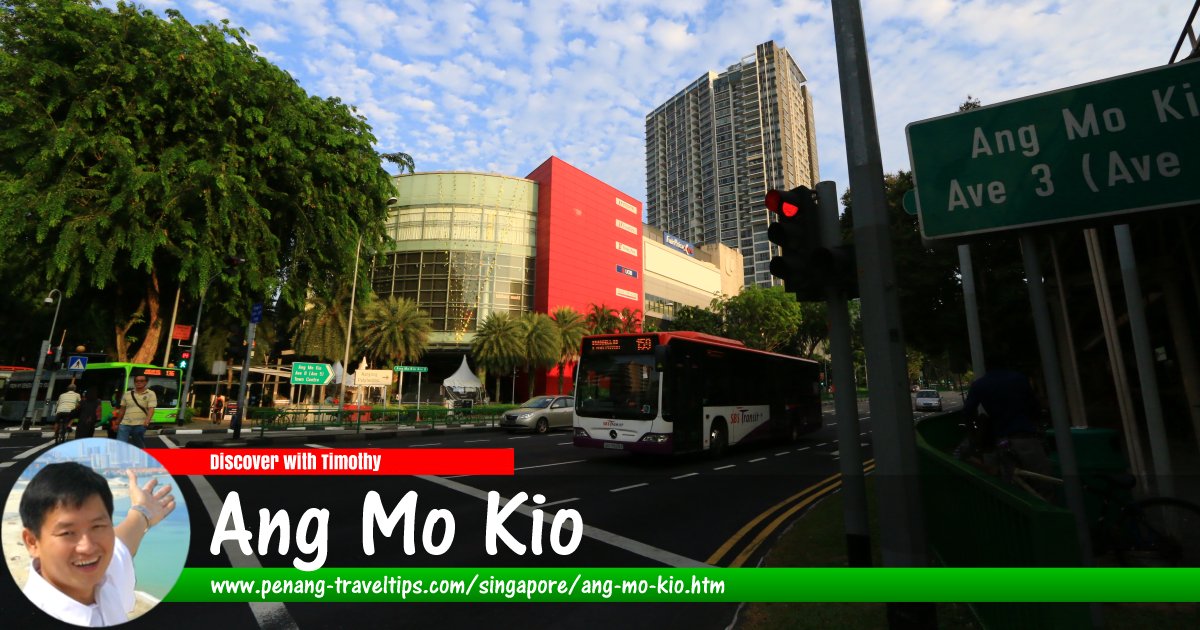 Ang Mo Kio, Singapore (9 July 2006)
The Ang Mo Kio Planning Area (Simplified Chinese: 宏茂桥, Traditional Chinese: 宏茂橋, Pinyin: Hóng Mào Qiáo, Malay: Ang Mo Kio, Tamil: ஆங் மோ கியோ) is one of the largest and most mature residential towns in northern Singapore. Covering a land area of 13.94 square kilometres, it is home to an estimated population of about 164,040 as of 2020, giving it a population density of approximately 11,800 persons per square kilometre1. The planning area falls mainly within Postal District 20, which also includes Bishan and parts of Thomson.
History of Ang Mo Kio
The history of Ang Mo Kio can be traced back to the early 20th century, when the area was a largely undeveloped rural landscape with kampongs, vegetable farms, and rubber plantations. The name first appeared on maps around 1855, and Ang Mo Kio New Town was officially developed in the 1970s by the Housing and Development Board (HDB) as part of Singapore’s effort to resettle villagers into modern public housing2. Today, Ang Mo Kio is a well-established heartland with a strong community identity.
Name and Pronunciation
The name “Ang Mo Kio”  is of Hokkien origin, with several possible interpretations. One common explanation is that it means “red-haired bridge,” where ang mo means “red-haired,” referring to Europeans, and kio means “bridge.” Another theory suggests that the name could be linked to the presence of tomato farms, since ang mo kio is also the Hokkien term for “tomato.” The pronunciation is /ɑŋ moʊ kioʊ/ in the International Phonetic Alphabet (IPA).
Geography and Boundaries
Ang Mo Kio is located in the North-East Region of Singapore. It is bordered by the Bishan Planning Area and Toa Payoh to the south, Serangoon to the east, Yishun to the north, and Central Water Catchment and Woodlands to the west. This strategic location places it at the crossroads between Singapore’s northern and central regions.
Subzones of Ang Mo Kio
- Ang Mo Kio Town Centre
- Cheng San
- Chong Boon
- Kebun Bahru
- Sembawang Hills
- Shangri-La
- Tagore
- Townsville
- Yio Chu Kang
- Yio Chu Kang East
- Yio Chu Kang North
- Yio Chu Kang West
Transport and Accessibility
Ang Mo Kio is well connected to the rest of Singapore via major expressways and arterial roads. The Central Expressway (CTE) runs along its southern boundary, providing direct access to the Downtown Core, while Upper Thomson Road and Upper Serangoon Road enhance its connectivity eastwards and westwards. The upcoming North-South Corridor is also expected to further improve accessibility.
MRT Connectivity
The area is served by several MRT lines:
- North South Line (NSL): Ang Mo Kio, Yio Chu Kang, and Mayflower stations.
- Thomson-East Coast Line (TEL): Mayflower and Lentor stations.
- Nearby areas are also connected via the Circle Line and North East Line at Serangoon and Bishan interchanges.
Residential Real Estate
As a mature housing estate, Ang Mo Kio has a wide range of housing options, from HDB flats to private condominiums and landed properties. As of 2024:
- HDB resale prices for 4-room flats (about 1,000 sq ft / 93 sq m) range from SGD 650,000 to SGD 850,000, depending on age and proximity to MRT.
- Private condominiums average between SGD 1,600 and SGD 2,100 per square foot, so a 1,000 sq ft (93 sq m) apartment can cost around SGD 1.8–2.1 million.
- Rental prices for 3-bedroom HDB flats average SGD 3,000–3,500 per month, while private condos of similar size rent for SGD 4,200–5,0003.
While not as expensive as central areas like Novena or Rochor, Ang Mo Kio’s prices reflect its desirability as a mature estate with excellent amenities.
Interesting Sights and Attractions
Ang Mo Kio offers a number of parks, recreational facilities, and community hubs, including:
- Ang Mo Kio Town Garden West: A hilltop park with lush greenery, exercise stations, and jogging paths.
- Bishan-Ang Mo Kio Park: One of Singapore’s largest urban parks, featuring a naturalised river, cycling paths, and family-friendly amenities.
- AMK Hub: The town’s main shopping mall, integrated with Ang Mo Kio MRT and bus interchange.
- Kebun Baru Birdsinging Club: A unique local attraction where bird enthusiasts gather daily.
- Ang Mo Kio Heritage Trail: A National Heritage Board trail that highlights the town’s history and development.
Community and Lifestyle
Ang Mo Kio is often described as a self-sufficient town. It has numerous schools, markets, and healthcare facilities, including Ang Mo Kio Polyclinic and the upcoming integrated healthcare hub in the area. Schools such as Anderson Secondary, CHIJ St. Nicholas Girls’ School, and Anderson Serangoon Junior College make it attractive to families. Its vibrant hawker centres and food courts, such as Cheng San Market and Mayflower Market, offer an authentic heartland dining experience.
Fun Facts
One fun fact is that Ang Mo Kio is the only town in Singapore that does not have roads with Malay names; instead, all its streets are numbered. This unique approach reflects the systematic planning style of the HDB during the estate’s development in the 1970s4.
Where to Stay
Ang Mo Kio is primarily a residential planning area, and it does not have a major mainstream hotel within the planning area itself. For visitors who want to explore Ang Mo Kio, a practical alternative is to stay in one of the neighbouring districts and travel into the area by MRT or bus. This can actually be more convenient for visitors who intend to see other parts of Singapore as well.
One option is to stay around Novena, where there is a good selection of hotels and the North South Line provides a direct connection to Ang Mo Kio MRT Station. Another option is the Kovan area, just to the east of Ang Mo Kio, where budget accommodation is available and Upper Serangoon Road provides convenient bus connections. Hotel listings near Ang Mo Kio MRT Station currently show that most of the recognised hotels are actually outside Ang Mo Kio itself, confirming that visitors should look at the surrounding planning areas when choosing accommodation1.
For visitors who specifically want to experience Ang Mo Kio as a heartland neighbourhood, staying nearby rather than in the city centre has an advantage: it places you closer to the local markets, hawker centres, parks and residential streets that give the area its character. Ang Mo Kio is also well connected by MRT, making it quite straightforward to use as a base for exploring central and northern Singapore.
What to Eat
Ang Mo Kio is an excellent place to experience everyday Singaporean hawker food. Rather than having one signature dish associated exclusively with the neighbourhood, its appeal lies in the sheer variety of inexpensive local food found in its markets, food centres and neighbourhood coffeeshops. Visitors can find familiar Singapore favourites such as chicken rice, Hokkien mee, wanton mee, fishball noodles, laksa, lor mee, carrot cake, rojak and nasi lemak, alongside Malay, Indian Muslim and other Asian cuisines.
For a first visit, a good approach is to visit one of Ang Mo Kio's traditional market and food centres around lunchtime. The Ang Mo Kio Central Market & Food Centre at 724 Ang Mo Kio Avenue 6 is particularly convenient because it is close to Ang Mo Kio MRT Station. The centre has dozens of stalls and is known for a broad selection of traditional hawker dishes, including chicken rice, braised duck rice, yong tau foo, fishball noodles, bak chor mee, curry rice, kway chap and lor mee2.
Ang Mo Kio is also a good destination for visitors interested in exploring beyond the most famous tourist hawker centres. The neighbourhood's other food centres, including Ang Mo Kio 628 Market & Food Centre, Chong Boon Market & Food Centre, Cheng San Market & Food Centre and Kebun Baru Market & Food Centre, offer a distinctly local atmosphere and a wide choice of inexpensive meals3.
There are also plenty of halal choices. Among the options in Ang Mo Kio are Rahim Muslim Food at Chong Boon Market & Food Centre, Fish & Chicks, which serves halal Western food, and Asam Tree at Block 709 Ang Mo Kio Avenue 8. Visitors seeking halal food therefore do not need to restrict themselves to restaurants outside the planning area4.
Where to Eat
Here are some of the best places to begin a food exploration of Ang Mo Kio:
- Ang Mo Kio Central Market & Food Centre, 724 Ang Mo Kio Avenue 6 – One of the most convenient choices for visitors, being within walking distance of Ang Mo Kio MRT Station. The centre is particularly good for sampling several different types of traditional hawker food in one visit. Among the stalls worth investigating is Hup Hup Minced Meat Noodle, which has been recognised by the Michelin Guide2.
- Ang Mo Kio 628 Market & Food Centre, 628 Ang Mo Kio Avenue 4 – A lively neighbourhood food centre with a strong selection of traditional Singaporean dishes. Popular choices include Sing Soon Lee Hainanese Boneless Chicken Rice, Sumo Fried Prawn Hokkien Mee and Ho Bee Roasted Food. There are also Malay food options, including Rosnah's Family Kitchen5.
- Chong Boon Market & Food Centre, 453A Ang Mo Kio Avenue 10 – A good choice for visitors wanting to eat where local residents eat. The centre has traditional breakfast and lunch fare, including porridge, fish soup, mee siam, noodles and other inexpensive dishes. Rahim Muslim Food is one of the halal options4.
- Cheng San Market & Food Centre – Another traditional neighbourhood food centre worth exploring. Recent local food guides highlight stalls serving prawn noodles, lor mee, Teochew porridge, herbal soup and beancurd, making it a useful stop for visitors who want to discover less tourist-oriented hawker food6.
- Kebun Baru Market & Food Centre, 226H & 226D Ang Mo Kio Avenue 1 – A smaller heartland food centre with a nostalgic atmosphere. Chye Kee Hainanese Chicken Rice is one of the stalls worth seeking out, serving both roasted and steamed chicken rice7.
- Khao Hom by Rung Mama – For visitors who prefer a sit-down restaurant rather than hawker food, this popular Thai restaurant at Ang Mo Kio Central 2 offers a wider restaurant-style dining experience. It is particularly suitable for dinner8.
- Fish & Chicks – A popular halal Western-food option in Ang Mo Kio, particularly useful for visitors travelling with companions who want something different from traditional hawker fare4.
One of the pleasures of eating in Ang Mo Kio is that visitors do not need to chase after a single famous restaurant. The neighbourhood is large enough to support several distinct food clusters, and its markets and food centres provide an opportunity to experience the kind of inexpensive, everyday cooking that forms an important part of Singapore's food culture.
For a particularly rewarding food outing, start at Ang Mo Kio MRT Station and walk towards Ang Mo Kio Central Market & Food Centre for breakfast or lunch. From there, explore the surrounding neighbourhood before moving on to another market or food centre. This gives visitors a taste of heartland Singapore that is quite different from the restaurant districts around Orchard Road, Marina Bay or Chinatown.
Accommodation and Food References
- Booking.com – Hotels near Ang Mo Kio MRT Station
- Singapore Hawker Centres – Ang Mo Kio Central Market & Food Centre
- Kopitiam – Ang Mo Kio 628 Market & Food Centre
- Burpple – Halal Food in Ang Mo Kio
- Reddit – Ang Mo Kio 628 Market & Food Centre recommendations
- Kopitiam – Cheng San Market & Food Centre
- Kopitiam – Kebun Baru Market & Food Centre
- Khao Hom by Rung Mama – Ang Mo Kio
Quick Facts
- Size: 13.94 sq km
- Population: ~164,040 (2020)
- Population Density: ~11,800 people per sq km
- Postal District: 20
- Established: Ang Mo Kio New Town developed in 1970s
- Name Origin: Hokkien phrase “red-haired bridge” or tomato farms
- Pronunciation: Ang Mo Kio (/ɑŋ moʊ kioʊ/)
- Main MRT Stations: Ang Mo Kio, Yio Chu Kang, Mayflower, Lentor
- Main Expressways: Central Expressway (CTE)
- Highlights: Bishan-Ang Mo Kio Park, AMK Hub, Ang Mo Kio Town Garden West
- Average Housing Prices: HDB 4-room ~SGD 650k–850k; Condominiums ~SGD 1,600–2,100 psf
Map of Ang Mo Kio, Singapore
MRT Stations in Ang Mo Kio
- Ang Mo Kio MRT Station (GPS: 1.37004, 103.84952)

- Lentor MRT Station (GPS: 1.38461, 103.83655)

- Mayflower MRT Station (GPS: 1.37147, 103.83669)

- Yio Chu Kang MRT Station (GPS: 1.38197, 103.84491)

- Teck Ghee MRT Station (GPS: 1.36579, 103.84331)

Condominiums in Ang Mo Kio
- AMO Residence (GPS: 1.36823, 103.83249)

Sights in Ang Mo Kio
- Ang Mo Kio Joint Temple (GPS: 1.36633, 103.83885)

- Ang Mo Kio Town Garden East (GPS: 1.37074, 103.85039)

- Bethesda Hall (GPS: 1.37475, 103.83735)

- Church of Christ the King (GPS: 1.3619, 103.85241)

- Kebun Baru Food Centre (GPS: 1.36718, 103.84002)

- Teck Ghee Court Food Centre (GPS: 1.36412, 103.84823)

Amenities in Ang Mo Kio
Schools in Ang Mo Kio includes Anderson Primary School, Ang Mo Kio Primary School, Da Qiao Primary School, Jing Shan Primary School, Mayflower Primary School, Teck Ghee Primary School, Townsville Primary School, Anderson Secondary School, Ang Mo Kio Secondary School, CHIJ Saint Nicholas Girls' School, Chong Boon Secondary School, Deyl Secondary School, Mayflower Secondary School, Presbyterian High School, Yio Chu Kang Secondary School, Pierce Secondary School, Anderson Junior College, ITE College West and Nanyang Polytechnic.Places of worship in Ang Mo Kio includes Liuxun Sahemiao Temple, Swee Kow Kuan Temple, Chu Sheng Temple, Bethesda Hall Ang Mo Kio, and Chin Leng Keng Chinese Temple.
Getting there
Nearest MRT station is the Ang Mo Kio MRT Station (NS16) on the North-South Line.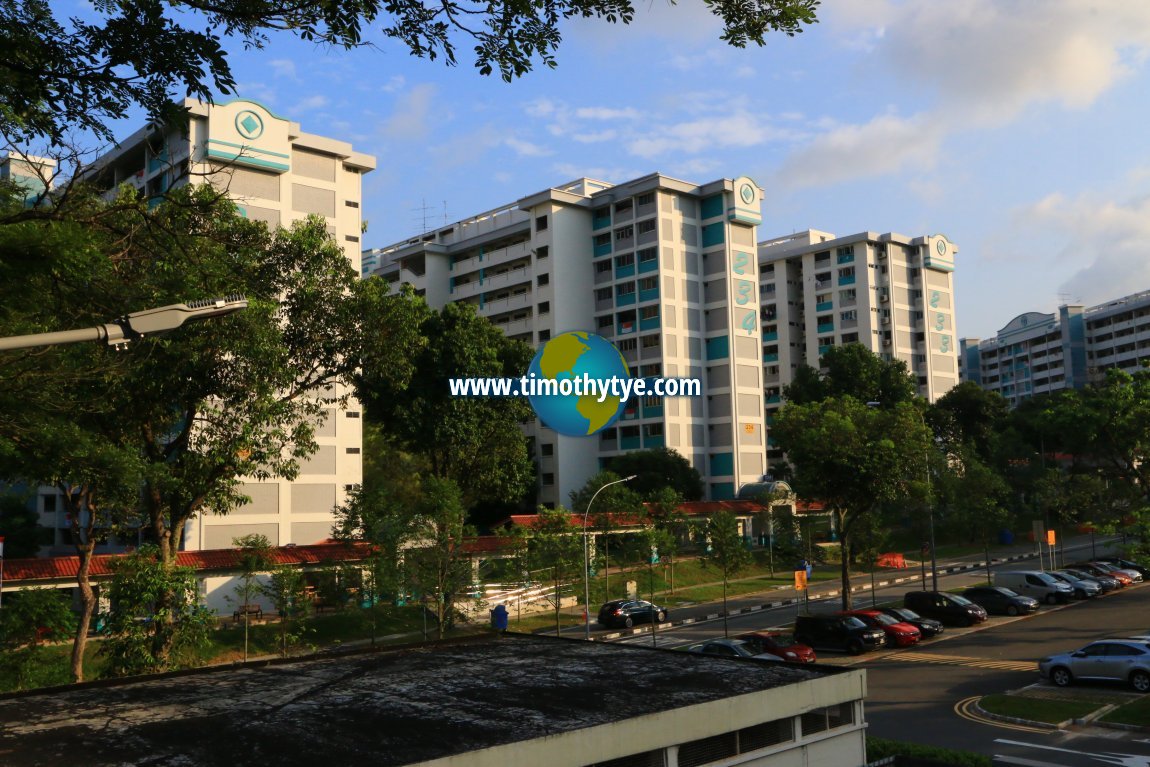 Blocks 233, 234 and 235 HDB Ang Mo Kio. (9 July 2006)
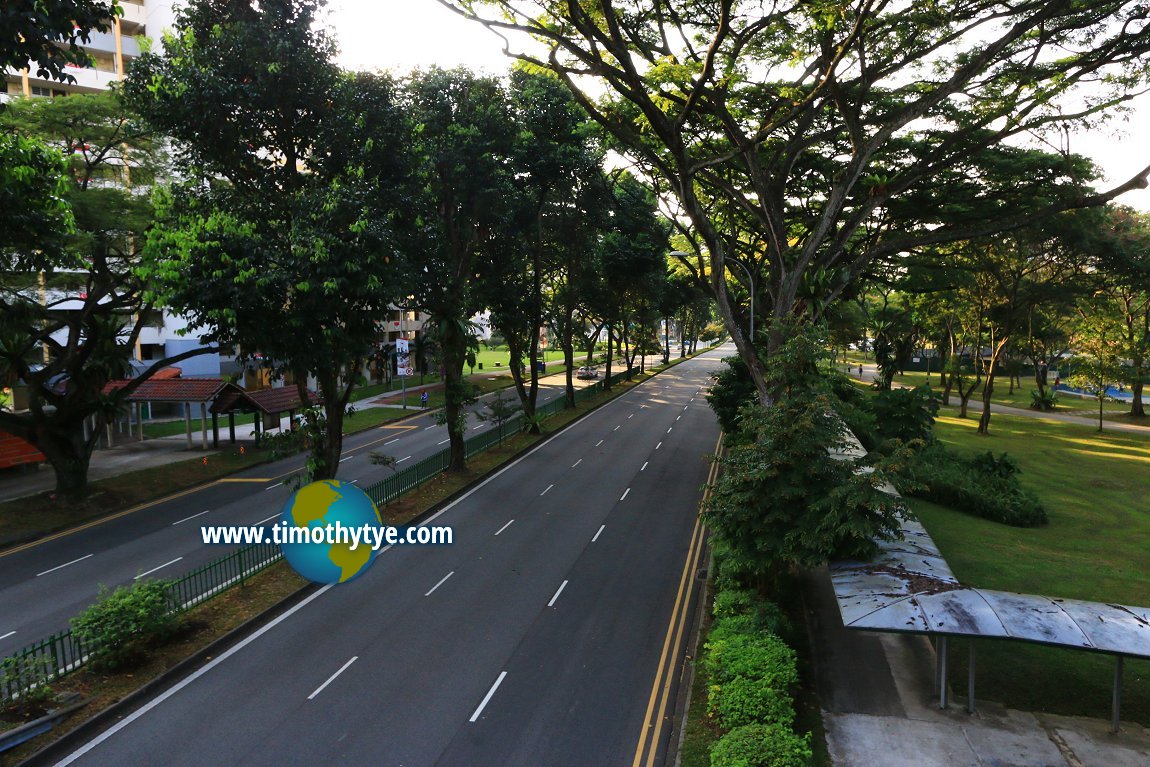 Ang Mo Kio Avenue 1, one of the main roads in Ang Mo Kio. (9 July 2006)
References
- Singapore Department of Statistics – Population Trends
- National Library Board Infopedia – Ang Mo Kio
- PropertyGuru Singapore – Ang Mo Kio Property Prices
- National Heritage Board – Ang Mo Kio Heritage Trail
Page Details
This page was created on 6 September 2025. Hi, my name is Timothy and created it from my research, for my own entertainment, knowledge and to satisfy my curiosity. I am providing the information to you in good faith and hope it is useful. I try to get the details as accurate as possible. I also try to update the page whenever I stumble on new details. So this and all my other pages are perpetual work in progress. If you discover any error, please politely inform me, pointing out where the error lies, and I will correct it as soon as possible. Your helpfulness will keep this page accurate, relevant and helpful to those who need the information.My videos of Singapore
Want to share your Singapore travel experiences or get tips from fellow travellers?
Join the Singapore Travel Tips Facebook GroupMore information for visiting and living in Singapore
Here are some related articles to help you get to know Singapore better.- Cost of Living in Different Singapore Neighbourhoods (2025 Guide)
- EZ-Link Card
- Owning a Car in Singapore
- Singapore MRT Map & Guide 2025
- Singapore Postal Districts and Postcodes
- Singapore Tourist Pass
- Taking the Bus in Singapore: A Visitor's Guide
- Understanding CCR, RCR and OCR in Singapore real estate
 Latest Pages & Updates
Buy Me A Coffee
If you enjoy the information I provide and want to support the work I do, please buy me a coffee! I appreciate it immensely, thank you so much!
