
Private Condominiums in Singapore
Private condominiums in Singapore represent the upper tier of residential living, offering comfort, exclusivity, and convenience. They are privately developed housing projects that come with a wide range of facilities such as swimming pools, gyms, function rooms, and security services. Unlike public housing or Executive Condominiums, private condominiums are open to both locals and foreigners, although different rules and taxes apply to foreign buyers. Understanding how these properties work is essential for anyone seeking to invest or live in Singapore's dynamic real estate market.
Quick Facts
- Private condominiums are fully private residential developments with strata-titled apartments.
- They offer full facilities such as pools, gyms, and clubhouses.
- Available to Singapore citizens, permanent residents (PRs), and foreigners.
- No income ceilings or eligibility restrictions apply.
- Foreigners can buy private condos without government approval (unlike landed properties).
- Subject to Buyer's Stamp Duty (BSD) and, for foreigners, Additional Buyer's Stamp Duty (ABSD).
- Usually sold on 99-year or freehold tenure.
What Are Private Condominiums?
Private condominiums, or simply “condos,” are multi-unit residential developments built by private property developers. Each unit is individually owned, while the common areas and facilities are jointly owned by the residents through a Management Corporation Strata Title (MCST). Condominiums are popular among middle- and upper-income households seeking a balance of privacy, amenities, and investment potential.
Condominiums in Singapore vary widely—from mass-market projects in suburban areas to luxury developments in prime districts such as Orchard Road, Marina Bay, and Sentosa Cove. The segment also includes boutique condos, which are smaller-scale developments with fewer units but higher exclusivity.
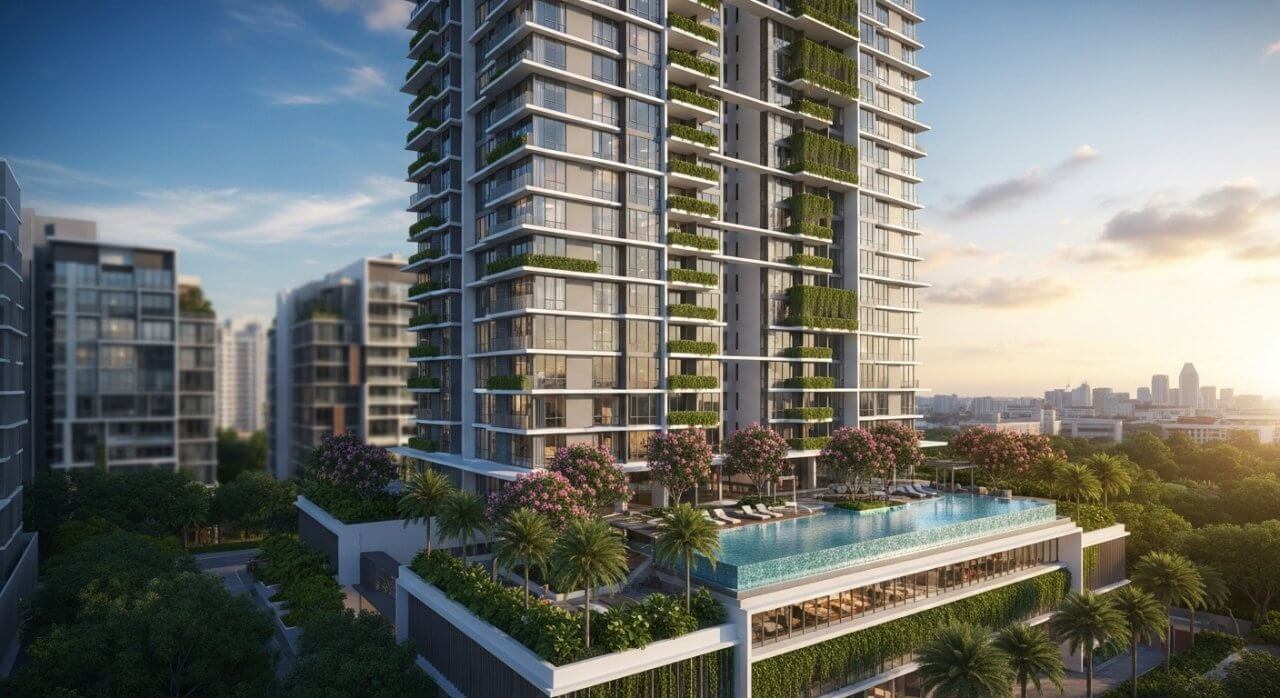 Private Condominiums in Singapore (7 October 2025 AI Generated)
Types of Private Condominiums
Private condominiums in Singapore can be broadly grouped into three categories based on location and market segment:
- Mass-Market Condominiums: Found mainly in suburban areas such as Punggol, Tampines, and Choa Chu Kang. These are more affordable options targeting upgraders from HDB flats.
- Mid-Tier Condominiums: Typically located in city-fringe areas such as Bishan, Toa Payoh, and Queenstown, offering better connectivity and higher-quality finishes.
- Luxury Condominiums: Located in prime districts (Districts 9, 10, and 11) and central areas like Marina Bay and Sentosa, catering to high-net-worth individuals seeking prestige and investment value.
Who Can Buy Private Condominiums
Singapore Citizens
Singapore citizens face no restrictions on buying private condominiums. They can purchase any number of private properties, subject only to the applicable stamp duties and financing rules.
Permanent Residents (PRs)
PRs are also eligible to purchase private condominiums without government approval. However, they are required to pay a higher Additional Buyer's Stamp Duty (ABSD) if they already own other residential properties in Singapore.
Foreigners
Foreigners can freely buy private condominium units in Singapore without approval from the Singapore Land Authority (SLA). This makes condos the most accessible form of property ownership for non-citizens. However, foreign buyers are subject to higher taxes, especially the ABSD, which can significantly affect total acquisition costs.
Tenure Types
Private condominiums in Singapore come under two main tenure types:
- 99-Year Leasehold: Most common for newer developments, particularly those built on government-sold land.
- Freehold: Offers perpetual ownership but often comes with a premium price tag. These are generally more desirable for long-term investment and legacy planning.
Buying a Private Condominium in Singapore
The process of buying a private condominium involves several steps and considerations:
- Financing and Budget Planning: Determine affordability, taking into account loan limits and taxes. Foreigners typically need to make a higher down payment due to loan-to-value (LTV) restrictions.
- Selecting a Property: Buyers may engage a licensed property agent to shortlist suitable projects based on location, price, and amenities.
- Option to Purchase (OTP): Once a unit is chosen, the buyer pays an option fee (usually 1% of the price) to secure the right to buy within 14 days.
- Exercise OTP: The buyer then pays another 4% to exercise the option and proceed with legal documentation.
- Completion: Legal conveyancing and full payment occur within the agreed period, followed by transfer of ownership.
Buyers are advised to engage a solicitor familiar with Singapore property law to handle the legal process and ensure compliance with local regulations.
Financing Rules
Both locals and foreigners can finance their condominium purchase through bank loans. However, several regulations apply under the Monetary Authority of Singapore (MAS) framework:
- Loan-to-Value (LTV) Ratio: Up to 75% for first property loans; lower for subsequent properties.
- Total Debt Servicing Ratio (TDSR): Monthly debt repayments must not exceed 55% of gross monthly income.
- Additional Cash Requirement: Foreigners often face stricter conditions and may need to pay a higher cash down payment.
Taxes and Fees Involved
When purchasing a private condominium, several taxes and fees apply:
- Buyer's Stamp Duty (BSD): Progressive tax applied to all property purchases.
- Additional Buyer's Stamp Duty (ABSD): A supplemental tax depending on citizenship status and number of properties owned. As of 2025, foreigners pay 60% ABSD on their first residential property.
- Property Tax: Annual tax based on the property's annual value and ownership type (owner-occupied or non-owner-occupied).
- Legal Fees: Typically range between 0.3% and 0.6% of the property value.
- Maintenance Fees: Monthly contributions for upkeep of shared facilities, managed by the MCST.
Resale and Rental Market
The private condominium resale market is active and well-regulated. Owners can sell their property anytime after purchase, although the Sellers' Stamp Duty (SSD) applies if the property is sold within the first three years of acquisition. The rate decreases progressively each year.
Condominiums are also a popular choice among tenants, particularly expatriates and professionals. Rental yields typically range between 3% and 4% per annum, depending on location and market conditions. Well-located condos near MRT stations, business districts, or international schools often enjoy high demand.
Foreign Ownership Restrictions and Considerations
While foreigners can freely purchase private condominiums, there are a few important points to note:
- Foreigners cannot buy landed property (e.g., bungalows, semi-detached houses) without approval from the Singapore Land Authority under the Residential Property Act.
- Condominiums on Sentosa Cove are an exception—foreigners may buy landed homes there with government approval.
- Foreign buyers should account for currency exchange risks and repatriation rules if financing from overseas sources.
- For investment purposes, foreign buyers should assess long-term rental demand and potential resale value, as capital appreciation can vary by district.
Advantages of Buying a Private Condominium
- Freedom of Ownership: No restrictions on sale or lease.
- Investment Potential: Strong long-term appreciation, particularly in prime districts.
- High-Quality Facilities: Resort-style living with full amenities.
- Accessibility: Many developments are located near MRT stations, schools, and commercial centres.
- Security and Privacy: 24-hour security and gated communities provide a high level of safety and comfort.
Challenges and Risks
- High Entry Cost: Prices and taxes can be prohibitive, especially for foreign buyers.
- ABSD Impact: The 60% ABSD for foreigners can significantly reduce investment returns.
- Market Sensitivity: Condo prices fluctuate with economic cycles and government cooling measures.
- Maintenance Costs: Monthly fees can be substantial, especially in luxury developments.
Popular Condominium Districts
Singapore's property market is often divided into three major regions:
- Core Central Region (CCR): Includes Orchard, Newton, and Marina Bay—luxury properties with premium pricing.
- Rest of Central Region (RCR): City-fringe areas like Queenstown, Kallang, and Novena—offering good balance between price and location.
- Outside Central Region (OCR): Suburban zones such as Punggol, Tampines, and Woodlands—more affordable options for upgraders and investors.
Living in a Private Condominium
Private condominiums offer residents a high level of comfort and convenience. Amenities such as swimming pools, tennis courts, BBQ pits, and landscaped gardens are standard. Management committees ensure proper maintenance, and residents benefit from a sense of exclusivity not typically found in public housing estates.
Conclusion
Private condominiums in Singapore cater to both locals and foreigners seeking a blend of lifestyle, investment, and prestige. With a well-regulated market, stable economy, and world-class infrastructure, Singapore remains one of Asia's most attractive destinations for property ownership. Whether purchased for personal use or investment, condominiums offer the flexibility, comfort, and value that define modern urban living in the city-state.
References
- Urban Redevelopment Authority (URA)
- Singapore Land Authority (SLA)
- Inland Revenue Authority of Singapore (IRAS)
- Monetary Authority of Singapore (MAS)
Page Details
This page was created on 7 October 2025. Hi, my name is Timothy and created it from my research, for my own entertainment, knowledge and to satisfy my curiosity. I am providing the information to you in good faith and hope it is useful. I try to get the details as accurate as possible. I also try to update the page whenever I stumble on new details. So this and all my other pages are perpetual work in progress. If you discover any error, please politely inform me, pointing out where the error lies, and I will correct it as soon as possible. Your helpfulness will keep this page accurate, relevant and helpful to those who need the information.Articles related to Residential Properties in Singapore
- Get a list of condominiums in Singapore
- Find out about Property Taxes and Stamp Duties in Singapore
- What is Buyer's Stamp Duty (BSD)
- What is Additional Buyer's Stamp Duty (ABSD)
- What is Seller's Stamp Duty (SSD)
- What is CCR, RCR and OCR
- What are HDB Flats
- What are Executive Condominiums
- What are Private Condominiums
- What are Landed Homes
- Understand Singapore's Ethnic Integration Policy
- Understanding Postal Districts and Postcodes
- What to expect from Real Estate Agents in Singapore
My videos of Singapore
Want to share your Singapore travel experiences or get tips from fellow travellers?
Join the Singapore Travel Tips Facebook GroupMore information for visiting and living in Singapore
Here are some related articles to help you get to know Singapore better.- Cost of Living in Different Singapore Neighbourhoods (2025 Guide)
- EZ-Link Card
- Owning a Car in Singapore
- Singapore MRT Map & Guide 2025
- Singapore Postal Districts and Postcodes
- Singapore Tourist Pass
- Taking the Bus in Singapore: A Visitor's Guide
- Understanding CCR, RCR and OCR in Singapore real estate
 Latest Pages & Updates
Buy Me A Coffee
If you enjoy the information I provide and want to support the work I do, please buy me a coffee! I appreciate it immensely, thank you so much!
