
Baker Street, London: A Historic Street Full of Character and Culture
Where is Baker Street?
Baker Street is located in the heart of the City of Westminster, one of the most iconic and historic boroughs in Central London. Stretching from Marylebone Road in the north to Portman Square in the south, it is surrounded by notable neighborhoods like Marylebone and Regent's Park. Its central position makes it an essential part of London's street network and a bustling hub for visitors and residents alike.How Long is Baker Street?
Baker Street runs for approximately 0.7 miles (1.1 kilometers) from its northern junction at Regent's Park (Marylebone Road) down to Portman Square. Though not a long street by London standards, it is densely packed with history, attractions, and important buildings.The History of Baker Street
Baker Street was laid out in the 18th century during the rapid expansion of London. It was originally developed by the builder William Baker, after whom the street is named. The construction of the street began around the 1750s, with further development continuing into the early 19th century as the surrounding Marylebone area flourished. The street quickly grew in prominence, becoming known for its elegant townhouses and for attracting well-to-do Londoners. Over time, it evolved to host businesses, shops, and cultural institutions, transforming into the vibrant thoroughfare we see today.How Baker Street Got Its Name
Baker Street was named after William Baker, the builder and entrepreneur responsible for developing the area during the 18th century. Unlike many London streets named after royalty, places, or ancient history, Baker Street has a more practical origin, tied directly to one of the key figures responsible for its creation. The street has been known as Baker Street since at least the 1760s.Connecting Street
- Marylebone Road
- Park Road
- Gloucester Place
- Crawford Street
- Paddington Street
- York Street
- George Street
- Wigmore Street
- Portman Square
Major Buildings and Landmarks on Baker Street
East Side Highlights:- Madame Tussauds London – One of London's most famous attractions, offering lifelike wax figures of celebrities and historical figures.
- The London Planetarium – Once part of Madame Tussauds, the building now offers immersive space experiences.
- Baker Street Station – An architectural gem and one of the original stations of the world's first underground railway.
- 221B Baker Street – The legendary fictional residence of Sherlock Holmes, now operating as the Sherlock Holmes Museum.
- University of Westminster Marylebone Campus – Providing educational programs in a variety of fields, contributing to the academic atmosphere of the area.
- Various historic Georgian and Victorian townhouses – Many of which have been converted into offices, hotels, and boutiques, preserving their historical charm.
Nearest London Underground Stations
Baker Street is well served by the London Underground, making it easily accessible from across the city. The primary station on the street is: Baker Street Station – One of London's oldest and most important Underground stations. It is served by several Underground lines: Other nearby stations include Marylebone Station (on the Bakerloo Line and National Rail services) and Bond Street Station (for the Central, Jubilee, and Elizabeth lines), both within a short walking distance.Fun Facts About Baker Street
Baker Street is steeped in literary fame thanks to Sir Arthur Conan Doyle's legendary fictional detective, Sherlock Holmes. Holmes was said to reside at the now-famous address of 221B Baker Street, even though, at the time of writing, such a specific house number didn't exist. Today, the Sherlock Holmes Museum occupies this iconic spot, complete with Victorian furnishings and artifacts related to the great detective.Another fascinating tidbit: Baker Street Station is one of the original stations of the world's first underground railway, the Metropolitan Railway, which opened in 1863. The historic platforms still retain many Victorian architectural details.
Moreover, during the Second World War, Baker Street housed the headquarters of the Special Operations Executive (SOE), a secret British organization tasked with espionage and sabotage behind enemy lines. The SOE's clandestine operations added an extra layer of mystery to the street's already storied reputation.
Map of Baker Street, London
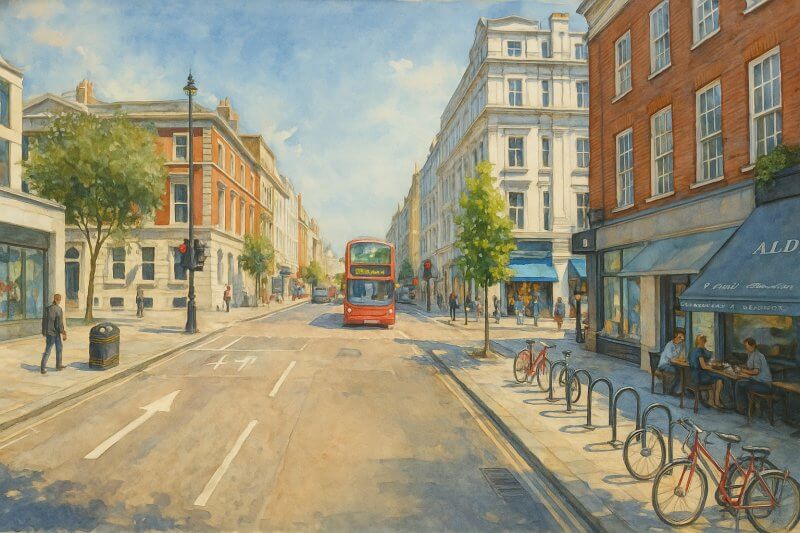
Painting of Baker Street (View full-size image here)
Moving to London?
New to London and need a place to live? Read our Renting A Flat Guide. This guide covers everything you need to know about renting a flat in London, from viewing to signing.Streets of London
Come, let's explore and discover the streets of London together! Listed here afre the Streets of London that I have documented. Dive in and discover!Map of Streets in London
View all the streets that I have documented on Google Maps in this Map of Streets in London.Want to share your London travel experiences or get tips from fellow travellers?
Join the London Travel Tips Facebook GroupMore information for visiting London
Here are some related articles to help you get to know London better.- Cost of Living in London: Discover the true cost of living in London, including housing, transport, groceries, and more - plus tips for budgeting in one of the world's most expensive cities.
- Driving in London: Planning to drive in London? Learn about roads, car rentals, parking, tolls, and key tips for tourists and visitors from outside the capital.
- Driving Tips for Visiting London: Thinking of driving to London? Discover the best times to travel, congestion tips, parking apps, breakdown help, and petrol advice for a smoother journey.
- Evolution of London's Streets: Discover the fascinating history of how London's streets developed from ancient footpaths to today's complex network of roads across the capital.
- History of Immigration to London: Discover the rich history of immigration to London, from Huguenots to Bangladeshis, and how diverse communities have shaped the city's vibrant identity.
- How Big Is London Compared to Other World Cities?
- How London's Streets Measure Up: A Global Comparison of Road Widths
- How Streets of London are Named: Discover how London streets get their names, who decides them, and how historic, political, and public influences shape street naming in the capital.
- How the Grosvenor Family Came to Own Much of Mayfair, Belgravia and Pimlico: Explore how the Grosvenor family came to own much of Mayfair, Belgravia, and Pimlico, and learn about their historical connection (or lack thereof) with the British royal family and government.
- Living and working in London
- London's Quiet Collapse: How Living Standards Fell as Costs Skyrockted (1975-2025): Explore how London residents endured rising costs and falling living standards from 1975 to 2025 - from rocketing rents to wage stagnation and inflation.
- Marvel of the London Underground: Discover the history, challenges, and triumphs of the London Underground - the world's first underground railway and a vital transport lifeline for the UK capital since 1863.
- Moving to London: Expat Tips for Settling in Westminster: Essential advice for expats moving to London's Westminster: neighborhood insights, cost of living, transportation, housing, healthcare, schools, and tips to help you feel at home in the heart of the city.
- Places in London that aren't pronounced the way they're spelled
- Shopping in London: Discover London's diverse shopping scene
- Taking the bus in London: This is your complete guide to taking the bus when in London.
- The Anglican Faith: A Visitor's Guide to the Church of England: Learn about the Anglican faith and its deep ties to London's landmarks like Westminster Abbey and St Paul's Cathedral.
- Top 10 London Streets Every Visitor Must See: Discover London through its most iconic thoroughfares - 10 streets every visitor must experience. From historic Abbey Road to vibrant Camden High Street, explore culture, shopping, and hidden gems.
- Why are most roads in Central London so narrow? Learn why there are so few multi-lane roads and elevated highways in the heart of the city.
 Latest Pages & Updates
Buy Me A Coffee
If you enjoy the information I provide and want to support the work I do, please buy me a coffee! I appreciate it immensely, thank you so much!
