
Wigmore Street, London
Wigmore Street is a prominent thoroughfare in the City of Westminster, London. Situated in the heart of Marylebone, it runs east-west, linking the stately Portman Square at its western end to the elegant Cavendish Square on its eastern flank. A key shopping and commercial street, Wigmore Street forms an important parallel corridor to the more bustling Oxford Street just to its south.
Character and Surroundings
Wigmore Street is lined with elegant late Georgian and Victorian buildings, many of which now house high-end boutiques, medical offices, showrooms, and law firms. The street is famed for its musical instrument shops and hearing aid specialists, earning it a niche reputation within London. Unlike the nearby Oxford Street, it offers a calmer, more refined atmosphere, making it a popular route for pedestrians seeking a more leisurely stroll.
Notable streets intersecting or branching off from Wigmore Street include Duke Street, Welbeck Street, Wimpole Street, and Harley Street. These streets are home to private medical clinics, galleries, and a mix of commercial and residential properties.
Connecting Streets
- Cavendish Square
- Duke Street
- Harley Street
- Mandeville Place
- Marylebone Lane
- Orchard Street
- Portman Square
- Seymour Mews
- Welbeck Street
- Wigmore Place
- Wimpole Street
Historical Background
Wigmore Street was developed in the 18th century as part of the Portman Estate, one of the grand aristocratic landholdings shaping the layout of Marylebone. The street was named after the market town of Wigmore in Herefordshire, historically linked to the influential Mortimer family. The Mortimers were powerful medieval barons, and their ancestral seat, Wigmore Castle, likely inspired the name of the street1.
The name Wigmore is pronounced as WIG-mor /ˈwɪɡ.mɔːr/. Though not as well-known as Oxford Street, Wigmore Street held strategic importance for its connection to medical professionals and musicians over the centuries. By the Victorian era, it had become home to piano makers and conservatories2.
Landmarks and Points of Interest
- Wigmore Hall – Located near the junction with Wimpole Street, this renowned concert hall is a major London venue for chamber music and solo recitals. Built in 1901, it boasts superb acoustics and an iconic art nouveau interior3.
- Henry Wood House – A modern office building named after the founder of the Proms, Sir Henry Wood. It reflects the street's fusion of history and modernity.
- University of Westminster (Cavendish Campus) – While not directly on the street, it is situated nearby, contributing to the youthful demographic and intellectual character of the area.
Transport Links
London Underground
Wigmore Street is within easy walking distance of several London Underground Stations:
- Bond Street Station – Located at the southeastern end of Wigmore Street, it is served by the Central and Jubilee lines, and the Elizabeth Line.
- Oxford Circus Station – A short walk eastward, serving the Bakerloo, Central, and Victoria lines.
- Marble Arch Station – To the west, accessible via Oxford Street, also on the Central Line.
Bus Services
Numerous bus routes serve Oxford Street and nearby Marylebone Road, including routes 7, 23, 74, 98, 113, and 139. These routes connect Wigmore Street with areas such as Bayswater, Kilburn, Camden, and central London.
Real Estate Overview
Wigmore Street features a blend of residential flats, commercial offices, and mixed-use properties. The area is known for its elegant period conversions and spacious apartments. As of July 2025, prime residential properties on or near Wigmore Street typically range in size from 750 sq ft (70 sq m) for a one-bedroom flat to over 2,000 sq ft (186 sq m) for larger three- or four-bedroom properties4.
- Sales Prices: A one-bedroom flat averages around £1.2 million, while larger apartments can command between £2.5–£4 million, depending on finish and amenities4.
- Rental Prices: Rentals average about £850–£1,200 per week for a two-bedroom flat, with premium residences fetching upwards of £2,000 per week4.
These figures place Wigmore Street within the higher echelons of London property prices, on par with other desirable Marylebone and Mayfair locations.
Fun Fact
Wigmore Street has long been associated with music. In fact, many piano manufacturers and musical instrument retailers had showrooms here during the 19th and early 20th centuries. This legacy continues through the celebrated Wigmore Hall, a favourite venue among classical musicians worldwide3.
Quick Facts
- Location: City of Westminster, London
- Neighbourhood: Marylebone
- Connects: Portman Square (west) to Cavendish Square (east)
- Nearby Streets: Duke Street, Wimpole Street, Harley Street, Welbeck Street
- Pronunciation: WIG-mor /ˈwɪɡ.mɔːr/
- Notable Sites: Wigmore Hall, Henry Wood House
- Nearby Underground: Bond Street (Central, Jubilee, Elizabeth), Oxford Circus (Bakerloo, Central, Victoria), Marble Arch (Central)
- Bus Routes: 7, 23, 74, 98, 113, 139 via Oxford Street and Marylebone Road
- Typical Home Sizes: 750–2,000 sq ft (70–186 sq m)
- Home Prices (2025): £1.2M–£4M
- Rental Rates: £850–£2,000+ per week
- Historic Name Origin: Named after Wigmore, Herefordshire, seat of the Mortimer family
References
- British History Online – Wigmore Street and the Portman Estate
- Wigmore Hall – History
- Zoopla – Wigmore Street House Prices
Map of Wigmore Street, London
Painting of Wigmore Street
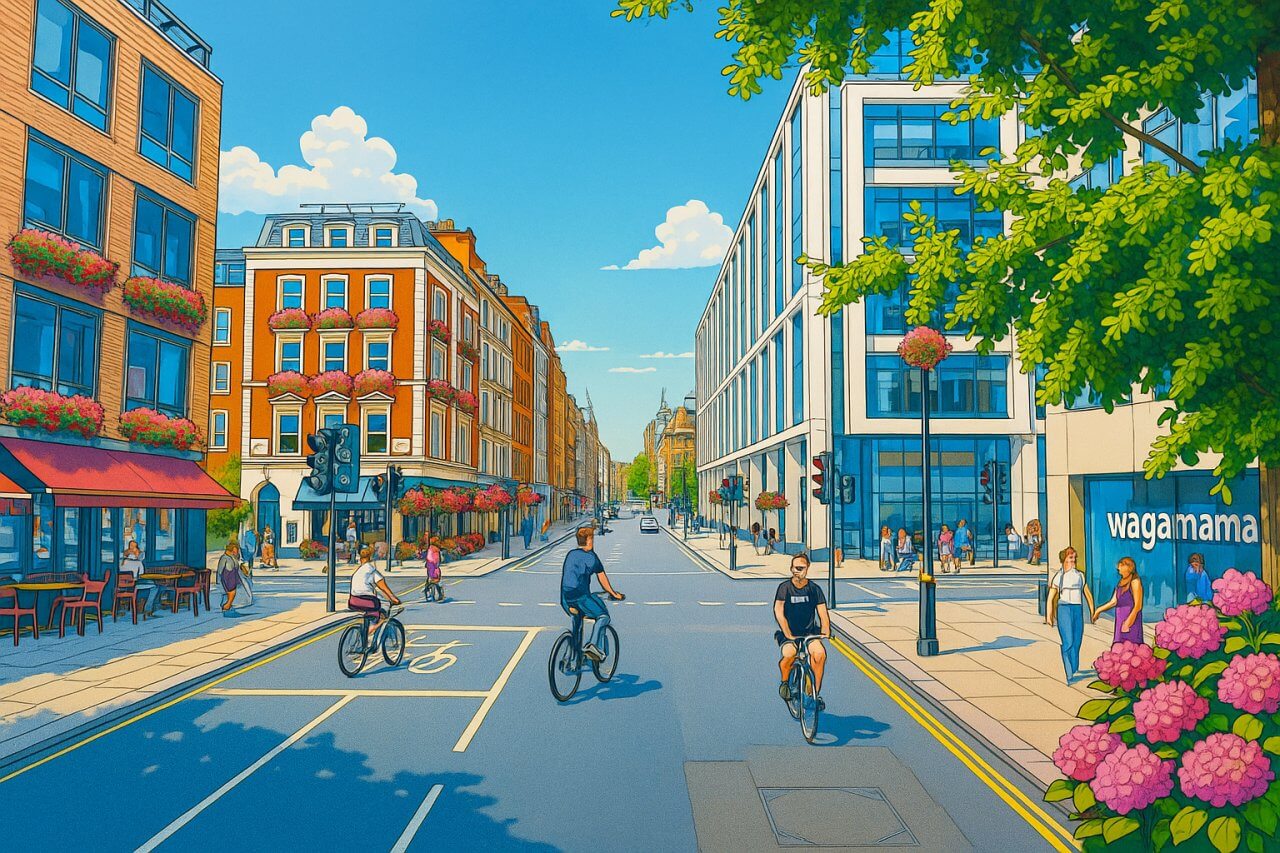 Painting of Wigmore Street
Page Details
This page was created on 10 July 2025. Hi, my name is Timothy and created it from my research, for my own entertainment, knowledge and to satisfy my curiosity. I am providing the information to you in good faith and hope it is useful. I try to get the details as accurate as possible. I also try to update the page whenever I stumble on new details. So this and all my other pages are perpetual work in progress. If you discover any error, please politely inform me, pointing out where the error lies, and I will correct it as soon as possible. Your helpfulness will keep this page accurate, relevant and helpful to those who need the information.Moving to London?
New to London and need a place to live? Read our Renting A Flat Guide. This guide covers everything you need to know about renting a flat in London, from viewing to signing.Streets of London
Come, let's explore and discover the streets of London together! Listed here afre the Streets of London that I have documented. Dive in and discover!Map of Streets in London
View all the streets that I have documented on Google Maps in this Map of Streets in London.Want to share your London travel experiences or get tips from fellow travellers?
Join the London Travel Tips Facebook GroupMore information for visiting London
Here are some related articles to help you get to know London better.- Cost of Living in London: Discover the true cost of living in London, including housing, transport, groceries, and more - plus tips for budgeting in one of the world's most expensive cities.
- Driving in London: Planning to drive in London? Learn about roads, car rentals, parking, tolls, and key tips for tourists and visitors from outside the capital.
- Driving Tips for Visiting London: Thinking of driving to London? Discover the best times to travel, congestion tips, parking apps, breakdown help, and petrol advice for a smoother journey.
- Evolution of London's Streets: Discover the fascinating history of how London's streets developed from ancient footpaths to today's complex network of roads across the capital.
- History of Immigration to London: Discover the rich history of immigration to London, from Huguenots to Bangladeshis, and how diverse communities have shaped the city's vibrant identity.
- How Big Is London Compared to Other World Cities?
- How London's Streets Measure Up: A Global Comparison of Road Widths
- How Streets of London are Named: Discover how London streets get their names, who decides them, and how historic, political, and public influences shape street naming in the capital.
- How the Grosvenor Family Came to Own Much of Mayfair, Belgravia and Pimlico: Explore how the Grosvenor family came to own much of Mayfair, Belgravia, and Pimlico, and learn about their historical connection (or lack thereof) with the British royal family and government.
- Living and working in London
- London's Quiet Collapse: How Living Standards Fell as Costs Skyrockted (1975-2025): Explore how London residents endured rising costs and falling living standards from 1975 to 2025 - from rocketing rents to wage stagnation and inflation.
- Marvel of the London Underground: Discover the history, challenges, and triumphs of the London Underground - the world's first underground railway and a vital transport lifeline for the UK capital since 1863.
- Moving to London: Expat Tips for Settling in Westminster: Essential advice for expats moving to London's Westminster: neighborhood insights, cost of living, transportation, housing, healthcare, schools, and tips to help you feel at home in the heart of the city.
- Places in London that aren't pronounced the way they're spelled
- Shopping in London: Discover London's diverse shopping scene
- Taking the bus in London: This is your complete guide to taking the bus when in London.
- The Anglican Faith: A Visitor's Guide to the Church of England: Learn about the Anglican faith and its deep ties to London's landmarks like Westminster Abbey and St Paul's Cathedral.
- Top 10 London Streets Every Visitor Must See: Discover London through its most iconic thoroughfares - 10 streets every visitor must experience. From historic Abbey Road to vibrant Camden High Street, explore culture, shopping, and hidden gems.
- Why are most roads in Central London so narrow? Learn why there are so few multi-lane roads and elevated highways in the heart of the city.
 Latest Pages & Updates
Buy Me A Coffee
If you enjoy the information I provide and want to support the work I do, please buy me a coffee! I appreciate it immensely, thank you so much!
