

Seven Streets Precinct
 Go Back - Latest PENANG Sights/Streets/New Properties > Malaysia > World | Hokkien : Lessons : Dictionary | YouTube | Facebook | About Me : Contact Me
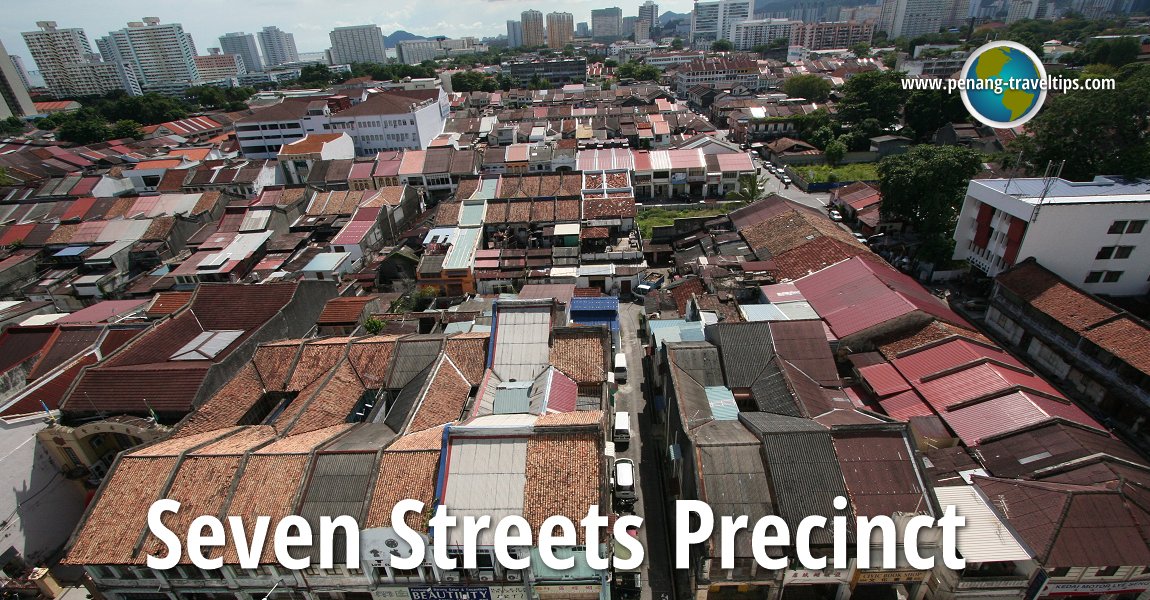 Seven Streets Precinct (25 November 2010)
The Seven Streets Precinct (Penang Hokkien: Chit1 Tiau3 Lor33) is an area in George Town immediately south of the Prangin Canal. This triangular piece of land is anchored by Magazine Circus to the northwest, the junction of Anson Bridge to the northeast, and Sungai Pinang Bridge to the south.
For much of the 19th century, the area was a collection of Chinese villages, with Koay Kangnga ("Across the River") being the settlement closest to the Prangin Canal. Beach Street continues south in the form of a country path that meandered along the coast towards the plantations in Gelugor and Batu Lanchang (by the way, "Batu Lanchang" in the 19th century refers to much of what is Green Lane today).
 Map of the Seven Streets Precinct, Penang
Sights in the Seven Streets Precinct
- Citadines Connect Georgetown Penang (GPS: 5.41268, 100.32868)

- Noordin One (GPS: 5.41268, 100.32868)
- Pak Thean Keong Temple (GPS: 5.40649, 100.3291)

- Phu Thor Yen Temple (GPS: 5.40869, 100.32794)

- Sandilands (GPS: 5.40513, 100.32852)

- Seng Hong Beow Temple (GPS: 5.40633, 100.3289)

- SJKC Eng Chuan (GPS: 5.40858, 100.32881)

- The Granite Luxury Hotel (GPS: 5.41343, 100.32957)

- The Wembley Penang (GPS: 5.413321, 100.329928)

What to eat in the Seven Streets Precinct
- Char Koay Kak at Cecil Street Market Hawker Centre in the Seven Streets Precinct of George Town, Penang, was recommended by Eddy Tong on 5 October, 2019
- Pasembur at the Cecil Street Market Hawker Centre in the Seven Streets Precinct was recommended by Deric Ong on 21 September, 2019
Eateries within the Seven Streets Precinct
Businesses in the Seven Streets Precinct
- 66 Unisex Hair Saloon
- Aik Soon Heng Enterprise
- BL Boon Lee Auto Parts
- Chin Heng Design
- Chan Hoe Hardware Trading
- Chin Huat & Sons Motor
- Chop Boon Sin Foundry
- Cinkoon Hardware
- Gogain Industry (metal works)
- Hi Style Hair Saloon
- Hoe Shen Trading
- Hok Hing Leong Sdn Bhd (motorcycle accessories)
- Huat Motor (motorcycle repair shop)
- Hup Seng Engineering
- K.E. Chong Air Conditioning
- Kedai Runcit Sin Guan Soon (sundry shop)
- Kedai Ubat Peh Cheong Tong (Chinese medical hall)
- Khian Huat Steel Works (metal works)
- Kim Lye Construction
- Klinik Soon
- Kwong Wah Yit Poh Newspaper
- Laison Supplies
- Lam Hin Motors
- Lye Advertising Enterprise
- Ms Cake House
- New Silk Unisex Hair & Beauty
- Ninety Nine Furniture Design
- Oh Eng Huat Cake Shop
- Pasar Mini Bu Zhi Dao
- Pidta Zillionaire Enterprise
- Pusat Bateri dan Tayar Lean Yi
- Recycle (Saro Metal Scrap Enterprise)
- Soon Way Hardware (PG) Sdn Bhd
- SS Hardware & Electrical Trading
- Tanjung Air-Cond Sales & Service
Living in the Seven Streets Precinct area (it wasn't called that yet) were Hokkiens who worshipped at temples such as the Seng Ong Beow Temple, at that time surrounded by mangrove, somewhere between land and sea. The kampung houses within that area were not arranged in any particular order - it is similar to the kampungs we see today, with clusters of houses interrupted by vegetable plots. The settlers, mostly farmers, sent their produce to the Prangin Canal, where they are loaded to boats and distributed elsewhere in town. Similarly, fish and imported goods come in through the canal and are sent to godowns and sundry shops.
Penang actually became more prosperous from the 4th quarter of the 19th century, when tin mining in Perak propelled an economic boom which even the repeated clan warfares could not derail. There was an influx of immigrants from China, the poor to work in the tin mines and the harbour - where much workforce was needed to load and unload tin and later rubber, the middle class setting up provision shops and retail businesses, while the upper class owning tin mines and were the main benefactors of the clan associations and builders of ornate clan temples.
The houses within the Seven Streets Precinct that we see today were built around the late 19th century. The burgeoning population induced the development of George Town to spill south across the Prangin Canal. The vegetable farms had to make way for roads. These were quickly laid out as seven parallel streets framed by two main roads, to be named Bridge Street (now Jalan C.Y. Choy) and Brick Kiln Road (now Jalan Gurdwara), and the Prangin Canal at the northern end. The houses that were put up were of bricks, certainly more durable than the attap and wood sheds that they replaced. The seven parallel streets were Magazine Road, Noordin Street, Presgrave Street, Tye Sin Street, Macallum Street, Katz Street and Cecil Street. To these were added Presgrave Street, Nanking Road, Herriot Street and Sandilands Streets. Running right through the Seven Streets Precinct, like a fishbone, is McNair Street.
The Seven Streets Precinct has all along been a working class neighbourhood. Even before the brickhouses were built, it was a no-man's land to the gentrified Baba Nyonyas, a place where clan warfares and triad activities were rampant. So it was until as late as the 1970's and early 80's.
The Seven Streets Precinct was originally earmarked to be included within George Town UNESCO World Heritage Site. However, the size of the core and buffer zones were subsequently reduced in area to what it is eventually inscribed.
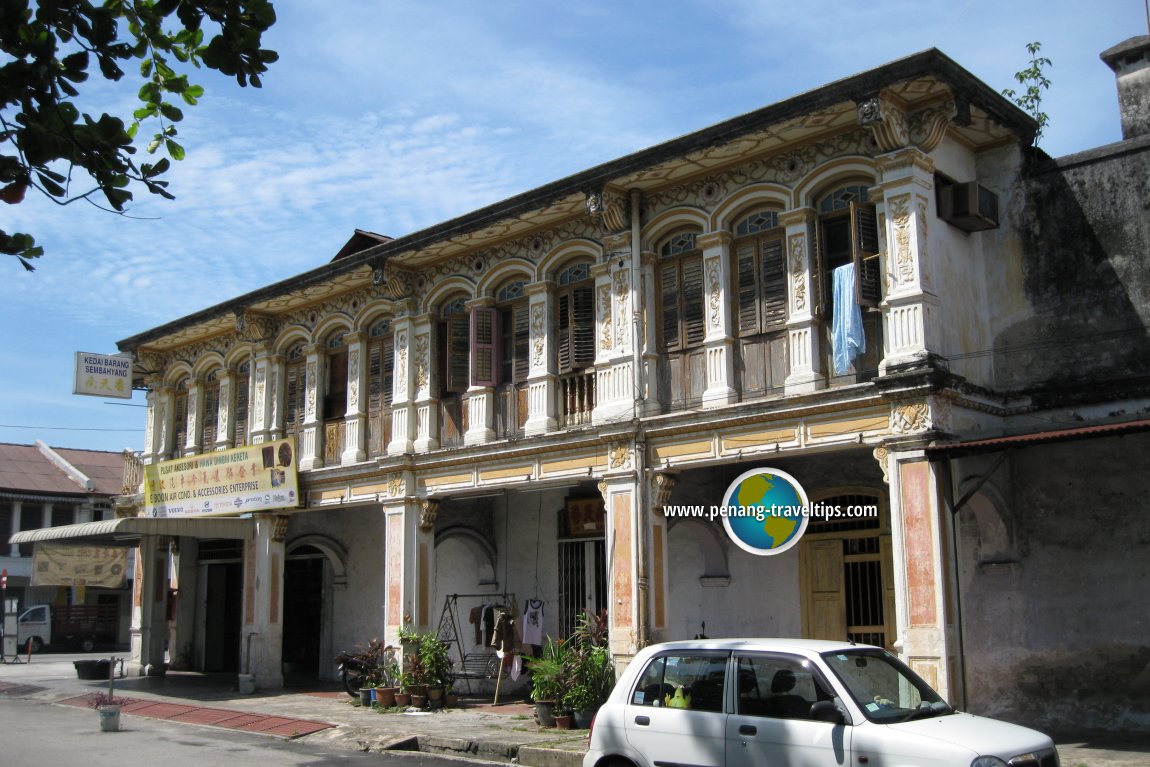 Pre-war houses in the Seven Streets Precinct (2 December 2008)
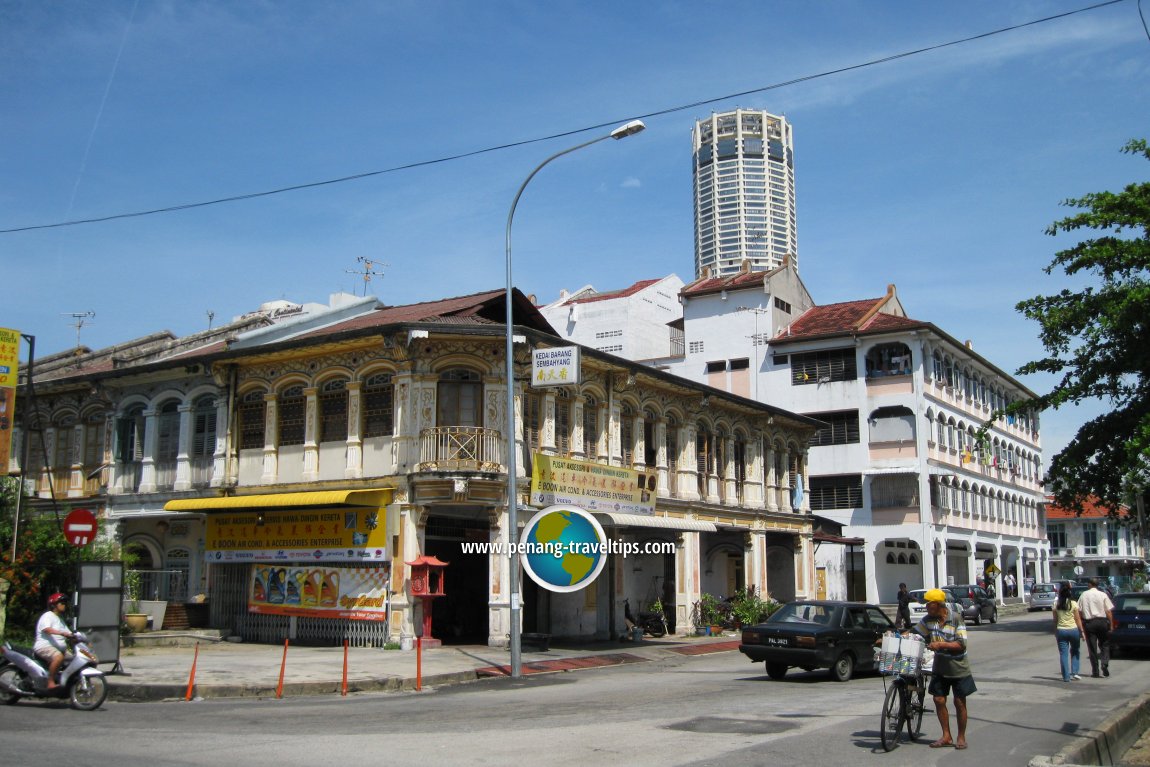 McNair Street, the main thoroughfare in the Seven Streets Precinct (2 December 2008)
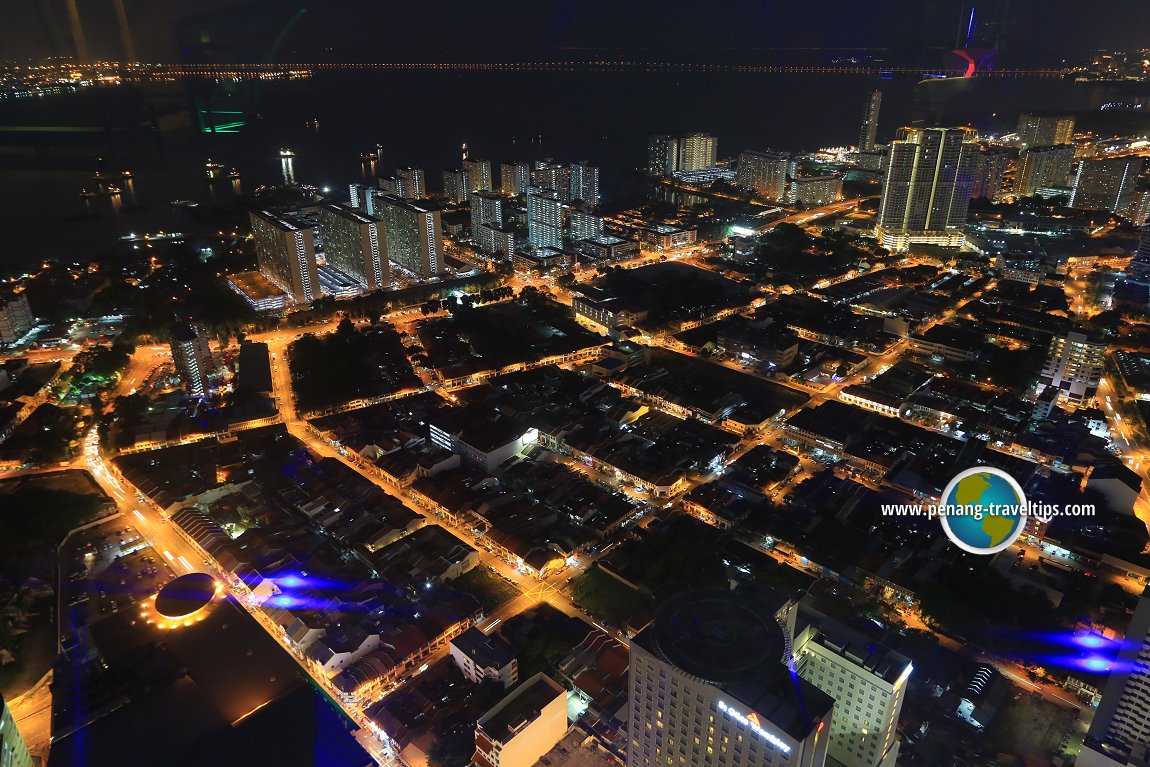 Seven Streets Precinct at night (26 May 2017)
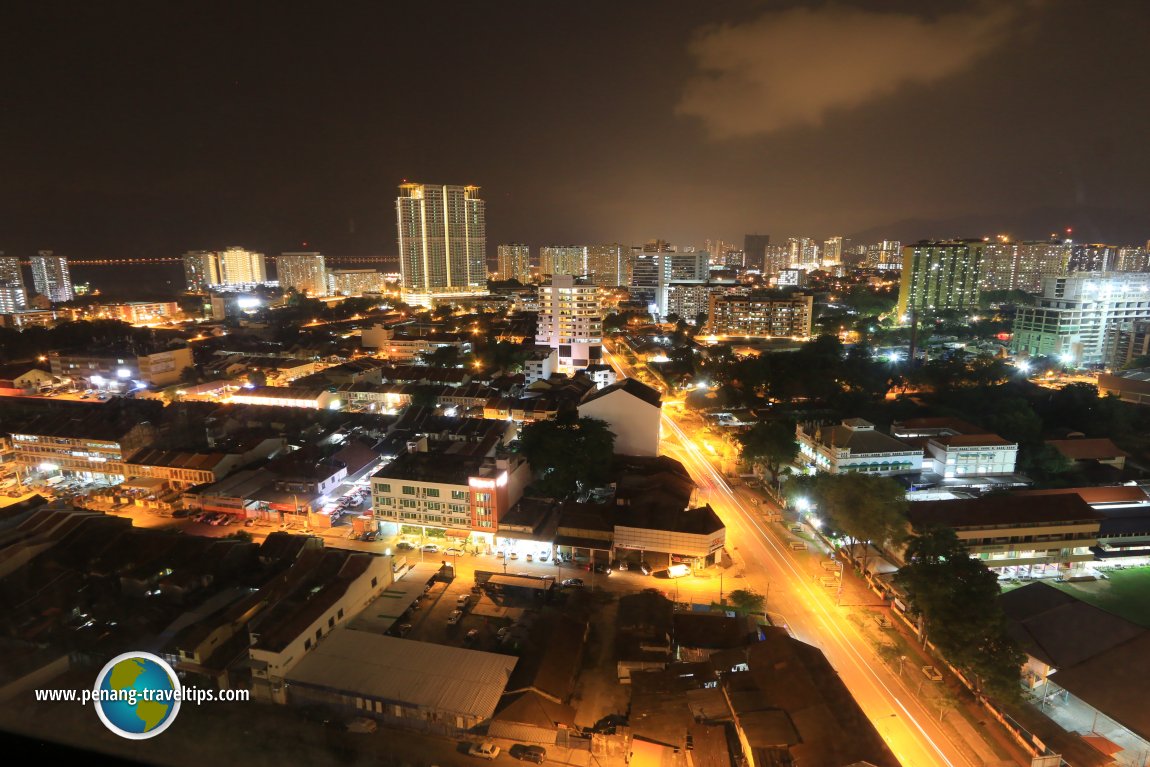 Seven Streets Precinct at night (26 May 2017)
Buy, rent or sell properties in Penang
Do you have a property for sale or to rent out? Are you looking to buy or rent a property? Get in touch with me. WhatsApp me (Timothy Tye) at 012 429 9844, and I will assign one of my property agents to serve you. I will choose the agent for you, according to your property needs. So when you message me, provide me some details of what you need, whether to sell, to buy, to rent or to rent out, and what type of property, is it condo, apartment, house, shop, office or land.Adakah anda mempunyai hartanah untuk dijual atau disewakan? Adakah anda ingin membeli atau menyewa hartanah? Hubungi saya. WhatsApp saya (Timothy Tye) di 012 429 9844, dan saya akan menugaskan salah seorang ejen hartanah saya untuk berkhidmat kepada anda. Saya akan pilih ejen untuk anda, mengikut keperluan hartanah anda. Oleh itu, apabila anda menghantar mesej kepada saya, berikan saya beberapa butiran tentang apa yang anda perlukan, sama ada untuk menjual, untuk membeli, untuk disewakan atau untuk disewakan, dan jenis hartanah apakah itu kondo, pangsapuri, rumah, kedai, pejabat atau tanah.
您有待出售或出租的房产吗? 您想购买或租赁房产吗? 与我联系。 WhatsApp 我 (Timothy Tye) 012 429 9844,我将指派一名房地产经纪人为您服务。 我会根据您的房产需求,为您选择代理。 因此,当您给我发消息时,请向我提供一些您需要的详细信息,无论是出售、购买、出租还是出租,以及房产类型,是公寓、公寓、房屋、商店、办公室还是土地。
New Properties in Penang
Looking to buy property in Penang? Get the e-brochures right here without having to visit or contact individual developers.- Anggun Residences E-Brochure, Batu Kawan
- Aston Acacia E-Brochure, Bukit Mertajam
- Beacon Executive Suites E-Brochure, George Town
- Beverly Heights @ Bukit Gambir E-Brochure, Gelugor
- BM Highland E-Brochure, Bukit Mertajam
- Cypress Villa E-Brochure, Sungai Ara
- D'Zone Condominium E-Brochure, Teluk Kumbar
- Elements Garden E-Brochure, Butterworth
- Ferringhi Residence 2 E-Brochure, Batu Ferringhi
- GEM Residences E-Brochure, Prai
- Golden Triangle 2 E-Brochure, Sungai Ara/Relau
- Grace Residence E-Brochure, Jelutong
- Granito @ Permai E-Brochure, Tanjong Bungah
- Green City Residence E-Brochure, Jelutong
- Havana Beach Residences E-Brochure, Bayan Lepas
- Imperial Residences E-Brochure, Sungai Ara/Relau
- Imperial Grande E-Brochure, Sungai Ara/Relau
- Lucerne Residence E-Brochure, Bayan Lepas
- Mezzo @ The Light City E-Brochure, Gelugor
- Middleton E-Brochure, Gelugor
- Orchard Villa 3 E-Brochure, Simpang Ampat
- Primero Heights E-Brochure, Permatang Pauh
- Queens Waterfront Q2 E-Brochure, Bayan Lepas
- Royale Heights @ Tambun Royale City E-Brochure, Simpang Ampat
- Royale Infinity @ Tambun Royale City E-Brochure, Simpang Ampat
- Rubica @ Harbour Place E-Brochure, Butterworth
- Sensasi Commercial Suites E-Brochure, Batu Kawan
- Setia Sky Ville E-Brochure, Jelutong
- Setia Sky Vista E-Brochure, Sungai Ara/Relau
- Setia V Residence E-Brochure, Gurney Drive
- Sinaran Residence E-Brochure, Batu Kawan
- Sky @ TriPark E-Brochure, Bukit Mertajam
- Skyridge Garden E-Brochure, Tanjong Tokong
- Starhill Luxury Residences E-Brochure, Gelugor
- Straits Residences E-Brochure, Tanjong Tokong
- Taman Nuri Emas E-Brochure, Nibong Tebal
- The Light Collection IV E-Brochure, Gelugor
- The Loft @ Southbay E-Brochure, Batu Maung
- The Terraces Condominium E-Brochure, Bukit Jambul
- Trehaus Condo Villas E-Brochure, Bukit Jambul
- Triuni Residences E-Brochure, Batu Uban
- Urban Suites E-Brochure, Tanjong Tokong
- Valencia Residence E-Brochure, Bayan Lepas
- Vertu Resort E-Brochure, Batu Kawan
- Vivo Executive Apartment E-Brochure, Batu Kawan
- Viluxe E-Brochure, Batu Kawan
- Waterside Residence E-Brochure, Gelugor
Latest updates on Penang Travel Tips
Discover with Timothy YouTube Channel
PG Food Channel
Learn Penang Hokkien YouTube Channel
SojiMart Videos
Share your travels and/or ask a travel-related question
Join the Penang Travel Tips Facebook Group to share photos, tips and anything related to your travels, or ask travel-related questions.
 Map of Roads in Penang
Looking for information on Penang? Use this Map of Roads in Penang to zoom in on information about Penang, brought to you road by road. Discover with Timothy
Let me take you to explore and discover Penang through my series of walking tours on YouTube. You may use these videos as your virtual tour guide. At the beginning of each video, I provide the starting point coordinates which you may key into your GPS, Google Maps or Waze, to be navigated to where I start the walk, and use the video as your virtual tour guide.Disclaimer
Please use the information on this page as guidance only. The author endeavours to update the information on this page from time to time, but regrets any inaccuracies if there be any.Latest from Discover with Timothy: Gurney Bay - what to see and do there
About this website

Hello and thanks for reading this page. My name is Timothy and my hobby is in describing places so that I can share the information with the general public. My website has become the go to site for a lot of people including students, teachers, journalists, etc. whenever they seek information on places, particularly those in Malaysia and Singapore. I have been doing this since 5 January 2003, for over twenty years already. You can read about me at Discover Timothy. By now I have compiled information on thousands of places, mostly in Peninsular Malaysia and Singapore, and I continue to add more almost every day. My goal is to describe every street in every town in Malaysia and Singapore.
Robbie's Roadmap
- Episode 1: Robbie's Journey to Financial Freedom
- Episode 2: Lost in America
- Episode 3: The Value of Money
- Episode 4: The Mentor
- Episode 5: The Thing that Makes Money
- Episode 6: The walk with a Billionaire
- Episode 7: The Financial Freedom Awakening
- Episode 8: Meet Mr Washington
- Episode 9: The Pizzeria Incident
Copyright © 2003-2024 Timothy Tye. All Rights Reserved.