
Penang Hokkien Resources
 Penang Hokkien Resources (27 July 2023)
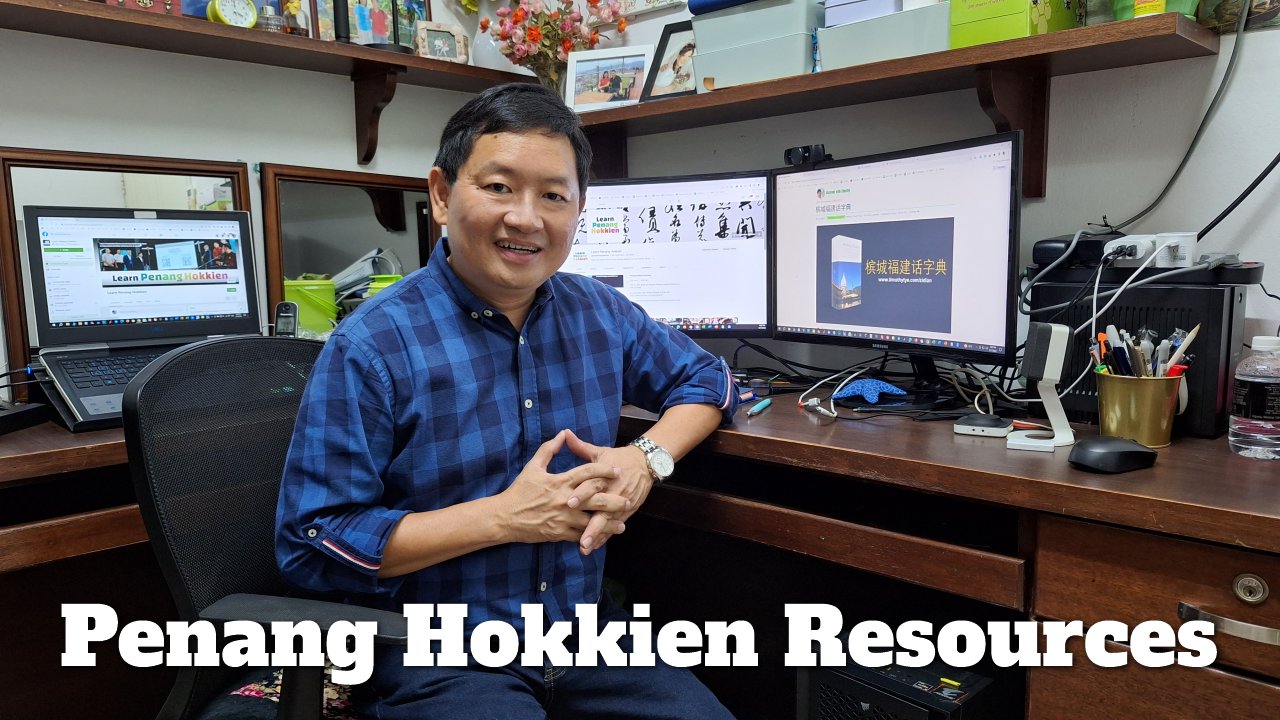
Penang Hokkien Resources is one of the most comprehensive compilation of material about Penang Hokkien on the Internet. This section of Penang Travel Tips was created in order to preserve and develop the language used by the Chinese in Penang, to ensure its relevancy in the 21st century.
As part of the modernisation effort on Penang Hokkien, a new writing system called Taiji Romanisation was introduced in 2013 to make it easy for the language to be written and used on standard keyboards and keypads.
Penang Hokkien Dictionary
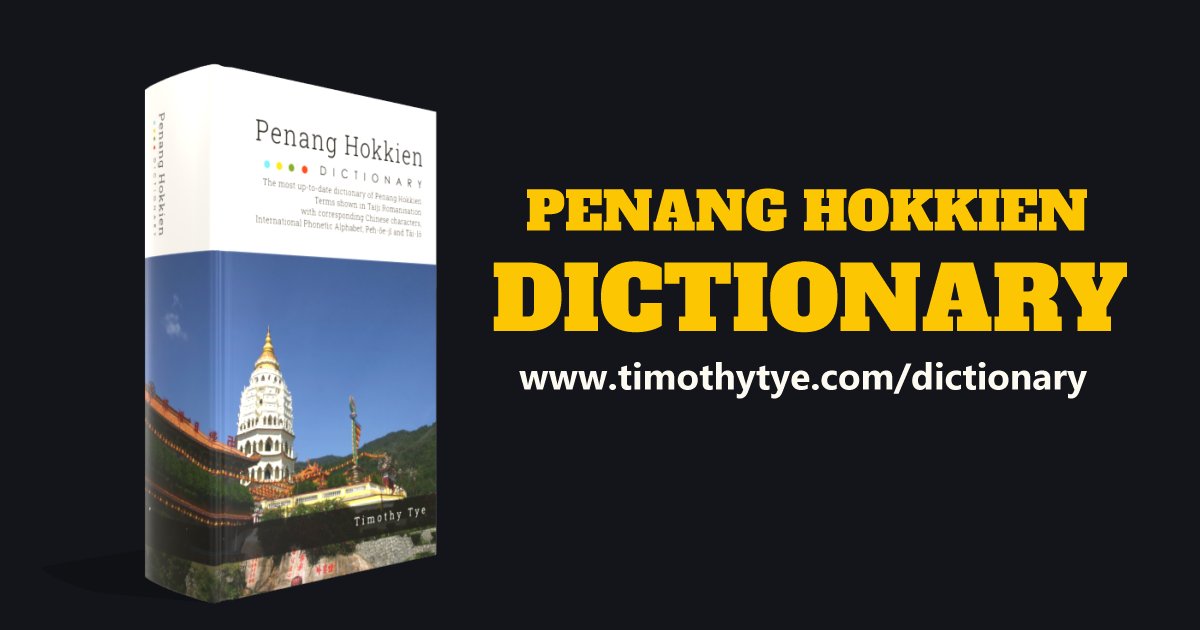
The Penang Hokkien Dictionary is an online dictionary listing all the words in common use in the language. Make use of this dictionary whenever you want to look up words.
Learn Penang Hokkien Facebook Group
Join the Learn Penang Hokkien Facebook Group to interact with Penang Hokkien speakers from all over the world.Launch of the Penang Hokkien Dictionary and YouTube Channel
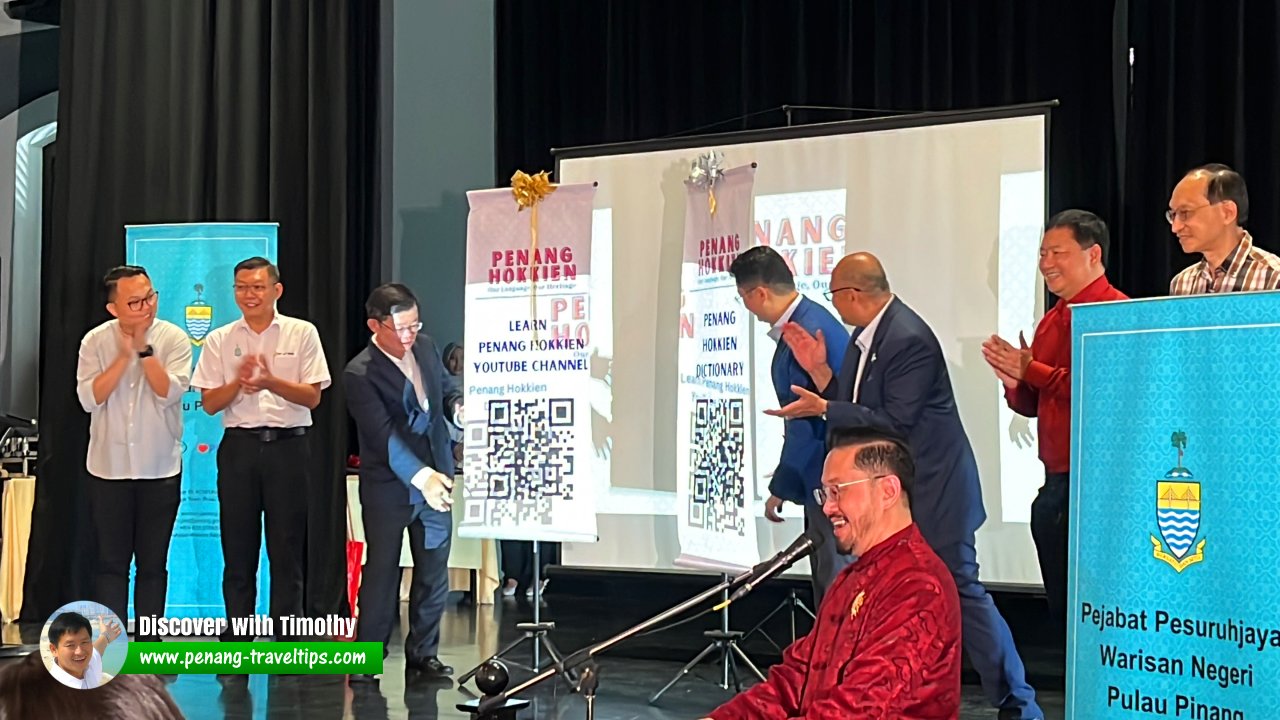
Launch of Penang Hokkien Dictionary and Learn Penang Hokkien YouTube Channel
The Penang Hokkien Dictionary and Learn Penang Hokkien YouTube Channel were officially launched by the Penang Chief Minister YAB Chow Kon Yeow at a ceremony at the Penang Town Hall on Wednesday, 5th July 2023.
Penang Hokkien Vocabulary
- Ailments & Treatments in Penang Hokkien
- Anatomy in Penang Hokkien
- Animals in Penang Hokkien
- Bible Vocabulary in Penang Hokkien
- Buildings in Penang Hokkien
- Christianity-related words in Penang Hokkien
- Cities in Penang Hokkien
- Colours in Penang Hokkien
- Common Chinese Surnames
- Cooking Terms in Penang Hokkien
- Countries in Penang Hokkien
- Crazy in Penang Hokkien
- Cuts of Pork in Penang Hokkien
- Durian terms in Penang Hokkien
- Dim Sum dishes in Penang Hokkien
- Emotional States in Penang Hokkien
- English Loanwords in Penang Hokkien
- English Loanwords via Malay in Penang Hokkien
- Entertainment Terms in Penang Hokkien
- Family Members in Penang Hokkien
- Festivals in Penang Hokkien
- Financial Terms in Penang Hokkien
- Flowers in Penang Hokkien
- Food in Penang Hokkien
- Fruits in Penang Hokkien
- Funeral Terms in Penang Hokkien
- Grammatical Terms in Penang Hokkien
- Groceries in Penang Hokkien
- Herbs and Spices in Penang Hokkien
- Idioms in Penang Hokkien
- Job Terms in Penang Hokkien
- Jokes in Penang Hokkien
- Local Dishes in Penang Hokkien
- Mammals in Penang Hokkien
- Metals in Penang Hokkien
- Occupations in Penang Hokkien
- Parts of the House in Penang Hokkien
- Penang Place Names in Penang Hokkien
- Penang Street Names in Penang Hokkien
- Places in Penang in Penang Hokkien
- Places in China
- Plants in Penang Hokkien
- Phrases for Doctors
- Printed Matter in Penang Hokkien
- Reptiles in Penang Hokkien
- Rhyming Couplets in Penang Hokkien
- Speaking with Numbers in Penang Hokkien
- Songs in Penang Hokkien
- Streets in Penang Hokkien
- Street Names in Penang Hokkien
- Tableware in Penang Hokkien
- Things in Penang Hokkien
- Things around the House in Penang Hokkien
- Things in the Bathroom in Penang Hokkien
- Things in the Bedroom in Penang Hokkien
- Things in the Classroom in Penang Hokkien
- Things in the Kitchen in Penang Hokkien
- Things People Wear in Penang Hokkien
- Throwing Water in Penang Hokkien
- Tongue Twisters in Penang Hokkien
- Trees in Penang Hokkien
- Vegetables in Penang Hokkien
- Water-related Terms in Penang Hokkien
- Wedding in Penang Hokkien
Penang Hokkien Story Writing Competition
The Penang Hokkien Story Writing Competition is an annual competition created to promote literacy in writing Penang Hokkien using Taiji Romanisation. The competition started in 2021. The following are the five winning entries for the 2021 competition.- 1st Prize: Which is more valuable, dead or alive? (Si4 kha1 tat1, a33si33 uak1 kha1 tat1) by Teoh Gaik Hong
- 2nd Prize: Grandma's Conversation with Granddaughter (Ah3 Ma4 ka1 Soon1 Kong1wa33) by Lee Say Lor
- 3nd Prize: My Story (Wah1-eh3 Kor1su33) by Stephanie Chee
- 4th Prize: The Story of Young Ah Hua (Ah3 Hua1 Se1han3-eh3 Kor1su33) by Julie Ang
- 5th Prize: Stories from my Mother-in-law (Wah1-eh3 Niau2-eh3 Kor1su33) by Ong May Wah
Penang Hokkien Videos
The following are some of the videos from our YouTube Channel.- Converting from POJ to Taiji Romanisation for Penang Hokkien
- Is Penang Hokkien proper Hokkien?
- Penang Hokkien before Penang (was established)
- History of Illiteracy in Penang Hokkien
- Let's Learn Penang Hokkien
- My Penang Hokkien Journey
- Giving Penang Hokkien A Modern Writing System
- Diglossia in Penang Hokkien
- For the love for Penang Hokkien
- Walter H Medhurst Dictionary: Insight into Hokkien in the 19th Century
- The Mission for Penang Hokkien
- Penang Hokkien: History of a Forgotten People
- History of Penang Hokkien
- History of Writing Penang Hokkien
Bahasa Hokkien Pulau Pinang
Learn Penang Hokkien on Bilibili
- 槟城福建话(闽南语)发音教学: 槟城福建话,又称庇能福建话(Penang Hokkien)是马来西亚闽南语的一种,视频中用到的拼音方案是作者本人发明且常年使用的。
Talk Like Us YouTube Videos
"Talk Like Us" is a series of videos on the Learn Penang Hokkien channel to teach learners simple phrases for use in the language.Penang Hokkien on Memrise
Launch of the Penang Hokkien Dictionary and YouTube Channel
Learn Penang Hokkien using Memrise
Memrise is a free step-by-step audio guide for learning Penang Hokkien.
Articles related to the history of Penang Hokkien
This list of articles provide you an insight into the history and background of Penang Hokkien.- Arrivals of the Chinese in the Malay Peninsula
- Evolution of Chinese Languages in Penang
- History of a forgotten people
- The Mission for Penang Hokkien
- Understanding the History of Penang Hokkien
- Walter H. Medhurst Dictionary: An Insight into Hokkien in the 19th Century
- Why are there various dialects in Hokkien
Material on Penang Hokkien
The following material is created to provide with material covering a broad aspect of the language.- Get to know the new Penang Hokkien writing system: Introduction to Taiji Romanisation.
- Penang Hokkien Grammar Lessons: Main list of lessons covering all aspects of Penang Hokkien language.
- Penang Hokkien for Beginners: A series of lessons to help people learn Penang Hokkien from scratch.
- Learn to Speak Penang Hokkien: Lessons to communicate orally through gaining familiarity with sentence structures in the language.
- Penang Hokkien Reading Material: Reading material for learners to familiarize themselves to written and spoken Penang Hokkien.
- Penang Hokkien Vocabulary: Lists of words under various major categories.
- Penang Hokkien for Native Speakers: Lessons geared to those speak Penang Hokkien, who want to learn to write using the Taiji Romanisation.
- Belajar Hokkien Penang: Belajar bertutur, membaca dan menulis dalam Bahasa Hokkien Penang.
- Videos in Hokkien Penang: A miscellaneous collection of videos we made in Penang Hokkien.
- Penang Hokkien Nursery Rhymes: Collection of songs, nursery rhymes and ditties in Penang Hokkien.
- Penang Hokkien Culture & History: Understand the history of Penang Hokkien and the people who speak it.
- Resources on Hokkien: List of web resources on Hokkien.
- Issues: Issues related to/affecting Penang Hokkien.
Videos of Penang Hokkien Authors
 Penang Hokkien Vocabulary Videos

Buy Me A Coffee
If you enjoy the information I provide and want to support the work I do, please buy me a coffee! I appreciate it immensely, thank you so much!

 Backtrack | HOME | Latest Updates |
Copyright © 2003-2026 Timothy Tye. All Rights Reserved.