
Thailand Travel Guide
 Go Back
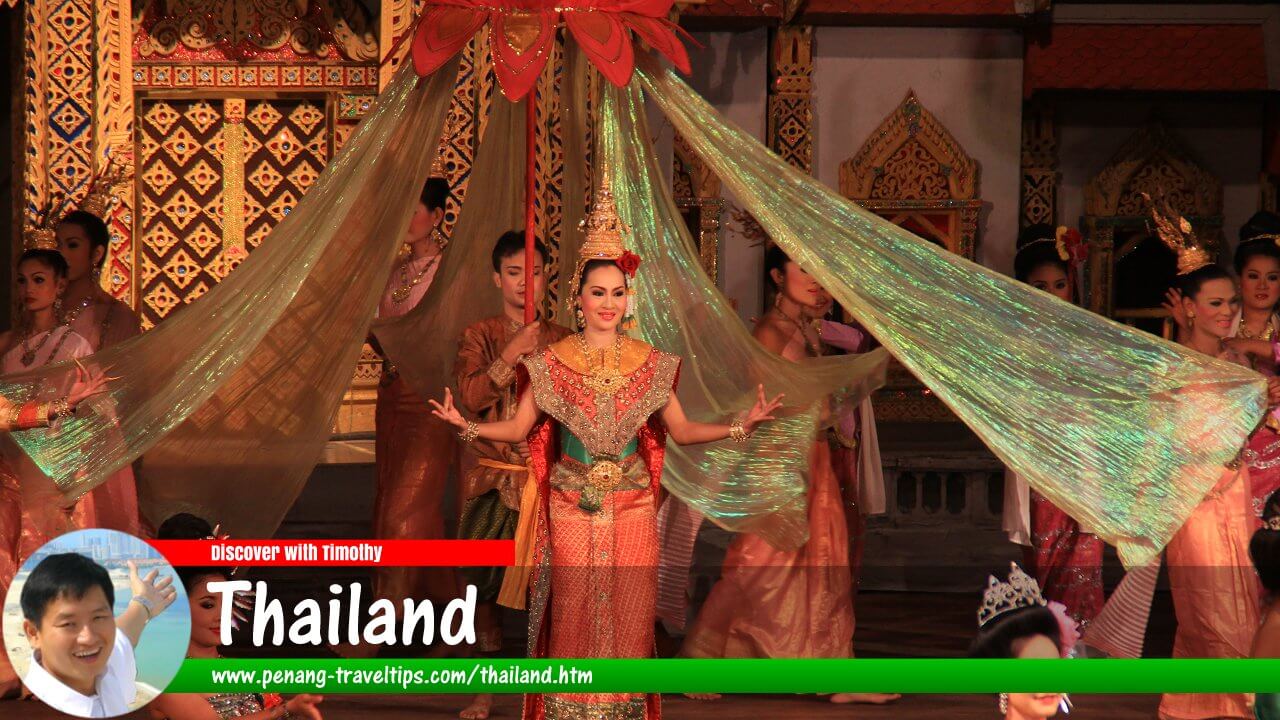 Thailand Travel Guide (5 February 2012)
Also available: Panduan Melawat Thailand
Thailand or Prathet Thai (ประเทศไทย  ) is a country in mainland Southeast Asia, occupying a strategic position between the Indochinese Peninsula and the Malay Peninsula. It borders Myanmar to the west and northwest, Laos to the north and northeast, Cambodia to the southeast, and Malaysia to the south. It also has extensive coastlines along the Andaman Sea and the Gulf of Thailand.
Thailand is one of Southeast Asia's most established travel destinations, offering an unusually wide range of experiences within a single country. Visitors can explore a modern Asian capital, ancient cities and archaeological sites, Buddhist temples, mountain landscapes, tropical islands, beaches, national parks, floating markets and distinctive regional cultures.
For travellers from Malaysia, Thailand is particularly accessible. It can be reached by air from several Malaysian cities, while southern Thailand is also accessible by road and rail. The shared border, longstanding historical connections and geographical proximity have made Thailand one of the most popular overseas destinations for Malaysians.
Thailand at a Glance
Official name: Kingdom of Thailand
Capital: Bangkok
Official language: Thai
Currency: Thai baht (THB)
Area: About 513,120 square kilometres
Population: About 70 million
Time zone: UTC+7
Neighbouring countries: Myanmar, Laos, Cambodia and Malaysia
Major seas: Andaman Sea and Gulf of Thailand
Where Is Thailand?
Thailand lies at the centre of mainland Southeast Asia. Its geographical position has historically made it an important crossroads between the Indian subcontinent, China and the various cultures of Southeast Asia.
The northern part of the country extends into the mountains bordering Myanmar and Laos. The central region contains the fertile Chao Phraya River basin, while the northeast forms the broad Khorat Plateau. In the south, Thailand narrows into a long peninsula extending towards Malaysia.
This geographical variety is one of the reasons Thailand offers such different travel experiences. A journey through the country can take a visitor from cool mountain regions in the north to tropical islands in the south.
Thailand's Capital
Bangkok is the capital and largest city of Thailand. It is the country's principal political, economic, commercial and transportation centre and is also the main gateway for many international visitors.
Bangkok combines modern skyscrapers, shopping centres and mass transit systems with historic temples, royal buildings, traditional markets and neighbourhoods that have existed for generations.
Among its best-known attractions are the Grand Palace, Wat Phra Kaew, Wat Arun, Wat Pho, Chinatown and the Chao Phraya River. The city is also famous for its street food, shopping and vibrant nightlife.
Geography of Thailand
Thailand can broadly be divided into several geographical regions, each with its own landscape and character. These include the mountainous north, the central plains, the northeast, the eastern region, the western borderlands and the southern peninsula.
The central plains are particularly important because the Chao Phraya River and its tributaries create fertile agricultural land. Rice cultivation has traditionally been one of the foundations of the region's economy.
The mountains of northern and western Thailand contain extensive forests and numerous national parks. The northeast is generally drier and has a distinctive landscape associated with the Khorat Plateau.
Southern Thailand is markedly different, with a narrow peninsula surrounded by sea. It contains some of the country's most famous beaches and islands.
The Chao Phraya River
The Chao Phraya River is one of Thailand's most important geographical features. It flows through the central plains and continues through Bangkok before reaching the Gulf of Thailand.
The river has played an important role in the development of agriculture, commerce and settlements. Bangkok itself developed around the river and its network of canals.
Today, the Chao Phraya remains an important part of Bangkok's transport system and is also a major attraction for visitors. River cruises and public boats provide an alternative way to see some of the city's most important landmarks.
The Mekong River
The Mekong River forms part of Thailand's border with Laos. It is one of the great rivers of Southeast Asia and has long been important to the communities living along its banks.
Several Thai towns and cities are located along or near the Mekong, including Nong Khai, Mukdahan and Chiang Khan. These places offer a different perspective on Thailand from the better-known tourist centres of Bangkok and the southern beaches.
Mountains and the Highest Point
Much of northern Thailand is mountainous. The country's highest point is Doi Inthanon, which rises to about 2,565 metres above sea level in Chiang Mai Province.
Doi Inthanon is within Doi Inthanon National Park and is known for its forests, waterfalls, mountain scenery and cooler temperatures. The area can be considerably colder than Bangkok and southern Thailand, particularly during the cool season.
The Southern Peninsula
Southern Thailand extends down the Malay Peninsula between the Andaman Sea and the Gulf of Thailand. This region is responsible for much of Thailand's international reputation as a beach and island destination.
The Andaman coast includes Phuket, Phang Nga, Krabi and numerous islands famous for limestone cliffs, clear waters and beaches. The Gulf coast includes destinations such as Koh Samui, Koh Phangan and Koh Tao.
The two coasts do not always experience their wet seasons at exactly the same time. Travellers planning a beach holiday should therefore consider the specific destination and season rather than treating the whole of southern Thailand as having identical weather.
Thailand's Islands
Thailand has hundreds of islands, ranging from heavily developed tourist destinations to relatively quiet islands with small communities and natural beaches.
Phuket is the country's largest and most developed island and has an extensive tourism infrastructure. Koh Samui is another major island destination, while Koh Phangan is known internationally for its Full Moon Party and tropical scenery.
Koh Tao is particularly associated with diving and snorkelling. In the Andaman Sea, islands such as Koh Lipe and the islands around Krabi and Phang Nga offer further choices for travellers seeking beaches and marine activities.
Climate of Thailand
Thailand has a predominantly tropical climate, although temperatures and rainfall vary considerably between regions.
The country is commonly described as having a hot season, a rainy season and a cooler season. These divisions are useful as a general guide, but actual conditions vary according to location.
Northern Thailand experiences a more noticeable cooler period, while southern Thailand remains warm throughout the year. The timing and intensity of rainfall also differ between the Andaman coast and the Gulf coast.
For travellers, this means that there is no single month that can be described as the universally best time to visit every part of Thailand. The most suitable period depends on where the traveller intends to go and what activities are planned.
People and Culture
Thailand has a population of around 70 million people and is culturally diverse. The majority of the population is Thai, but the country's history has also been shaped by Chinese, Mon, Khmer, Malay and other communities.
Thai culture is strongly influenced by Theravada Buddhism. Temples, Buddhist images, religious festivals and traditional ceremonies form an important part of everyday cultural life.
At the same time, Thailand is not culturally uniform. The northern region has a strong Lanna heritage, the northeast has its distinctive Isan culture, and the south has substantial Malay and Muslim cultural influences.
Religion in Thailand
Buddhism is the predominant religion in Thailand. Buddhist temples, known as wat, are found throughout the country and range from small village temples to major historical monuments.
Thailand also has significant Muslim communities, particularly in the southern provinces bordering Malaysia. Muslim communities are also found in Bangkok, Chiang Mai, Phuket and other parts of the country.
Christian, Hindu, Sikh and Chinese religious traditions are also represented. This diversity is particularly visible in Thailand's larger cities.
Language
Thai is the official language of Thailand and uses its own distinctive script.
English is widely encountered in major tourist destinations, hotels, airports and businesses that serve international visitors. However, English is less commonly spoken in some rural areas.
Visitors travelling beyond the major tourist centres may find it useful to learn a few basic Thai expressions. Even simple greetings and polite phrases can make everyday interactions easier.
Thai Food
Thai cuisine is one of the country's most important cultural exports and is enjoyed throughout the world.
Regional cuisines differ considerably. Central Thai food is represented by dishes commonly associated with Bangkok, while northern cuisine has strong Lanna influences. Northeastern or Isan cuisine is known for dishes such as som tam and sticky rice, while southern Thai food is often characterised by stronger spices and distinctive curries.
Street food is an important part of the Thai dining experience. Visitors can find everything from noodles and rice dishes to grilled meats, seafood, desserts and fresh fruit.
Thailand's food culture is particularly varied, and travellers should not assume that every dish served in a Thai restaurant outside Thailand represents the food found throughout the country.
History of Thailand
The territory of present-day Thailand has been inhabited for thousands of years. Archaeological discoveries provide evidence of prehistoric communities engaged in agriculture, metalworking and trade.
One of the country's most important prehistoric archaeological sites is Ban Chiang in northeastern Thailand. The site provides evidence of an ancient settlement and has been recognised as a UNESCO World Heritage Site.
Before the emergence of Thai kingdoms, different parts of present-day Thailand were influenced by several early cultures and states, including the Mon Dvaravati civilisation and the Khmer Empire.
The Sukhothai Kingdom
The Sukhothai Kingdom emerged in the 13th century and is traditionally regarded as one of the earliest major Thai kingdoms.
Sukhothai became an important centre of political power, religion and culture. Its history is closely associated with King Ramkhamhaeng and the development of early Thai writing and artistic traditions.
The ruins of Sukhothai are now among Thailand's most important historical attractions and form part of the UNESCO-listed Historic Town of Sukhothai and Associated Historic Towns.
The Ayutthaya Kingdom
The Ayutthaya Kingdom was founded in 1350 and eventually became one of the most powerful states in Southeast Asia.
Ayutthaya developed into an important international trading centre. Merchants and diplomats from China, Japan, India, Persia and European countries visited the kingdom, giving its capital a remarkably cosmopolitan character.
Ayutthaya was destroyed in 1767 following an invasion by Burmese forces. The ruins of the former capital remain one of Thailand's most important historical attractions and are recognised as a UNESCO World Heritage Site.
From Thonburi to Bangkok
Following the destruction of Ayutthaya, King Taksin established a new capital at Thonburi, on the western bank of the Chao Phraya River.
In 1782, King Rama I established the Chakri Dynasty and moved the capital to the eastern bank of the river. The new capital developed into modern Bangkok.
The city subsequently expanded from a royal and river-based settlement into the enormous metropolis that exists today.
Thailand and European Colonialism
During the 19th century, European colonial powers expanded their territories throughout Southeast Asia. British control extended across Burma and Malaya, while French Indochina included present-day Laos, Cambodia and Vietnam.
Thailand, then known internationally as Siam, maintained its independence through a combination of diplomacy, military reform, modernisation and territorial concessions.
Siam lost control of several territories during this period, but unlike its neighbouring countries, it was not formally incorporated into a European colonial empire.
From Absolute to Constitutional Monarchy
Thailand underwent a major political transformation in 1932, when a revolution ended absolute monarchy and established a constitutional system.
The country subsequently experienced periods of military and civilian government, political changes and several constitutional revisions.
Despite these political changes, the monarchy has remained an important institution in Thai society.
Thailand Today
Modern Thailand has a diversified economy based on manufacturing, services, agriculture, trade and tourism. Bangkok is the country's principal economic centre, while other cities serve as regional centres for commerce, education and industry.
Tourism remains one of Thailand's most internationally visible industries. Millions of visitors come each year to experience its cities, historical sites, beaches, islands, food and cultural attractions.
Thailand as a Travel Destination
Thailand's greatest strength as a destination is its variety. A traveller can combine an urban holiday in Bangkok with ancient ruins in Ayutthaya, mountain scenery in Chiang Mai and a beach holiday in southern Thailand.
The country also caters to a wide range of budgets. Backpackers can find inexpensive accommodation and food, while luxury resorts, international hotels and high-end restaurants provide options for travellers seeking a more comfortable experience.
Thailand's mature tourism industry also means that visitors can generally find extensive choices for accommodation, transportation, restaurants, tours and activities.
Why Malaysians Visit Thailand
Thailand is especially attractive to Malaysians because of its proximity and accessibility. Travellers from northern Malaysia can reach southern Thailand by road or rail, while direct flights connect major Malaysian cities with Bangkok, Phuket, Chiang Mai and other Thai destinations.
The cultural familiarity of Southeast Asia is another advantage. Malaysian travellers are already accustomed to tropical weather, Asian food, Buddhist and Islamic cultural influences and many of the social customs encountered in Thailand.
For Malaysians, Thailand can therefore be suitable for anything from a short weekend trip across the border to a longer multi-city holiday covering several regions of the country.
The following parts of this Thailand Travel Guide will examine the country's major destinations, transportation, accommodation, food, attractions and practical travel considerations in greater detail.
Major Cities and Tourist Destinations in Thailand
Thailand has a remarkable variety of destinations, ranging from a huge modern capital to ancient royal cities, mountain towns, beach resorts and small islands. The best destination depends largely on what the traveller wants to experience.
For a first visit, Bangkok is usually the most convenient starting point. Travellers with more time can then add destinations in the north, central Thailand or the south. Because the country is large, it is generally better to concentrate on one or two regions rather than attempting to cover the entire country in a single trip.
Bangkok
Bangkok is Thailand's capital, largest city and principal international gateway. It is also the country's most important destination for first-time visitors.
The city combines royal palaces, historic temples, traditional markets and old neighbourhoods with skyscrapers, shopping malls, modern rail systems and a sophisticated hospitality industry.
Major attractions include the Grand Palace, Wat Phra Kaew, Wat Pho, Wat Arun, Chinatown, Chatuchak Weekend Market and the Chao Phraya River.
Bangkok is also an important food destination. Visitors can experience everything from street food and traditional Thai restaurants to international cuisine and fine dining.
Ayutthaya
Ayutthaya was the capital of the Ayutthaya Kingdom from the 14th century until its destruction in 1767. Its archaeological remains provide an impressive glimpse into one of Southeast Asia's most powerful historical kingdoms.
The Historic City of Ayutthaya is a UNESCO World Heritage Site. Its ruins include temple complexes, Buddha images, stupas and remnants of the former royal city.
Ayutthaya is particularly convenient for visitors from Bangkok because it can be reached relatively easily by road or rail. It is therefore popular as a day trip, although staying overnight allows visitors to experience the historical area at a more leisurely pace.
Sukhothai
Sukhothai is associated with one of the earliest major Thai kingdoms. The ancient city is known for its impressive temples, Buddha images, monuments and large archaeological park.
The Historic Town of Sukhothai and Associated Historic Towns is a UNESCO World Heritage Site.
Compared with Ayutthaya, Sukhothai is less urbanised and offers a more spacious archaeological landscape. Visitors can explore the ruins by bicycle, electric vehicle or on foot.
Chiang Mai
Chiang Mai is the largest city in northern Thailand and the historic centre of the Lanna cultural region.
The old city is surrounded in places by remnants of its historic moat and walls and contains numerous Buddhist temples. Among the best known are Wat Phra Singh and Wat Chedi Luang.
Chiang Mai is also a gateway to northern Thailand's mountains, national parks, waterfalls, villages and cultural attractions.
The city has a large selection of hotels, restaurants, cafés, markets and handicraft shops, making it suitable for both short visits and longer stays.
Chiang Rai
Chiang Rai lies in northern Thailand near the borders with Myanmar and Laos. It is best known for its distinctive contemporary Buddhist temples and its location within the mountainous landscapes of the far north.
The White Temple, officially known as Wat Rong Khun, is one of the most recognisable attractions in the region. Other notable attractions include the Blue Temple and Wat Huay Pla Kang.
Chiang Rai is also a base for exploring the Golden Triangle and the surrounding mountain areas.
Pattaya
Pattaya is a major seaside resort on the Gulf of Thailand, located relatively close to Bangkok.
The city developed rapidly as an international tourist destination and now has a wide range of hotels, restaurants, shopping centres and entertainment facilities.
Pattaya is particularly convenient for travellers who want to combine a beach holiday with easy access to Bangkok. Nearby islands, including Koh Larn, provide additional opportunities for swimming and water activities.
Hua Hin
Hua Hin is a coastal resort town on the Gulf of Thailand. It has a long association with the Thai royal family and developed as one of Thailand's earliest major beach resorts.
Hua Hin is known for its beaches, seafood, night markets, golf courses and relaxed atmosphere. It is particularly popular with domestic tourists and families.
Its relatively easy road connection from Bangkok makes it suitable for a short holiday or weekend escape from the capital.
Kanchanaburi
Kanchanaburi is located west of Bangkok near the border with Myanmar. It is best known internationally for its connection with the history of the Second World War.
The Bridge on the River Kwai, associated with the Burma-Siam Railway, is the most famous historical attraction in the area. Museums and war cemeteries provide additional context about the thousands of prisoners of war and Asian labourers who suffered during the railway's construction.
Kanchanaburi is not solely a historical destination. The province also contains forests, rivers, waterfalls, caves and national parks, making it suitable for visitors interested in nature and outdoor activities.
Phuket
Phuket is Thailand's largest island and one of the country's most developed international resort destinations.
The island has a wide range of beaches, hotels, restaurants, shopping facilities and entertainment. The western coast contains many of the best-known beach resorts, while Phuket Old Town provides a contrasting experience with its historic Sino-Portuguese architecture.
Phuket also serves as a gateway to numerous islands and marine destinations in the Andaman Sea.
Because Phuket has a major international airport, it is possible to visit the island without passing through Bangkok.
Krabi
Krabi is one of Thailand's best-known destinations for dramatic coastal scenery. The province is characterised by limestone cliffs, beaches, islands and turquoise waters.
Ao Nang is the principal tourist centre and a convenient base for boat trips to nearby islands and beaches.
The nearby Railay peninsula is particularly famous for its limestone cliffs and rock-climbing opportunities. Although accessible only by boat from the mainland in the conventional tourist route, Railay is one of the most recognisable landscapes in southern Thailand.
Phang Nga
Phang Nga lies between Phuket and mainland southern Thailand. It is known for its spectacular limestone formations rising from the sea.
Phang Nga Bay is one of the region's best-known attractions. Boat trips allow visitors to explore the bay's islands, cliffs, caves and mangrove environments.
One of the most famous landmarks is James Bond Island, named after its appearance in the 1974 film The Man with the Golden Gun.
Koh Samui
Koh Samui is a large island in the Gulf of Thailand and one of the country's major resort destinations.
The island offers beaches, resorts, restaurants, spas and water activities. It also provides access to the nearby Ang Thong National Marine Park.
Koh Samui has its own airport and can therefore be reached conveniently by air. It is particularly suitable for travellers seeking a tropical island holiday with a developed tourism infrastructure.
Koh Phangan
Koh Phangan is located near Koh Samui and is internationally famous for its Full Moon Party, held at Haad Rin.
Beyond the party scene, the island has quieter beaches, forested hills, waterfalls and resorts catering to travellers seeking a more peaceful experience.
Visitors can combine Koh Phangan with Koh Samui and Koh Tao as part of a Gulf of Thailand island itinerary.
Koh Tao
Koh Tao is a small island in the Gulf of Thailand that has become particularly famous for scuba diving and snorkelling.
Its relatively accessible diving sites and large number of dive schools have made it one of the world's best-known destinations for learning to dive.
The island also has beaches and viewpoints for visitors who are not interested in diving.
Koh Lipe
Koh Lipe is a small island in the Andaman Sea near the Malaysian border. It forms part of Tarutao National Marine Park.
The island is known for its clear water, coral reefs and beaches and is particularly attractive to visitors interested in snorkelling and island scenery.
Its location makes Koh Lipe especially interesting for Malaysian travellers, as it is geographically close to northern Malaysia.
Hat Yai
Hat Yai is the largest city in southern Thailand and an important commercial and transportation centre near the Malaysian border.
The city is particularly popular with Malaysian visitors from Kedah, Perlis, Penang and neighbouring states. Many Malaysians visit Hat Yai for shopping, food, accommodation and short holidays.
Hat Yai is also an important gateway to other parts of southern Thailand and has good road, rail and air connections.
Songkhla
Songkhla is a historic coastal city near Hat Yai. Unlike Hat Yai, which is primarily a commercial centre, Songkhla has a more traditional character and a rich multicultural history.
The old town contains historic buildings influenced by Thai, Chinese and Malay cultures. The city also has beaches and a distinctive waterfront setting.
Songkhla can be visited together with Hat Yai and is particularly suitable for travellers interested in history, local culture and food.
Pattani, Yala and Narathiwat
The southernmost provinces of Pattani, Yala and Narathiwat have a distinctive Malay-Muslim cultural heritage and a history closely connected with the northern Malay world.
These provinces contain historic mosques, traditional communities and cultural sites that differ significantly from the Buddhist-majority areas farther north.
However, parts of the deep south have experienced prolonged security problems. Travellers should therefore check current travel advisories and local conditions before planning a visit to these provinces.
Isan: Northeastern Thailand
Isan is the common name for northeastern Thailand. It is the country's largest geographical region and has a distinctive culture, cuisine and history.
The region has strong historical and cultural connections with Laos. Lao-related languages and traditions remain influential, although the region is politically and administratively part of Thailand.
Major cities include Nakhon Ratchasima, Khon Kaen, Udon Thani and Ubon Ratchathani.
Nakhon Ratchasima
Nakhon Ratchasima, often called Korat, is the largest urban centre of northeastern Thailand.
The city is an important gateway to the Isan region and to attractions such as Khao Yai National Park and the Khmer temple complex of Phimai.
For travellers interested in exploring Thailand beyond the standard tourist circuit, Korat provides a useful starting point for northeastern Thailand.
Khon Kaen
Khon Kaen is an important educational, commercial and transportation centre in Isan.
The city is less dependent on international tourism than Bangkok or Phuket, making it a useful destination for visitors interested in experiencing modern northeastern Thai life.
Khon Kaen can also serve as a base for exploring surrounding archaeological, cultural and natural attractions.
Udon Thani
Udon Thani is a major city in northeastern Thailand and an important transportation centre near the Lao border.
One of the region's most significant archaeological sites, Ban Chiang, is located in Udon Thani Province. The site is recognised by UNESCO for its importance in understanding prehistoric Southeast Asia.
Khao Yai National Park
Khao Yai National Park is one of Thailand's most important protected areas and forms part of the Dong Phayayen-Khao Yai Forest Complex, a UNESCO World Heritage Site.
The park contains forests, waterfalls, grasslands and a wide variety of wildlife. It is within relatively easy reach of Bangkok compared with many of Thailand's other major national parks.
Khao Yai is suitable for travellers who want to combine a visit to Bangkok with hiking, wildlife viewing and nature.
Thailand's National Parks
Thailand has an extensive network of national parks protecting forests, mountains, islands, coral reefs and other natural environments.
Some parks are primarily terrestrial, while others protect marine environments. Popular examples include Doi Inthanon National Park, Khao Yai National Park, Ao Phang-nga National Park and Mu Ko Similan National Park.
Conditions, opening dates and access restrictions can vary according to weather and conservation requirements. Visitors should check current information before travelling to a national park.
Choosing Where to Go in Thailand
Travellers can choose destinations according to the type of holiday they want.
History and heritage: Ayutthaya, Sukhothai, Chiang Mai and Bangkok.
City life and shopping: Bangkok, Pattaya and Chiang Mai.
Mountains and nature: Chiang Mai, Chiang Rai, Doi Inthanon and Khao Yai.
Beaches and islands: Phuket, Krabi, Koh Samui, Koh Phangan, Koh Tao and Koh Lipe.
Food and local culture: Bangkok, Chiang Mai, Hat Yai, Songkhla and Isan.
Short trip from Malaysia: Hat Yai, Songkhla and southern Thailand.
Thailand's geographical diversity means that travellers do not necessarily need to visit the country's most famous destinations to have a rewarding trip. Some of the smaller cities and less visited regions can provide a more authentic experience of local life.
For a first visit, however, Bangkok remains the most practical starting point, while Ayutthaya, Chiang Mai, Phuket and Krabi are among the destinations that can be added depending on the length and purpose of the trip.
Getting to Thailand
Thailand is one of the easiest international destinations to reach from Malaysia. Travellers can enter the country by air, road, rail or, in some cases, by sea. The most suitable option depends on the traveller's starting point, destination and length of stay.
For Malaysians travelling to Bangkok or northern Thailand, flying is generally the fastest option. For those living in northern Malaysia, travelling overland into southern Thailand can be particularly convenient.
Travelling to Thailand by Air
Thailand has several international airports serving different parts of the country. The main gateway is Suvarnabhumi Airport in Bangkok, while Don Mueang International Airport also handles a large number of international and domestic flights.
Travellers flying directly to holiday destinations may be able to bypass Bangkok. Phuket International Airport, Chiang Mai International Airport, Krabi International Airport and Samui International Airport serve some of Thailand's major tourist regions.
Flights from Malaysia to Thailand
Direct flights connect Malaysia with several Thai cities. Kuala Lumpur has the greatest choice of services, while Penang and other Malaysian airports also have international connections to Thailand depending on the current airline schedules.
The main international destinations for Malaysian travellers include Bangkok, Phuket, Chiang Mai, Krabi and Hat Yai.
Flight schedules change from time to time as airlines adjust routes and frequencies. Travellers should therefore check the current schedules before planning an itinerary around a particular flight.
Flying from Kuala Lumpur
Kuala Lumpur is the main Malaysian gateway to Thailand and offers the widest choice of flights.
Direct flights from Kuala Lumpur to Bangkok are frequent, and there are also services to several other Thai destinations. This makes Kuala Lumpur particularly convenient for travellers who intend to continue by domestic flight to another part of Thailand.
The flight from Kuala Lumpur to Bangkok is relatively short, making Bangkok suitable for a long weekend or short city break as well as a longer holiday.
Flying from Penang
For travellers from Penang, flying can be considerably more convenient than travelling overland, especially when visiting Bangkok or destinations farther south.
The Penang International Airport has international services to Thailand, although routes and frequencies can vary. Travellers should check the current flight schedule when planning their journey.
Bangkok and southern Thai destinations can also be reached through connecting flights when a direct service is unavailable or does not fit the desired schedule.
Flying from Other Malaysian Cities
Travellers from Johor Bahru, Kota Bharu, Langkawi, Kota Kinabalu and other Malaysian cities may also find direct or connecting services to Thailand, depending on the current airline network.
For residents of northern Malaysia, however, overland travel can sometimes be more convenient when the destination is in southern Thailand.
Entering Thailand by Road
Thailand shares a land border with Malaysia, making it possible to travel between the two countries by car, bus, taxi or other road transport.
The principal international crossings are located between the Malaysian states of Kedah, Perlis, Kelantan and Perak and the southern Thai provinces.
Among the best-known crossings are Padang Besar, Wang Kelian, Bukit Kayu Hitam and Rantau Panjang.
Padang Besar Border
Padang Besar is an important Malaysia-Thailand border crossing in Perlis and is also connected by rail.
The Thai town on the other side of the border is also called Padang Besar. From there, travellers can continue by rail or road towards Hat Yai and other destinations in southern Thailand.
The border is particularly useful for travellers who want to combine a Malaysian rail journey with a visit to southern Thailand.
Bukit Kayu Hitam Border
The Bukit Kayu Hitam–Sadao crossing is one of the busiest land borders between Malaysia and Thailand.
It is particularly important for road travellers heading towards Hat Yai and other destinations in southern Thailand. The crossing is convenient for Malaysians travelling by private car, tour bus or other road transport.
Because it is a major commercial and tourist gateway, queues can become substantial during weekends, public holidays and festive periods.
Rantau Panjang Border
The Rantau Panjang–Sungai Kolok crossing connects Kelantan with Narathiwat Province in southern Thailand.
This route provides access to the southernmost part of Thailand and is of particular interest to travellers exploring the Malay-Muslim cultural region.
Travellers should check current security conditions and official travel advisories before planning travel in the deep south.
Travelling to Thailand by Train
Rail travel is another way to enter Thailand from Malaysia. The international rail connection between Malaysia and Thailand makes it possible to travel northwards through the border region towards Hat Yai.
One of the most useful routes for Malaysian travellers is the journey via Padang Besar. Malaysian railway services connect to the border, where passengers can continue into Thailand using the Thai railway network.
Thailand's railway system also provides long-distance services from Bangkok to various parts of the country. Train travel can therefore form part of a longer overland itinerary rather than simply being a means of crossing the border.
Travelling to Thailand by Bus
Long-distance buses connect Malaysia with southern Thailand. Services are particularly common between Malaysian cities and Hat Yai, with some routes continuing farther north.
Buses can be an economical option, although journey times depend heavily on the border crossing and road conditions.
During weekends, school holidays and festive periods, it is advisable to allow extra time for border formalities and traffic congestion.
Travelling to Thailand by Car
Malaysians can travel into southern Thailand by private car, subject to the applicable border, vehicle and insurance requirements.
Drivers should prepare the necessary vehicle documents before leaving Malaysia. Requirements can include documentation relating to the vehicle, insurance and permission to use the vehicle in Thailand.
It is important to check the current requirements before departure because border procedures and documentation requirements can change.
Driving in Thailand
Thailand drives on the left-hand side of the road, as does Malaysia. This makes driving in Thailand more familiar to Malaysian motorists than driving in countries that use right-hand traffic.
However, road conditions, traffic behaviour and local driving practices can differ considerably between regions.
Traffic in Bangkok can be particularly congested, and driving in major tourist cities may be less convenient than using public transport.
Entry Requirements for Malaysians
Malaysian citizens travelling to Thailand for tourism generally benefit from visa-free entry under Thailand's applicable visa-exemption arrangements.
The permitted length of stay and entry conditions are determined by the Thai authorities and may change. Travellers should therefore verify the latest requirements before departure rather than relying on an older travel experience.
A valid Malaysian passport is required for international travel. Travellers should also ensure that their passport meets the validity requirements imposed by Thai immigration authorities.
Thailand Digital Arrival Card
Thailand has introduced the Thailand Digital Arrival Card (TDAC) for foreign travellers entering the country. The system requires eligible foreign visitors to submit their arrival information electronically before entering Thailand.
The TDAC is not the same as a visa. It is an immigration arrival-registration requirement and should not be confused with visa requirements.
Travellers should complete the arrival information through the official Thai immigration system before their journey and keep the relevant confirmation available when travelling.
Passport and Immigration Checks
At the border, immigration officers may check the traveller's passport, travel information and other relevant details.
Travellers should keep their passport safely accessible and avoid packing it in checked luggage when flying.
It is also sensible to keep evidence of accommodation and onward or return travel accessible, particularly when travelling internationally for the first time.
Travel Insurance
Travel insurance is not a substitute for meeting Thailand's immigration requirements, but it can provide useful protection against unexpected expenses.
Depending on the policy, coverage may include medical treatment, hospitalisation, trip cancellation, lost luggage, travel delays and other travel-related problems.
Travellers taking part in activities such as diving, motorcycling or adventure sports should check whether those activities are covered by their insurance.
Currency in Thailand
The official currency of Thailand is the Thai baht, abbreviated as THB and commonly represented by the symbol ฿.
Banknotes are issued in several denominations, while coins are also widely used for smaller purchases and transport fares.
Credit cards and debit cards are widely accepted in hotels, shopping centres, restaurants and other established businesses. However, cash remains useful, particularly at markets, small restaurants, street stalls and in some rural areas.
Changing Malaysian Ringgit in Thailand
Malaysian ringgit can be exchanged for Thai baht at money changers in Malaysia and Thailand.
Exchange rates vary between providers, and the rate offered at airports is not necessarily the most favourable. Travellers should compare rates and fees rather than assuming that exchanging money at the first available counter is the best option.
In southern Thailand, Malaysian ringgit may be more familiar because of the large number of Malaysian visitors, but travellers should not assume that every business will accept ringgit.
Using Bank Cards and ATMs
ATMs are widely available in Thai cities and tourist destinations. International debit and credit cards can generally be used at many ATMs, subject to the card issuer's policies and applicable fees.
Before travelling, Malaysian travellers should check whether their bank charges overseas withdrawal or foreign-currency transaction fees.
It is also useful to have more than one payment method in case a card is lost, blocked or temporarily unavailable.
Electricity in Thailand
Thailand generally uses electricity at 220 volts and 50 hertz, which is compatible with the voltage used in Malaysia.
Thai electrical sockets can accommodate several plug types. Malaysian travellers using three-pin British-style plugs may sometimes need an adaptor, depending on the accommodation.
Mobile Phones and Internet
Mobile connectivity is widely available in Thailand, especially in cities and major tourist destinations.
Travellers can use international roaming, purchase a Thai SIM card or use an eSIM, depending on their phone and mobile plan.
Wi-Fi is also widely available in hotels, cafés, shopping centres and many other tourist establishments.
Time Difference between Malaysia and Thailand
Thailand uses Indochina Time (ICT), which is UTC+7. Malaysia uses Malaysia Time (MYT), which is UTC+8.
Thailand is therefore one hour behind Malaysia.
This small time difference is easy to overlook when planning flights, train journeys or online bookings. Malaysian travellers should remember to check whether the stated time is local Thai time or Malaysian time.
Public Holidays and Festivals
Thailand has numerous public holidays and cultural festivals throughout the year. Some of the best-known include Songkran, the traditional Thai New Year, and Loy Krathong.
Songkran is celebrated in April and is famous internationally for its water festivities. Loy Krathong is traditionally associated with floating decorated baskets on waterways and is generally held around November, according to the lunar calendar.
During major festivals and holidays, transport and accommodation can become particularly busy. Travellers should make reservations early if visiting during these periods.
Crossing the Border from Malaysia
For Malaysian travellers entering Thailand by land, immigration procedures take place at the designated border checkpoint. Travellers should follow the instructions of Malaysian and Thai authorities and allow sufficient time for both sides of the border.
The experience can be relatively quick during quiet periods but considerably slower during weekends, public holidays and school holidays.
Travellers should avoid planning a tightly timed connection immediately after crossing the border, especially when travelling by road.
Travelling with Children
Families travelling to Thailand should ensure that each child has the required travel documentation and that accommodation and transport arrangements are suitable for children.
Thailand offers many family-friendly destinations, including Bangkok, Chiang Mai, Hua Hin, Phuket and various beach resorts.
Parents should also consider the heat and humidity, particularly when planning outdoor activities with young children.
Travelling with Medication
Travellers carrying prescription or other controlled medication should check Thailand's current regulations before travelling.
Some medicines that are readily available or routinely prescribed in Malaysia may be subject to restrictions in another country. When appropriate, travellers should carry medication in its original packaging together with a prescription or doctor's letter.
Do not assume that a medicine is permitted simply because it is legally available in Malaysia.
Planning the Journey from Malaysia
The most suitable route into Thailand depends on the destination.
Bangkok: Flying is generally the fastest and simplest option.
Chiang Mai or Chiang Rai: Flying is usually preferable unless the journey itself is intended to be part of the experience.
Hat Yai and southern Thailand: Flying, driving, bus or train can all be practical depending on the starting point in Malaysia.
Koh Lipe: Travelling overland to the northern Malaysian border region and continuing by boat can be an attractive option.
Phuket and Krabi: Flying is generally the most convenient choice for a short holiday.
Southern border provinces: Road and rail connections from northern Malaysia can be particularly convenient, but current security conditions should be checked.
Thailand's excellent transport connections mean that travellers do not have to follow a single standard route. A Malaysian visitor can fly directly into Bangkok, cross the border overland into Hat Yai, or combine air and rail travel to create a longer journey through several parts of the country.
Getting Around Thailand
Thailand has an extensive transportation network connecting its major cities, provincial centres, tourist destinations and islands. Travellers can choose between domestic flights, trains, buses, minivans, taxis, ride-hailing services, ferries and local public transport.
The best method depends on the distance involved. Flying is generally the most practical way to cover long distances, while trains and buses are useful for overland journeys. Within cities, public transport can often be more convenient than driving.
Domestic Flights
Domestic air travel is one of the easiest ways to travel between distant parts of Thailand. Bangkok serves as the country's main aviation hub, but several other cities have airports with direct connections to major destinations.
Domestic flights are particularly useful for travellers with limited time. A journey that would take many hours by road or rail can often be completed in a little over an hour by air, excluding airport transfer and check-in time.
Popular domestic routes include Bangkok to Chiang Mai, Chiang Rai, Phuket, Krabi, Hat Yai and Koh Samui.
Bangkok's Airports
Bangkok is served primarily by Suvarnabhumi Airport and Don Mueang International Airport.
Suvarnabhumi is the principal international airport and is connected to the city by the Airport Rail Link as well as road transport. Don Mueang handles many low-cost and domestic services and is also an important gateway for travellers flying within Thailand.
When booking a connecting flight in Bangkok, travellers should check which airport is used by each flight. Allowing sufficient time to travel between the two airports is particularly important.
Thailand's Railway System
Thailand has an extensive railway network operated by the State Railway of Thailand. The network radiates from Bangkok towards the north, northeast, east and south.
Rail travel is particularly attractive for travellers who prefer slower journeys and want to see the countryside rather than simply reaching their destination as quickly as possible.
The railway connects Bangkok with cities such as Chiang Mai, Ayutthaya, Nakhon Ratchasima, Khon Kaen, Udon Thani, Surat Thani and Hat Yai.
Long-Distance Trains
Thailand's long-distance trains include ordinary, rapid, express and special express services. Depending on the route and train, passengers can choose between different classes and seating or sleeping arrangements.
Overnight sleeper trains are particularly useful for long journeys. A night train from Bangkok towards Chiang Mai or southern Thailand can save the cost of a hotel night while allowing the traveller to arrive at the destination in the morning.
For popular routes and sleeper berths, advance booking is advisable, particularly during weekends, school holidays and major festivals.
Thailand's New Railway Services
Thailand has been modernising parts of its railway network, including the introduction of new rolling stock and upgraded railway infrastructure.
The development of improved rail services has made train travel increasingly attractive for both domestic and international travellers. However, travel times remain considerably longer than flying on many long-distance routes.
Travelling by Bus
Buses provide extensive coverage throughout Thailand and are particularly useful for destinations that are not directly served by railway.
Long-distance buses connect Bangkok with virtually every region of the country. Services range from basic buses to more comfortable coaches with reclining seats and onboard facilities.
Bus travel can be considerably cheaper than flying, although journey times can be long. For shorter intercity journeys, however, buses can be an efficient and practical option.
Minivans
Minivans operate on many routes between towns and cities. They are particularly common in southern Thailand and around Bangkok.
Minivans are generally faster than conventional buses because they make fewer stops, but they provide less space for luggage and passengers.
Travellers with large suitcases should check the luggage arrangements before purchasing a minivan ticket.
Local Buses
Local buses operate in Bangkok and many provincial cities. Services vary considerably from one location to another.
In Bangkok, buses provide an extensive network that reaches neighbourhoods not directly served by the city's rail systems. They can be inexpensive but may take longer because of traffic.
Bangkok Mass Transit
Bangkok has one of the most extensive urban public transport systems in Thailand. The main rail systems are the BTS Skytrain and MRT.
The BTS consists primarily of elevated railway lines, while the MRT includes underground and elevated sections. Together they connect many major commercial, residential and tourist areas.
For visitors, using the BTS and MRT can be considerably easier than travelling by car through Bangkok's often congested roads.
Airport Rail Link
The Airport Rail Link connects Suvarnabhumi Airport with Bangkok's urban rail network.
It provides a useful alternative to road transport, particularly when traffic congestion is heavy. Travellers can transfer between the Airport Rail Link and other rail services to reach different parts of Bangkok.
Chao Phraya River Boats
The Chao Phraya River provides an important transportation route through Bangkok. Public boats operate along the river and can be useful for reaching attractions near the waterfront.
River transport is particularly useful when visiting attractions such as Wat Arun, the Grand Palace area and other riverside locations.
It is also one of the most enjoyable ways to see Bangkok from a different perspective.
Taxis
Taxis are widely available in Bangkok and other major Thai cities. In Bangkok, metered taxis are generally used, although travellers should make sure that the meter is operating where appropriate.
Taxi fares are relatively inexpensive compared with many large cities around the world, but traffic congestion can make a short journey surprisingly time-consuming.
Travellers should also be aware that airport and certain other journeys may involve additional official charges.
Ride-Hailing Services
Ride-hailing applications are widely used in Thailand and can be convenient for visitors who prefer to request a car through a smartphone.
The application normally provides the destination, estimated fare and driver information, reducing some of the uncertainty associated with taking a taxi in an unfamiliar city.
Availability and service types vary between locations, so travellers should not assume that exactly the same service will be available in every part of Thailand.
Tuk-Tuks
The three-wheeled tuk-tuk is one of Thailand's most recognisable forms of local transport.
Tuk-tuks are particularly common in Bangkok and tourist destinations. They can be an enjoyable experience for short journeys, although fares are generally negotiated rather than calculated by meter.
Travellers should agree on the fare before starting the journey. It is also worth comparing the quoted fare with the cost of a taxi or ride-hailing service.
Motorcycle Taxis
Motorcycle taxis are common in Bangkok and other Thai cities. They are particularly useful for short journeys through congested streets where a car would take much longer.
Passengers should wear the helmet provided and consider carefully whether they are comfortable travelling by motorcycle in busy traffic.
Songthaews
A songthaew is a type of shared passenger vehicle based on a modified pickup truck. It is widely used in towns and cities throughout Thailand.
Songthaew systems vary from one location to another. Some operate along fixed routes, while others function more like shared taxis.
They are particularly useful in places such as Chiang Mai, where red songthaews are a familiar part of the city's transport system.
Renting a Car
Car rental is available at airports, major cities and tourist destinations throughout Thailand.
A rental car can be useful for exploring rural areas, national parks and destinations where public transport is limited.
For visitors who intend to spend most of their time in Bangkok or another large city, however, renting a car may be unnecessary. Traffic congestion, parking difficulties and unfamiliar roads can make public transport more convenient.
Driving in Thailand
Thailand drives on the left-hand side of the road, as does Malaysia. This makes Thailand relatively familiar for Malaysian motorists.
Nevertheless, traffic conditions can vary considerably. Bangkok has heavy congestion, while rural roads may present different challenges such as motorcycles, agricultural vehicles and animals crossing the road.
Drivers should observe Thai traffic regulations and drive defensively, particularly when travelling outside major urban areas.
International Driving Permit
Travellers intending to drive in Thailand should make sure they hold the driving documentation required under Thai law and by their rental company.
An International Driving Permit may be required or strongly recommended for foreign visitors, depending on the circumstances and the type of licence being used.
Travellers should confirm the current requirements before renting a vehicle rather than assuming that a Malaysian driving licence alone will always be sufficient.
Motorcycle Rental
Motorcycles and scooters are widely available for rent in tourist destinations such as Phuket, Chiang Mai, Koh Samui and other islands.
Although motorcycle rental can be convenient and inexpensive, it carries significantly greater risk than travelling by car or public transport, particularly for visitors unfamiliar with local traffic.
Travellers should have the appropriate motorcycle licence and insurance coverage, wear a proper helmet and avoid riding if they are inexperienced.
Ferries and Island Transport
Ferries and speedboats are essential for reaching many of Thailand's islands.
Major ferry routes connect the mainland with islands such as Koh Samui, Koh Phangan and Koh Tao. In the Andaman Sea, boats connect Phuket, Krabi, Koh Lanta, Koh Lipe and numerous smaller islands.
Travel times can be affected by weather and sea conditions. Ferry schedules may also change seasonally.
Long-Tail Boats
The traditional long-tail boat is commonly used in Thailand's rivers, canals and coastal areas.
These boats are particularly associated with southern Thailand and can be used for sightseeing, island transfers and excursions through coastal waterways.
A long-tail boat trip can be an attraction in its own right, particularly in places such as Krabi, Phang Nga and the floating-market areas around Bangkok.
Travelling Around Bangkok
Bangkok is large enough that visitors should plan their daily activities according to geographical location rather than attempting to cross the city repeatedly.
The BTS, MRT, river boats, taxis and ride-hailing services provide several ways of moving around. Walking is also useful within individual neighbourhoods.
A practical strategy is to group attractions that are close together on the same day. This reduces time lost to Bangkok's traffic congestion.
Travelling Around Chiang Mai
Chiang Mai is smaller and generally easier to navigate than Bangkok. Visitors can use songthaews, tuk-tuks, taxis, ride-hailing services, rental vehicles and bicycles.
The old city is particularly suitable for walking, as many temples and historical attractions are located relatively close to one another.
For attractions outside the city, such as Doi Suthep or Doi Inthanon, organised tours, private vehicles or hired transport may be more convenient.
Travelling Around the Islands
Transport on Thai islands varies according to their size and level of development.
Larger islands such as Phuket and Koh Samui have taxis, ride-hailing services, buses and rental vehicles. Smaller islands may rely more heavily on motorcycles, songthaews, long-tail boats and walking.
Visitors should take particular care when renting motorcycles on islands. Roads can be steep or winding, and unfamiliar riders may be exposed to greater risks than they expect.
Choosing the Best Form of Transport
Long distances: Domestic flights are usually the fastest option.
Overnight journeys: Sleeper trains can be a comfortable and interesting alternative to flying.
Medium-distance travel: Trains and long-distance buses are often economical choices.
Bangkok: BTS, MRT and river boats are often preferable to driving.
Short urban journeys: Taxis, ride-hailing services, tuk-tuks and motorcycle taxis are widely available.
Rural areas: A rental car or organised tour may be more practical where public transport is limited.
Islands: Ferries, speedboats and long-tail boats are essential for many destinations.
Travel Times within Thailand
Thailand's size means that travel between regions can take considerably longer than a map might suggest.
Bangkok to Chiang Mai, for example, is a substantial journey by road or conventional train, while Bangkok to Phuket also requires many hours by road. Flying can therefore save considerable time when an itinerary includes destinations in different parts of the country.
On the other hand, travellers who have sufficient time may find that slower journeys reveal aspects of Thailand that are easily missed when travelling exclusively by air.
Planning an Efficient Itinerary
A good Thailand itinerary should take geography into account. Rather than travelling repeatedly back and forth across the country, visitors should ideally arrange destinations in a logical sequence.
For example, a northern itinerary might combine Bangkok, Ayutthaya, Chiang Mai and Chiang Rai, while a southern itinerary could combine Phuket, Krabi and nearby islands.
Travellers with more time can combine regions by using domestic flights. This allows a trip to include both northern Thailand and the southern beaches without spending several days travelling overland.
The availability of different forms of transport is one of Thailand's greatest advantages as a tourist destination. Whether travelling by modern aircraft, overnight train, local songthaew, tuk-tuk or traditional long-tail boat, visitors have numerous ways to experience the country.
Food and Accommodation in Thailand
Thailand offers one of Southeast Asia's most varied combinations of food and accommodation. Travellers can eat at simple roadside stalls, traditional family-run restaurants, modern food courts and internationally recognised fine-dining establishments. Similarly, accommodation ranges from inexpensive hostels and guesthouses to luxury hotels and private island resorts.
The experience can vary greatly from one region to another. Food in Chiang Mai is different from food in Bangkok, while the cuisine of southern Thailand has its own distinctive ingredients and flavours. Accommodation choices are equally diverse, with city hotels, mountain resorts, beach bungalows and riverside properties all offering very different experiences.
Understanding Thai Cuisine
Thai cuisine is often described internationally as a single style of food, but the country's culinary traditions are highly regional. Geography, climate, local agriculture and the cultural history of different communities have all influenced what people eat.
Rice is a fundamental part of Thai food culture. Jasmine rice is widely eaten in central and southern Thailand, while sticky rice is particularly important in northern and northeastern Thailand.
Many Thai meals combine different flavours, including sweet, sour, salty, spicy and sometimes bitter elements. Herbs, chillies, lime, fish sauce, fermented ingredients, coconut milk and fresh vegetables are commonly used.
Central Thai Cuisine
Central Thai cuisine is the style most commonly associated with Bangkok and with Thai restaurants outside Thailand.
Well-known dishes include pad thai, tom yum, green curry and various rice and noodle dishes.
Central Thailand has historically been influenced by royal cooking traditions as well as Chinese, Indian and other regional culinary influences. Bangkok therefore offers an enormous variety of food ranging from traditional Thai dishes to Chinese-Thai cuisine and international restaurants.
Northern Thai Cuisine
Northern Thai food reflects the history and culture of the former Lanna region.
One of the best-known dishes is khao soi, a curry noodle dish associated particularly with Chiang Mai. Sticky rice is also more prominent in northern Thai cuisine than in much of central Thailand.
Other northern dishes may use herbs, pork, fermented ingredients and grilled foods in ways that differ from the coconut-milk-based curries commonly associated with central Thai cooking.
Isan Cuisine
The cuisine of northeastern Thailand, commonly known as Isan food, is strongly associated with sticky rice, grilled meats, herbs and spicy salads.
Some of its best-known dishes include som tam, a spicy papaya salad, and larb, a minced-meat salad prepared with herbs and seasonings.
Isan food can be extremely spicy, although visitors can usually request a lower level of chilli. The region's food culture has close historical and cultural connections with neighbouring Laos.
Southern Thai Cuisine
Southern Thai cuisine is often known for its strong flavours and liberal use of spices. Seafood is particularly important because of the region's long coastlines.
Curries from southern Thailand can be considerably spicier than those encountered elsewhere in the country. Coconut milk, turmeric, fresh herbs and seafood are common ingredients.
The southern provinces also have important Malay and Muslim cultural influences. This is reflected in some local dishes and food traditions, particularly in areas closer to the Malaysian border.
Street Food
Street food is one of the most recognisable features of travelling in Thailand. Food stalls and small vendors can be found in markets, along busy streets and near transportation hubs.
Visitors can buy cooked noodles, grilled foods, rice dishes, soups, snacks, desserts, fruit and drinks at a wide range of prices.
Street food is not limited to tourists. Many Thai people eat regularly from food stalls and local markets, particularly in urban areas where people may prefer to buy freshly prepared food rather than cook at home.
Food Courts
Modern shopping centres in Thailand often contain extensive food courts. These provide an especially convenient introduction to local food because several vendors operate within the same space.
Food courts can offer Thai, Chinese, Japanese and other Asian cuisines, together with drinks and desserts. They are useful for travellers who want a wide range of choices in a clean and air-conditioned environment.
Some food courts use prepaid cards or electronic payment systems rather than direct cash payment at every stall.
Night Markets
Night markets are found throughout Thailand and combine food, shopping and entertainment.
Some are large tourist attractions, while others serve mainly local residents. Visitors can find cooked food, snacks, clothing, souvenirs and household goods.
Popular night markets can become crowded, particularly during weekends. They are nevertheless among the best places to experience the social atmosphere of Thai cities after dark.
Thai Desserts
Thai desserts are an important part of the country's food culture. Coconut milk, rice, tropical fruit, palm sugar and eggs are commonly used.
One of the best-known desserts is mango sticky rice, combining ripe mango with sweetened sticky rice and coconut cream.
Visitors will also encounter a wide variety of cakes, jellies, pancakes and other sweets at markets and food stalls.
Fresh Fruit
Thailand's tropical climate supports the cultivation of a wide range of fruit. Markets often sell mangoes, pineapples, papayas, watermelons, rambutans, mangosteens, longans and other seasonal produce.
Durian is also an important fruit in Thailand and is available in different varieties depending on the region and season.
Buying fresh fruit from a market is one of the simplest ways to experience Thailand's agricultural diversity.
Food Safety
Thailand's street food culture is extensive, and millions of people eat from food stalls every day. Nevertheless, visitors should use normal judgement when choosing where to eat.
A stall with a steady turnover of customers may indicate that food is being prepared and sold quickly. Freshly cooked food served hot is generally preferable to food that has been left exposed for a long period.
Travellers with allergies or dietary restrictions should communicate their requirements clearly. It is not always safe to assume that a dish does not contain an ingredient simply because it is not immediately visible.
Spicy Food
Some Thai dishes can be considerably spicier than food commonly served in Malaysian Thai restaurants.
Travellers who are sensitive to chilli should ask for less spice when ordering. Phrases such as mai phet, meaning not spicy, or phet nit noi, meaning a little spicy, can be useful.
However, the actual level of spiciness can still vary between restaurants and regions.
Vegetarian and Special Dietary Requirements
Vegetarian food is available in Thailand, particularly in larger cities and tourist destinations. Buddhist traditions have also contributed to the availability of vegetarian dishes in some areas.
However, travellers should not assume that a vegetable dish is completely free from animal products. Fish sauce, shrimp paste and other ingredients may be used in Thai cooking.
Those with allergies, religious restrictions or strict dietary requirements should explain their needs carefully and, where necessary, use translated information to communicate them.
Where to Stay in Thailand
Thailand has accommodation for virtually every type of traveller and budget.
Bangkok and the major tourist destinations have large numbers of international hotels, boutique hotels, serviced apartments, guesthouses and hostels. Smaller towns may have fewer choices, but accommodation is generally available in provincial centres and established tourist areas.
Travellers should choose accommodation according to location as well as price. A cheaper hotel far from public transport or major attractions may ultimately be less convenient than a slightly more expensive hotel in a better location.
Luxury Hotels and Resorts
Thailand is one of Asia's major destinations for luxury accommodation. International hotel brands operate properties in Bangkok, Phuket, Koh Samui and other popular destinations.
Luxury resorts may offer private beaches, swimming pools, spas, restaurants and extensive leisure facilities. Some are designed as self-contained destinations where guests spend most of their holiday within the resort.
Bangkok also has numerous high-end hotels, including properties along the Chao Phraya River and in the central business and shopping districts.
Mid-Range Hotels
Mid-range hotels provide one of the most practical accommodation options for many travellers. Thailand has a large number of modern hotels offering private rooms, air conditioning, Wi-Fi and other standard facilities.
This category is available throughout Bangkok and most major tourist destinations.
Mid-range accommodation can offer particularly good value compared with equivalent hotels in some other international destinations.
Budget Hotels and Guesthouses
Budget hotels and guesthouses are widely available in Thailand. These can range from simple family-run establishments to modern low-cost hotels.
Guesthouses are particularly common in historic and backpacker areas such as Chiang Mai, while Bangkok and major cities offer extensive choices of inexpensive accommodation.
Travellers should check reviews and recent guest comments before booking, particularly regarding cleanliness, location and the condition of the facilities.
Hostels
Hostels are available in Bangkok, Chiang Mai, Phuket and other destinations popular with backpackers and younger travellers.
They typically provide dormitory beds at lower prices than private hotel rooms, although private rooms may also be available.
Hostels can be particularly suitable for solo travellers interested in meeting other travellers.
Beach Resorts and Bungalows
Thailand's beach destinations offer everything from basic bungalows to internationally branded luxury resorts.
A simple beach bungalow can provide direct access to the sea at a relatively modest price, while high-end resorts may offer private villas and extensive facilities.
The choice depends largely on whether the traveller wants an active holiday close to restaurants and nightlife or a quieter resort experience.
Riverside Accommodation
Riverside hotels provide another distinctive type of accommodation.
In Bangkok, hotels along the Chao Phraya River can offer views of the city and convenient access to river transport.
Other destinations, including Kanchanaburi, also have accommodation beside rivers, ranging from simple guesthouses to floating resorts.
Mountain and Nature Resorts
Northern Thailand has numerous resorts and lodges located in mountainous or rural settings.
These can provide access to cooler weather, forests, waterfalls and scenic landscapes.
Travellers should check transport arrangements before booking accommodation outside city centres, as a beautiful rural location may be difficult to reach without a private vehicle or organised transport.
Choosing Where to Stay in Bangkok
Bangkok is large, and hotel location can significantly affect the quality of a visit.
Travellers interested in shopping and modern city life may prefer accommodation near Sukhumvit, Siam or other BTS and MRT-connected areas.
Those interested primarily in historical attractions may consider staying near the riverside or in areas with convenient access to the Grand Palace and major temples.
Budget travellers often choose areas with a concentration of guesthouses and inexpensive restaurants. Before booking, it is worth checking the nearest BTS or MRT station rather than judging location solely by the hotel's address.
Choosing Where to Stay in Chiang Mai
The Old City is one of the most popular areas for visitors to Chiang Mai because of its concentration of temples, restaurants, cafés and guesthouses.
Other areas may be preferable for travellers seeking modern hotels, nightlife or a quieter environment.
Visitors planning to take several excursions outside Chiang Mai should also consider how easily their accommodation can be reached by tour operators or hired transport.
Choosing Where to Stay in Phuket
Phuket has several different resort areas, each offering a distinct atmosphere.
Some areas are known for busy beaches and nightlife, while others are quieter and more suitable for families or travellers seeking a relaxed holiday.
Phuket Old Town provides a completely different experience from the beach resorts and may appeal to visitors interested in local history, architecture and food.
Choosing Where to Stay on the Islands
On smaller islands, accommodation should be selected according to the location of beaches, ferry piers and the type of holiday planned.
A resort on a remote beach may provide peace and beautiful scenery but require expensive transport to reach restaurants, shops or the main town.
Conversely, staying near a busy pier or tourist centre may provide greater convenience but less privacy and tranquillity.
Booking Accommodation
Accommodation in Thailand can be booked through hotel websites, online booking platforms and travel agents.
Travellers should check what is included in the advertised price. Breakfast, taxes, service charges and other fees may be presented differently depending on the booking method.
It is also advisable to check cancellation conditions, particularly when booking far in advance or during the rainy season, when weather may affect travel plans.
High Season and Low Season
Accommodation prices can vary considerably according to season and destination.
During peak holiday periods, popular destinations such as Bangkok, Phuket and Chiang Mai may experience higher prices and limited room availability.
During quieter periods, travellers may find lower rates and more accommodation choices. However, the low season in a beach destination may coincide with heavier rainfall or rougher sea conditions.
Booking During Festivals
Major festivals can have a significant effect on accommodation availability.
Songkran, New Year, Loy Krathong and important regional festivals can attract large numbers of domestic and international visitors.
Chiang Mai, for example, can become particularly busy during Songkran and other major cultural events.
Travellers planning to visit during a festival should book flights and accommodation well in advance.
Useful Tips for Food and Accommodation
Try regional food: Do not limit yourself to the same dishes throughout Thailand.
Check the spice level: Thai food can be much hotter than expected.
Use busy food stalls: High customer turnover can be a useful sign when choosing street food.
Choose hotels by location: Access to public transport can save considerable travel time.
Book early during festivals: Popular destinations can fill up quickly.
Check what is included: Compare breakfast, taxes, service charges and cancellation conditions.
Consider transport before booking: A remote resort may require expensive transfers.
Food and accommodation are among the pleasures of travelling in Thailand rather than simply practical necessities. The country's extensive culinary traditions and broad range of places to stay allow visitors to tailor their journey according to both their interests and their budget.
A traveller can spend the morning eating local food at a market, stay in a simple guesthouse in a historic town, and later enjoy a luxury hotel overlooking a modern city or tropical beach. This variety is one of the reasons Thailand remains such a flexible and rewarding destination for different types of travellers.
When to Visit Thailand
Thailand can be visited throughout the year, but the best time depends on the region and the type of holiday. The country has a tropical climate, with generally hot conditions throughout the year and seasonal variations in rainfall.
Thailand is commonly described as having a cool season, hot season and rainy season. However, these seasons are not equally pronounced everywhere. The southern peninsula in particular has different rainfall patterns on its Gulf and Andaman coasts.
Cool Season
The period from approximately November to February is generally regarded as Thailand's cool season. For many travellers, this is the most comfortable time to visit, particularly in northern and central Thailand.
Temperatures are usually more pleasant than during the hottest months, and rainfall is generally lower in many parts of the country.
This is also the peak tourist season in many destinations. Popular hotels and flights can therefore be more expensive, especially around Christmas, New Year and other major holidays.
Hot Season
The hot season generally occurs from around March to May. Temperatures can become very high, particularly in central and northeastern Thailand.
April is particularly associated with intense heat. It is also the month of Songkran, the traditional Thai New Year, when water celebrations take place throughout the country.
Travellers visiting during this period should be prepared for strong sunshine and high humidity and should drink sufficient water.
Rainy Season
The rainy season generally begins around May or June and continues into October in much of Thailand.
Rain does not necessarily mean that it rains continuously throughout the day. In many parts of the country, rainfall occurs as heavy showers or thunderstorms, followed by periods of sunshine.
The rainy season can nevertheless bring flooding, rough seas and temporary disruption to transport in some areas.
Thailand's Regional Climate Differences
Thailand is geographically diverse, so the weather can differ significantly from one region to another.
Northern Thailand can experience cooler nights during the cool season, particularly in mountainous areas. Central Thailand is generally hot and humid, while southern Thailand remains tropical throughout the year.
The two sides of the southern peninsula also have different rainfall patterns. This is important when planning an island holiday.
Andaman Coast
The Andaman coast includes destinations such as Phuket, Krabi, Phang Nga and Koh Lipe.
The generally drier period is often from around November to April, making these months popular for beach holidays and island trips.
During the wetter months, seas can become rougher and some boat services may be affected by weather conditions.
Gulf of Thailand
The Gulf of Thailand includes Koh Samui, Koh Phangan and Koh Tao.
The rainfall pattern on this side of the peninsula differs from the Andaman coast. Some periods that are wetter on the Andaman side can be relatively more suitable for travel around the Gulf islands.
Travellers planning an island holiday should therefore check the climate of the specific destination rather than assuming that the entire Thai coastline has the same weather at the same time.
When to Visit Bangkok
Bangkok can be visited at any time of year. The cooler months from November to February are generally more comfortable for sightseeing, particularly for visitors intending to spend considerable time outdoors.
The hottest months can make walking around temples and historical areas tiring, while heavy rain can occasionally interrupt outdoor activities.
Visitors should plan sightseeing around the weather and make use of air-conditioned shopping centres, museums and indoor attractions during the hottest part of the day.
When to Visit Northern Thailand
Northern Thailand is particularly attractive from approximately November to February, when temperatures are generally more comfortable and the weather is relatively dry.
Mountain areas can become surprisingly cool at night, especially at higher elevations. Travellers planning early-morning excursions or mountain stays should bring suitable clothing.
The period around March and April can be less attractive for some visitors because of very high temperatures and seasonal air pollution.
Burning Season in Northern Thailand
Northern Thailand can experience seasonal haze and elevated levels of fine particulate pollution, commonly associated with agricultural burning, forest fires and regional atmospheric conditions.
The problem can be particularly noticeable in parts of northern Thailand during the late dry season, although the severity varies from year to year.
Travellers with respiratory sensitivities should check current air-quality conditions before visiting Chiang Mai, Chiang Rai and other northern destinations during this period.
When to Visit the Beaches
For beach holidays, the best travel period depends on which coast is being visited.
The Andaman destinations such as Phuket and Krabi are generally most popular during the drier months, while the Gulf islands have a somewhat different rainfall pattern.
Travellers should also remember that the weather at sea can affect ferry and speedboat services. Even when rain is not particularly heavy on land, rough seas may make boat journeys uncomfortable or temporarily unsafe.
Thailand During Songkran
Songkran, traditionally celebrated in April, is one of Thailand's most important festivals.
The festival marks the traditional Thai New Year and is associated with family gatherings, temple visits, merit-making and water celebrations.
In major tourist destinations, the water festivities can become large public events. Travellers should protect phones, cameras and other electronic equipment from water and expect roads and public areas to become particularly busy.
Songkran is also a major domestic travel period, so flights, trains and accommodation can become heavily booked.
Thailand During Loy Krathong
Loy Krathong is traditionally celebrated on the full moon of the twelfth month of the Thai lunar calendar, usually in November.
People traditionally release decorated krathongs onto waterways as part of the festival. Chiang Mai is also famous for celebrations associated with lanterns during this period.
The exact date changes from year to year, and celebrations vary from one locality to another.
Public Holidays and Travel Crowds
Thailand has numerous public holidays during which domestic travel increases significantly.
Accommodation and transport can become particularly busy during Songkran, the New Year period and other major holidays.
Travellers who prefer quieter conditions should consider visiting outside major holiday periods or booking well in advance.
Health Considerations
Thailand is a major international tourist destination with modern hospitals and medical facilities in Bangkok and other large cities. Medical facilities can be more limited in rural areas and on smaller islands.
Travellers should take ordinary precautions appropriate to a tropical country, including protection from excessive heat, sun exposure, mosquitoes and contaminated food or water.
Heat and Dehydration
Thailand can be extremely hot and humid, particularly during the hot season.
Visitors spending several hours outdoors should drink sufficient water and take breaks in shaded or air-conditioned places.
Heat exhaustion can develop surprisingly quickly, particularly when sightseeing on foot or participating in outdoor activities.
Sun Protection
Strong tropical sunlight can cause sunburn even when the temperature does not initially feel extreme.
Travellers should consider using sunscreen, wearing a hat and seeking shade during the strongest sunlight.
This is particularly important when spending long periods on beaches, boats or exposed historical sites.
Mosquitoes and Insect Protection
Mosquitoes are present in many parts of Thailand. Some mosquito-borne diseases occur in the country, and the risk varies according to location and season.
Travellers can reduce mosquito exposure by using insect repellent, wearing appropriate clothing and staying in accommodation with adequate screening or air conditioning.
Those planning travel to rural or forested areas should obtain current health advice before departure.
Food and Drinking Water
Tap water is not generally recommended for visitors to drink directly unless it has been treated or specifically confirmed as safe.
Bottled or properly treated drinking water is widely available.
Travellers should use normal food-safety precautions, particularly when eating raw food, seafood or food that has been stored in unsuitable conditions.
Travel Insurance and Medical Care
Travel insurance is advisable for visitors to Thailand, particularly those planning activities such as diving, trekking, motorcycling or other adventure activities.
Travellers should check the policy carefully to ensure that medical treatment, emergency evacuation and activities included in their itinerary are covered.
Private hospitals in Bangkok and major tourist destinations can provide high standards of medical care, but treatment can be expensive without appropriate insurance.
Safety in Thailand
Thailand is visited by millions of international travellers every year, and most tourist trips are completed without serious problems.
Nevertheless, visitors should take normal precautions against theft, scams, traffic accidents and other common travel risks.
Travellers should remain particularly alert in crowded tourist areas, markets, transport hubs and nightlife districts.
Road Safety
Road accidents are an important safety concern in Thailand, particularly involving motorcycles.
Visitors who are not experienced motorcycle riders should think carefully before renting a scooter simply because it is a common form of transport in tourist areas.
When travelling by car, taxi or minivan, wearing a seat belt is advisable whenever one is available.
Scams and Tourist Traps
As in many major tourist destinations, some visitors encounter scams or misleading offers in Thailand.
Travellers should be cautious about unsolicited offers of tours, transport, jewellery, entertainment or other services, particularly when the offer seems unusually attractive.
It is sensible to confirm prices before accepting a service and to use reputable booking platforms or established businesses where possible.
Respecting Thai Culture
Thailand has a predominantly Buddhist culture, and visitors should behave respectfully when visiting temples and other religious places.
Appropriate clothing is expected at many temples, particularly those containing important Buddha images or functioning as active places of worship.
Visitors should follow signs and local instructions regarding photography, footwear and behaviour.
Visiting Buddhist Temples
Visitors are often expected to remove their shoes before entering certain temple buildings.
Clothing that covers the shoulders and knees is generally more appropriate for visiting important religious sites. Avoid treating Buddha images as props for inappropriate photographs.
Travellers should also avoid touching religious objects or entering restricted areas unless permitted.
The Thai Monarchy
The Thai monarchy occupies an important position in Thai society, and laws relating to the monarchy are taken seriously.
Visitors should treat images and symbols of the monarchy respectfully and should avoid making comments or engaging in behaviour that could be considered insulting or offensive.
Alcohol and Smoking
Thailand has regulations governing where alcohol may be sold and consumed, and restrictions can vary according to location and circumstances.
Smoking is prohibited in many public and enclosed areas, and additional restrictions may apply in certain tourist locations and beaches.
Travellers should follow signs and local regulations rather than assuming that practices permitted in Malaysia are necessarily permitted in Thailand.
Beaches and Marine Activities
Thailand's beaches and islands are among its biggest attractions, but visitors should pay attention to warning flags and local instructions.
Sea conditions can change rapidly, particularly during the monsoon season. Strong currents and rough seas can be dangerous even when the beach appears relatively calm.
When taking part in snorkelling, diving or boat excursions, travellers should use reputable operators and appropriate safety equipment.
Elephant Tourism
Elephants are closely associated with Thailand, and visitors will encounter many opportunities to see them.
Travellers should consider animal welfare when choosing an elephant attraction. Facilities that allow visitors to ride, handle or interact intensively with elephants may involve practices that are harmful to the animals.
Where possible, visitors can choose reputable facilities that prioritise observation and responsible animal care rather than entertainment based on close physical interaction.
Travel in the Deep South
The provinces of Pattani, Yala and Narathiwat, as well as some neighbouring areas, have experienced security problems and periodic violence.
The cultural and historical importance of these areas is considerable, particularly for understanding the Malay-Muslim heritage of southern Thailand. However, travellers should consult current government travel advisories and local security information before visiting.
Conditions can change, and advice that was appropriate several months earlier may no longer reflect the current situation.
Travelling During the Monsoon
Heavy rain can occasionally cause flooding, landslides, road closures and transport disruptions.
Travellers visiting during the rainy season should allow flexibility in their itinerary, particularly when travelling to islands by boat.
It is wise not to schedule important international flights immediately after a long journey involving several weather-sensitive connections.
Useful Thai Words
Learning a few simple Thai expressions can make travelling easier and is generally appreciated by local people.
Sawasdee — Hello
Khob khun — Thank you
Chai — Yes
Mai chai — No / not
Mai pen rai — It is alright / no problem
Tao rai? — How much?
Mai phet — Not spicy
Phet nit noi — A little spicy
Useful Advice for Malaysian Travellers
Malaysians generally find Thailand relatively easy to visit because the two countries are geographically close, both drive on the left and have many cultural and culinary similarities.
However, travellers should not assume that everything works exactly as it does in Malaysia. Thai regulations, transport systems, payment practices and local customs can differ.
Malaysians travelling by road should pay particular attention to border opening hours, vehicle documentation and insurance requirements. Those travelling by air should check the airport used by their airline, particularly when connecting through Bangkok.
It is also useful to carry some Thai baht in cash even when planning to use cards or electronic payments.
Thailand for Families
Thailand is suitable for family holidays, with destinations offering beaches, wildlife attractions, cultural sites, shopping and entertainment.
Bangkok, Hua Hin, Chiang Mai and Phuket are among the destinations with extensive family-oriented facilities.
Families should nevertheless take the tropical climate into account. Young children may tire quickly during long sightseeing days, so an itinerary with adequate rest periods is preferable.
Thailand for Older Travellers
Thailand can also be suitable for older travellers, particularly when accommodation and transport are chosen carefully.
Large cities and major tourist destinations have good hotel infrastructure and private medical facilities. However, historic temples and attractions may involve stairs, uneven surfaces or considerable walking.
Travellers with mobility limitations should check accessibility before booking accommodation or excursions.
Thailand for Solo Travellers
Thailand is a popular destination for solo travellers because of its extensive tourism infrastructure and broad range of accommodation.
Hostels, group tours and organised activities provide opportunities to meet other travellers.
Solo visitors should nevertheless take the same precautions they would elsewhere, particularly when travelling at night or using unfamiliar transport.
Thailand for Short Trips
Thailand is well suited to short holidays from Malaysia because of the relatively short flight time and the availability of direct transport.
Bangkok is particularly suitable for a weekend or long-weekend visit. Hat Yai and nearby southern destinations can be even more convenient for travellers from northern Malaysia, especially when travelling overland.
A short trip is best focused on one destination rather than attempting to cover several distant parts of the country.
Thailand for Longer Trips
Travellers with two weeks or more can combine several regions.
A longer itinerary could include Bangkok and the historical cities of central Thailand, followed by Chiang Mai and Chiang Rai in the north. Another option is to combine Bangkok with Phuket, Krabi and nearby islands in the south.
Domestic flights make it possible to combine distant regions without spending excessive amounts of time travelling overland.
Responsible Travel in Thailand
Responsible tourism helps protect Thailand's natural and cultural heritage.
Visitors can contribute by reducing plastic waste, avoiding damage to coral reefs, respecting wildlife, supporting local businesses and following rules in national parks and protected areas.
When visiting temples and historical monuments, travellers should avoid climbing on fragile structures or touching ancient surfaces.
Thailand's popularity places considerable pressure on some destinations. Travelling outside the busiest areas and supporting smaller local businesses can help distribute tourism benefits more widely.
Final Travel Advice
Thailand is an easy country to visit but is large enough that careful planning can make a substantial difference to the quality of a trip.
Travellers should choose destinations according to the season, allow sufficient time for transportation and take local weather and regional conditions into account. Those travelling during peak periods should book important transport and accommodation in advance.
For Malaysian travellers, Thailand has the added advantage of being close, relatively affordable and well connected by air, road and rail. Yet its regional cultures, landscapes and cuisines are sufficiently diverse to reward repeated visits.
Whether the journey is a short shopping trip to Hat Yai, a city break in Bangkok, a cultural journey through the ancient capitals, a mountain holiday in the north or a beach escape in the south, Thailand offers a remarkably broad range of travel experiences within a single country.
Practical Information for Travellers
Thailand is a relatively easy country for Malaysian travellers to visit, with frequent flights, extensive road and rail connections, and a well-developed tourism industry. Nevertheless, a little preparation before departure can make the journey considerably smoother.
Currency of Thailand
The official currency of Thailand is the Thai baht (THB), commonly written as ฿. The baht is divided into 100 satang, although satang coins are not commonly encountered in everyday tourist transactions.
Banknotes are issued in several denominations, while coins are used for smaller purchases and public transport fares.
Travellers should carry some Thai baht in cash, particularly when visiting markets, small restaurants, local transport operators and rural areas where card payments may not be available.
Using Credit and Debit Cards
Credit and debit cards are widely accepted at hotels, shopping centres, supermarkets, international restaurants and many established businesses in Thailand.
Smaller shops, street-food vendors and local markets may still accept cash only. The extent of electronic payment acceptance also varies between destinations.
Travellers should therefore avoid relying entirely on cards and should keep a reasonable amount of cash available.
ATMs in Thailand
ATMs are widely available in cities, tourist destinations and shopping areas. International cards are generally accepted by major Thai banks.
Foreign cards may incur withdrawal fees, and the exchange rate offered by the ATM or card network may differ from the rate expected by the traveller.
Travellers should check the amount being charged before confirming an international cash withdrawal.
Mobile Phones and SIM Cards
Thailand has extensive mobile-phone coverage in populated areas. Major Thai telecommunications companies offer prepaid SIM cards and tourist packages.
SIM cards can commonly be purchased at airports, shopping centres, telecommunications shops and other authorised outlets.
Travellers should ensure that their phone is unlocked and compatible with the local network before purchasing a Thai SIM card.
Using Mobile Data
Mobile data is useful for navigation, ride-hailing, translation, restaurant searches and online bookings.
Malaysian travellers should check their Malaysian mobile operator's roaming rates before departure. Depending on the length of the trip, a Thai prepaid SIM or travel eSIM may offer better value.
Internet Access
Wi-Fi is widely available in hotels, cafés, shopping centres and restaurants in tourist areas.
Connection quality varies, particularly outside major cities and resorts.
Travellers should not assume that every rural accommodation establishment will provide high-speed internet, especially when staying in remote mountain or island locations.
Electricity
Thailand uses electricity at approximately 220 volts and 50 hertz, similar to Malaysia.
Thai electrical outlets can accommodate several types of plugs. Malaysian travellers carrying appliances with Malaysian three-pin plugs may need an appropriate adapter depending on the socket provided by their accommodation.
Time Zone
Thailand operates on Indochina Time (ICT), which is UTC+7.
Thailand is one hour behind Malaysia, which operates on UTC+8. Travellers arriving from Malaysia should therefore remember to adjust their watches and devices accordingly.
Language
The official language of Thailand is Thai.
English is widely understood in hotels, airports and major tourist destinations, although English proficiency can be more limited in rural areas.
Learning a few basic Thai expressions can be helpful and is generally appreciated by local people.
Thai Names and Addresses
Thai names can sometimes appear unfamiliar to foreign visitors because Thai people generally use personal names followed by family names, while nicknames are very commonly used in everyday life.
Addresses can also appear lengthy because they may include several administrative levels. Travellers using navigation applications will generally find it easier to search for the name of the destination rather than attempting to interpret a Thai address manually.
Shopping in Thailand
Shopping is a major part of tourism in Thailand. Bangkok has large modern shopping centres, department stores and markets, while smaller destinations often have traditional markets and locally produced handicrafts.
Popular purchases include Thai silk, handicrafts, clothing, food products, spa products and souvenirs.
Travellers should be cautious when purchasing expensive gemstones, antiques or other high-value items from unfamiliar sellers.
Markets and Bargaining
Bargaining is common in some Thai markets, particularly where prices are not clearly displayed.
It is less appropriate in department stores, supermarkets, established shops and many restaurants where prices are fixed.
Bargaining should be conducted politely. The difference between the buyer's preferred price and the seller's asking price may be small, so there is little reason to turn a minor transaction into an unpleasant encounter.
Thai Massage and Spas
Traditional Thai massage is an important part of Thailand's tourism and wellness industry.
Visitors can find massage establishments ranging from inexpensive neighbourhood shops to luxurious hotel spas.
Prices and standards vary considerably. Travellers should choose reputable establishments and make sure they understand what treatment they are booking.
National Parks
Thailand has numerous national parks protecting forests, mountains, waterfalls, islands and marine environments.
National parks provide opportunities for hiking, wildlife observation, swimming, snorkelling and other outdoor activities, depending on the location.
Visitors should follow park regulations, avoid leaving rubbish behind and refrain from damaging plants, rocks or other natural features.
Beaches and Marine Parks
Thailand's marine parks protect important coastal and island environments. Some areas may be subject to seasonal closures or restrictions to protect ecosystems and allow natural recovery.
Travellers should follow instructions concerning swimming, snorkelling, diving, anchoring and access to protected areas.
Coral reefs are particularly vulnerable to physical damage. Visitors should avoid standing on or touching coral and should not remove marine life or shells from protected areas.
Thailand's Historic Cities
Thailand's historic cities provide an important complement to its beaches and modern urban attractions.
Ayutthaya was the capital of the Ayutthaya Kingdom and is now famous for its archaeological ruins and temples.
Sukhothai was the centre of the Sukhothai Kingdom and is known for its historic park and Buddhist monuments.
These destinations can be visited as day trips from Bangkok, although staying overnight allows visitors to explore them at a more relaxed pace.
Thailand's Cultural Diversity
Thailand is culturally diverse despite having a strong national identity. Regional traditions, languages, food and architecture reflect centuries of interaction among different communities.
The north has strong Lanna influences, northeastern Thailand shares cultural links with Laos, central Thailand developed around the Chao Phraya basin, and the south has significant Malay and Muslim cultural influences.
Visitors who travel beyond the major tourist centres will encounter a much broader picture of Thai society than that presented by the country's famous beaches and nightlife destinations alone.
Thailand and Its Muslim Communities
Thailand has a substantial Muslim population, particularly in the southern provinces. Muslim communities can also be found in Bangkok, Chiang Mai and other parts of the country.
Mosques and halal restaurants are available in many major cities and tourist destinations, although their availability varies considerably from place to place.
Muslim travellers should therefore research the destination in advance if access to halal food and prayer facilities is important to their itinerary.
Cross-Border Travel from Malaysia
Thailand shares a land border with Malaysia, making overland travel possible through several border crossings.
The most frequently used routes for Malaysian travellers include crossings in Perlis, Kedah, Perak and Kelantan.
Popular southern Thai destinations such as Hat Yai and the border towns can be reached relatively easily by road or rail from northern Malaysia.
Travellers crossing the land border should check current immigration, vehicle and insurance requirements before departure, particularly when driving their own Malaysian-registered vehicle.
Flying from Malaysia to Thailand
Thailand is well connected to Malaysia by air. Direct flights operate from Kuala Lumpur and other Malaysian cities to several Thai destinations.
Bangkok, Phuket, Chiang Mai, Chiang Rai, Krabi and Hat Yai are among the destinations that may be reached by direct flights depending on the airline and current schedule.
For travellers from northern Malaysia, Hat Yai is particularly convenient because of its proximity to the Malaysian border.
Thailand as a Weekend Destination
Thailand is close enough to Malaysia to make short visits practical. Bangkok is suitable for a city break, while Hat Yai can be reached conveniently from northern Malaysia.
For a weekend trip, it is generally better to concentrate on one city or one small geographical area rather than attempting to visit several distant destinations.
Thailand as a Family Holiday Destination
Thailand offers a broad range of attractions suitable for families, including beaches, theme parks, aquariums, cultural sites, nature parks and shopping centres.
Families should choose accommodation with convenient access to transport and attractions and avoid packing too many activities into a single day.
Thailand as a Cultural Destination
Travellers interested in history and culture can explore ancient capitals, Buddhist temples, royal monuments, museums, traditional markets and historic communities.
Bangkok, Ayutthaya, Sukhothai, Chiang Mai and several other destinations offer particularly rich cultural experiences.
A cultural itinerary also provides an opportunity to understand Thailand beyond the familiar image of tropical beaches and resort tourism.
Thailand as a Nature Destination
Thailand's mountains, forests, waterfalls, rivers and islands provide extensive opportunities for nature-based travel.
Northern Thailand is particularly suitable for mountain scenery and trekking, while the south is famous for beaches, limestone formations, coral reefs and marine parks.
Visitors should choose activities according to their fitness level and experience and use reputable guides when entering remote areas.
Thailand for Repeat Visitors
Thailand is a country that rewards repeat visits because its regions offer very different experiences.
A traveller who has already visited Bangkok and Phuket may discover an entirely different side of the country by travelling to Chiang Mai, Isan, Kanchanaburi, Sukhothai or the southern border provinces.
Returning visitors can also explore Thailand at a slower pace, spending more time in individual communities rather than concentrating exclusively on major tourist attractions.
Suggested Types of Thailand Itineraries
Short city break: Bangkok with its temples, markets, shopping districts, museums and riverside attractions.
History and culture: Bangkok, Ayutthaya and Sukhothai, with additional time in Chiang Mai.
Northern Thailand: Chiang Mai, Chiang Rai and surrounding mountain areas.
Beach holiday: Phuket, Krabi and nearby islands along the Andaman coast.
Gulf islands: Koh Samui, Koh Phangan and Koh Tao.
Southern Thailand: Phuket or Krabi combined with other coastal and island destinations.
Southern Thailand from Malaysia: Hat Yai and nearby destinations, particularly suitable for shorter trips from northern Malaysia.
Thailand Travel Guide for Malaysians
For Malaysian travellers, Thailand is one of the most accessible overseas destinations in the region. It can be reached by air, rail, bus or private vehicle, and the country's extensive tourism infrastructure makes independent travel relatively straightforward.
The similarities between Malaysia and Thailand can also make the country feel familiar. Both countries drive on the left, have tropical climates and have long histories of cultural interaction. Thai food is also widely familiar to Malaysians through the many Thai restaurants found throughout Malaysia.
At the same time, Thailand offers experiences that are distinctly different from those found in Malaysia. Its Buddhist temples, historic capitals, regional cuisines, traditional festivals and varied landscapes provide plenty of reasons to explore beyond the border areas.
Malaysians travelling to Thailand should nevertheless check current entry requirements, transport schedules, border procedures, health information and local regulations before departure. Travel conditions can change, particularly during periods of severe weather or major public events.
Cities in Thailand
- Bangkok - capital and biggest city
- Angthong
- Ayutthaya
- Chanthaburi
- Chiang Mai
- Chiang Rai
- Chonburi
- Hatyai
- Hua Hin
- Kanchanaburi
- Khao Lak
- Khon Kaen
- Krabi
- Lampang
- Lamphun
- Lopburi
- Mae Hong Son
- Nakhon Pathom
- Nakhon Ratchasima
- Nakhon Sawan
- Nakhon Si Thammarat
- Narathiwat
- Nonthaburi
- Pak Kret
- Pattani
- Pattaya
- Phitsanulok
- Ranong
- Rayong
- Samut Prakan
- Samut Sakhon
- Sangkhla Buri
- Si Racha
- Si Satchanalai
- Songkhla
- Sukhothai
- Suphan Buri
- Surat Thani
- Trang
- Ubon Ratchathani
- Udon Thani
- Yala
Map of the Provinces of Thailand
- Amnat Charoen Province
- Ang Thong Province
- Ayutthaya Province
- Bangkok
- Bueng Kan Province
- Buri Ram Province
- Chachoengsao Province
- Chai Nat Province
- Chaiyaphum Province
- Chanthaburi Province
- Chiang Mai Province
- Chiang Rai Province
- Chonburi Province
- Chumphon Province
- Kalasin Province
- Kamphaeng Phet Province
- Kanchanaburi Province
- Khon Kaen Province
- Krabi Province
- Lampang Province
- Lamphun Province
- Loei Province
- Lop Buri Province
- Mae Hong Son Province
- Maha Sarakham Province
- Mukdahan Province
- Nakhon Nayok Province
- Nakhon Pathom Province
- Nakhon Phanom Province
- Nakhon Ratchasima Province
- Nakhon Sawan Province
- Nakhon Si Thammarat Province
- Nan Province
- Narathiwat Province
- Nong Bua Lamphu Province
- Nong Khai Province
- Nonthaburi Province
- Pathum Thani Province
- Pattani Province
- Phang Nga Province
- Phayao Province
- Phatthalung Province
- Phetchabun Province
- Phetchaburi Province
- Phichit Province
- Phitsanulok Province
- Phrae Province
- Phuket Province
- Prachin Buri Province
- Prachuap Khiri Khan Province
- Ranong Province
- Ratchaburi Province
- Rayong Province
- Roi Et Province
- Sa Kaeo Province
- Sakon Nakhon Province
- Samut Prakan Province
- Samut Sakhon Province
- Samut Songkhram Province
- Saraburi Province
- Satun Province
- Si Sa Ket Province
- Sing Buri Province
- Songkhla Province
- Sukhothai Province
- Suphan Buri Province
- Surat Thani Province
- Surin Province
- Tak Province
- Trang Province
- Trat Province
- Ubon Ratchathani Province
- Udon Thani Province
- Uthai Thani Province
- Uttaradit Province
- Yala Province
- Yasothon Province
Holiday Islands in Thailand
Categories of Sights in Thailand
- Provinces of Thailand
- Airports in Thailand
- Buddhist Temples in Thailand
- City Pillar Shrines in Thailand
- Marine National Parks in Thailand
- Museums in Thailand
- National Parks in Thailand
- Palaces in Thailand
- Streets in Thailand
- Wats in Thailand
- Wetlands in Thailand
Conclusion
Thailand combines a rich historical and cultural heritage with modern cities, tropical islands, mountains, forests and an exceptionally well-developed tourism industry. Its extensive transportation network makes it possible to travel between very different regions within the same trip.
For Malaysian travellers, the country's geographical proximity and strong transport connections make Thailand especially convenient. A short visit can focus on Bangkok, Hat Yai or another nearby destination, while a longer journey can encompass several regions and reveal the considerable diversity of Thai culture and landscapes.
The best Thailand experience comes from looking beyond the most famous tourist attractions. Exploring local food, historic towns, regional traditions and less-visited parts of the country can provide a deeper understanding of Thailand and make each visit more rewarding.
References
Tourism Authority of Thailand — Official tourism information covering destinations, attractions, festivals and travel planning in Thailand.
State Railway of Thailand — Information on Thailand's railway network, train services, fares and schedules.
Airports of Thailand — Information concerning Thailand's major international airports and passenger services.
Department of Consular Affairs, Ministry of Foreign Affairs of Thailand — Official information concerning visas, immigration and entry requirements.
Thai Meteorological Department — Official information on weather, climate and meteorological conditions in Thailand.
Department of National Parks, Wildlife and Plant Conservation — Information concerning Thailand's national parks, protected areas and natural attractions.
Page Details
This page was created on 16 August 2026. Hi, my name is Timothy and created it from my research, for my own entertainment, knowledge and to satisfy my curiosity. I am providing the information to you in good faith and hope it is useful. I try to get the details as accurate as possible. I also try to update the page whenever I stumble on new details. So this and all my other pages are perpetual work in progress. If you discover any error, please politely inform me, pointing out where the error lies, and I will correct it as soon as possible. Your helpfulness will keep this page accurate, relevant and helpful to those who need the information.Buy Me A Coffee
If you enjoy the information I provide and want to support the work I do, please buy me a coffee! I appreciate it immensely, thank you so much!
