
Pasir Ris Travel Guide
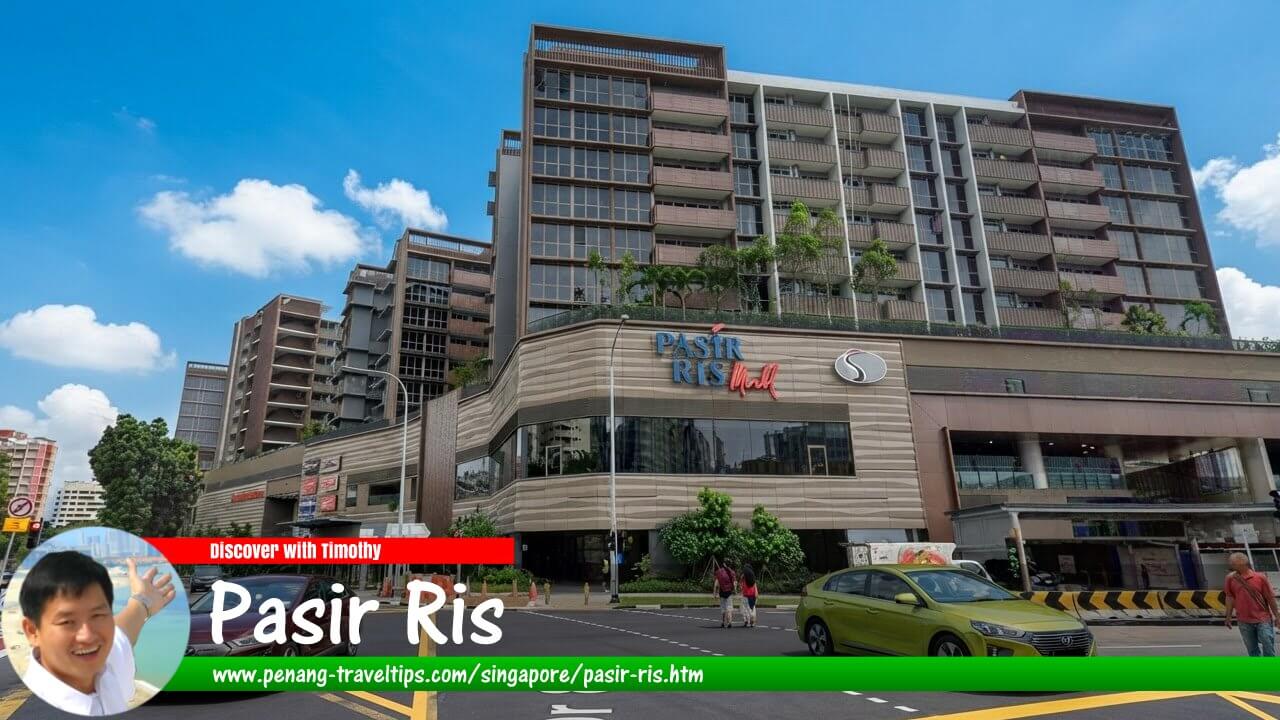 Pasir Ris, Singapore (AI image created on 12 August 2026)
The Pasir Ris Planning Area (Simplified Chinese: 白沙, Traditional Chinese: 白沙, Pinyin: Báishā, Malay: Pasir Ris, Tamil: பாசிர் ரிஸ்) is a residential town located in the East Region of Singapore. It covers about 15.02 square kilometres and had a resident population of around 148,000 as of 20201. Known for its coastal parks, family-friendly amenities, and diverse housing options, Pasir Ris has developed into a vibrant suburban community while retaining elements of its laid-back seaside charm.
History of Pasir Ris
The name “Pasir Ris” comes from Malay, meaning “white sand,” reflecting the sandy beaches that once stretched across its coast. In the past, the area was largely rural, with kampongs, coconut plantations, and fish farms. Modern development of Pasir Ris began in the late 1980s under the Housing and Development Board (HDB) town planning scheme. Since then, it has grown into one of Singapore’s newer residential towns, with a strong emphasis on greenery and recreational spaces.
Name and Pronunciation
“Pasir Ris” is pronounced /ˈpɑːsɪr rɪs/ in English. In Mandarin Chinese, it is called Báishā (白沙), which literally means “white sand.” In Tamil, it is rendered as பாசிர் ரிஸ், while Malay usage retains the original name.
Geography and Boundaries
Pasir Ris is situated along the northeastern coastline of Singapore. It is bordered by the Paya Lebar Planning Area to the southwest, Tampines Planning Area to the west, and Changi Bay Planning Area to the east. To the north lies the Johor Strait, with views of Malaysia’s Johor state across the water.
Subzones of Pasir Ris
- Flora Drive
- Loyang East
- Loyang West
- Pasir Ris Central
- Pasir Ris Drive
- Pasir Ris Park
- Pasir Ris Wafer Fab Park
- Pasir Ris West
Transport and Accessibility
Pasir Ris is well-served by the MRT and bus networks. Pasir Ris MRT Station, located in the town centre, is on the East West Line. By 2030, the Cross Island Line will also serve the area, enhancing connectivity to other parts of Singapore. Major roads include Pasir Ris Drive and Elias Road, linking to the Tampines expressway (TPE) for access to the rest of the island.
Land Use and Development
The town is predominantly residential, consisting of HDB flats, executive condominiums, and private housing. Pasir Ris is known for its lower-density layout compared to older estates, with wide roads, landscaped pathways, and extensive parks. The town centre provides retail, dining, and entertainment options, while neighborhood centres serve local communities.
Residential Character
Pasir Ris offers a range of housing options. As of mid-2025, HDB resale flats in Pasir Ris are priced between SGD 500,000 and 700,000 for 4-room units, while larger executive flats can exceed SGD 800,0002. Private condominiums typically range from SGD 1,300–1,700 per square foot (13,993–18,299 per sq m). For example, a 1,100 sq ft (102 sq m) apartment may cost between SGD 1.4 million and 1.9 million. Monthly rentals for condominiums generally fall between SGD 3,000 and 4,500, offering more affordable living compared to central areas like Novena or Outram.
Parks, Recreation, and Lifestyle
One of Pasir Ris’s defining features is its abundance of green and coastal spaces. Highlights include:
- Pasir Ris Park – a coastal park with a mangrove boardwalk, cycling paths, and playgrounds, popular among families and nature lovers.
- Loyang Tua Pek Kong Temple – a multi-faith place of worship reflecting Singapore’s religious diversity.
- Downtown East – a leisure and lifestyle hub with shopping, dining, Wild Wild Wet water park, and entertainment options.
- Elias Mall and White Sands Mall – neighbourhood shopping centres catering to residents’ daily needs.
Education and Institutions
Pasir Ris has a wide range of schools, from primary to tertiary institutions, such as Pasir Ris Secondary School, Hai Sing Catholic School, and Meridian Secondary School. The presence of international schools also makes the town attractive for expatriate families.
Where to Stay
Pasir Ris is a good place to stay for visitors who prefer a quieter, greener and more relaxed side of Singapore. It is in the far east of the island, close to Changi Airport, and has a distinctly suburban atmosphere. The planning area is particularly suitable for families, visitors who enjoy outdoor activities and travellers who want to stay near the coast rather than in the busy city centre.
The main accommodation choice within Pasir Ris is D'Resort @ Downtown East. This 387-room resort is set beside Pasir Ris Park and is directly associated with Wild Wild Wet water park and the wider Downtown East leisure complex. The resort has family rooms, suites, barbecue facilities and easy access to the beach, mangroves, restaurants, shops and entertainment facilities.
D'Resort is particularly attractive to families because it offers something that most Singapore hotels cannot: a genuine resort-style environment within the city. Guests can combine their accommodation with a visit to Wild Wild Wet, cycling around Pasir Ris Park, exploring the mangroves or spending time beside the beach.
Another advantage is its location. D'Resort is only about ten minutes from Singapore Changi Airport by car, making it potentially useful for visitors with an early flight or a late arrival who would rather stay in the eastern part of Singapore than travel into the city centre.
Civil Service Club @ Loyang, formerly known as Aloha Loyang, provides another accommodation option in the broader Pasir Ris and Loyang area. It is a chalet-style property rather than a conventional city hotel and is particularly suited to families and groups looking for a more informal stay.
Visitors who want a conventional hotel with more extensive facilities can also look just beyond Pasir Ris towards Changi. Village Hotel Changi is a practical nearby alternative, particularly for visitors who like the idea of staying in the eastern part of Singapore while remaining close to the airport and the coast.
For most visitors, however, D'Resort is the most distinctive accommodation choice in Pasir Ris itself. It is especially suitable if your visit includes children, Wild Wild Wet or several days of outdoor recreation.
Visitors who want to spend most of their holiday sightseeing in central Singapore should probably stay closer to the city centre instead. Pasir Ris is well connected by public transport, but travelling into Orchard Road, Marina Bay or the Downtown Core takes considerably longer than staying in a central planning area.
For travellers with an interest in the eastern side of Singapore, however, Pasir Ris makes an appealing base. It is close to Changi, Tampines, Changi Village and the northeastern coastline, while offering considerably more greenery and open space than most central districts.
What to Eat
Pasir Ris has a much better food scene than its relatively quiet suburban character might suggest. The principal food destinations are Pasir Ris Central Hawker Centre, Downtown East, Pasir Ris Mall and the neighbourhood coffee shops and food clusters scattered throughout the housing estates.
Pasir Ris Central Hawker Centre is the most important destination for visitors interested in local food. Located at 110 Pasir Ris Central, it was designed with a mixture of traditional hawker fare and newer, more contemporary food concepts. The two-storey centre has long been known for combining familiar local dishes with more unusual offerings. :contentReference[oaicite:2]{index=2}
The hawker centre is particularly useful because it gives visitors a choice between inexpensive traditional food and more modern casual dining. Dishes available in the area include chicken rice, bak chor mee, nasi lemak, ayam penyet, prawn noodles, fish soup, Western food and a variety of desserts and snacks.
Downtown East provides a very different food experience. The large leisure complex beside D'Resort contains numerous restaurants, cafés and casual food outlets. This is particularly convenient for families because eating can easily be combined with shopping, entertainment and Wild Wild Wet.
Pasir Ris Mall, beside Pasir Ris MRT Station, has added another substantial concentration of restaurants and food outlets to the town centre. It is particularly convenient for visitors arriving by MRT and looking for a meal before or after exploring Pasir Ris Park.
Pasir Ris also has numerous smaller coffee shops and neighbourhood food clusters. These are worth considering if you are staying in the residential parts of the planning area and want an inexpensive meal without travelling into the town centre.
For halal food, Pasir Ris is a reasonably convenient area. There are halal restaurants and food stalls around Downtown East, Pasir Ris Central and the neighbourhood shopping centres. Visitors can also find halal Western, Malay, Indonesian and other Muslim-friendly choices in the wider eastern region.
Visitors who require formally halal-certified food should nevertheless check the current certification status of an individual stall or restaurant before ordering, as tenants and certifications can change.
Where to Eat
Pasir Ris is best explored through a mixture of hawker food, casual restaurants and the larger dining clusters around Downtown East and Pasir Ris Mall.
- Pasir Ris Central Hawker Centre – The obvious starting point for local food. The centre offers a broad selection of traditional hawker dishes as well as newer and more contemporary food concepts. It is particularly useful for visitors who want variety without spending restaurant prices.
- Wild Olives Western – A popular Western-food stall at Pasir Ris Central Hawker Centre. It is known locally for affordable Western meals and is one of the stalls worth considering when exploring the food centre.
- Fushion Briyani – A briyani stall at Pasir Ris Central Hawker Centre that has attracted attention for its distinctive take on the dish. It is an interesting choice for visitors who want something different from the usual hawker staples.
- 1 Kebab Shop – Located at Pasir Ris Central Hawker Centre, this is an option for visitors looking for kebabs and Middle Eastern-style food. It is particularly useful for visitors wanting a break from Chinese and Singaporean hawker food.
- White Restaurant – Located at Pasir Ris Mall, this established restaurant specialises in traditional Chinese dishes and is particularly associated with its signature Sembawang white beehoon. It provides a more comfortable sit-down dining experience than the hawker centre.
- Khao Hom by Rung Mama – A Thai restaurant at Pasir Ris Mall offering Thai dishes in a convenient town-centre location. It is a good alternative when you want something other than local Singaporean food.
- Xiang Xiang Hunan Cuisine – A Chinese restaurant at Pasir Ris Mall specialising in Hunan cuisine. It is suitable for visitors travelling as a group who want a substantial sit-down Chinese meal.
- Tongue Tip Lanzhou Beef Noodle – Located at Downtown East, this is a halal restaurant specialising in Lanzhou-style beef noodles. It is a particularly useful choice for Muslim visitors and for anyone wanting a different type of Chinese cuisine.
- Segar @ Downtown East – A halal restaurant within Downtown East offering convenient dining for visitors spending the day at the leisure complex.
- Rasa Istimewa @ Pasir Ris – Located along Pasir Ris Road near the coastal recreation areas, this restaurant is a good option for Malay and seafood-oriented dining in a more relaxed setting.
- georges @ The Cove – A casual bar-and-grill style restaurant near the Pasir Ris waterfront. Its setting makes it particularly suitable for a relaxed meal after spending time around the coast.
For a first visit, I would make Pasir Ris Central Hawker Centre the principal food stop. It gives visitors a good introduction to the everyday food culture of the neighbourhood and is more representative of local life than the restaurants in the shopping malls.
If you are travelling with children, Downtown East is particularly convenient because food, entertainment and accommodation are concentrated together. You can spend the day at Wild Wild Wet, have a meal at the complex and return to D'Resort without needing another journey.
For a more relaxed meal near the coast, consider the restaurants around Pasir Ris Park and Pasir Ris Road. These establishments are particularly attractive towards the evening when the weather is cooler and the coastal atmosphere becomes more enjoyable.
Muslim visitors have a reasonable selection of halal food in Pasir Ris, including choices at Downtown East and the surrounding neighbourhoods. Tongue Tip Lanzhou Beef Noodle is one particularly convenient halal option, while Malay and seafood choices can be found elsewhere in the planning area.
For visitors staying at D'Resort, there is little need to travel far for food. Downtown East itself contains numerous food and beverage outlets, while Pasir Ris Central is only a short journey away.
Exploring Pasir Ris
Pasir Ris is one of Singapore's best planning areas for visitors who want to experience the island's coastline, mangroves, parks and family-oriented recreation. It does not have the grand monuments of the Civic District or the skyscrapers of Marina Bay, but it offers a very different picture of Singapore.
The principal attraction is Pasir Ris Park, a large coastal park extending along the northeastern shoreline. The park contains broad lawns, cycling and walking paths, mangroves, a beach and recreational facilities.
The Pasir Ris mangrove forest is particularly interesting. Visitors can explore the mangrove environment and look for wildlife among the trees, waterways and mudflats. The mangrove boardwalk provides a much more intimate experience of Singapore's natural environment than most visitors might expect in a densely urbanised city.
Pasir Ris Beach provides another reason to visit. While it is not Singapore's most famous beach, it is a pleasant place for a walk, especially around sunrise or sunset. The view towards the sea and offshore areas gives the eastern side of Singapore a more open character than the densely built central districts.
Pasir Ris Park's bicycle trails make cycling one of the best ways to explore the area. Bicycles can be rented around the park and Downtown East, making it possible to cover considerably more ground than on foot.
Wild Wild Wet, at Downtown East, is one of the area's principal family attractions. The water park offers slides, pools and other water-based attractions and can easily occupy a substantial part of a family day.
Downtown East itself is more than a water park. The complex contains entertainment, shopping, restaurants, a cinema and other leisure facilities. For families staying at D'Resort, it effectively functions as an integrated holiday complex.
Another attraction is Pasir Ris Town Park, particularly known for its large fishing pond. The park provides a quieter neighbourhood recreation area and demonstrates the extent to which greenery has been incorporated into Pasir Ris's residential environment.
Pasir Ris MRT Station is the main transport gateway to the planning area. It is on the East West Line and is also associated with the Cross Island Line's future Pasir Ris interchange. This will further strengthen Pasir Ris's role as a transport node in eastern Singapore.
The planning area's location also makes it convenient for visitors interested in Changi Village and Pulau Ubin. Changi Point Ferry Terminal, from which bumboats depart for Pulau Ubin, is only a relatively short journey away. A visitor staying in Pasir Ris can therefore combine a day at Pasir Ris Park with an excursion to Pulau Ubin on another day.
Changi Airport is another major advantage. Pasir Ris is one of the more convenient residential planning areas from which to reach the airport, making it attractive for travellers with early departures or late arrivals.
Pasir Ris also has a strong neighbourhood identity. Much of the planning area consists of residential estates, schools, community facilities and local shopping centres rather than tourist attractions. Visitors who venture away from Downtown East therefore see a more ordinary side of Singapore, with residents using the parks, markets, food centres and shopping centres as part of their daily lives.
For visitors interested in Singapore's urban planning, this is worth noticing. Pasir Ris was developed as a large new town in the eastern part of the island, with housing, schools, parks, transport and commercial facilities planned together. The result is a town where many everyday necessities are within easy reach of residential areas.
The coastal location is another defining characteristic. Unlike much of central Singapore, Pasir Ris has a genuine sense of open space. The shoreline, parkland and mangroves provide a visual and environmental contrast to the high-rise urban landscape that dominates most of the island.
One of the best ways to experience Pasir Ris is therefore to combine the town centre with the coast. Start with breakfast or lunch at Pasir Ris Central Hawker Centre, walk or cycle through Pasir Ris Park, explore the mangroves and continue towards the beach.
Families can instead base themselves around Downtown East. Spend the morning at Wild Wild Wet, have lunch nearby, rest at D'Resort during the hottest part of the afternoon, and return to the park or beach in the evening.
For couples and independent travellers, Pasir Ris can be particularly pleasant around sunset. The combination of the coast, parkland and casual restaurants creates a relaxed atmosphere that is quite different from the busy city centre.
Pasir Ris is also a useful base for visitors who want to explore the eastern and northeastern parts of Singapore. Tampines, Changi, Loyang and Punggol are all relatively accessible, while the airport is particularly close.
Visitors should not choose Pasir Ris expecting the same concentration of major attractions found in central Singapore. Instead, choose it if you value space, greenery, the coast, family recreation, local food and a quieter environment.
For a short stay, two days can be enough to experience the main attractions. For a longer stay, Pasir Ris works particularly well as part of an eastern Singapore itinerary, combined with Changi Village, Pulau Ubin, Tampines and the other coastal areas.
Ultimately, Pasir Ris offers something that many visitors do not realise Singapore possesses: a genuine seaside suburban environment within a highly developed city. The mangroves, beach, cycling paths, parks and neighbourhood food centres make it a refreshing contrast to the skyscrapers and shopping malls of central Singapore.
For travellers who want to see more than the usual tourist Singapore, Pasir Ris is therefore well worth considering. Stay beside the park, cycle along the coast, eat at the hawker centre, explore the mangroves and watch the sun go down over the eastern shoreline. It is a very different, and very enjoyable, way of experiencing Singapore.
Accommodation and Food References
- D'Resort @ Downtown East – Official Website
- Civil Service Club @ Loyang – Official Website
- Village Hotel Changi – Official Website
- National Environment Agency – Pasir Ris Central Hawker Centre
- National Parks Board – Pasir Ris Park
- Downtown East – Official Website
- Wild Wild Wet – Official Website
- Housing & Development Board – Pasir Ris
- Land Transport Authority – Cross Island Line
- People's Association – Pasir Ris-Punggol Neighbourly Welcome Guide
Fun Facts
Pasir Ris Park is one of the few places in Singapore where you can still find a natural mangrove forest. The park’s mangrove boardwalk allows visitors to see mudskippers, crabs, and herons up close, offering a rare glimpse of coastal ecology in an urban nation. The town is also known for its proximity to Loyang Industrial Estate, which supports aviation-related industries due to its closeness to Changi Airport.
Map of Pasir Ris, Singapore
MRT Stations in Pasir Ris, Singapore
- Loyang MRT Station (GPS: 1.37255, 103.9726) planned

- Pasir Ris MRT Station (GPS: 1.37311, 103.94926)

- Pasir Ris East MRT Station (GPS: 1.36843, 103.9593) planned

Quick Facts
- Total Area: 15.02 sq km
- Population: ~148,000 (2020)
- Postal District: District 18
- Main MRT: Pasir Ris (East West Line, future Cross Island Line)
- Key Features: Pasir Ris Park, Downtown East
- Notable Landmark: Loyang Tua Pek Kong Temple
- Character: Coastal, family-friendly, suburban
References
- Singapore Department of Statistics – Population Data
- Urban Redevelopment Authority – Planning Areas
- National Parks Board – Pasir Ris Park
- NLB Infopedia – Pasir Ris
Page Details
This page was created on 8 September 2025. Hi, my name is Timothy and created it from my research, for my own entertainment, knowledge and to satisfy my curiosity. I am providing the information to you in good faith and hope it is useful. I try to get the details as accurate as possible. I also try to update the page whenever I stumble on new details. So this and all my other pages are perpetual work in progress. If you discover any error, please politely inform me, pointing out where the error lies, and I will correct it as soon as possible. Your helpfulness will keep this page accurate, relevant and helpful to those who need the information.My videos of Singapore
Want to share your Singapore travel experiences or get tips from fellow travellers?
Join the Singapore Travel Tips Facebook GroupMore information for visiting and living in Singapore
Here are some related articles to help you get to know Singapore better.- Cost of Living in Different Singapore Neighbourhoods (2025 Guide)
- EZ-Link Card
- Owning a Car in Singapore
- Singapore MRT Map & Guide 2025
- Singapore Postal Districts and Postcodes
- Singapore Tourist Pass
- Taking the Bus in Singapore: A Visitor's Guide
- Understanding CCR, RCR and OCR in Singapore real estate
 Latest Pages & Updates
Buy Me A Coffee
If you enjoy the information I provide and want to support the work I do, please buy me a coffee! I appreciate it immensely, thank you so much!
