
Pasir Lebar Travel Guide
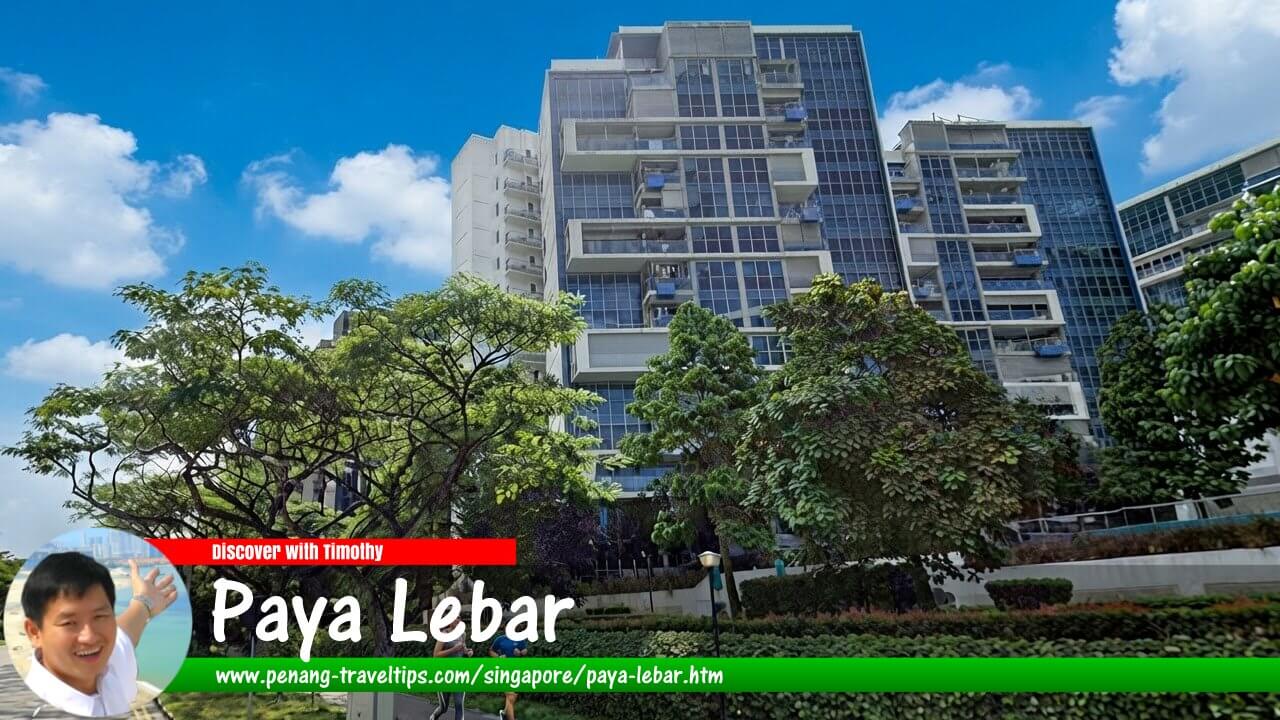 Paya Lebar, Singapore (AI image created on 12 August 2026)
The Paya Lebar Planning Area (Simplified Chinese: 巴耶利峇, Traditional Chinese: 巴耶利峇, Pinyin: Bāyēlìbā, Malay: Paya Lebar, Tamil: பாயா லேபார்) is a centrally located planning area in the East Region of Singapore. Covering around 6.13 square kilometres, it plays a dual role as both a commercial hub and residential town. Paya Lebar is positioned as a key regional centre under the Urban Redevelopment Authority’s (URA) decentralisation strategy, offering a mix of offices, retail, and lifestyle developments. Its strategic location, extensive transport connections, and vibrant growth have transformed it into one of Singapore’s most important urban sub-centres.
History of Paya Lebar
The name “Paya Lebar” comes from the Malay words “paya,” meaning swamp, and “lebar,” meaning wide, reflecting the area’s history as a swampy floodplain. In the early years, Paya Lebar was mainly agricultural, with kampongs, livestock farms, and rural settlements. In 1955, Paya Lebar Airport was opened, serving as Singapore’s international airport until operations shifted to Changi Airport in 1981. The former airport continues to function as Paya Lebar Air Base, a major military airbase of the Republic of Singapore Air Force (RSAF). Since the 1990s, the area has undergone significant transformation into a vibrant commercial hub.
Name and Pronunciation
“Paya Lebar” is pronounced /ˈpaɪə leɪbɑːr/ in English. In Mandarin Chinese, it is called Bāyēlìbā (巴耶利峇), while Tamil renders it as பாயா லேபார். The Malay name is the original, describing the wide swampy terrain of the past.
Geography and Boundaries
Paya Lebar is situated in the East Region of Singapore. It is bounded by Hougang to the north, Tampines to the east, Bedok to the south, and Geylang and Toa Payoh to the west. Its central location and proximity to the city make it a desirable hub for businesses and residents alike.
Transport and Accessibility
Paya Lebar is extremely well-connected by public transport. The Paya Lebar MRT Interchange Station links the East West Line and the Circle Line, providing convenient access to different parts of Singapore. Major roads such as Paya Lebar Road, Upper Paya Lebar Road, and the Pan Island Expressway (PIE) also serve the area, making it easily accessible by car and bus.
Land Use and Development
Paya Lebar is recognised as a regional centre, and in recent years has seen major developments, particularly around Paya Lebar Central. Key projects include:
- Paya Lebar Quarter (PLQ) – a mixed-use development comprising Grade A offices, retail malls, residences, and lifestyle amenities.
- Paya Lebar Square – an office and retail development directly connected to the MRT station.
- SingPost Centre – a lifestyle mall housing the Singapore Post headquarters, retail outlets, and a cinema.
The transformation of Paya Lebar into a dynamic hub has reduced commuting pressure on the central business district, offering decentralised employment opportunities.
Residential Character
Although Paya Lebar is predominantly commercial, there are residential estates within and around it, especially in areas like MacPherson and Eunos. Housing here includes HDB flats, private condominiums, and landed homes. As of mid-2025, HDB resale flats in the Paya Lebar vicinity are priced from SGD 550,000 to 750,000 for 4-room units, while private condominiums range from SGD 1,600–2,000 per square foot (17,222–21,528 per sq m). Rental demand is strong due to its central location, with average condo rentals ranging between SGD 3,500 and 5,000 per month.
Lifestyle and Amenities
Paya Lebar offers a wide variety of lifestyle and recreational options. With shopping malls, F&B outlets, and cultural sites nearby, residents and workers enjoy a balanced urban lifestyle. The area is close to popular food hubs such as Geylang Serai Market, Old Airport Road Food Centre, and Joo Chiat, known for its heritage shophouses and Peranakan cuisine.
Future Developments
The relocation of Paya Lebar Air Base, scheduled around 2030, will free up a vast tract of land for redevelopment. This presents immense opportunities for new housing estates, green spaces, and commercial hubs. The transformation of the former airbase is expected to reshape Singapore’s urban landscape in the decades ahead.
Where to Stay
Paya Lebar is a convenient place to stay for visitors who want to be close to both central Singapore and the eastern part of the island. The planning area has developed into an important commercial centre, with shopping malls, offices, restaurants and excellent public transport. It is also close to Geylang Serai, Joo Chiat and Katong, making it particularly attractive to visitors interested in food and Singapore's Malay and Peranakan heritage.
Aqueen Hotel Paya Lebar is the principal mainstream hotel within the planning area. Located on Jalan Afifi, it is close to Paya Lebar MRT Station and the shopping and dining facilities of Paya Lebar. It is a practical choice for visitors who want a conventional hotel without paying the prices normally associated with staying in the city centre.
The hotel's location is particularly useful because Paya Lebar MRT Station is an interchange between the East West Line and Circle Line. From here, visitors can travel directly towards the city centre, Changi Airport and other parts of eastern Singapore, while the Circle Line provides convenient access towards HarbourFront, Bishan and the southern and western parts of the island.
There are also several hotels just beyond the planning area's boundaries which can be considered if accommodation within Paya Lebar itself is unavailable. The Geylang and Joo Chiat districts immediately surrounding Paya Lebar contain numerous hotels, ranging from simple budget properties to more distinctive boutique accommodation.
For visitors who prefer a more characterful neighbourhood, Joo Chiat is particularly appealing. It is within easy reach of Paya Lebar and provides access to conserved Peranakan shophouses, cafés, restaurants and a lively evening food scene.
Paya Lebar is especially suitable for visitors who want to explore eastern Singapore. It provides a useful middle ground: considerably less hectic than the central business district, but much better connected than many of the residential planning areas farther east.
For a first visit, I would recommend choosing accommodation within easy reach of Paya Lebar MRT Station. This places the visitor close to Paya Lebar Quarter, Paya Lebar Square and the surrounding restaurants, while providing an easy rail connection to the rest of Singapore.
Visitors interested particularly in Malay food and culture may also find Paya Lebar more rewarding than staying in a conventional city-centre hotel. Geylang Serai is immediately nearby, and the area contains one of Singapore's most important concentrations of Malay food, shops and cultural institutions.
What to Eat
Food is one of Paya Lebar's strongest attractions. The planning area sits beside Geylang Serai and the Joo Chiat district, giving visitors access to an unusually broad mixture of Malay, Indonesian, Chinese, Indian, Peranakan and international food.
The area has everything from inexpensive hawker food to modern restaurants in shopping malls. Visitors can eat at a traditional food centre in the morning, have lunch in a shopping mall and finish the day at one of the many restaurants and cafés around Paya Lebar and Joo Chiat.
For visitors particularly interested in Malay and halal food, Paya Lebar is an excellent choice. The neighbouring Geylang Serai precinct has long been one of Singapore's principal centres of Malay culture and commerce, and its food scene reflects that heritage.
Geylang Serai Market & Food Centre is one of the most important food destinations in the area. The market is especially well known for Malay and Muslim food, including nasi padang, nasi ayam, mee rebus, mee siam, lontong, Malay kuih and other traditional dishes.
Haig Road Market & Food Centre, towards the Joo Chiat side of the planning area, provides another excellent hawker experience. Its stalls serve a mixture of Malay, Chinese and other Singaporean favourites and it is particularly popular with local residents.
Paya Lebar Square and Paya Lebar Quarter provide a more modern alternative. Their restaurants and food outlets cover Japanese, Korean, Chinese, Western, vegetarian and other cuisines, while the surrounding streets contain many smaller independent eateries.
Visitors who want to understand Singapore's food culture should therefore not limit themselves to the shopping malls. The greatest contrast is between the modern dining environment of Paya Lebar Quarter and the traditional food culture found around Geylang Serai and Haig Road.
There is also a substantial selection of halal food in the Paya Lebar area. This includes Malay and Indonesian food as well as halal versions of other Asian cuisines. Muslim visitors will therefore find Paya Lebar considerably easier for halal dining than many central business districts.
As always, visitors who require halal-certified food should check the current certification status of an individual establishment before dining, as tenants and certification status can change.
Where to Eat
There are so many food choices around Paya Lebar that the best approach is to divide them between traditional hawker food, Malay and halal food, and modern restaurants.
- Geylang Serai Market & Food Centre – One of Singapore's most important Malay food destinations. Visitors can sample nasi padang, Malay noodles, rice dishes, kuih and other traditional favourites. It is particularly worthwhile during the fasting month of Ramadan, when the surrounding area becomes exceptionally lively with food stalls and bazaars.
- Haig Road Market & Food Centre – A popular neighbourhood hawker centre with a mixture of Malay, Chinese and other local dishes. It is a good place to experience everyday Singaporean hawker culture away from the more tourist-oriented food destinations.
- Nasi Lemak Ayam Taliwang at Paya Lebar Square – A halal option specialising in nasi lemak and Indonesian-style ayam taliwang. It is particularly convenient for visitors looking for an inexpensive halal meal near Paya Lebar MRT Station.
- First Bowl Rice Kitchen at Paya Lebar Square – A casual Chinese restaurant offering rice-based dishes and other Chinese meals. It is a useful option when visitors want a sit-down meal without going to a more formal restaurant.
- Kajiken at Paya Lebar Square – A Japanese noodle restaurant specialising in abura soba, providing an alternative to the predominantly Singaporean and Malay food found elsewhere in the neighbourhood.
- Greendot at Paya Lebar Square – A vegetarian restaurant offering meat-free Asian dishes. It is a useful choice for vegetarian visitors or anyone wanting a lighter alternative.
- Tanglin Cookhouse at Paya Lebar Quarter – A contemporary restaurant offering a broad Western-inspired menu in a more polished setting. It is suitable for visitors wanting a leisurely sit-down meal rather than hawker food.
- Tipsy Bird Gastrobar at Paya Lebar Quarter – A modern restaurant and gastrobar with a lively atmosphere, particularly suited to evening dining and socialising.
- Muslim Delights Malay Food and Noodles – A halal Malay food outlet on Upper Paya Lebar Road offering inexpensive local dishes. It is particularly useful for visitors exploring the northern side of the planning area.
- 89.7 Supper Club – A halal late-night restaurant in nearby Geylang East offering a range of local and casual dishes. It is particularly useful for visitors looking for food after the conventional dinner hours.
- Old Airport Road Food Centre – Although technically in the neighbouring Geylang planning area, this famous hawker centre is close enough to be considered by visitors staying in Paya Lebar. It is one of Singapore's most celebrated food centres and offers a huge variety of traditional local dishes.
For visitors wanting the most distinctly local experience, I would begin with Geylang Serai Market & Food Centre and Haig Road Market & Food Centre. These provide a very different experience from the restaurants inside the modern shopping centres.
For Muslim visitors, Geylang Serai should be one of the first places to explore. The combination of Malay food, halal restaurants, traditional kuih and the surrounding Malay businesses gives the area a cultural dimension that is difficult to reproduce elsewhere in Singapore.
For a more modern dining experience, head towards Paya Lebar Quarter. The development has transformed the area around the MRT interchange into a major commercial and dining destination, with restaurants and cafés surrounding landscaped public spaces.
If you are prepared to walk beyond the planning area's formal boundary, Joo Chiat and Katong provide another excellent food trail. The area is famous for Peranakan food, cafés, bakeries, restaurants and traditional Singaporean dishes.
For a serious hawker-food expedition, Old Airport Road Food Centre is also worth the short trip. It is one of the largest and best-known hawker centres in Singapore and gives visitors an enormous choice of local food under one roof.
Exploring Paya Lebar
Paya Lebar is a fascinating planning area because it represents the meeting point between old and new eastern Singapore. Modern shopping malls and office buildings now dominate the central part of the district, while the surrounding neighbourhoods retain strong Malay, Peranakan and traditional Singaporean influences.
The modern heart of the area is Paya Lebar Central. URA describes it as a lively commercial centre located at the fringe of the city centre, intended to provide businesses with an accessible alternative to the Central Business District.
The most prominent development is Paya Lebar Quarter, usually known as PLQ. The mixed-use development contains offices, shops, restaurants and public spaces and has substantially changed the appearance of Paya Lebar.
The planning of Paya Lebar Central places considerable emphasis on pedestrian connectivity. Covered walkways, pedestrian malls and links between buildings are intended to make it easier for people to move between the MRT station, shopping centres, offices and public spaces.
Yet just beyond the modern commercial centre is Geylang Serai, one of the most culturally distinctive neighbourhoods in Singapore.
URA has designated part of Paya Lebar Central as the Geylang Serai Cultural Belt, recognising the area's importance to Malay culture and heritage. The belt includes developments such as Wisma Geylang Serai and Joo Chiat Complex and incorporates public spaces intended for community activities and cultural events.
Wisma Geylang Serai is particularly worth visiting. The building functions as a community and cultural centre and provides a focal point for Malay arts, culture and heritage in the neighbourhood.
Nearby, Geylang Serai Market combines a traditional market with a hawker centre. It is one of the best places in Singapore to see Malay food culture in an everyday setting rather than simply as a cultural attraction.
The area becomes particularly lively during Ramadan, when the Geylang Serai Ramadan Bazaar traditionally attracts large crowds. Temporary food stalls, clothing vendors and other businesses transform the streets into one of Singapore's most vibrant seasonal marketplaces.
Visitors interested in Peranakan culture should continue towards Joo Chiat. The neighbourhood is known for its colourful conserved shophouses, many of which feature elaborate façades characteristic of the Peranakan architectural tradition.
Joo Chiat Road and the surrounding streets also provide a fascinating contrast to Paya Lebar Quarter. Instead of large modern developments, visitors encounter low-rise shophouses, traditional businesses, cafés, restaurants and residential streets.
Another useful landmark is Joo Chiat Complex, a long-established shopping centre associated particularly with Malay and Muslim shoppers. Its presence reinforces the area's role as a commercial centre for Singapore's Malay community.
Paya Lebar is also well connected to several interesting neighbourhoods. From the MRT station, visitors can travel quickly to Bugis, Little India, Orchard Road and the Downtown Core, while travelling in the opposite direction brings them towards Bedok, Tampines and Changi.
The planning area's transport advantage is therefore considerable. Paya Lebar MRT Station is an interchange between the East West Line and Circle Line, allowing visitors to reach many parts of Singapore without changing trains for at least part of their journey.
For visitors interested in Singapore's aviation history, the wider Paya Lebar area also has an unexpected connection with the country's former airport. Paya Lebar Airport opened in 1955 as Singapore's second civilian airport and became the country's principal international airport before Changi Airport opened in 1981. The site subsequently became Paya Lebar Air Base.
The air base is not a conventional visitor attraction, but its history is important to understanding the development of eastern Singapore. URA's current plans envisage the eventual relocation of the air base from the 2030s onwards, opening the way for a major new mixed-use district and substantial new housing.
This means that Paya Lebar and its surrounding districts are likely to change considerably over the coming decades. The future redevelopment of the Paya Lebar Air Base will create a new generation of neighbourhoods, while Paya Lebar Central continues to develop as a commercial and cultural centre.
For visitors today, however, the most rewarding experience is to explore the contrast between Paya Lebar Quarter and Geylang Serai. Begin among the modern towers and shopping centres around the MRT station, then walk towards Geylang Serai and the older streets beyond.
Along the way, the character of the city changes noticeably. Modern offices give way to shopping centres, then to traditional markets, mosques, Malay businesses, restaurants and conserved shophouses.
For a half-day itinerary, start at Paya Lebar MRT Station, explore Paya Lebar Quarter and Paya Lebar Square, then walk towards Geylang Serai. Have lunch at Geylang Serai Market & Food Centre before exploring Wisma Geylang Serai and the surrounding streets.
In the afternoon, continue towards Joo Chiat to see the conserved shophouses and explore the cafés and restaurants. If you are interested in food, this can easily become an entire day's itinerary.
In the evening, return towards Paya Lebar Quarter for dinner, or continue into Geylang for its famous late-night food scene. This is one of the areas of Singapore where eating late is part of the local culture.
Paya Lebar is particularly suitable for visitors who enjoy food, shopping, Malay culture, architecture and neighbourhood exploration. It is less suited to visitors whose main interests are major monuments and attractions, although its excellent MRT connections make those attractions easy to reach.
The greatest attraction of Paya Lebar is therefore not one individual landmark. It is the juxtaposition of different versions of Singapore: a modern commercial centre, a historic Malay cultural district, a Peranakan neighbourhood and a busy local food scene all within a relatively small area.
For visitors wanting to experience Singapore beyond the usual tourist districts, Paya Lebar is an excellent choice. It provides a particularly good introduction to the eastern side of the city and offers one of the most accessible opportunities to explore Singapore's Malay heritage while remaining close to the modern city centre.
Accommodation and Food References
- Urban Redevelopment Authority – Paya Lebar Central Urban Design Guidelines
- Urban Redevelopment Authority – Paya Lebar Air Base
- Aqueen Hotel Paya Lebar – Official Website
- Paya Lebar Quarter – Official Website
- Paya Lebar Square – Official Website
- National Heritage Board – Wisma Geylang Serai
- National Environment Agency – Hawker Centres
- Singapore Tourism Board – Joo Chiat and Katong
- Islamic Religious Council of Singapore – MUIS
- Land Transport Authority – Singapore Rail Network
Map of Paya Lebar, Singapore
Quick Facts
- Total Area: 6.13 sq km
- Population: ~114,000 (2020)
- Postal Districts: Districts 13, 14, and 19
- Main MRT: Paya Lebar (East West Line, Circle Line)
- Key Features: Paya Lebar Quarter, SingPost Centre, Paya Lebar Square
- Notable Future Development: Relocation of Paya Lebar Air Base
- Character: Commercial hub, centrally located, highly connected
References
- Urban Redevelopment Authority – Planning Areas
- Singapore Department of Statistics
- NLB Infopedia – Paya Lebar
- Paya Lebar Quarter (PLQ)
Page Details
This page was created on 8 September 2025. Hi, my name is Timothy and created it from my research, for my own entertainment, knowledge and to satisfy my curiosity. I am providing the information to you in good faith and hope it is useful. I try to get the details as accurate as possible. I also try to update the page whenever I stumble on new details. So this and all my other pages are perpetual work in progress. If you discover any error, please politely inform me, pointing out where the error lies, and I will correct it as soon as possible. Your helpfulness will keep this page accurate, relevant and helpful to those who need the information.My videos of Singapore
Want to share your Singapore travel experiences or get tips from fellow travellers?
Join the Singapore Travel Tips Facebook GroupMore information for visiting and living in Singapore
Here are some related articles to help you get to know Singapore better.- Cost of Living in Different Singapore Neighbourhoods (2025 Guide)
- EZ-Link Card
- Owning a Car in Singapore
- Singapore MRT Map & Guide 2025
- Singapore Postal Districts and Postcodes
- Singapore Tourist Pass
- Taking the Bus in Singapore: A Visitor's Guide
- Understanding CCR, RCR and OCR in Singapore real estate
 Latest Pages & Updates
Buy Me A Coffee
If you enjoy the information I provide and want to support the work I do, please buy me a coffee! I appreciate it immensely, thank you so much!
