
Pearl River, China
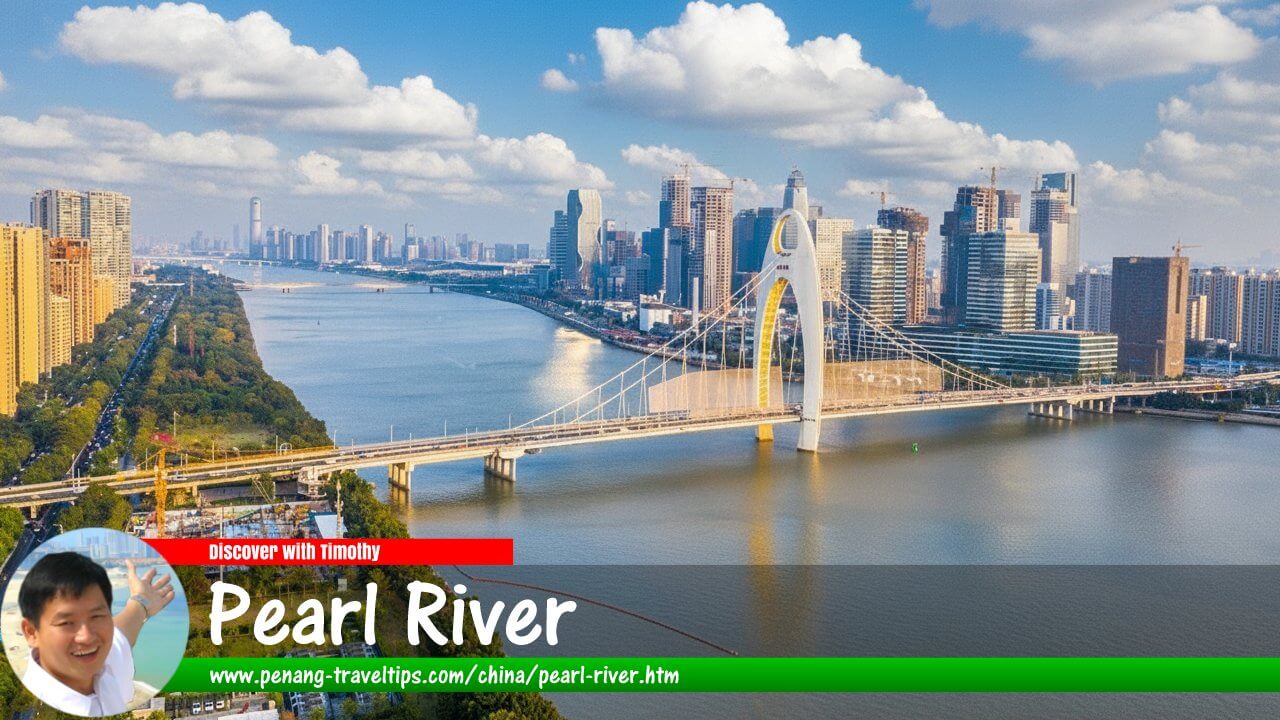 Pearl River, China (Photo edited with AI on 16 June 2026)
Pearl River, known in Chinese as 珠江 and in pinyin as Zhū Jiāng, is one of the most important river systems in China. It is the third-longest river in the country after the Yangtze and Yellow Rivers and forms the heart of southern China's economic and cultural landscape. The Pearl River system drains a vast region across several provinces before emptying into the South China Sea through one of the world's largest and most densely populated estuaries. The river has played a crucial role in transportation, agriculture, trade, and urban development for more than two thousand years.1
Quick Facts
- English Name: Pearl River
- Chinese Name: 珠江
- Pinyin: Zhū Jiāng
- River System Length: Approximately 2,400 km
- Source Region: Yunnan Province, China
- Mouth: Pearl River Estuary, South China Sea
- Major Tributaries: Xi River, Bei River, Dong River
- Major Cities: Guangzhou, Foshan, Zhongshan, Jiangmen, Dongguan, Shenzhen, Hong Kong, Macau
- Drainage Basin: Approximately 453,700 square kilometres
- Economic Importance: Supports the Pearl River Delta, one of the world's largest manufacturing regions
Name and Origin
The English name "Pearl River" is derived from a small rocky island located in the section of the river flowing through Guangzhou. This island, known as the Pearl Sea Rock (海珠石, Hǎizhū Shí), was said to resemble a giant pearl shining on the water's surface. Over time, foreign traders and navigators adopted the name "Pearl River" to describe the waterway associated with Guangzhou. In Chinese, the name 珠江 (Zhū Jiāng) literally means "Pearl River."
Strictly speaking, the Pearl River is not a single river but a complex river system composed of several major waterways, including the Xi River (West River), Bei River (North River), and Dong River (East River). Together, these rivers form the extensive network commonly referred to as the Pearl River system.2
Geography
The Pearl River basin covers much of southern China and extends across the provinces of Yunnan, Guizhou, Guangxi, Guangdong, Hunan, and Jiangxi. The river system ultimately flows into the South China Sea through the Pearl River Estuary between Hong Kong and Macau.
The longest component of the system is the Xi River (西江, Xī Jiāng), which originates in the mountains of Yunnan Province and flows eastward through Guangxi before entering Guangdong. Combined with its tributaries, the Pearl River system measures approximately 2,400 kilometres in length, making it China's third-longest river system.3
The basin receives abundant rainfall due to the East Asian monsoon climate. As a result, the river maintains a substantial volume of water throughout much of the year. Seasonal flooding has historically enriched agricultural lands while also presenting challenges for settlements along its banks.
The river system is composed of three principal tributaries:
- Xi River (West River): The largest and longest tributary.
- Bei River (North River): Flows southward from northern Guangdong.
- Dong River (East River): Supplies water to several major urban areas, including Hong Kong and Shenzhen.
Near its mouth, the river divides into numerous channels, distributaries, and waterways that form the Pearl River Delta. This delta is one of the most urbanized and economically productive regions in the world.4
Major Cities Along the River
The Pearl River system passes through or influences numerous important cities, including:
These cities collectively form the Greater Bay Area, one of the world's largest metropolitan regions.
History
The Pearl River has been central to human settlement and economic development in southern China for thousands of years. Archaeological evidence indicates that communities lived and farmed along the river basin during prehistoric times. Fertile floodplains and reliable water supplies encouraged agricultural development and population growth.
During the Qin Dynasty (221–206 BCE), imperial expansion into southern China increased the strategic importance of the river. The waterway became a major transportation route linking inland regions with the coast. Subsequent dynasties invested in river management, navigation, and trade infrastructure.
By the Tang Dynasty (618–907 CE) and Song Dynasty (960–1279 CE), Guangzhou had become one of China's most important ports. Merchant ships from Southeast Asia, India, the Middle East, and later Europe used the Pearl River to reach the city. International commerce flourished, bringing wealth and cultural exchange to the region.5
During the Ming and Qing dynasties, the Pearl River continued to serve as a major commercial artery. Guangzhou became the primary port through which foreign merchants conducted trade with China. The Canton System, implemented during the Qing Dynasty, concentrated foreign trade in Guangzhou and increased the strategic significance of the river.
The river also played a role during the Opium Wars of the nineteenth century. Several military engagements occurred along the Pearl River and its estuary as foreign powers sought greater access to Chinese markets.6
In the twentieth century, industrialization transformed the river basin. Following China's economic reforms beginning in 1978, the Pearl River Delta became one of the fastest-growing manufacturing regions in the world. Cities such as Shenzhen evolved from small settlements into global economic centres within a few decades.
Economy and Products
The Pearl River is the foundation of one of the most productive economic regions on Earth. The Pearl River Delta contributes a significant share of China's manufacturing output, exports, and technological innovation.
The river supports transportation networks that move raw materials and finished goods between inland provinces and coastal ports. Extensive shipping routes connect factories, industrial parks, logistics centres, and international markets.
Key industries along the river include:
- Electronics manufacturing
- Information technology
- Telecommunications equipment
- Textiles and garments
- Home appliances
- Automobile production
- Petrochemicals
- Shipbuilding
- Food processing
Shenzhen has become a global centre for technology and innovation, while Guangzhou remains a major commercial and transportation hub. Dongguan is renowned for manufacturing, and Foshan is known for ceramics, machinery, and household appliances.
Agriculture also remains important in certain parts of the basin. Farmers cultivate rice, sugarcane, vegetables, fruits, and fish. The delta's fertile soils and abundant water have supported agricultural production for centuries.
The river additionally supplies drinking water to millions of people. The Dong River is especially significant because it provides a substantial portion of Hong Kong's freshwater supply.7
Environment and Ecology
The Pearl River basin contains a diverse range of ecosystems, including mountain forests, wetlands, estuarine habitats, and mangrove areas. These environments support numerous species of fish, birds, reptiles, and aquatic organisms.
Rapid industrialization and urban growth have created environmental challenges. Water pollution, habitat loss, and land reclamation have affected sections of the river and delta. In response, Chinese authorities have implemented conservation measures aimed at improving water quality and protecting ecological resources.
Wetlands near the estuary serve as important stopover points for migratory birds traveling along the East Asian–Australasian Flyway. Conservation projects continue to focus on balancing economic development with environmental sustainability.
Tourist Attractions Along the Pearl River
The Pearl River and its surrounding cities offer numerous attractions that highlight the region's natural beauty, cultural heritage, and modern development.
1. Pearl River Night Cruise (Guangzhou)
The famous night cruises in Guangzhou provide spectacular views of illuminated skyscrapers, bridges, and waterfront landmarks. The cruises are among the city's most popular tourist experiences.
2. Canton Tower
Located beside the river in Guangzhou, Canton Tower is one of the tallest towers in the world. Observation decks offer panoramic views of the river and the city.
3. Shamian Island
This historic district in Guangzhou features colonial-era architecture, tree-lined streets, and riverside scenery reflecting the city's international trading past.
4. Chimelong Tourist Resort
Situated near the Pearl River Delta, this large entertainment complex includes theme parks, safari attractions, and water parks.
5. Kaiping Diaolou
Located near tributaries connected to the Pearl River system, these UNESCO World Heritage defensive towers showcase a unique blend of Chinese and Western architectural influences.
6. Macau Historic Centre
At the western side of the estuary, Macau offers historic churches, fortresses, and cultural sites reflecting centuries of Chinese and Portuguese interaction.
7. Hong Kong Victoria Harbour
Connected to the Pearl River Estuary, Victoria Harbour is famous for its skyline, harbour cruises, and nightly light displays.
8. Shenzhen Bay Park
This waterfront park provides scenic views of the estuary, cycling paths, wetlands, and opportunities for birdwatching.
9. Seven Star Crags (Zhaoqing)
Located near the upper reaches of the river system, this scenic area features limestone formations, lakes, and historic temples.
Legacy and Significance
The Pearl River has shaped the history, economy, and culture of southern China for centuries. From ancient trade routes and agricultural communities to modern megacities and high-technology industries, the river has served as a vital lifeline for millions of people.
Today, the Pearl River remains an essential transportation corridor, source of freshwater, centre of economic activity, and symbol of the remarkable transformation of southern China. Its vast basin and dynamic delta continue to influence the development of one of the world's most important urban and industrial regions.
References
- Encyclopaedia Britannica – Zhu Jiang (Pearl River)
- Encyclopaedia Britannica – Pearl River System
- China.org.cn – Pearl River Overview
- UNESCO – Pearl River Delta Information
- Encyclopaedia Britannica – Guangzhou History
- Encyclopaedia Britannica – First Opium War
- Hong Kong Water Supplies Department – Dongjiang Water Supply
Page Details
This page was created/modified on 16 June 2026. Hi, my name is Timothy and created it from my research, for my own entertainment, knowledge and to satisfy my curiosity. I am providing the information to you in good faith and hope it is useful. I try to get the details as accurate as possible. I also try to update the page whenever I stumble on new details. So this and all my other pages are perpetual work in progress. If you discover any error, please politely inform me, pointing out where the error lies, and I will correct it as soon as possible. Your helpfulness will keep this page accurate, relevant and helpful to those who need the information.