
Bayan Lepas Travel Guide
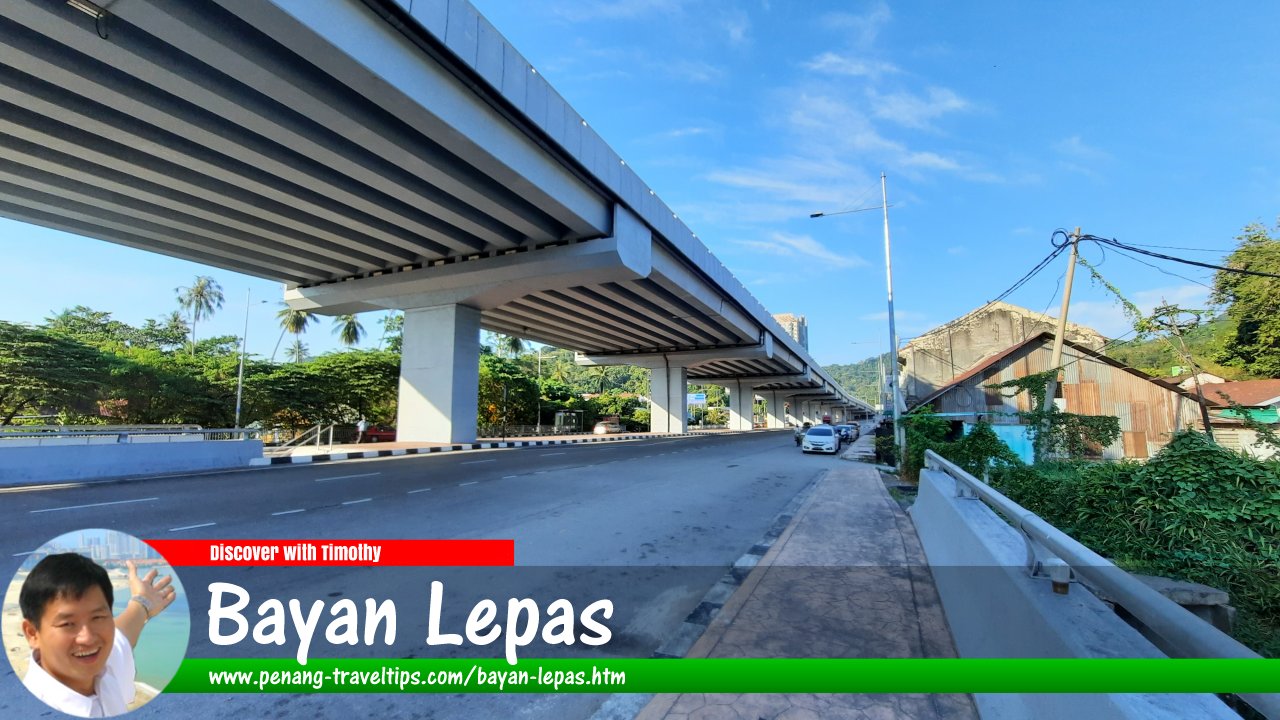 Bayan Lepas, Penang (12 January 2022)

Also available: Panduan Melawat Bayan Lepas
Bayan Lepas (Chinese: 峇六拜; Pinyin: Bā Liùbài; Penang Hokkien: Ba3 Lark3pai4, often shortened to Ba3 Pai4) is an area in the southeastern part of Penang Island, Malaysia. It is known for Penang International Airport, the Bayan Lepas Free Industrial Zone and the historic Snake Temple. The area also includes an old town with traditional shophouses, markets and local businesses, as well as surrounding settlements such as Batu Maung, Kampung Seronok, Kampung Binjai and Permatang Damar Laut. Since the development of the industrial zone and the planned township of Bayan Baru in the 1970s, Bayan Lepas has grown into an important residential, commercial and industrial area within the Greater Penang metropolitan region.
Quick Facts
- Name: Bayan Lepas
- Chinese name: 峇六拜
- Location: Southeastern Penang Island, Penang, Malaysia
- Approximate coordinates: 5.29487° N, 100.25954° E
- Administrative district: Southwest District, Penang Island
- Main road through the old town: Jalan Bayan Lepas
- Major road connection: Federal Route 6
- Major landmarks: Penang International Airport and Snake Temple
- Industrial centre: Bayan Lepas Free Industrial Zone
- Nearby planned township: Bayan Baru
- Public transport: Rapid Penang buses, taxis and e-hailing services
Geography and Location
Bayan Lepas occupies a substantial area in the southeastern part of Penang Island. The name is used both for the historic town and, more broadly, for the surrounding urban and industrial area. It is therefore important to distinguish between the old town of Bayan Lepas, the planned township of Bayan Baru and the Bayan Lepas Free Industrial Zone. Although these places are closely connected, each has a different role in the development of the island.
The old town lies along Jalan Bayan Lepas, near the junction with Jalan Dato Ismail Hashim. Its shops, market and local businesses serve residents from the surrounding settlements. Bayan Baru, by contrast, is a planned township developed to accommodate the growing population and commercial needs associated with industrialisation in the south of the island.
Other settlements within the wider Bayan Lepas area include Batu Maung, Kampung Seronok, Kampung Binjai and Permatang Damar Laut. These places have their own local identities and histories. Some retain elements of traditional village life, while others have experienced substantial changes as roads, housing developments and industrial facilities have expanded.
The coastline and the island's southern road network are also important to the area's geography. Penang International Airport occupies a prominent position in Bayan Lepas, while the industrial zone extends around major roads and areas close to the airport. These facilities have made Bayan Lepas one of the principal economic centres of southeastern Penang Island.
History of Bayan Lepas
The Old Town and Its Early Development
Before the expansion of modern industry, Bayan Lepas was a local settlement serving nearby villages and agricultural areas. Its old town developed around shops and everyday services, providing residents with places to purchase goods, conduct business and meet their daily needs.
Jalan Bayan Lepas, formerly referred to more generally as Main Road, became an important route connecting the town with other settlements in the southern part of Penang Island. The old town's market and shophouses reflect its historical role as a local commercial centre.
Over time, the settlement became linked to larger transport and economic networks. The construction and expansion of the airport, followed by the development of the industrial zone, transformed the surrounding landscape and increased the importance of the area beyond its original role as a small town.
Penang International Airport
One of the most significant developments in Bayan Lepas was the establishment of an airfield, which subsequently developed into Penang International Airport. The airport became an important gateway for travellers visiting Penang and a transport facility supporting the state's commercial and industrial activities.
The airport's location close to the industrial zone has been particularly significant. Businesses involved in electronics manufacturing and other industries benefit from access to air transport, while hotels, restaurants and transport services have developed to serve passengers, workers and business visitors.
The airport has undergone expansion and upgrading over the years. Today, it is an important part of Penang's transport infrastructure, although its facilities and passenger traffic should be distinguished from the wider history of the town itself.
The Bayan Lepas Free Industrial Zone
The establishment of the Bayan Lepas Free Industrial Zone in the early 1970s marked a major turning point in the area's development. The Penang state government pursued industrialisation as a way to create employment and diversify the state's economy. The Penang Development Corporation (PDC), established in 1971, played a major role in developing the industrial zone and planned townships in Penang.1
The first phase of the Bayan Lepas Free Industrial Zone opened in 1972. The zone attracted electronics manufacturers and other industrial companies, helping Penang develop into a significant centre for electronics and electrical manufacturing. Its growth also created demand for workers, housing, transport, retail businesses and public services.
The development of Bayan Baru during the 1970s was closely associated with this transformation. The planned township provided residential and commercial facilities for a growing population near the industrial zone. As a result, the wider Bayan Lepas area gradually evolved from a collection of settlements and agricultural land into a major urban and industrial district.
Road Expansion and Changes to the Old Town
As traffic increased, the old town faced growing pressure from vehicles travelling between the airport, industrial zone and settlements farther south. Jalan Bayan Lepas became an important route for commuters and commercial traffic, but the older road layout and closely spaced shophouses limited the available road space.
In 2015, a road-widening project led to the demolition of a number of shophouses along the southern side of Jalan Bayan Lepas. Contemporary reports also referred to proposed changes affecting public facilities in the area. These works formed part of efforts to improve traffic flow as development continued across the southern part of Penang Island.
The road improvements altered parts of the old town's built environment. Nevertheless, the area remains useful for understanding how a traditional local centre has adapted to the demands of a rapidly growing urban and industrial region. Historical descriptions of the town should be read with these changes in mind, since not every building or road feature mentioned in older accounts necessarily remains today.
Origin of the Name Bayan Lepas
The name Bayan Lepas is commonly interpreted as meaning “the parakeet has flown away” or “the escaped parakeet”. In Malay, bayan refers to a type of parrot, while lepas can mean released, escaped or gone free.
A local story explains that a wealthy family from Sumatra arrived by boat at the coast in the area during the nineteenth century. In the commotion of coming ashore, the family's pet parakeet reportedly escaped. According to the story, the incident gave the place its name.
This account is a traditional explanation of the place name rather than a story conclusively established by historical records. It is best presented as local folklore, since the precise historical origin of the name has not been firmly demonstrated.
The Old Town of Bayan Lepas
The old town is one of the most distinctive parts of Bayan Lepas for visitors interested in local history and everyday life. Its commercial activity centres on Jalan Bayan Lepas and the surrounding streets, where shops, food stalls and other businesses serve residents from the town and neighbouring villages.
Bayan Lepas Market is one of the area's long-standing local institutions. The market has traditionally served as a place for residents to buy fresh produce and daily necessities, as well as a meeting point for people from nearby settlements. Historical accounts identify an earlier market building dating to 1930, although the present condition and facilities should be checked locally.
Older accounts describe the town as having rows of early twentieth-century shophouses on both sides of the main road. Some of these buildings were subsequently affected by road-widening works and urban redevelopment. The old town should therefore be understood as a historic commercial area that has changed over time, rather than as a completely preserved heritage district.
Visitors can explore the streets to see local shops and sample food sold in the area. However, Jalan Bayan Lepas remains a working road, and traffic can be heavy. Take care when crossing the road and avoid walking along narrow stretches without suitable pedestrian space.
Places of Interest in Bayan Lepas
Snake Temple
Snake Temple is one of the best-known landmarks in Bayan Lepas. Also known as the Temple of the Azure Cloud, it was built in 1850 and dedicated to Chor Soo Kong, a Buddhist priest and healer revered by devotees.2
The temple is famous for the snakes found within its grounds, particularly pit vipers associated with the temple's religious traditions. According to local belief, snakes appeared after the temple was built and were regarded as being under the protection of the deity. The temple continues to function as a place of worship as well as a visitor attraction.
Located along Jalan Sultan Azlan Shah, the temple is within reach of the airport and industrial area. Visitors can view its traditional Chinese temple architecture, altars and religious decorations. As it remains an active place of worship, visitors should dress respectfully, avoid disturbing worshippers and follow instructions given by temple staff.
Snakes are wild animals, and visitors should never attempt to touch, handle or disturb them. Their presence and the arrangements for viewing them may vary, so follow the temple's current rules and any safety guidance provided on site.
Penang International Airport
Penang International Airport is one of the most important transport facilities in the state. Located in Bayan Lepas, it handles domestic and international air services and provides access to Penang for tourists, business travellers and residents returning home.
The airport has also influenced the development of the surrounding area. Hotels, restaurants, transport services and commercial facilities cater to passengers and people working in the airport and nearby industrial zone. Although the airport is not a conventional sightseeing attraction, it is central to the modern identity and economic importance of Bayan Lepas.
Bayan Lepas Free Industrial Zone
The Bayan Lepas Free Industrial Zone is a major manufacturing centre, particularly associated with electronics and electrical products. It has played an important role in Penang's industrial development since the 1970s and is part of the state's wider high-technology manufacturing economy.
The zone is primarily a workplace rather than a conventional tourist destination. Access to individual factories and industrial premises is generally controlled, and visitors should not enter private facilities without permission. Its significance to visitors lies mainly in understanding the economic changes that have shaped modern Penang.
Nearby Villages and Coastal Settlements
The wider Bayan Lepas area includes settlements such as Batu Maung and Permatang Damar Laut. Some parts of these areas retain connections with coastal livelihoods and village life, although housing, transport infrastructure and other forms of development have changed the landscape.
Visitors interested in exploring beyond the old town should plan around specific destinations rather than assuming that all places described as being in Bayan Lepas are close together. The wider area covers a considerable distance, and some destinations are more conveniently reached by car or e-hailing service than on foot.
Food in Bayan Lepas
Bayan Lepas offers a variety of everyday Malaysian food, particularly around the old town, residential neighbourhoods and commercial areas. Visitors can look for coffee shops, breakfast stalls, local restaurants and food courts serving residents and workers.
Common dishes to look for include nasi lemak, roti canai, nasi kandar, fried noodles, char koay teow, rice dishes with assorted side dishes and traditional Malaysian kuih. The range available depends on the individual establishment and the time of day.
Halal Food for Muslim Travellers
Muslim visitors can look for Malay restaurants, mamak eateries and other premises that clearly identify their food as halal. However, the type of cuisine alone does not guarantee halal status. If halal certification or preparation practices are important to you, check the establishment's displayed certification or ask the staff directly.
Local markets and neighbourhood food stalls may also be useful places to find breakfast and snacks. Operating hours vary: some stalls open early in the morning, while others concentrate on lunch or evening trade. It is worth checking locally before making a special trip to a particular establishment.
Where to Stay in Bayan Lepas
Bayan Lepas is a practical base for visitors who need to be near Penang International Airport, the industrial zone or business facilities in the southeastern part of the island. Accommodation options in the wider area include airport hotels, business hotels and properties in nearby commercial and residential neighbourhoods.
Choosing an Area to Stay
- Bayan Lepas: Convenient for travellers with early or late flights and visitors attending business appointments in the industrial zone.
- Bayan Baru: A practical choice for visitors who want access to shops, restaurants, shopping facilities and other urban amenities.
- Batu Maung and the southern area: Worth considering if your activities are concentrated in the southeastern part of the island. Check the actual distance to your destinations before booking.
- George Town: Better suited to visitors whose main interests are heritage buildings, cultural attractions, museums and the city's wider restaurant scene.
Bayan Lepas is not necessarily the best base for every type of holiday. Travellers primarily interested in exploring George Town's heritage areas or visiting beaches on the island's northwestern coast may find another location more convenient. Before booking, compare the accommodation's location, transport options and travel times rather than considering room rates alone.
How to Get to Bayan Lepas
By Air
The most direct way to reach Bayan Lepas from destinations served by flights to Penang is through Penang International Airport. From the terminal, visitors can continue to the old town, Bayan Baru or their accommodation by taxi, e-hailing service or public bus, depending on their destination.
Not all accommodation described as being in Bayan Lepas is within walking distance of the terminal. The area is extensive, and pedestrian routes between the airport and nearby destinations are not always convenient. Check the precise location of your hotel before deciding how to travel from the airport.
By Road
Bayan Lepas can be reached by road from George Town and other parts of Penang Island via major roads, including Jalan Bayan Lepas and Jalan Sultan Azlan Shah. The Tun Dr Lim Chong Eu Expressway is another important route connecting the southern part of the island with the city and other urban areas to the north.
Drivers arriving from mainland Malaysia can enter Penang Island by either the Penang Bridge or the Sultan Abdul Halim Mu'adzam Shah Bridge, commonly known as the Second Penang Bridge. The more convenient route depends on the point of origin, the precise destination in Bayan Lepas and current traffic conditions.
Traffic may be heavy during commuting hours, particularly around major junctions and roads serving the industrial zone and airport. If you are travelling to catch a flight, allow extra time for the road journey, vehicle drop-off and airport procedures.
By Bus
Rapid Penang buses connect the southern part of Penang Island with George Town and other destinations. Routes serving the airport area include services that travel via Bayan Baru and services that pass through areas near Snake Temple. The exact route depends on the destination and the bus service selected.3
Bus routes, timetables and frequencies can change. Check the latest service information before travelling rather than relying on an old route number or timetable. If arriving at Sungai Nibong bus terminal, check whether a suitable connecting bus is available or use a taxi or e-hailing service for the onward journey.
Getting Around Bayan Lepas
By Car or E-Hailing Service
A car is useful for exploring the wider Bayan Lepas area, especially if you plan to visit several destinations in one day. Taxis and e-hailing services are convenient for direct journeys between the airport, accommodation, restaurants and Snake Temple.
Traffic can become congested during working hours, particularly around the main roads serving the industrial zone. If you are driving, allow time to find parking in the old town and around busy commercial premises.
By Public Bus
Public buses can be an economical way to travel, but the usefulness of a route depends on its stops, frequency and distance from your destination. Check the nearest bus stop and confirm that the service takes you close enough to the place you intend to visit.
On Foot
Walking is suitable for exploring a compact area of the old town, such as a row of shops or the streets around the market. However, Bayan Lepas as a whole is not particularly convenient to explore entirely on foot. The airport, industrial zone, old town, Bayan Baru and surrounding settlements are spread across a wide area.
Some main roads are busy, and pedestrian facilities may be limited or discontinuous. Use appropriate crossings, take care near traffic and avoid walking along narrow road shoulders when a safer alternative is available.
Suggested Visit to Bayan Lepas
If you have a few hours to explore Bayan Lepas, you could begin in the old town and visit the market area and local shops. Continue to Snake Temple if it is open and travel conditions permit, then have a meal at a nearby restaurant or proceed to the commercial facilities in Bayan Baru.
Visitors interested in Penang's economic history can also consider Bayan Lepas in the context of the island's wider development. The old town, surrounding villages, planned township and industrial zone illustrate different stages in the area's transformation from a local settlement into a major urban and manufacturing centre.
Updates on Bayan Lepas
7 November, 2015: The Star reports that the state government has approved land reclamation in the Bayan Bay and Bayan Mutiara neighbourhoods of Bayan Lepas. The reclaimation is to be carried out by Ivory Tropicana (14 hectares/35 acres) and Gim Ventures (10 hectares/24.79 acres). The reclamation will enable the construction of 2,100 houses, a velodrome, a football field, basketball court, volleyball courts, an international standard swimming pool and diving pool.
Getting to Bayan Lepas
Several Rapid Penang buses pass through the Bayan Lepas area as well as its towns and villages. Among the buses include 302, 304, 305, 307, 308, 401 and 502.
Practical Information for Visitors
- Weather: Penang is hot and humid throughout the year. Carry drinking water, sun protection and an umbrella or raincoat.
- Visiting hours: The old town can be explored during the day. If visiting the market, check local operating hours and consider going in the morning.
- Places of worship: Dress respectfully at Snake Temple and avoid disturbing religious activities.
- Transport: Check bus services, traffic conditions and the exact location of your accommodation before setting out.
- Halal food: Verify the halal status of food premises if this is important to you.
- Photography: Ask permission before photographing individuals or private activities, and observe any restrictions at religious or commercial premises.
Conclusion
Bayan Lepas brings together a historic town, village settlements, an international airport and a major industrial zone. Its history reflects the wider transformation of southeastern Penang Island, particularly following the development of the airport, the Bayan Lepas Free Industrial Zone and the planned township of Bayan Baru.
For visitors, Snake Temple and the old town offer insights into the area's local identity, while the airport and industrial zone explain its importance to modern Penang. Understanding the differences between the old town, Bayan Baru and the wider industrial area makes it easier to plan a visit and appreciate how Bayan Lepas has developed over time.
 Map of Bayan Lepas, Penang
 Apartments and Condominiums in Bayan Lepas
- Avion Residence (GPS: 5.29645, 100.26411)
 (under construction)
- Bayan Permai Apartment (GPS: 5.29613, 100.26274)

- Bayan Suite (GPS: 5.33467, 100.30802)

- BayStar (GPS: 5.33467, 100.30802)

- Bayu Nyaman Apartment (GPS: 5.29779, 100.25686)

- Bayu Tiara Apartment (GPS: 5.29687, 100.25614)

- Desa Putra (GPS: 5.34139, 100.30787)

- Fiera Vista (GPS: 5.29872, 100.26576)

- Forest Ville (GPS: 5.29909, 100.25752)

- Gold Coast Resort (GPS: 5.338931, 100.309163)

- Goodwood Residence (GPS: 5.30651, 100.26914)

- Halaman Murni Apartment (GPS: 5.29629, 100.2618)

- Havana Beach Residences
 (GPS: 5.3061, 100.27301)

- London Pavilion (GPS: 5.28777, 100.25648)

- Lucerne Residences (GPS: 5.30087, 100.2675)

- Maldives Residences (GPS: 5.30641, 100.27207)

- Meridien Residence (GPS: 5.30258, 100.25806)

- One Foresta (GPS: 5.3005, 100.25885)

- Putra Marine Resort (GPS: 5.34029, 100.31079)

- Putra Place (GPS: 5.34076, 100.30941)

- QuayWest Residence (GPS: 5.3429, 100.31064)

- Queens Waterfront Residences (GPS: 5.33427, 100.30886)

- Reflections (GPS: 5.30337, 100.26103)

- Setia Tri-Angle (GPS: 5.30253, 100.26021)

- Solaria Residences (GPS: 5.30038, 100.26597)

- SummerSkye Residences (GPS: 5.29916, 100.26756)

- Summerton (GPS: 5.33906, 100.30861)

- Sunsuri Residences (GPS: 5.30551, 100.27054)

- Taman Sri Bayu (GPS: 5.29658, 100.25677)

- The Amarene (GPS: 5.3021, 100.26792)

- The Zen (GPS: 5.35269, 100.31151)

- Tree Sparina @ Ideal Vision Park (GPS: 5.30357, 100.26871)

- Tropicana Bay Residences (GPS: 5.34336, 100.30918)

- Villa Emas (GPS: 5.34029, 100.31079)

Commercial Properties in Bayan Lepas
- Ideal GBS @ Penang Airport (GPS: 5.2974, 100.26718)

- SummerSkye Square (GPS: 5.29916, 100.26757)
- Sunway Prima (GPS: 5.3039, 100.27792)

Hotels in Bayan Lepas
- Eastin Hotel (GPS: 5.33649, 100.30645)

- Econtel Hotel (GPS: 5.33647, 100.30701)

- Hompton Airport Hotel (GPS: 5.30641, 100.26972)
 (under construction)
Hotel Equatorial- Hotel EST
- Hotel Seri Malaysia
- Le Méridien Penang Airport (GPS: 5.29645, 100.26411) (under construction)
- Olive Tree Hotel
- TH Hotel
Landed Properties in Bayan Lepas
- Baygarden (GPS: 5.33714, 100.30933)

- D'Residence (GPS: 5.35025, 100.31338)

- Dua Villas (GPS: 5.30192, 100.26645)

- Mont Tierra Residences (GPS: 5.29687, 100.25605)

- Penang World City (GPS: 5.34328, 100.31189)

- Sathu Terraces (GPS: 5.30239, 100.26307)

- South Homes (GPS: 5.33563, 100.28358)

- Taman Ara Indah (GPS: 5.29876, 100.26207)

- Taman Tunas Damai (GPS: 5.3024, 100.27013)

- Tree Residency (GPS: 5.30166, 100.26438)

Markets in Bayan Lepas
- Bayan Lepas Market (GPS: 5.29516, 100.25923)
Miscellaneous Sights in Bayan Lepas
- Bayan Lepas Elevated U-Turn (GPS: 5.30048, 100.27343)

- Bayan Lepas Muslim Cemetery (GPS: 5.29481, 100.25803)

- Bayan Lepas Pedestrian Bridge (GPS: 5.29528, 100.26204)

- Jambatan Harapan Spiral Bicycle & Pedestrian Bridge (GPS: 5.3281, 100.30627)

- Malaysia Airport Training Centre (GPS: 5.29606, 100.26601)

- Nissan Service Centre (GPS: 5.30005, 100.27132)

- Penang International Airport (GPS: 5.29357, 100.26601)

- Penang Low-Cost Carrier Terminal (GPS: 5.29151, 100.26327)

- Perkampungan Polis Bayan Indah (GPS: 5.29821, 100.2691)

- Rumah Tradisional Kampung Seronok (GPS: 5.29055, 100.25906)

- Saujana Damai Apartment (GPS: 5.30111, 100.26905)

- Surau Desa Putra (GPS: 5.34068, 100.30772)

- The Star Media Group (GPS: 5.29759, 100.2678)

Petrol Stations in Bayan Lepas
- Shell Sungai Tiram (GPS: 5.3016, 100.27448)

Private Clinics in Bayan Lepas
Public Clinics in Bayan Lepas
- Klinik Kesihatan Bayan Lepas (GPS: 5.29977, 100.26205)

Roads in Bayan Lepas
- Cangkat Kenari
- Cangkat Kenari 1
- Cangkat Kenari 2
- Cangkat Sungai Ara 1
- Cangkat Sungai Ara 1/A
- Cangkat Sungai Ara 2
- Cangkat Sungai Ara 2/A
- Cangkat Sungai Ara 3
- Cangkat Sungai Ara 4
- Cangkat Sungai Ara 5
- Cangkat Sungai Ara 6
- Cangkat Sungai Ara 7
- Cangkat Sungai Ara 8
- Cangkat Sungai Ara 9
- Cangkat Sungai Ara 10
- Cangkat Sungai Ara 11
- Cangkat Sungai Ara 12
- Cangkat Sungai Ara 14
- Cangkat Sungai Ara 15
- Cangkat Sungai Ara 19
- Cangkat Sungai Ara 20
- Gerbang Sungai Ara 1
- Gerbang Sungai Ara 2
- Gerbang Sungai Ara 3
- Gerbang Sungai Ara 4
- Gerbang Sungai Ara 5
- Gerbang Sungai Ara 6
- Gerbang Sungai Ara 7
- Halaman Sungai Tiram
- Hilir Sungai Keluang 1
- Hilir Sungai Keluang 2
- Hilir Sungai Keluang 3
- Hilir Sungai Keluang 4
- Hilir Sungai Keluang 5
- Jalan Bayan Mutiara
- Jalan Bukit Ayun
- Jalan Dato Ismail Hashim
- Jalan Kenari
- Jalan Kenyalang
- Jalan Merbah
- Jalan Permatang Damar Laut
- Jalan Sungai Ara 1
- Jalan Sungai Ara 2
- Jalan Sungai Ara 3
- Jalan Sungai Ara 4
- Jalan Sungai Ara 5
- Jalan Sungai Ara 6
- Jalan Sungai Ara 7
- Jalan Sungai Tiram 1
- Jalan Sungai Tiram 2
- Jalan Sungai Tiram 3
- Jalan Sungai Tiram 4
- Jalan Sungai Tiram 5
- Jalan Sungai Tiram 6
- Jalan Sungai Tiram 7
- Jalan Sungai Tiram 8
- Jalan Sungai Tiram 9
- Jalan Tun Dr Awang
- Lebuh Kampung Bukit
- Lebuh Kampung Jawa
- Lebuhraya Kampung Jawa
- Lengkok Kenari
- Lengkok Kenari 1
- Lengkok Kenari 2
- Lengkok Kenari 3
- Lilitan Sungai Ara
- Lilitan Bayan
- Lintang Bayan 1
- Lintang Bayan 2
- Lintang Bayan 3
- Lintang Bayan 4
- Lintang Bayan 5
- Lintang Bayan 6
- Lintang Bayan 7
- Lintang Bayan 8
- Lintang Bayan 9
- Lintang Bayan 10
- Lintang Bayan 11
- Lintang Bayan 12
- Lintang Bayan 14
- Lintang Bayan Lepas
- Lintang Kampung Jawa
- Lintang Sungai Ara 1
- Lintang Sungai Ara 2
- Lintang Sungai Ara 3
- Lintang Sungai Ara 4
- Lintang Sungai Ara 6
- Lintang Sungai Ara 9
- Lintang Sungai Ara 11
- Lintang Sungai Ara 12
- Lintang Sungai Ara 13
- Lorong Kampung Bukit 3
- Lorong Kenari
- Lorong Kenari 1
- Lorong Kenari 2
- Lorong Kenari 3
- Lorong Kenari 4
- Lorong Kenari 5
- Lorong Kenari 6
- Lorong Kenari 7
- Lorong Kenari 8
- Lorong Kenari 9
- Lorong Kenari 10
- Lorong Kenari 11
- Lorong Kenari 12
- Lorong Kenari 13
- Lorong Kenari 14
- Lorong Kenari 15
- Lorong Rajawali 1
- Lorong Rajawali 2
- Lorong Rajawali 3
- Lorong Sungai Tiram 6
- Medan Bayan Lepas
- Medan Rajawali
- Persiaran Bayan 1
- Persiaran Bayan 2
- Persiaran Bayan Indah
- Persiaran Bayan Indah 2
- Persiaran Bayan Lepas
- Persiaran Bayan Mutiara
- Persiaran Bayan Mutiara 1
- Persiaran Bayan Mutiara 2
- Persiaran Kelicap
- Persiaran Rajawali
- Persiaran Relau
- Persiaran Relau 1
- Persiaran Relau 2
- Persiaran Relau 3
- Persiaran Relau 4
- Persiaran Relau 5
- Persiaran Sungai Ara 1
- Persiaran Sungai Ara 2
- Persiaran Sungai Ara 3
- Pintasan Kampung Jawa 1
- Solok Kampung Perlis
- Solok Rajawali 4
- Tingkat Kenari
- Tingkat Kenari 1
- Tingkat Kenari 2
- Tingkat Kenari 3
- Tingkat Kenari 4
- Tingkat Kenari 5
- Tingkat Kenari 6
- Tingkat Kenari 8
- Tingkat Sungai Ara 1
- Tingkat Sungai Ara 2
- Tingkat Sungai Ara 3
- Tingkat Sungai Ara 4
Schools in Bayan Lepas
- SJK(C) Chung Shan (GPS: 5.29789, 100.27002)

- SJK(C) Shih Chung (GPS: 5.30038, 100.25735)

- SMJK Heng Ee Cawangan Bayan Baru (GPS: 5.3036, 100.27245)

- Straits International School (GPS: 5.29759, 100.2678)

Chinese Temples and Buddhist/Taoist Religious Institutions in Bayan Lepas
- Ling Ying Tang Temple (GPS: 5.30198, 100.27145)

- Soka Gakkai Malaysia (GPS: 5.29909, 100.27031)

- Snake Temple (GPS: 5.31419, 100.28524)

- Thean Leng Tnua Temple 天靈壇 (GPS: 5.30594, 100.2696)

Mosques and Muslim Religious Institutions in Bayan Lepas
- Masjid Al-Idayah (GPS: 5.29614, 100.25946)

- Masjid Jamek Sungai Tiram (GPS: 5.30135, 100.27408)

- Mitsubishi Motors Service Centre (GPS: 5.2994, 100.27071)

- Musalla Kampung Bukit (GPS: 5.29614, 100.25946)

Food & Beverage Outlets in Bayan Lepas
- Bangkok Tomyam
- Cargas Cafe
- Food Bayana (GPS: 5.29356, 100.28878)

- Joo Seng Bee Cafe
- Nam Koo Coffee shop
- Nasi Kandar Line Clear Bayan Lepas
- Nasi Kandar Makbul outlets
- Restoran Haniffa
- Restoran Mak Long (GPS: 5.29737, 100.26431)

- Restoran Payung
- Restoran Qayyum
- Sin Hwa Lam Seafood Restaurant
- Tong Kayu Cafe
Businesses in Bayan Lepas Town
- AJ Tyre and Car Services
- Bayan Lepas Mini Market
- Blooms Nursery & Gallery (GPS: 5.28952, 100.25642)

- BLR Powers Motor
- Brothers Hair Dressing Saloon
- Eye-Spec Optical
- Farmasi Bayan
- Gen-3 Trading Bicycle Shop
- HBH Trading
- K9 Eternity Net House
- Kedai Emas Imej Indah
- Kedai Gunting Rambut Gaya Ratna
- Kedai Jam Seong Heng
- Kedai Motor Seong
- Kedai Motor Two Wheel
- Kedai Motosikal Abe Motor
- Kedai Motosikal Racing Star Trading
- Kedai Runcit Abdul Mutalibu & Partners
- Kedai Runcit Bean Heng Chan
- Kedai Runcit Han Guan
- Kedai Runcit Kong Hoe Hin
- Kedai Tin Bayan Lepas
- Leng Lee Motor
- Lim Bicycle Shop
- M. Mohabadulla Enterprise
- Mini Market Kim Hoe
- Mita Furniture Enterprise (furniture shop)
- Nardock Performance
- Pasar Mini AA (sundry shop)
- Pasar Mini Future (sundry shop)
- Perniagaan Basikal Guan Lee (bicycle shop)
- Perniagaan Bayan Lepas (sundry shop)
- Perniagaan Perabut Heng (furniture shop)
- R2 Twin Enterprise
- Sebagus Travel & Tours
- Summit Top Enterprise
- SY Motor Racing
- Syarikat United Radio
- Tamin Store
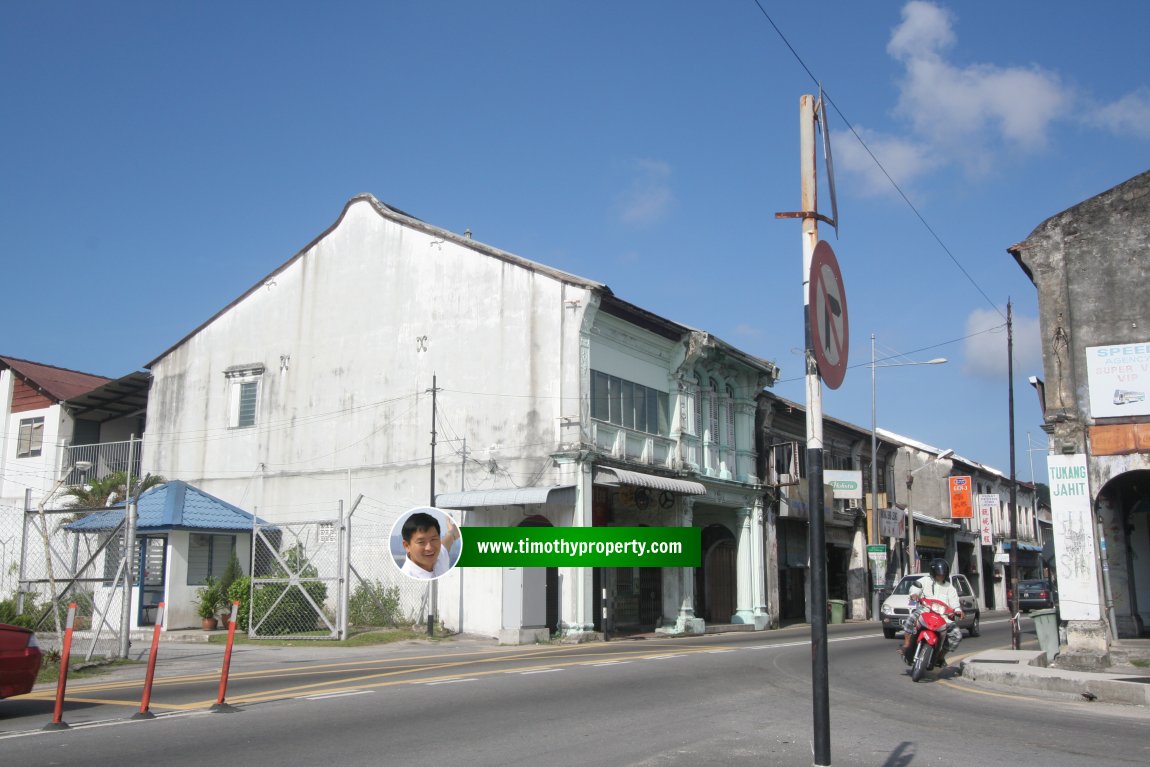 The pekan, or village centre, of Bayan Lepas. The houses along this row were demolished in 2015 for the road upgrading project. (12 July 2008)

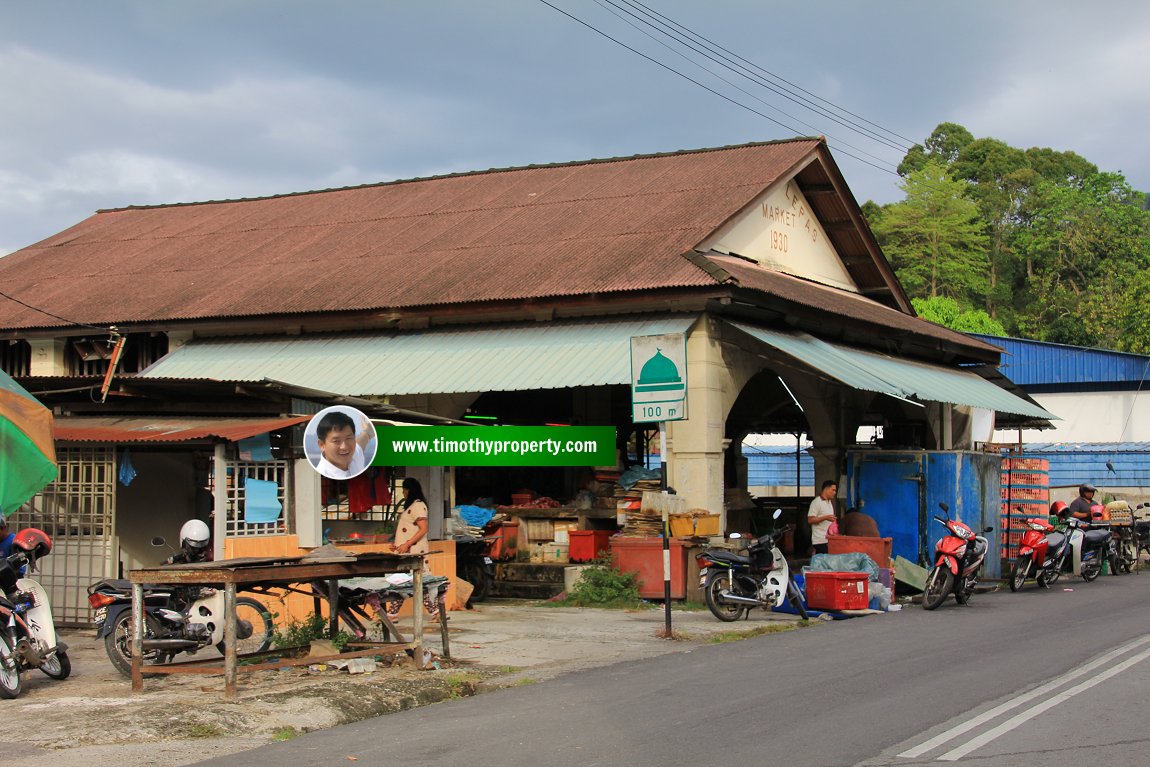 Bayan Lepas Market (4 February 2013)
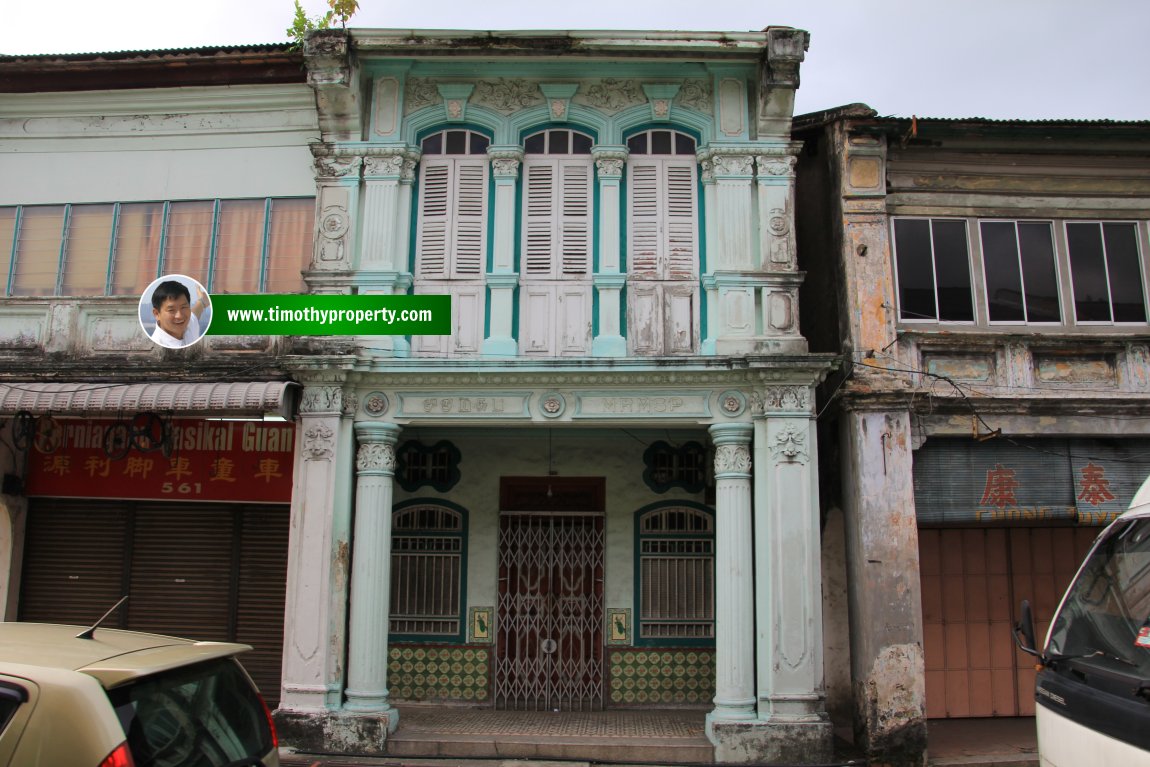 Bayan Lepas pre-war townhouse, one of those demolished for the road expansion. (4 February 2013)
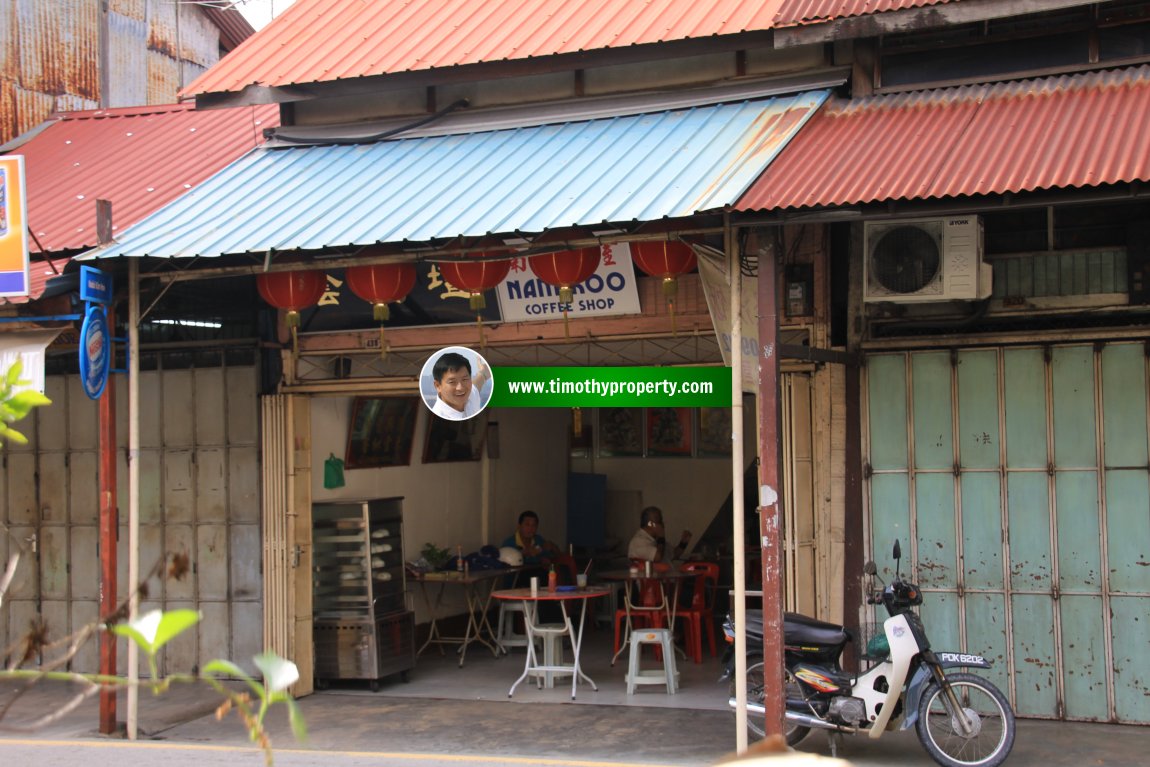 This coffee shop, now demolished, used to have nasi kandar stall that my father took me when I was small. (4 February 2013)
 Chong Shan School Union Building, now demolished (4 February 2013)
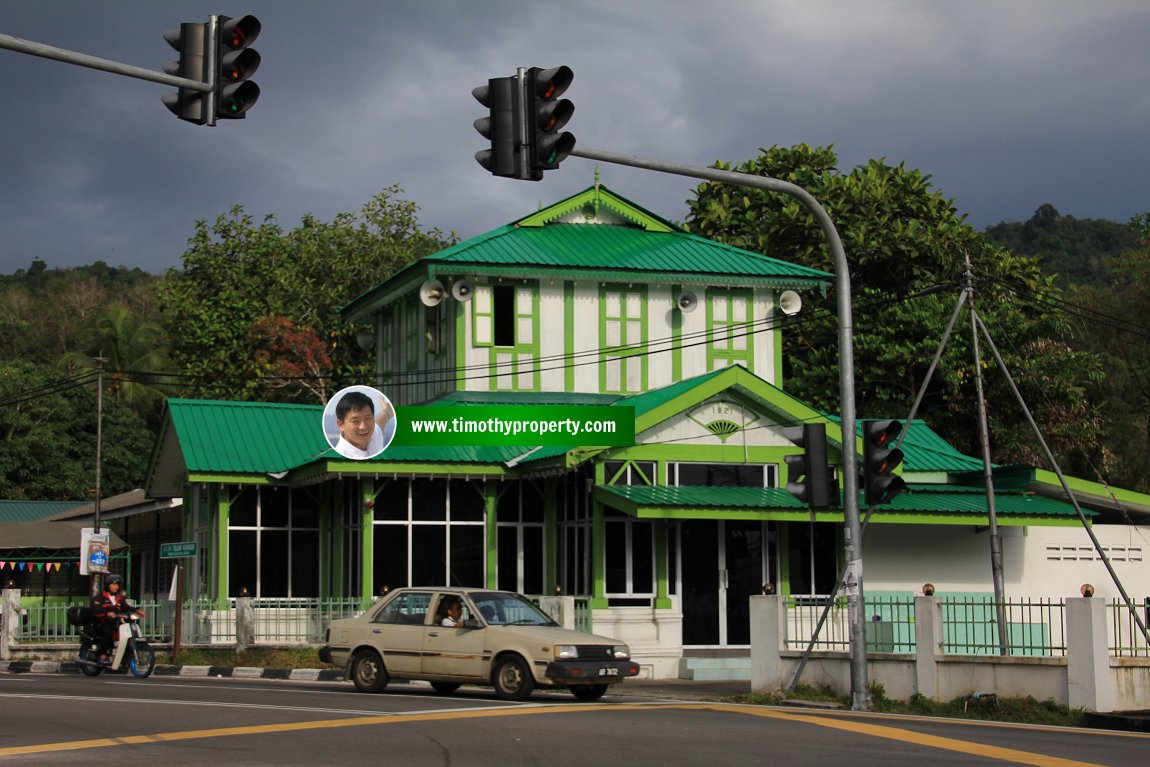 Musallah Kampung Bukit with its religious school, Madrasah Khairiah Islamiah in Bayan Lepas (2 February 2013)
References
- Penang Travel Tips, Penang Development Corporation, background on the corporation's role in Penang's development. Read more.
- MyPenang, official Penang tourism directory, Snake Temple, including its history and location. Read more.
- Visit Penang, Rapid Penang Bus 401 / 401E, route information for services connecting George Town, the airport and destinations in southern Penang Island. Read more.
- Penang Travel Tips, Bayan Lepas, the existing page and additional local information. Read more.
Page Details
This page was created on 17 October 2026. Hi, my name is Timothy and created it from my research, for my own entertainment, knowledge and to satisfy my curiosity. I am providing the information to you in good faith and hope it is useful. I try to get the details as accurate as possible. I also try to update the page whenever I stumble on new details. So this and all my other pages are perpetual work in progress. If you discover any error, please politely inform me, pointing out where the error lies, and I will correct it as soon as possible. Your helpfulness will keep this page accurate, relevant and helpful to those who need the information.Want to share your Penang travel experiences or get tips from fellow travellers?
Join the Penang Travel Tips Facebook GroupUseful guides for visiting Penang
My Videos of Penang
Latest Pages & Updates
Buy Me A Coffee
If you enjoy the information I provide and want to support the work I do, please buy me a coffee! I appreciate it immensely, thank you so much!
