
Lim Chu Kang Travel Guide
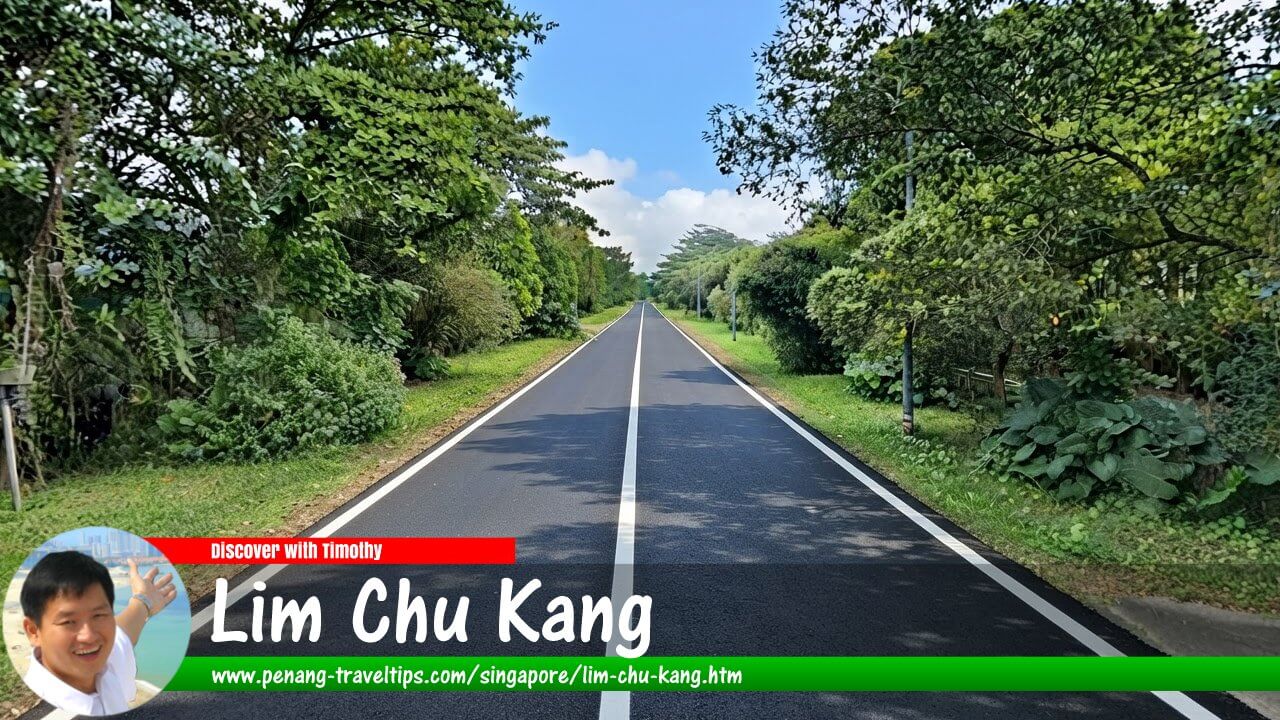 Lim Chu Kang, Singapore (AI image created on 10 August 2026)
The Lim Chu Kang Planning Area (Simplified Chinese: 林厝港, Traditional Chinese: 林厝港, Pinyin: Lín Cuò Gǎng, Malay: Lim Chu Kang, Tamil: லிம் சு காங்) is located in the northwestern corner of Singapore. It is one of the least urbanised parts of the island, characterised by farms, nature reserves, military camps, and cemeteries. Covering about 37.3 square kilometres, it is a sparsely populated area with only a few hundred civilian residents, making its population density among the lowest in Singapore1. Lim Chu Kang falls mainly within Postal District 25.
History of Lim Chu Kang
The name “Lim Chu Kang” originated from early Teochew settlers who cultivated gambier and pepper plantations in the 19th century. “Lim” refers to the surname of a prominent family, while “Chu Kang” (厝港) means “riverbank settlement” in Teochew and Hokkien dialects. Historically, the area was rural, dotted with kampongs (villages) and plantations. As Singapore developed, much of Lim Chu Kang was retained as farmland, training grounds, and land for cemeteries rather than being converted into urban housing estates.
Name and Pronunciation
“Lim Chu Kang” is pronounced Leem Choo Kahng, with the International Phonetic Alphabet (IPA) transcription /lɪm tʃuː kɑːŋ/.
Geography and Boundaries
Lim Chu Kang occupies the far northwest of Singapore, bounded by Sembawang to the northeast, Choa Chu Kang to the southeast, Tengah to the south, and the Straits of Johor to the west. It is dominated by forested land, farms, and restricted areas for military use. Lim Chu Kang also encompasses Sungei Buloh Wetland Reserve and the Kranji Marshes, important ecological sites.
The Lim Chu Kang Planning Area has only one subzone, the eponymous Lim Chu Kang subzone. In other words, the planning area is not further split into separate subzones.
Transport and Accessibility
Accessibility to Lim Chu Kang is limited compared to most other planning areas. The main road is Lim Chu Kang Road, which runs north–south and connects to the Kranji Expressway (KJE) and Bukit Timah Expressway (BKE). Public transport options are sparse, with a handful of bus services connecting to Choa Chu Kang and Kranji. There are no MRT stations within Lim Chu Kang itself; the nearest is Kranji station on the North South Line.
Residential Real Estate
Lim Chu Kang does not have typical residential neighbourhoods like other planning areas. Instead, it is zoned largely for agricultural, military, and cemetery use. Civilian housing is minimal, mainly scattered farmhouses. As such, there is no significant real estate market here, and residents typically live in farm-related quarters. For those working in Lim Chu Kang, housing is usually sought in nearby Choa Chu Kang or Woodlands, where HDB and private housing options are abundant2.
Landmarks and Attractions
Despite its sparse population, Lim Chu Kang holds cultural, historical, and ecological significance. Notable landmarks include:
- Sungei Buloh Wetland Reserve – Singapore’s first ASEAN Heritage Park, home to migratory birds and mangrove wildlife.
- Kranji War Cemetery – The resting place of World War II Allied soldiers.
- Neo Tiew Estate – A former HDB estate now used for military training.
- Lim Chu Kang Farms – The last remaining cluster of vegetable, fish, and goat farms in Singapore.
- Chua Chu Kang Columbarium and Cemeteries – Sites of heritage and cultural practices.
Community and Lifestyle
Lim Chu Kang is unlike the rest of urban Singapore. Instead of bustling housing estates, it offers a rural, rustic lifestyle connected to nature and agriculture. Many Singaporeans visit the area to explore farms, go bird-watching at Sungei Buloh, or pay respects at cemeteries. The government has announced that farming activities in Lim Chu Kang will be gradually consolidated into high-tech facilities, with some farms relocated to other parts of Singapore, as the area continues to evolve.
Where to Stay
Lim Chu Kang has very little conventional tourist accommodation. This is hardly surprising: the planning area is dominated by farms, military land, reservoirs, wetlands and rural roads rather than housing estates, shopping centres and commercial districts. Visitors planning a trip to Lim Chu Kang should therefore consider staying in nearby Kranji, Woodlands or Choa Chu Kang and making Lim Chu Kang a day excursion.
There is, however, an unusual accommodation option on the edge of the countryside: Kranji Sanctuary Resort, formerly associated with Gallop Kranji Farm Resort, on Neo Tiew Lane 2. The resort offers a rural setting quite unlike the conventional hotels found in central Singapore. It can be attractive to visitors who specifically want to experience Singapore's agricultural north-west rather than simply use Lim Chu Kang as a place to sleep.
However, visitors should check the property's current operating and accommodation arrangements carefully before booking. In May 2026, the Singapore Food Agency announced changes to land use in Lim Chu Kang, and the authorities confirmed that several affected farm leases will expire between December 2026 and March 2027. The Gallop Kranji Farm Resort site is among the properties affected, with its lease reported to expire in March 2027.1
For most travellers, staying outside Lim Chu Kang is the safer and more practical choice. Kranji MRT Station provides access to the north-west, while Choa Chu Kang and Woodlands offer substantially more accommodation, restaurants, supermarkets and other visitor facilities. A visitor can then hire a taxi or private-hire car to explore the farms and nature areas.
Lim Chu Kang is also not a place where you need to stay overnight to appreciate it. A half-day or full-day excursion can comfortably combine a farm visit with a meal and a visit to Sungei Buloh Wetland Reserve or another nearby nature attraction.
What to Eat
Food in Lim Chu Kang is closely connected to the area's agricultural character. Rather than having a concentration of hawker centres and restaurants, the planning area has farm-based dining, cafés and places where visitors can eat food surrounded by greenery and farmland.
One of the best-known destinations is Bollywood Farms, formerly known as Bollywood Veggies, at 100 Neo Tiew Road. The farm has long been known for its organic and locally grown produce and its in-house bistro, where visitors can enjoy home-style dishes in a rural setting. It is one of the places that makes Lim Chu Kang feel completely different from the rest of urban Singapore. :contentReference[oaicite:2]{index=2}
Another interesting possibility is farm-to-table dining. Several agricultural businesses in the Lim Chu Kang area grow vegetables and other produce for Singapore's food supply. The area is therefore a useful place to learn about local agriculture as well as eat.
Halal food is much less plentiful in Lim Chu Kang itself than in Singapore's urban neighbourhoods. Muslim visitors should not expect to find a large selection of halal-certified restaurants or hawker stalls. If halal food is important, it is advisable to eat before entering the rural area or bring suitable food with you, unless you have confirmed the current halal status of a particular farm restaurant.
For a broader selection of halal and non-halal food, Choa Chu Kang and Woodlands are much better choices. These neighbouring residential towns have established food centres, coffeeshops and shopping malls, so they are more suitable for visitors who want a substantial choice of meals.
Where to Eat
These are the places I would consider when planning a food-focused visit to Lim Chu Kang:
- Bollywood Farms, 100 Neo Tiew Road – One of the area's best-known farm destinations, with an in-house bistro serving home-style food and dishes associated with the farm's own produce. It is particularly worthwhile for visitors who want lunch in a countryside setting. The farm's current public listings identify it as a Lim Chu Kang attraction and farm-based dining destination.2
- Kranji countryside cafés and farm eateries – The roads around Neo Tiew and Lim Chu Kang have several small agricultural businesses where visitors may find refreshments, produce and occasional food-related experiences. Opening arrangements can vary considerably, so checking before making a special journey is advisable.
- Farm shops and produce outlets – One of the pleasures of visiting Lim Chu Kang is buying locally grown vegetables, eggs and other agricultural products directly from farms. These are not substitutes for a hawker lunch, but they make interesting additions to a countryside excursion.
- Choa Chu Kang neighbourhood food centres – If you want a full selection of Singaporean hawker food before or after visiting Lim Chu Kang, the food centres in neighbouring Choa Chu Kang are considerably more convenient. They offer Chinese, Malay, Indian and halal options at everyday local prices.
- Woodlands food centres – Woodlands is another useful fallback for visitors approaching Lim Chu Kang from the north. It has a large residential population and consequently a much broader choice of hawker stalls, coffeeshops and halal restaurants.
For visitors specifically looking for a meal in the countryside, Bollywood Farms is the obvious first choice. Its importance is not simply the food itself but the setting: you can eat while surrounded by greenery and agricultural land, something that is increasingly unusual in highly urbanised Singapore.
It is worth remembering, however, that Lim Chu Kang's food landscape is changing. In May 2026, the Singapore Food Agency announced a new land-use direction for the area. Five farm sites are affected, with three leases or tenancies expiring in December 2026 and March 2027, while two other farms have leases running into 2036 and 2037. The Government is also planning new agricultural areas further north and has launched new farm land tenders as part of its continuing food-security strategy.3
This means that some of the farm attractions and eateries mentioned in older travel guides may not continue indefinitely. Check the current operating status before making a special trip, particularly if you are visiting Lim Chu Kang specifically to see a particular farm or eat at a farm restaurant.
A Countryside Food Excursion
Lim Chu Kang is best experienced as a countryside excursion rather than a conventional food tour. Start in the morning, when the rural roads are cooler and agricultural activity is already under way. Visit a farm, purchase some locally grown produce, and then have lunch at one of the farm-based eateries that is operating that day.
You can then continue towards Sungei Buloh Wetland Reserve. The reserve is one of Singapore's most remarkable natural attractions and has a history going back to its opening as a nature park in 1993. It was gazetted as a nature reserve in 2002 and became Singapore's first ASEAN Heritage Park in 2003. Today it encompasses 202 hectares of mangroves, mudflats, ponds and forests.4
Sungei Buloh is particularly rewarding for birdwatchers. More than 200 bird species have been recorded there, including resident species and migratory birds. The migratory season is particularly interesting, when birds travelling along the East Asian-Australasian Flyway use Singapore's wetlands as a stopover.5
Another interesting nearby attraction is Kranji Marshes, one of Singapore's largest freshwater marshes. It covers 56.8 hectares, of which about eight hectares are accessible to the public. The marsh is part of the wider Sungei Buloh Nature Park Network and provides important habitat for wildlife.6
The combination of farms, wetlands and marshland makes Lim Chu Kang one of the few places where visitors can see a very different side of Singapore. There are no skyscrapers, major shopping malls or busy urban streets here. Instead, you encounter vegetable farms, nurseries, reservoirs, wetlands and long stretches of open land.
For families, Lim Chu Kang can be particularly memorable. Children who know Singapore mainly as a city of apartment towers and shopping centres can see where some of their food comes from, visit a working farm and observe goats, birds and other wildlife. It is an excellent opportunity to introduce the idea that Singapore has an agricultural landscape as well as an urban one.
For Muslim visitors, I would recommend planning the food component carefully. Lim Chu Kang itself should not be regarded as a halal-food destination. Instead, have a confirmed halal meal in Choa Chu Kang or Woodlands before or after your excursion, and treat the farm visit and nature attractions as the main experience.
Lim Chu Kang is therefore one of the few Singapore planning areas where the journey is almost as important as the destination. Come here for the farms, wetlands, birdlife and rural atmosphere rather than for hotels, shopping or a large selection of restaurants. If you approach it that way, Lim Chu Kang offers an unusually fascinating glimpse of Singapore's countryside and its continuing effort to maintain local food production.
Accommodation and Food References
- Singapore Food Agency – Government to Implement Land-Use Change in Lim Chu Kang
- Tripadvisor – Bollywood Farms
- Singapore Food Agency – New Lim Chu Kang Agricultural Land Tender and Enhanced Lease Framework
- National Parks Board – History of Sungei Buloh Wetland Reserve
- National Parks Board – Birdwatching at Sungei Buloh Wetland Reserve
- National Parks Board – Kranji Marshes
Fun Facts
Lim Chu Kang was once home to Neo Tiew Estate, an HDB estate completed in the 1970s. It was vacated in the early 2000s and has since been used exclusively for military training exercises3.
Map of Lim Chu Kang, Singapore
Sights in Lim Chu Kang
- Sungei Buloh Wetland Reserve (GPS: 1.33192, 103.67878)

Quick Facts
- Size: ~37.3 sq km
- Population: A few hundred residents
- Postal District: 25
- Name Origin: From Teochew/Hokkien “Chu Kang” (riverbank settlement) and Lim family
- Pronunciation: Leem Choo Kahng (/lɪm tʃuː kɑːŋ/)
- Main Road: Lim Chu Kang Road
- Nearest MRT Station: Kranji (North South Line)
- Key Landmarks: Sungei Buloh Wetland Reserve, Kranji War Cemetery, Lim Chu Kang farms
References
- Urban Redevelopment Authority – Planning Areas
- PropertyGuru – Singapore Property Market
- NLB Infopedia – Lim Chu Kang
Page Details
This page was created on 8 September 2025. Hi, my name is Timothy and created it from my research, for my own entertainment, knowledge and to satisfy my curiosity. I am providing the information to you in good faith and hope it is useful. I try to get the details as accurate as possible. I also try to update the page whenever I stumble on new details. So this and all my other pages are perpetual work in progress. If you discover any error, please politely inform me, pointing out where the error lies, and I will correct it as soon as possible. Your helpfulness will keep this page accurate, relevant and helpful to those who need the information.My videos of Singapore
Want to share your Singapore travel experiences or get tips from fellow travellers?
Join the Singapore Travel Tips Facebook GroupMore information for visiting and living in Singapore
Here are some related articles to help you get to know Singapore better.- Cost of Living in Different Singapore Neighbourhoods (2025 Guide)
- EZ-Link Card
- Owning a Car in Singapore
- Singapore MRT Map & Guide 2025
- Singapore Postal Districts and Postcodes
- Singapore Tourist Pass
- Taking the Bus in Singapore: A Visitor's Guide
- Understanding CCR, RCR and OCR in Singapore real estate
 Latest Pages & Updates
Buy Me A Coffee
If you enjoy the information I provide and want to support the work I do, please buy me a coffee! I appreciate it immensely, thank you so much!
