
Jurong West Travel Guide
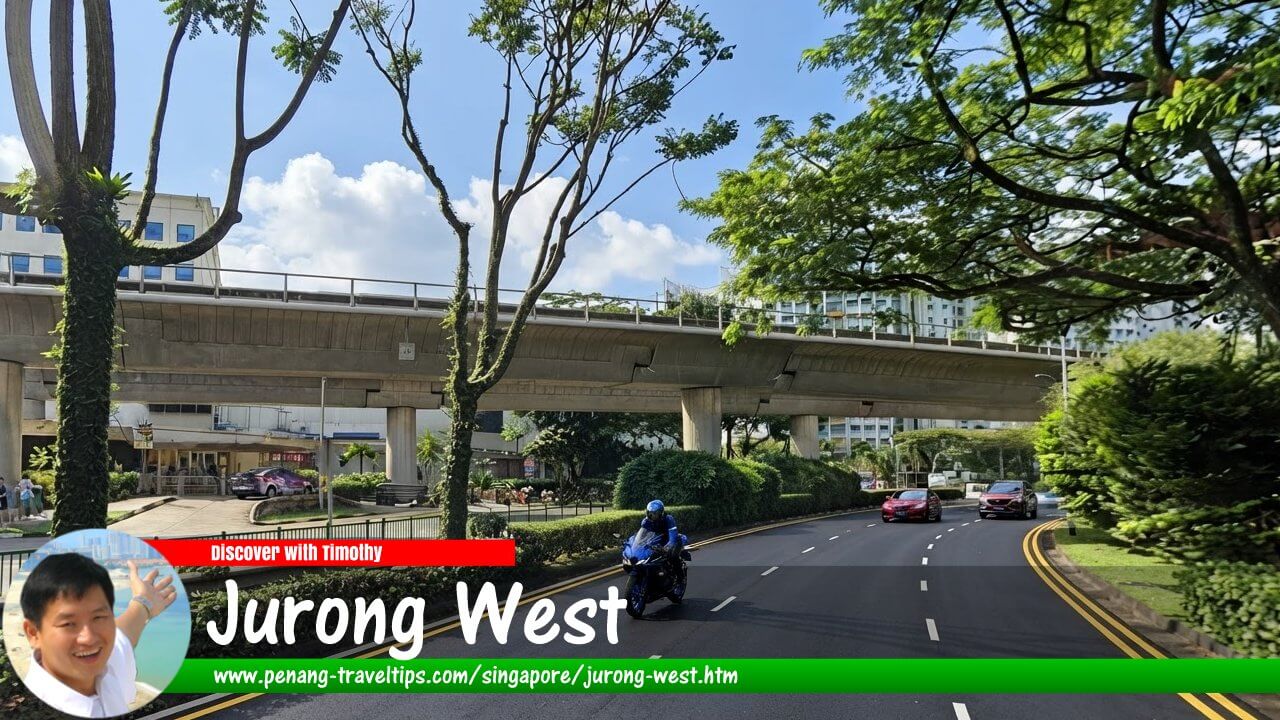 Jurong West, Singapore (AI image created on 9 August 2026)
The Jurong West Planning Area (Simplified Chinese: 裕廊西, Traditional Chinese: 裕廊西, Pinyin: Yù Láng Xī, Malay: Jurong Barat, Tamil: ஜூரோங் மேற்கு) is the largest residential town in the western part of Singapore. It covers 23.48 square kilometres and is part of the West Region. As of 2020, the population of Jurong West was around 262,7301, making it the most populous planning area in western Singapore. It lies mainly within Postal District 22, with smaller portions in District 61.
History of Jurong West
Jurong West was once a largely rural area consisting of swampland, fish farms, and kampungs. During the 1960s, the Singapore government launched the Jurong Industrial Estate project, and Jurong West was gradually developed into housing estates to accommodate workers and their families. By the 1980s and 1990s, Jurong West had become a major HDB town, complementing the industrial and commercial growth of the surrounding Jurong region.
Name and Pronunciation
“Jurong” is believed to have originated from the Malay word “jerung,” meaning “shark.” Jurong West, as its name suggests, refers to the western portion of the greater Jurong area. It is pronounced Joo-rong We-st, with the International Phonetic Alphabet (IPA) transcription /ˈdʒuː.rɒŋ wɛst/.
Geography and Boundaries
Jurong West is bordered by Jurong East to the east, Bukit Batok and Choa Chu Kang to the north, and Tengah to the northeast. To its south are the Jurong Industrial Estate and Jurong Island. Its location makes it both a residential and industrial support town.
Subzones of Jurong West
Transport and Accessibility
Jurong West is well connected by expressways and MRT lines. The Pan Island Expressway (PIE) and Ayer Rajah Expressway (AYE) serve the area, linking it to central and southern Singapore.
MRT Connectivity
Several MRT lines serve Jurong West, including:
- East West Line (EWL): Lakeside, Boon Lay, and Pioneer stations.
- North South Line (NSL): Accessible via nearby Jurong East interchange.
- Jurong Region Line (JRL): Currently under development, it will further enhance accessibility in the town.
Residential Real Estate
Jurong West is predominantly a residential area, with numerous HDB estates and a growing number of condominiums. As of 2025:
- HDB 4-room flats: SGD 450,000–600,000, depending on age and proximity to MRT.
- Private condominiums: SGD 1,200–1,600 per square foot.
- Monthly rental: HDB flats average SGD 2,100–2,700; condominiums SGD 3,000–4,0002.
Jurong West offers relatively affordable housing compared to central Singapore, making it attractive for families and students, especially with the presence of Nanyang Technological University (NTU).
Landmarks and Attractions
Jurong West features several notable institutions, parks, and community facilities. Key highlights include:
- Nanyang Technological University (NTU): One of Asia’s leading universities, occupying a large campus in Jurong West.
- Jurong West Sports and Recreation Centre: A major community sports facility with pools, gyms, and stadium.
- Lakeside Park and Chinese Garden: Scenic spots around Jurong Lake, shared with Jurong East.
- Boon Lay Place: A lively neighbourhood hub with eateries, markets, and shops.
- Jurong Point: One of Singapore’s largest suburban malls, located next to Boon Lay MRT station.
Community and Lifestyle
Jurong West is a vibrant mix of students, families, and long-time residents. NTU adds a youthful, international character to the town, while Jurong Point serves as a focal point for shopping and dining. Traditional wet markets, hawker centres, and neighbourhood shops continue to thrive, reflecting the balance between modern living and local heritage.
Where to Stay
Jurong West is primarily a large residential planning area rather than a hotel district, so there are relatively few conventional hotels within its boundaries. Visitors who want to explore Jurong West will generally find a better choice of accommodation in neighbouring Jurong East, Boon Lay and Bukit Batok. This is not a major disadvantage, however, because the area is well connected by MRT and bus services.
Coliwoo Boon Lay is one of the more useful accommodation choices near Jurong West. Located on Boon Lay Drive, it provides serviced-apartment-style accommodation and is particularly suitable for longer stays or visitors who prefer a residential environment rather than a conventional hotel. Its location is also convenient for exploring the western part of Singapore.
For visitors who prefer a mainstream hotel, Four Points by Sheraton Singapore, Riverview is a more substantial nearby option, although it is in the neighbouring River Valley area rather than Jurong West itself. A more convenient strategy for most visitors is to stay around Jurong East, where the hotel selection is stronger and the MRT interchange provides excellent connections to Jurong West.
Visitors who want to stay particularly close to the attractions and food of Jurong West can also consider accommodation around Jurong Point and Boon Lay. Jurong Point is directly connected to Boon Lay MRT Station and Boon Lay Bus Interchange, making it one of the most convenient transport and shopping hubs in western Singapore.
For most travellers, however, I would recommend treating Jurong West as a neighbourhood to explore rather than a place in which you necessarily need to stay. Staying in Jurong East gives you access to more hotels, while still putting Jurong West's food centres, shopping malls and neighbourhood attractions within easy reach.
What to Eat
Food is one of the strongest reasons to visit Jurong West. The planning area has several large neighbourhood hawker centres, including Jurong West Hawker Centre, 505 Jurong West Market & Food Centre, Taman Jurong Market & Food Centre, Boon Lay Place Food Village and Quality Road Hawker Centre. Together they provide a remarkably broad selection of inexpensive Singaporean food.
Jurong West Hawker Centre at 50 Jurong West Street 61 is one of the area's newer hawker destinations. It offers traditional Singaporean food alongside modern stalls, and is particularly useful for visitors who want to explore the food culture of the Jurong West heartland. Current food guides highlight stalls serving seafood, zi char, Western food and halal dishes1.
505 Jurong West Market & Food Centre at 505 Jurong West Street 52 is another excellent destination. A recent 2026 food guide highlights its fresh fish soup, curry rice, handmade bao and vegetarian food, showing the range of everyday dishes available there2.
Taman Jurong Market & Food Centre is particularly interesting for visitors because of its strong mixture of Chinese, Malay and Indian food. The centre has both halal and non-halal food, making it a particularly useful destination for groups with different dietary requirements3.
Jurong West is also unusually good for halal food. Current halal listings identify more than 90 halal places in the planning area, including restaurants, hawker stalls and outlets at Jurong Point4. This makes the planning area particularly convenient for Muslim visitors.
Another important food destination is Boon Lay Place Food Village at 221A Boon Lay Place. The centre has a long-established reputation for affordable local food, with stalls serving fishball noodles, nasi lemak, prawn noodles, oyster omelette and other Singaporean favourites5.
Visitors should also explore the coffeeshops scattered throughout Jurong West. Some of the area's most popular food is found not in famous tourist establishments but in these small neighbourhood premises, where stalls specialise in dishes such as chicken rice, ban mian, minced-meat noodles, nasi lemak, prata and Western food.
Where to Eat
These are some of the places worth considering when exploring Jurong West's food scene:
- Jurong West Hawker Centre, 50 Jurong West Street 61 – One of the principal hawker destinations in the planning area. It offers a broad selection of local food and includes halal choices. The centre is particularly useful for visitors exploring the Pioneer and Jurong West 505 neighbourhoods1.
- Rasa Sayang at Jurong West Hawker Centre – A halal stall serving affordable Western food. Its chicken chop is one of the stall's best-known dishes and provides a simple, inexpensive meal within the hawker centre1.
- 505 Jurong West Market & Food Centre, 505 Jurong West Street 52 – A particularly good destination for traditional neighbourhood hawker food. Current recommendations include fish soup, curry rice, vegetarian dishes and handmade bao2.
- Heng Heng Cooked Food at 505 Jurong West Market & Food Centre – Known for fresh fish soup with a clean, balanced broth and a chilli and sambal accompaniment. It is a good choice for a relatively light but satisfying local lunch2.
- Curry Papa at 505 Jurong West Market & Food Centre – A stall specialising in hearty curry rice. It is a useful choice for visitors wanting an inexpensive and filling Singaporean-style meal2.
- Sinar Harapan Chinese Muslim Food at 505 Jurong West Market & Food Centre – A halal hawker stall offering Chinese-Muslim food. It is particularly interesting for visitors wanting to explore the overlap between Chinese and Muslim culinary traditions.
- Taman Jurong Market & Food Centre, 3 Yung Sheng Road – A major neighbourhood hawker centre with both halal and non-halal stalls. Seafood, fish soup, noodles, nasi lemak and Malay dishes are among the food available3.
- Woodlands BBQ Seafood at Taman Jurong – A seafood option at the food centre for visitors wanting grilled seafood and other cooked dishes in a casual hawker environment.
- Boon Lay Place Food Village, 221A Boon Lay Place – One of Jurong West's best-known neighbourhood food centres. It has a particularly broad selection of traditional dishes and remains popular from breakfast through dinner5.
- O'Kee Fishball Noodle at Boon Lay Place Food Village – A stall specialising in fishball noodles and other noodle dishes. It is one of the stalls worth seeking out when exploring the food village5.
- Boon Lay Power Nasi Lemak – A well-known halal nasi lemak destination associated with the Boon Lay area. It is particularly popular for late-night and early-morning eating and is a good example of Singapore's distinctive supper culture.
- Ayza's Restaurant, 508 Jurong West Street 52 – A popular halal restaurant operating around the clock. It serves Indian and Malay-style food, including biryani, prata and other hearty dishes, making it especially useful for Muslim visitors or anyone looking for a late-night meal.
- Tang Tea House, 414 Jurong West Street 42 – A halal restaurant offering a broad Asian menu. It is a useful sit-down option for visitors who want something more substantial than hawker food.
- Rasa Istimewa Restaurant @ SAFRA Jurong – A halal seafood restaurant at SAFRA Jurong serving Malay-style seafood and other cooked dishes. It is particularly suitable for groups wanting a sit-down meal rather than individual hawker dishes.
- Super Sushi at Jurong Point – A halal Japanese restaurant serving sushi and other Japanese dishes. It is a convenient option for Muslim visitors shopping or dining around Jurong Point.
- Mr Teh Tarik Eating House, 456 Jurong West Avenue 1 – A halal-friendly casual dining destination specialising in teh tarik and Malaysian- and Singaporean-style food. It is particularly suitable for breakfast, supper or a casual drink.
- Quality Road Hawker Centre, 45 Quality Road – An older neighbourhood food centre serving breakfast and lunch dishes. It is particularly suitable for visitors who enjoy traditional local food and want to explore a less tourist-oriented part of western Singapore.
If you have only one meal to spare in Jurong West, I would recommend 505 Jurong West Market & Food Centre for a classic heartland hawker experience. Its mixture of fish soup, curry rice, vegetarian food and other inexpensive dishes makes it a particularly good introduction to everyday Jurong West dining2.
If you are more interested in halal food, make Jurong West Hawker Centre, Taman Jurong Market & Food Centre or the Boon Lay area your priorities. The planning area's large number of halal stalls and restaurants means Muslim visitors have an unusually broad choice of food4.
For an evening meal, Boon Lay Place Food Village is particularly attractive. The food centre has long been part of the western heartland food scene and offers a wide selection of dishes at relatively modest prices. It is also a good place to combine several small dishes rather than committing to one restaurant5.
Jurong West is also an excellent place to experience Singaporean supper culture. Several halal restaurants and coffeeshops remain open late, while stalls around Boon Lay and the residential estates serve people coming home after work. Ayza's Restaurant, for example, is listed as operating around the clock, making it a particularly convenient destination for late-night diners.
Visitors interested in shopping can combine their food excursion with Jurong Point, one of the major shopping centres in western Singapore. Its restaurants and food outlets provide an air-conditioned alternative to the hawker centres, while the surrounding Boon Lay neighbourhood offers a much more traditional heartland food experience.
One of the best things about eating in Jurong West is that the area does not feel designed for tourists. The hawker centres primarily serve residents, students and workers, so the prices and portions are generally geared towards everyday dining. If you want to see what ordinary Singaporeans eat in the western heartlands, Jurong West is an excellent place to do it.
The planning area's food scene also reflects the diversity of western Singapore. Chinese hawker food sits alongside Malay and Indian-Muslim dishes, halal Chinese-Muslim food, Western food, Japanese restaurants and modern casual dining. This makes Jurong West a surprisingly rewarding destination for a food-focused excursion.
For visitors with several hours available, I would suggest combining a visit to one of the hawker centres with Jurong Lake Gardens or the attractions around Jurong East. This turns a food trip into a broader exploration of western Singapore and gives you a better appreciation of the enormous residential communities that make up this part of the island.
Accommodation and Food References
- Time Out Singapore – Jurong West Hawker Centre Food Guide
- Kopitiam – 10 Must-Try Hawker Stalls at 505 Jurong West Market & Food Centre
- ThreeBestRated – Hawker Food in Jurong West
- HalalTag – Halal-certified Food in Jurong West
- Kopitiam – 10 Must-Try Hawker Stalls at Boon Lay Place Food Village
- Jurong Point – Official Website
Fun Facts
Jurong Point, with over 450 shops, is one of the largest neighbourhood malls in Singapore and is often described as a “town within a town”3.
Quick Facts
- Size: 23.48 sq km
- Population: ~262,730 (2020)
- Postal Districts: 22, 61
- Name Origin: Malay “jerung” (shark)
- Pronunciation: Joo-rong We-st (/ˈdʒuː.rɒŋ wɛst/)
- Main MRT Stations: Lakeside, Boon Lay, Pioneer (EWL)
- Main Expressways: PIE, AYE
- Key Landmarks: NTU, Jurong Point, Lakeside Park, Jurong West Sports Centre
- Average Property Prices: HDB 4-room ~SGD 450k–600k; Condos ~SGD 1,200–1,600 psf
Map of Jurong West, Singapore
Sights in Jurong West
- Boon Lay MRT Station (GPS: 1.33853, 103.70595)

- Jurong Point (GPS: 1.33754, 103.69692)

- Lakeside MRT Station (GPS: 1.34428, 103.72072)

- Pioneer MRT Station (GPS: 1.33754, 103.69692)

- Singapore Discovery Centre (GPS: 1.33192, 103.67878)

References
- Singapore Department of Statistics – Population Data
- PropertyGuru – Jurong West Property Market
- NLB Infopedia – Jurong
Page Details
This page was created on 8 September 2025. Hi, my name is Timothy and created it from my research, for my own entertainment, knowledge and to satisfy my curiosity. I am providing the information to you in good faith and hope it is useful. I try to get the details as accurate as possible. I also try to update the page whenever I stumble on new details. So this and all my other pages are perpetual work in progress. If you discover any error, please politely inform me, pointing out where the error lies, and I will correct it as soon as possible. Your helpfulness will keep this page accurate, relevant and helpful to those who need the information.My videos of Singapore
Want to share your Singapore travel experiences or get tips from fellow travellers?
Join the Singapore Travel Tips Facebook GroupMore information for visiting and living in Singapore
Here are some related articles to help you get to know Singapore better.- Cost of Living in Different Singapore Neighbourhoods (2025 Guide)
- EZ-Link Card
- Owning a Car in Singapore
- Singapore MRT Map & Guide 2025
- Singapore Postal Districts and Postcodes
- Singapore Tourist Pass
- Taking the Bus in Singapore: A Visitor's Guide
- Understanding CCR, RCR and OCR in Singapore real estate
 Latest Pages & Updates
Buy Me A Coffee
If you enjoy the information I provide and want to support the work I do, please buy me a coffee! I appreciate it immensely, thank you so much!
