
Geylang Travel Guide
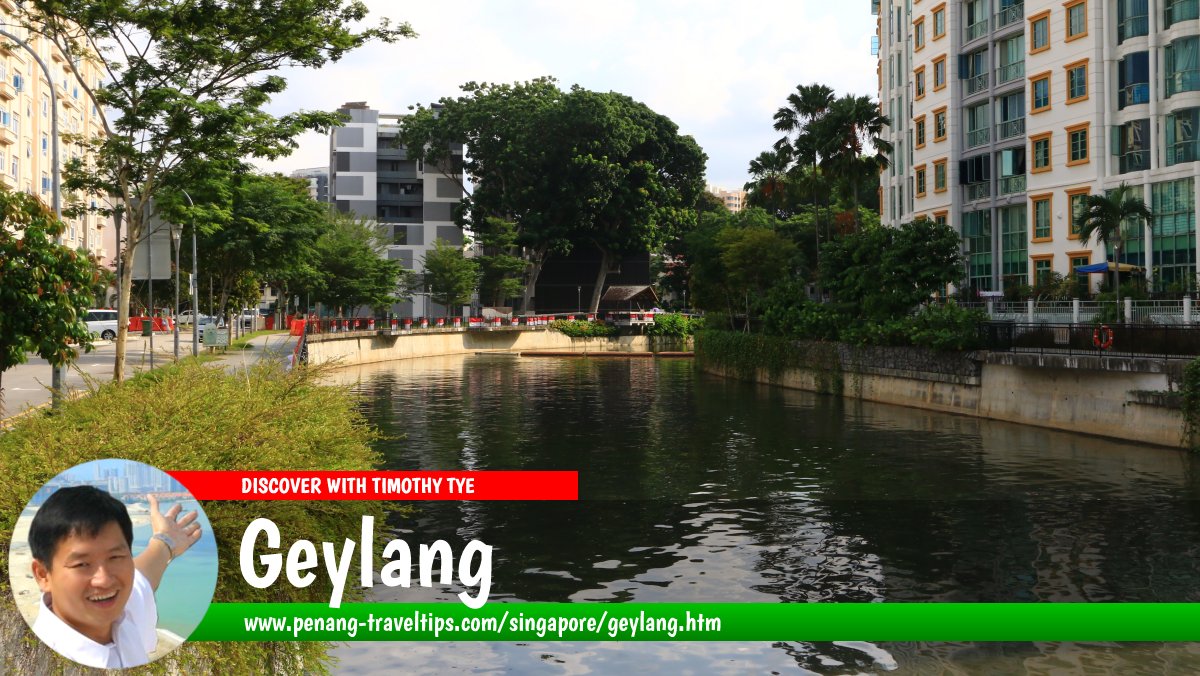 Geylang, Singapore (28 July 2017)
The Geylang Planning Area (Simplified Chinese: 芽笼, Traditional Chinese: 芽籠, Pinyin: Yá Lóng, Malay: Geylang, Tamil: கேலாங்) is located in the eastern part of the Central Region of Singapore. Covering 9.64 square kilometres, it had a population of about 112,000 as of 20201. Geylang is one of the oldest urban areas in Singapore, known for its bustling food scene, conserved shophouses, and diverse residential neighbourhoods. It lies within Postal Districts 13 and 14.
History of Geylang
The name “Geylang” has been traced to several possible origins. One theory is that it derived from the Malay word kilang, meaning “mill” or “factory,” as the area once hosted coconut plantations and processing sites. Another interpretation is that it came from geylang, meaning “to shift” or “to move,” reflecting the early movement of people and activities in the area. By the late 19th century, Geylang had become a thriving settlement with residential quarters, shops, and cultural institutions. It is today a place where heritage meets urban renewal.
Name and Pronunciation
“Geylang” is pronounced as Gay-lang, with the International Phonetic Alphabet (IPA) transcription /ˈɡeɪ.lɑːŋ/.
Geography and Boundaries
The Geylang Planning Area is bordered by the Kallang Planning Area to the west, Rochor Planning Area to the northwest, Paya Lebar Planning Area to the northeast, and Marine Parade Planning Area to the south. It sits along major roads such as Changi Road, East Coast Road, and Jalan Eunos.
Transport and Accessibility
Geylang is well connected by expressways and MRT lines. The East Coast Parkway (ECP) and Pan Island Expressway (PIE) run nearby, linking the town to the city centre and Changi Airport.
MRT Connectivity
Several MRT stations serve the Geylang Planning Area, spread across different lines:
- East West Line (EWL): Aljunied, Kallang, Paya Lebar, and Eunos.
- Circle Line (CCL): Paya Lebar, Dakota, and Mountbatten.
- Downtown Line (DTL): MacPherson.
- Thomson-East Coast Line (TEL): Future stations in Marine Parade will further improve access.
Residential Real Estate
Geylang is unique for its mix of landed properties, conserved shophouses, private apartments, and newer condominiums. It is also well known for freehold properties, unlike many other parts of Singapore dominated by 99-year leasehold housing. As of 2025:
- Freehold condominiums in Geylang average around SGD 1,600–2,100 per square foot.
- A 1,000 sq ft (93 sq m) freehold unit typically costs between SGD 1.6 million and 2.1 million.
- HDB flats in surrounding areas are generally priced between SGD 450,000 and 700,000 for 4-room units.
- Rentals in Geylang range from SGD 2,800–3,800 for condominiums and SGD 2,000–2,500 for HDB flats2.
These prices are competitive compared to central planning areas, making Geylang attractive to investors and residents seeking central living with heritage character.
Landmarks and Attractions
Geylang is renowned for its colourful mix of cultural and lifestyle landmarks. Highlights include:
- Old Geylang Shophouses: Rows of conserved shophouses with intricate facades, housing eateries, boutique hotels, and shops.
- Geylang Serai: The cultural heart of Singapore’s Malay community, home to the Geylang Serai Market and festive bazaars during Hari Raya.
- Kong Hock Tong Temple: A historic Chinese temple founded in the 19th century.
- Sports Hub and Indoor Stadium (nearby in Kallang): Attract visitors for concerts and sporting events.
- Geylang East Public Library: A popular community resource.
Community and Lifestyle
Geylang is one of Singapore’s most vibrant food destinations, famous for late-night eateries, seafood restaurants, and hawker stalls. Popular dishes such as frog porridge, durian, and claypot rice are especially associated with the area. The neighbourhood is also home to schools, community clubs, and healthcare facilities, including Geylang Polyclinic.
Where to Stay
Geylang has a large concentration of hotels, making it one of the more practical planning areas for visitors who want reasonably priced accommodation with easy access to central Singapore. Much of the accommodation is concentrated along Geylang Road and the surrounding lorongs, with choices ranging from budget hotels to more comfortable mid-range properties.
ibis budget Singapore Gold at 123 Sims Avenue is one of the more convenient budget options within the planning area. Its location near the eastern end of Geylang puts guests close to Geylang Serai, Paya Lebar and the neighbourhood's extensive selection of restaurants and hawker food. It is particularly suitable for travellers who are more interested in location and affordability than resort-style facilities.
Hotel 81 Orchid and other Hotel 81 properties provide another budget-oriented option in Geylang. The hotels are generally compact and straightforward, but their location is useful for visitors who want inexpensive accommodation close to the MRT and the late-night food scene.
For visitors wanting something a little more comfortable, the hotels around the Paya Lebar end of Geylang are worth considering. Aqueen Hotel Paya Lebar is just outside the planning area's western edge and is particularly convenient because it is close to Paya Lebar MRT Station, which is an interchange between the East West Line and Circle Line.
Geylang accommodation is generally less expensive than the luxury hotels of Marina Bay, Orchard Road and the central business district. The trade-off is that the streets around the budget hotels have a distinctly urban and sometimes gritty character. This is not necessarily a disadvantage: for travellers who want to experience real neighbourhood Singapore and eat local food late into the evening, Geylang can be an excellent base.
Families and visitors seeking a quieter atmosphere may prefer to stay closer to Paya Lebar or Katong, while independent travellers and food enthusiasts may appreciate staying directly in Geylang. The MRT makes the area surprisingly convenient: Aljunied and Dakota stations provide access to the central and eastern parts of Singapore, while Paya Lebar adds an interchange to the Circle Line.
What to Eat
Food is one of the principal reasons to visit Geylang. The planning area has an unusually broad mixture of Malay, Indonesian, Chinese, Indian-Muslim and modern Asian food, together with some of Singapore's best-known durian shops. Many restaurants remain open late, making Geylang particularly attractive to visitors who enjoy eating after dark.
The most important destination for Malay food is Geylang Serai Market and Food Centre. Located at 1 Geylang Serai, the market stands at the heart of the historic Malay community of Geylang Serai. Its food section is particularly strong in Malay and Muslim cuisine, with dishes such as nasi padang, nasi lemak, mee rebus, mee siam, satay and traditional desserts. Current listings identify more than 40 halal food stalls in the market1.
Geylang Serai is especially atmospheric during the fasting month of Ramadan, when the surrounding streets and market area become the setting for one of Singapore's best-known pasar malam traditions. Even outside Ramadan, however, the market provides an excellent introduction to Malay food and culture.
Another important food destination is Geylang East Market & Food Centre at 117 Aljunied Avenue 2. It is more of a neighbourhood hawker centre than a tourist attraction and is therefore useful for visitors wanting inexpensive everyday Singaporean food. The centre serves the surrounding residential community and has stalls selling noodles, rice dishes, porridge and other local favourites.
Geylang is also famous for frog porridge. Restaurants along Geylang Road have been serving claypot frog porridge for decades, with the dish usually accompanied by ginger and spring onions or a spicy sauce. It is one of the more unusual local specialities that visitors can try in the area.
Another Geylang institution is dim sum and late-night Chinese food. Several restaurants and coffeeshops operate into the early morning, making the area particularly popular with people looking for supper. This late-night food culture is one of Geylang's defining characteristics and gives the planning area a different atmosphere from Singapore's more polished tourist districts.
Geylang is also an excellent destination for halal food. In addition to Geylang Serai Market, the planning area has numerous Malay and Indian-Muslim restaurants serving nasi padang, biryani, murtabak, prata and other dishes. 89.7 Supper Club, for example, operates around the clock and is one of the options for halal supper in the eastern part of Geylang2.
For visitors wanting something more formal, Saffrons Restaurant at Wisma Geylang Serai serves Indian food and is halal-certified, while Mutiara Seafood provides halal zi char and seafood. The latter is operated by JUMBO Group and provides a useful alternative to the hawker centres3.
Where to Eat
These are some of the places worth considering when exploring Geylang's food scene:
- Geylang Serai Market and Food Centre, 1 Geylang Serai – The essential destination for Malay and halal hawker food in Geylang. The market is particularly good for nasi padang, nasi lemak, mee rebus, mee siam, satay and traditional Malay desserts1.
- Sinar Pagi Nasi Padang – A well-known stall at Geylang Serai Market serving traditional nasi padang. Choose rice and then select from the range of curries, vegetables, meats and sambal. It is one of the best ways to experience the variety of Malay food in a single meal.
- Warong Nenek Obek – A stall associated with traditional Malay dishes including nasi rawon. Rawon is a dark, richly flavoured Indonesian beef soup made with keluak, and is a particularly interesting dish for visitors who want to go beyond Singapore's better-known Malay foods.
- Warung Solo – A popular Indonesian food destination offering dishes from the Malay-Indonesian culinary tradition. It is particularly useful for visitors wanting to explore the connections between Singaporean Malay food and the cuisines of Indonesia4.
- Otak-Otak Kampung at Geylang Serai – A useful stop for otak-otak, the spicy fish paste traditionally wrapped in banana leaf and grilled. It makes a good snack between meals while exploring the market.
- Geylang East Market & Food Centre, 117 Aljunied Avenue 2 – A more everyday neighbourhood hawker centre. It is a good choice for visitors who want inexpensive local food away from the better-known tourist destinations.
- Geylang Bahru Market & Food Centre – Although towards the north-western side of the planning area, this neighbourhood centre provides another broad selection of hawker food and is useful for visitors exploring the Geylang Bahru side of the district.
- Singapore Nasi Kandar – A 24-hour halal Indian-Muslim restaurant at Geylang Road. It is particularly useful for visitors looking for nasi kandar or a late-night meal, with current listings showing the restaurant operating around the clock2.
- 89.7 Supper Club – A halal late-night and 24-hour supper destination at Geylang East Avenue 3. It is particularly useful for Muslim visitors who arrive late or simply enjoy Singapore's distinctive supper culture2.
- Mr & Mrs Mohgan's Super Crispy Prata – A popular Indian-Muslim eatery known for crispy prata and other supper favourites. It is a good choice for visitors who want a simple meal of prata with curry.
- Saffrons Restaurant at Wisma Geylang Serai – A halal Indian restaurant offering biryani and other Indian dishes. It is a useful sit-down alternative to the hawker stalls3.
- Mutiara Seafood at Wisma Geylang Serai – A halal seafood and zi char restaurant operated by JUMBO Group. It is particularly suitable for groups wanting a shared Chinese-style seafood meal while observing halal requirements3.
- Geylang Lor 9 Fresh Frog Porridge – One of the restaurants associated with Geylang's famous frog-porridge tradition. The claypot porridge is commonly paired with ginger-and-spring-onion frog or a spicy frog dish, providing an unusual local dining experience.
- Sin Huat Seafood Restaurant – A long-established Geylang restaurant known particularly for seafood. Its signature crab bee hoon has achieved almost legendary status among Singapore food enthusiasts and is best treated as a special-occasion meal.
- Durian stalls along Geylang Road – Geylang is one of Singapore's best-known areas for durian, with numerous fruit shops operating along the main road. During the durian season, visitors can compare varieties such as Mao Shan Wang, D24 and Red Prawn. Prices vary considerably according to variety and season.
If you have only one meal to spare in Geylang, I would recommend Geylang Serai Market and Food Centre if you are interested in Malay or halal food. It gives you not just a meal but also an opportunity to see the cultural heart of the Geylang Serai community.
For something more distinctly associated with Geylang itself, try frog porridge. It is one of the area's signature foods and makes for a memorable experience precisely because it is not something most visitors encounter elsewhere in Singapore.
Geylang is particularly good for late-night eating. Restaurants and food stalls remain open well after the conventional dinner period, and some halal establishments operate through the night. This makes the area a useful destination for travellers arriving late in Singapore, night owls and visitors who want to experience the city's supper culture2.
Muslim visitors will find Geylang especially convenient. The concentration of halal stalls around Geylang Serai, together with the many Malay and Indian-Muslim restaurants along Geylang Road, means there is a very broad range of halal food. From nasi padang and nasi lemak to biryani, prata and seafood, visitors can spend several days exploring the area without running out of choices1.
One of the best ways to explore Geylang is therefore to come without a rigid restaurant itinerary. Start at Geylang Serai Market in the daytime, walk along Geylang Road, stop for a snack or drink, return in the evening for dinner, and then explore the late-night restaurants and durian shops. Geylang is a neighbourhood best experienced through its food and atmosphere rather than through a checklist of attractions.
It is also worth remembering that Geylang has a more complex character than its food reputation alone suggests. The planning area contains a historic Malay community, busy commercial streets, traditional shophouses, temples and mosques, residential estates and Singapore's well-known red-light district. Visitors should therefore expect a lively and sometimes gritty urban environment rather than the polished atmosphere of Marina Bay or Orchard Road.
Accommodation and Food References
- HalalTag – Geylang Serai Market and Food Centre
- Time Out Singapore – Geylang Food Guide
- Saffrons – Halal Food Near Geylang 2026
- Tripadvisor – Geylang Restaurants
- Booking.com – Hotels near Geylang Serai Market
Fun Facts
Geylang Road is one of Singapore’s oldest thoroughfares, built as early as the mid-19th century, and still serves as the main artery of the town today3.
Map of Geylang, Singapore
MRT Stations in Geylang
- Aljunied MRT Station (GPS: 1.31641, 103.88304)

- Dakota MRT Station (GPS: 1.30824, 103.88582)

- MacPherson MRT Station (GPS: 1.32678, 103.89019; CC10)

- Mattar MRT Station (GPS: 1.32688, 103.88321; DT25)

- Mountbatten MRT Station (GPS: 1.30631, 103.88244)

- Ubi MRT Station (GPS: 1.32979, 103.89922)

Apartments, Condominiums and selected HDB Flats in Geylang
- Avant Residences (GPS: 1.31363, 103.88234)

- Dawn Ville (GPS: 1.31256, 103.89458) 1 Butterworth Ln, S 439444; P: +65 6256 9333


- Katong Ville (GPS: 1.31311, 103.89368) 88 Tanjong Katong Rd, S 436958

- Park 1 Suites (GPS: 1.314003, 103.889444)

- Paya Lebar Residences (GPS: 1.31753, 103.89134) 27 Paya Lebar Rd, S 409042; P: +65 6741 7628

- SimsVille Condominium (GPS: 1.31727, 103.88876) 2 Geylang East Ave 2, S 389754; P: +65 6741 4686

- Sunflower View (GPS: 1.31308, 103.88833)

- The Water Edge (GPS: 1.31379, 103.88874)

Commercial Buildings in Geylang
- City Plaza (GPS: 1.31334, 103.89372) 64 Tanjong Katong Rd, S 436956; P: +65 6746 2218

- Elite Building (GPS: 1.31451, 103.88218)

- WIS@Changi (GPS: 1.31659, 103.9012) 116 Changi Rd, S 419718

Hotels in Geylang
- AL Asia Hotel (GPS: 1.31341, 103.88464)

Markets, Hawker Centres and Food Courts in Geylang
- 21 Old Airport Road (GPS: 1.30755, 103.88448)
- Haig Road Market & Food Centre (GPS: 1.3152, 103.89554) 14 Haig Rd, S 430014

- Kallang Estate Food Centre (GPS: 1.3074, 103.88403)

- Old Airport Road Food Centre (GPS: 1.30824, 103.88582)

- Pasar Geylang Serai (GPS: 1.31672, 103.89827) 1 Geylang Serai, S 401001

Parks and Recreational Areas in Geylang
- Geylang East ActiveSG Swimming Complex (GPS: 1.32129, 103.88784) 601 Aljunied Ave 1, S 389862; P: +65 6745 7175

- Geylang East Park (GPS: 1.3218, 103.88769) 601 Aljunied Ave 1, S 389862; P: +65 6745 7175

- Geylang Park Connector (GPS: 1.31019, 103.8888)

- Kampong Ubi Community Centre (GPS: 1.31775, 103.9007) 10 Jln Ubi, S 409075; P: +65 6742 3564

- Kembangan-Chai Chee Community Hub (GPS: 1.31761, 103.89953) 11 Jln Ubi, S 409074; P: +65 3165 8017

- MacPherson Community Club (GPS: 1.32361, 103.88472) 400 Paya Lebar Way, S 379131; P: +65 6841 1085

Petrol Stations in Geylang
- Caltex (GPS: 1.32541, 103.89082) 128 Paya Lebar Road, S 409013; P: +65 6749 8969

- Shell (GPS: 1.32169, 103.89166) 98 Paya Lebar Road, S 409008; P: +65 6747 6938

Religious Buildings in Geylang
- Charis Tabernacle (GPS: 1.31334, 103.89372) 64 Tanjong Katong Rd, S 436956; P: +65 6746 2218
- Chong Tuck Tong Temple (GPS: 1.31356, 103.88332)

- Church of Our Lady Queen of Peace (GPS: 1.31224, 103.89363) 4 Sandy Ln, S 437321; P: +65 6744 2879

- Foo Hai Ch'an Monastery (GPS: 1.31793, 103.88836) 87 Geylang East Ave 2, S 389753; P: +65 6748 6676

- Hoon Sian Keng Temple (GPS: 1.3163, 103.90102) 82 Changi Rd, S 419716; P: +65 6344 2571

- Khadijah Mosque (GPS: 1.3142, 103.88604)

- Masjid Wak Tanjong (GPS: 1.3175, 103.89194) 25 Paya Lebar Rd, S 409004; P: +65 6747 2743

- Sagaramudra Buddhist Institute (GPS: 1.30824, 103.88582)

- Soon Thian Keing Temple (GPS: 1.31486, 103.88572)

- Sri Sivan Temple (GPS: 1.31844, 103.88873) 24 Geylang East Ave 2, S 389752; P: +65 6743 4566

Shopping malls in Geylang
- Centropod@Changi (GPS: 1.31654, 103.90055) 80 Changi Rd, S 419715; P: +65 6702 3500

- City Plaza (GPS: 1.31518, 103.89331)

- KINEX (GPS: 1.31379, 103.88874)

- Joo Chiat Complex (GPS: 1.31568, 103.89887) 1 Joo Chiat Rd, S 420001; P: +65 6746 9965

- Paya Lebar Square (GPS: 1.31914, 103.89253) 60 Paya Lebar Rd, S 409051; P: +65 6702 3107

- PLQ Mall (GPS: 1.31766, 103.89316) 10 Paya Lebar Rd, S 409057; P: +65 6955 8800

- SingPost Centre (GPS: 1.3189, 103.89404) 10 Eunos Rd 8, S 408600
- Tanjong Katong Complex (GPS: 1.3164, 103.89437)

Sights in Geylang
- Wisma Geylang Serai cultural heritage integrated hub (GPS: 1.31649, 103.89656) 1 Engku Aman Turn, S 408528

Streets in Geylang
- Aljunied Road
- Circuit Link
- Dakota Crescent
- Geylang East Central
- Geylang Road
- Guillemard Road
- Lorong 19 Geylang
- Lorong 21 Geylang
- Lorong 21A Geylang
- Lorong 24 Geylang
- Lorong 26 Geylang
- Lorong 28 Geylang
- Lorong 30 Geylang
- Lorong 34 Geylang
- Lorong 36 Geylang
- Lorong 38 Geylang
- Lorong 40 Geylang
- Old Airport Road
- Paya Lebar Road
- Sims Avenue
- Ubi Avenue 2
Map of the subzones of Geylang
Quick Facts
- Size: 9.64 sq km
- Population: ~112,000 (2020)
- Postal Districts: 13, 14
- Name Origin: Possibly from Malay “kilang” (mill/factory) or “geylang” (to move/shift)
- Pronunciation: Gay-lang (/ˈɡeɪ.lɑːŋ/)
- Main MRT Stations: Aljunied, Paya Lebar, Dakota, Eunos, MacPherson
- Main Expressways: PIE, ECP
- Key Landmarks: Geylang Serai, shophouses, Kong Hock Tong Temple
- Average Property Prices: Condominiums ~SGD 1,600–2,100 psf; HDB 4-room ~SGD 450k–700k
References
- Singapore Department of Statistics – Population Data
- PropertyGuru – Geylang Property Market
- NLB Infopedia – Geylang
Page Details
This page was created on 8 September 2025. Hi, my name is Timothy and created it from my research, for my own entertainment, knowledge and to satisfy my curiosity. I am providing the information to you in good faith and hope it is useful. I try to get the details as accurate as possible. I also try to update the page whenever I stumble on new details. So this and all my other pages are perpetual work in progress. If you discover any error, please politely inform me, pointing out where the error lies, and I will correct it as soon as possible. Your helpfulness will keep this page accurate, relevant and helpful to those who need the information.My videos of Singapore
Want to share your Singapore travel experiences or get tips from fellow travellers?
Join the Singapore Travel Tips Facebook GroupMore information for visiting and living in Singapore
Here are some related articles to help you get to know Singapore better.- Cost of Living in Different Singapore Neighbourhoods (2025 Guide)
- EZ-Link Card
- Owning a Car in Singapore
- Singapore MRT Map & Guide 2025
- Singapore Postal Districts and Postcodes
- Singapore Tourist Pass
- Taking the Bus in Singapore: A Visitor's Guide
- Understanding CCR, RCR and OCR in Singapore real estate
 Latest Pages & Updates
Buy Me A Coffee
If you enjoy the information I provide and want to support the work I do, please buy me a coffee! I appreciate it immensely, thank you so much!
