
Portman Mews South, London
Overview
Portman Mews South is a narrow, primarily residential one-way mews that runs from Orchard Street in the east to Portman Street in the west, tucked behind the grander Georgian facades of central Marylebone in the City of Westminster. The street retains the intimate, slightly tucked-away character typical of London mews: low-rise former service buildings, many converted into attractive homes or small creative workplaces, cobbled or block-paved surfacing, and a calm, village-like atmosphere amidst busy central London.
Setting and neighbouring streets
Portman Mews South sits just south of Wigmore Street and a short walk north of the retail thoroughfare of Oxford Street. Nearby streets include Orchard Street to the east, Portman Street to the west and the wider Portman Estate grid to the north and south. To the north you will find Portman Square and its gardens; to the south the character transitions to mixed residential and small commercial properties. The mews feels notably quieter than the surrounding main streets, making it popular with residents seeking central yet peaceful addresses.
How the street is like
Physically, Portman Mews South is short and narrow — the kind of street where delivery vans need to navigate carefully and where you often step from busy pavement into a small, cobbled residential lane. Houses tend to be two to three storeys, many with garage doors at ground level and living space above. Landscaping is modest but well kept: window boxes, clipped hedges and occasional street trees. A sense of privacy and seclusion is a defining quality.
History and development
The mews originated in the 18th and early 19th centuries as service yards for the larger townhouses on the surrounding streets of the Portman Estate. Historically, these mews provided stabling, coach houses and servants' accommodation for wealthy residents; over time, with the decline of household staff and the rise of motor transport, they evolved into light industrial and storage uses and later into desirable residential properties. Much of the built fabric visible today dates from the Georgian and early Victorian periods, though many façades and interiors have been substantially remodelled in the 20th and 21st centuries.
Name and pronunciation
The name comes from its association with the Portman family and the Portman Estate that developed much of this area of Marylebone in the 18th century. The word Portman is pronounced commonly as “PORT-man” with the IPA rendering /ˈpɔːrtmən/ (British English). The addition “Mews South” simply distinguishes this mews from neighbouring mews and service lanes on the Estate.
Interesting sights and nearby attractions
Although Portman Mews South itself is modest in scale, it sits within a cluster of attractions that make the area attractive to visitors and locals alike:
- Portman Square and its private garden square — a classic Georgian garden square a short walk away.
- High-end shops and boutiques along nearby Wigmore Street and Oxford Street.
- Architectural interest in the surviving mews façades and converted coach houses — popular with walkers and photographers interested in London's hidden lanes.
- Independent cafés and small design studios tucked into neighbouring streets.
Real estate: sizes, prices & rents (estimates)
Typical property sizes in Portman Mews South are compact compared to suburban homes: many mews houses range from about 800–2,000 sq ft (≈74–186 sq m), depending on the number of storeys and whether a garage/annex is included.
Price guidance (estimates as of Aug 2025): central Marylebone mews houses command a premium because of location and rarity. Small mews houses of around 800–1,000 sq ft might sell for approximately £900,000–£1.6m; larger, well-appointed mews homes of 1,500–2,000 sq ft can reach £2.5m–£5m or more depending on finish and outside space. Rents for mews homes vary widely but can fall in the range of roughly £3,000–£10,000 per calendar month depending on size, condition and furnishings. These figures reflect the central London market premium: prices in Portman Mews South and nearby mews are typically higher than average London prices because of the Marylebone/Westminster postcode and proximity to central amenities.
Note: the numbers above are approximate estimates and should be verified with current property listings or a local agent for exact, dated figures.
Transport: Underground, lines and buses
The nearest London Underground access is a short walk from Portman Mews South. Key stations within easy reach include Bond Street Station (served by the Central and Elizabeth lines), Oxford Circus Station (served by the Central, Bakerloo and Victoria lines) and Great Portland Street Station (served by the Circle, Hammersmith & City and Metropolitan lines). These provide fast connections across central London and beyond.
Local bus services run along nearby Oxford Street and along the wider Portman Estate roads. Bus stops are located on Orchard Street and Oxford Street within a short walking distance of the mews; these stops link to numerous east-west and north-south routes across central London.
Practical tips for visitors
Portman Mews South is best enjoyed on foot — it rewards slow walking and looking up at Georgian brickwork, old coach doors and subtle architectural details. Photography is popular but be considerate: these are private homes, and residents appreciate discretion. If you are visiting cafés or shops nearby, note that parking is extremely limited; the mews is mainly residential and not intended for long-stay public parking.
Fun fact
Like many London mews, Portman Mews South embodies the city's layered history: what was once the back-of-house for grand townhouses is now prized front-line living. The mews pattern — small, service lanes tucked behind elegant streets — is one of London's most charming urban survivals and feels, unexpectedly, like a little village within the metropolis.
Quick Facts
Location: Portman Mews South — between Orchard Street (east) and Portman Street (west).
Ward / Borough: Marylebone, City of Westminster.
Character: Short, cobbled, one-way residential mews.
Typical property size: ~800–2,000 sq ft (≈74–186 sq m).
Estimated prices (Aug 2025): Sales ~£900k–£5m; rents ~£3,000–£10,000 pcm (varies with size & finish).
Nearest tubes: Bond Street, Oxford Circus, Great Portland Street (short walk).
Access: Bus stops on Orchard Street & Oxford Street nearby; largely pedestrian friendly.
References
- Portman Estate — history and estate information
- Historic England — notes on London mews and conservation
- Rightmove — recent sales and rental listings for Marylebone / Portman Estate
- Zoopla — market prices and property data
- Transport for London — station and bus stop information
Map of Portman Mews South, London
Painting of Portman Mews South
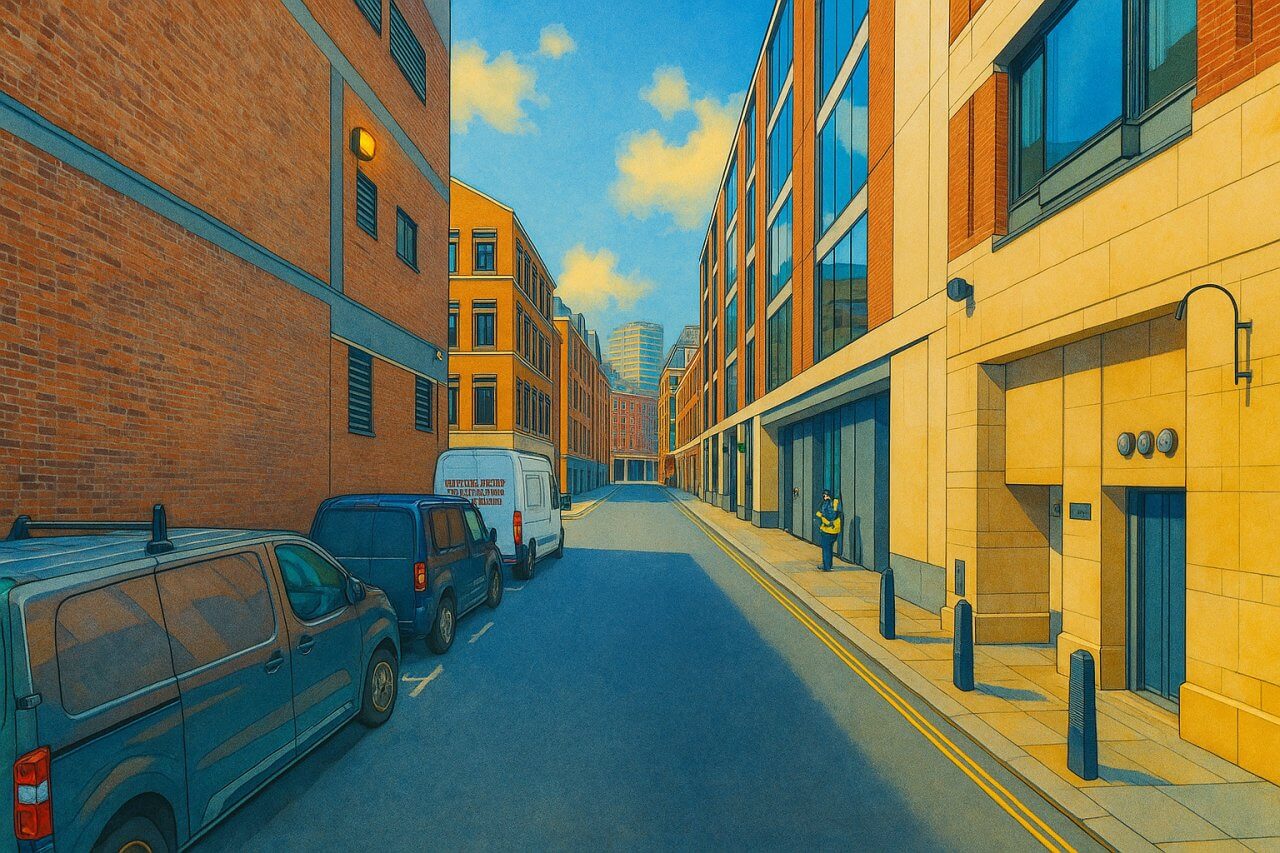 Painting of Portman Mews South
Page Details
This page was created on 8 August 2025. Hi, my name is Timothy and created it from my research, for my own entertainment, knowledge and to satisfy my curiosity. I am providing the information to you in good faith and hope it is useful. I try to get the details as accurate as possible. I also try to update the page whenever I stumble on new details. So this and all my other pages are perpetual work in progress. If you discover any error, please politely inform me, pointing out where the error lies, and I will correct it as soon as possible. Your helpfulness will keep this page accurate, relevant and helpful to those who need the information.Moving to London?
New to London and need a place to live? Read our Renting A Flat Guide. This guide covers everything you need to know about renting a flat in London, from viewing to signing.Streets of London
Come, let's explore and discover the streets of London together! Listed here afre the Streets of London that I have documented. Dive in and discover!Map of Streets in London
View all the streets that I have documented on Google Maps in this Map of Streets in London.Want to share your London travel experiences or get tips from fellow travellers?
Join the London Travel Tips Facebook GroupMore information for visiting London
Here are some related articles to help you get to know London better.- Cost of Living in London: Discover the true cost of living in London, including housing, transport, groceries, and more - plus tips for budgeting in one of the world's most expensive cities.
- Driving in London: Planning to drive in London? Learn about roads, car rentals, parking, tolls, and key tips for tourists and visitors from outside the capital.
- Driving Tips for Visiting London: Thinking of driving to London? Discover the best times to travel, congestion tips, parking apps, breakdown help, and petrol advice for a smoother journey.
- Evolution of London's Streets: Discover the fascinating history of how London's streets developed from ancient footpaths to today's complex network of roads across the capital.
- History of Immigration to London: Discover the rich history of immigration to London, from Huguenots to Bangladeshis, and how diverse communities have shaped the city's vibrant identity.
- How Big Is London Compared to Other World Cities?
- How London's Streets Measure Up: A Global Comparison of Road Widths
- How Streets of London are Named: Discover how London streets get their names, who decides them, and how historic, political, and public influences shape street naming in the capital.
- How the Grosvenor Family Came to Own Much of Mayfair, Belgravia and Pimlico: Explore how the Grosvenor family came to own much of Mayfair, Belgravia, and Pimlico, and learn about their historical connection (or lack thereof) with the British royal family and government.
- Living and working in London
- London's Quiet Collapse: How Living Standards Fell as Costs Skyrockted (1975-2025): Explore how London residents endured rising costs and falling living standards from 1975 to 2025 - from rocketing rents to wage stagnation and inflation.
- Marvel of the London Underground: Discover the history, challenges, and triumphs of the London Underground - the world's first underground railway and a vital transport lifeline for the UK capital since 1863.
- Moving to London: Expat Tips for Settling in Westminster: Essential advice for expats moving to London's Westminster: neighborhood insights, cost of living, transportation, housing, healthcare, schools, and tips to help you feel at home in the heart of the city.
- Places in London that aren't pronounced the way they're spelled
- Shopping in London: Discover London's diverse shopping scene
- Taking the bus in London: This is your complete guide to taking the bus when in London.
- The Anglican Faith: A Visitor's Guide to the Church of England: Learn about the Anglican faith and its deep ties to London's landmarks like Westminster Abbey and St Paul's Cathedral.
- Top 10 London Streets Every Visitor Must See: Discover London through its most iconic thoroughfares - 10 streets every visitor must experience. From historic Abbey Road to vibrant Camden High Street, explore culture, shopping, and hidden gems.
- Why are most roads in Central London so narrow? Learn why there are so few multi-lane roads and elevated highways in the heart of the city.
 Latest Pages & Updates
Buy Me A Coffee
If you enjoy the information I provide and want to support the work I do, please buy me a coffee! I appreciate it immensely, thank you so much!
