
Fortnum & Mason, London
Fortnum & Mason is one of London’s most iconic and refined department stores, famous for its fine teas, extravagant hampers, gourmet foods, and long-standing royal associations. Located on Piccadilly in the heart of the West End, this upscale destination has been a hallmark of British elegance and culinary excellence since the early 18th century. For both visitors and locals, it offers a quintessentially British retail experience infused with heritage, charm, and indulgence.
Location
Fortnum & Mason is located at 181 Piccadilly, London W1A 1ER, on the north side of the street between Duke Street and Jermyn Street. It occupies a prominent six-storey building close to Green Park and St James’s, making it easily accessible and an ideal stop while exploring nearby landmarks.
Distance from Charing Cross
The store is approximately 1.1 miles (around 1.77 km) by road from Charing Cross, which is about a 10–15-minute walk depending on the pace and traffic.
History
Fortnum & Mason was founded in 1707 by William Fortnum, a footman in Queen Anne’s household, and his landlord Hugh Mason. Fortnum had the clever idea of selling the half-used royal candles from the palace and used the proceeds to fund the business venture. Over time, the store grew in prestige and developed a reputation for luxury goods, catering to the elite, aristocracy, and eventually the Royal Family itself.
Its location on Piccadilly positioned it perfectly to serve wealthy clients and travelers in the West End. The store has innovated in food retailing throughout its history — for example, it was among the first to stock baked beans and also pioneered the concept of the modern picnic hamper, supplying provisions to British troops and explorers over the centuries.
Fortnum & Mason holds several Royal Warrants and remains a favourite of the British royal household. In 2012, Queen Elizabeth II officially opened the Diamond Jubilee Tea Salon on the store’s fourth floor.
Nearest Transport Links
London Underground
- Green Park Station – served by the Piccadilly, Victoria, and Jubilee lines – is about a 4-minute walk to the west of the store.
- Piccadilly Circus Station – served by the Piccadilly and Bakerloo lines – is about a 6-minute walk to the east.
Bus Stops
There are multiple bus stops near the store along Piccadilly. Key routes stopping nearby include:
- Bus 6 – from Aldwych to Willesden
- Bus 9 – from Hammersmith to Aldwych
- Bus 14 – from Putney Heath to Russell Square
- Bus 19 – from Battersea Bridge to Finsbury Park
- Bus 38 – from Victoria to Clapton Pond
Opening Hours
As of 2025, Fortnum & Mason’s regular opening hours are:
- Monday to Saturday: 10:00 AM – 8:00 PM
- Sunday: 11:30 AM – 6:00 PM (browsing only until 12:00 PM)
Hours may vary on public holidays, so it is advisable to check in advance before visiting.
Notable Features
Fortnum & Mason spans six floors and is especially renowned for:
- Ground Floor Food Hall – a celebrated destination for teas, biscuits, preserves, and wines.
- Luxury Hampers – curated gift baskets filled with gourmet items, which can be customised for any occasion.
- Diamond Jubilee Tea Salon – an elegant space offering traditional afternoon tea with fine china and attentive service.
- Homewares, Perfumes, and Accessories – offering luxury items and designer collaborations.
Fun Fact
Fortnum & Mason once supplied provisions for British mountaineer George Mallory’s ill-fated expedition to Mount Everest in 1922. It also created special hampers for soldiers fighting in the Crimean War, and during World War II, sent delicacies to officers abroad — making it not just a department store, but a piece of living history.
Quick Facts
- Name: Fortnum & Mason
- Location: 181 Piccadilly, London W1A 1ER
- Founded: 1707 by William Fortnum and Hugh Mason
- Distance from Charing Cross: Approx. 0.6 miles (1 km)
- Nearest Tube Stations: Green Park (Piccadilly, Victoria, Jubilee), Piccadilly Circus (Piccadilly, Bakerloo)
- Nearby Bus Routes: 6, 9, 14, 19, 38
- Opening Hours: Mon–Sat: 10am–8pm, Sun: 11:30am–6pm
- Highlights: Famous hampers, royal tea salon, luxury goods
- Fun Fact: Supplied explorers and troops with luxury provisions for centuries
References
Fortnum & Mason is  on the Map of Piccadilly, London
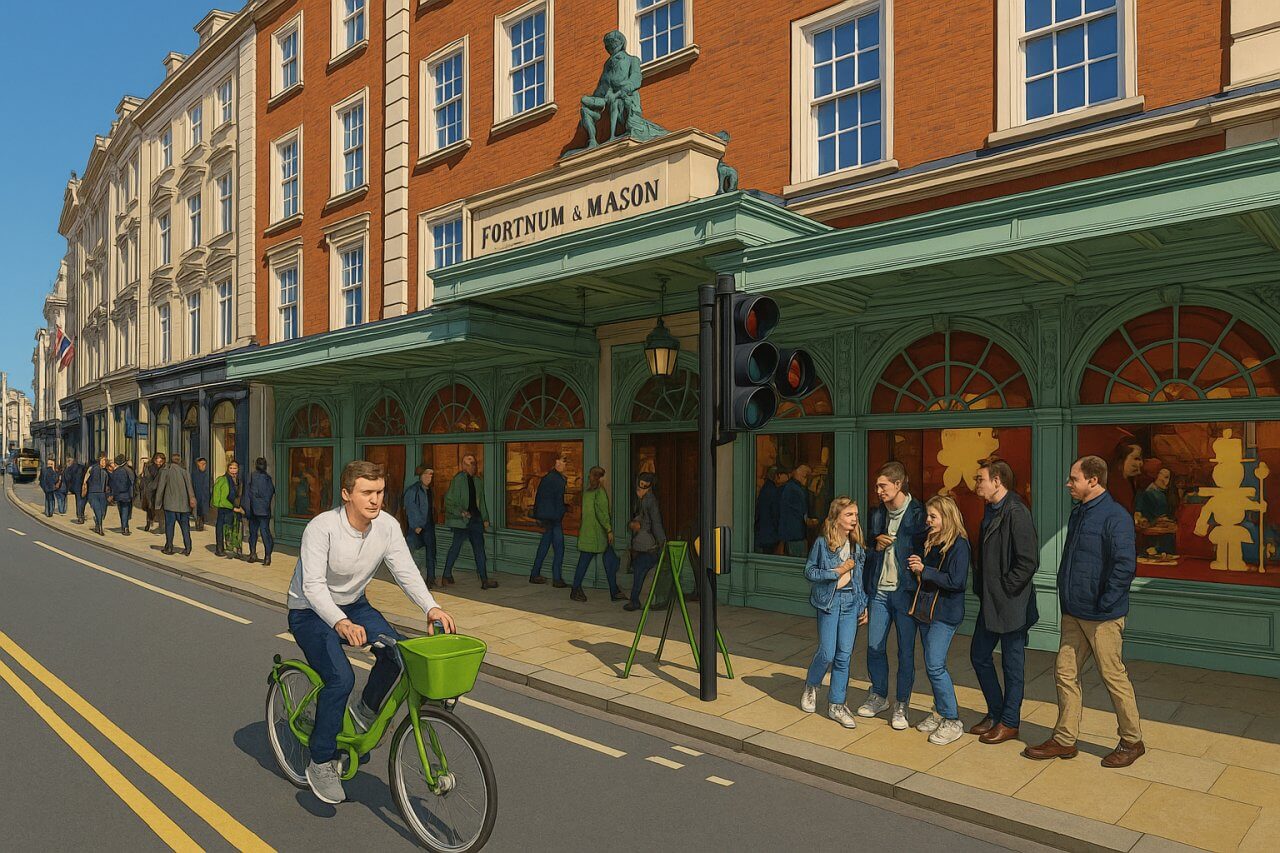
Painting of Fortnum & Mason, London (View image in full size)

Page Details
This page was created on 22 May 2025. Hi, my name is Timothy and created it from my research, for my own entertainment, knowledge and to satisfy my curiosity. I am providing the information to you in good faith and hope it is useful. I try to get the details as accurate as possible. I also try to update the page whenever I stumble on new details. So this and all my other pages are perpetual work in progress. If you discover any error, please politely inform me, pointing out where the error lies, and I will correct it as soon as possible. Your helpfulness will keep this page accurate, relevant and helpful to those who need the information.List of Shopping Malls in London
Want to share your London travel experiences or get tips from fellow travellers?
Join the London Travel Tips Facebook GroupMore information for visiting London
Here are some related articles to help you get to know London better.- Cost of Living in London: Discover the true cost of living in London, including housing, transport, groceries, and more - plus tips for budgeting in one of the world's most expensive cities.
- Driving in London: Planning to drive in London? Learn about roads, car rentals, parking, tolls, and key tips for tourists and visitors from outside the capital.
- Driving Tips for Visiting London: Thinking of driving to London? Discover the best times to travel, congestion tips, parking apps, breakdown help, and petrol advice for a smoother journey.
- Evolution of London's Streets: Discover the fascinating history of how London's streets developed from ancient footpaths to today's complex network of roads across the capital.
- History of Immigration to London: Discover the rich history of immigration to London, from Huguenots to Bangladeshis, and how diverse communities have shaped the city's vibrant identity.
- How Big Is London Compared to Other World Cities?
- How London's Streets Measure Up: A Global Comparison of Road Widths
- How Streets of London are Named: Discover how London streets get their names, who decides them, and how historic, political, and public influences shape street naming in the capital.
- How the Grosvenor Family Came to Own Much of Mayfair, Belgravia and Pimlico: Explore how the Grosvenor family came to own much of Mayfair, Belgravia, and Pimlico, and learn about their historical connection (or lack thereof) with the British royal family and government.
- Living and working in London
- London's Quiet Collapse: How Living Standards Fell as Costs Skyrockted (1975-2025): Explore how London residents endured rising costs and falling living standards from 1975 to 2025 - from rocketing rents to wage stagnation and inflation.
- Marvel of the London Underground: Discover the history, challenges, and triumphs of the London Underground - the world's first underground railway and a vital transport lifeline for the UK capital since 1863.
- Moving to London: Expat Tips for Settling in Westminster: Essential advice for expats moving to London's Westminster: neighborhood insights, cost of living, transportation, housing, healthcare, schools, and tips to help you feel at home in the heart of the city.
- Places in London that aren't pronounced the way they're spelled
- Shopping in London: Discover London's diverse shopping scene
- Taking the bus in London: This is your complete guide to taking the bus when in London.
- The Anglican Faith: A Visitor's Guide to the Church of England: Learn about the Anglican faith and its deep ties to London's landmarks like Westminster Abbey and St Paul's Cathedral.
- Top 10 London Streets Every Visitor Must See: Discover London through its most iconic thoroughfares - 10 streets every visitor must experience. From historic Abbey Road to vibrant Camden High Street, explore culture, shopping, and hidden gems.
- Why are most roads in Central London so narrow? Learn why there are so few multi-lane roads and elevated highways in the heart of the city.
 Latest Pages & Updates
Buy Me A Coffee
If you enjoy the information I provide and want to support the work I do, please buy me a coffee! I appreciate it immensely, thank you so much!
