
The East End, London
A Vibrant Corner of London with Deep Historical Roots
Where is the East End of London?
The East End of London lies immediately to the east of the historic City of London, stretching outward toward the River Lea. It hugs the northern banks of the River Thames and extends inland to encompass traditional working-class neighborhoods, industrial heritage sites, and areas of recent redevelopment.Different organisations, local councils, and historians may define the East End slightly differently:
- Historic definitions focus mostly on Tower Hamlets and parts of Hackney.
- Modern interpretations often include parts of Newham and even Waltham Forest as the city has expanded.
Size and Population of the East End
The East End does not have fixed official boundaries, which leads to some variation depending on interpretation. However, it is generally considered to cover about 20–25 square kilometres (8–10 square miles). The population of the East End is estimated at around 600,000 people, spread across key boroughs like Tower Hamlets, parts of Hackney, Newham, and historically a part of the old East Ham area. However, having said that, there is no universal agreement over where constitutes East End.Map of East End, London
Major Roads of the East End
Several important roads crisscross the East End:- Whitechapel Road (A11) – running east from Aldgate, a historic artery through the East End.
- Commercial Road (A13) – linking the City with the Docklands and Newham areas.
- Roman Road – an ancient thoroughfare now serving communities like Bow.
- Mile End Road (A11) – a continuation of Whitechapel Road toward Stratford.
The History of the East End
The term "East End" came into regular use during the late 18th century.Before this time, the area was known simply as "beyond Aldgate" or as distinct villages like Stepney and Whitechapel. By the 19th century, overcrowding, poverty, and rapid industrialization created conditions that firmly established the East End’s image as the gritty heart of working-class London.
Throughout its history, the East End has welcomed waves of immigrants:
- Huguenot refugees in the 17th century.
- Jewish communities in the 19th century.
- Bengali immigrants in the 20th century.
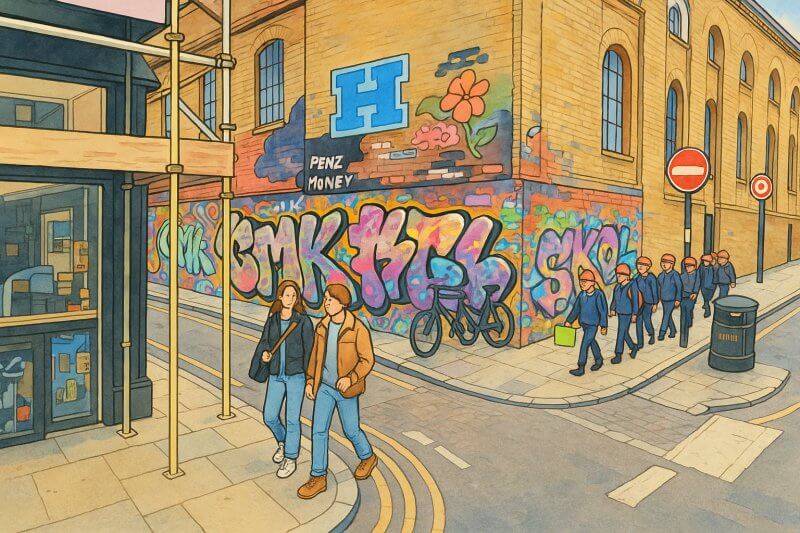
Painting of East End (View full-size image here)
Demographics of the East End
The East End is one of the most ethnically diverse areas of London. Today, significant communities include:- British Bangladeshis (especially in Whitechapel and Brick Lane).
- Caribbean communities (notably in Hackney).
- Somali, Vietnamese, and Eastern European populations.
Real Estate and Living Conditions
The East End remains mixed in terms of affluence:- Areas like Whitechapel, Stepney, and Bow still retain working-class roots and offer relatively affordable housing compared to central London.
- The Isle of Dogs, Canary Wharf, and nearby Docklands areas have transformed into some of the most expensive residential and commercial zones in London.
Important Buildings and Landmarks in the East End
The East End boasts several famous and fascinating sites, including:- The Tower of London – historically marking the entrance to the East End.
- Brick Lane – vibrant for its street art, curries, and Sunday markets.
- Canary Wharf – London's modern financial powerhouse, with soaring skyscrapers.
- Victoria Park – often called the “People’s Park”, a historic and beloved green space.
- Spitalfields Market – a bustling destination for shopping and dining.
Characteristics of the East End
The East End has a complex identity:- Historically working-class, tied to dock work, tailoring, and manufacturing industries.
- Residential areas are dense, lively, and diverse.
- Commercial hubs have emerged, particularly in Canary Wharf and along major roadways.
Public Transport: Underground, DLR, and Rail
The East End is exceptionally well-connected by public transport:- London Underground:
- District Line (Whitechapel, Stepney Green, Bow Road)
- Hammersmith & City Line (Whitechapel, Mile End)
- Central Line (Bethnal Green, Mile End, Stratford)
- Jubilee Line (Canary Wharf, Canning Town)
- Docklands Light Railway (DLR):
- Runs through the Isle of Dogs, Poplar, Limehouse, and Stratford, providing easy access to Docklands and east London hubs.
- National Rail Services:
- Overground connections through Whitechapel, Hackney, and Stratford.
Fun Facts about the East End
- The East End was the site of the infamous Jack the Ripper murders in 1888, a mystery that still fascinates historians and tourists today.
- Pie and mash shops, a staple of traditional Cockney cuisine, originated here.
- The East End’s Docklands hosted the 2012 London Olympics at Stratford, which sparked massive urban regeneration.
- The word “Cockney” historically referred to someone born within the sound of Bow Bells — the bells of St Mary-le-Bow Church in nearby Cheapside, which some include in the East End's wider influence.
List of Places in London, Map of Places in London
Want to share your London travel experiences or get tips from fellow travellers?
Join the London Travel Tips Facebook GroupMore information for visiting London
Here are some related articles to help you get to know London better.- Cost of Living in London: Discover the true cost of living in London, including housing, transport, groceries, and more - plus tips for budgeting in one of the world's most expensive cities.
- Driving in London: Planning to drive in London? Learn about roads, car rentals, parking, tolls, and key tips for tourists and visitors from outside the capital.
- Driving Tips for Visiting London: Thinking of driving to London? Discover the best times to travel, congestion tips, parking apps, breakdown help, and petrol advice for a smoother journey.
- Evolution of London's Streets: Discover the fascinating history of how London's streets developed from ancient footpaths to today's complex network of roads across the capital.
- History of Immigration to London: Discover the rich history of immigration to London, from Huguenots to Bangladeshis, and how diverse communities have shaped the city's vibrant identity.
- How Big Is London Compared to Other World Cities?
- How London's Streets Measure Up: A Global Comparison of Road Widths
- How Streets of London are Named: Discover how London streets get their names, who decides them, and how historic, political, and public influences shape street naming in the capital.
- How the Grosvenor Family Came to Own Much of Mayfair, Belgravia and Pimlico: Explore how the Grosvenor family came to own much of Mayfair, Belgravia, and Pimlico, and learn about their historical connection (or lack thereof) with the British royal family and government.
- Living and working in London
- London's Quiet Collapse: How Living Standards Fell as Costs Skyrockted (1975-2025): Explore how London residents endured rising costs and falling living standards from 1975 to 2025 - from rocketing rents to wage stagnation and inflation.
- Marvel of the London Underground: Discover the history, challenges, and triumphs of the London Underground - the world's first underground railway and a vital transport lifeline for the UK capital since 1863.
- Moving to London: Expat Tips for Settling in Westminster: Essential advice for expats moving to London's Westminster: neighborhood insights, cost of living, transportation, housing, healthcare, schools, and tips to help you feel at home in the heart of the city.
- Places in London that aren't pronounced the way they're spelled
- Shopping in London: Discover London's diverse shopping scene
- Taking the bus in London: This is your complete guide to taking the bus when in London.
- The Anglican Faith: A Visitor's Guide to the Church of England: Learn about the Anglican faith and its deep ties to London's landmarks like Westminster Abbey and St Paul's Cathedral.
- Top 10 London Streets Every Visitor Must See: Discover London through its most iconic thoroughfares - 10 streets every visitor must experience. From historic Abbey Road to vibrant Camden High Street, explore culture, shopping, and hidden gems.
- Why are most roads in Central London so narrow? Learn why there are so few multi-lane roads and elevated highways in the heart of the city.
 Latest Pages & Updates
Buy Me A Coffee
If you enjoy the information I provide and want to support the work I do, please buy me a coffee! I appreciate it immensely, thank you so much!
