
Brentwood Station, London
Brentwood Station – Gateway to Essex on the Elizabeth Line
Brentwood Station is a key railway station located in the town of Brentwood, Essex, on the eastern edge of Greater London. Though not technically part of London, it plays an important role in connecting commuters and visitors to Central London via the Elizabeth Line. The station is situated approximately 20 miles (32 km) north-east of Charing Cross by road.
History and Naming
Brentwood Station first opened on 1 July 1840 as part of the Eastern Counties Railway. The station has been known as Brentwood Railway Station from the start, and has retained this name throughout its operation, reflecting the identity of the historic town it serves. The station predates many of the more central London Underground stations, making it a significant early node in the expansion of rail travel in the southeast of England.
The arrival of the railway in Brentwood played a transformative role in the town’s development, enabling faster access to the capital and boosting its status as a desirable commuter location. Over time, the station was absorbed into the Great Eastern Railway and later became part of British Rail before being incorporated into Transport for London's operations with the introduction of the Elizabeth Line.
Architecture and Layout
The station building features a traditional red-brick façade, complemented by a pitched roof and heritage-style signage. While modern updates have been made to accommodate accessibility and ticketing technologies, the station retains a classic appearance that reflects its Victorian origins. Step-free access is available, and a footbridge connects the platforms.
Services and Connections
Today, Brentwood Station is served primarily by the Elizabeth Line, with trains running at frequent intervals both toward the heart of London and to destinations further east. While the station is not part of the London Underground network, it plays an integral role in the broader transport system.
Elizabeth Line
The station sits on the eastern branch of the Elizabeth Line. The preceding station is Harold Wood, while the subsequent station is Shenfield, which also acts as the eastern terminus for this line. This positioning allows for efficient travel both into the City and further afield.
Passengers can reach key interchange points for the Central Line at Liverpool Street, or change for the Jubilee Line, District Line, Circle Line, and others as they proceed westward.
Fare Zones and Ticket Information
Brentwood lies within Travelcard Zone 9. Below are the most recent adult fare prices and estimated travel times for popular journeys from Brentwood Station:
- To Shenfield Station:
- Single ticket: £2.70
- Oyster/contactless: £2.50
- Estimated travel time: 4 minutes
- To Reading Station:
- Single ticket: £22.00
- Oyster/contactless: £20.60
- Estimated travel time: 1 hour 30 minutes
- To Charing Cross Station:
- Single ticket: £13.10
- Oyster/contactless: £12.50
- Estimated travel time: Approximately 1 hour
- Interchanges: Change at Liverpool Street for Northern Line to Embankment, short walk to Charing Cross
Fun Fact
A unique feature of Brentwood Station is that it lies just outside the official boundary of Greater London, but it is still fully integrated into London's fare zones. This means you can use an Oyster card or contactless payment method, despite being in Essex. It's one of the furthest stations east that is still part of London's travel ecosystem.
Quick Facts
- Station Name: Brentwood Station
- Location: Brentwood, Essex
- Opened: 1 July 1840
- Named After: The town of Brentwood
- Distance from Charing Cross: Approx. 20 miles (32 km) by road
- Architectural Style: Victorian red-brick with modern updates
- Rail Services: Elizabeth Line
- Zone: Travelcard Zone 9
- Preceding Elizabeth Line Station: Harold Wood
- Following Elizabeth Line Station: Shenfield
- Fare to Shenfield: £2.70 single / £2.50 Oyster
- Fare to Reading: £22.00 single / £20.60 Oyster
- Fare to Charing Cross: £13.10 single / £12.50 Oyster
- Estimated Travel Time to Shenfield: 4 minutes
- Estimated Travel Time to Reading: 1 hour 30 minutes
- Estimated Travel Time to Charing Cross: 1 hour (with interchanges)
- Step-Free Access: Yes
- Ticketing: Oyster and contactless accepted
Brentwood Station is  on the Map of London Underground
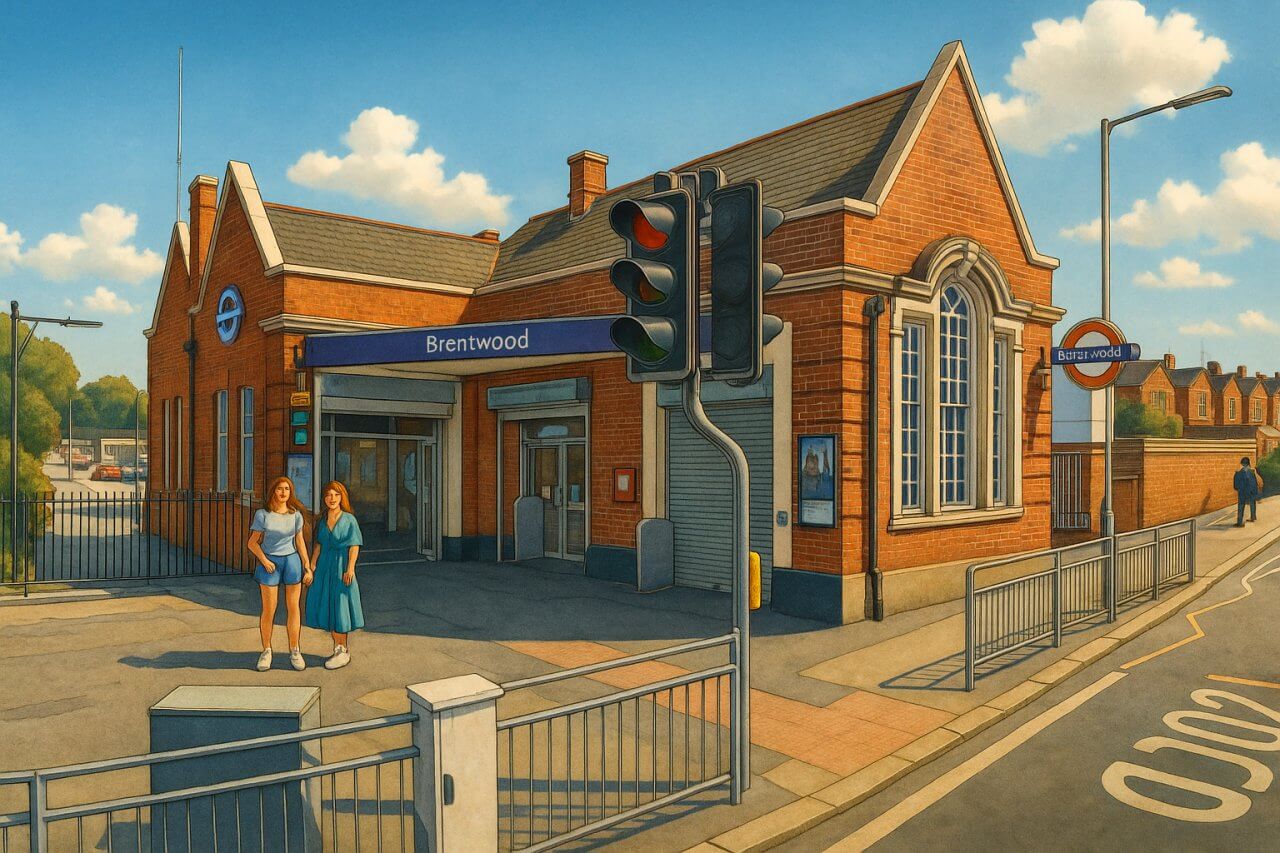
Painting of Brentwood Station, London (View image in full size)

Page Details
This page was created on 30 May 2025. Hi, my name is Timothy and created it from my research, for my own entertainment, knowledge and to satisfy my curiosity. I am providing the information to you in good faith and hope it is useful. I try to get the details as accurate as possible. I also try to update the page whenever I stumble on new details. So this and all my other pages are perpetual work in progress. If you discover any error, please politely inform me, pointing out where the error lies, and I will correct it as soon as possible. Your helpfulness will keep this page accurate, relevant and helpful to those who need the information.Want to share your London travel experiences or get tips from fellow travellers?
Join the London Travel Tips Facebook GroupMore information for visiting London
Here are some related articles to help you get to know London better.- Cost of Living in London: Discover the true cost of living in London, including housing, transport, groceries, and more - plus tips for budgeting in one of the world's most expensive cities.
- Driving in London: Planning to drive in London? Learn about roads, car rentals, parking, tolls, and key tips for tourists and visitors from outside the capital.
- Driving Tips for Visiting London: Thinking of driving to London? Discover the best times to travel, congestion tips, parking apps, breakdown help, and petrol advice for a smoother journey.
- Evolution of London's Streets: Discover the fascinating history of how London's streets developed from ancient footpaths to today's complex network of roads across the capital.
- History of Immigration to London: Discover the rich history of immigration to London, from Huguenots to Bangladeshis, and how diverse communities have shaped the city's vibrant identity.
- How Big Is London Compared to Other World Cities?
- How London's Streets Measure Up: A Global Comparison of Road Widths
- How Streets of London are Named: Discover how London streets get their names, who decides them, and how historic, political, and public influences shape street naming in the capital.
- How the Grosvenor Family Came to Own Much of Mayfair, Belgravia and Pimlico: Explore how the Grosvenor family came to own much of Mayfair, Belgravia, and Pimlico, and learn about their historical connection (or lack thereof) with the British royal family and government.
- Living and working in London
- London's Quiet Collapse: How Living Standards Fell as Costs Skyrockted (1975-2025): Explore how London residents endured rising costs and falling living standards from 1975 to 2025 - from rocketing rents to wage stagnation and inflation.
- Marvel of the London Underground: Discover the history, challenges, and triumphs of the London Underground - the world's first underground railway and a vital transport lifeline for the UK capital since 1863.
- Moving to London: Expat Tips for Settling in Westminster: Essential advice for expats moving to London's Westminster: neighborhood insights, cost of living, transportation, housing, healthcare, schools, and tips to help you feel at home in the heart of the city.
- Places in London that aren't pronounced the way they're spelled
- Shopping in London: Discover London's diverse shopping scene
- Taking the bus in London: This is your complete guide to taking the bus when in London.
- The Anglican Faith: A Visitor's Guide to the Church of England: Learn about the Anglican faith and its deep ties to London's landmarks like Westminster Abbey and St Paul's Cathedral.
- Top 10 London Streets Every Visitor Must See: Discover London through its most iconic thoroughfares - 10 streets every visitor must experience. From historic Abbey Road to vibrant Camden High Street, explore culture, shopping, and hidden gems.
- Why are most roads in Central London so narrow? Learn why there are so few multi-lane roads and elevated highways in the heart of the city.
 Latest Pages & Updates
Buy Me A Coffee
If you enjoy the information I provide and want to support the work I do, please buy me a coffee! I appreciate it immensely, thank you so much!
