
Mandai Travel Guide
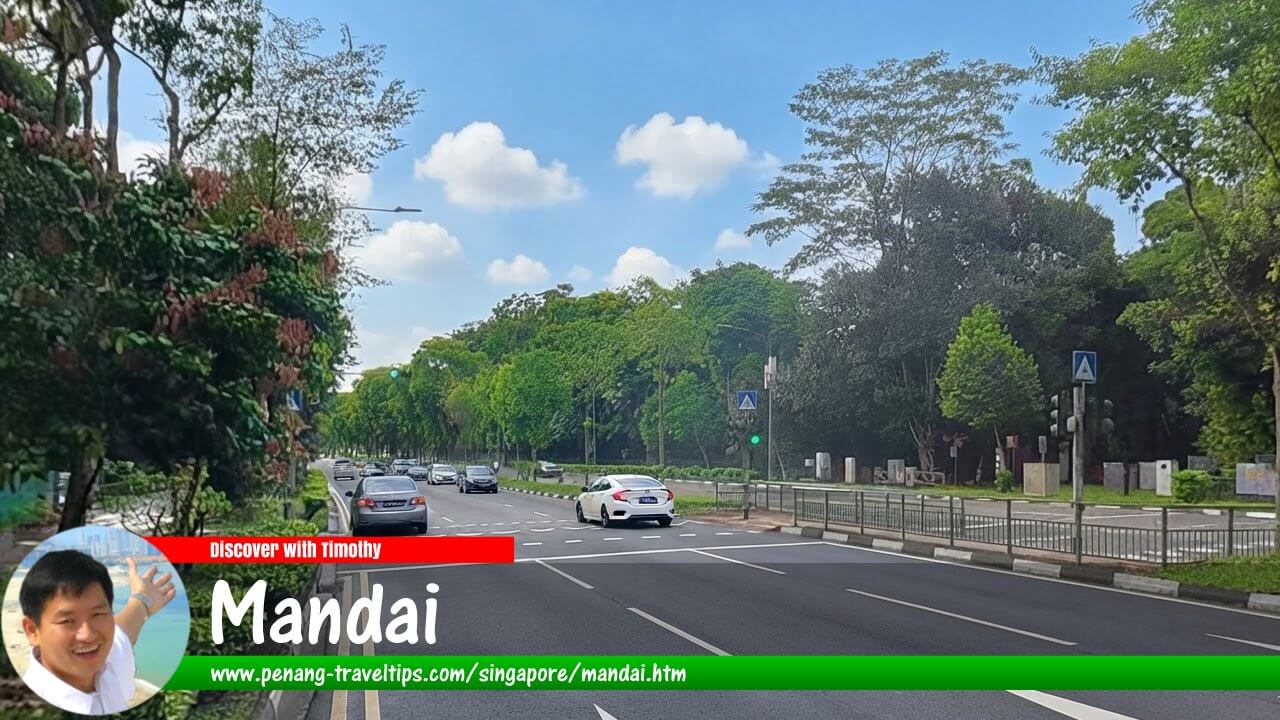 Mandai, Singapore (AI image created on 10 August 2026)
The Mandai Planning Area (Simplified Chinese: 万礼, Traditional Chinese: 萬禮, Pinyin: Wàn Lǐ, Malay: Mandai, Tamil: மண்டை) is located in the northern part of Singapore. Covering around 11.8 square kilometres, Mandai is a largely undeveloped zone known for its wildlife parks, military facilities, and natural landscapes. Unlike other planning areas, Mandai has almost no residential population, as the land is reserved primarily for nature, recreation, and defence1. It is situated mostly within Postal District 25.
History of Mandai
The name “Mandai” is believed to originate from a Malay word referring to a tree species or swampy ground. Historically, the area was forested and sparsely populated. From the 20th century onwards, large parts of Mandai were designated for military training and as protected green zones. The area rose to prominence when the Singapore Zoo opened in 1973, followed by the Night Safari in 1994. In recent decades, Mandai has been developed into the Mandai Wildlife Reserve, a cluster of world-class zoological parks that attract millions of visitors annually.
Name and Pronunciation
“Mandai” is pronounced Mun-dye, with the International Phonetic Alphabet (IPA) transcription /ˈmʌn.daɪ/.
Geography and Boundaries
Mandai is situated north of the Central Water Catchment, bounded by Woodlands to the west, Yishun to the east, and Sembawang to the north. Much of the land is forested or reserved for military use, with key areas open to the public for leisure and recreation.
Subzones of Mandai
There are as of now three subzones to Mandai namely Mandai East, Mandai Estate and Mandai West. Of these, only Mandai Estate is populated, both that too with only about 2,100 people as of 2024 (Source City Population website). So, for now, I will not do any separate subzone pages for this planning area yet.Transport and Accessibility
Mandai is accessible by road via Mandai Road, Mandai Lake Road, and Upper Seletar Reservoir Road. The Bukit Timah Expressway (BKE) passes through the area, linking it to central and northern Singapore. The nearest MRT stations are Khatib (on the North South Line) and Springleaf (on the Thomson-East Coast Line), from which shuttle buses connect to the wildlife parks.
Residential Real Estate
Unlike most planning areas, Mandai does not contain residential housing estates. It is dominated by protected land, military camps, and wildlife facilities. For housing, residents and workers in the Mandai area typically live in neighbouring Yishun or Woodlands, where both public and private options are readily available2.
Landmarks and Attractions
Mandai is best known for its internationally recognised wildlife and nature attractions. Major landmarks include:
- Singapore Zoo – Opened in 1973, renowned for its open-concept enclosures and global conservation efforts.
- Night Safari – The world’s first nocturnal zoo, launched in 1994.
- River Wonders – Featuring freshwater habitats and giant pandas, opened in 2012 (formerly River Safari).
- Bird Paradise – Opened in 2023, replacing Jurong Bird Park as Singapore’s premier aviary.
- Upper Seletar Reservoir Park – A scenic park popular for jogging, fishing, and photography.
Community and Lifestyle
Mandai does not have permanent residential communities but is an important destination for recreation and tourism. Families, nature lovers, and wildlife enthusiasts flock to the Mandai Wildlife Reserve. The government has also earmarked Mandai for eco-tourism, with new attractions, green lodges, and conservation projects being developed under the Mandai Rejuvenation Project.
Where to Stay
Mandai is not a conventional hotel district, but the opening of Mandai Rainforest Resort by Banyan Tree has changed the situation considerably. The resort is located at 60 Mandai Lake Road, within the Mandai Wildlife Reserve, and is the obvious choice for visitors who want to stay close to Singapore Zoo, Bird Paradise, River Wonders and Night Safari.
Mandai Rainforest Resort by Banyan Tree is particularly distinctive because the accommodation is surrounded by rainforest rather than an urban landscape. The resort has been designed as part of the wider Mandai wildlife destination and provides a convenient base for visitors planning to spend two or more days exploring the wildlife parks. It also has its own dining facilities, including Planter's Shed, which serves local and international food.
Staying at the resort is especially attractive for families. Instead of travelling from a city-centre hotel to the wildlife parks each day, visitors can remain in the Mandai area and devote an entire day to the attractions. It also makes it easier to combine Singapore Zoo with River Wonders and Night Safari without having to make a long journey back into the city between visits.
For visitors who prefer a wider choice of hotels or want to keep accommodation costs lower, Woodlands, Yishun and Khatib are the most practical nearby areas. They have considerably more everyday accommodation, food and shopping facilities, while Mandai itself can be reached by taxi, private-hire car or public transport.
Another possibility is to stay in central Singapore and visit Mandai as a full-day excursion. This is perfectly feasible because Singapore is compact and the wildlife parks can be reached from the city by road. However, if the main purpose of your visit is the wildlife parks, staying at the Mandai Rainforest Resort provides a much more immersive experience.
What to Eat
Mandai has one of the most unusual food scenes among Singapore's planning areas because much of its dining is concentrated around the Mandai Wildlife Reserve. Visitors no longer need to leave the area to find a proper meal after visiting the zoo or bird park. The reserve now describes itself as a nature-and-wildlife dining destination, with cafés, fast food outlets, food courts and full-service restaurants distributed across its attractions.1
The choice is considerably broader than one might expect. There are local and Asian dishes, Western food, Japanese food, Indian cuisine, snacks, cafés and family-friendly fast food. This makes Mandai particularly convenient for families, because different members of a group can choose different styles of food without having to leave the wildlife reserve.
There are also halal food options. The Mandai Wildlife Reserve's current dining directory specifically identifies several outlets as halal, including A&W, KFC, Copper Chimney, McDonald's, Munchi Pancakes and Old Chang Kee. The reserve also notes that not every food outlet is halal-certified, so visitors should check the designation of individual outlets rather than assuming that all food sold within the parks is halal.1
One of the most interesting developments is the Food Republic food court at Mandai Wildlife EAST. It gives visitors a much broader selection of local-style food than the traditional attraction cafés and is particularly useful for families who want something substantial during a full day at the wildlife parks.
Visitors should nevertheless be aware that dining inside a major attraction is generally more expensive than eating at a neighbourhood hawker centre. If your priority is inexpensive local food, it can make sense to eat in nearby Yishun, Khatib or Woodlands before or after your visit. If convenience is more important, however, eating within Mandai is perfectly practical.
Where to Eat
These are some of the places worth considering when exploring Mandai:
- Crimson Restaurant, Bird Paradise – A full-service restaurant overlooking the Hong Leong Foundation Crimson Wetlands. It is one of Mandai's more distinctive dining experiences, with views of colourful birds and the surrounding wetland landscape. The restaurant offers a more refined experience than the park's cafés and food courts.1
- Penguin Cove Restaurant, Bird Paradise – A family-friendly restaurant where diners can watch penguins swimming and diving. It serves local favourites and Western dishes and is particularly memorable for families with children.1
- Penguin Cove Cafe – A café beside the penguin exhibit serving drinks, pastries and snacks. It is a good place to stop during a visit to Bird Paradise without committing to a full meal.
- Copper Chimney, Mandai Wildlife WEST – A halal restaurant specialising in North Indian and Indian-Chinese cuisine. It serves substantial meals including thali and other Indian dishes and is one of the best choices in Mandai for visitors specifically looking for a halal sit-down restaurant.1
- COLLIN'S at Mandai Wildlife WEST – A Western restaurant offering a broad selection of casual Western dishes. It is particularly convenient for families and groups looking for familiar food during a wildlife-park visit.
- Xiang Xiang Hunan Cuisine – A Chinese restaurant at the Mandai Wildlife Reserve serving Hunan-style dishes. It is a good option for visitors wanting something more substantial and distinctive than standard attraction food.
- Cavern Restaurant – One of the more unusual dining experiences in Mandai, located within Rainforest Wild Adventure. The restaurant's cave-like setting fits naturally with the adventure attraction and makes the meal part of the overall experience.
- Ulu Ulu Safari Restaurant, Night Safari – The main dining destination associated with Night Safari. It offers local and Asian favourites as well as Indian food and remains open into the evening, making it particularly convenient for visitors spending the night at the safari park.1
- Food Republic, Mandai Wildlife EAST – A food court offering a wider selection of casual food and drinks. It is a particularly useful choice for visitors who want local-style food and more variety than a single restaurant can provide.
- Ah Meng Restaurant, Singapore Zoo – A restaurant named after the Singapore Zoo's famous orangutan icon. It serves local and international food and is also associated with the distinctive Breakfast in the Wild experience, where diners can enjoy breakfast in the zoo environment.2
- Ah Meng Bistro, Singapore Zoo – A more casual alternative serving sandwiches, pastries, desserts and drinks. It is useful for a quick break during a day at the zoo.
- Owa Bistro, Singapore Zoo entrance – A café and grab-and-go outlet at the zoo entrance, useful for visitors wanting breakfast, snacks or drinks before entering the attraction or after leaving it.1
- KFC at Singapore Zoo – A halal-certified fast-food option with outlets at the zoo entrance and KidzWorld. It is particularly useful for families and Muslim visitors wanting a familiar and clearly identified halal option.1
- A&W at Mandai Wildlife WEST – A halal-certified fast-food outlet serving burgers, chicken, fries and its famous root beer. It is convenient for families and visitors looking for a quick meal.1
- Munchi Pancakes – A halal-certified outlet specialising in traditional min jiang kueh, the Singaporean-style peanut or coconut-filled pancake snack. It makes a good inexpensive snack between wildlife attractions.1
- Old Chang Kee Coffee House – A halal café at Mandai Wildlife WEST, particularly useful for snacks such as curry puffs and light refreshments.1
- Planter's Shed, Mandai Rainforest Resort – The resort's all-day dining restaurant, offering local and international dishes, breakfast and dinner buffets and à la carte dining. It is the natural choice for visitors staying overnight at the resort.1
If you are visiting Singapore Zoo, I would not recommend leaving Mandai simply to find lunch. There is now enough food within the wildlife reserve to make staying inside the attraction the more convenient option. Recent local discussions also suggest that the dining selection has improved considerably, with Food Republic and the newer food street giving visitors more choices than in the past.3
For a special meal, Crimson Restaurant is particularly attractive because the setting is part of the experience. The restaurant overlooks the Crimson Wetlands at Bird Paradise, and the wildlife around you makes this very different from an ordinary restaurant lunch.2
For Muslim visitors, Copper Chimney is probably the most interesting full-service halal choice. It serves North Indian and Indian-Chinese cuisine and is specifically identified by Mandai Wildlife Reserve as halal. There are also halal fast-food and snack options throughout the reserve, including A&W, KFC, McDonald's, Munchi Pancakes and Old Chang Kee.1
If you are staying at the Mandai Rainforest Resort, Planter's Shed makes eating in the area especially easy. The restaurant serves breakfast, dinner and à la carte meals, so guests do not need to leave the wildlife reserve for their evening meal.
For visitors seeking more local and inexpensive food, the best strategy is different. Eat before entering Mandai or travel to a nearby neighbourhood such as Yishun or Khatib. Local residents have recently recommended the food around Springleaf as another alternative, with prata, dim sum, Thai food and yong tau foo among the choices available.4
Mandai is therefore unusual in that its dining scene is largely designed around the visitor experience. It is not a place where you wander down a street lined with traditional coffeeshops and hawker stalls. Instead, the restaurants are integrated into the wildlife attractions themselves, allowing visitors to eat while continuing their exploration of the parks.
This works particularly well for families. A full day at Singapore Zoo, River Wonders or Bird Paradise can be tiring, especially for young children, and having cafés, food courts and restaurants within the attractions means that there is no need to make another journey simply to find lunch.
It is also worth considering the Night Safari separately. Because the attraction operates into the evening, visitors can have dinner at Ulu Ulu Safari Restaurant and then continue exploring the park after dark. This makes it one of the few places in Singapore where an evening meal can be naturally incorporated into a wildlife experience.
Mandai has consequently become much more than simply the location of Singapore's zoo. With the addition of Bird Paradise, Rainforest Wild Adventure, the Mandai Rainforest Resort and an increasingly sophisticated collection of restaurants, it is developing into a destination in its own right. For visitors who enjoy wildlife, nature and family attractions, staying and eating in Mandai can now form a substantial part of a Singapore itinerary.
Accommodation and Food References
- Mandai Wildlife Reserve – Dining Outlets
- Mandai Wildlife Reserve – Wild Dining Experiences
- Reddit – Recent discussion of food in and around Singapore Zoo
- Reddit – Recent recommendations for food near Mandai
Fun Facts
Mandai was once the site of heavy fighting during World War II, as Japanese forces advanced towards the Causeway. Today, traces of wartime bunkers and military installations remain hidden in its forests3.
Map of Mandai, Singapore
Quick Facts
- Size: ~11.8 sq km
- Population: Minimal, mostly military and staff quarters
- Postal District: 25
- Name Origin: Likely Malay, referring to a tree or swampy land
- Pronunciation: Mun-dye (/ˈmʌn.daɪ/)
- Main Roads: Mandai Road, Mandai Lake Road
- Nearest MRT Stations: Khatib (NSL), Springleaf (TEL)
- Key Landmarks: Singapore Zoo, Night Safari, River Wonders, Bird Paradise
References
- Urban Redevelopment Authority – Planning Areas
- PropertyGuru – Singapore Property Market
- NLB Infopedia – Mandai
Page Details
This page was created on 8 September 2025. Hi, my name is Timothy and created it from my research, for my own entertainment, knowledge and to satisfy my curiosity. I am providing the information to you in good faith and hope it is useful. I try to get the details as accurate as possible. I also try to update the page whenever I stumble on new details. So this and all my other pages are perpetual work in progress. If you discover any error, please politely inform me, pointing out where the error lies, and I will correct it as soon as possible. Your helpfulness will keep this page accurate, relevant and helpful to those who need the information.My videos of Singapore
Want to share your Singapore travel experiences or get tips from fellow travellers?
Join the Singapore Travel Tips Facebook GroupMore information for visiting and living in Singapore
Here are some related articles to help you get to know Singapore better.- Cost of Living in Different Singapore Neighbourhoods (2025 Guide)
- EZ-Link Card
- Owning a Car in Singapore
- Singapore MRT Map & Guide 2025
- Singapore Postal Districts and Postcodes
- Singapore Tourist Pass
- Taking the Bus in Singapore: A Visitor's Guide
- Understanding CCR, RCR and OCR in Singapore real estate
 Latest Pages & Updates
Buy Me A Coffee
If you enjoy the information I provide and want to support the work I do, please buy me a coffee! I appreciate it immensely, thank you so much!
