
Kubang Ulu, Bukit Mertajam
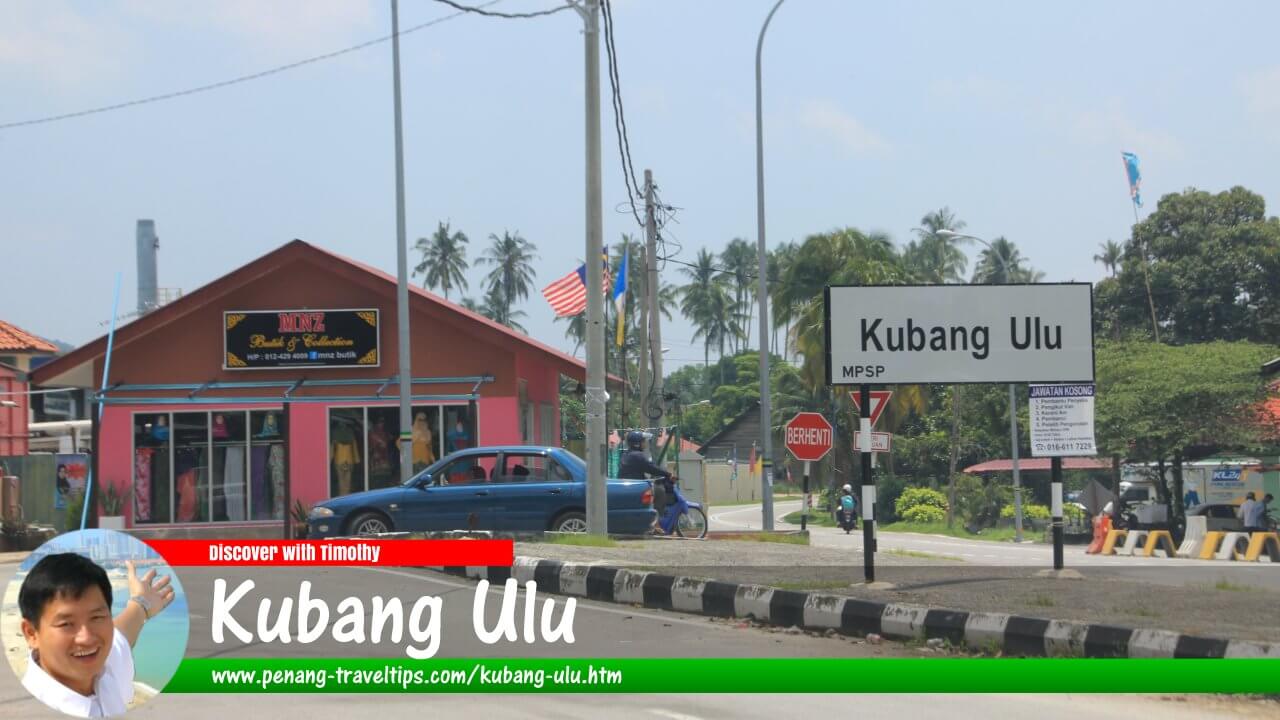 Kubang Ulu, Bukit Mertajam (11 September 2015)
Kubang Ulu is a traditional village located in the Bukit Mertajam area of Seberang Perai, Penang, Malaysia. Nestled between Penanti to the west and Mengkuang to the east, the village represents a quieter, rural side of mainland Penang that contrasts with the more urbanised sections of Bukit Mertajam. Kubang Ulu is characterised by agricultural land, village settlements, and a close-knit community that reflects long-established rural traditions in central Seberang Perai1.
Quick Facts
Location: Bukit Mertajam, Seberang Perai, Penang, Malaysia
District: Seberang Perai Tengah
Administrative Authority: Seberang Perai City Council (MBSP)
Village Type: Rural kampung
Nearby Areas: Penanti (west), Mengkuang (east)
Primary Character: Agricultural landscape and traditional village life
Geographical Setting
Kubang Ulu lies within the gently undulating terrain of central Seberang Perai, positioned between low hills and agricultural plains. The village is influenced by the foothills of the Bukit Mertajam range, particularly toward the Mengkuang side, while flatter land toward Penanti supports farming and village housing. This transitional geography has shaped land use patterns and settlement distribution over generations2.
Small streams, drainage canals, and low-lying fields are common features of the local landscape. These waterways support irrigation and help manage rainfall in the tropical climate. The surrounding greenery, combined with relatively low building density, gives Kubang Ulu a distinctly rural atmosphere despite its proximity to more developed parts of Bukit Mertajam.
Origins and Historical Context
The history of Kubang Ulu is closely tied to early Malay settlement in inland Seberang Perai. The term “kubang” commonly refers to a small pond or depression where water collects, suggesting that early settlers may have established the village near a natural water source. The word “ulu” indicates an upstream or inland location, reinforcing the village’s historical association with interior agricultural land3.
For much of its history, Kubang Ulu developed as an agrarian settlement, with families relying on farming, small-scale livestock rearing, and forest-edge resources. The village remained largely unaffected by colonial-era industrialisation, allowing traditional social structures and land-use practices to persist well into the post-independence period.
Traditional Economy and Agriculture
Agriculture has long been the backbone of Kubang Ulu’s economy. Paddy cultivation, fruit trees, and smallholdings formed the basis of household livelihoods, supported by shared labour and communal cooperation. Seasonal agricultural cycles influenced daily routines, festivities, and social organisation within the village4.
While fewer residents today depend exclusively on farming, agricultural activity remains visible in the form of small plots, orchards, and backyard cultivation. Many households supplement their income through work in nearby towns while maintaining ties to the land as part of their cultural identity.
Community Structure and Village Life
Kubang Ulu is characterised by strong community bonds rooted in kampung traditions. Extended families often live in close proximity, fostering a sense of mutual support and shared responsibility. Social life revolves around community spaces such as mosques, surau, and village halls, which serve as venues for religious observance and collective activities.
Customary practices, including gotong-royong (communal work), continue to play an important role in maintaining public spaces and supporting community events. These traditions help reinforce social cohesion and preserve a way of life that has defined the village for generations.
Religious and Cultural Significance
Religion plays a central role in the daily life of Kubang Ulu residents. Islamic practices and teachings shape social norms, education, and community engagement. Mosques and surau are not only places of worship but also centres for learning and social interaction.
Cultural traditions are expressed through religious celebrations, weddings, and life-cycle events that bring together residents from Kubang Ulu and neighbouring villages. These occasions strengthen inter-village relationships, particularly with Penanti and Mengkuang, reinforcing a shared cultural landscape5.
Connectivity and Accessibility
Kubang Ulu is accessible via local roads that link it to Penanti in the west and Mengkuang in the east. These routes connect the village to Bukit Mertajam town, providing access to markets, schools, healthcare facilities, and employment opportunities. Although traffic volumes are generally low, improved road conditions have enhanced mobility for residents.
Private vehicles are the primary mode of transport, reflecting the rural nature of the area. The village’s location allows residents to enjoy a relatively quiet environment while remaining within reasonable commuting distance of urban centres in central Seberang Perai6.
Education and Social Facilities
Educational needs in Kubang Ulu are served by schools located within the village and in nearby communities. Primary education is typically accessible within short distances, while secondary and higher education institutions are found in Bukit Mertajam and surrounding towns.
In addition to formal education, informal learning through religious classes and community activities remains significant. These educational pathways contribute to character building and help transmit cultural values across generations.
Environmental Features and Challenges
The natural environment of Kubang Ulu includes agricultural land, patches of secondary vegetation, and watercourses that support local ecosystems. These features provide environmental benefits such as cooling, biodiversity support, and scenic value.
However, the village also faces environmental challenges, including drainage management during heavy rainfall and pressure from nearby development. Balancing environmental preservation with infrastructure improvement is an ongoing concern for residents and local authorities7.
Relationship with Penanti and Mengkuang
Kubang Ulu’s location between Penanti and Mengkuang places it within a network of rural communities that share economic, social, and cultural ties. Residents often travel to neighbouring areas for markets, schools, and community events, creating a pattern of interdependence.
This relationship enhances resilience, as shared resources and social connections help sustain village life amid broader regional changes. Kubang Ulu benefits from its proximity to these communities while maintaining a distinct local identity.
Urban Influence and Gradual Change
Although Kubang Ulu remains predominantly rural, the influence of urbanisation from Bukit Mertajam is gradually becoming more apparent. Improved infrastructure, rising land values, and population growth in surrounding areas have introduced new dynamics into village life.
Despite these changes, many residents express a desire to preserve the village’s rural character. Development tends to be incremental rather than large-scale, allowing traditional patterns of living to coexist with modern conveniences.
Role within Seberang Perai Tengah
Within the context of Seberang Perai Tengah, Kubang Ulu represents the agricultural and cultural hinterland that supports more urbanised centres. Its contribution lies not in industrial output but in preserving heritage, green spaces, and community-based living.
This role adds to the diversity of Seberang Perai, demonstrating how rural villages continue to play a meaningful part in the region’s social and environmental fabric.
Future Outlook
Looking ahead, Kubang Ulu is likely to continue evolving gradually rather than undergoing rapid transformation. Sustainable development, infrastructure maintenance, and environmental protection will shape its future trajectory.
As Bukit Mertajam and central Seberang Perai grow, Kubang Ulu stands as an example of a village that balances proximity to urban centres with a strong commitment to tradition, community values, and rural heritage.
Map of Kubang Ulu, Bukit Mertajam
Sights in Kubang Ulu
- Lee Rubber Factory (GPS: 5.40803, 100.47611)

- Rumah Tuan Guru Haji Othman (GPS: 5.40728, 100.47433)

Kubang Ulu is  on the Map of Bukit Mertajam
References
- Seberang Perai City Council (MBSP)
- Penang Institute – Regional Geography and Communities
- Official Portal of the Penang State Government
- Department of Agriculture Malaysia
- Department of Islamic Development Malaysia (JAKIM)
- Ministry of Transport Malaysia
- Federal Department of Town and Country Planning Malaysia
Page Details
This page was created on 4 January 2026.Want to share your Penang travel experiences or get tips from fellow travellers?
Join the Penang Travel Tips Facebook GroupUseful guides for visiting Penang
My Videos of Penang
 Latest Pages & Updates
Buy Me A Coffee
If you enjoy the information I provide and want to support the work I do, please buy me a coffee! I appreciate it immensely, thank you so much!
