
Wardour Street, London
Wardour Street: A Historic Heartbeat of Soho
Welcome to Wardour Street – Where London's Creative Energy Shines
Wardour Street is one of the most dynamic and famous streets in the Soho area of central London. Known for its historic links to the British film and music industries, it has long been a creative and cultural hotspot, attracting both locals and tourists with its unique atmosphere.Where Is Wardour Street?
Wardour Street runs through the heart of Soho, within the City of Westminster, in central London.It stretches from Leicester Square at its southern end, near Coventry Street, and heads northward up to the bustling Oxford Street, one of London's major shopping streets.
Wardour Street is perfectly positioned within the lively grid of Soho's entertainment district, close to many theatres, restaurants, and nightlife venues.
How Long Is Wardour Street?
Wardour Street measures approximately 0.6 miles (around 1 kilometre) in length.Though not an especially long street, it packs a remarkable amount of history, character, and energy into every metre.
Map of Wardour Street, London
Connecting Streets
- D'Arblay Street
- Brewer Street
- Broadwick Street
- Coventry Street
- Dansey Place
- Hollen Street
- Lisle Street
- Noel Street
- Old Compton Street
- Oxford Street
- Peter Street
- Shaftesbury Avenue
- Sheraton Street
- Winnett Street
The History of Wardour Street
Wardour Street has origins dating back to the 16th century, when the area that is now Soho was first being developed.Initially, the street was known by several different names along its length, including Colmanhedge Lane, Princes Street, and Wardour Street for different sections.
Over the centuries, as Soho grew into a fashionable district, Wardour Street became associated with antiques dealers during the 18th and 19th centuries. By the 20th century, it evolved into the centre of the British film industry, hosting many film production and distribution companies.
Today, Wardour Street is better known for its trendy bars, restaurants, and media offices, but traces of its rich history remain visible.
How Did Wardour Street Get Its Name?
The street takes its name from the Wardour family, notable landowners in the 17th century.It was officially named "Wardour Street" in the early 18th century as the area around Soho was being formally developed and mapped.
The name is pronounced roughly as it is spelled but often comes across slightly shortened in spoken English: "WAR-dər" /ˈwɔː.dər/
 or sometimes /ˈwɔː.dɔːr/ .
Locals typically pronounce it with a soft ‘r' at the end, typical of non-rhotic London English.
or sometimes /ˈwɔː.dɔːr/ .
Locals typically pronounce it with a soft ‘r' at the end, typical of non-rhotic London English.
Connecting Streets to Wardour Street
Wardour Street is well-connected and intersects with several major and minor roads, including:- Oxford Street (at the northern end)
- Broadwick Street
- Old Compton Street
- Peter Street
- Shaftesbury Avenue
- Coventry Street (near Leicester Square at the southern end)
Major Buildings and Landmarks Along Wardour Street
Wardour Street features a fascinating mix of historic and contemporary buildings. Notable sites include:- St Anne's Church Soho: Although set back slightly from Wardour Street, this historic church (originally built in the late 17th century) is an important local landmark.
- The Soho Curzon Cinema: A beloved spot for cinephiles, offering independent films and comfortable viewing experiences.
- The Marquee Club (former location): Once located at 90 Wardour Street, this legendary music venue hosted performances by artists like David Bowie, The Rolling Stones, and Jimi Hendrix.
- Media and Production Offices: The street remains home to numerous media companies, post-production houses, and creative agencies.
Nearest London Underground Stations
Wardour Street is extremely accessible via several London Underground stations:- Tottenham Court Road Station: Served by the Central, Northern, and Elizabeth Lines. Just a short walk from the northern end of Wardour Street.
- Leicester Square Station: Served by the Northern and Piccadilly Lines. Close to the southern end of the street.
- Oxford Circus Station: Served by the Bakerloo, Central, and Victoria Lines. Only a few minutes' walk from the northern section.
- Piccadilly Circus Station: Served by the Bakerloo and Piccadilly Lines. Also within walking distance.
Fun Facts About Wardour Street
- In the 19th century, Wardour Street became so synonymous with antique shops that "Wardour Street English" became a term for old-fashioned, affected English inspired by antiquarians!
- The Marquee Club at 90 Wardour Street helped launch the careers of some of the biggest names in rock history. It is still fondly remembered in music history circles today.
- Parts of the street have appeared in numerous films and TV shows set in London's bustling Soho district.
- Even today, Wardour Street maintains its connection to the entertainment world, housing post-production firms and media agencies, continuing its 20th-century legacy as a creative hub.
Conclusion: Why Visit Wardour Street?
Wardour Street perfectly captures the spirit of Soho: lively, creative, and endlessly fascinating.Whether you're interested in its rich history, its place in music and film culture, or simply looking to enjoy some of London's best dining and nightlife, Wardour Street is well worth a visit.
Walking down Wardour Street is like flipping through the pages of London's cultural history – all condensed into one vibrant and unforgettable street.
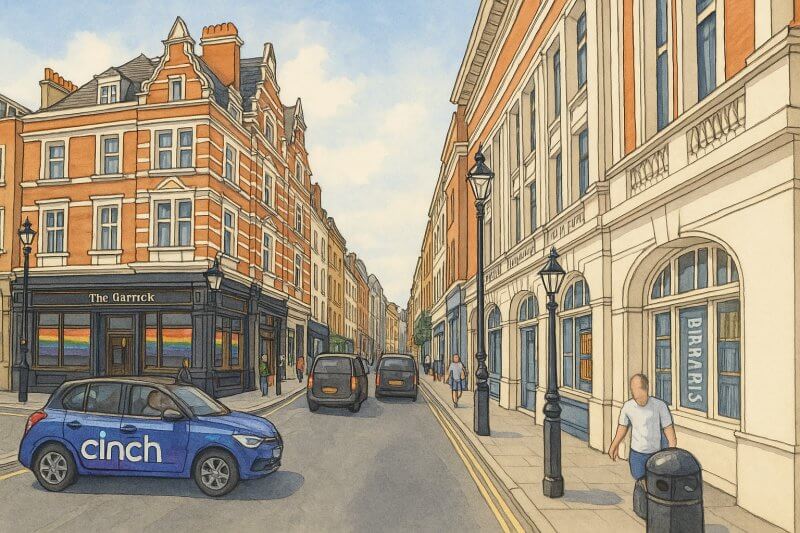
Painting of Wardour Street (View full-size image here)
Moving to London?
New to London and need a place to live? Read our Renting A Flat Guide. This guide covers everything you need to know about renting a flat in London, from viewing to signing.Streets of London
Come, let's explore and discover the streets of London together! Listed here afre the Streets of London that I have documented. Dive in and discover!Map of Streets in London
View all the streets that I have documented on Google Maps in this Map of Streets in London.Want to share your London travel experiences or get tips from fellow travellers?
Join the London Travel Tips Facebook GroupMore information for visiting London
Here are some related articles to help you get to know London better.- Cost of Living in London: Discover the true cost of living in London, including housing, transport, groceries, and more - plus tips for budgeting in one of the world's most expensive cities.
- Driving in London: Planning to drive in London? Learn about roads, car rentals, parking, tolls, and key tips for tourists and visitors from outside the capital.
- Driving Tips for Visiting London: Thinking of driving to London? Discover the best times to travel, congestion tips, parking apps, breakdown help, and petrol advice for a smoother journey.
- Evolution of London's Streets: Discover the fascinating history of how London's streets developed from ancient footpaths to today's complex network of roads across the capital.
- History of Immigration to London: Discover the rich history of immigration to London, from Huguenots to Bangladeshis, and how diverse communities have shaped the city's vibrant identity.
- How Big Is London Compared to Other World Cities?
- How London's Streets Measure Up: A Global Comparison of Road Widths
- How Streets of London are Named: Discover how London streets get their names, who decides them, and how historic, political, and public influences shape street naming in the capital.
- How the Grosvenor Family Came to Own Much of Mayfair, Belgravia and Pimlico: Explore how the Grosvenor family came to own much of Mayfair, Belgravia, and Pimlico, and learn about their historical connection (or lack thereof) with the British royal family and government.
- Living and working in London
- London's Quiet Collapse: How Living Standards Fell as Costs Skyrockted (1975-2025): Explore how London residents endured rising costs and falling living standards from 1975 to 2025 - from rocketing rents to wage stagnation and inflation.
- Marvel of the London Underground: Discover the history, challenges, and triumphs of the London Underground - the world's first underground railway and a vital transport lifeline for the UK capital since 1863.
- Moving to London: Expat Tips for Settling in Westminster: Essential advice for expats moving to London's Westminster: neighborhood insights, cost of living, transportation, housing, healthcare, schools, and tips to help you feel at home in the heart of the city.
- Places in London that aren't pronounced the way they're spelled
- Shopping in London: Discover London's diverse shopping scene
- Taking the bus in London: This is your complete guide to taking the bus when in London.
- The Anglican Faith: A Visitor's Guide to the Church of England: Learn about the Anglican faith and its deep ties to London's landmarks like Westminster Abbey and St Paul's Cathedral.
- Top 10 London Streets Every Visitor Must See: Discover London through its most iconic thoroughfares - 10 streets every visitor must experience. From historic Abbey Road to vibrant Camden High Street, explore culture, shopping, and hidden gems.
- Why are most roads in Central London so narrow? Learn why there are so few multi-lane roads and elevated highways in the heart of the city.
 Latest Pages & Updates
Buy Me A Coffee
If you enjoy the information I provide and want to support the work I do, please buy me a coffee! I appreciate it immensely, thank you so much!
