
Regency Street, London
Where is Regency Street?
Regency Street is located in the City of Westminster, central London. It runs in a north-south direction between Horseferry Road to the south and Vincent Street to the north, within walking distance of the River Thames, Tate Britain, and Victoria Tower Gardens.How Long is Regency Street?
Regency Street is approximately 300 metres in length. While not a long road by London standards, it plays a useful role in the grid of streets that make up this part of Westminster and is known for its consistent architectural character and peaceful atmosphere.History of Regency Street
Regency Street was developed in the early 19th century as part of the expansion of Westminster into a more orderly residential district. The street was originally laid out in the 1820s as part of the broader development of the Millbank Estate, though most of the buildings seen today date from the early 20th century. Much of the street was redeveloped in the 1920s and 1930s as part of slum clearance efforts by the London County Council (LCC). The construction of the Regency Street estate, a notable example of municipal housing, marked a major turning point in the street's physical and social character.Origin of the Name “Regency Street”
The name “Regency Street” reflects the architectural and cultural aspirations of the Regency era, a period associated with elegance, order, and urban development. Though the street was laid out in the early 19th century, the name appears to have been formally adopted around the 1840s. It evokes the style and sensibilities of the Regency period (1811–1820), even though the buildings post-date that era.Street Character: Primarily Residential
Regency Street is largely a residential street, with the majority of its buildings forming part of the London County Council's historic housing estate. The properties are typically red- or yellow-brick mansion blocks with inner courtyards and uniform façades. There are a few small commercial premises on the ground floor, including:- a convenience store
- a small café
- a dry cleaner
Connecting Roads
Regency Street connects with several local roads:- Causton Street
- Chapter Street
- Douglas Street
- Esterbrooke Street
- Fynes Street
- Horseferry Road to the south – a main arterial route connecting Lambeth Bridge with Westminster.
- Maunsel Street
- Montaigne Close
- Page Street intersects Regency Street about halfway along its length.
- Rampayne Street
- Rutherford Street
- Vincent Street to the north – a quieter local road with access to adjacent estates and civic buildings.
Major Buildings on Regency Street
On the east side of Regency Street:- Regency Street Estate – A set of low-rise housing blocks constructed by the LCC, still used today for social housing.
- St John's Gardens – A small green space located just off the street near Vincent Street.
- Hide Tower – A notable 20-storey residential building providing council and private housing.
- The Regency Café – An art deco-style café opened in 1946, famous for its traditional breakfasts and appearances in TV and film.
Nearest London Underground Stations
Regency Street benefits from proximity to several tube stations:- Pimlico Station (Victoria line) – About a 7-minute walk south.
- St James's Park Station (District and Circle lines) – Roughly 10 minutes to the northeast.
- Victoria Station (Victoria, District, and Circle lines, plus mainline rail) – Around 12 minutes' walk northwest.
Fun Fact: A Café of Film Fame
Perhaps the most famous feature of Regency Street is the Regency Café on the corner of Regency Street and Page Street. Opened in 1946, it's an iconic spot with tiled art-deco interiors and has been featured in numerous films and television series, including Layer Cake, Brighton Rock, and episodes of Judge John Deed.The café is popular with both locals and tourists looking for an authentic full English breakfast in a classic setting.
Map of Regency Street, London
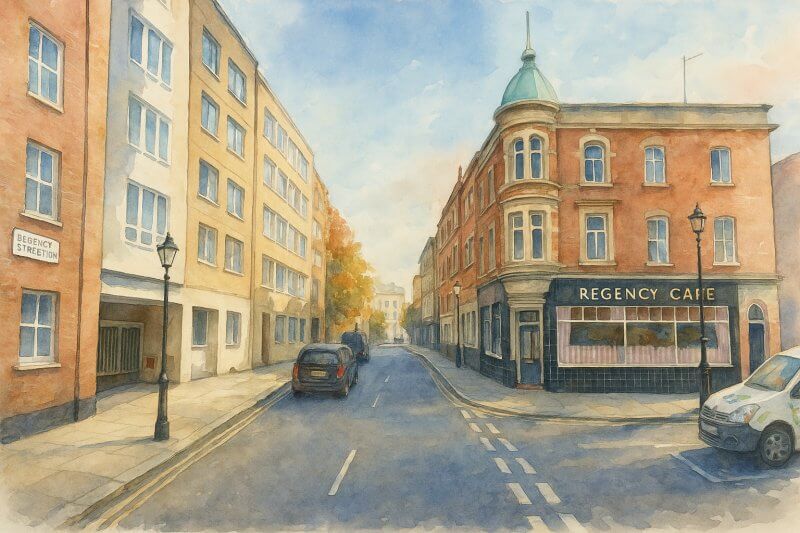
Painting of Regency Cafe on Regency Street, London (View full-size image here)
Moving to London?
New to London and need a place to live? Read our Renting A Flat Guide. This guide covers everything you need to know about renting a flat in London, from viewing to signing.Streets of London
Come, let's explore and discover the streets of London together! Listed here afre the Streets of London that I have documented. Dive in and discover!Map of Streets in London
View all the streets that I have documented on Google Maps in this Map of Streets in London.Want to share your London travel experiences or get tips from fellow travellers?
Join the London Travel Tips Facebook GroupMore information for visiting London
Here are some related articles to help you get to know London better.- Cost of Living in London: Discover the true cost of living in London, including housing, transport, groceries, and more - plus tips for budgeting in one of the world's most expensive cities.
- Driving in London: Planning to drive in London? Learn about roads, car rentals, parking, tolls, and key tips for tourists and visitors from outside the capital.
- Driving Tips for Visiting London: Thinking of driving to London? Discover the best times to travel, congestion tips, parking apps, breakdown help, and petrol advice for a smoother journey.
- Evolution of London's Streets: Discover the fascinating history of how London's streets developed from ancient footpaths to today's complex network of roads across the capital.
- History of Immigration to London: Discover the rich history of immigration to London, from Huguenots to Bangladeshis, and how diverse communities have shaped the city's vibrant identity.
- How Big Is London Compared to Other World Cities?
- How London's Streets Measure Up: A Global Comparison of Road Widths
- How Streets of London are Named: Discover how London streets get their names, who decides them, and how historic, political, and public influences shape street naming in the capital.
- How the Grosvenor Family Came to Own Much of Mayfair, Belgravia and Pimlico: Explore how the Grosvenor family came to own much of Mayfair, Belgravia, and Pimlico, and learn about their historical connection (or lack thereof) with the British royal family and government.
- Living and working in London
- London's Quiet Collapse: How Living Standards Fell as Costs Skyrockted (1975-2025): Explore how London residents endured rising costs and falling living standards from 1975 to 2025 - from rocketing rents to wage stagnation and inflation.
- Marvel of the London Underground: Discover the history, challenges, and triumphs of the London Underground - the world's first underground railway and a vital transport lifeline for the UK capital since 1863.
- Moving to London: Expat Tips for Settling in Westminster: Essential advice for expats moving to London's Westminster: neighborhood insights, cost of living, transportation, housing, healthcare, schools, and tips to help you feel at home in the heart of the city.
- Places in London that aren't pronounced the way they're spelled
- Shopping in London: Discover London's diverse shopping scene
- Taking the bus in London: This is your complete guide to taking the bus when in London.
- The Anglican Faith: A Visitor's Guide to the Church of England: Learn about the Anglican faith and its deep ties to London's landmarks like Westminster Abbey and St Paul's Cathedral.
- Top 10 London Streets Every Visitor Must See: Discover London through its most iconic thoroughfares - 10 streets every visitor must experience. From historic Abbey Road to vibrant Camden High Street, explore culture, shopping, and hidden gems.
- Why are most roads in Central London so narrow? Learn why there are so few multi-lane roads and elevated highways in the heart of the city.
 Latest Pages & Updates
Buy Me A Coffee
If you enjoy the information I provide and want to support the work I do, please buy me a coffee! I appreciate it immensely, thank you so much!
