
Millbank Tower, London
Millbank Tower - A Westminster landmark on the Thames
Millbank Tower (GPS: 51.49232, -0.12579) is a prominent modernist skyscraper located on the north bank of the River Thames in the City of Westminster, London.Rising 118 metres (387 feet) with 31 storeys, the tower dominates the skyline near the Tate Britain and offers some of the most breathtaking views over central London. It is one of the capital’s iconic high-rise buildings outside the traditional City cluster, and has housed everything from political party headquarters to art exhibitions and media events.
History and Construction
Millbank Tower was designed in the early 1960s by Ronald Ward and Partners and was completed in 1963. The architectural style is distinctly International Modernism, characterised by clean lines, a steel frame, and curtain wall glass façade.The tower was originally built as the headquarters of Vickers, a British engineering conglomerate. Over the decades, it became home to various tenants, including the Conservative Party, the Labour Party, and numerous media and corporate organisations.
At the time of its completion, Millbank Tower was the tallest building in the UK—a title it held until the construction of the BT Tower.
How Millbank Tower Got Its Name
The tower derives its name from the road it stands beside—Millbank. This stretch of road runs along the Thames and has deep historical associations, including with the now-demolished Millbank Prison, which once stood near the tower’s current site.Millbank Tower was referred to as such from the outset of its life, likely because of its location. There is no evidence of a prior name before “Millbank Tower” became the standard usage.
Distance from Charing Cross
Millbank Tower is situated approximately 1.4 miles (2.25 km) by road from Charing Cross, traditionally considered the central point of London.The drive typically takes 10–15 minutes depending on traffic, making the tower extremely accessible from central London locations.
Nearest Underground Stations
Millbank Tower is well-served by public transport, with several London Underground stations nearby:- Pimlico Station – on the Victoria Line (approximately 8 minutes on foot)
- Westminster Station – served by the District, Circle, and Jubilee Lines (about 12 minutes’ walk)
- St James’s Park Station – on the District and Circle Lines (around 15 minutes’ walk)
Architectural and Structural Details
Millbank Tower is a 31-storey high-rise with a total height of 118 metres (387 feet). Its slender, rectangular structure allows for wide, uninterrupted views and efficient use of space.Here’s how the tower is typically arranged:
- Ground and Podium Levels: Reception, lift lobbies, and service access
- Floors 2–29: Primarily open-plan office spaces for a range of corporate and organisational tenants
- Floors 30–31: Once used for executive offices and special events, these floors offer spectacular panoramic views
Views from the Top
One of the building’s most attractive features is its sweeping, 360-degree view from the top floors. On clear days, you can see:- Westminster Abbey and the Palace of Westminster
- The London Eye spinning across the river
- The Shard and City skyline rising to the east
- Battersea Power Station to the southwest
- Hyde Park and Kensington in the northwest distance
Fun Fact: A Political Powerhouse
In recent decades, Millbank Tower earned a reputation as a centre of British political life. Both the Labour and Conservative parties have based major campaign operations in the tower.In the 1990s and early 2000s, it served as the headquarters for New Labour, led by Tony Blair. The press dubbed it “Millbank Machine” in reference to the powerful campaign apparatus that operated from within.
This association with political strategy and media made it a behind-the-scenes player in major elections and government communications.
Quick Facts
- Name: Millbank Tower
- Location: Millbank, Westminster, London SW1
- Height: 118 metres (387 feet)
- Storeys: 31
- Completed: 1963
- Architect: Ronald Ward and Partners
- Architectural Style: International Modernism
- Former Use: Vickers HQ, political party offices, media, events
- Nearby Stations: Pimlico (Victoria), Westminster (Jubilee, Circle, District), St James’s Park (Circle, District)
- Distance from Charing Cross: Approx. 1.4 miles (2.25 km)
- Notable Views: London Eye, Parliament, The Shard, Hyde Park
- Fun Fact: Known as the base of New Labour’s “Millbank Machine” in the 1990s
Millbank Tower is  on the Map of Millbank, London
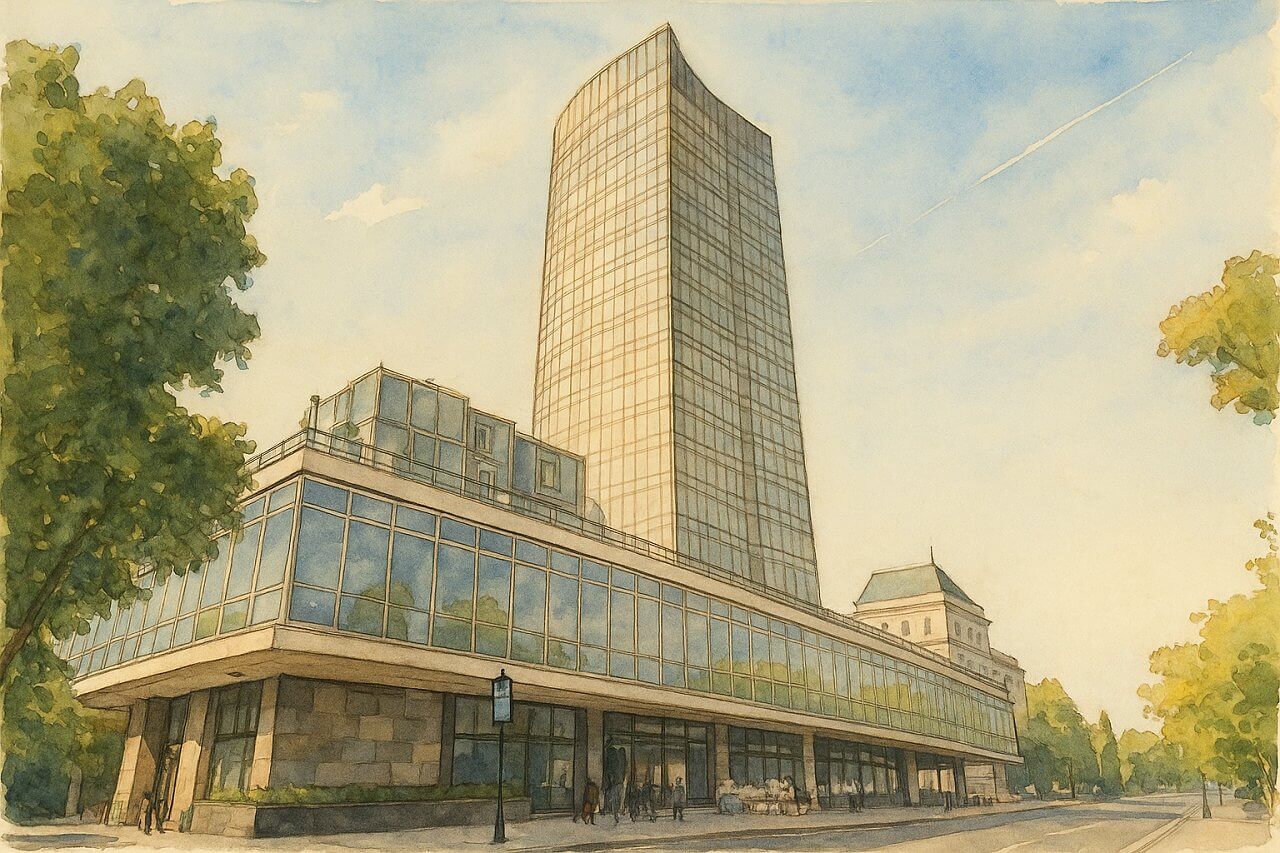
Painting of Millbank Tower, London (View image in full size)

Page Details
This page was created on 3 May 2025. Hi, my name is Timothy and created it from my research, for my own entertainment, knowledge and to satisfy my curiosity. I am providing the information to you in good faith and hope it is useful. I try to get the details as accurate as possible. I also try to update the page whenever I stumble on new details. So this and all my other pages are perpetual work in progress. If you discover any error, please politely inform me, pointing out where the error lies, and I will correct it as soon as possible. Your helpfulness will keep this page accurate, relevant and helpful to those who need the information.List of Office Buildings in London
Want to share your London travel experiences or get tips from fellow travellers?
Join the London Travel Tips Facebook GroupMore information for visiting London
Here are some related articles to help you get to know London better.- Cost of Living in London: Discover the true cost of living in London, including housing, transport, groceries, and more - plus tips for budgeting in one of the world's most expensive cities.
- Driving in London: Planning to drive in London? Learn about roads, car rentals, parking, tolls, and key tips for tourists and visitors from outside the capital.
- Driving Tips for Visiting London: Thinking of driving to London? Discover the best times to travel, congestion tips, parking apps, breakdown help, and petrol advice for a smoother journey.
- Evolution of London's Streets: Discover the fascinating history of how London's streets developed from ancient footpaths to today's complex network of roads across the capital.
- History of Immigration to London: Discover the rich history of immigration to London, from Huguenots to Bangladeshis, and how diverse communities have shaped the city's vibrant identity.
- How Big Is London Compared to Other World Cities?
- How London's Streets Measure Up: A Global Comparison of Road Widths
- How Streets of London are Named: Discover how London streets get their names, who decides them, and how historic, political, and public influences shape street naming in the capital.
- How the Grosvenor Family Came to Own Much of Mayfair, Belgravia and Pimlico: Explore how the Grosvenor family came to own much of Mayfair, Belgravia, and Pimlico, and learn about their historical connection (or lack thereof) with the British royal family and government.
- Living and working in London
- London's Quiet Collapse: How Living Standards Fell as Costs Skyrockted (1975-2025): Explore how London residents endured rising costs and falling living standards from 1975 to 2025 - from rocketing rents to wage stagnation and inflation.
- Marvel of the London Underground: Discover the history, challenges, and triumphs of the London Underground - the world's first underground railway and a vital transport lifeline for the UK capital since 1863.
- Moving to London: Expat Tips for Settling in Westminster: Essential advice for expats moving to London's Westminster: neighborhood insights, cost of living, transportation, housing, healthcare, schools, and tips to help you feel at home in the heart of the city.
- Places in London that aren't pronounced the way they're spelled
- Shopping in London: Discover London's diverse shopping scene
- Taking the bus in London: This is your complete guide to taking the bus when in London.
- The Anglican Faith: A Visitor's Guide to the Church of England: Learn about the Anglican faith and its deep ties to London's landmarks like Westminster Abbey and St Paul's Cathedral.
- Top 10 London Streets Every Visitor Must See: Discover London through its most iconic thoroughfares - 10 streets every visitor must experience. From historic Abbey Road to vibrant Camden High Street, explore culture, shopping, and hidden gems.
- Why are most roads in Central London so narrow? Learn why there are so few multi-lane roads and elevated highways in the heart of the city.
 Latest Pages & Updates
Buy Me A Coffee
If you enjoy the information I provide and want to support the work I do, please buy me a coffee! I appreciate it immensely, thank you so much!
