
Marylebone High Street, London
Marylebone High Street is one of the most iconic and sought-after streets in the City of Westminster, located in the heart of Marylebone, London. This charming street runs from Marylebone Road in the north to Thayer Street at the junction with Blandford Street in the south.
Street Layout and Surroundings
Marylebone High Street stretches roughly 650 metres (2,130 feet) through one of London's most refined neighbourhoods. It is lined with boutique shops, cafés, restaurants, and a mixture of Georgian and Victorian architecture. The street forms a central spine of the Marylebone area and is well-connected to nearby thoroughfares such as Paddington Street, Devonshire Street, and Weymouth Street.
To the north, the street links with the busy Marylebone Road, while to the south, it transitions into Thayer Street, continuing the retail and dining experience. The western boundary of Marylebone High Street is close to Manchester Square, home to the Wallace Collection, while to the east, it is parallel to Harley Street, renowned for its private medical practices.
Connecting Streets
- Beaumont Street
- Blandford Street
- Devonshire Place Mews
- Devonshire Street
- George Street
- Marylebone Lane
- Marylebone Road
- Moxon Street
- New Cavendish Street
- Nottingham Street
- Paddington Street
- Weymouth Street
History of Marylebone High Street
Marylebone High Street has roots dating back to the early 18th century when the village of Marylebone developed into a fashionable suburb of London. Originally part of the rural manor of Tyburn, the area was gradually transformed following the construction of grand residences and shopping streets to cater to the upper classes. The name "Marylebone" derives from the church of St Mary by the Bourne (the "bourne" referring to the Tyburn stream).
By the Victorian era, Marylebone High Street had become the bustling commercial centre of the neighbourhood. While it fell into decline in the mid-20th century, a significant revival in the late 1990s, led by the Howard de Walden Estate, restored its elegance and vibrancy. Today, it is regarded as one of London's most delightful shopping streets.
Name and Pronunciation
The name "Marylebone" is pronounced MAR-li-b'n in everyday English speech. The International Phonetic Alphabet (IPA) transcription is /ˈmɑːrlɪbən/. The commonly mispronounced version "Mary-le-bone" is often corrected by locals.
Things to See and Do
Marylebone High Street offers a wealth of attractions and experiences for both locals and visitors. Some of the highlights include:
- Daunt Books – An Edwardian bookshop with long oak galleries and skylights, specialising in travel books.
- The Conran Shop – A stylish design and lifestyle store located in the former Michelin House.
- Marylebone Farmers' Market – Held every Sunday in nearby Cramer Street car park, showcasing fresh local produce.
- St Marylebone Parish Church – An important historical site located near the northern end of the street.
- Wallace Collection – A short walk away in Manchester Square, offering a world-class art collection.
Property Prices and Real Estate (2025)
Marylebone High Street is among the most desirable residential locations in London. According to real estate reports from July 2025, the average price of residential properties on and around Marylebone High Street is approximately £2,000 per square foot (approximately £21,528 per square metre).
A typical two-bedroom apartment of around 1,000 sq ft (about 93 sq metres) can sell for between £1.8 million to £2.2 million, depending on condition and building amenities. For rental, the same property might command £7,000 to £9,000 per month, making it one of the priciest places to live in central London. Despite the high costs, demand remains strong due to the area's blend of historic charm and modern convenience.
Public Transport and Accessibility
Marylebone High Street is well served by the London Underground and local buses. The nearest London Underground stations are:
- Regent's Park Station – on the Bakerloo line.
- Bond Street Station – on the Central and Elizabeth lines.
- Oxford Circus Station – on the Bakerloo, Central, and Victoria lines.
Numerous London bus routes pass nearby, including services along Marylebone Road, Wigmore Street, and Baker Street, making it highly accessible from various parts of the city.
Fun Fact
Marylebone High Street was once home to the original location of the famous Ginglik Music Hall in the 19th century, a popular venue for Victorian entertainment, though no trace of it remains today.
Quick Facts
- Marylebone High Street connects Marylebone Road in the north to Thayer Street at the junction with Blandford Street in the south.
- Located in Marylebone, City of Westminster, London.
- History dates back to the 18th century as a shopping street for the Marylebone area.
- Named after St Mary by the Bourne; pronounced MAR-li-b'n (/ˈmɑːrlɪbən/).
- Nearby attractions include Daunt Books, the Conran Shop, Wallace Collection, and Marylebone Farmers' Market.
- Average residential property prices are around £2,000 per square foot (as of July 2025).
- Nearest London Underground stations: Regent's Park, Bond Street, Oxford Circus.
- Numerous bus stops are located nearby along Marylebone Road and Wigmore Street.
References
Map of Marylebone High Street, London
Painting of Marylebone High Street
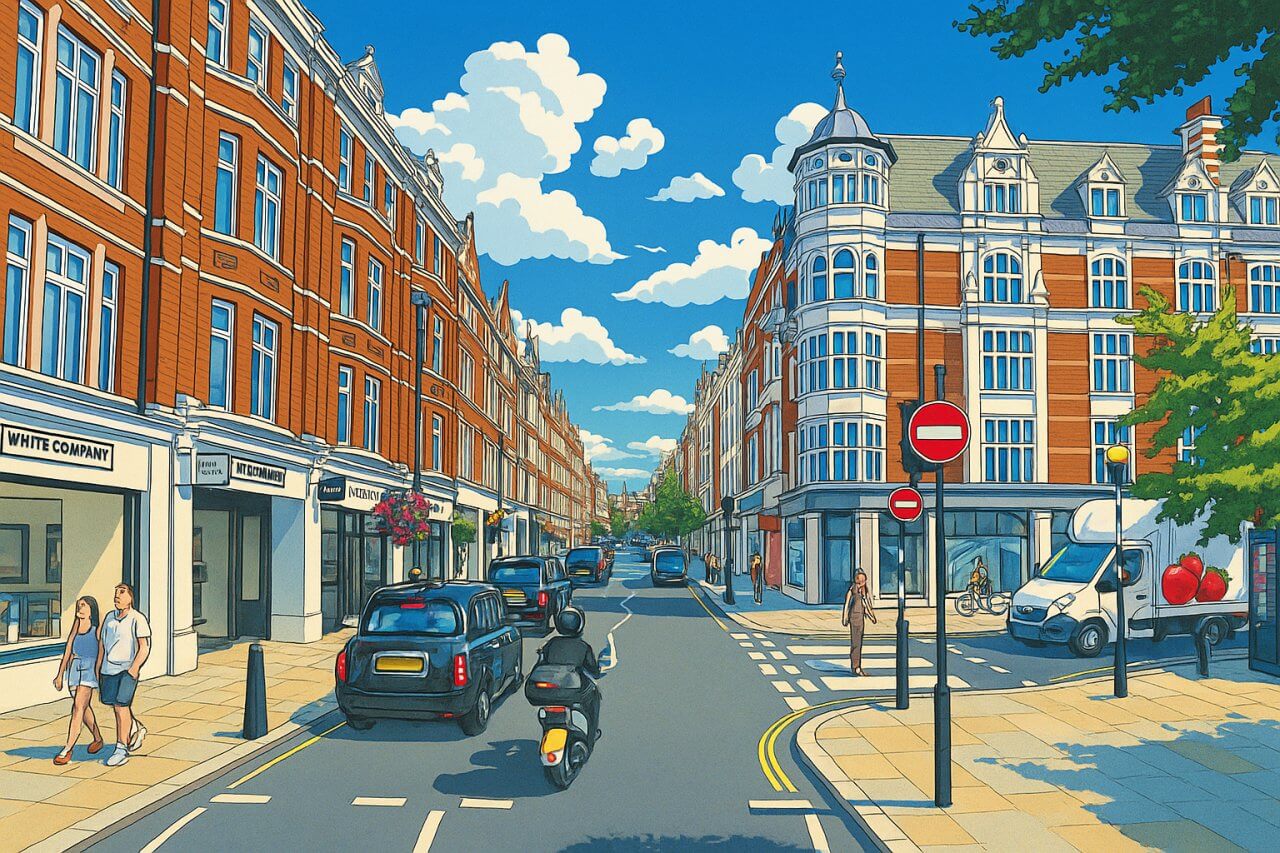 Painting of Marylebone High Street
Page Details
This page was created on 20 July 2025. Hi, my name is Timothy and created it from my research, for my own entertainment, knowledge and to satisfy my curiosity. I am providing the information to you in good faith and hope it is useful. I try to get the details as accurate as possible. I also try to update the page whenever I stumble on new details. So this and all my other pages are perpetual work in progress. If you discover any error, please politely inform me, pointing out where the error lies, and I will correct it as soon as possible. Your helpfulness will keep this page accurate, relevant and helpful to those who need the information.Moving to London?
New to London and need a place to live? Read our Renting A Flat Guide. This guide covers everything you need to know about renting a flat in London, from viewing to signing.Streets of London
Come, let's explore and discover the streets of London together! Listed here afre the Streets of London that I have documented. Dive in and discover!Map of Streets in London
View all the streets that I have documented on Google Maps in this Map of Streets in London.Want to share your London travel experiences or get tips from fellow travellers?
Join the London Travel Tips Facebook GroupMore information for visiting London
Here are some related articles to help you get to know London better.- Cost of Living in London: Discover the true cost of living in London, including housing, transport, groceries, and more - plus tips for budgeting in one of the world's most expensive cities.
- Driving in London: Planning to drive in London? Learn about roads, car rentals, parking, tolls, and key tips for tourists and visitors from outside the capital.
- Driving Tips for Visiting London: Thinking of driving to London? Discover the best times to travel, congestion tips, parking apps, breakdown help, and petrol advice for a smoother journey.
- Evolution of London's Streets: Discover the fascinating history of how London's streets developed from ancient footpaths to today's complex network of roads across the capital.
- History of Immigration to London: Discover the rich history of immigration to London, from Huguenots to Bangladeshis, and how diverse communities have shaped the city's vibrant identity.
- How Big Is London Compared to Other World Cities?
- How London's Streets Measure Up: A Global Comparison of Road Widths
- How Streets of London are Named: Discover how London streets get their names, who decides them, and how historic, political, and public influences shape street naming in the capital.
- How the Grosvenor Family Came to Own Much of Mayfair, Belgravia and Pimlico: Explore how the Grosvenor family came to own much of Mayfair, Belgravia, and Pimlico, and learn about their historical connection (or lack thereof) with the British royal family and government.
- Living and working in London
- London's Quiet Collapse: How Living Standards Fell as Costs Skyrockted (1975-2025): Explore how London residents endured rising costs and falling living standards from 1975 to 2025 - from rocketing rents to wage stagnation and inflation.
- Marvel of the London Underground: Discover the history, challenges, and triumphs of the London Underground - the world's first underground railway and a vital transport lifeline for the UK capital since 1863.
- Moving to London: Expat Tips for Settling in Westminster: Essential advice for expats moving to London's Westminster: neighborhood insights, cost of living, transportation, housing, healthcare, schools, and tips to help you feel at home in the heart of the city.
- Places in London that aren't pronounced the way they're spelled
- Shopping in London: Discover London's diverse shopping scene
- Taking the bus in London: This is your complete guide to taking the bus when in London.
- The Anglican Faith: A Visitor's Guide to the Church of England: Learn about the Anglican faith and its deep ties to London's landmarks like Westminster Abbey and St Paul's Cathedral.
- Top 10 London Streets Every Visitor Must See: Discover London through its most iconic thoroughfares - 10 streets every visitor must experience. From historic Abbey Road to vibrant Camden High Street, explore culture, shopping, and hidden gems.
- Why are most roads in Central London so narrow? Learn why there are so few multi-lane roads and elevated highways in the heart of the city.
 Latest Pages & Updates
Buy Me A Coffee
If you enjoy the information I provide and want to support the work I do, please buy me a coffee! I appreciate it immensely, thank you so much!
