
Chinatown, London
A Vibrant Slice of East Asia in the Heart of the West End
A Colourful Cultural Enclave Just Steps from Soho
London’s Chinatown is a bustling and colourful district renowned for its vibrant atmosphere, authentic East Asian cuisine, and cultural significance.Nestled between the bright lights of Leicester Square and the stylish streets of Soho, Chinatown offers visitors an immersive experience where tradition meets modern London life.
Where is Chinatown, London?
Chinatown is situated in the heart of London’s West End, within the City of Westminster.It is positioned just north of Leicester Square and south of Soho, making it incredibly central and easy to reach from many parts of London.
The area is densely packed with restaurants, shops, bakeries, and markets offering everything from dim sum and roast duck to traditional Chinese medicine and gifts.
Which Roads Form Chinatown?
Chinatown’s core is made up of several interconnected streets and pedestrianised lanes. The main streets that define Chinatown are:- Gerrard Street – the central spine of Chinatown, famed for its red lanterns and Chinese-style gates.
- Newport Place – home to public spaces and restaurants, with a large central square.
- Macclesfield Street – linking Shaftesbury Avenue to Gerrard Street.
- Lisle Street – known for East Asian shops and eateries.
- Rupert Court and Rupert Street – smaller but bustling lanes connected to the main district.
- Little Newport Street and Little Newport Place – side streets rich with hidden gems.
Map of Chinatown, London
The History of Chinatown
The story of Chinatown in London is one of resilience and transformation.The original Chinese community was established in the Limehouse area of East London during the late 19th century, primarily by Chinese sailors and traders.
These early settlers mostly spoke Cantonese, a southern Chinese dialect, reflecting their origins in the Guangdong province and Hong Kong.
In the 1950s and 1960s, as shipping declined and the East End community dispersed, Chinese immigrants began to move to Soho. Gerrard Street, with its central location and affordable rents, became the new hub for Chinese businesses, particularly restaurants.
The modern Chinatown, as we know it today, began taking shape in the 1970s. The transformation included the pedestrianisation of Gerrard Street and the installation of Chinese-style architectural features, such as the ornate Paifang (gateways) and red lanterns.
Urban morphology evolved as existing Georgian and Victorian buildings were repurposed rather than replaced, blending British architectural styles with Chinese decorative elements.
Changes in Demographics
Over the past decade, Chinatown has experienced some demographic shifts.While it remains a cultural centre for London's Chinese community, rising rents and urban redevelopment have seen some traditional businesses move out.
Today, there is a greater presence of East and Southeast Asian cultures, including communities from Vietnam, Korea, and Malaysia. Newer generations of British-born Chinese and other Asian-Londoners have also infused the area with a more diverse cultural energy.
Nevertheless, Chinatown continues to be a symbolic and social centre for celebrations like Lunar New Year and the Mid-Autumn Festival.
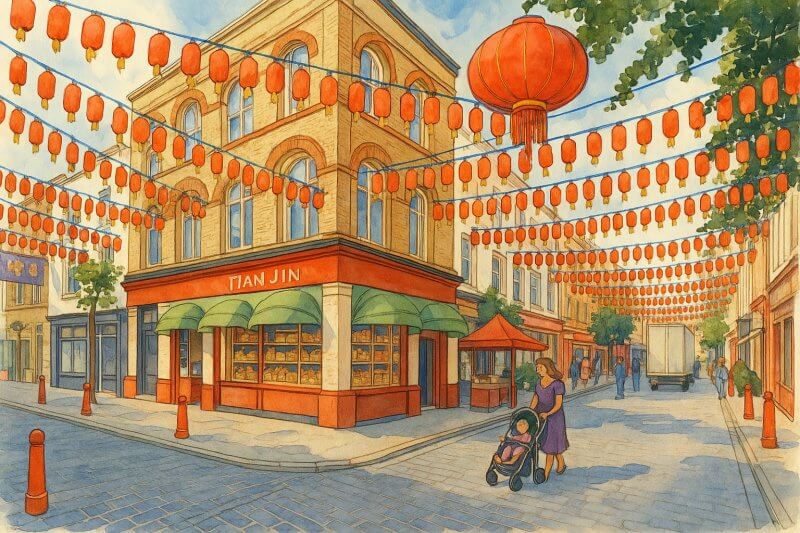
Painting of Chinatown (View full-size image here)
Important Buildings and Landmarks in Chinatown
Chinatown is home to several notable landmarks and unique features that reflect its cultural identity:- Chinatown Gate (Gerrard Street): The most prominent landmark, an elaborate Chinese ceremonial archway, was completed in 2016. It was constructed in traditional Qing dynasty style and is the largest in the UK.
- Gerrard Street: Beyond the gate, the entire street is an experience, lined with dozens of restaurants and businesses, and strung overhead with thousands of red lanterns.
- Statue of a Stone Lion: Symbolising protection, pairs of stone lions can be found flanking the entrances to Chinatown’s key areas.
- Newport Place: A newly redeveloped public square featuring public art and seating, offering a welcoming space for visitors to relax and soak in the atmosphere.
Nearest London Underground Stations
Chinatown is exceptionally well-served by several Underground stations, making it very accessible:- Leicester Square Station – served by the Northern and Piccadilly lines. It is just a short walk south of Gerrard Street.
- Piccadilly Circus Station – served by the Bakerloo and Piccadilly lines, a few minutes' walk to the west.
- Tottenham Court Road Station – served by the Central, Elizabeth, and Northern lines, approximately a 10-minute walk to the northeast.
Fun Facts About Chinatown
Chinatown is filled with surprises, some of which may not be immediately obvious to casual visitors:- Hidden Speakeasies: Several trendy hidden cocktail bars, disguised as restaurants or shops, are tucked away in Chinatown – perfect for adventurous explorers.
- Home to Bubble Tea Culture: London’s bubble tea craze owes much to Chinatown, where some of the city's first dedicated bubble tea shops opened.
- Bilingual Street Signs: All street signs in Chinatown are bilingual, displaying both English and traditional Chinese characters, adding to the district's authentic feel.
- Lunar New Year Celebrations: Chinatown hosts Europe's biggest Lunar New Year festival, drawing hundreds of thousands of visitors annually with parades, performances, and street food festivals.
- Film Location: Gerrard Street and its surroundings have featured in several films and TV shows, adding cinematic flair to its already dynamic character.
Conclusion
Chinatown, London is a vivid celebration of Chinese and wider East Asian culture nestled right in the heart of the city.From its rich history and evolving community to its outstanding food scene and cultural landmarks, Chinatown offers visitors an unforgettable experience that continues to adapt while preserving its unique heritage.
Whether you come to sample authentic dim sum, take photos under the grand Chinatown Gate, or simply enjoy the lively atmosphere, Chinatown remains one of London’s most cherished and dynamic districts.
List of Places in London, Map of Places in London
Want to share your London travel experiences or get tips from fellow travellers?
Join the London Travel Tips Facebook GroupMore information for visiting London
Here are some related articles to help you get to know London better.- Cost of Living in London: Discover the true cost of living in London, including housing, transport, groceries, and more - plus tips for budgeting in one of the world's most expensive cities.
- Driving in London: Planning to drive in London? Learn about roads, car rentals, parking, tolls, and key tips for tourists and visitors from outside the capital.
- Driving Tips for Visiting London: Thinking of driving to London? Discover the best times to travel, congestion tips, parking apps, breakdown help, and petrol advice for a smoother journey.
- Evolution of London's Streets: Discover the fascinating history of how London's streets developed from ancient footpaths to today's complex network of roads across the capital.
- History of Immigration to London: Discover the rich history of immigration to London, from Huguenots to Bangladeshis, and how diverse communities have shaped the city's vibrant identity.
- How Big Is London Compared to Other World Cities?
- How London's Streets Measure Up: A Global Comparison of Road Widths
- How Streets of London are Named: Discover how London streets get their names, who decides them, and how historic, political, and public influences shape street naming in the capital.
- How the Grosvenor Family Came to Own Much of Mayfair, Belgravia and Pimlico: Explore how the Grosvenor family came to own much of Mayfair, Belgravia, and Pimlico, and learn about their historical connection (or lack thereof) with the British royal family and government.
- Living and working in London
- London's Quiet Collapse: How Living Standards Fell as Costs Skyrockted (1975-2025): Explore how London residents endured rising costs and falling living standards from 1975 to 2025 - from rocketing rents to wage stagnation and inflation.
- Marvel of the London Underground: Discover the history, challenges, and triumphs of the London Underground - the world's first underground railway and a vital transport lifeline for the UK capital since 1863.
- Moving to London: Expat Tips for Settling in Westminster: Essential advice for expats moving to London's Westminster: neighborhood insights, cost of living, transportation, housing, healthcare, schools, and tips to help you feel at home in the heart of the city.
- Places in London that aren't pronounced the way they're spelled
- Shopping in London: Discover London's diverse shopping scene
- Taking the bus in London: This is your complete guide to taking the bus when in London.
- The Anglican Faith: A Visitor's Guide to the Church of England: Learn about the Anglican faith and its deep ties to London's landmarks like Westminster Abbey and St Paul's Cathedral.
- Top 10 London Streets Every Visitor Must See: Discover London through its most iconic thoroughfares - 10 streets every visitor must experience. From historic Abbey Road to vibrant Camden High Street, explore culture, shopping, and hidden gems.
- Why are most roads in Central London so narrow? Learn why there are so few multi-lane roads and elevated highways in the heart of the city.
 Latest Pages & Updates
Buy Me A Coffee
If you enjoy the information I provide and want to support the work I do, please buy me a coffee! I appreciate it immensely, thank you so much!
