
Bank, London
 Map of Bank, London
The Origin of the name "Bank"
The name "Bank" comes from the Bank of England, which was established in 1694. Initially founded to manage government debt and serve as the country's central bank, the institution's presence in the area has made "Bank" a shorthand for financial activity in the city. Over time, the area surrounding the Bank of England has developed into one of the most vital commercial centres in the world.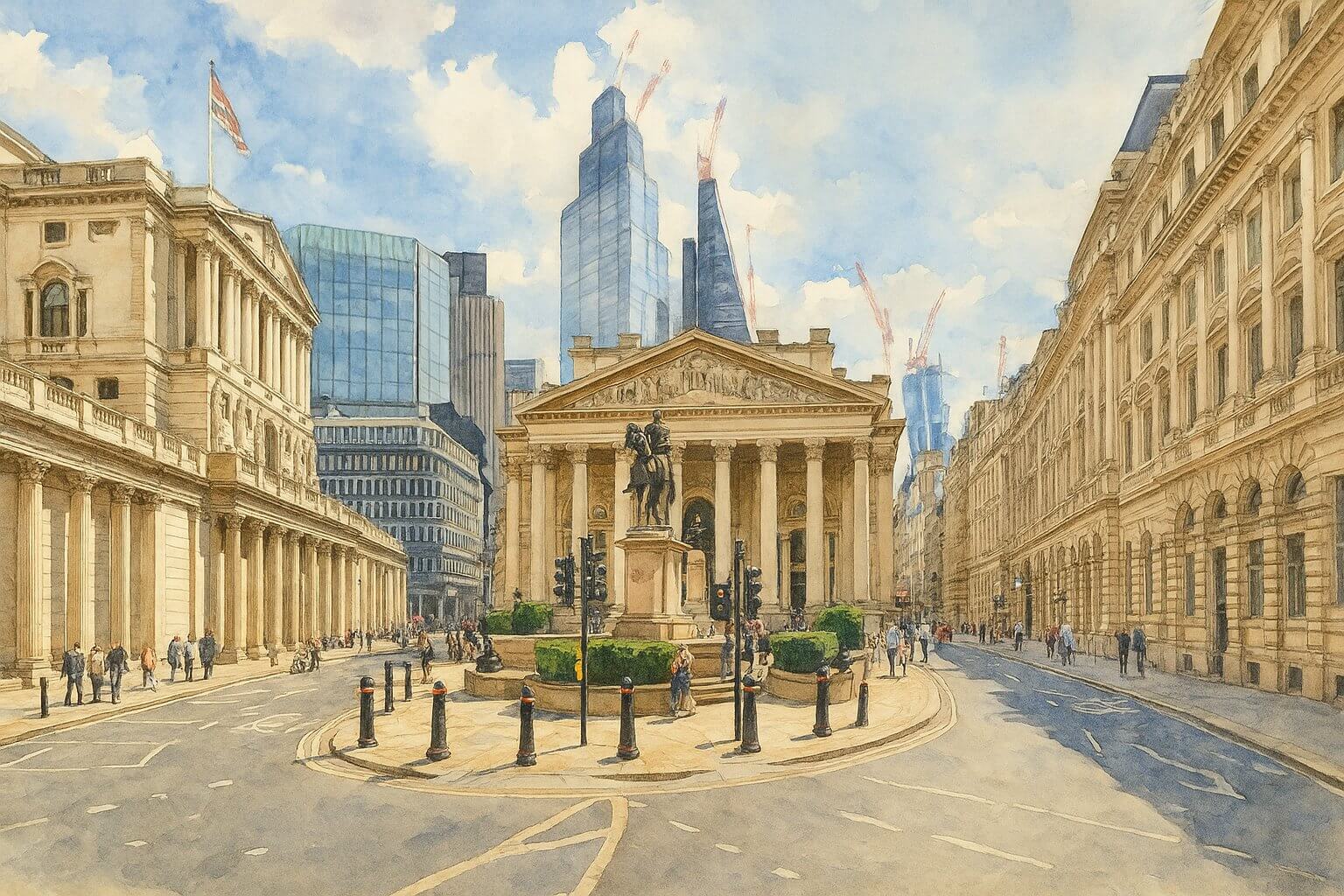
Watercolour painting of Bank, London
Major Streets in the Bank Area
Several key streets run through the Bank area, each contributing to its distinct atmosphere of commerce and history. These include:- Threadneedle Street: Home to the Bank of England, this street has long been at the heart of London's financial scene.
- Lombard Street: Known for its banking heritage, this historic street is where London's banking sector began.
- King William Street: A major road connecting the Bank area to Monument and London Bridge.
- Cornhill: A historic street linking to the Royal Exchange, another key site in the City's financial history.
Bank Tube Station
Bank station is one of London's busiest and most significant transport hubs. It is served by multiple Underground lines, including Central Line, Northern Line, Waterloo & City Line and Docklands Light Railway (DLR). This extensive coverage makes Bank station an essential part of London's transport network, connecting commuters and tourists alike to the heart of the city.Monument Tube Station
Although Monument Tube Station is located nearby, it is generally not considered part of the Bank area itself. It sits at the southern end of the Bank area, near the famous Monument to the Great Fire of London. However, both stations are often linked in people's minds due to their proximity and their role in London's financial district.Fun Facts about the Bank area
- The Bank of England: Often referred to as "The Old Lady of Threadneedle Street," the Bank of England is one of the world's oldest central banks and remains a key institution in the city's financial landscape.
- Monument to the Great Fire: Located near Monument station, this 202-foot tall column commemorates the Great Fire of London, which started in 1666. Visitors can climb to the top for stunning views of the city.
- Stock Exchange: The Royal Exchange, located on Cornhill, was once home to the London Stock Exchange and remains a symbol of the city's trading heritage.
The Bank area blends historic architecture with modern finance, making it one of the most recognizable parts of London. Whether you're exploring its iconic streets, taking in its landmarks, or learning about the financial systems that run through it, the Bank area offers something for every visitor and resident.
List of Places in London, Map of Places in London
Want to share your London travel experiences or get tips from fellow travellers?
Join the London Travel Tips Facebook GroupMore information for visiting London
Here are some related articles to help you get to know London better.- Cost of Living in London: Discover the true cost of living in London, including housing, transport, groceries, and more - plus tips for budgeting in one of the world's most expensive cities.
- Driving in London: Planning to drive in London? Learn about roads, car rentals, parking, tolls, and key tips for tourists and visitors from outside the capital.
- Driving Tips for Visiting London: Thinking of driving to London? Discover the best times to travel, congestion tips, parking apps, breakdown help, and petrol advice for a smoother journey.
- Evolution of London's Streets: Discover the fascinating history of how London's streets developed from ancient footpaths to today's complex network of roads across the capital.
- History of Immigration to London: Discover the rich history of immigration to London, from Huguenots to Bangladeshis, and how diverse communities have shaped the city's vibrant identity.
- How Big Is London Compared to Other World Cities?
- How London's Streets Measure Up: A Global Comparison of Road Widths
- How Streets of London are Named: Discover how London streets get their names, who decides them, and how historic, political, and public influences shape street naming in the capital.
- How the Grosvenor Family Came to Own Much of Mayfair, Belgravia and Pimlico: Explore how the Grosvenor family came to own much of Mayfair, Belgravia, and Pimlico, and learn about their historical connection (or lack thereof) with the British royal family and government.
- Living and working in London
- London's Quiet Collapse: How Living Standards Fell as Costs Skyrockted (1975-2025): Explore how London residents endured rising costs and falling living standards from 1975 to 2025 - from rocketing rents to wage stagnation and inflation.
- Marvel of the London Underground: Discover the history, challenges, and triumphs of the London Underground - the world's first underground railway and a vital transport lifeline for the UK capital since 1863.
- Moving to London: Expat Tips for Settling in Westminster: Essential advice for expats moving to London's Westminster: neighborhood insights, cost of living, transportation, housing, healthcare, schools, and tips to help you feel at home in the heart of the city.
- Places in London that aren't pronounced the way they're spelled
- Shopping in London: Discover London's diverse shopping scene
- Taking the bus in London: This is your complete guide to taking the bus when in London.
- The Anglican Faith: A Visitor's Guide to the Church of England: Learn about the Anglican faith and its deep ties to London's landmarks like Westminster Abbey and St Paul's Cathedral.
- Top 10 London Streets Every Visitor Must See: Discover London through its most iconic thoroughfares - 10 streets every visitor must experience. From historic Abbey Road to vibrant Camden High Street, explore culture, shopping, and hidden gems.
- Why are most roads in Central London so narrow? Learn why there are so few multi-lane roads and elevated highways in the heart of the city.
 Latest Pages & Updates
Buy Me A Coffee
If you enjoy the information I provide and want to support the work I do, please buy me a coffee! I appreciate it immensely, thank you so much!
