
Batu Gantong Travel Guide
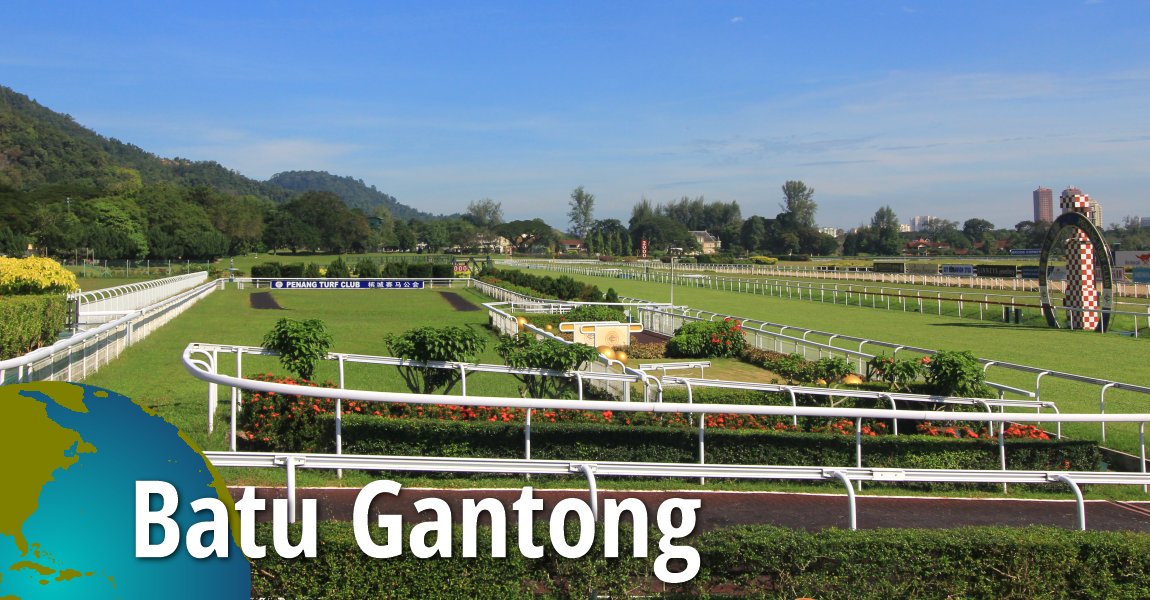 Batu Gantong, Penang (3 December 2011)
Also available: Panduan Melawat Batu Gantung
Batu Gantong is a neighbourhood on the outskirts of George Town, Penang, best known for two prominent landmarks: the Penang Turf Club and Batu Gantong Cemetery. Both are associated with Jalan Batu Gantung, a road leading into the area from the Jalan Scotland and Jalan York vicinity. Although Batu Gantong is close to the city centre, much of its land is occupied by the racecourse, cemetery grounds and related facilities, alongside residential developments. The neighbourhood also has a literary connection through Chan Kim Boon, a 19th-century writer who used Batu Gantong as his pen name.1
Quick Facts
- Name: Batu Gantong
- Location: On the outskirts of George Town, Penang Island, Malaysia
- Nearby areas: Jalan Scotland, Jalan York, Green Lane and Air Itam
- Best-known landmarks: Penang Turf Club and Batu Gantong Cemetery
- Historic cemetery: Established in 1886, according to United Hokkien Cemeteries
- Horse-racing club: Penang Turf Club, founded in 1864
- Literary connection: Chan Kim Boon, who wrote under the pen name Batu Gantong
- Distance from Komtar: Approximately 5 km, depending on the destination and route
- Main access road: Jalan Batu Gantung, also commonly associated with the Batu Gantong name
- Public transport: Buses serve nearby Jalan Scotland; the cemetery and some destinations require a further walk or another mode of transport
- Character: A mixed neighbourhood of residential areas, institutional land, cemetery grounds and a racecourse
Geography and Location
Batu Gantong lies inland from the older urban core of George Town, near the junction of several important local roads. It is accessed principally through Jalan Batu Gantung, which branches from the road network around Jalan Scotland and Jalan York. The neighbourhood is close to established residential districts and is within a relatively short driving distance of central George Town.
The area does not have a single, clearly defined boundary that is universally used for everyday purposes. Its relationship with George Town and Air Itam is best understood in terms of the surrounding roads, residential developments and adjoining land uses. For practical purposes, Batu Gantong can be regarded as part of the wider urban area on the southern and southwestern outskirts of George Town.
Jalan Batu Gantung serves several distinct destinations, including the Penang Turf Club, Batu Gantong Cemetery, cremation facilities and nearby residential developments. The road is therefore more than a local access route: it connects the neighbourhood's principal institutions with the surrounding urban road network.2
Land use and development
A defining feature of Batu Gantong is the amount of land occupied by the racecourse and cemetery. The Penang Turf Club's grounds cover a substantial area, while Batu Gantong Cemetery occupies extensive land that includes hilly terrain. These uses help explain why the neighbourhood's built-up residential areas are concentrated around the available roads and parcels of land rather than forming one continuous urban grid.
Residential development in the surrounding area includes older landed properties, flats and newer apartment buildings. As George Town expanded, formerly peripheral neighbourhoods became increasingly integrated into the city's urban fabric. Batu Gantong now sits among established residential districts, although the racecourse and cemetery retain a distinct presence in the local landscape.
The area is close enough to George Town to be considered by people who work or study in the city, but the convenience of a particular address depends on its access to the main roads, public transport and daily amenities. A property near Jalan Scotland may have different transport advantages from one situated deeper along Jalan Batu Gantung.
History of Batu Gantong
Batu Gantong Cemetery
Batu Gantong Cemetery is one of the area's most important historical landmarks. According to United Hokkien Cemeteries, the cemetery was established in 1886. It formed part of the burial infrastructure developed by Penang's Chinese community during a period when the island's population and commercial activity were expanding.3
The cemetery reflects the role played by community organisations in providing burial grounds and maintaining funerary traditions. In the late 19th century, Chinese associations and community leaders arranged land for burials as existing cemetery areas came under pressure. Batu Gantong became one of the principal burial grounds associated with the Hokkien community in Penang.
The cemetery is now managed by United Hokkien Cemeteries, an organisation formed in 1923 through the unification of cemetery management bodies. Its responsibilities extend beyond Batu Gantong to several other cemetery sites on Penang Island. The organisation's history documents the development of these burial grounds and the community institutions that administer them.3
Over time, urban development has surrounded parts of the cemetery. Residential estates, roads and other facilities have changed the setting in which the burial grounds are located. Nevertheless, the cemetery remains a significant part of Batu Gantong's physical character and local history.
Penang Turf Club
The Penang Turf Club is the other landmark most closely associated with Batu Gantong. The club was founded in 1864 and describes itself as the oldest existing turf club in Malaysia. Its early race meetings were held at a different site before the club developed its present racecourse at Batu Gantong.4
Horse racing became part of Penang's recreational and sporting life during the British colonial period. The sport attracted spectators from different parts of the settlement, and race meetings became established events on the local calendar. The Penang Turf Club's history records the development of racing in Penang from the 19th century onwards.
The present racecourse occupies a large tract of land within the urban area. Its grounds include the racetrack and associated facilities. On race days, the movement of spectators and vehicles can affect traffic on the surrounding roads, particularly near the approaches to the club.
The Penang Turf Club is a working sporting venue rather than a conventional public park. Access to its facilities depends on the club's operating arrangements and scheduled activities. Visitors interested in horse racing should check the club's official website for current race dates, admission details and visitor information before making a trip.
The Batu Gantong Crematorium and related facilities
The Batu Gantong area also contains cremation and funeral facilities associated with United Hokkien Cemeteries. These include the Batu Gantong Crematorium and nearby columbarium facilities. Their presence reflects the continuing role of the area in the funerary and memorial practices of Penang's Chinese community.
The crematorium's development belongs to the broader history of changing funerary practices and the management of burial land on a densely populated island. As urban land became more constrained, cremation and the provision of columbarium space became important complements to traditional burial grounds. Visitors should treat these facilities as active places of remembrance and respect the privacy of families attending funeral services.
Origin and Meaning of the Name Batu Gantong
The name Batu Gantong is commonly interpreted as meaning “hanging rock” in Malay. Batu means rock or stone, while gantong is a local or older spelling related to gantung, meaning to hang or suspend. The name is traditionally associated with a boulder said to have appeared precariously suspended on a hillside in the area.
Although this explanation is associated with the local place name, the precise location and geological history of the rock are not well established in the sources used here. It is therefore more appropriate to present the hanging-rock explanation as the traditional interpretation of the name rather than as a fully documented geological account.
There is also a spelling distinction worth noting. The neighbourhood is widely known as Batu Gantong, while the road is commonly written as Jalan Batu Gantung. Visitors may encounter both forms in maps, addresses and local references. When searching for directions, it is useful to try the spelling used by the particular destination.
Chan Kim Boon and the Literary Connection
Batu Gantong has an unusual connection with the literary history of the Straits Chinese community through Chan Kim Boon (1851–1920), a writer known for his work in Baba Malay. He used Batu Gantong as his pen name. Baba Malay was a form of Malay associated with the Peranakan Chinese communities of the Straits Settlements, incorporating vocabulary and expressions shaped by local multilingual life.
According to the existing Penang Travel Tips account, Chan Kim Boon was said to have been born in Batu Gantong village before moving into George Town, where he later lived at 75 Muntri Street.1 This biographical detail connects the neighbourhood with a writer whose work forms part of the wider history of Malay-language literature in the region.
The pen name is particularly notable because it adopts the name of a locality rather than a conventional personal name. While Batu Gantong is now most readily associated with its cemetery and racecourse, its connection with Chan Kim Boon provides another dimension to the area's history.
Places of Interest in Batu Gantong
1. Penang Turf Club
The Penang Turf Club is the best-known sporting attraction in the neighbourhood. Its history dates to the 19th century, and its present grounds occupy a large site within the urban area. For visitors interested in horse racing, the club offers a way to experience a sporting tradition that has been part of Penang's history for more than a century.
Admission and public access depend on the club's schedule and arrangements. It is best to consult the club's official information before visiting rather than assume that all facilities are open to casual visitors every day.
2. Batu Gantong Cemetery
Batu Gantong Cemetery is a major historical burial ground associated with the Chinese community in Penang. Its extensive grounds and hillside sections reflect the scale of the cemetery established in the late 19th century. It is of particular interest to people studying local history, community institutions and the development of Penang's burial grounds.
This is an active cemetery and place of remembrance, not a conventional sightseeing attraction. Visitors should remain quiet, avoid disturbing mourners and ceremonies, and follow any access instructions issued by the cemetery's management.
3. Batu Gantong Crematorium and columbarium
The crematorium and nearby columbarium facilities are part of the area's wider funerary complex. They are primarily service facilities rather than tourist attractions, but they help explain why Batu Gantong has retained its importance in the administration of burial and memorial services.
People visiting for official, family or religious purposes should confirm the correct entrance and arrangements in advance. Access may be affected by funeral services and other scheduled activities.
4. Lean Cheng Keong Temple and nearby local landmarks
Lean Cheng Keong Temple is one of the local landmarks in the vicinity of Jalan Batu Gantung. The surrounding area also contains community offices and residential developments. These places form part of the neighbourhood's everyday environment rather than a concentrated tourist district.
Visitors exploring the area on foot should plan their route carefully. Roads serving the cemetery and racecourse are primarily intended for local access, and not every destination has a dedicated pedestrian route or visitor facilities.
Where to Stay near Batu Gantong
Batu Gantong is not primarily a hotel district. Travellers who want to visit the neighbourhood can usually find a wider range of accommodation in George Town and the surrounding urban areas. The best base depends on whether the main purpose of the visit is to explore Penang's heritage attractions, attend an event at the Turf Club, visit family or access other parts of the island.
George Town
George Town offers a broad choice of accommodation, including heritage hotels, boutique guesthouses, business hotels and larger properties. Staying in the city centre can be convenient for visitors who also want to explore historic streets, museums, shopping areas and local food destinations. Batu Gantong can then be visited by car, taxi or e-hailing service.
Green Lane and nearby residential areas
Areas around Green Lane and other established neighbourhoods south of central George Town may be practical for travellers who prefer to stay outside the busiest tourist streets. The available accommodation varies by location, so check the actual driving distance to Batu Gantong rather than relying only on the name of the district.
Air Itam
Air Itam is another possible base for visitors who plan to explore the western side of George Town and nearby attractions. It has its own local food and commercial areas, although traffic can be busy on some roads. Depending on your itinerary, accommodation in Air Itam may be more convenient for visits to several inland parts of the island than a hotel in the city centre.
Before booking, consider parking, access to public transport and the time needed to reach your main destinations. If attending a horse-racing event or visiting the cemetery for a scheduled service, confirm the location and timing in advance.
What to Eat in and around Batu Gantong
Batu Gantong itself is not a major food destination comparable with George Town's historic centre or Penang's larger hawker areas. There are local food outlets and businesses in the surrounding neighbourhoods, but visitors may find a wider selection by travelling towards Jalan Scotland, Green Lane, Air Itam or central George Town.
Penang hawker food
Penang is known for its hawker dishes, including char koay teow, curry mee, Hokkien mee, nasi kandar and a variety of noodle and rice dishes. Availability varies between food centres and individual stalls, so visitors should check local opening times and whether a particular stall is operating on the day.
Food around Air Itam and Green Lane
Air Itam and Green Lane have residential and commercial areas where visitors can look for local restaurants, coffee shops and hawker food. These areas may be convenient places to eat before or after visiting Batu Gantong. If travelling by public transport, check the distance from the food outlet to the nearest bus stop and the service available for the return journey.
Halal food for Muslim visitors
Muslim travellers can look for halal-certified restaurants or food outlets that clearly identify their halal status in the surrounding urban areas. Do not assume that a restaurant is halal solely because it serves Malay or other Asian dishes. Where certification matters, check the current status or ask the operator about ingredients and food preparation.
For a wider choice of halal eateries, visitors may find it useful to plan meals in nearby commercial areas or in George Town, where the range of food outlets is larger.
How to Get to Batu Gantong
By car
Driving is a practical way to reach Batu Gantong, particularly if your destination is the cemetery, crematorium or another facility farther along Jalan Batu Gantung. From central George Town, head towards the Jalan Scotland and Jalan York area, then follow the appropriate road signs and directions to the intended destination.
The distance from Komtar is approximately 5 km by road, although the exact distance and journey time depend on the destination within Batu Gantong and the route taken. Traffic conditions can change considerably during peak commuting periods and on race days.
Parking arrangements differ between the racecourse, cemetery facilities and nearby businesses. Do not assume that parking is available at every entrance, and avoid obstructing driveways or access routes used by funeral vehicles and local residents.
By bus
Rapid Penang buses serve the wider Jalan Scotland area. The existing Penang Travel Tips guide to Jalan Batu Gantung identifies routes 304 and 306 as services passing along Scotland Road, with the nearest bus stops some distance from the cemetery entrance.2 Bus routes and timetables can change, so verify current service information before setting out.
There is no guarantee that a bus will take you directly to the cemetery or racecourse entrance. Depending on your destination, you may need to walk from Scotland Road or use a taxi or e-hailing service for the final part of the journey. The walk may be less suitable for visitors with mobility difficulties, young children or those travelling in hot or wet weather.
By taxi or e-hailing service
A taxi or e-hailing service is often the more convenient option for visitors who are unfamiliar with the local roads or who need to reach the cemetery or crematorium directly. Enter the full destination name into the booking app and confirm the drop-off point with the driver if necessary.
For the return journey, especially after a scheduled event or during busy periods, allow time for a vehicle to arrive. If visiting for a funeral or memorial service, confirm the entrance and timing with the organiser rather than relying solely on a general map pin.
From Penang International Airport
Travellers arriving at Penang International Airport can reach Batu Gantong by taxi, e-hailing service or a combination of public transport services. A direct road journey passes through the island's urban road network, and the duration depends on traffic and the exact destination.
If you are travelling with luggage or need to arrive at a specific time, a direct vehicle is usually easier than making several bus transfers. Check the estimated fare and journey time before leaving the airport.
Getting Around Batu Gantong
The neighbourhood is spread around several main roads and large institutional sites, so walking is practical only for some journeys. The distance between the nearest bus stop and the cemetery, for example, can be considerable for a visitor who is not accustomed to walking in Penang's heat.
Jalan Batu Gantung is a local access road serving the racecourse, cemetery and surrounding facilities. Drivers should watch for vehicles entering or leaving these premises, particularly during events or funeral services. Pedestrians should use available footpaths and cross roads carefully.
If you intend to visit several places in the neighbourhood, plan the stops in advance. The cemetery, crematorium and Turf Club have separate entrances and operating arrangements, and they should not be treated as one single visitor site.
Practical Advice for Visitors
- Check opening and access arrangements: The Turf Club, cemetery and crematorium serve different purposes and may have different visitor rules.
- Plan transport carefully: Public transport may stop on the surrounding main roads rather than at the entrance of your destination.
- Allow extra time during race days: Traffic near the Turf Club may be heavier when events are taking place.
- Dress appropriately: Wear comfortable footwear and bring water if walking between locations.
- Be respectful at the cemetery: Keep noise to a minimum, avoid photographing mourners without permission and follow any instructions from the management.
- Confirm addresses: The area uses both Batu Gantong and Batu Gantung in place names, so enter the complete destination name when using navigation apps.
- Choose meals nearby: For a wider choice of restaurants and hawker food, consider nearby commercial areas or George Town.
Conclusion
Batu Gantong is a distinctive neighbourhood on the outskirts of George Town, shaped by the presence of the Penang Turf Club, the historic Batu Gantong Cemetery and associated cremation and memorial facilities. Its history reaches back to the 19th century, when the cemetery was established and horse racing was becoming part of Penang's organised sporting life.
The area's literary association with Chan Kim Boon adds another layer to its identity. Although Batu Gantong is not a conventional tourist district with a concentration of hotels and attractions, it offers insight into Penang's sporting, community and cultural history. Visitors can explore it as part of a wider journey around George Town, provided they plan transport carefully and respect the purpose of its active institutional sites.
 Map of Batu Gantong
 Sights in Batu Gantong
- Batu Gantong Cemetery (GPS: 5.41193, 100.2931)

- Batu Gantong Crematorium (GPS: 5.41321, 100.2935)

- Batu Gantung Funeral Parlour (GPS: 5.41321, 100.2935)

- Desa Lumba Kuda Apartment (GPS: 5.4125, 100.29897)

- Lahat Court Apartment (GPS: 5.41223, 100.2993)

- Lean Cheng Keong Temple (GPS: 5.41276, 100.29665)

- Leng Sim Ee Columbarium (GPS: 5.41308, 100.29394)

- Medan Lumba Kuda Apartment (GPS: 5.41022, 100.30037)

- Medan Lumba Kuda Flats (GPS: 5.41362, 100.29994)

- Menara Kuda Lari Apartment (GPS: 5.41186, 100.29853)

- Penang Syariah High Court (GPS: 5.41385, 100.30133)

- Penang Turf Club (GPS: 5.41624, 100.29656)

- Scotland Villas (GPS: 5.41357, 100.29901)

- Sekolah Kebangsaan Saint Xavier (GPS: 5.409, 100.30028)

- Taman Harmoni Apartment (GPS: 5.41085, 100.30046)

- United Hokkien Cemeteries Office (GPS: 5.41265, 100.29638)

List of roads in Batu Gantong
- Jalan Batu Gantung
- Jalan Goh Guan Ho
- Jalan Joki
- Jalan Kuda
- Jalan Lahat
- Jalan Lumba Kuda
- Jalan Sekolah La Salle
- Lengkok Lumba Kuda
- Lintang Lumba Kuda
- Lintang Lumba Kuda 1
- Lorong Lumba Kuda
- Solok Sekolah La Salle
- Taman Lumba Kuda
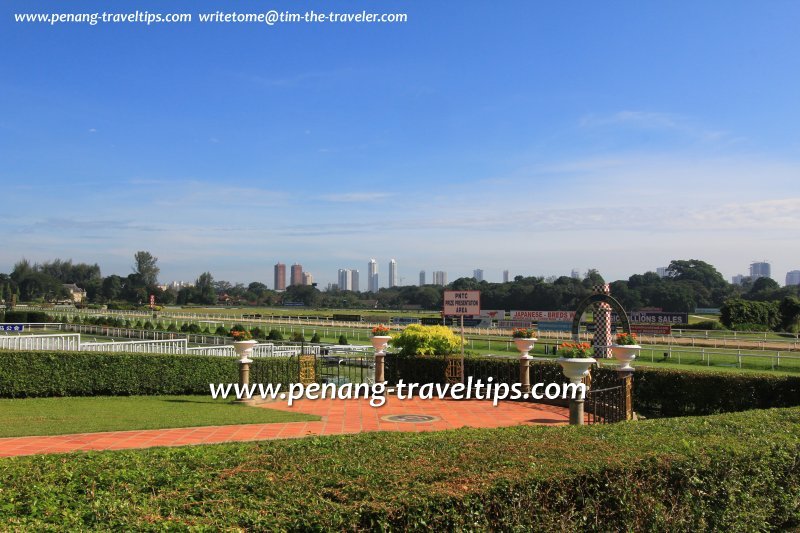 Batu Gantong, Penang (3 December 2011)
References
- Penang Travel Tips, Batu Gantong, George Town, Penang. https://www.penang-traveltips.com/batu-gantong.htm
- Penang Travel Tips, Jalan Batu Gantung — road layout, nearby landmarks and public transport access. https://www.penang-traveltips.com/jalan-batu-gantung.htm
- United Hokkien Cemeteries, Establishment and History — establishment of Batu Gantong Cemetery in 1886 and the organisation's history. https://www.penanguhc.com/en/history
- Penang Turf Club, Our History — history of the club and horse racing in Penang. https://penangturfclub.com/our-history/
- Penang Turf Club, About Us — information about the present racecourse and club facilities. https://penangturfclub.com/about/
Page Details
This page was created on 15 October 2026. Hi, my name is Timothy and created it from my research, for my own entertainment, knowledge and to satisfy my curiosity. I am providing the information to you in good faith and hope it is useful. I try to get the details as accurate as possible. I also try to update the page whenever I stumble on new details. So this and all my other pages are perpetual work in progress. If you discover any error, please politely inform me, pointing out where the error lies, and I will correct it as soon as possible. Your helpfulness will keep this page accurate, relevant and helpful to those who need the information.Want to share your Penang travel experiences or get tips from fellow travellers?
Join the Penang Travel Tips Facebook GroupUseful guides for visiting Penang
My Videos of Penang
Latest Pages & Updates
Buy Me A Coffee
If you enjoy the information I provide and want to support the work I do, please buy me a coffee! I appreciate it immensely, thank you so much!
