
Batu Gantong Crematorium
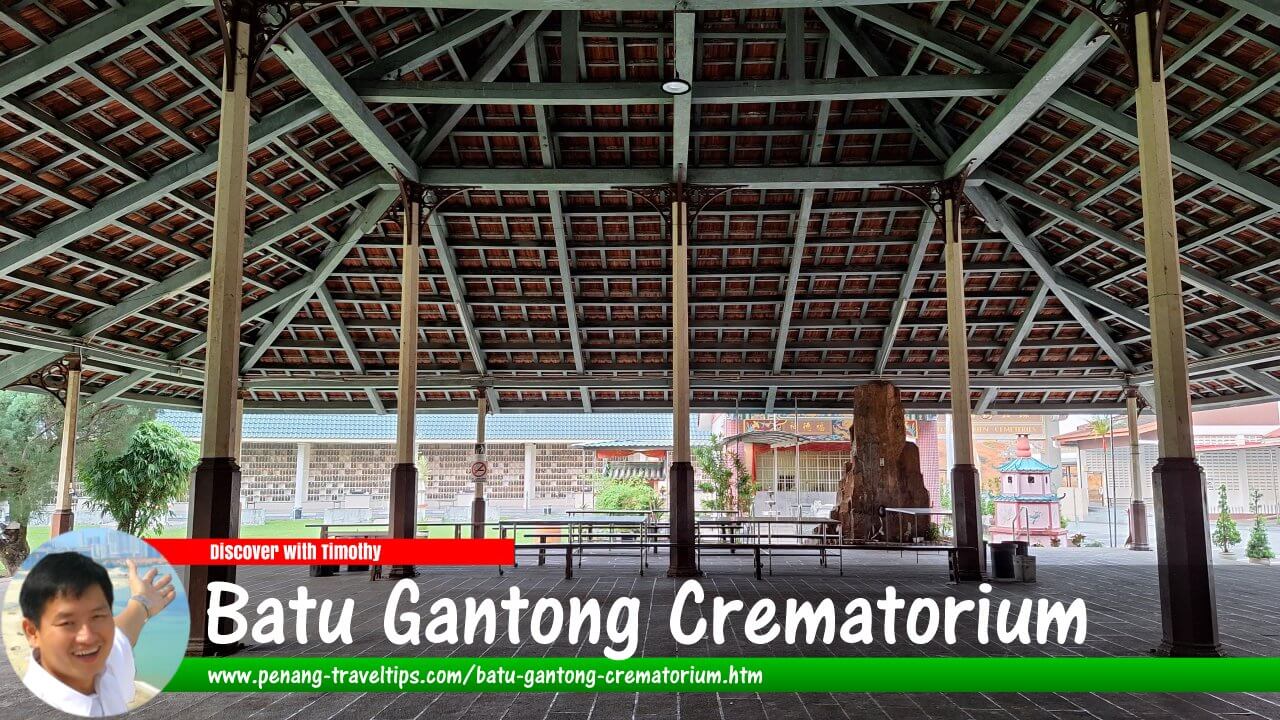 Batu Gantong Crematorium (6 June 2026)
The Batu Gantong Crematorium (GPS: 5.41321, 100.2935), operated under the United Hokkien Cemeteries in Penang, stands as one of the most significant cremation facilities on the island, reflecting the evolving funerary traditions of the Chinese community in northern Malaysia. The crematorium was built in 1951. It is located at the end of Jalan Batu Gantung, the road that was originally built to reach it. Situated near the historic Batu Gantong burial grounds, the crematorium has long served as a vital institution for the Hokkien-speaking population and other Chinese dialect groups in Penang. Its development mirrors the broader transition from traditional burial practices to cremation, influenced by urbanisation, land scarcity, and changing cultural attitudes toward death and remembrance. Adjacent to the crematorium is the Leng Sim Ee Columbarium.
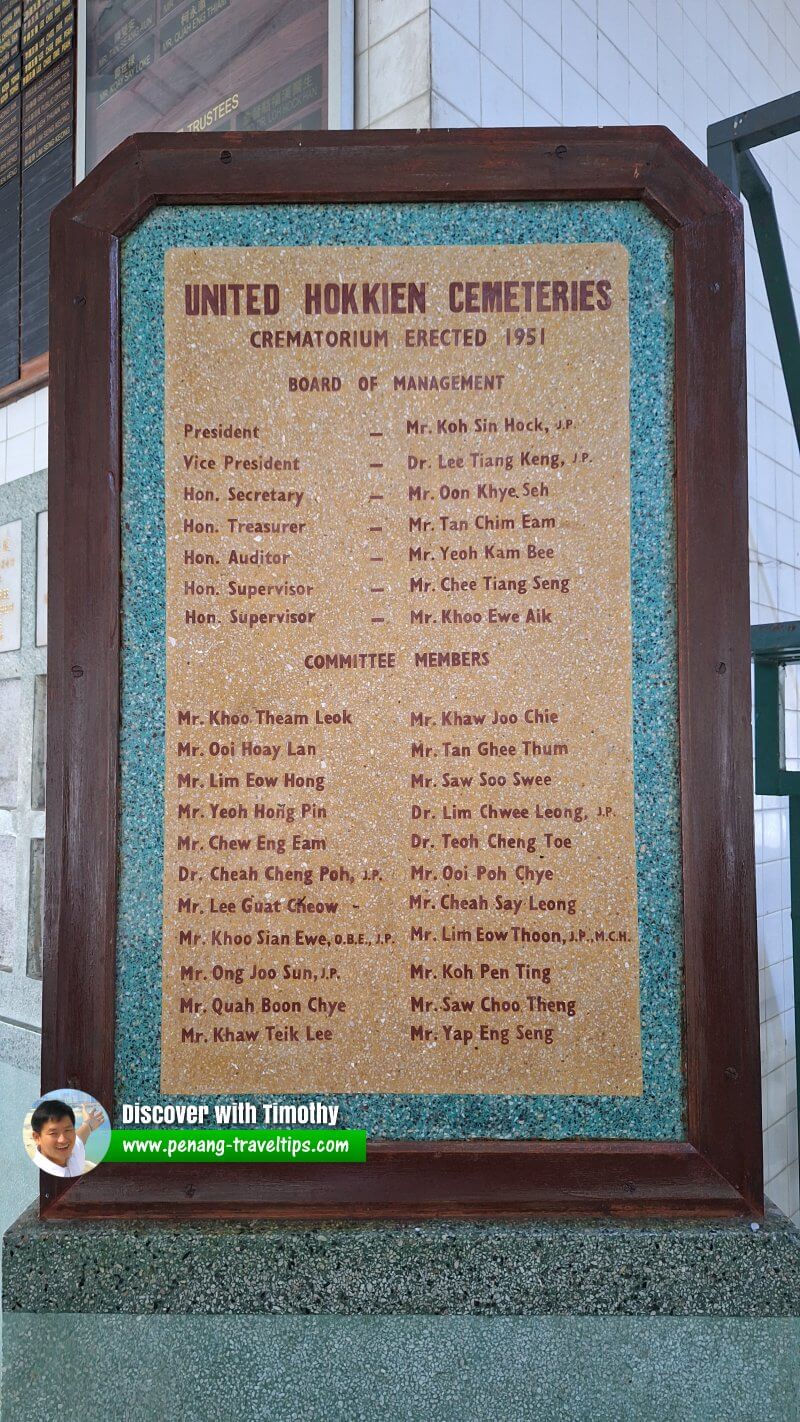
Batu Gantong Crematorium founding plaque (6 June 2026)
The United Hokkien Cemeteries organisation itself has deep roots in Penang’s Chinese communal history, having been established to manage burial lands and related ancestral rites for the Hokkien community. Over time, as Penang’s population expanded and land availability became increasingly limited, the need for a modern cremation facility became apparent. The Batu Gantong Crematorium emerged as part of this response, complementing the existing cemetery grounds and providing a dignified, centralised service for funeral arrangements.
Quick Facts
- Name: Batu Gantong Crematorium
- Managing Body: United Hokkien Cemeteries, Penang
- Location: Batu Gantong area, George Town, Penang
- Primary Function: Cremation services for the Chinese community
- Established: Developed in stages during the mid–late 20th century
- Cultural Significance: Central cremation facility for Hokkien and other Chinese dialect groups in Penang
- Associated Site: Batu Gantong Cemetery complex
The history of cremation in Penang is closely tied to the island’s demographic and cultural evolution. During the early colonial period, burial was the dominant practice among Chinese settlers, with clan associations managing burial grounds according to dialect group traditions. However, by the mid-20th century, rapid urban development in George Town and surrounding areas created increasing pressure on land use. Cemeteries that were once located on the outskirts of settlements gradually became surrounded by urban expansion, leading to concerns about space limitations and long-term sustainability.
In response to these challenges, the concept of cremation gained acceptance within the Chinese community, supported by both practical considerations and gradual shifts in religious interpretation. Buddhist and Taoist practices, which already included ritual flexibility regarding death rites, adapted to incorporate cremation as a respectful alternative to burial. The United Hokkien Cemeteries, as a major clan-based organisation, played a key role in facilitating this transition by developing infrastructure to support cremation services at Batu Gantong.
The Batu Gantong Crematorium was designed not only as a functional facility but also as a ceremonial space where traditional rites could continue in adapted form. Funeral halls, prayer areas, and columbarium niches were incorporated to ensure that families could still observe ancestral rituals. The architecture and layout reflect a blend of modern utility and traditional symbolism, with emphasis placed on dignity, respect, and continuity of cultural practices. Over the years, upgrades and expansions have been carried out to accommodate increasing demand and to improve operational efficiency.
One of the key historical developments associated with the crematorium is its role in normalising cremation within Penang’s Chinese society. In earlier decades, cremation was sometimes viewed with hesitation due to traditional preferences for burial and concerns about ancestral customs. However, through community engagement, education, and the practical realities of land scarcity, cremation gradually became widely accepted. The Batu Gantong facility thus became a focal point for this cultural transition, helping to shape contemporary funerary norms in Penang.
During the late 20th century, the crematorium also benefited from broader governmental support for urban planning and public health initiatives. As Penang’s population density increased, authorities encouraged more efficient land use in cemeteries, including the development of columbarium systems and cremation services. The United Hokkien Cemeteries organisation worked in tandem with these policies, ensuring that the Batu Gantong Crematorium remained aligned with regulatory standards and community expectations.
In addition to its functional role, the crematorium has also become a site of cultural memory. Many Penang families have long-standing connections to the Batu Gantong cemetery complex, and the crematorium forms part of a larger ancestral landscape. Ritual observances such as Qingming (Tomb-Sweeping Day) continue to draw large numbers of visitors, who come to pay respects to their ancestors and maintain familial ties across generations. The crematorium thus serves not only as a place of farewell but also as a bridge between the living and the dead within Chinese cultural tradition.
The United Hokkien Cemeteries organisation has continued to modernise the facility in response to changing needs. Improvements in environmental standards, emissions control, and operational efficiency have been introduced over time. These upgrades reflect broader global trends in cremation technology, where emphasis is placed on sustainability and reduced environmental impact. At the same time, care has been taken to preserve the cultural and ritual integrity of the services provided.
Today, the Batu Gantong Crematorium remains an essential institution within Penang’s funeral services landscape. It represents a successful adaptation of traditional Chinese burial culture to modern urban realities. Its history is closely intertwined with the story of Penang itself—a city shaped by migration, community organisation, and cultural continuity. As land scarcity continues to influence urban planning, the role of cremation facilities such as Batu Gantong is likely to remain important in the decades ahead.
Looking forward, the crematorium is expected to continue evolving in response to technological advances and shifting societal preferences. Digital memorialisation, improved columbarium design, and environmentally friendly cremation technologies are among the developments that may shape its future. Nevertheless, its core mission remains unchanged: to provide a respectful and dignified space for the final rites of the deceased, in accordance with the traditions and values of the community it serves.
Batu Gantong Crematorium is  on the Map of Jalan Batu Gantung, Penang
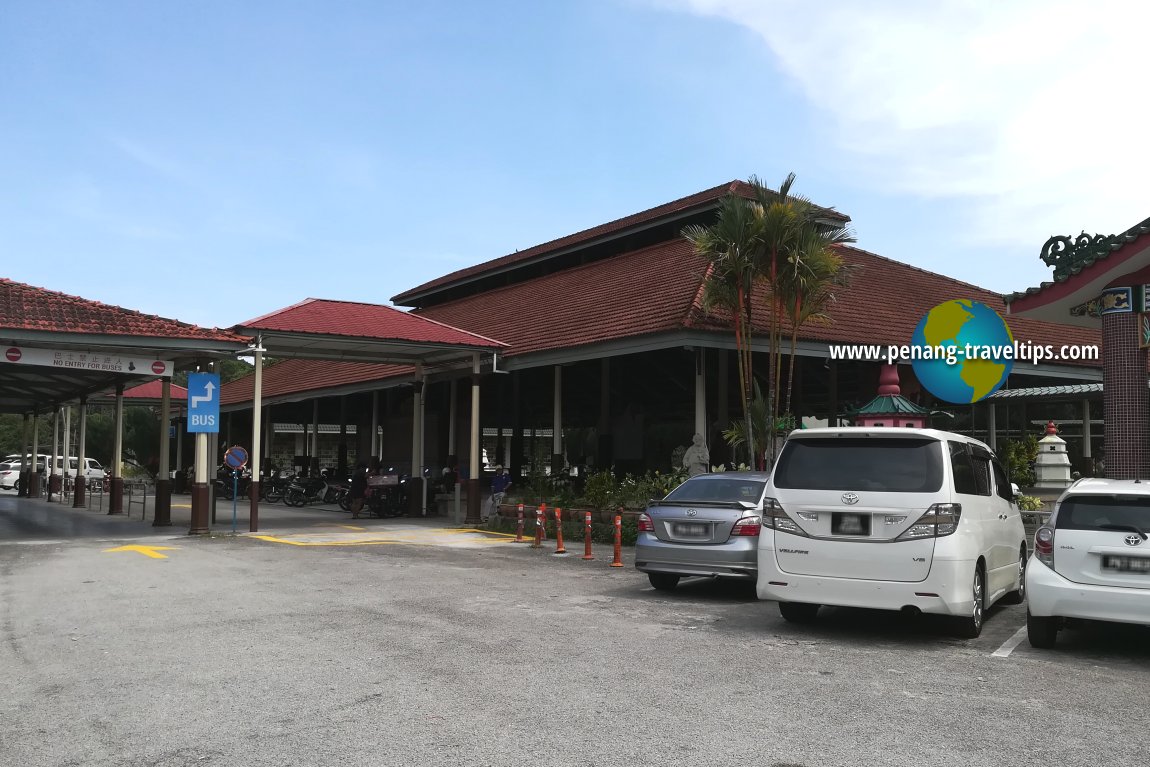 Batu Gantong Crematorium (19 November 2017)
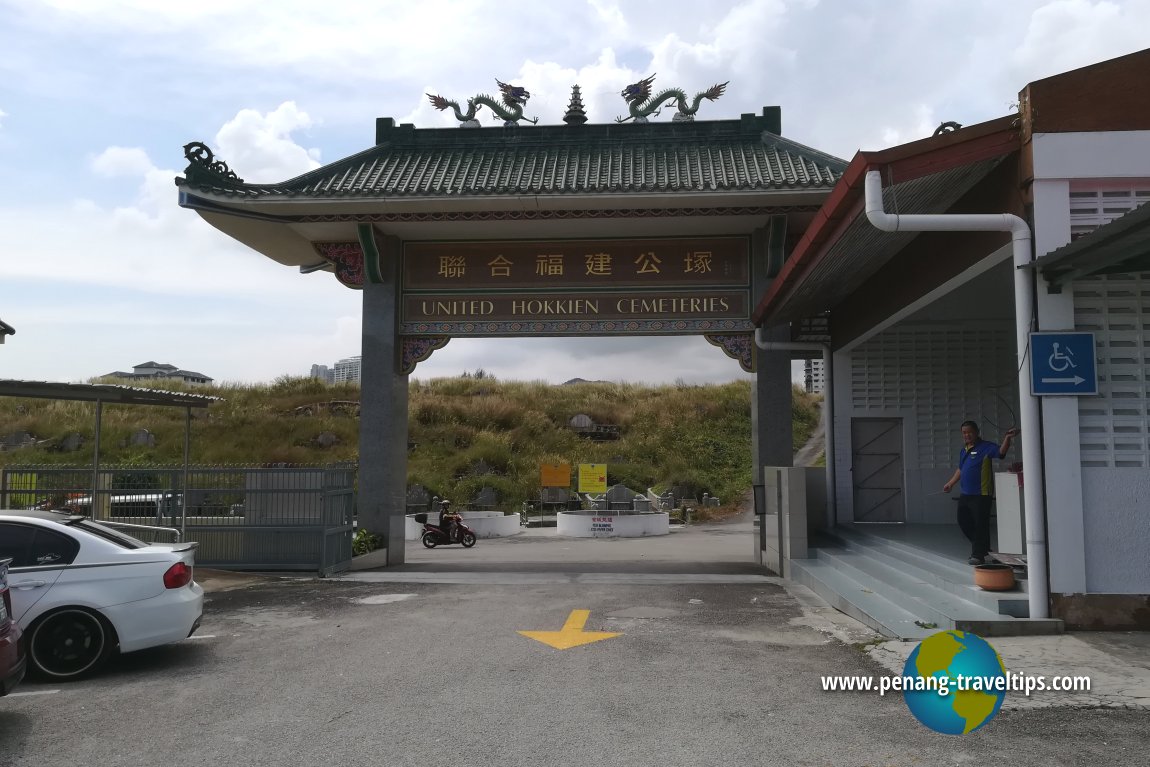 Entrance to the Batu Gantong Crematorium (19 November 2017)
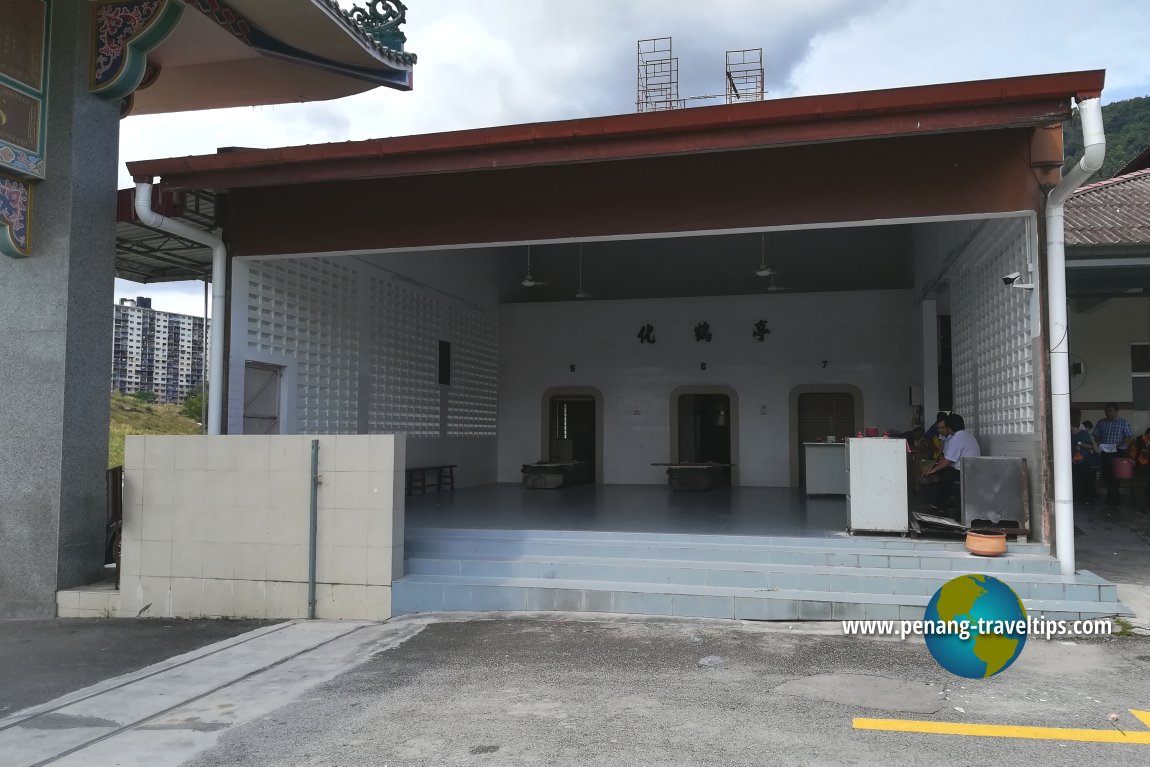 One of the crematories at the Batu Gantong Crematorium (19 November 2017)
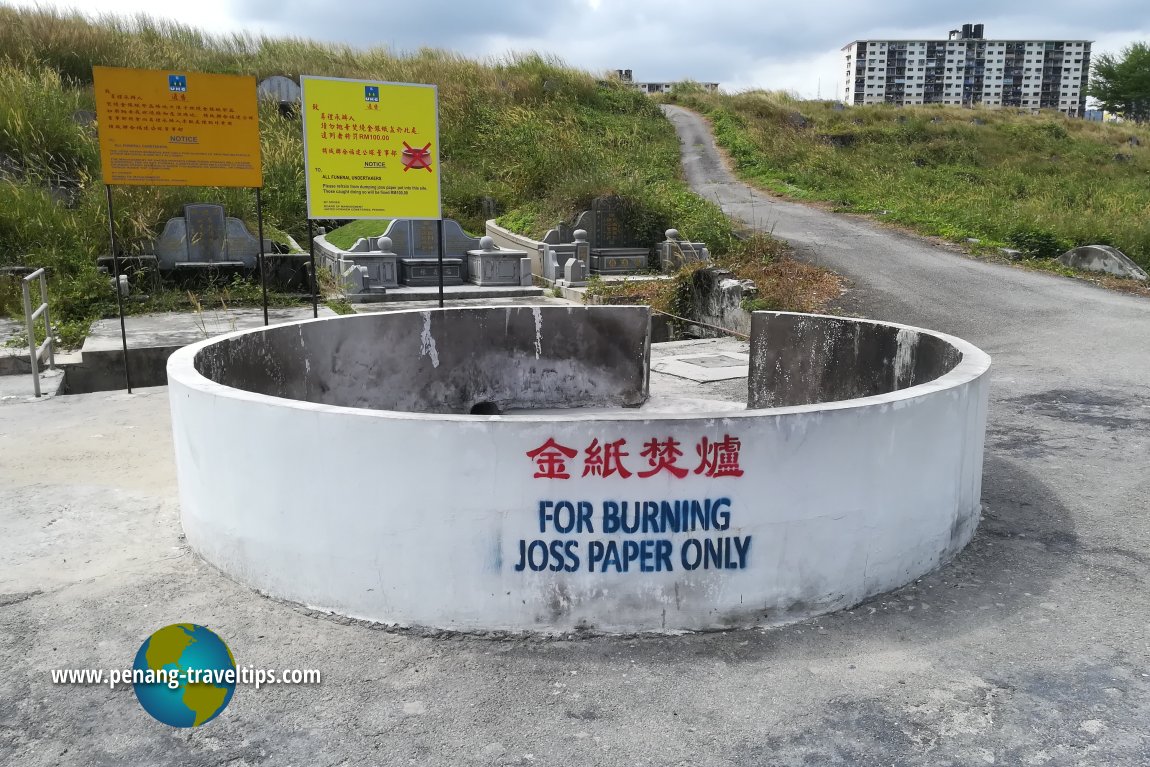 Place to burn joss paper, with the Batu Gantong Cemetery in the background. (19 November 2017)
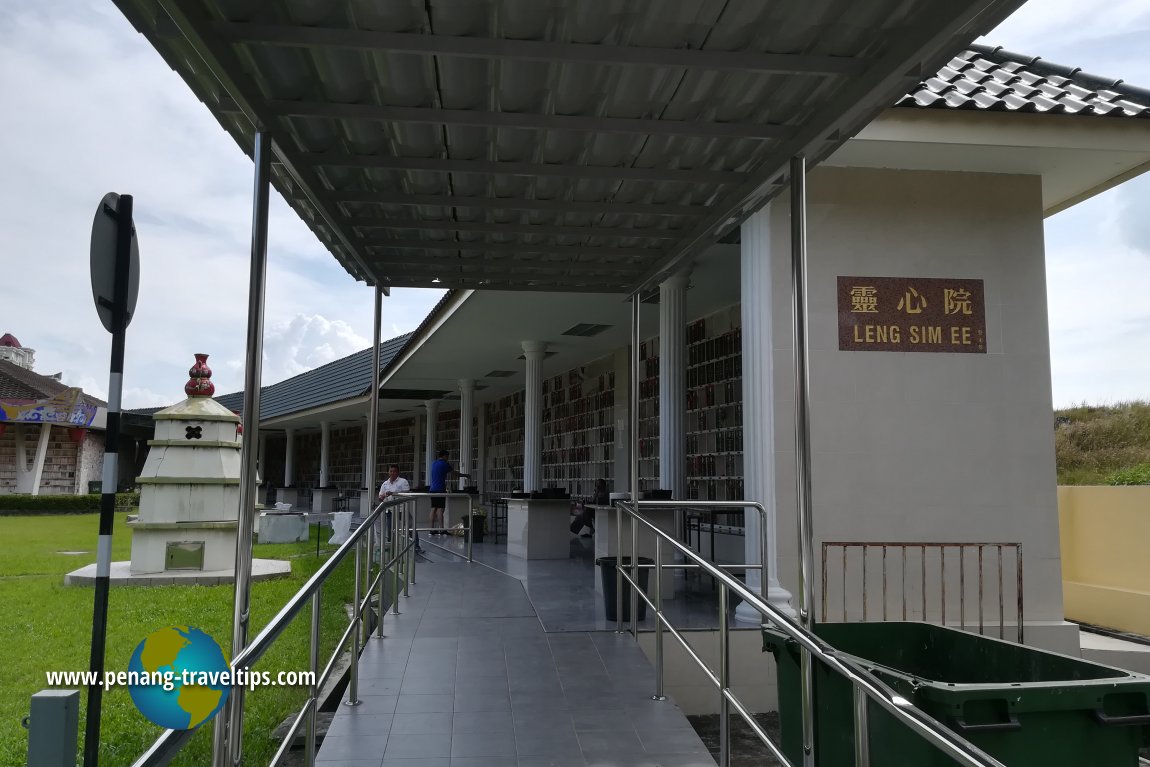 Leng Sim Ee Columbarium (19 November 2017)
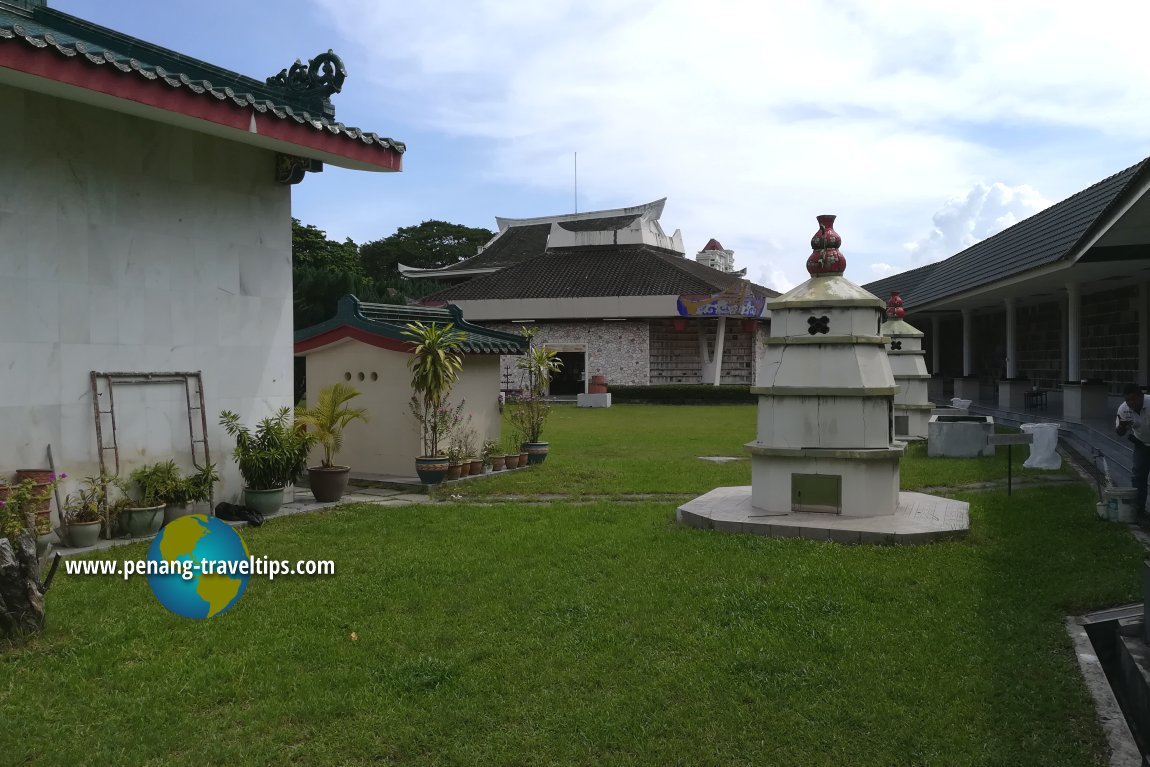 Ground of the Leng Sim Ee Columbarium (19 November 2017)
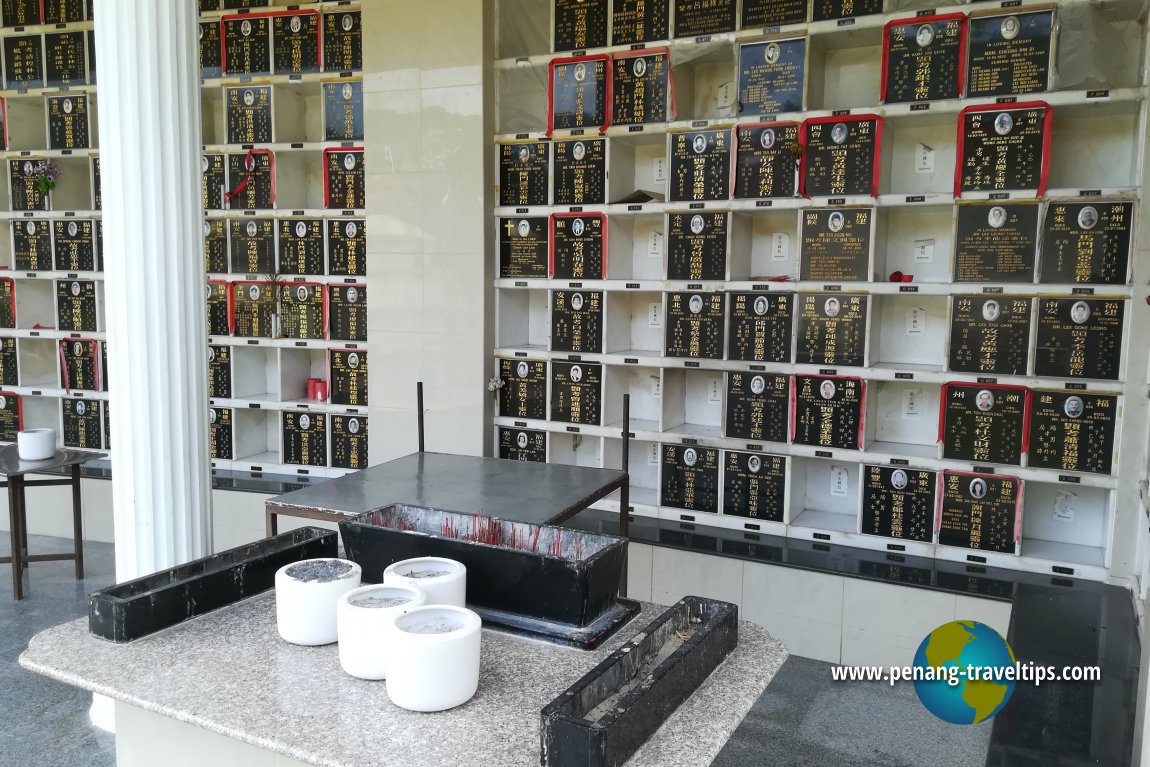 Altar and urn niches at the Leng Sim Ee Columbarium (19 November 2017)
References
- Cremation – General Overview
- Chinese Funeral Traditions
- George Town, Penang – Urban Development Context
- Death and Burial in Chinese Culture
Page Details
This page was created on 2 October 2025.Want to share your Penang travel experiences or get tips from fellow travellers?
Join the Penang Travel Tips Facebook GroupUseful guides for visiting Penang
My Videos of Penang
 Latest Pages & Updates
Buy Me A Coffee
If you enjoy the information I provide and want to support the work I do, please buy me a coffee! I appreciate it immensely, thank you so much!
