
Vietnam Travel Guide
 Go Back
 Vietnam Travel Guide (31 August 2006)
Also available: Panduan Melawat Vietnam
Introduction, Geography and History of Vietnam
Vietnam is a long, narrow country in mainland Southeast Asia, stretching along the eastern side of the Indochinese Peninsula. It shares land borders with China to the north and Laos and Cambodia to the west, while its eastern and southern sides face the South China Sea. Its distinctive S-shaped geography gives the country a remarkable variety of landscapes, from mountains and highland valleys to fertile river deltas, long beaches, limestone karsts and tropical islands.
Overview of Vietnam
The official name of the country is the Socialist Republic of Vietnam. Its capital is Hanoi, in northern Vietnam, while Ho Chi Minh City is the country's largest metropolitan centre and an important economic and commercial hub.
Vietnam is one of Southeast Asia's most geographically and culturally diverse countries. The country combines a long coastline, fertile agricultural regions, mountain landscapes, historic cities and a rich mixture of Vietnamese and minority cultures. Its tourism attractions range from ancient monuments and imperial architecture to beaches, caves, rice terraces and river landscapes.
Geography
Vietnam occupies the eastern portion of the Indochinese Peninsula. Although the country is relatively narrow in many places, it extends a considerable distance from north to south. This elongated geography contributes to significant differences in climate, scenery and culture between the northern, central and southern parts of the country.
The northern region contains mountains, valleys and extensive limestone formations. Central Vietnam is characterised by a combination of mountains, coastal plains, beaches and historic settlements, while southern Vietnam contains broad lowlands and the vast Mekong Delta.
The Coastline
Vietnam has an extensive coastline along the South China Sea, creating numerous opportunities for beach holidays, island excursions, seafood experiences and maritime activities.
Among the best-known coastal destinations are Da Nang, Nha Trang, Mui Ne, Quy Nhon, Vung Tau and Phu Quoc. The coast also contains numerous smaller islands and bays, including the spectacular limestone seascapes of Ha Long Bay in the north.
Mountains and Highlands
Mountains cover substantial areas of northern and central Vietnam. The northern highlands are particularly well known for spectacular valleys, terraced rice fields and communities belonging to Vietnam's ethnic minorities.
Sapa and Ha Giang are among the best-known mountain destinations. Further south, the Central Highlands contain elevated plateaus, forests, waterfalls and coffee-growing areas.
River Deltas
Two major river systems have played an important role in the development of Vietnamese civilisation and agriculture: the Red River in the north and the Mekong in the south.
The Red River Delta surrounds Hanoi and is one of the country's major agricultural and population centres. In southern Vietnam, the Mekong Delta spreads into a vast network of rivers, canals, islands, orchards and agricultural communities before reaching the sea.
Northern Vietnam
Northern Vietnam is centred around Hanoi and contains some of the country's most dramatic mountain and karst landscapes. The region includes Ha Long Bay, Ninh Binh, Sapa, Ha Giang and numerous rural areas.
Hanoi is an important gateway to northern Vietnam. From the capital, travellers can reach mountain destinations, historic sites, rural communities and limestone landscapes.
Central Vietnam
Central Vietnam occupies the narrow central portion of the country and is particularly rich in history and cultural attractions. The region includes Hue, Hoi An and Da Nang, as well as beaches, national parks and caves.
Hue was the imperial capital of Vietnam during the Nguyen dynasty, while Hoi An developed as an important historic trading port. Da Nang serves as a major modern city and transport hub for central Vietnam.
The region also contains the Phong Nha cave system and other spectacular natural landscapes.
Southern Vietnam
Southern Vietnam is dominated by Ho Chi Minh City and the Mekong Delta. The region has a warmer tropical climate and combines large urban centres with agricultural landscapes, waterways and coastal destinations.
Ho Chi Minh City is the country's major commercial and economic centre, while Can Tho provides an important gateway to the Mekong Delta. Phu Quoc and Con Dao offer island experiences farther south.
Hanoi
Hanoi is the capital of Vietnam and one of the country's most historically significant cities. The city combines colonial-era architecture, traditional neighbourhoods, lakes, temples, museums and modern commercial districts.
The Old Quarter is particularly well known for its narrow streets, traditional commercial activities, street food and lively urban atmosphere. Hanoi is also an important starting point for exploring northern Vietnam.
Ho Chi Minh City
Ho Chi Minh City, formerly known as Saigon, is Vietnam's largest city and one of the most dynamic urban centres in Southeast Asia.
The city is known for its busy streets, markets, restaurants, cafés, museums, colonial architecture and modern shopping districts. It is also a major gateway to southern Vietnam and the Mekong Delta.
Da Nang
Da Nang is a major coastal city in central Vietnam. It is known for its beaches, modern urban development and proximity to several important cultural and natural attractions.
Its location makes it particularly useful as a base for visiting Hoi An, the Marble Mountains, Hue and other destinations in central Vietnam.
Hue
Hue is closely associated with Vietnam's imperial history. The city and its surrounding monuments preserve important remains of the Nguyen dynasty.
Visitors come to Hue for the Imperial City, royal tombs, pagodas, traditional cuisine and the distinctive cultural atmosphere of central Vietnam.
Hoi An
Hoi An is a historic riverside town famous for its preserved architecture and heritage character. Its historic streets reflect influences from Vietnamese, Chinese, Japanese and European traders who once interacted through the port.
Hoi An is also known for its lanterns, tailor shops, traditional houses, markets, cafés and proximity to beaches and rural villages. The town is one of Vietnam's most popular cultural destinations.
Ha Long Bay
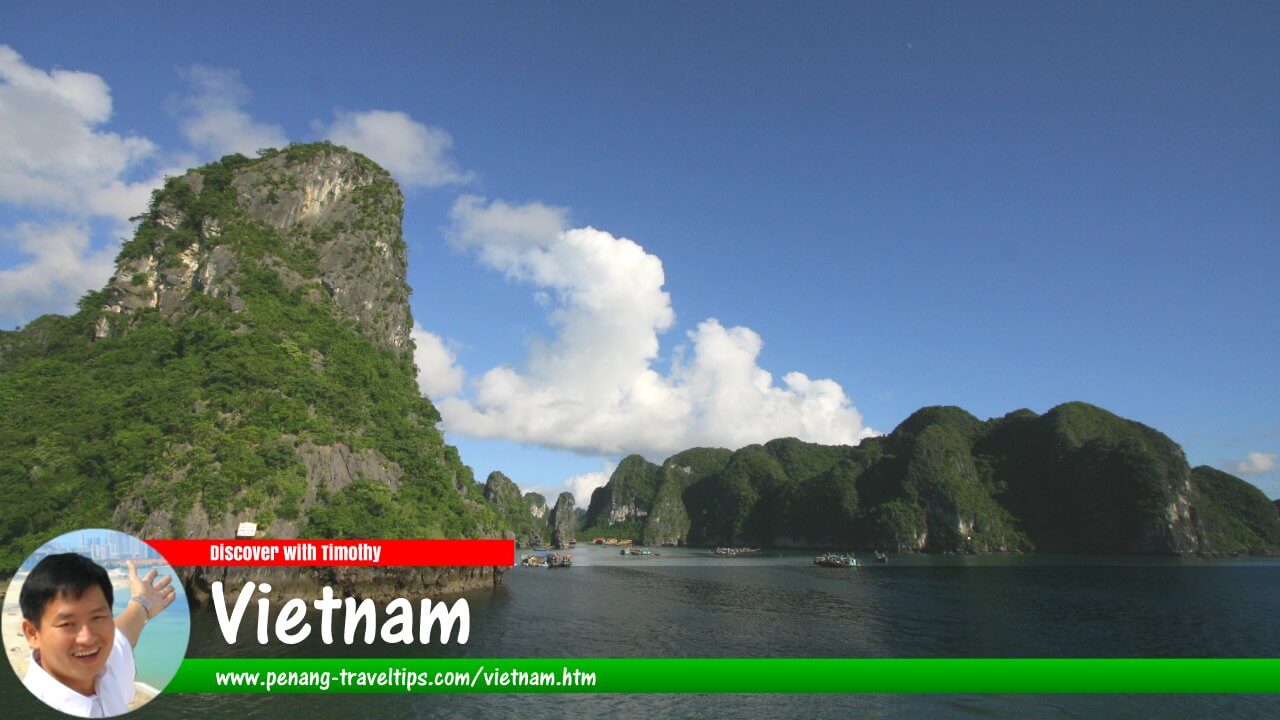
Ha Long Bay is one of Vietnam's best-known natural attractions. Its seascape is characterised by numerous limestone islands and karst formations rising from the sea.
Boat cruises are the traditional way to experience the bay, while nearby Lan Ha Bay provides another option for exploring the limestone seascapes of northern Vietnam.
Ninh Binh
Ninh Binh is known for its dramatic limestone mountains, rivers, rice fields and rural landscapes. The Trang An area is particularly noted for boat journeys through waterways surrounded by towering karst formations.
The region is sometimes described as an inland counterpart to the landscapes of Ha Long Bay because of its combination of limestone formations and waterways.
Sapa
Sapa is a mountain destination in northern Vietnam, known for terraced rice fields, valleys and ethnic minority communities. Its cooler climate has also made it a popular retreat from the heat of the lowlands.
The surrounding area offers opportunities for trekking, village visits and mountain scenery.
Ha Giang
Ha Giang lies in Vietnam's far north and is known for dramatic mountain roads, limestone landscapes, valleys and ethnic minority communities.
The Ha Giang Loop has become particularly popular among travellers seeking a more adventurous experience of northern Vietnam. The region is best suited to travellers who are comfortable with mountain roads and changing weather conditions.
Phong Nha
Phong Nha is renowned for its extensive cave systems and spectacular karst landscapes. The area includes Phong Nha-Ke Bang National Park, where visitors can explore caves, rivers and forested mountains.
The region is also associated with Son Doong Cave, recognised as the world's largest known cave passage by volume.
Da Lat
Da Lat is a highland city in southern-central Vietnam known for its cooler climate, pine forests, gardens, lakes, coffee and agricultural production.
Its climate and scenery have made Da Lat a popular domestic and international holiday destination, particularly for travellers looking for a cooler environment.
Nha Trang
Nha Trang is a major coastal resort city known for its beaches, islands, seafood and water-based activities. It is one of Vietnam's established seaside destinations.
The surrounding waters contain numerous islands, making the area suitable for boat trips, swimming and other marine activities.
Mui Ne
Mui Ne, on the southern-central coast, is known for its beaches, sand dunes and water sports. Its distinctive landscape makes it different from many of Vietnam's other coastal destinations.
The area is particularly associated with kiteboarding and its large red and white sand dunes.
Phu Quoc
Phu Quoc is Vietnam's best-known tropical island destination. Located off the southwestern coast, it is popular for beaches, resorts, seafood, island excursions and sunsets.
The island can be visited as a standalone holiday destination or combined with a wider southern Vietnam itinerary.
The Mekong Delta
The Mekong Delta is a vast lowland region in southern Vietnam where the Mekong River divides into numerous waterways before reaching the sea.
Travellers visit the region to experience floating markets, river communities, orchards, farms, canals and a slower rural way of life. Can Tho is one of the principal urban centres used as a base for exploring the delta.
History of Vietnam
Vietnam has a long and complex history shaped by indigenous kingdoms, Chinese influence, independent Vietnamese dynasties, regional trading networks, French colonial rule, war and reunification.
The country's history is reflected in its temples, citadels, imperial monuments, colonial buildings, museums and traditional communities.
Early Vietnam
The history of Vietnam extends back many centuries. Early societies developed around the fertile river deltas, particularly the Red River region in the north.
Ancient Vietnamese culture was influenced by interaction with neighbouring peoples and by the long period of Chinese political and cultural influence in northern Vietnam.
Chinese Influence
Northern Vietnam experienced periods of Chinese rule and strong Chinese cultural influence over many centuries. Chinese political institutions, writing, philosophy and administrative traditions left a lasting mark on Vietnamese society.
At the same time, Vietnamese communities maintained their own cultural identity and repeatedly established periods of independent rule.
Vietnamese Dynasties
After achieving lasting independence from Chinese domination, Vietnam developed a succession of Vietnamese dynasties. Among the most important were the Ly, Tran, Le and Nguyen dynasties.
These dynasties shaped the country's political institutions, territory, architecture, literature and religious traditions.
The Nguyen Dynasty
The Nguyen dynasty was the last imperial dynasty of Vietnam. Its imperial capital was established at Hue, where the remains of the Imperial City and royal tombs can still be visited.
The Nguyen period is particularly important to travellers because many of its surviving monuments form the core of Hue's cultural heritage.
French Colonial Period
During the nineteenth century, France established colonial control over Vietnam, which became part of French Indochina together with Laos and Cambodia.
French colonial influence can still be seen in the architecture and urban planning of cities such as Hanoi and Ho Chi Minh City. It also influenced Vietnamese cuisine, education, administration and urban culture.
Independence Movement
Vietnamese movements seeking independence from French colonial rule grew during the twentieth century. Ho Chi Minh became the most prominent leader of the Vietnamese independence movement.
The First Indochina War eventually resulted in the defeat of French forces and the end of French colonial rule in Vietnam.
Division of Vietnam
Following the French defeat in 1954, Vietnam was divided into a communist North Vietnam and a non-communist South Vietnam, with Hanoi and Saigon respectively becoming the principal political centres.
The division eventually led to the Vietnam War, one of the defining conflicts of twentieth-century Southeast Asian history.
The Vietnam War
The Vietnam War, known in Vietnam as the American War, involved North Vietnam, South Vietnam and major international powers. The conflict caused enormous loss of life and widespread destruction.
For visitors, sites associated with the war include museums, former military installations, tunnels and memorials in several parts of the country.
Reunification
In 1975, North Vietnamese forces captured Saigon, bringing the war to an end. Vietnam was subsequently reunified, and in 1976 the country officially became the Socialist Republic of Vietnam.
Saigon was renamed Ho Chi Minh City in honour of Ho Chi Minh.
Vietnam Today
Modern Vietnam combines a socialist political system with a rapidly developing market economy. Since the economic reforms known as Đổi Mới began in 1986, Vietnam has undergone substantial economic and social transformation.
Major cities have developed into important manufacturing, commercial, technological and tourism centres, while rural regions continue to play an important role in agriculture and food production.
People of Vietnam
Vietnam has a population consisting predominantly of the Kinh or Vietnamese ethnic group, together with numerous officially recognised ethnic minority communities.
Many minority groups live in the northern mountains and Central Highlands. Their languages, clothing, architecture, agricultural traditions and festivals contribute significantly to Vietnam's cultural diversity.
Vietnamese Language
The official language is Vietnamese. Vietnamese is written using the modern Latin-based quốc ngữ writing system, which uses additional marks to indicate pronunciation and tones.
English is increasingly common in the tourism industry, particularly in major cities and popular destinations. However, outside tourist areas, English may be less widely understood.
Religion and Belief
Vietnam's religious and spiritual life is diverse. Buddhism, ancestor veneration, folk beliefs, Christianity, Cao Dai and other traditions can be found throughout the country.
Many Vietnamese combine elements of different traditions in their daily lives. Temples, pagodas, churches and other religious sites form an important part of the country's cultural landscape.
Vietnamese Culture
Vietnamese culture has been shaped by indigenous traditions as well as centuries of interaction with China, Southeast Asia and other parts of the world.
Family relationships, respect for elders, ancestor remembrance, food and community remain important aspects of Vietnamese society.
Vietnamese Cuisine
Vietnamese cuisine is one of the country's strongest attractions. It is characterised by fresh herbs, vegetables, rice, noodles, seafood, meat, fermented sauces and a balance of different flavours.
Famous dishes include pho, banh mi, bun cha, goi cuon and numerous regional specialities. Vietnamese cuisine varies considerably between the north, centre and south, making food exploration an important part of a longer journey.
Vietnam as a Travel Destination
Vietnam offers an unusually broad range of travel experiences within a single country. A traveller can combine a historic city, mountain trekking, a coastal resort, a cave expedition and a river journey within the same trip.
The official tourism authority divides the country's principal travel experiences broadly into northern, central and southern Vietnam, each with its own landscape and character.
Why Visit Vietnam?
Vietnam is particularly attractive to travellers interested in history, food, nature and culture. Its cities provide lively urban experiences, while the countryside offers rice terraces, rivers, mountains and traditional communities.
For Malaysian travellers, Vietnam is also relatively accessible, with international air connections from Malaysia to several Vietnamese cities. Its proximity within Southeast Asia makes it practical for both short holidays and longer journeys.
Understanding Vietnam Before Your Journey
Vietnam is much more than a single destination. The experience in Hanoi can feel very different from that in Ho Chi Minh City, while Hue, Hoi An, Sapa, Da Lat, the Mekong Delta and Phu Quoc each have their own character.
Travellers should therefore think of Vietnam as a collection of distinct regions rather than attempting to cover the entire country in one short visit. A well-planned itinerary that concentrates on one region is often more rewarding than spending much of the journey travelling between distant destinations.
Vietnam's Administrative Changes
Vietnam underwent a major administrative reorganisation in 2025. Since 1 July 2025, the country has had 34 provincial-level administrative units, comprising 28 provinces and 6 centrally governed cities. The new administrative structure replaced the previous system of 63 provincial-level units.
This change is important when consulting newer maps, government information and administrative addresses. Some familiar provincial names and boundaries have changed following mergers. For tourism purposes, however, many established destination names such as Hanoi, Ha Long, Sapa, Hue, Hoi An, Da Nang and Ho Chi Minh City remain useful geographical references.
Three Broad Travel Regions
For the purposes of planning a holiday, Vietnam can conveniently be understood as three broad regions:
- Northern Vietnam — Hanoi, Ha Long Bay, Ninh Binh, Sapa and Ha Giang.
- Central Vietnam — Hue, Da Nang, Hoi An, Phong Nha, Nha Trang and the Central Highlands.
- Southern Vietnam — Ho Chi Minh City, the Mekong Delta, Mui Ne, Vung Tau, Phu Quoc and Con Dao.
This regional approach is particularly useful when planning a first visit because the country is long and travelling from one end to the other can take considerable time.
Vietnam in the Context of Southeast Asia
Vietnam occupies a strategically important position in mainland Southeast Asia. Its borders connect it with China, Laos and Cambodia, while its long coastline faces major maritime routes.
Its history and culture consequently reflect interaction with both continental and maritime Asia. This mixture is one reason Vietnam has developed such a distinctive identity within Southeast Asia.
The following parts of this guide examine how to enter Vietnam, how to travel around the country, where to stay, when to visit, what to eat, and how to plan a journey that makes the most of Vietnam's remarkable regional diversity.
Entry Requirements and How to Get to Vietnam
For Malaysian travellers, Vietnam is one of the more convenient international destinations in Southeast Asia to visit. Malaysian passport holders can enter Vietnam without a visa for stays of up to 30 days. The visa exemption applies to ordinary Malaysian passports, with the permitted period including the day of arrival and the day of departure. The passport should be valid for at least six months, and immigration authorities may request evidence of onward or return travel.
Visa Requirements for Malaysians
A Malaysian travelling to Vietnam for a normal holiday of 30 days or less generally does not need to apply for a visa beforehand. This makes Vietnam particularly suitable for short holidays, weekend breaks and multi-city trips within the country.
Travellers planning to remain in Vietnam for more than 30 days, or those requiring a visa for another reason, can apply for a Vietnamese electronic visa. Vietnam's e-visa is available to citizens of all countries and territories and can be issued for a maximum of 90 days, with either single or multiple entry.
Vietnam E-Visa
The Vietnamese e-visa is applied for online through the official electronic visa system operated by the Immigration Department of the Ministry of Public Security. Applicants submit their personal information, passport details, photograph and passport data-page image online and pay the applicable fee electronically.
The official e-visa system is available at evisa.gov.vn. Travellers should use the official government website rather than assuming that a commercial visa agency is an official Vietnamese government service.
An e-visa can be particularly useful for Malaysians who want to stay longer than 30 days or who intend to leave Vietnam and return during the same journey. A multiple-entry e-visa can simplify an itinerary that combines Vietnam with neighbouring Cambodia, Laos or Thailand.
Passport Requirements
Before travelling, make sure that your passport has at least six months of validity remaining. It is also sensible to have several blank pages available for immigration stamps and other travel requirements.
Keep a digital copy of your passport, flight bookings, hotel reservations and travel insurance information in a secure location. A physical photocopy can also be useful if your passport is lost.
Arrival and Departure Dates
For Malaysian travellers using the visa exemption, the 30-day period includes both the date of arrival and the date of departure. Travellers should therefore calculate the permitted stay carefully rather than assuming that 30 nights automatically means 30 days.
If your itinerary is close to the 30-day limit, check the permitted dates carefully before departure. Overstaying immigration permission can result in penalties and complications when leaving the country.
Entering Vietnam by Air
For most Malaysian visitors, flying is the simplest way to reach Vietnam. Vietnam has several international airports, but the principal gateways for international travellers are Noi Bai International Airport in Hanoi, Tan Son Nhat International Airport in Ho Chi Minh City and Da Nang International Airport. Direct international services also operate to destinations such as Cam Ranh, Phu Quoc and other Vietnamese airports.
The best airport to use depends on the region you intend to visit. Travellers concentrating on northern Vietnam will normally find Hanoi the most convenient gateway, while those exploring central Vietnam can fly directly to Da Nang. Ho Chi Minh City is the natural gateway to southern Vietnam and the Mekong Delta.
Flying from Malaysia to Vietnam
Malaysia has strong air connections with Vietnam, particularly from Kuala Lumpur. Direct flights are available to major Vietnamese cities, making it possible to begin a holiday in Hanoi, Da Nang or Ho Chi Minh City without first travelling through another country.
The choice of arrival city can make a significant difference to the efficiency of an itinerary. A traveller interested mainly in Hanoi, Ha Long Bay and Ninh Binh should normally fly into Hanoi. Someone visiting Hoi An, Hue and Da Nang may save considerable travel time by flying directly to Da Nang.
Travellers heading to the Mekong Delta and southern Vietnam will generally find Ho Chi Minh City the most practical arrival point.
Kuala Lumpur to Hanoi
Hanoi's Noi Bai International Airport is the main international gateway to northern Vietnam. It is located outside the city centre and serves as the starting point for journeys to Hanoi, Ha Long Bay, Ninh Binh, Sapa and Ha Giang.
For a northern Vietnam itinerary, flying from Kuala Lumpur to Hanoi is usually the most logical arrangement because it avoids having to travel north again after arriving elsewhere in the country.
Kuala Lumpur to Ho Chi Minh City
Ho Chi Minh City's Tan Son Nhat International Airport is the main gateway to southern Vietnam. It is particularly convenient for visitors planning to explore Ho Chi Minh City, the Mekong Delta, Vung Tau, Mui Ne or other southern destinations.
The airport has separate international and domestic terminals connected by a covered walkway. Travellers making a domestic connection should nevertheless allow sufficient time between flights, particularly during busy periods.
Kuala Lumpur to Da Nang
Da Nang International Airport is particularly useful for travellers visiting central Vietnam. It provides convenient access to Da Nang itself as well as Hoi An, Hue and other destinations in the central region.
Da Nang is only a short road journey from Hoi An, making it one of the most useful international gateways for a central Vietnam itinerary. The airport has separate domestic and international terminals connected by a covered walkway.
Flying to Phu Quoc
Phu Quoc International Airport provides another option for travellers whose primary interest is a tropical island holiday. International services to Phu Quoc can vary according to season and airline schedules, so flights should be checked carefully when planning the journey.
Phu Quoc can also be incorporated into a longer southern Vietnam itinerary by taking a domestic flight from Ho Chi Minh City.
Choosing Your Arrival Airport
| Arrival airport | Best suited for |
|---|---|
| Hanoi (HAN) | Hanoi, Ha Long Bay, Ninh Binh, Sapa, Ha Giang and northern Vietnam |
| Da Nang (DAD) | Da Nang, Hoi An, Hue and central Vietnam |
| Ho Chi Minh City (SGN) | Ho Chi Minh City, Mekong Delta and southern Vietnam |
| Phu Quoc (PQC) | Phu Quoc and an island-focused holiday |
| Cam Ranh (CXR) | Nha Trang and the south-central coast |
Domestic Flights within Vietnam
Vietnam is a long country, and domestic flights are often the most practical way to cover large distances. Flying is particularly useful when combining northern, central and southern Vietnam in a single holiday.
For example, travelling overland from Hanoi to Ho Chi Minh City can consume a substantial portion of a holiday, whereas a domestic flight takes only a few hours. Vietnam Tourism notes that flying is generally the most convenient way to reach distant destinations within the country.
Major Domestic Flight Routes
Common domestic routes include:
- Hanoi to Ho Chi Minh City
- Hanoi to Da Nang
- Hanoi to Phu Quoc
- Ho Chi Minh City to Da Nang
- Ho Chi Minh City to Phu Quoc
- Ho Chi Minh City to Nha Trang
- Da Nang to Hanoi
- Da Nang to Ho Chi Minh City
Domestic flights are particularly useful for travellers who want to combine several regions without spending long periods on trains or buses.
Travelling by Train
Vietnam has a north-south railway network commonly associated with the Reunification Express. The railway connects Hanoi with major destinations in central and southern Vietnam, including Hue, Da Nang and Ho Chi Minh City.
Train travel is slower than flying but can be a rewarding way to experience the Vietnamese countryside. It is especially suitable for travellers who prefer the journey itself to be part of the holiday.
From Hanoi, railway services also provide access towards Lao Cai, the gateway traditionally used for Sapa, while routes from central Vietnam connect important destinations along the coast.
Overnight Trains
Overnight trains can be useful when travelling long distances because they combine transportation with accommodation for the night. Sleeping berths are generally preferable to ordinary seats for long journeys.
Travellers who choose overnight trains should book their berths in advance, particularly during weekends, public holidays and peak travel periods.
Travelling by Bus
Long-distance buses connect most major Vietnamese cities and tourist destinations. They can be considerably cheaper than flights and may provide direct connections to places not served conveniently by rail.
Vietnam's tourist bus network includes sleeper buses designed for overnight journeys. These can be practical for budget travellers, although the comfort level varies between operators.
Travellers who are tall may find some sleeper-bus berths restrictive. For longer journeys, it is worth comparing the total cost and travel time with a train or domestic flight.
Travelling by Car
Private cars with drivers are widely used by tourists, particularly for journeys involving several attractions. A car and driver can be especially convenient for destinations such as Ninh Binh, Ha Long Bay, Hoi An, Hue and the Mekong Delta.
For Malaysian visitors unfamiliar with Vietnamese roads, hiring a car with a local driver is generally more practical than attempting to drive long distances themselves.
Motorbikes and Scooters
Motorbikes are an extremely common form of transportation in Vietnam and are widely used by local residents. They are also popular among independent travellers.
However, traffic conditions in major Vietnamese cities can be challenging. Anyone considering renting or riding a motorbike should understand the local legal requirements, possess the appropriate licence and insurance, and be comfortable with the road conditions.
The scenic mountain roads of Ha Giang have become particularly famous among motorbike travellers, but this is not an activity for inexperienced riders. Hiring an experienced local rider or joining a reputable guided tour may be safer for visitors without extensive motorcycle experience.
Getting Around Vietnamese Cities
Taxis, buses, ride-hailing services and motorbike taxis are available in major Vietnamese cities. Grab is widely used and can be convenient for arranging transportation without having to negotiate fares on the street.
Hanoi and Ho Chi Minh City also have increasingly developed urban transport systems, including rail-based services in the larger metropolitan areas.
From the Airport to the City
Airport transfers vary according to the destination. Taxis, ride-hailing services, airport buses, hotel transfers and private cars are commonly available.
At busy airports, travellers should use recognised taxi companies or book transportation through a reputable app or hotel rather than accepting unsolicited offers from people approaching them inside the terminal.
Arriving in Hanoi
Noi Bai International Airport is about 45 kilometres from central Hanoi. Travellers can use taxis, ride-hailing services, buses or pre-arranged hotel transfers to reach the city.
Because of the distance and traffic, allow adequate time when travelling back to the airport for a departing international flight.
Arriving in Ho Chi Minh City
Tan Son Nhat International Airport is much closer to central Ho Chi Minh City than Hanoi's airport is to central Hanoi. Nevertheless, traffic congestion can make the journey unpredictable, especially during peak hours.
Travellers should allow sufficient time when travelling to the airport, particularly for international departures.
Arriving in Da Nang
Da Nang International Airport is conveniently located close to the city centre. It is also a practical gateway for Hoi An, which is roughly 30 kilometres away, and Hue, which is farther north.
Private transfers are particularly convenient for travellers heading directly from Da Nang airport to Hoi An or Hue.
Travelling between Hanoi and Ho Chi Minh City
The distance between Hanoi and Ho Chi Minh City makes air travel the obvious choice for most visitors who simply want to move between the two cities.
The railway offers a much slower but more scenic alternative. Travellers with plenty of time can use the journey as an opportunity to visit destinations such as Hue and Da Nang along the way.
An Open-Jaw Vietnam Itinerary
One of the most efficient ways to explore Vietnam is to arrive in one city and depart from another. For example, a Malaysian traveller could fly into Hanoi, travel south through central Vietnam and eventually fly home from Ho Chi Minh City.
This avoids having to return to the starting point and is particularly useful for a journey lasting one to two weeks.
Example: Northern Vietnam Trip
For a northern itinerary, fly from Malaysia to Hanoi, explore the capital and then travel to Ninh Binh, Ha Long Bay and either Sapa or Ha Giang. Return to Hanoi for the flight home, or continue by air to another region.
Example: Central Vietnam Trip
For central Vietnam, fly directly to Da Nang and use it as a base for Da Nang, Hoi An and the surrounding region. Continue to Hue by road or train before flying home from Da Nang or continuing to another Vietnamese city.
Example: Southern Vietnam Trip
For southern Vietnam, fly into Ho Chi Minh City and explore the city before travelling to the Mekong Delta. Phu Quoc can then be added by domestic flight if a beach holiday is desired.
Example: North-to-South Trip
Travellers with approximately two weeks can consider an itinerary beginning in Hanoi and ending in Ho Chi Minh City. The journey can include Ha Long Bay or Ninh Binh in the north, Hue and Hoi An in central Vietnam, followed by Ho Chi Minh City and the Mekong Delta in the south.
Domestic flights can be used between the major regions, while trains or private cars can be used for shorter journeys where the scenery and journey itself are part of the experience.
Border Crossings from Neighbouring Countries
Vietnam shares land borders with China, Laos and Cambodia. Travellers making a wider Southeast Asian journey can therefore enter or leave Vietnam overland at designated international border gates.
E-visa holders can use designated land border gates listed by the Vietnamese immigration authorities. Travellers should check that the particular crossing they intend to use is permitted under their visa before beginning an overland journey.
Entering Vietnam from Cambodia
Vietnam can be combined conveniently with Cambodia in a wider Indochina itinerary. Ho Chi Minh City is connected to Cambodia by road, and river journeys along the Mekong can also form part of some travel itineraries.
Travellers crossing the border should check the entry requirements of both countries and make sure their Vietnamese visa, if required, permits the intended point of entry.
Entering Vietnam from Laos
Vietnam also shares several land border crossings with Laos. These routes are useful for adventurous travellers exploring mainland Southeast Asia overland, although journeys can be considerably slower than flying.
Because not every border crossing necessarily accommodates every type of immigration document, travellers using an e-visa should verify the exact border gate before departure.
Entering Vietnam from China
Northern Vietnam has several international land crossings with China. These can be useful for travellers combining Vietnam with southern China, particularly in the northern mountain region.
As with other overland crossings, check the latest immigration requirements and confirm that the selected border gate accepts the travel document being used.
Travel Documents to Keep Handy
- Passport with sufficient validity.
- Printed or digital copy of your visa or e-visa, if required.
- Return or onward flight booking.
- Hotel booking details.
- Travel insurance information.
- Emergency contact information.
- Copies of important documents stored separately from the originals.
Before You Fly
Check your passport validity, visa status, airline baggage allowance and flight schedule before leaving Malaysia. If you are travelling on the 30-day visa exemption, calculate your permitted stay carefully.
Travellers using an e-visa should check every detail on the approved document, including their name, passport number, date of birth, nationality, entry date and intended entry point. Errors in immigration documents can cause unnecessary complications at the border.
Travel Insurance
Travel insurance is recommended for a Vietnam trip, particularly when the itinerary includes domestic flights, motorbike travel, trekking, water activities or other adventure experiences.
Check that the policy actually covers the activities you intend to undertake. Some policies impose restrictions on motorcycle use or adventure sports.
Planning Your Transportation
Vietnam's size means that transportation should be considered when designing an itinerary. Avoid trying to visit too many distant destinations in a short holiday.
For a first visit, concentrating on one region or combining two neighbouring regions will usually produce a more relaxed trip. Domestic flights can then be used when a longer-distance transfer is worthwhile.
Useful Official Sources
Vietnam's immigration and entry requirements can change. Before travelling, consult the latest information from official sources rather than relying solely on older travel guides or third-party websites.
- Vietnam National Electronic Visa System — official e-visa application portal operated by the Immigration Department.
- Vietnam Tourism — Visa Requirements — official tourism information on visa and e-visa arrangements.
- Vietnam Tourism — Getting to Vietnam — information on international gateways and transportation.
For Malaysian travellers, the key point is simple: an ordinary Malaysian passport allows visa-free entry to Vietnam for up to 30 days. For longer or more complex journeys, the official Vietnamese e-visa system provides an electronic visa of up to 90 days, with single- or multiple-entry options.
Getting Around Vietnam
Vietnam is a long country, and transportation is an important part of planning a journey. The main choices are domestic flights, trains, long-distance buses, private cars, taxis, ride-hailing services, motorbikes and boats. The best option depends on the distance, the time available and the type of experience a traveller wants.
Domestic Flights
For travellers with limited time, domestic flights are usually the most efficient way to move between northern, central and southern Vietnam. The country's long north-south geography means that an overland journey can consume an entire day or more.
For example, the railway journey between Hanoi and Ho Chi Minh City can take around 30 hours, while journeys between Hanoi or Ho Chi Minh City and central Vietnam can also take many hours. Flying therefore makes particular sense when the objective is to visit several distant regions during a short holiday.
Vietnam's major domestic airports include Hanoi, Ho Chi Minh City, Da Nang, Cam Ranh near Nha Trang and Phu Quoc. Domestic flights connect these airports with numerous other destinations.
Domestic Airlines
Vietnam has several airlines serving domestic routes. Vietnam Airlines operates an extensive domestic network, while low-cost airlines provide additional choices on many routes.
When comparing fares, travellers should look beyond the advertised ticket price. Baggage allowance, seat selection, payment fees and other extras can make a significant difference to the final cost.
Train Travel
Train travel is one of the most interesting ways to experience Vietnam. The railway follows much of the country's north-south corridor and passes through cities and landscapes that are difficult to appreciate from an aircraft.
The main north-south railway is commonly associated with the Reunification Express. Major destinations along the route include Hanoi, Hue, Da Nang, Nha Trang and Ho Chi Minh City.
Vietnamese Railway Classes
Vietnamese trains generally offer several classes, ranging from ordinary seating to sleeping berths. For longer journeys, a soft seat or a sleeping berth is considerably more comfortable than a hard seat.
Travellers who want to experience an overnight train should consider a four-berth soft sleeper when available. It provides considerably more privacy and comfort than an ordinary seat.
Buying Train Tickets
Train tickets can be purchased from railway stations and through Vietnam Railways' official online ticketing system. During busy travel periods, tickets should be purchased well in advance.
When purchasing an electronic ticket, make sure that the passenger information corresponds exactly with the identification document used for travel.
Overnight Trains
An overnight train can be a useful compromise between flying and travelling during the day. Instead of spending a full day travelling, passengers can sleep while the train moves towards the next destination.
For a long journey, however, do not expect the speed or comfort of a modern high-speed railway. Vietnam's conventional railway is primarily a scenic and practical means of transportation rather than a high-speed system.
Trains to Sapa
Travellers heading to Sapa traditionally use the railway from Hanoi towards Lao Cai and continue the journey by road to Sapa.
The train does not reach Sapa itself. Lao Cai is the railway gateway, from which taxis, private cars and buses continue into the mountains.
Long-Distance Buses
Long-distance buses are widely used throughout Vietnam and are often cheaper than trains or flights. Tourist-oriented buses connect many popular destinations, particularly in central and southern Vietnam.
Sleeper buses are common for overnight journeys. They use reclining berths rather than conventional upright seats, allowing passengers to lie back during the journey.
Open-tour buses are particularly popular along the major tourist route connecting Hanoi, Hue, Hoi An, Nha Trang, Da Lat, Mui Ne and Ho Chi Minh City.
Sleeper Buses
Sleeper buses can be an inexpensive way to cover long distances, but comfort varies considerably between operators and vehicles.
Travellers should also consider the road conditions and the driving style before choosing an overnight bus. For elderly travellers or those who value comfort, a train sleeper or domestic flight may be preferable.
Private Car and Driver
Hiring a private car with a driver is particularly useful for sightseeing in areas where public transportation is inconvenient. It allows travellers to stop at viewpoints, restaurants and attractions along the way.
Private transportation is especially useful for journeys such as Hanoi to Ninh Binh, Da Nang to Hoi An and Hue, or Ho Chi Minh City to the Mekong Delta.
For Malaysian travellers, a private car with driver can also be a comfortable choice for families or groups because the cost can be shared among several passengers.
Taxis
Taxis are widely available in Vietnam's cities and tourist destinations. However, taxi scams have historically been a concern, particularly around airports and major tourist attractions.
Travellers should use established taxi companies and check that the meter is operating. Ride-hailing applications can reduce uncertainty about fares because the price is normally displayed before the journey is confirmed.
Grab in Vietnam
Grab is widely used in Vietnam's major cities and provides car and motorbike services. It can be particularly useful for visitors who are unfamiliar with local taxi fares.
A local SIM or suitable mobile-data connection may be necessary to use ride-hailing applications reliably.
Motorbike Taxis
Motorbike taxis are common in Vietnam and can be useful for short journeys through congested urban areas. They are often cheaper and faster than cars during heavy traffic.
Passengers should wear the helmet provided by the driver and follow normal road-safety precautions.
Cyclos
The traditional cyclo is a three-wheeled bicycle taxi in which the passenger sits at the front while the driver pedals from behind.
Cyclos are now primarily a tourist experience rather than the main means of urban transportation. They can be enjoyable for a leisurely sightseeing trip through historic districts, particularly in Hanoi and Hue.
Agree on the price and duration before beginning the journey.
City Buses
Public buses operate in major Vietnamese cities and are generally inexpensive. They can be useful for travellers who are comfortable navigating local routes and do not mind spending more time travelling.
Hanoi has an extensive bus network, while Ho Chi Minh City also has numerous urban bus routes.
Urban Rail
Vietnam is developing modern urban railway systems as its major cities expand. Hanoi already has an operating urban metro system, while Ho Chi Minh City is developing its metro network.
The urban rail systems are particularly useful where they provide a direct alternative to heavily congested roads. Their networks remain much smaller than those of major Asian cities such as Bangkok, Singapore or Kuala Lumpur, so buses, taxis and ride-hailing services remain important.
Walking in Vietnamese Cities
Walking is one of the best ways to experience Vietnam's historic districts. Hanoi's Old Quarter, the centre of Hoi An and parts of Hue are particularly suitable for exploring on foot.
However, crossing busy roads can be challenging for first-time visitors. Traffic, especially motorcycles, can be extremely dense in the major cities.
Cross roads slowly and predictably rather than suddenly changing direction. Look for a safe gap, maintain a steady pace and allow approaching motorcycles to anticipate your movement.
Motorbikes and Scooter Rental
Motorbikes are one of Vietnam's defining forms of transportation. They are particularly useful for short-distance travel and for exploring rural areas.
Motorbike rental shops can be found in many Vietnamese cities. Rental prices vary according to the type and condition of the motorcycle.
The legal requirements for foreign visitors should be checked carefully before renting. Do not assume that a Malaysian driving licence by itself gives you the legal right to ride a motorcycle in Vietnam.
Motorbike Safety
Vietnamese traffic can be intimidating for inexperienced riders. Major cities have heavy motorcycle traffic, while mountain roads can contain sharp bends, steep slopes, trucks and changing weather conditions.
Travellers who are not experienced motorcycle riders should not learn to ride in Vietnam simply because motorcycles are a convenient way to travel.
For scenic routes such as the Ha Giang Loop, joining a reputable guided tour with an experienced local rider can be a better option for visitors who lack the necessary riding experience.
Cycling
Cycling is an enjoyable way to explore Vietnam's countryside. It is particularly popular around Hoi An, Ninh Binh, the Mekong Delta and rural areas.
Cycling tours can take visitors through rice fields, villages, farms and smaller roads that are difficult to experience from a tour bus.
Travellers should take extra care on major roads and avoid cycling after dark in unfamiliar areas.
Boats and River Transport
Boats are an important part of travel in several Vietnamese destinations. In the Mekong Delta, boats provide access to waterways and floating markets, while Ha Long Bay and surrounding bays are explored primarily by boat.
Hoi An also has river-based activities, while Ho Chi Minh City offers boat excursions along the Saigon River and towards attractions outside the city.
Travelling in the Mekong Delta
The Mekong Delta is particularly suited to a combination of road and river transportation. Travellers may use buses or private cars to reach towns such as Can Tho and then join boat tours to explore canals and river communities.
For an authentic experience, choose a smaller boat or locally operated tour where appropriate, but always check that safety equipment and operating standards are satisfactory.
Travelling in Ha Long Bay
The traditional way to experience Ha Long Bay is by boat. Options range from short daytime cruises to overnight cruises lasting one or more nights.
A cruise can include meals, caves, beaches, kayaking and viewpoints depending on the itinerary. Travellers should compare the actual route rather than choosing a cruise solely on price.
Travelling in Hoi An
Hoi An's historic centre is compact and best explored on foot or bicycle. Some areas are pedestrian-friendly at particular times, making walking particularly pleasant in the evening.
Bicycles are also useful for reaching nearby villages, rice fields and beaches.
Travelling in Hanoi
Hanoi's Old Quarter is compact enough to explore on foot, although traffic can make walking challenging. Taxis, ride-hailing services and buses provide alternatives for longer journeys.
Hanoi's urban metro system provides another option for selected journeys, although its network is still limited compared with the city's extensive road-based transport system.
Travelling in Ho Chi Minh City
Ho Chi Minh City has an extensive network of taxis, buses and ride-hailing services. Traffic congestion can be significant, particularly during peak periods.
The city is developing its urban rail network, which is expected to provide additional transportation options as more metro lines become operational.
Airport Transportation
Airport transfers should be arranged with the same care as any other taxi journey. At busy airports, use an official taxi queue, a reputable ride-hailing service or a pre-arranged hotel transfer.
Avoid accepting unsolicited transportation offers from people who approach you inside or immediately outside the terminal.
Travelling with Luggage
Travellers moving around Vietnam frequently should pack reasonably light. Domestic flights, trains, sleeper buses and taxis are easier to manage with one medium-sized suitcase or backpack than with several large pieces of luggage.
If travelling by train, keep valuables and important documents with you rather than placing them in an inaccessible luggage compartment.
Traffic and Road Conditions
Road traffic is one of the most noticeable differences for visitors from Malaysia. Motorcycles are extremely common, and traffic flow in major cities can appear chaotic to newcomers.
Pedestrians should remain alert, while drivers and motorcyclists should be particularly cautious around intersections, buses and larger vehicles.
Crossing the Road
Crossing a busy Vietnamese street is often an experience in itself. The most important principle is to remain predictable.
When a safe opportunity appears, walk steadily across the road rather than running or repeatedly stopping. Motorcycles generally adjust their trajectory around pedestrians, but sudden movements make this more difficult.
Travel Time versus Distance
Do not judge Vietnamese travel time purely by the distance shown on a map. Road congestion, mountain roads, construction and traffic can make journeys considerably longer than expected.
This is particularly important when arranging airport transfers or connecting a train, bus or flight. Leave a generous buffer rather than planning a connection with only a few minutes to spare.
Booking Transportation
For domestic flights and popular trains, advance booking is advisable during weekends, Vietnamese public holidays and peak travel periods. Train tickets should be purchased early during major holidays and busy travel periods.
For ordinary bus journeys, tickets can often be arranged closer to the departure date, although popular sleeper routes can sell out.
Vietnamese Public Holidays and Transport
Transportation becomes considerably busier during major Vietnamese holidays, especially Tet, the Vietnamese Lunar New Year. Large numbers of Vietnamese travel home to visit their families, resulting in heavy demand for flights, trains and buses.
Travellers planning to visit Vietnam around Tet should book transportation and accommodation as early as possible and should expect some businesses and restaurants to close or operate reduced hours.
Choosing the Right Mode of Transport
Domestic flight
Best for: Long-distance travel
Main advantage: Fastest option
Train
Best for: Scenic journeys and overnight travel
Main advantage: Comfortable and memorable
Sleeper bus
Best for: Budget travel
Main advantage: Usually inexpensive
Private car
Best for: Families and sightseeing
Main advantage: Flexible and convenient
Grab
Best for: Urban travel
Main advantage: Convenient fare-based booking
Taxi
Best for: Short urban journeys
Main advantage: Widely available
Motorbike
Best for: Experienced riders
Main advantage: Flexible and adventurous
Bicycle
Best for: Rural exploration
Main advantage: Slow-paced and immersive
Boat
Best for: Delta, bay and river experiences
Main advantage: Access to waterways
Best Transportation Strategy for a First Visit
For a first visit lasting one to two weeks, a combination of transportation methods is usually the most efficient. Use domestic flights for long distances, trains or private cars for selected regional journeys, and walking, Grab, taxis or local transport within cities.
For example, a traveller could fly from Malaysia to Hanoi, use a private car or tour for Ninh Binh and Ha Long Bay, fly to Da Nang, travel by road to Hoi An and Hue, and then fly to Ho Chi Minh City before returning to Malaysia.
This approach provides a good balance between efficiency and the pleasure of experiencing Vietnam's roads, railway and countryside.
Practical Transportation Advice
- Allow plenty of time for airport transfers.
- Use reputable taxis or ride-hailing services.
- Keep important documents and valuables with you.
- Book trains and flights early during holidays.
- Choose soft seats or sleeper berths for long train journeys.
- Compare the final price of low-cost flights after baggage and other fees.
- Do not rent a motorbike unless you meet the legal requirements and are genuinely competent to ride.
- Agree on the price before using a cyclo or other transportation without a meter.
- Expect traffic to be heavier and slower than a map may suggest.
- Consider a private driver when visiting several attractions outside a major city.
Vietnam's transportation system may initially appear complicated, but it becomes relatively straightforward once the country is divided into regions. Fly between distant regions, use trains or road transport for regional journeys, and rely on walking, Grab, taxis and local transport within cities. This combination gives most visitors the best balance of time, comfort, cost and experience.
References
- Vietnam Tourism – Transport within Vietnam
- Vietnam Tourism – Plan Your Trip
- Vietnam Tourism – Frequently Asked Questions
- Vietnam Tourism – A Traveller's Guide to Vietnam's Airports
- Vietnam Railways – Official Train Ticketing Website
Major Cities of Vietnam
Major Tourist Attractions of Vietnam
- Cu Chi Tunnels
- Cuc Phuong National Park
- Ha Long Bay
- Ha Tien
- Hoa Lu
- My Son
- Perfume Pagoda
- Sapa
- Tam Coc
Categories of Sights in Vietnam
When to Visit, Climate, Accommodation and Travel Costs
Vietnam stretches for more than 1,600 kilometres from north to south, so its climate varies considerably between regions. There is no single month that represents the best time to visit the whole country. The ideal period depends on whether you plan to visit the north, central coast, southern Vietnam, the mountains or the islands.
Climate of Vietnam
Vietnam has a tropical monsoon climate, but its long north-south geography produces significant regional differences. Northern Vietnam has four more clearly defined seasons, while central and southern Vietnam are generally warmer throughout the year.
The north can become surprisingly cool during winter, particularly in the mountains. Central Vietnam has a pronounced rainy season that can affect coastal destinations, while southern Vietnam generally has a dry season and a wet season.
For Malaysian travellers accustomed to a warm tropical climate throughout the year, northern Vietnam may therefore feel considerably cooler than expected during the winter months.
Best Time to Visit Vietnam
For a countrywide trip, March to April and October to November are among the more useful periods to consider. These months can provide a reasonable balance between temperature and rainfall across several regions, although conditions still vary from place to place.
There is no guarantee of uniformly good weather throughout the country during these periods. A traveller visiting Hanoi, Hue and Ho Chi Minh City in the same trip may encounter quite different conditions in each location.
Visiting Northern Vietnam
Northern Vietnam is generally most comfortable from October to April, although the conditions vary considerably within this period.
October and November can provide pleasant conditions for Hanoi, Ninh Binh and Ha Long Bay. The mountain areas can also be attractive during this period, although temperatures fall more rapidly at higher elevations.
December to February is winter in northern Vietnam. Hanoi can be cool and occasionally damp, while mountain destinations such as Sapa can become genuinely cold.
March and April bring warmer weather and increasing greenery. These months can be particularly pleasant for sightseeing before the hotter and more humid summer period.
Visiting Sapa in Winter
Sapa is considerably cooler than Hanoi because of its elevation. During December, January and February, temperatures can fall to levels that Malaysian visitors may find surprisingly cold.
Anyone visiting Sapa during this period should bring a proper jacket, warm trousers and suitable footwear. Do not assume that Vietnam's tropical reputation means every part of the country is hot.
Visiting Ha Giang
Ha Giang can be visited throughout much of the year, but conditions on the mountain roads vary considerably.
October to April is generally cooler and can provide clear mountain scenery, while spring brings flowers and greenery. Summer can be wetter, making road conditions more challenging in some areas.
Travellers joining a motorcycle tour should pay particular attention to weather forecasts because rain can make mountain roads slippery and visibility poor.
Visiting Ha Long Bay
Ha Long Bay can be visited throughout the year, but the weather influences the experience significantly. The cooler months can bring mist and cloudy conditions, while summer can be hotter and wetter.
Storms in the South China Sea can occasionally result in cruise cancellations or itinerary changes. Cruise operators may alter schedules for safety reasons when severe weather is forecast.
Visiting Central Vietnam
Central Vietnam has a different weather pattern from the north and south. Hue, Da Nang and Hoi An generally experience their wetter period towards the latter part of the year.
February to May is generally a pleasant period for visiting central Vietnam, with relatively comfortable temperatures and less rainfall than the wetter months.
June to August can be hot, particularly in coastal areas, although this is also a popular period for beach holidays.
Rainy Season in Hue and Hoi An
Hue and Hoi An can receive substantial rainfall during the later part of the year. Hoi An in particular can experience flooding in low-lying areas during periods of heavy rain.
Travellers visiting between September and January should monitor weather conditions and remain flexible with their plans.
Visiting Da Nang
Da Nang is a popular year-round destination, although its weather varies by season. The beach is particularly attractive during the drier and sunnier months.
The period from roughly February to May is often comfortable for combining beaches with sightseeing in Da Nang, Hoi An and Hue.
Visiting Nha Trang
Nha Trang has a relatively long dry season compared with some other parts of central Vietnam. The warmer months are popular for beach holidays, swimming and island excursions.
Rainfall becomes more significant towards the latter part of the year, so travellers planning an island-focused holiday should check the seasonal forecast.
Visiting Southern Vietnam
Southern Vietnam is warm throughout the year. The main distinction is between the dry season and the wet season.
The dry season generally runs from approximately December to April. This is a popular period for visiting Ho Chi Minh City, the Mekong Delta and southern beaches.
The wet season generally runs from approximately May to November. Rain usually comes in the form of heavy showers or thunderstorms rather than continuous rain throughout the entire day.
Visiting Ho Chi Minh City
Ho Chi Minh City is a year-round destination. During the wet season, travellers should expect tropical downpours, often in the afternoon.
The rain does not necessarily prevent sightseeing, but it is useful to carry a compact umbrella or rain jacket and allow some flexibility in the daily schedule.
Visiting the Mekong Delta
The Mekong Delta can be visited throughout the year, although river levels, rainfall and agricultural conditions change with the seasons.
The dry season generally offers easier conditions for sightseeing, while the rainy season can provide lush scenery and fuller waterways. Travellers should nevertheless be prepared for sudden rain.
Visiting Phu Quoc
Phu Quoc is generally most attractive during the dry season, particularly from approximately November to April. The sea is often calmer and the weather is more suitable for beach activities and boat excursions.
The rainy season can bring heavy rainfall and rougher seas. Some marine activities may therefore be less predictable during this period.
Vietnam During Tet
Tet, the Vietnamese Lunar New Year, is the country's most important annual celebration. It normally falls between late January and February, although the exact dates change each year according to the lunar calendar.
Tet can be an interesting cultural period to experience, with flowers, decorations, traditional foods and family celebrations throughout the country.
However, Tet is not necessarily the easiest time for an ordinary sightseeing holiday. Millions of Vietnamese travel to their hometowns, creating exceptionally heavy demand for flights, trains and buses. Some shops, restaurants and attractions may also close for several days.
If you want to experience Tet, plan well in advance. If your priority is convenience and predictable opening hours, consider travelling outside the main Tet holiday period.
Peak and Low Seasons
Vietnam does not have one single nationwide peak season. Tourism patterns vary by region.
Northern Vietnam tends to attract more visitors during the cooler and drier months, while beach destinations become especially popular during their sunnier periods. Major Vietnamese holidays can create domestic travel peaks regardless of the international tourism season.
Accommodation in Vietnam
Vietnam offers accommodation at almost every price level, ranging from inexpensive hostels and family-run guesthouses to international five-star hotels and luxury resorts.
The choice of accommodation depends heavily on the destination. Large cities offer the widest selection, while mountain villages and smaller islands may have fewer options.
Hotels
Hotels are widely available in Hanoi, Ho Chi Minh City, Da Nang, Nha Trang, Hue and other major destinations. International hotel chains are particularly common in the larger cities and resort areas.
Local Vietnamese hotels can offer excellent value, particularly for travellers who prioritise location over international-brand facilities.
Budget Accommodation
Budget accommodation includes hostels, guesthouses, homestays and simple local hotels. These are particularly common in backpacker areas and popular tourist destinations.
Prices vary substantially depending on location and season. A simple room in a provincial town can cost considerably less than accommodation in central Hanoi or Ho Chi Minh City.
Mid-Range Hotels
Vietnam has a large selection of comfortable three- and four-star hotels. These are often an excellent choice for Malaysian travellers who want air-conditioning, private bathrooms, breakfast and a convenient location without paying luxury-hotel prices.
In many destinations, the difference in price between a basic hotel and a well-rated mid-range property is relatively modest.
Luxury Hotels
Luxury accommodation is available in the major cities and established resort destinations. Hanoi and Ho Chi Minh City have numerous five-star hotels, while Da Nang, Nha Trang, Phu Quoc and other coastal destinations have large luxury resorts.
Luxury resorts outside the cities often provide private beaches, swimming pools, restaurants, spas and organised activities.
Homestays
Homestays are particularly popular in rural and mountain regions. They can provide an opportunity to experience local architecture, food and village life.
However, the word "homestay" can describe anything from a genuine family home to a purpose-built tourist property. Travellers should check reviews and photographs to understand what they are actually booking.
Accommodation in Hanoi
For first-time visitors, staying around the Old Quarter provides convenient access to many attractions, restaurants, cafés and shops.
The French Quarter and areas around Hoan Kiem Lake offer another choice, often with a quieter atmosphere and a larger selection of upscale hotels.
Accommodation in Ho Chi Minh City
Many first-time visitors choose accommodation in or around District 1, the city's principal central tourist and commercial area.
District 3 and other nearby areas can provide a more local atmosphere while remaining convenient for sightseeing.
Accommodation in Da Nang
Da Nang provides two broad accommodation experiences: city-centre hotels and beachfront properties.
Beachfront accommodation around My Khe and other coastal areas is popular with holidaymakers, while central hotels can be more convenient for restaurants, shopping and transport.
Accommodation in Hoi An
Hoi An offers boutique hotels, guesthouses, homestays and resorts. Staying near the Ancient Town is convenient for evening sightseeing, while accommodation farther out can provide a quieter environment.
Travellers who enjoy cycling may prefer a property between the Ancient Town and the beach, where rural scenery is easily accessible.
Accommodation in Hue
Hue has a good selection of hotels, many of which are located close to the Perfume River and the city centre.
The city is generally less expensive than Hanoi or Ho Chi Minh City, making it possible to find comfortable accommodation at relatively reasonable prices.
Accommodation in Ninh Binh
Ninh Binh offers a mixture of hotels, guesthouses, resorts and rural homestays. Properties around Tam Coc and Trang An are particularly popular because they provide easy access to the area's limestone landscapes.
Accommodation in Sapa
Sapa has everything from inexpensive guesthouses to luxury mountain resorts. Some properties have spectacular views of the surrounding mountains and rice terraces.
Because temperatures can be cold during winter, check whether your accommodation has adequate heating or other arrangements for cold weather.
Accommodation in Phu Quoc
Phu Quoc has a particularly wide range of resorts, hotels, villas and budget accommodation. Beachfront resorts can be significantly more expensive than properties farther inland.
When choosing a resort, check the actual location carefully. A property described as being "near the beach" may not necessarily have direct beach access.
How Much Does Vietnam Cost?
Vietnam remains relatively affordable by the standards of many international destinations, although costs vary significantly between cities, resorts and types of travel.
A budget traveller can spend relatively little by staying in inexpensive accommodation, eating local food and using public transportation. At the other end of the scale, luxury hotels, private drivers, cruises and organised tours can make a Vietnam holiday considerably more expensive.
Budget Travel
Budget travellers can keep costs down by staying in hostels or simple guesthouses, eating at local restaurants and travelling by bus or ordinary train.
Street food and small local eateries can provide inexpensive meals, while public buses and ride-hailing motorbikes can reduce transportation costs in cities.
Mid-Range Travel
For many Malaysian visitors, a mid-range approach offers a particularly good balance between comfort and cost. This can include a comfortable three- or four-star hotel, local restaurants supplemented by selected international meals, Grab or taxis for urban transportation, and domestic flights between distant regions.
A couple travelling this way can enjoy a comfortable holiday without paying luxury-resort prices.
Luxury Travel
Luxury travel in Vietnam can include five-star hotels, private transfers, luxury cruises, private guides, spa treatments and high-end restaurants.
Luxury resorts in places such as Da Nang, Nha Trang and Phu Quoc can be particularly attractive for travellers who want to combine sightseeing with several days of relaxation.
Food Costs
Food is one of the areas where Vietnam can offer excellent value. A simple local meal can cost only a few tens of thousands of Vietnamese dong, while meals in tourist restaurants and international hotels can be considerably more expensive.
Street food is an important part of Vietnamese culture, but visitors should choose busy establishments with good food turnover and observe basic hygiene.
Coffee and Drinks
Vietnam is famous for its coffee culture, and cafés are found throughout the country. Vietnamese coffee is commonly prepared using a metal drip filter and may be served with condensed milk or over ice.
Cà phê sữa đá, iced coffee with condensed milk, is particularly popular. Travellers who prefer their coffee without milk or sugar can request black coffee, although terminology and preparation vary between establishments.
Transportation Costs
Transportation costs vary according to the distance and type of service. City buses are among the cheapest options, while taxis, Grab cars and private drivers cost more.
Domestic flights can be surprisingly affordable when booked early, but fares may rise considerably around holidays and peak travel periods.
Accommodation Costs
Hotel prices depend strongly on location, season and standard. A simple room in a smaller city can be inexpensive, while a centrally located hotel in Hanoi or Ho Chi Minh City can cost considerably more.
Resort prices also vary widely. Travellers should compare several properties and check whether breakfast, airport transfers, taxes and resort fees are included.
Using Vietnamese Dong
The official currency of Vietnam is the Vietnamese dong (VND). Vietnamese prices can appear surprisingly large because the dong has a high numerical denomination.
For example, a price displayed as 100,000 VND does not mean that the item is exceptionally expensive. Travellers should become familiar with the denominations before making purchases.
Cash and Cards
Credit and debit cards are widely accepted at hotels, shopping centres, chain restaurants and many established businesses in major cities. However, cash remains important for street food, small shops, local markets, taxis and rural areas.
It is sensible to carry some Vietnamese dong in smaller denominations rather than relying entirely on cards.
ATMs
ATMs are widely available in Vietnamese cities and tourist destinations. However, withdrawal limits, bank charges and foreign-card fees vary.
Travellers should use ATMs located inside banks or established commercial areas where possible and remain aware of their surroundings when withdrawing cash.
Exchange Rates
The exchange rate between the Malaysian ringgit and Vietnamese dong fluctuates. Rather than memorising a fixed conversion rate, travellers can use a currency-conversion application or calculator during the journey.
It is also useful to understand the approximate value of common denominations so that prices can be judged quickly.
Tipping in Vietnam
Tipping is not traditionally as deeply established in Vietnam as it is in some Western countries, and it is generally not compulsory for ordinary meals or taxi journeys.
Nevertheless, tipping is increasingly common in the tourism and hospitality industries. A small tip can be appropriate for good service from guides, drivers, hotel staff and other service providers.
Travel Costs for Malaysian Visitors
For Malaysians, Vietnam can offer good value because accommodation, food and many local services are generally less expensive than in Malaysia's major tourist cities, although this depends heavily on the standard chosen.
Airfare is often one of the largest components of the overall budget, especially during school holidays, public holidays and peak travel periods.
Saving Money in Vietnam
- Book international and domestic flights early when possible.
- Compare hotels by location as well as price.
- Eat at busy local restaurants for inexpensive meals.
- Use Grab or public transportation for ordinary city journeys.
- Share private transportation with family or friends.
- Use trains or buses when the journey itself is part of the experience.
- Avoid unnecessary airport transfers arranged by expensive third-party operators.
- Check whether hotel rates include breakfast and taxes before comparing prices.
- Travel outside major Vietnamese holidays when possible.
Choosing Accommodation by Location
Hanoi Old Quarter
Best for: First-time visitors, sightseeing, food and nightlife
Character: Busy, historic and convenient
Hanoi French Quarter
Best for: Upscale accommodation and a quieter atmosphere
Character: Elegant and less hectic
Ho Chi Minh City District 1
Best for: First-time visitors and central sightseeing
Character: Busy, commercial and convenient
Da Nang Beachfront
Best for: Beach holidays and resort stays
Character: Modern and relaxed
Hoi An Ancient Town
Best for: Culture, heritage and evening sightseeing
Character: Historic and atmospheric
Sapa
Best for: Mountains, trekking and cooler weather
Character: Highland and scenic
Phu Quoc
Best for: Beaches, resorts and relaxation
Character: Tropical and resort-oriented
Planning According to Your Budget
Vietnam can accommodate almost any travel budget. The most important factor is not simply how much money you spend but where you choose to spend it.
A traveller can save money on accommodation and food while spending more on a memorable Ha Long Bay cruise or private excursion. Alternatively, a luxury resort holiday can be combined with inexpensive local meals and independent sightseeing.
For Malaysian travellers, Vietnam is therefore suitable for both economical short breaks and comfortable longer holidays.
Recommended Length of Stay
A short visit of four to five days is sufficient for one city and its immediate surroundings. For example, Hanoi can be combined with Ninh Binh or Ha Long Bay, while Ho Chi Minh City can be combined with the Mekong Delta.
A trip of seven to ten days allows two regions to be combined comfortably. A journey of around two weeks can cover northern, central and southern highlights, provided domestic flights are used strategically.
Trying to see the entire country in less than a week is likely to result in more time spent travelling than enjoying the destinations.
Best Choice for a First Visit
For a first trip to Vietnam, travellers who have around one week may choose either northern Vietnam or central Vietnam rather than attempting to cover the entire country.
With approximately ten days to two weeks, a north-to-south itinerary becomes more practical. Flying between the major regions allows the traveller to experience a much greater variety of landscapes and cultures without spending excessive time on the road.
The best time to visit ultimately depends on the regions included in the itinerary. There is no single perfect season for the whole of Vietnam. By choosing destinations according to their weather patterns and allowing sufficient time between major stops, travellers can greatly improve the quality of their journey.
Places to Visit in Vietnam
Vietnam offers an unusually wide variety of destinations for a country of its size. Its attractions range from historic cities and ancient trading ports to limestone mountains, tropical islands, rice terraces, caves, beaches and river deltas. The country can broadly be divided into three travel regions: northern Vietnam, central Vietnam and southern Vietnam.
For a first visit, the most commonly visited destinations include Hanoi, Ha Long Bay, Ninh Binh, Sapa, Ha Giang, Da Nang, Hoi An, Hue, Phong Nha, Nha Trang, Da Lat, Ho Chi Minh City, the Mekong Delta and Phu Quoc. Vietnam's official tourism authority similarly groups its major destinations into northern, central and southern regions. :contentReference[oaicite:0]{index=0}
Hanoi
Hanoi is the capital of Vietnam and one of the country's most historically significant cities. It is the principal gateway to northern Vietnam and an excellent starting point for exploring the surrounding region.
The city combines Vietnamese traditions with architectural influences from centuries of Chinese and French interaction. Its historic centre contains narrow streets, traditional houses, temples, markets, cafés and colonial buildings.
Among the most important attractions are Hoan Kiem Lake, the Old Quarter, the Temple of Literature, the Ho Chi Minh Mausoleum complex, the One Pillar Pagoda and the Imperial Citadel of Thang Long.
The Central Sector of the Imperial Citadel of Thang Long is recognised as a UNESCO World Heritage Site, reflecting Hanoi's importance as a political centre over many centuries. :contentReference[oaicite:1]{index=1}
Hoan Kiem Lake
Hoan Kiem Lake is one of the symbolic landmarks of Hanoi. Located in the heart of the city, it provides an open space amid the surrounding urban environment.
The small Ngoc Son Temple sits on an island connected to the shore by the distinctive red Huc Bridge. The lake is particularly atmospheric in the early morning and evening.
Hanoi Old Quarter
The Old Quarter is one of the most enjoyable areas of Hanoi for visitors to explore on foot. Its narrow streets historically developed around different trades, and the area remains filled with shops, restaurants, cafés and small businesses.
The Old Quarter is also an excellent place to experience Vietnamese street food. Visitors can find dishes such as pho, bun cha, banh mi and numerous regional specialities.
Temple of Literature
The Temple of Literature is one of Hanoi's best-known historical sites. Founded in 1070, it became associated with Vietnam's Confucian educational tradition and is traditionally regarded as the country's first national university.
The complex consists of courtyards, pavilions, gardens and traditional Vietnamese architecture. It provides an introduction to the importance of scholarship and education in Vietnamese history.
Ha Long Bay
Ha Long Bay is one of Vietnam's most famous natural attractions. The bay is characterised by thousands of limestone islands and islets rising dramatically from the sea.
The best way to experience the landscape is generally by boat. Cruises range from short excursions to overnight journeys that allow passengers to spend more time among the islands.
Activities may include visiting caves, kayaking, swimming and exploring floating communities, depending on the cruise itinerary.
Ha Long Bay is part of the UNESCO World Heritage property known as Ha Long Bay – Cat Ba Archipelago. :contentReference[oaicite:2]{index=2}
Cat Ba Island
Cat Ba is the largest island in the Cat Ba Archipelago and is increasingly incorporated into journeys around Ha Long Bay and Lan Ha Bay.
The island offers beaches, forested hills, viewpoints, caves and opportunities for kayaking and boat excursions. It can also be used as an alternative base for travellers who prefer staying on an island rather than aboard a cruise ship.
Ninh Binh
Ninh Binh is one of the most spectacular destinations in northern Vietnam. The area is known for towering limestone karsts, rice fields, rivers, caves and rural scenery.
It is sometimes described as "Ha Long Bay on land" because its limestone formations rise dramatically from the surrounding landscape.
The principal attractions include Trang An, Tam Coc, Bich Dong Pagoda and the former capital of Hoa Lu.
Trang An
Trang An is best explored by small boat. The journey passes through narrow waterways, caves, limestone cliffs and tranquil valleys.
The Trang An Landscape Complex is a UNESCO World Heritage Site and is recognised as a mixed cultural and natural property. Its landscape combines limestone mountains, waterways, caves, agricultural land, villages and archaeological evidence of human occupation extending over more than 30,000 years. :contentReference[oaicite:3]{index=3}
Tam Coc
Tam Coc is another popular boat excursion in the Ninh Binh region. The route passes through rice fields and limestone mountains, with several caves along the river.
The scenery changes according to the season. During the rice-growing period, the surrounding fields can create a particularly attractive landscape.
Hoa Lu Ancient Capital
Hoa Lu was the capital of ancient Vietnamese kingdoms during the 10th and 11th centuries. It is located within the wider Trang An Landscape Complex.
The site contains temples dedicated to historical Vietnamese rulers and provides an opportunity to understand the early political history of the country.
Sapa
Sapa is a mountain resort town in northern Vietnam, located near the Chinese border. It is famous for its dramatic mountain scenery, terraced rice fields and communities belonging to several ethnic minority groups.
Sapa is also the gateway to Fansipan, the highest mountain in Vietnam and one of the most prominent peaks in mainland Southeast Asia.
The surrounding villages provide opportunities for trekking and cultural experiences. Visitors should be aware that the weather can be considerably cooler than in Hanoi, particularly during winter.
Fansipan
Fansipan rises to 3,143 metres and is often called the "Roof of Indochina". Traditionally, reaching its summit required a challenging multi-day trek, but a cable car now allows many visitors to reach the mountain much more easily.
The summit area contains religious structures, viewpoints and mountain scenery. Weather at the top can change quickly, so warm clothing is useful even when conditions in Sapa itself are relatively mild.
Ha Giang
Ha Giang is one of northern Vietnam's most dramatic mountain regions. It is characterised by steep limestone mountains, deep valleys, winding roads and ethnic minority communities.
The Ha Giang Loop has become particularly popular among independent travellers and motorcyclists.
The journey is best suited to travellers who enjoy mountain scenery and adventure rather than those looking for a conventional sightseeing holiday. Roads can be demanding, and weather conditions may change rapidly.
Mai Chau
Mai Chau is a rural valley surrounded by mountains and is known for rice fields, traditional villages and the culture of ethnic minority communities.
It is a relatively accessible alternative to the more remote mountain regions and can be visited as a short excursion from Hanoi.
Central Vietnam
Central Vietnam contains some of the country's most important historical and cultural destinations. The region includes Da Nang, Hoi An, Hue, My Son and Phong Nha, as well as numerous beaches and mountain landscapes.
The combination of historic cities and natural attractions makes central Vietnam particularly suitable for travellers who want to combine sightseeing with relaxation.
Da Nang
Da Nang is one of Vietnam's principal cities and an important gateway to central Vietnam. It combines a modern urban environment with beaches, mountains and convenient access to Hoi An and Hue.
The city is known for My Khe Beach, the Marble Mountains, the Son Tra Peninsula and the Dragon Bridge.
Da Nang is particularly convenient for travellers because its international airport is close to the city and provides access to several important destinations in central Vietnam.
Hoi An
Hoi An is one of Vietnam's most atmospheric destinations. Its historic centre contains narrow streets, old merchant houses, assembly halls, temples, shops and restaurants.
The town was once an important trading port linking Vietnam with other parts of Southeast and East Asia. Its architecture reflects Vietnamese, Chinese, Japanese and later European influences. :contentReference[oaicite:4]{index=4}
Hoi An Ancient Town is a UNESCO World Heritage Site and is particularly attractive in the evening, when lanterns illuminate the historic streets.
Japanese Covered Bridge
The Japanese Covered Bridge is one of Hoi An's most recognisable landmarks. The small covered structure reflects the historic presence of Japanese merchants in the former trading port.
It has become one of the most photographed sights in the old town.
My Son Sanctuary
My Son Sanctuary is an archaeological site associated with the ancient Champa civilisation. The complex contains brick temple structures built between approximately the 4th and 13th centuries.
The site provides an important link to the history of the Cham people and the cultural influences that existed in central Vietnam before and alongside later Vietnamese states.
My Son Sanctuary is a UNESCO World Heritage Site. :contentReference[oaicite:5]{index=5}
Hue
Hue was the imperial capital of Vietnam under the Nguyen dynasty from 1802 to 1945. It is therefore one of the country's most important destinations for understanding royal Vietnamese history.
The city's principal attractions include the Imperial City, the Forbidden Purple City, royal tombs, pagodas and the Perfume River.
The Complex of Hue Monuments is a UNESCO World Heritage Site. The heritage area encompasses the historic imperial capital and monuments associated with the Nguyen dynasty. :contentReference[oaicite:6]{index=6}
Imperial City of Hue
The Imperial City forms the heart of Hue's historic complex. It was enclosed by massive defensive walls and contains palaces, courtyards, ceremonial buildings and other structures associated with the Nguyen court.
Although parts of the complex were damaged during periods of war, extensive restoration and conservation have preserved many important structures.
Royal Tombs of Hue
Several Nguyen emperors constructed elaborate tomb complexes in the countryside surrounding Hue. Among the best known are the tombs of Minh Mang, Tu Duc and Khai Dinh.
Each tomb reflects the personality and preferences of its emperor. The complexes combine architecture, gardens, ponds and religious elements.
Phong Nha
Phong Nha is renowned for its spectacular limestone caves and karst landscapes. The area is part of a major protected natural region in central Vietnam.
The best-known attractions include Phong Nha Cave, Paradise Cave and the extensive cave systems of the surrounding national park.
The World Heritage property has been expanded to include Hin Nam No National Park in Laos, reflecting the broader transboundary karst landscape and its natural significance. :contentReference[oaicite:7]{index=7}
Quy Nhon
Quy Nhon is a coastal city in central Vietnam that remains less internationally developed than Da Nang or Nha Trang.
It offers beaches, coastal scenery and access to archaeological sites associated with the Champa civilisation. It can appeal to travellers looking for a quieter coastal destination.
Nha Trang
Nha Trang is one of Vietnam's best-known beach destinations. It has a long sandy coastline, offshore islands and a large tourism industry.
Popular activities include swimming, snorkelling, diving, island excursions and enjoying seafood.
The city also contains cultural attractions such as the Po Nagar Cham Towers, which provide a connection to the history of the Champa civilisation.
Da Lat
Da Lat is a highland city known for its cooler climate, pine forests, lakes, flower gardens and colonial-era architecture.
Its elevation gives it a climate quite different from the tropical lowlands. For Vietnamese visitors, Da Lat has long been associated with romance, relaxation and honeymoon trips.
The surrounding countryside is also known for agriculture, including flowers, vegetables, coffee and strawberries.
Mui Ne
Mui Ne is a coastal resort area in Binh Thuan Province, famous for beaches, sand dunes and watersports.
The large red and white sand dunes are among its most distinctive attractions. Mui Ne has also become known internationally as a destination for kiteboarding and other wind-related activities.
Southern Vietnam
Southern Vietnam is dominated by Ho Chi Minh City and the vast Mekong Delta. The region is generally warmer than northern and central Vietnam and has a distinctly tropical character.
Ho Chi Minh City
Ho Chi Minh City, formerly known as Saigon, is Vietnam's largest city and its principal commercial centre. It is a fast-moving metropolis where historic buildings stand alongside modern shopping centres, cafés and high-rise developments.
Major attractions include the Reunification Palace, Notre-Dame Cathedral Basilica of Saigon, the Saigon Central Post Office, the War Remnants Museum, Ben Thanh Market and the historic districts around the city centre.
The city is also the principal gateway to southern Vietnam and the Mekong Delta.
Cu Chi Tunnels
The Cu Chi Tunnels are an extensive underground tunnel network northwest of Ho Chi Minh City. They are associated with the military history of the Vietnam War and provide an insight into how underground networks were used during the conflict.
Visitors can explore sections of the tunnels and view displays explaining their construction and wartime use.
Mekong Delta
The Mekong Delta is a vast region of rivers, canals, rice fields, fruit orchards and settlements in southern Vietnam. The Mekong River divides into numerous waterways before reaching the sea.
The delta provides a very different experience from Vietnam's major cities. Boat journeys, floating markets, agricultural villages and riverside communities are among its principal attractions.
Can Tho
Can Tho is the largest city in the Mekong Delta and a popular base for exploring the region.
Its best-known attraction is the Cai Rang Floating Market, where boats gather on the river to sell agricultural produce and other goods.
The market is most active in the early morning, so visitors should expect to start the excursion well before breakfast.
Chau Doc
Chau Doc is a Mekong Delta town near the Cambodian border. It is known for its river scenery, floating communities and cultural diversity.
The town can be incorporated into an overland itinerary between Vietnam and Cambodia and is also associated with river routes along the Mekong.
Phu Quoc
Phu Quoc is Vietnam's largest island and one of the country's leading beach destinations. It offers sandy beaches, tropical scenery, resorts and opportunities for boat excursions.
The island is suitable for travellers who want to combine sightseeing in mainland Vietnam with several days of relaxation by the sea.
Besides beaches, attractions include the island's fishing communities, pepper farms, markets and natural areas.
Con Dao
The Con Dao archipelago lies off the southern coast of Vietnam. Its islands are known for beaches, forests, coral reefs and a relatively secluded atmosphere.
Con Dao also has considerable historical significance because the islands were used as a prison complex during the colonial and wartime periods.
Compared with Phu Quoc, Con Dao generally offers a quieter and less developed tourism experience.
Vung Tau
Vung Tau is a coastal city within easy reach of Ho Chi Minh City. It is a popular weekend destination for residents of the metropolis.
The city offers beaches, seafood restaurants, temples and coastal viewpoints. It can be visited as a short excursion from Ho Chi Minh City.
Destinations by Travel Interest
History and heritage
Hanoi, Hue, Hoi An, My Son, Hoa Lu
Natural scenery
Ha Long Bay, Ninh Binh, Sapa, Ha Giang, Phong Nha
Beaches and islands
Da Nang, Nha Trang, Mui Ne, Phu Quoc, Con Dao
Food and city life
Hanoi, Ho Chi Minh City, Da Nang, Hoi An
Mountain experiences
Sapa, Ha Giang, Da Lat, Mai Chau
River and rural experiences
Ninh Binh, Mekong Delta, Can Tho, Chau Doc
Family holidays
Da Nang, Hoi An, Nha Trang, Phu Quoc
UNESCO World Heritage Sites
Vietnam has a remarkable collection of UNESCO World Heritage properties. They include cultural, natural and mixed heritage sites spread across different parts of the country.
Among the best known to travellers are Hoi An Ancient Town, Complex of Hue Monuments, My Son Sanctuary, Ha Long Bay – Cat Ba Archipelago, Trang An Landscape Complex, Central Sector of the Imperial Citadel of Thang Long and Phong Nha-Ke Bang and Hin Nam No. UNESCO currently lists nine World Heritage properties for Vietnam. :contentReference[oaicite:8]{index=8}
Best Destinations for First-Time Visitors
For a first visit, Hanoi is the natural introduction to northern Vietnam, while Ho Chi Minh City provides an energetic introduction to the south. In central Vietnam, Hoi An, Hue and Da Nang complement one another particularly well.
For natural scenery, Ha Long Bay and Ninh Binh are among the easiest destinations to add to a Hanoi itinerary. In the south, the Mekong Delta provides a contrasting experience of riverside and agricultural life.
How Long to Spend at Each Destination
Hanoi
Recommended: 2–3 days
Ha Long Bay
Recommended: 1–2 days
Ninh Binh
Recommended: 1–2 days
Sapa
Recommended: 2–3 days
Ha Giang
Recommended: 3–4 days
Da Nang
Recommended: 2–3 days
Hoi An
Recommended: 2–3 days
Hue
Recommended: 1–2 days
Ho Chi Minh City
Recommended: 2–3 days
Mekong Delta
Recommended: 1–2 days
Phu Quoc
Recommended: 3–4 days
Combining Destinations
Vietnam's major tourist destinations can be combined into several natural travel corridors. Northern Vietnam can be explored from Hanoi, with excursions to Ninh Binh, Ha Long Bay and the mountain regions.
Central Vietnam is particularly easy to combine because Da Nang, Hoi An and Hue are relatively close to one another.
Southern Vietnam can be organised around Ho Chi Minh City, with excursions to the Cu Chi Tunnels, the Mekong Delta and nearby coastal destinations.
A Classic Vietnam Itinerary
A classic first-time itinerary begins in Hanoi and travels southward. It may include Hanoi, Ha Long Bay, Hoi An, Hue and Ho Chi Minh City, with the Mekong Delta added towards the end.
Vietnam Tourism itself presents a ten-day highlights itinerary following a similar north-to-south route, including Hanoi, Ha Long Bay, Hoi An, Hue, Ho Chi Minh City and the Mekong Delta. :contentReference[oaicite:9]{index=9}
North Vietnam Itinerary
A northern itinerary could begin in Hanoi and continue to Ninh Binh and Ha Long Bay. Travellers with more time can then continue to Sapa or Ha Giang.
This route is particularly suitable for visitors interested in landscapes, mountain scenery, traditional villages and northern Vietnamese culture.
Central Vietnam Itinerary
A central Vietnam itinerary can begin in Da Nang and continue to Hoi An and Hue. My Son can be visited as an excursion from Hoi An, while Phong Nha can be added for travellers interested in caves and natural landscapes.
This region is especially attractive because a relatively short journey can combine beaches, historic cities, ancient architecture and rural scenery.
Southern Vietnam Itinerary
A southern itinerary can be based around Ho Chi Minh City, with excursions to the Cu Chi Tunnels and Mekong Delta. Travellers with additional time can continue to Phu Quoc or Con Dao for a beach holiday.
Choosing Between North, Central and South
Northern Vietnam
Best for: History, mountains, limestone landscapes and traditional culture
Main destinations: Hanoi, Ha Long Bay, Ninh Binh, Sapa and Ha Giang
Central Vietnam
Best for: Heritage, beaches and cultural attractions
Main destinations: Da Nang, Hoi An, Hue, My Son and Phong Nha
Southern Vietnam
Best for: City life, river culture, tropical islands and warm weather
Main destinations: Ho Chi Minh City, Mekong Delta, Phu Quoc, Con Dao and Vung Tau
Vietnam's greatest strength as a tourist destination is the diversity of experiences available within one country. A visitor can walk through the historic streets of Hanoi in the morning, cruise among limestone islands in Ha Long Bay, cycle through rice fields around Hoi An, explore imperial monuments in Hue and end the journey among the waterways of the Mekong Delta.
For Malaysians making their first visit, it is usually better to explore a smaller number of destinations thoroughly rather than attempting to cover the entire country. Vietnam rewards slower travel, particularly when the journey includes its historic towns, rural landscapes and natural environments.
Places to Visit in Vietnam
Vietnam offers an unusually wide variety of destinations for a country of its size. Its attractions range from historic cities and ancient trading ports to limestone mountains, tropical islands, rice terraces, caves, beaches and river deltas. The country can broadly be divided into three travel regions: northern Vietnam, central Vietnam and southern Vietnam.
For a first visit, the most commonly visited destinations include Hanoi, Ha Long Bay, Ninh Binh, Sapa, Ha Giang, Da Nang, Hoi An, Hue, Phong Nha, Nha Trang, Da Lat, Ho Chi Minh City, the Mekong Delta and Phu Quoc. Vietnam's official tourism authority similarly groups its major destinations into northern, central and southern regions. :contentReference[oaicite:0]{index=0}
Hanoi
Hanoi is the capital of Vietnam and one of the country's most historically significant cities. It is the principal gateway to northern Vietnam and an excellent starting point for exploring the surrounding region.
The city combines Vietnamese traditions with architectural influences from centuries of Chinese and French interaction. Its historic centre contains narrow streets, traditional houses, temples, markets, cafés and colonial buildings.
Among the most important attractions are Hoan Kiem Lake, the Old Quarter, the Temple of Literature, the Ho Chi Minh Mausoleum complex, the One Pillar Pagoda and the Imperial Citadel of Thang Long.
The Central Sector of the Imperial Citadel of Thang Long is recognised as a UNESCO World Heritage Site, reflecting Hanoi's importance as a political centre over many centuries. :contentReference[oaicite:1]{index=1}
Hoan Kiem Lake
Hoan Kiem Lake is one of the symbolic landmarks of Hanoi. Located in the heart of the city, it provides an open space amid the surrounding urban environment.
The small Ngoc Son Temple sits on an island connected to the shore by the distinctive red Huc Bridge. The lake is particularly atmospheric in the early morning and evening.
Hanoi Old Quarter
The Old Quarter is one of the most enjoyable areas of Hanoi for visitors to explore on foot. Its narrow streets historically developed around different trades, and the area remains filled with shops, restaurants, cafés and small businesses.
The Old Quarter is also an excellent place to experience Vietnamese street food. Visitors can find dishes such as pho, bun cha, banh mi and numerous regional specialities.
Temple of Literature
The Temple of Literature is one of Hanoi's best-known historical sites. Founded in 1070, it became associated with Vietnam's Confucian educational tradition and is traditionally regarded as the country's first national university.
The complex consists of courtyards, pavilions, gardens and traditional Vietnamese architecture. It provides an introduction to the importance of scholarship and education in Vietnamese history.
Ha Long Bay
Ha Long Bay is one of Vietnam's most famous natural attractions. The bay is characterised by thousands of limestone islands and islets rising dramatically from the sea.
The best way to experience the landscape is generally by boat. Cruises range from short excursions to overnight journeys that allow passengers to spend more time among the islands.
Activities may include visiting caves, kayaking, swimming and exploring floating communities, depending on the cruise itinerary.
Ha Long Bay is part of the UNESCO World Heritage property known as Ha Long Bay – Cat Ba Archipelago. :contentReference[oaicite:2]{index=2}
Cat Ba Island
Cat Ba is the largest island in the Cat Ba Archipelago and is increasingly incorporated into journeys around Ha Long Bay and Lan Ha Bay.
The island offers beaches, forested hills, viewpoints, caves and opportunities for kayaking and boat excursions. It can also be used as an alternative base for travellers who prefer staying on an island rather than aboard a cruise ship.
Ninh Binh
Ninh Binh is one of the most spectacular destinations in northern Vietnam. The area is known for towering limestone karsts, rice fields, rivers, caves and rural scenery.
It is sometimes described as "Ha Long Bay on land" because its limestone formations rise dramatically from the surrounding landscape.
The principal attractions include Trang An, Tam Coc, Bich Dong Pagoda and the former capital of Hoa Lu.
Trang An
Trang An is best explored by small boat. The journey passes through narrow waterways, caves, limestone cliffs and tranquil valleys.
The Trang An Landscape Complex is a UNESCO World Heritage Site and is recognised as a mixed cultural and natural property. Its landscape combines limestone mountains, waterways, caves, agricultural land, villages and archaeological evidence of human occupation extending over more than 30,000 years. :contentReference[oaicite:3]{index=3}
Tam Coc
Tam Coc is another popular boat excursion in the Ninh Binh region. The route passes through rice fields and limestone mountains, with several caves along the river.
The scenery changes according to the season. During the rice-growing period, the surrounding fields can create a particularly attractive landscape.
Hoa Lu Ancient Capital
Hoa Lu was the capital of ancient Vietnamese kingdoms during the 10th and 11th centuries. It is located within the wider Trang An Landscape Complex.
The site contains temples dedicated to historical Vietnamese rulers and provides an opportunity to understand the early political history of the country.
Sapa
Sapa is a mountain resort town in northern Vietnam, located near the Chinese border. It is famous for its dramatic mountain scenery, terraced rice fields and communities belonging to several ethnic minority groups.
Sapa is also the gateway to Fansipan, the highest mountain in Vietnam and one of the most prominent peaks in mainland Southeast Asia.
The surrounding villages provide opportunities for trekking and cultural experiences. Visitors should be aware that the weather can be considerably cooler than in Hanoi, particularly during winter.
Fansipan
Fansipan rises to 3,143 metres and is often called the "Roof of Indochina". Traditionally, reaching its summit required a challenging multi-day trek, but a cable car now allows many visitors to reach the mountain much more easily.
The summit area contains religious structures, viewpoints and mountain scenery. Weather at the top can change quickly, so warm clothing is useful even when conditions in Sapa itself are relatively mild.
Ha Giang
Ha Giang is one of northern Vietnam's most dramatic mountain regions. It is characterised by steep limestone mountains, deep valleys, winding roads and ethnic minority communities.
The Ha Giang Loop has become particularly popular among independent travellers and motorcyclists.
The journey is best suited to travellers who enjoy mountain scenery and adventure rather than those looking for a conventional sightseeing holiday. Roads can be demanding, and weather conditions may change rapidly.
Mai Chau
Mai Chau is a rural valley surrounded by mountains and is known for rice fields, traditional villages and the culture of ethnic minority communities.
It is a relatively accessible alternative to the more remote mountain regions and can be visited as a short excursion from Hanoi.
Central Vietnam
Central Vietnam contains some of the country's most important historical and cultural destinations. The region includes Da Nang, Hoi An, Hue, My Son and Phong Nha, as well as numerous beaches and mountain landscapes.
The combination of historic cities and natural attractions makes central Vietnam particularly suitable for travellers who want to combine sightseeing with relaxation.
Da Nang
Da Nang is one of Vietnam's principal cities and an important gateway to central Vietnam. It combines a modern urban environment with beaches, mountains and convenient access to Hoi An and Hue.
The city is known for My Khe Beach, the Marble Mountains, the Son Tra Peninsula and the Dragon Bridge.
Da Nang is particularly convenient for travellers because its international airport is close to the city and provides access to several important destinations in central Vietnam.
Hoi An
Hoi An is one of Vietnam's most atmospheric destinations. Its historic centre contains narrow streets, old merchant houses, assembly halls, temples, shops and restaurants.
The town was once an important trading port linking Vietnam with other parts of Southeast and East Asia. Its architecture reflects Vietnamese, Chinese, Japanese and later European influences. :contentReference[oaicite:4]{index=4}
Hoi An Ancient Town is a UNESCO World Heritage Site and is particularly attractive in the evening, when lanterns illuminate the historic streets.
Japanese Covered Bridge
The Japanese Covered Bridge is one of Hoi An's most recognisable landmarks. The small covered structure reflects the historic presence of Japanese merchants in the former trading port.
It has become one of the most photographed sights in the old town.
My Son Sanctuary
My Son Sanctuary is an archaeological site associated with the ancient Champa civilisation. The complex contains brick temple structures built between approximately the 4th and 13th centuries.
The site provides an important link to the history of the Cham people and the cultural influences that existed in central Vietnam before and alongside later Vietnamese states.
My Son Sanctuary is a UNESCO World Heritage Site. :contentReference[oaicite:5]{index=5}
Hue
Hue was the imperial capital of Vietnam under the Nguyen dynasty from 1802 to 1945. It is therefore one of the country's most important destinations for understanding royal Vietnamese history.
The city's principal attractions include the Imperial City, the Forbidden Purple City, royal tombs, pagodas and the Perfume River.
The Complex of Hue Monuments is a UNESCO World Heritage Site. The heritage area encompasses the historic imperial capital and monuments associated with the Nguyen dynasty. :contentReference[oaicite:6]{index=6}
Imperial City of Hue
The Imperial City forms the heart of Hue's historic complex. It was enclosed by massive defensive walls and contains palaces, courtyards, ceremonial buildings and other structures associated with the Nguyen court.
Although parts of the complex were damaged during periods of war, extensive restoration and conservation have preserved many important structures.
Royal Tombs of Hue
Several Nguyen emperors constructed elaborate tomb complexes in the countryside surrounding Hue. Among the best known are the tombs of Minh Mang, Tu Duc and Khai Dinh.
Each tomb reflects the personality and preferences of its emperor. The complexes combine architecture, gardens, ponds and religious elements.
Phong Nha
Phong Nha is renowned for its spectacular limestone caves and karst landscapes. The area is part of a major protected natural region in central Vietnam.
The best-known attractions include Phong Nha Cave, Paradise Cave and the extensive cave systems of the surrounding national park.
The World Heritage property has been expanded to include Hin Nam No National Park in Laos, reflecting the broader transboundary karst landscape and its natural significance. :contentReference[oaicite:7]{index=7}
Quy Nhon
Quy Nhon is a coastal city in central Vietnam that remains less internationally developed than Da Nang or Nha Trang.
It offers beaches, coastal scenery and access to archaeological sites associated with the Champa civilisation. It can appeal to travellers looking for a quieter coastal destination.
Nha Trang
Nha Trang is one of Vietnam's best-known beach destinations. It has a long sandy coastline, offshore islands and a large tourism industry.
Popular activities include swimming, snorkelling, diving, island excursions and enjoying seafood.
The city also contains cultural attractions such as the Po Nagar Cham Towers, which provide a connection to the history of the Champa civilisation.
Da Lat
Da Lat is a highland city known for its cooler climate, pine forests, lakes, flower gardens and colonial-era architecture.
Its elevation gives it a climate quite different from the tropical lowlands. For Vietnamese visitors, Da Lat has long been associated with romance, relaxation and honeymoon trips.
The surrounding countryside is also known for agriculture, including flowers, vegetables, coffee and strawberries.
Mui Ne
Mui Ne is a coastal resort area in Binh Thuan Province, famous for beaches, sand dunes and watersports.
The large red and white sand dunes are among its most distinctive attractions. Mui Ne has also become known internationally as a destination for kiteboarding and other wind-related activities.
Southern Vietnam
Southern Vietnam is dominated by Ho Chi Minh City and the vast Mekong Delta. The region is generally warmer than northern and central Vietnam and has a distinctly tropical character.
Ho Chi Minh City
Ho Chi Minh City, formerly known as Saigon, is Vietnam's largest city and its principal commercial centre. It is a fast-moving metropolis where historic buildings stand alongside modern shopping centres, cafés and high-rise developments.
Major attractions include the Reunification Palace, Notre-Dame Cathedral Basilica of Saigon, the Saigon Central Post Office, the War Remnants Museum, Ben Thanh Market and the historic districts around the city centre.
The city is also the principal gateway to southern Vietnam and the Mekong Delta.
Cu Chi Tunnels
The Cu Chi Tunnels are an extensive underground tunnel network northwest of Ho Chi Minh City. They are associated with the military history of the Vietnam War and provide an insight into how underground networks were used during the conflict.
Visitors can explore sections of the tunnels and view displays explaining their construction and wartime use.
Mekong Delta
The Mekong Delta is a vast region of rivers, canals, rice fields, fruit orchards and settlements in southern Vietnam. The Mekong River divides into numerous waterways before reaching the sea.
The delta provides a very different experience from Vietnam's major cities. Boat journeys, floating markets, agricultural villages and riverside communities are among its principal attractions.
Can Tho
Can Tho is the largest city in the Mekong Delta and a popular base for exploring the region.
Its best-known attraction is the Cai Rang Floating Market, where boats gather on the river to sell agricultural produce and other goods.
The market is most active in the early morning, so visitors should expect to start the excursion well before breakfast.
Chau Doc
Chau Doc is a Mekong Delta town near the Cambodian border. It is known for its river scenery, floating communities and cultural diversity.
The town can be incorporated into an overland itinerary between Vietnam and Cambodia and is also associated with river routes along the Mekong.
Phu Quoc
Phu Quoc is Vietnam's largest island and one of the country's leading beach destinations. It offers sandy beaches, tropical scenery, resorts and opportunities for boat excursions.
The island is suitable for travellers who want to combine sightseeing in mainland Vietnam with several days of relaxation by the sea.
Besides beaches, attractions include the island's fishing communities, pepper farms, markets and natural areas.
Con Dao
The Con Dao archipelago lies off the southern coast of Vietnam. Its islands are known for beaches, forests, coral reefs and a relatively secluded atmosphere.
Con Dao also has considerable historical significance because the islands were used as a prison complex during the colonial and wartime periods.
Compared with Phu Quoc, Con Dao generally offers a quieter and less developed tourism experience.
Vung Tau
Vung Tau is a coastal city within easy reach of Ho Chi Minh City. It is a popular weekend destination for residents of the metropolis.
The city offers beaches, seafood restaurants, temples and coastal viewpoints. It can be visited as a short excursion from Ho Chi Minh City.
Destinations by Travel Interest
History and heritage
Hanoi, Hue, Hoi An, My Son, Hoa Lu
Natural scenery
Ha Long Bay, Ninh Binh, Sapa, Ha Giang, Phong Nha
Beaches and islands
Da Nang, Nha Trang, Mui Ne, Phu Quoc, Con Dao
Food and city life
Hanoi, Ho Chi Minh City, Da Nang, Hoi An
Mountain experiences
Sapa, Ha Giang, Da Lat, Mai Chau
River and rural experiences
Ninh Binh, Mekong Delta, Can Tho, Chau Doc
Family holidays
Da Nang, Hoi An, Nha Trang, Phu Quoc
UNESCO World Heritage Sites
Vietnam has a remarkable collection of UNESCO World Heritage properties. They include cultural, natural and mixed heritage sites spread across different parts of the country.
Among the best known to travellers are Hoi An Ancient Town, Complex of Hue Monuments, My Son Sanctuary, Ha Long Bay – Cat Ba Archipelago, Trang An Landscape Complex, Central Sector of the Imperial Citadel of Thang Long and Phong Nha-Ke Bang and Hin Nam No. UNESCO currently lists nine World Heritage properties for Vietnam. :contentReference[oaicite:8]{index=8}
Best Destinations for First-Time Visitors
For a first visit, Hanoi is the natural introduction to northern Vietnam, while Ho Chi Minh City provides an energetic introduction to the south. In central Vietnam, Hoi An, Hue and Da Nang complement one another particularly well.
For natural scenery, Ha Long Bay and Ninh Binh are among the easiest destinations to add to a Hanoi itinerary. In the south, the Mekong Delta provides a contrasting experience of riverside and agricultural life.
How Long to Spend at Each Destination
Hanoi
Recommended: 2–3 days
Ha Long Bay
Recommended: 1–2 days
Ninh Binh
Recommended: 1–2 days
Sapa
Recommended: 2–3 days
Ha Giang
Recommended: 3–4 days
Da Nang
Recommended: 2–3 days
Hoi An
Recommended: 2–3 days
Hue
Recommended: 1–2 days
Ho Chi Minh City
Recommended: 2–3 days
Mekong Delta
Recommended: 1–2 days
Phu Quoc
Recommended: 3–4 days
Combining Destinations
Vietnam's major tourist destinations can be combined into several natural travel corridors. Northern Vietnam can be explored from Hanoi, with excursions to Ninh Binh, Ha Long Bay and the mountain regions.
Central Vietnam is particularly easy to combine because Da Nang, Hoi An and Hue are relatively close to one another.
Southern Vietnam can be organised around Ho Chi Minh City, with excursions to the Cu Chi Tunnels, the Mekong Delta and nearby coastal destinations.
A Classic Vietnam Itinerary
A classic first-time itinerary begins in Hanoi and travels southward. It may include Hanoi, Ha Long Bay, Hoi An, Hue and Ho Chi Minh City, with the Mekong Delta added towards the end.
Vietnam Tourism itself presents a ten-day highlights itinerary following a similar north-to-south route, including Hanoi, Ha Long Bay, Hoi An, Hue, Ho Chi Minh City and the Mekong Delta. :contentReference[oaicite:9]{index=9}
North Vietnam Itinerary
A northern itinerary could begin in Hanoi and continue to Ninh Binh and Ha Long Bay. Travellers with more time can then continue to Sapa or Ha Giang.
This route is particularly suitable for visitors interested in landscapes, mountain scenery, traditional villages and northern Vietnamese culture.
Central Vietnam Itinerary
A central Vietnam itinerary can begin in Da Nang and continue to Hoi An and Hue. My Son can be visited as an excursion from Hoi An, while Phong Nha can be added for travellers interested in caves and natural landscapes.
This region is especially attractive because a relatively short journey can combine beaches, historic cities, ancient architecture and rural scenery.
Southern Vietnam Itinerary
A southern itinerary can be based around Ho Chi Minh City, with excursions to the Cu Chi Tunnels and Mekong Delta. Travellers with additional time can continue to Phu Quoc or Con Dao for a beach holiday.
Choosing Between North, Central and South
Northern Vietnam
Best for: History, mountains, limestone landscapes and traditional culture
Main destinations: Hanoi, Ha Long Bay, Ninh Binh, Sapa and Ha Giang
Central Vietnam
Best for: Heritage, beaches and cultural attractions
Main destinations: Da Nang, Hoi An, Hue, My Son and Phong Nha
Southern Vietnam
Best for: City life, river culture, tropical islands and warm weather
Main destinations: Ho Chi Minh City, Mekong Delta, Phu Quoc, Con Dao and Vung Tau
Vietnam's greatest strength as a tourist destination is the diversity of experiences available within one country. A visitor can walk through the historic streets of Hanoi in the morning, cruise among limestone islands in Ha Long Bay, cycle through rice fields around Hoi An, explore imperial monuments in Hue and end the journey among the waterways of the Mekong Delta.
For Malaysians making their first visit, it is usually better to explore a smaller number of destinations thoroughly rather than attempting to cover the entire country. Vietnam rewards slower travel, particularly when the journey includes its historic towns, rural landscapes and natural environments.
Food, Culture, Customs and Practical Information
Vietnamese culture has been shaped by a long history of indigenous traditions, Chinese influence, Southeast Asian connections, French colonial rule and more recent global influences. For visitors, this cultural diversity is particularly visible in the country's food, architecture, festivals, family traditions, religious practices and everyday life.
Vietnam is also a country where regional differences are important. Food, accents, customs and even popular dishes can differ noticeably between northern, central and southern Vietnam. Travellers who move from Hanoi to Hue, Hoi An and Ho Chi Minh City will therefore encounter several distinct cultural environments rather than a single uniform Vietnamese culture.
Vietnamese Cuisine
Vietnamese cuisine is one of the country's greatest attractions. It is generally characterised by fresh ingredients, herbs, vegetables, rice, noodles, seafood and a balance of salty, sweet, sour, spicy and savoury flavours.
Rice is a fundamental part of Vietnamese food culture, appearing as steamed rice, rice noodles, rice paper and numerous other preparations. Fish sauce, known as nuoc mam, is one of the most important seasonings in Vietnamese cooking.
Vietnamese meals are often accompanied by fresh herbs, chilli, lime and dipping sauces. The result can be highly aromatic without necessarily being extremely spicy.
Regional Differences in Vietnamese Food
Northern Vietnamese cuisine, particularly around Hanoi, is often associated with relatively subtle and balanced flavours. Central Vietnamese cuisine tends to be more strongly seasoned and is particularly associated with the cuisine of Hue. Southern Vietnamese cooking often incorporates sweeter flavours and a greater variety of tropical ingredients.
These differences mean that the same dish can taste noticeably different depending on where it is eaten.
Pho
Pho is probably the most internationally recognised Vietnamese dish. It consists of rice noodles served in a fragrant broth, normally accompanied by beef or chicken and garnished with herbs and other ingredients.
Pho originated in northern Vietnam and became one of the country's national culinary symbols. In Vietnam, it is commonly eaten for breakfast, although it can be enjoyed at any time of the day.
Banh Mi
Banh mi refers to a Vietnamese-style baguette sandwich. The bread reflects the influence of French colonial cuisine, while the fillings and seasonings are distinctly Vietnamese.
A typical banh mi may contain meat, pate, pickled vegetables, cucumber, coriander and chilli. The combination of crisp bread, savoury fillings and fresh vegetables makes it one of the easiest Vietnamese foods for visitors to enjoy.
Bun Cha
Bun cha is strongly associated with Hanoi. It consists of grilled pork served with rice noodles, herbs and a sweet-sour dipping sauce.
The dish is often accompanied by fresh vegetables and herbs, making it a good example of the balance between grilled meat and fresh ingredients found in Vietnamese cuisine.
Bun Bo Hue
Bun bo Hue is a spicy beef noodle soup associated with Hue. Its broth has a stronger and more complex flavour than the typically lighter broth of northern pho.
It is usually served with beef and pork ingredients, rice noodles and fresh herbs. Travellers who enjoy spicy food should consider trying it while visiting central Vietnam.
Cao Lau
Cao lau is a speciality of Hoi An. It combines thick noodles with slices of pork, herbs, vegetables and crispy pieces of dough or noodles.
The dish is closely associated with Hoi An's historic food culture and is difficult to reproduce exactly outside the town because of the traditional preparation methods and local ingredients involved.
Com Tam
Com tam, or broken rice, is particularly associated with southern Vietnam and Ho Chi Minh City. It is commonly served with grilled pork, vegetables, pickles and a sweet fish sauce.
It is an inexpensive and filling meal that can be found in numerous local eateries.
Vietnamese Coffee
Coffee is deeply embedded in Vietnamese urban culture. Vietnam is one of the world's major coffee-producing countries, and cafés are an important part of everyday social life.
Traditional Vietnamese coffee is often brewed slowly through a small metal filter called a phin. It may be served black, with condensed milk or over ice.
Ca Phe Sua Da
Ca phe sua da is Vietnamese iced coffee with condensed milk. It is particularly popular in southern Vietnam and has become one of the country's best-known drinks.
Travellers who prefer coffee without milk can order black coffee, while those who want a less sweet drink should specify their preference.
Vietnamese Tea
Tea is another important part of Vietnamese daily life. Green tea is commonly served in homes, restaurants and shops, sometimes without charge.
Tea can also be offered when visiting someone's home or conducting a social meeting. Accepting a small cup can be a polite gesture of hospitality.
Vegetarian Food
Vegetarian food is widely available in Vietnam, particularly in Buddhist-influenced communities and larger cities. Restaurants specialising in vegetarian cuisine are often identified by the word chay.
Travellers who do not eat meat should nevertheless explain their dietary requirements clearly because fish sauce and other animal-based ingredients may be used even in dishes that appear otherwise vegetarian.
Halal Food in Vietnam
Halal food is available in Vietnam, particularly in major tourist centres such as Ho Chi Minh City, Hanoi and areas frequented by international visitors. However, it is considerably less widespread than in Malaysia.
Muslim travellers should therefore plan ahead rather than assuming that every Vietnamese restaurant can provide halal food. In smaller towns and rural destinations, halal options may be very limited.
Ho Chi Minh City has a particularly visible Muslim community and several halal restaurants, especially around the central area. Hanoi also has restaurants serving halal food, although the selection is smaller.
Travellers should look for recognised halal certification where possible and clarify whether meat, sauces and cooking utensils meet their requirements.
Muslim Prayer Facilities
Vietnam has a small Muslim population, including Cham Muslim communities and Muslim residents from other countries. Mosques and Islamic prayer facilities can be found in major cities and in areas with established Muslim communities.
The number of mosques is nevertheless small compared with Malaysia. Travellers who need regular access to a mosque should research the location of prayer facilities before travelling to each destination.
Eating at Street Food Stalls
Street food is an integral part of Vietnamese life rather than merely a tourist attraction. Small stalls and informal restaurants can serve excellent food at very reasonable prices.
A useful rule for visitors is to choose busy establishments where food is prepared frequently and there is a steady flow of local customers. This does not eliminate the risk of food-borne illness, but it can reduce the likelihood of eating food that has been sitting out for long periods.
Drinking Water
Travellers are generally advised to drink bottled or properly treated water rather than untreated tap water.
Sealed bottled water is widely available throughout Vietnam. Check that the seal is intact before drinking.
Ice in Drinks
Ice is commonly used in Vietnamese drinks, including iced coffee and soft drinks. Ice from established restaurants, cafés and hotels is generally produced commercially, but travellers with sensitive stomachs may prefer to use ice from reputable establishments.
Vietnamese Culture and Social Customs
Vietnamese society places considerable importance on family, respect for elders and social relationships. Visitors will often notice that family connections play a significant role in everyday life.
Politeness is generally appreciated, although Vietnamese social customs can differ from those familiar to Malaysian visitors. A friendly attitude, patience and willingness to observe local practices are usually the best approach.
Greetings
A simple smile and verbal greeting are generally sufficient when meeting people. Handshakes are common in formal or business situations, particularly in urban areas.
The Vietnamese language uses different forms of address depending on age, relationship and social position. Consequently, Vietnamese people may refer to one another using kinship terms such as older brother, younger sibling, aunt or uncle even when they are not relatives.
Respect for Elders
Respect for older people is an important cultural value. Visitors should therefore avoid behaviour that could be interpreted as disrespectful towards elderly people, particularly in homes, religious sites or formal situations.
Removing Shoes
Shoes may be removed when entering some Vietnamese homes, temples or other designated areas. Visitors should observe what local people do and follow the established practice.
Visiting Temples and Pagodas
Vietnam has a large number of Buddhist temples and pagodas as well as other religious sites. Visitors are generally welcome, but modest clothing and respectful behaviour are expected.
Avoid loud conversation, inappropriate poses for photographs and behaviour that could disturb people who are praying or performing religious rituals.
When entering a religious building, follow any instructions regarding footwear, photography and areas that are restricted to worshippers.
Photography
Photography is generally welcomed at tourist attractions, but restrictions may apply in museums, religious buildings, military-related locations and government facilities.
When photographing people, particularly monks, elderly residents or people in rural communities, it is courteous to ask for permission first.
Vietnamese Festivals
Vietnam has a rich calendar of traditional festivals. Many are connected with the lunar calendar and therefore occur on different dates each year according to the Gregorian calendar.
Tet
Tet Nguyen Dan, usually shortened to Tet, is the Vietnamese Lunar New Year and the country's most important festival.
Families traditionally return to their ancestral homes, clean and decorate their houses, prepare special foods and honour their ancestors. Streets and homes are often decorated with flowers, particularly peach blossoms in the north and yellow apricot blossoms in the south.
For visitors, Tet can provide a memorable cultural experience, but it can also make travel considerably more complicated because of the huge amount of domestic movement.
Mid-Autumn Festival
The Mid-Autumn Festival, known as Tet Trung Thu, is particularly associated with children. Lanterns, mooncakes, lion dances and family gatherings are common features.
Hoi An is particularly atmospheric during the festival period because of its already famous lantern traditions.
Hung Kings' Festival
The Hung Kings' Festival honours the legendary founders of the Vietnamese nation. It is an important expression of national identity and ancestor reverence.
The main ceremonies are associated with the Hung Kings Temple complex in Phu Tho Province.
Hoi An Lantern Festival
Hoi An is famous for its lantern-lit streets, particularly during its monthly full-moon celebrations. Electric lights in parts of the historic centre may be reduced while colourful lanterns become more prominent.
The atmosphere is especially attractive after sunset, when the old town takes on a distinctly different appearance from its daytime character.
Religion in Vietnam
Vietnam's religious landscape is diverse. Buddhism has had a profound influence on Vietnamese culture, while Confucian traditions, Taoism, folk beliefs and ancestor veneration have also shaped society.
Christianity, Islam, Cao Dai and Hoa Hao Buddhism are among the other religious traditions present in Vietnam.
Ancestor Worship
Ancestor veneration is an important cultural practice in Vietnam. Many Vietnamese families maintain an ancestral altar in their homes and make offerings on significant occasions.
This practice is closely connected with family identity and remembrance rather than being understood simply through the categories of religion commonly used in the West.
Caodaism
Cao Dai is a Vietnamese religion that emerged in the early 20th century. Its principal centre is the Cao Dai Holy See in Tay Ninh Province.
The religion incorporates elements associated with several religious and philosophical traditions. The temple complex is known for its colourful and distinctive architecture.
Vietnamese Language
The official language of Vietnam is Vietnamese. Unlike many other Southeast Asian languages, modern Vietnamese is written using a Latin-based script known as Quoc Ngu.
The writing system uses numerous diacritical marks to indicate tones and vowel distinctions. As a result, Vietnamese words can look unfamiliar even though the alphabet itself is based on Latin letters.
Vietnamese Tones
Vietnamese is a tonal language. The meaning of a syllable can change depending on its tone, which is represented in writing through diacritical marks.
This can make Vietnamese pronunciation challenging for visitors who are not familiar with tonal languages. Malaysian travellers who speak Mandarin, Cantonese, Hokkien or other Chinese languages may find the concept of tones somewhat familiar, although Vietnamese tones operate differently.
English in Vietnam
English is widely taught in Vietnam and is increasingly common among younger people, particularly in major cities and tourist destinations.
English is generally more useful in hotels, airports and tourist businesses than in small local shops or rural communities. Outside tourist areas, a translation application can be very helpful.
Useful Vietnamese Words
Xin chao – Hello
Cam on – Thank you
Xin loi – Sorry / Excuse me
Vang – Yes
Khong – No
Bao nhieu? – How much?
Toi khong hieu – I don't understand
Nha ve sinh o dau? – Where is the toilet?
Internet and Mobile Connectivity
Vietnam has extensive mobile-phone and internet coverage in populated areas. Wi-Fi is commonly available in hotels, cafés, restaurants and shopping centres.
Travellers who want mobile data can obtain a local SIM card or use an eSIM, depending on whether their phone supports the technology.
SIM Cards and eSIMs
Local mobile operators provide prepaid SIM cards and mobile data packages. Major operators include Viettel, Vinaphone and MobiFone.
Travellers should purchase SIM cards from official operator outlets or reputable retailers rather than accepting an anonymous SIM from an unofficial seller.
Using Mobile Phones
Ride-hailing applications, maps, translation tools, hotel bookings and messaging applications are particularly useful in Vietnam. Having mobile data can therefore make independent travel considerably easier.
Electricity
Vietnam uses electricity at approximately 220 volts and 50 Hz, which is compatible with the electrical standard used in Malaysia.
Vietnamese electrical outlets can accommodate several plug types, including sockets that accept flat two-pin plugs. Malaysian travellers may nevertheless find it useful to carry a universal travel adaptor because socket configurations can vary between hotels.
Time Zone
Vietnam uses Indochina Time (ICT), which is UTC+7. It does not observe daylight saving time.
Vietnam is therefore one hour behind Malaysia. When it is 12:00 noon in Kuala Lumpur, it is 11:00 am in Hanoi or Ho Chi Minh City.
Public Holidays
Vietnam has several national public holidays, with Tet being by far the most significant in terms of domestic travel.
Other major holidays include Reunification Day on 30 April, International Labour Day on 1 May and National Day on 2 September.
Hotels, transport services and tourist attractions may experience unusually high demand around major holidays, so travellers should make reservations early.
Safety in Vietnam
Vietnam is generally a manageable destination for independent travellers, but ordinary precautions should still be taken.
The most common problems affecting tourists are more likely to involve petty theft, scams, traffic accidents and transportation-related issues than serious violent crime.
Pickpocketing and Bag Snatching
Visitors should take particular care with phones, cameras and bags in crowded areas. Motorcycle-based bag snatching can occur, especially in busy urban areas.
Avoid holding a smartphone loosely while standing beside a busy road, and keep bags securely positioned away from passing traffic.
Traffic Safety
Traffic is one of the most important safety considerations in Vietnam. Major cities contain large numbers of motorcycles, cars, buses and pedestrians sharing busy roads.
Pedestrians should cross roads carefully and predictably. Do not suddenly run across a busy road, and pay attention to motorcycles approaching from different directions.
Motorcycles
Motorcycles are a fundamental part of Vietnamese transportation. Renting a motorcycle can provide freedom in rural areas, but visitors should understand local licensing and insurance requirements before riding.
Motorcycling on mountain roads such as the Ha Giang Loop requires particular care because of steep slopes, sharp bends, heavy vehicles and changing weather.
Scams and Overcharging
Most Vietnamese people working in tourism are honest and helpful, but tourists can encounter occasional overcharging or misleading pricing.
Use reputable taxis or ride-hailing applications, confirm prices before accepting private transportation and check menus carefully before ordering.
Emergency Numbers
Vietnam uses separate emergency numbers for different services. The main numbers include 113 for police, 114 for fire services and 115 for medical emergencies.
Foreign visitors who experience an emergency may also seek assistance from their hotel, tour operator or the nearest police station, particularly if communication in Vietnamese is difficult.
Health Precautions
Travellers should take ordinary precautions against food- and water-borne illnesses, mosquito bites, excessive heat and sun exposure.
Those travelling to rural or forested areas should obtain current health advice before departure, particularly regarding mosquito-borne diseases and recommended vaccinations.
Travel Insurance
Travel insurance is strongly recommended for international travel. A suitable policy should cover medical treatment, hospitalisation, personal accidents, trip interruption and other relevant risks.
Travellers participating in activities such as motorcycle tours, diving or trekking should check whether those activities are specifically covered by their policy.
Respecting Local Communities
Vietnamese communities, particularly in rural and ethnic minority areas, are increasingly exposed to tourism. Visitors can contribute positively by respecting local customs, avoiding unnecessary litter and supporting locally owned businesses.
When visiting villages, ask before photographing people or entering private property. Avoid treating traditional homes or religious ceremonies simply as photographic attractions.
Responsible Tourism
Responsible travel in Vietnam includes reducing plastic waste, using refillable water bottles where safe, respecting wildlife, avoiding illegal wildlife products and choosing accommodation and tour operators that follow responsible practices.
Travellers should also be cautious about attractions that allow close contact with wild animals. An activity advertised as an "animal experience" is not necessarily beneficial to the animals involved.
Shopping in Vietnam
Vietnam offers a wide range of traditional handicrafts, textiles, coffee, tea, ceramics, lacquerware and food products. Markets are particularly useful for experiencing local commerce, although prices may require negotiation.
Vietnamese Coffee as a Souvenir
Vietnamese coffee is one of the easiest souvenirs to bring home. Robusta coffee is particularly important to Vietnam's coffee industry and has a stronger and more intense character than many Arabica coffees.
The traditional phin coffee filter is inexpensive, lightweight and makes a useful companion to Vietnamese coffee beans.
Silk and Textiles
Silk and textiles are among Vietnam's traditional handicrafts. Hoi An is particularly well known for tailor shops and textile products.
Travellers ordering tailored clothing should allow sufficient time for fittings and alterations rather than expecting a complex garment to be completed immediately.
Vietnamese Lacquerware
Lacquerware is a traditional Vietnamese craft involving multiple layers of lacquer and decorative work. It is available in various forms, including trays, boxes, bowls and artwork.
Buyers should choose reputable shops when purchasing expensive pieces and should ask about packing and transportation if the item is fragile.
Bargaining
Bargaining can be common in traditional markets and some small shops, but it is not expected everywhere. Prices in department stores, supermarkets, established restaurants and many modern businesses are generally fixed.
When bargaining, remain friendly and reasonable. A small difference in price may be insignificant to a visitor but meaningful to a local seller.
Practical Advice for Malaysian Travellers
Currency
Carry some Vietnamese dong in cash, especially for small purchases and local food.
Language
English is useful in tourist areas, while a translation application is helpful elsewhere.
Food
Vietnamese food is varied and generally affordable. Malaysians seeking halal food should plan ahead, particularly outside major cities.
Religion
Mosques and Muslim prayer facilities exist but are much less common than in Malaysia.
Connectivity
A local SIM or eSIM can be useful for maps, translation, ride-hailing and communication.
Weather
Check regional weather conditions because northern, central and southern Vietnam have different seasonal patterns.
Traffic
Exercise particular caution when crossing busy roads and when considering motorcycle travel.
Cashless payment
Cards and digital payments are increasingly common, but cash remains important for small businesses.
Dress
Dress modestly when visiting temples, pagodas and other religious sites.
What to Pack for Vietnam
Packing requirements depend strongly on the season and itinerary. Travellers visiting only southern Vietnam can generally pack for a warm tropical climate, while those travelling to northern mountain destinations may need considerably warmer clothing.
Useful items include comfortable walking shoes, lightweight clothing, a compact rain jacket or umbrella, sunscreen, insect repellent, a reusable water bottle and a universal travel adaptor.
If visiting Sapa, Ha Giang or other highland destinations during cooler months, bring a warm jacket and appropriate layers.
Useful Travel Applications
A smartphone can be particularly useful when travelling around Vietnam. Applications for maps, translation, currency conversion, ride-hailing, hotel reservations and airline bookings can significantly simplify independent travel.
Google Maps is useful for locating attractions and restaurants, while Grab is widely used for booking cars and motorcycles in major cities. Translation applications can help when communicating with people who do not speak English.
Final Practical Advice
Vietnam is relatively easy to explore, but its long geography means that distances should not be underestimated. Hanoi and Ho Chi Minh City are far apart, and travelling between northern and southern destinations can consume considerable time.
A well-planned itinerary should therefore take regional weather, transportation time and personal interests into account. It is usually better to spend several days enjoying a destination than to rush through numerous cities simply to add them to a checklist.
For Malaysian visitors, Vietnam offers a particularly appealing combination of geographical proximity, affordable travel, excellent food, diverse scenery and rich cultural heritage. With reasonable preparation, it can accommodate everything from a short city break to a two-week exploration of the country from north to south.
Getting Around Vietnam and Planning Your Trip
Vietnam is a relatively accessible destination for Malaysian travellers, with direct flights from Malaysia to several major Vietnamese cities. Once in the country, visitors can travel between cities by domestic flight, train, long-distance bus, private car or other local transport. The most suitable method depends on the distance, available time and type of experience desired.
Getting to Vietnam from Malaysia
Vietnam is well connected to Malaysia by air. Direct flights are available from Kuala Lumpur to major Vietnamese destinations, particularly Ho Chi Minh City and Hanoi. Depending on the season and airline schedules, direct services may also be available to other Vietnamese destinations.
Travellers from Penang and other parts of Malaysia may find it convenient to connect through Kuala Lumpur, Singapore or another regional hub if a direct flight is not available for their preferred destination.
Flying from Malaysia to Hanoi
Noi Bai International Airport is the main international airport serving Hanoi. It is located approximately 30 kilometres north of the city centre.
Hanoi is the most convenient arrival point for travellers planning to explore northern Vietnam, including Ninh Binh, Ha Long Bay, Sapa and Ha Giang.
Flying from Malaysia to Ho Chi Minh City
Tan Son Nhat International Airport serves Ho Chi Minh City and is the principal international gateway to southern Vietnam.
It is particularly convenient for travellers intending to visit Ho Chi Minh City, the Cu Chi Tunnels, the Mekong Delta or continue to southern beach destinations.
Flying to Da Nang
Da Nang International Airport is the principal international gateway to central Vietnam. It is particularly useful for visitors planning to explore Da Nang, Hoi An, Hue and My Son.
Because of its location, Da Nang can be an excellent arrival or departure point for an itinerary covering central Vietnam without having to backtrack to Hanoi or Ho Chi Minh City.
Vietnamese Visa Requirements for Malaysians
Malaysian citizens travelling to Vietnam for tourism should check the latest entry requirements before departure because visa policies can change.
Vietnam currently allows citizens of Malaysia to enter visa-free for short stays, subject to the conditions and maximum stay permitted under the current immigration regulations.
Travellers planning a longer stay, multiple visits or activities that fall outside normal tourism should check whether a visa or other immigration permission is required.
The Vietnamese immigration authorities provide the most authoritative information on entry requirements, while Malaysian travellers can also consult the Embassy of Vietnam in Malaysia when clarification is necessary.
Vietnam E-Visa
Vietnam operates an electronic visa system for eligible foreign nationals. The e-visa can be useful for travellers who require a visa or who are planning a stay that is not covered by visa exemption.
Applications should be made through the official Vietnamese immigration channels rather than through unofficial websites that may charge additional service fees.
Arrival at Vietnamese Airports
International airports in Vietnam can be busy, particularly during major holidays and peak travel periods. Allow sufficient time for immigration, baggage collection and transportation into the city.
Travellers should keep their passport, accommodation details and onward travel information readily accessible when passing through immigration.
Travelling Around Vietnam
Vietnam has an extensive transportation network. The main options for tourists are domestic flights, trains, intercity buses, private cars, taxis and ride-hailing services.
The country's long north-south geography means that domestic flights can save considerable time when travelling between distant regions.
Domestic Flights
Domestic flights are often the fastest way to travel between Hanoi, Da Nang and Ho Chi Minh City. Several Vietnamese airlines operate domestic services between major cities and tourist destinations.
Flying is particularly useful when the itinerary covers both northern and southern Vietnam. A journey that would take many hours by land can often be completed in a fraction of the time by air.
Vietnam Railways
Vietnam has a railway system extending along much of the country's north-south axis. The main railway route connects Hanoi with Ho Chi Minh City and passes through important destinations including Hue and Da Nang.
The railway is slower than flying but can provide a more interesting travel experience, particularly for visitors who want to observe Vietnam's countryside.
Reunification Express
The north-south railway is commonly associated with the Reunification Express, a popular name for passenger trains operating along the country's principal railway corridor.
Travellers can choose between different classes and types of seating or sleeping accommodation. Overnight trains can also reduce the need to pay for a hotel for one night while covering a long distance.
Train from Hanoi to Hue
The railway journey from Hanoi to Hue is a scenic way to travel between northern and central Vietnam. The route passes through rural areas and coastal landscapes before reaching the former imperial capital.
Travellers with sufficient time may find the train preferable to flying because the journey itself becomes part of the experience.
Train from Hue to Da Nang
The railway journey between Hue and Da Nang is particularly scenic. The train crosses the Hai Van Pass and offers views of mountains and coastline.
For visitors travelling between the two cities, this is one of the more enjoyable short rail journeys in Vietnam.
Long-Distance Buses
Long-distance buses connect most major Vietnamese cities and towns. They are generally cheaper than flights and can be useful for shorter intercity journeys.
Many routes use sleeper buses, which are designed with reclining seats or beds for overnight travel.
Travellers should choose established bus operators and check the exact departure and arrival locations because some services may use terminals outside the city centre.
Private Cars and Drivers
Hiring a private car with a driver can be a convenient option for families or groups, particularly when visiting several attractions in the same region.
This arrangement is particularly useful for routes such as Hanoi–Ninh Binh, Da Nang–Hoi An–My Son or Ho Chi Minh City–Mekong Delta.
Taxis
Taxis are widely available in major Vietnamese cities. Travellers should use reputable taxi companies or book through a recognised ride-hailing application.
Ride-hailing services can be especially useful because the fare is normally displayed before the journey begins.
Grab in Vietnam
Grab is widely used in Vietnam and is particularly convenient in Hanoi, Ho Chi Minh City, Da Nang and other major urban areas.
The service can be used to book cars and, in many locations, motorcycle rides. It also provides a useful way to avoid misunderstandings over destinations and fares.
Motorcycle Taxis
Motorcycle taxis are a common form of urban transportation in Vietnam. They can be considerably faster than cars during heavy traffic.
Visitors should wear the helmet provided and take particular care when using motorcycle transport. Those who are uncomfortable riding on motorcycles can choose car-based services instead.
Cycling
Cycling can be an enjoyable way to explore rural areas, particularly around Hoi An, Ninh Binh and the Mekong Delta.
Cyclists should exercise caution on major roads because Vietnamese traffic can be busy and unpredictable. Guided cycling tours can be useful for visitors who are unfamiliar with local roads.
Walking
Walking is one of the best ways to explore historic areas such as Hanoi's Old Quarter and Hoi An Ancient Town.
However, pedestrians should remain alert because motorcycles and other vehicles frequently share the same roads and lanes.
Boat Transportation
Boats are an important part of tourism in several Vietnamese destinations. They are used for excursions in Ha Long Bay, Trang An, Tam Coc and the Mekong Delta.
In some areas, boats are not merely tourist attractions but part of everyday transportation and commerce.
Accommodation in Vietnam
Vietnam offers accommodation ranging from inexpensive hostels and guesthouses to international luxury hotels and private resorts.
Prices vary considerably according to destination, season and standard. Accommodation in major tourist cities can be surprisingly affordable compared with many other international destinations.
Hotels in Hanoi
Hanoi offers a particularly wide range of accommodation. Visitors interested in sightseeing often prefer to stay around the Old Quarter or Hoan Kiem Lake because many attractions, restaurants and shops are within walking distance.
Those seeking a quieter environment may prefer accommodation outside the busiest parts of the Old Quarter.
Hotels in Ho Chi Minh City
Ho Chi Minh City has accommodation in virtually every price category. District 1 is particularly convenient for first-time visitors because many major attractions, restaurants and commercial areas are concentrated there.
Other districts may offer a quieter atmosphere and can be more suitable for longer stays.
Accommodation in Hoi An
Hoi An offers boutique hotels, guesthouses, villas and resorts. Visitors can choose between staying near the historic centre or closer to the beach.
Staying within or near the old town is convenient for evening exploration, while accommodation near An Bang Beach provides a more relaxed seaside experience.
Beach Resorts
Vietnam has numerous beach resorts, particularly around Da Nang, Nha Trang, Mui Ne and Phu Quoc.
Travellers should distinguish between a city-centre hotel and a full-service resort because the experience can be very different. Resorts are generally more suitable for travellers intending to spend substantial time relaxing on the property.
Homestays
Homestays are available in rural and mountain areas and can provide a closer experience of local life.
The term "homestay" can describe anything from staying with a local family to staying in a purpose-built guesthouse designed to resemble a traditional home. Travellers should therefore check the accommodation description carefully.
When to Book Accommodation
Accommodation should be booked further in advance during Tet, major Vietnamese holidays and the busiest international travel periods.
For ordinary travel, visitors generally have a wide range of accommodation choices, but popular boutique hotels and well-reviewed guesthouses can fill quickly.
Suggested 7-Day Vietnam Itinerary
Day 1 – Hanoi
Explore Hoan Kiem Lake, the Old Quarter and major historical attractions.
Day 2 – Hanoi
Visit the Temple of Literature, Imperial Citadel and other cultural sites.
Day 3 – Ninh Binh
Take a boat excursion through the limestone landscape and visit Hoa Lu.
Day 4 – Ha Long Bay
Travel to Ha Long Bay and take a day or overnight cruise.
Day 5 – Hanoi to central Vietnam
Fly to Da Nang and continue to Hoi An.
Day 6 – Hoi An
Explore the Ancient Town and surrounding countryside.
Day 7 – Da Nang
Visit the city and nearby attractions before departure.
Suggested 10-Day Vietnam Itinerary
Days 1–2 – Hanoi
Explore the capital and its historic centre.
Day 3 – Ninh Binh
Visit Trang An or Tam Coc and Hoa Lu.
Day 4 – Ha Long Bay
Take a cruise among the limestone islands.
Day 5 – Hanoi to Hue
Fly or take an overnight train to central Vietnam.
Day 6 – Hue
Explore the Imperial City and royal tombs.
Day 7 – Hoi An
Travel through Da Nang and explore Hoi An.
Day 8 – Hoi An
Explore the old town and surrounding countryside.
Day 9 – Ho Chi Minh City
Fly south and explore the city centre.
Day 10 – Mekong Delta
Take a day excursion into the Mekong Delta before returning to Ho Chi Minh City.
Suggested 14-Day Vietnam Itinerary
Days 1–2 – Hanoi
Explore Hanoi's historic and cultural attractions.
Days 3–4 – Ha Long Bay
Take a cruise and explore the bay.
Days 5–6 – Ninh Binh
Explore Trang An, Tam Coc and Hoa Lu.
Days 7–8 – Hue
Visit the Imperial City and royal tombs.
Days 9–10 – Hoi An and Da Nang
Explore Hoi An Ancient Town, My Son and Da Nang.
Days 11–12 – Ho Chi Minh City
Explore the city and visit the Cu Chi Tunnels.
Day 13 – Mekong Delta
Visit Can Tho or another Mekong Delta destination.
Day 14 – Ho Chi Minh City
Enjoy a final day in the city before departure.
Suggested Two-Week Northern Vietnam Itinerary
Travellers who prefer nature and cultural experiences can concentrate on northern Vietnam rather than attempting to cover the entire country.
Hanoi – 3 days
Ninh Binh – 2 days
Ha Long Bay – 2 days
Sapa – 3 days
Ha Giang – 3–4 days
Suggested Two-Week Central and Southern Vietnam Itinerary
Da Nang – 2 days
Hoi An – 3 days
Hue – 2 days
Ho Chi Minh City – 3 days
Mekong Delta – 2 days
Phu Quoc – 2–3 days
Best Time to Visit Vietnam
There is no single best month for visiting the entire country because Vietnam stretches a considerable distance from north to south and has several different climate zones.
The northern, central and southern regions can experience different weather conditions at the same time. A period that is comfortable in Hanoi may be wet in central Vietnam or particularly hot in the south.
For this reason, travellers should consider the weather of the specific regions included in their itinerary rather than relying on a single national "best time" to visit.
Visiting Northern Vietnam
Northern Vietnam generally experiences cooler conditions from around November through February, particularly in mountainous areas. Hanoi can become cool and damp during winter, while Sapa can be considerably colder.
Spring and autumn are often comfortable periods for exploring Hanoi, Ninh Binh and other northern destinations.
Visiting Central Vietnam
Central Vietnam has its own seasonal pattern. Hoi An, Da Nang and Hue can experience substantial rainfall during parts of the year, while other months can be hot and sunny.
Travellers planning a beach holiday should therefore pay particular attention to the weather in central Vietnam before booking.
Visiting Southern Vietnam
Southern Vietnam has a tropical climate with a broad wet season and dry season. Ho Chi Minh City and the Mekong Delta remain warm throughout the year.
Even during the wet season, rainfall often occurs as heavy showers rather than continuous rain throughout the entire day, although conditions vary.
Travelling During Tet
Tet is a fascinating time to experience Vietnamese culture, but it can also be one of the most challenging periods for independent travel.
Large numbers of Vietnamese people travel to their home provinces during the holiday. Flights, trains, buses and hotels can become heavily booked, while some shops and restaurants close for several days.
Visitors who specifically want to experience Tet should make transport and accommodation arrangements well in advance.
Vietnam for Families
Vietnam can be a rewarding destination for families. Cities such as Da Nang and Hoi An offer a combination of beaches, cultural attractions and family-friendly accommodation.
Families travelling with young children should take into account traffic conditions, long travel distances and the heat in some regions.
Vietnam for Senior Travellers
Vietnam can also be suitable for senior travellers, particularly when the itinerary is paced comfortably.
Instead of changing hotels every night, it can be more comfortable to stay several nights in each destination and take organised day excursions.
Travellers with mobility concerns should check hotel facilities and attraction accessibility in advance because historic sites may contain uneven surfaces, steps and limited accessibility infrastructure.
Vietnam for Budget Travellers
Vietnam is well suited to budget travel. Affordable guesthouses, local restaurants, public transport and inexpensive street food make it possible to travel around the country without a large daily budget.
However, prices rise substantially for luxury resorts, private tours, premium cruises and high-end dining.
Vietnam for Luxury Travellers
Vietnam also offers a growing luxury tourism sector. Luxury hotels and resorts can be found in major cities and beach destinations, while high-end cruises operate in Ha Long Bay and surrounding waters.
Private drivers, personalised tours, fine dining and luxury river experiences are also available.
Vietnam for Adventure Travellers
Adventure travellers can explore the caves of Phong Nha, trek in Sapa, ride through Ha Giang, kayak in Ha Long Bay and explore the country's mountains and national parks.
Adventure activities should be undertaken with reputable operators, particularly where specialist equipment or local knowledge is required.
Vietnam for Beach Holidays
Travellers primarily interested in beaches have numerous options, including Da Nang, Nha Trang, Mui Ne, Phu Quoc and Con Dao.
The best choice depends on the season, accessibility and desired atmosphere. Da Nang is convenient for combining beaches with cultural sightseeing, while Phu Quoc and Con Dao are better suited to travellers wanting an island experience.
Vietnam for Cultural Travel
Travellers interested in history and culture should consider Hanoi, Hue, Hoi An, My Son and the traditional communities of northern Vietnam.
These destinations collectively provide an overview of Vietnam's imperial history, trading connections, religious traditions, ethnic diversity and modern national identity.
Vietnam for Food Lovers
Vietnam is an excellent destination for food-focused travel. Hanoi is particularly important for northern Vietnamese cuisine, Hue for central Vietnamese specialities, Hoi An for regional dishes and Ho Chi Minh City for the diverse cuisine of southern Vietnam.
Trying the same type of dish in different regions is one of the simplest ways to appreciate Vietnam's regional culinary differences.
Vietnam for Malaysian Travellers
For Malaysians, Vietnam is relatively convenient because of its proximity, frequent air connections, affordable accommodation and familiar Southeast Asian environment.
The main cultural differences are found in language, cuisine, religious composition and everyday customs. Malaysians who are accustomed to halal food should make additional preparations because halal restaurants and mosques are much less common than in Malaysia.
Chinese Malaysians may find some aspects of Vietnamese culture familiar because of historical Chinese influence, while travellers from all Malaysian backgrounds are likely to recognise many aspects of Southeast Asian life.
Recommended Approach for a First Visit
A first-time visitor should resist the temptation to see every major destination in a single trip. Vietnam is long and geographically diverse, and travelling between regions can take considerable time.
For a trip of about one week, concentrating on one region is usually the most comfortable approach. For around ten days, a north-to-central itinerary can work well. Travellers with two weeks or more can reasonably combine northern, central and southern Vietnam, particularly by using domestic flights.
Suggested First Visit from Malaysia
For 5–7 days:
Hanoi + Ninh Binh + Ha Long Bay
For 7–10 days:
Hanoi + Ha Long Bay + Da Nang + Hoi An
For 10–14 days:
Hanoi + Ninh Binh + Ha Long Bay + Hue + Hoi An + Ho Chi Minh City
For 14 days or more:
Hanoi + northern attractions + central Vietnam + Ho Chi Minh City + Mekong Delta
Final Overview
Vietnam is one of Southeast Asia's most diverse travel destinations. Its attractions range from the historic streets of Hanoi and Hoi An to the imperial monuments of Hue, the limestone landscapes of Ha Long Bay and Ninh Binh, the mountains of the north, the caves of Phong Nha and the waterways of the Mekong Delta.
The country is also remarkably varied in its food and culture. Northern, central and southern Vietnam each have their own culinary traditions and distinctive character, while the country's long coastline provides numerous opportunities for beach holidays.
For Malaysian travellers, Vietnam offers a particularly attractive combination of accessibility, affordability and cultural richness. Direct flights, extensive domestic transportation and a wide range of accommodation make independent travel relatively straightforward.
The most important consideration is to plan according to geography and season. Vietnam is not a small country to be crossed casually in a few days. A well-paced itinerary that concentrates on a few destinations will usually provide a more rewarding experience than attempting to cover the entire country.
Whether the purpose is to explore history, experience Vietnamese food, relax on a beach, trek through mountains, cruise among limestone islands or discover rural river communities, Vietnam provides enough variety to support many different styles of travel.
Page Details
This page was created on 19 August 2026. Hi, my name is Timothy and created it from my research, for my own entertainment, knowledge and to satisfy my curiosity. I am providing the information to you in good faith and hope it is useful. I try to get the details as accurate as possible. I also try to update the page whenever I stumble on new details. So this and all my other pages are perpetual work in progress. If you discover any error, please politely inform me, pointing out where the error lies, and I will correct it as soon as possible. Your helpfulness will keep this page accurate, relevant and helpful to those who need the information.Buy Me A Coffee
If you enjoy the information I provide and want to support the work I do, please buy me a coffee! I appreciate it immensely, thank you so much!
