
Singapore River
The Singapore River (Simplified Chinese: 新加坡河, Traditional Chinese: 新加坡河, Pinyin: Xīnjiāpō Hé, Malay: Sungai Singapura, Tamil: சிங்கப்பூர் நதி) is the most historic river in Singapore. Flowing for about 3.2 kilometres from the Kim Seng Bridge to Marina Bay, the river has been the cradle of modern Singapore’s development since the establishment of the trading post in 1819. It was once the island’s busiest waterway, lined with bustling warehouses, bumboats, and shophouses. Today, it has been transformed into a scenic precinct for leisure, culture, and dining, following an ambitious clean-up project in the late 20th century.
History of the Singapore River
The Singapore River has been the lifeline of Singapore’s economy since the 19th century. After Sir Stamford Raffles founded the British trading settlement in 1819, the river became the centre of maritime trade. Early immigrants from China, India, and the Malay Archipelago settled along its banks, working as coolies, traders, and merchants. The south bank, particularly Boat Quay, became crowded with warehouses that stored rice, spices, tin, and other commodities that passed through Singapore as an entrepôt hub.
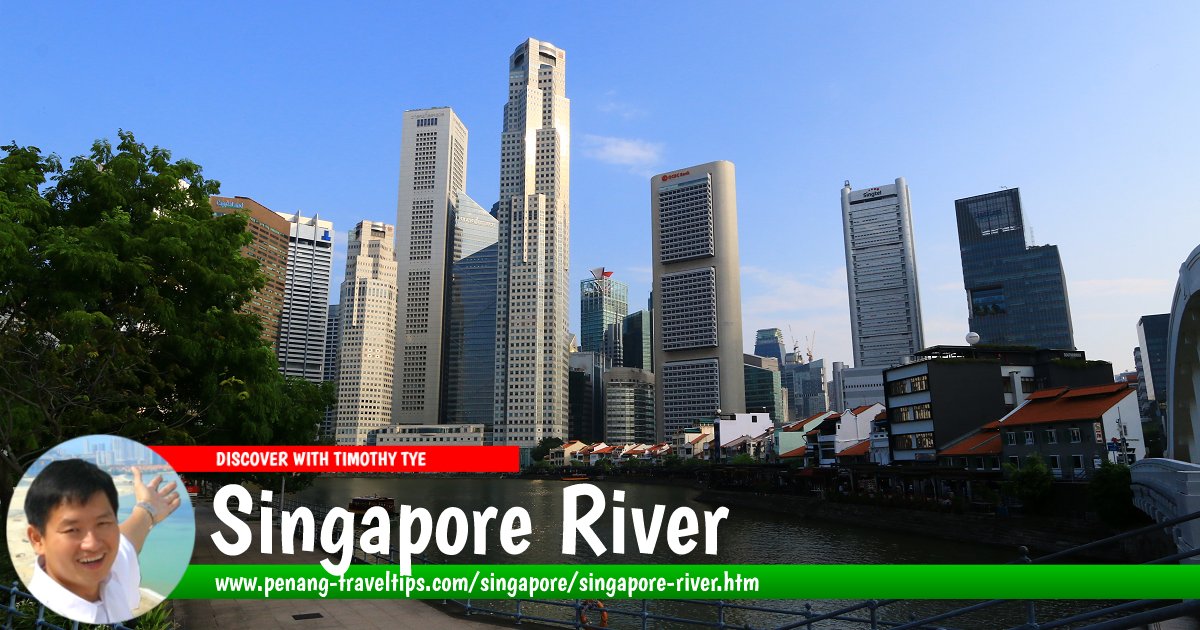 Singapore River (28 July 2017)
Map of Singapore River and Singapore River Planning Area
The quays along the river were named based on their development timeline: Boat Quay was the first and busiest, Clarke Quay followed as trade expanded upstream, and Robertson Quay developed later as river commerce grew. The river was the main artery of commerce until containerisation and modern port facilities shifted shipping to Jurong and later to the Pasir Panjang Terminal.
Geography and Length
The Singapore River stretches for about 3.2 km, flowing from the Kim Seng Bridge near River Valley Road, winding past Robertson Quay, Clarke Quay, and Boat Quay, before emptying into Marina Bay. Historically, it flowed directly into the sea, but with land reclamation projects, the river’s mouth was altered, and it now drains into the Marina Channel as part of the Marina Reservoir system.
Canalisation and Modifications
In order to support Singapore’s urban growth, parts of the Singapore River were canalised to improve water flow and prevent flooding. The riverbanks were also reinforced, and bridges such as Cavenagh Bridge, Elgin Bridge, and Anderson Bridge were constructed across it to improve connectivity between the north and south banks.
The River Clean-Up
By the 1970s, the Singapore River had become heavily polluted, clogged with garbage, sewage, and waste from industries, street hawkers, and squatters. In 1977, then Prime Minister Lee Kuan Yew launched a bold initiative to clean up the river. Over ten years, the government relocated more than 26,000 families and 5,000 street hawkers, provided modern sanitation facilities, and redeveloped the riverbanks. By 1987, the Singapore River was declared clean, setting the stage for its transformation into a leisure and cultural district.
Present Use
Today, the Singapore River is no longer a centre of trade but a vibrant lifestyle and heritage precinct. Its quays have been repurposed into entertainment and dining hubs, popular with both locals and tourists. River cruises offer scenic rides showcasing colonial-era bridges, restored shophouses, and landmarks such as the Asian Civilisations Museum and Esplanade Park.
The riverbanks are also popular recreational spots, with walking and cycling paths that form part of the larger park connector network. Events such as the Singapore River Festival highlight the river’s cultural significance, blending history with modern entertainment.
Relation to the Singapore River Planning Area
The Singapore River runs through several planning areas, but only part of it is within the Singapore River Planning Area. Specifically, the stretch from Robertson Quay to Boat Quay, including Clarke Quay, falls within the planning area’s boundaries. The upper reaches of the river are within the River Valley Planning Area, while the river mouth lies adjacent to the Downtown Core Planning Area.
Quick Facts
- Length: ~3.2 km
- Source: Kim Seng Bridge near River Valley Road
- Mouth: Marina Bay (formerly the Singapore Straits)
- Quays: Boat Quay, Clarke Quay, Robertson Quay
- Key Transformation: Singapore River Clean-Up (1977–1987)
- Current Use: Dining, entertainment, river cruises, heritage tourism
- Within Singapore River Planning Area: From Robertson Quay to Boat Quay, including Clarke Quay
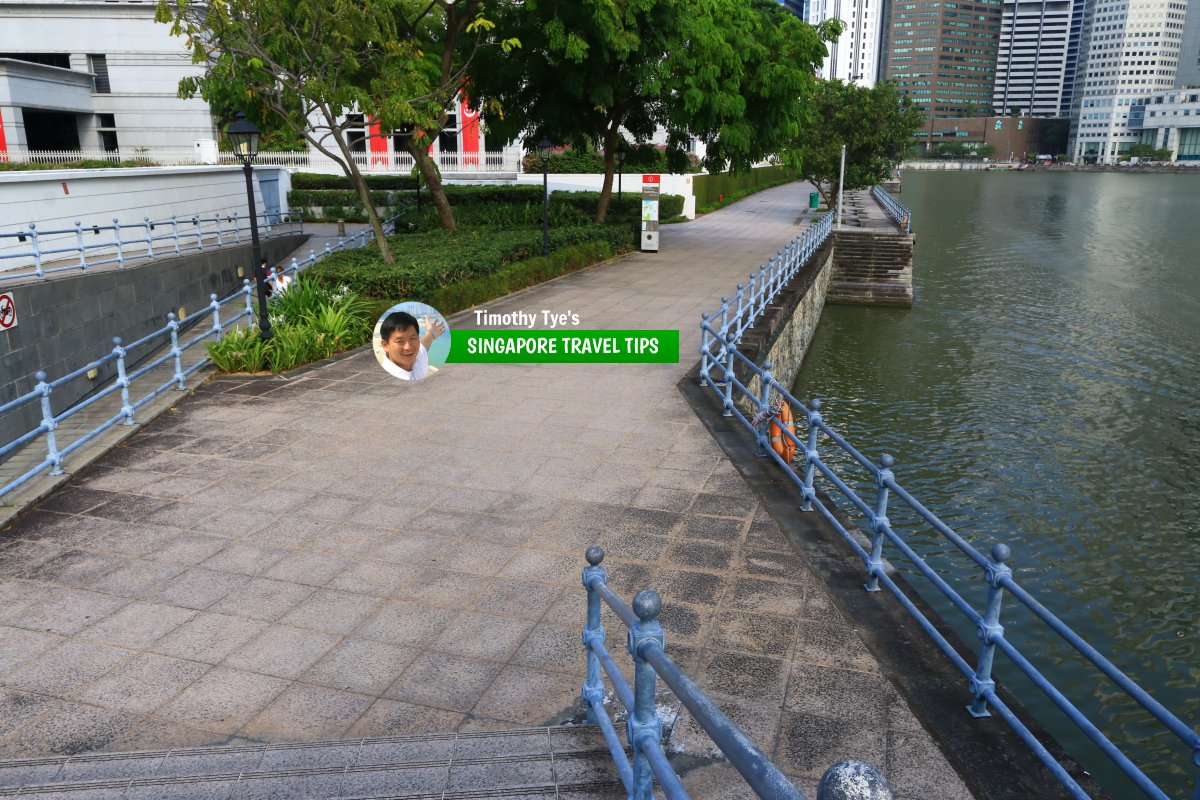 Promenade along the Singapore River at North Boat Quay (28 July 2017)
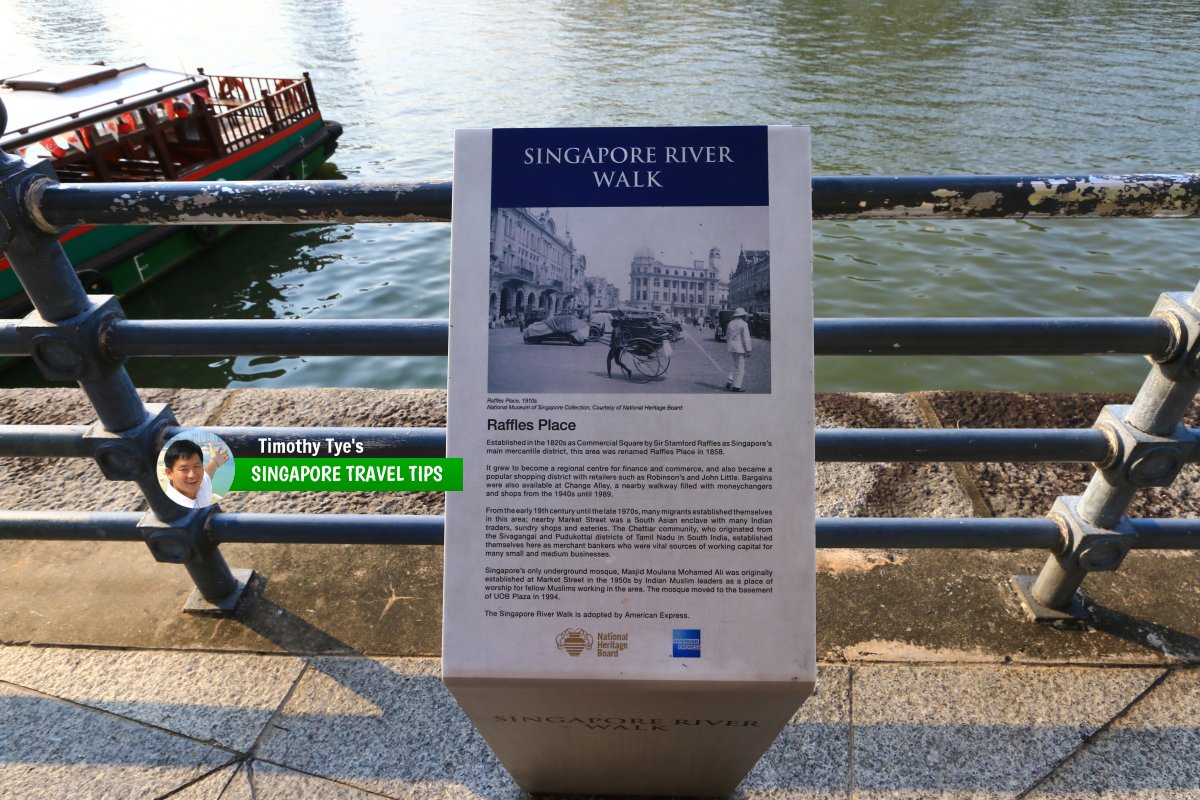 Interpretive board for the Singapore River Walk by the riverbank. (28 July 2017)
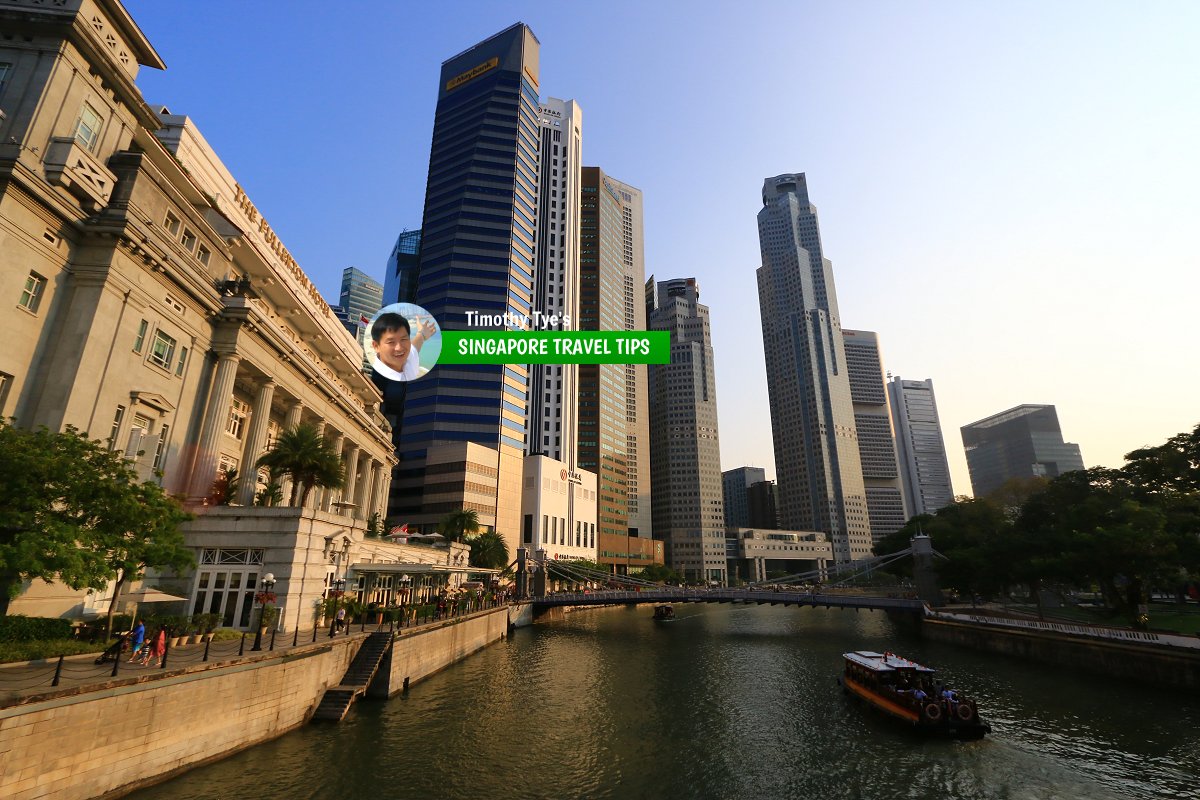 View of the Singapore River with the skyscrapers of the Financial District from Anderson Bridge. (28 July 2017)
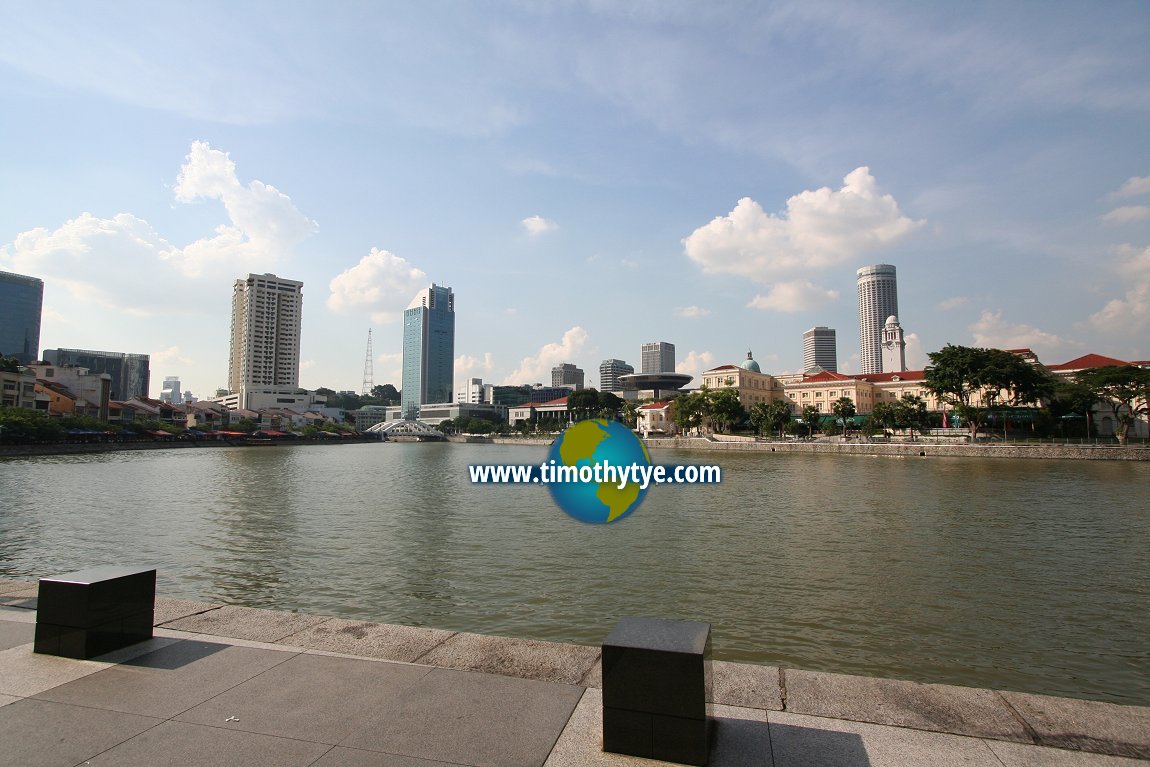 View of the Singapore River. (11 September, 2010)
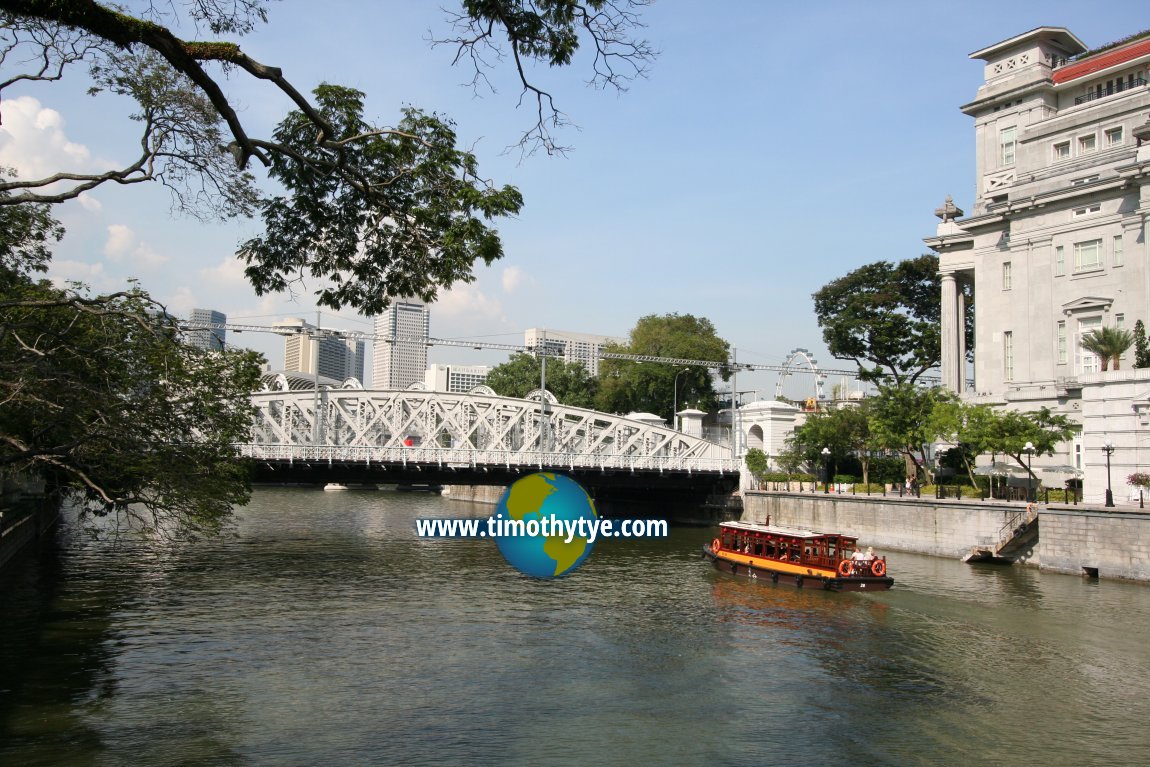 Singapore River near the Fullerton Hotel. (11 September, 2010)
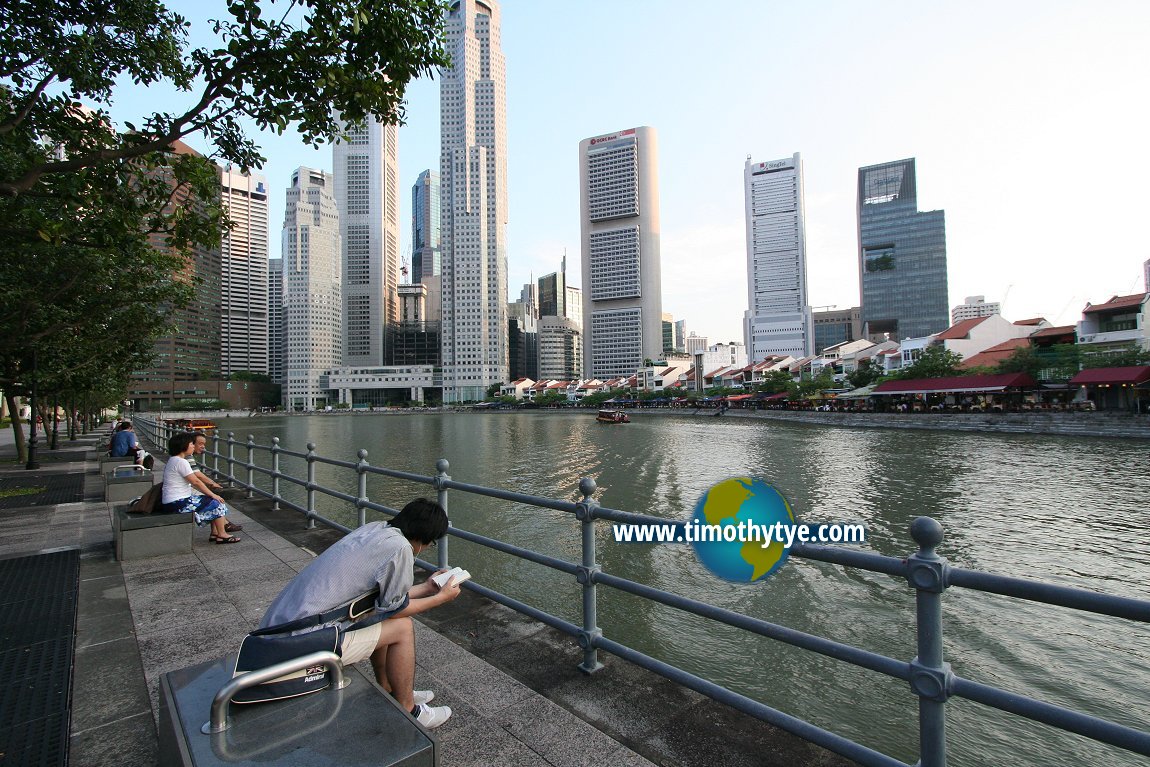 People relaxing by the bank of the Singapore River. (12 September, 2010)
References
- Urban Redevelopment Authority – Singapore River
- NLB Infopedia – Singapore River
- Singapore Tourism Board – Singapore River Precinct
Page Details
This page was created on 9 September 2025. Hi, my name is Timothy and created it from my research, for my own entertainment, knowledge and to satisfy my curiosity. I am providing the information to you in good faith and hope it is useful. I try to get the details as accurate as possible. I also try to update the page whenever I stumble on new details. So this and all my other pages are perpetual work in progress. If you discover any error, please politely inform me, pointing out where the error lies, and I will correct it as soon as possible. Your helpfulness will keep this page accurate, relevant and helpful to those who need the information.My videos of Singapore
Want to share your Singapore travel experiences or get tips from fellow travellers?
Join the Singapore Travel Tips Facebook GroupMore information for visiting and living in Singapore
Here are some related articles to help you get to know Singapore better.- Cost of Living in Different Singapore Neighbourhoods (2025 Guide)
- EZ-Link Card
- Owning a Car in Singapore
- Singapore MRT Map & Guide 2025
- Singapore Postal Districts and Postcodes
- Singapore Tourist Pass
- Taking the Bus in Singapore: A Visitor's Guide
- Understanding CCR, RCR and OCR in Singapore real estate
 Latest Pages & Updates
Buy Me A Coffee
If you enjoy the information I provide and want to support the work I do, please buy me a coffee! I appreciate it immensely, thank you so much!
