
Parks in Singapore
Parks in Singapore form an essential part of the island’s identity as a “City in Nature.” Despite being one of the world’s most urbanised countries, Singapore has seamlessly integrated greenery into its landscape, offering residents and visitors a refreshing balance between city life and natural beauty. These parks are not only recreational spaces but also serve as wildlife habitats, heritage sites, and community gathering places, reflecting Singapore’s deep commitment to sustainable urban living.
Quick Facts
- Total Number of Parks: Over 400 public parks and nature areas
- Major Park Management Agency: National Parks Board (NParks)
- Largest Park: East Coast Park (about 185 hectares)
- Oldest Park: Singapore Botanic Gardens (established in 1859)
- Newest Large Park: Jurong Lake Gardens (opened in phases from 2019)
- Popular Activities: Jogging, cycling, picnicking, birdwatching, and outdoor fitness
- Entry Fee: Most parks are free for public access
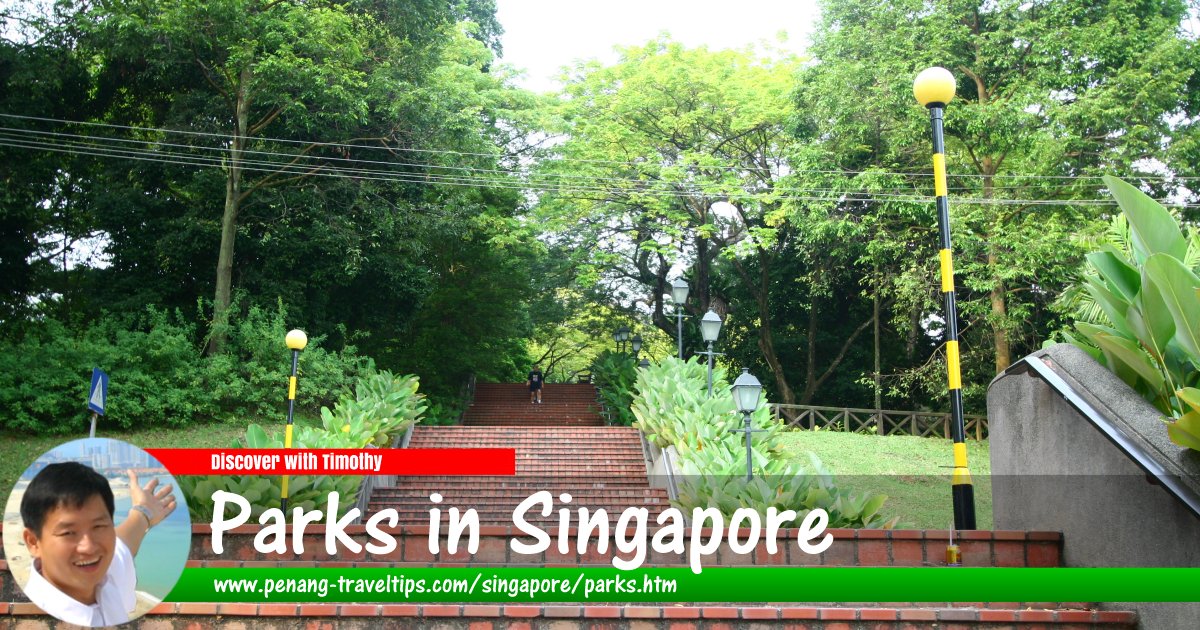 Parks in Singapore (9 July 2006)
History and Development of Parks in Singapore
The history of parks in Singapore stretches back to the 19th century, when the British colonial government introduced landscaped gardens for both scientific study and leisure. The Singapore Botanic Gardens, founded in 18591, served as an experimental site for cultivating tropical crops such as rubber and spices. It later evolved into a premier horticultural institution and today is a UNESCO World Heritage Site.
During the post-independence years, Singapore’s leaders recognised that urbanisation could not come at the expense of greenery. The 1967 “Garden City” vision, introduced by then Prime Minister Lee Kuan Yew, led to massive tree-planting and park development initiatives across the island. This vision gradually matured into the 21st-century concept of a “City in Nature”, focusing on connecting green spaces, restoring biodiversity, and encouraging citizens to engage with nature daily.
Map of Parks in Singapore
List of Parks in Singapore
- Admiralty Park (GPS: 1.44363, 103.78315)

- Ang Mo Kio Town Garden East (GPS: 1.37074, 103.85039)

- Bedok Reservoir Park (GPS: 1.33977, 103.93393)

- Bukit Timah Nature Reserve (GPS: 1.34839, 103.77746)

- Chinese Garden (GPS: 1.33898, 103.72975)

- Choa Chu Kang Park

- Dhoby Ghaut Green (GPS: 1.2785, 103.84137)

- Duxton Plain Park (GPS: 1.2785, 103.84137)

- Esplanade Park (GPS: 1.28983, 103.85381)

- Fort Canning (GPS: 1.29499, 103.84601)

- Gardens by the Bay (GPS: 1.28163, 103.86363)

- Hindhede Nature Park (GPS: 1.34602, 103.77517)

- Hong Lim Park (Speaker's Corner) (GPS: 1.28672, 103.84609)

- Jinlan Garden (GPS: 1.27667, 103.84261)

- Jurong Bird Park (GPS: 1.3187, 103.70644)

- Kallang Riverside Park (GPS: 1.30556, 103.86712)

- Kranji Reservoir Park A (GPS: 1.43838, 103.74273) and B (GPS: 1.43928, 103.73762)
- Labrador Nature Reserve (GPS: 1.26555, 103.80157)

- Marina City Park (GPS: 1.28261, 103.8614)

- Merlion Park (GPS: 1.28676, 103.85434)

- Night Safari (GPS: 1.40218, 103.78806)

- Pearl's Hill City Park (GPS: 1.28464, 103.8399)

- Queen Elizabeth Walk (GPS: 1.2883, 103.85322)

- Sembawang Park (GPS: 1.46166, 103.83688)

- Singapore Botanic Gardens (GPS: 1.3079, 103.81855)

- Sungei Buloh Wetland Reserve (GPS: 1.44656, 103.72346)

- Telok Ayer Green (GPS: 1.28132, 103.84778)

- The Promontory @ Marina Bay (GPS: 1.28165, 103.85406)

Types of Parks in Singapore
Singapore’s parks can be broadly grouped into several categories, each offering unique experiences:
- Nature Reserves: Protected areas preserving original rainforest and wetland ecosystems, such as Bukit Timah Nature Reserve and Sungei Buloh Wetland Reserve.
- Regional and Urban Parks: Large, landscaped parks for recreation and leisure, including East Coast Park and Bishan-Ang Mo Kio Park.
- Neighbourhood Parks: Smaller green spaces providing daily relaxation spots within residential estates.
- Park Connectors: A growing network of cycling and walking trails linking major parks and natural areas across the island.
Major Parks and Nature Areas in Singapore
1. Singapore Botanic Gardens
The Singapore Botanic Gardens is the crown jewel of Singapore’s park system. Covering 82 hectares, it combines landscaped gardens, forested trails, and lakes in the heart of the city. It houses the National Orchid Garden, featuring over 1,000 species and 2,000 hybrids of orchids. Recognised as a UNESCO World Heritage Site in 20152, it remains a beloved destination for nature lovers, researchers, and tourists alike.
2. East Coast Park
East Coast Park is Singapore’s largest and most popular coastal park, stretching over 15 kilometres along the southeastern coastline. It offers a mix of sandy beaches, cycling paths, barbecue pits, and seafood restaurants. Families and fitness enthusiasts flock here to enjoy activities like rollerblading, wakeboarding, and picnicking by the sea. The park’s tagline, “Recreation for All,” truly captures its inclusive appeal.
3. Gardens by the Bay
One of Singapore’s most iconic modern parks, Gardens by the Bay blends futuristic design with ecological innovation. Its famous Supertree Grove features towering vertical gardens, while the Flower Dome and Cloud Forest conservatories showcase plant life from around the world. Since opening in 2012, the gardens have become a global symbol of Singapore’s sustainable urban development3.
4. Bishan-Ang Mo Kio Park
Located in central Singapore, Bishan-Ang Mo Kio Park is a model for urban ecological design. It was transformed from a concrete canal into a naturalised river ecosystem, now teeming with fish, birds, and butterflies. Joggers, cyclists, and families enjoy its open lawns, riverside cafes, and playgrounds. The park’s success inspired similar “river renaturalisation” projects across the island.
5. Jurong Lake Gardens
Jurong Lake Gardens represents the future of Singapore’s park design. Officially opened in 2019, it is the first national gardens in the heartlands, covering more than 90 hectares around Jurong Lake. Highlights include the Rasau Walk boardwalk, Forest Ramble children’s play area, and Lakeside Garden, which showcases native wetland plants. It is part of a larger vision to transform Jurong into a vibrant regional hub of green living.
6. West Coast Park
West Coast Park is affectionately known as the “Play Centre in the West.” Its sprawling adventure playground attracts families, while the open fields and scenic promenade provide ideal spots for picnics and kite-flying. The park’s location along the coast offers breezy sea views and connections to nearby Labrador Nature Reserve via park connectors.
7. MacRitchie Reservoir Park
For those who love nature and hiking, MacRitchie Reservoir Park is a must-visit. It is part of Singapore’s oldest reservoir and surrounded by secondary rainforest. The park features a network of trails and the famous TreeTop Walk—a 250-metre suspension bridge offering panoramic views of the forest canopy. Visitors may spot long-tailed macaques, monitor lizards, and rare bird species along the paths4.
8. Kranji Reservoir Park
Located in northern Singapore, Kranji Reservoir Park offers a peaceful countryside atmosphere with fishing spots, lookout points, and historical significance linked to World War II. It is part of the Kranji Countryside area, which includes farms, nature reserves, and wetlands. The park’s tranquil waters and rural charm make it ideal for quiet recreation and reflection.
The Park Connector Network
One of Singapore’s most innovative green infrastructure projects is the Park Connector Network (PCN). This island-wide system of cycling and jogging routes links major parks, nature reserves, and residential areas. Popular connectors include the Eastern Coastal Loop, Central Urban Loop, and Round-Island Route, which circles the entire island over 150 kilometres. The PCN encourages eco-friendly commuting and promotes active lifestyles while strengthening the city’s green continuity.
Community and Conservation Efforts
Singapore’s parks are more than just recreational grounds—they are also centres for environmental education and conservation. The National Parks Board (NParks) actively engages the public through volunteer programs, guided walks, and citizen science projects. Initiatives like Community in Bloom and Butterfly Gardens invite residents to cultivate green spaces in their neighbourhoods, fostering a strong sense of ownership and stewardship for nature.
Fun Facts about Parks in Singapore
- Singapore has one of the world’s highest ratios of green space per capita among dense urban cities.
- Over 50% of the island’s surface area is now covered in greenery, including roadside trees and rooftop gardens5.
- The country’s oldest heritage tree, a tembusu located in the Botanic Gardens, is estimated to be more than 200 years old.
- Some parks, like Fort Canning Park, sit on historical sites dating back to pre-colonial and colonial eras.
- Several park connectors are lit at night with energy-efficient solar lighting for safe evening strolls and rides.
Planning Your Visit
Most parks in Singapore are open daily from early morning until late evening, and entry is free. Visitors are advised to bring water, sun protection, and insect repellent, especially for nature reserves and forest trails. Public transport accessibility is excellent, with many parks located near MRT stations or connected via the PCN. Whether you prefer serene gardens, seaside relaxation, or adventurous trails, Singapore’s parks offer something for every age and interest.
Conclusion
The extensive network of parks in Singapore showcases the nation’s dedication to harmony between urban life and nature. From heritage gardens to modern waterfront parks, these green spaces enhance livability, support biodiversity, and strengthen community bonds. For both residents and visitors, exploring Singapore’s parks is not just a leisure activity—it’s an experience that reveals the city’s soul as a true City in Nature.
References
- National Parks Board – Singapore Botanic Gardens
- UNESCO World Heritage Centre – Singapore Botanic Gardens
- Gardens by the Bay Official Website
- NParks – MacRitchie Reservoir Park
- NParks – City in Nature Initiative
Page Details
This page was created on 10 October 2025. Hi, my name is Timothy and created it from my research, for my own entertainment, knowledge and to satisfy my curiosity. I am providing the information to you in good faith and hope it is useful. I try to get the details as accurate as possible. I also try to update the page whenever I stumble on new details. So this and all my other pages are perpetual work in progress. If you discover any error, please politely inform me, pointing out where the error lies, and I will correct it as soon as possible. Your helpfulness will keep this page accurate, relevant and helpful to those who need the information.My videos of Singapore
Want to share your Singapore travel experiences or get tips from fellow travellers?
Join the Singapore Travel Tips Facebook GroupMore information for visiting and living in Singapore
Here are some related articles to help you get to know Singapore better.- Cost of Living in Different Singapore Neighbourhoods (2025 Guide)
- EZ-Link Card
- Owning a Car in Singapore
- Singapore MRT Map & Guide 2025
- Singapore Postal Districts and Postcodes
- Singapore Tourist Pass
- Taking the Bus in Singapore: A Visitor's Guide
- Understanding CCR, RCR and OCR in Singapore real estate
 Latest Pages & Updates
Buy Me A Coffee
If you enjoy the information I provide and want to support the work I do, please buy me a coffee! I appreciate it immensely, thank you so much!
