
Malaysia Travel Guide
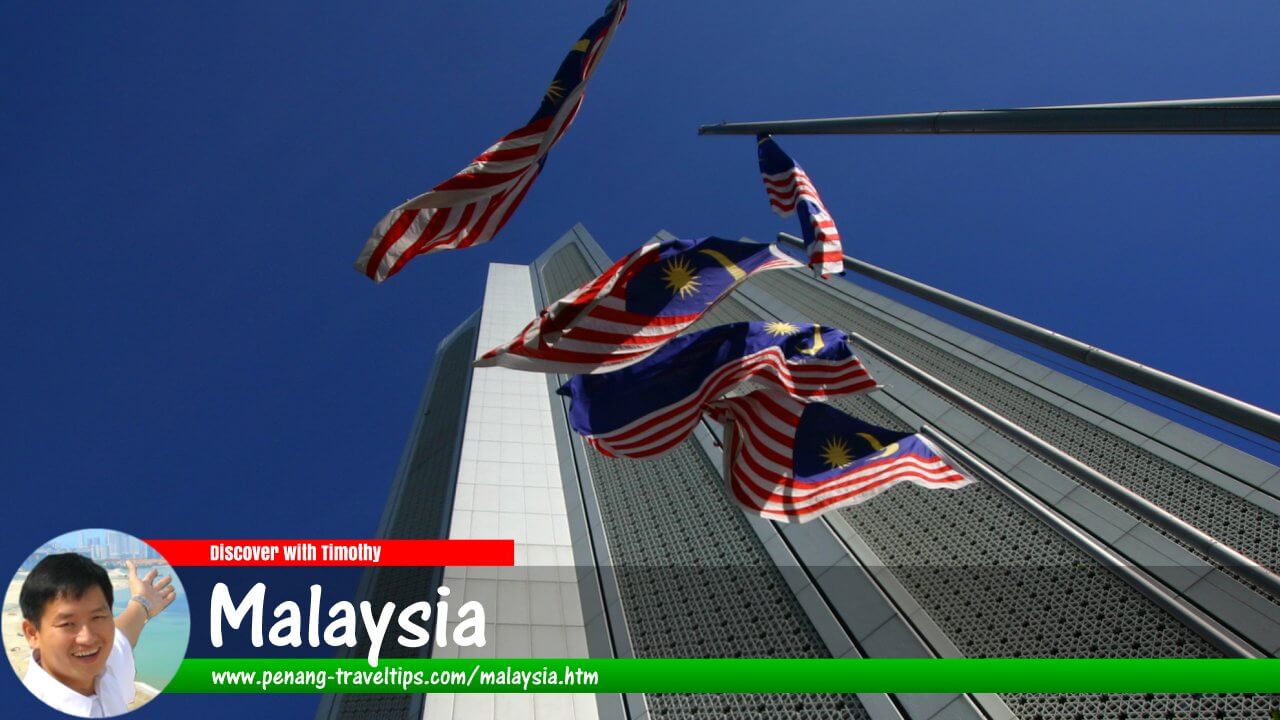 Malaysia Travel Guide (8 February 2006)
Juga terdapat: Panduan Melawat Malaysia
Malaysia is a Southeast Asian nation of striking geographic variety and cultural diversity — from the Malay Peninsula to the rainforests of Borneo — and a modern economy built on trade, manufacturing and services. This page gives a concise but comprehensive introduction to Malaysia’s history, geography, administrative structure, government, population and demographics, economy and GDP, standard of living, and transportation networks. 1
Quick Facts
- Official name: Malaysia (Federation of Malaysia)
- Capital: Kuala Lumpur (official/constitutional); Putrajaya (administrative)
- Area: ~330,800 km² (Peninsular Malaysia + East Malaysia)
- Population: ~33.8 million (IMF estimate, 2025). 2
- Political system: Federal constitutional monarchy
- Administrative divisions: 13 states and 3 federal territories
- GDP (nominal): Malaysia is an upper-middle-income economy with strong manufacturing and services sectors; growth forecasts vary by year. 3
- Main languages: Malay (official), English, Chinese dialects, Tamil and many indigenous languages
- Time zone: Malaysia Time (MYT) — UTC+08:00
History — a brief overview
Malaysia’s recorded history spans centuries of regional kingdoms, maritime trade and colonial influence. The classical Malay sultanates — most famously the Malacca Sultanate from the 15th century — were important trading hubs linking the Indian Ocean and South China Sea. European colonial powers arrived from the 16th century, and British influence grew strongest by the 19th century, consolidating territories in Peninsular Malaysia under British Malaya and later bringing Sabah and Sarawak under British administration in Borneo. Modern Malaysia emerged after World War II: the Federation of Malaya gained independence in 1957, and on 16 September 1963 the Federation expanded to form Malaysia with Sabah, Sarawak and (briefly) Singapore. Singapore separated in 1965. Post-independence Malaysia pursued industrialisation, infrastructure and nation-building policies that shaped its multi-ethnic society. 4
My Videos of Malaysia
Geography and regions
Malaysia is geographically split into two main regions separated by the South China Sea:
- Peninsular Malaysia (West Malaysia) — lies at the southern tip of the Malay Peninsula and contains the capital Kuala Lumpur, the administrative capital Putrajaya, and most of the country’s economic hubs. The terrain includes coastal plains, central mountain ranges (the Titiwangsa Range), and tropical lowland forests.
- East Malaysia — comprises the states of Sabah and Sarawak on the island of Borneo, plus the federal territory of Labuan. East Malaysia is notable for its vast rainforest, biodiversity, and indigenous communities; Mount Kinabalu in Sabah is the country’s highest peak.
The total land area of Malaysia is approximately 330,800 square kilometres, with ecosystems ranging from mangroves and peat swamps to montane cloud forests. Malaysia’s maritime location has historically made it a trading crossroads and today supports a busy merchant fleet and busy ports. 5
Administrative divisions and government
Malaysia is a federal constitutional monarchy composed of 13 states and 3 federal territories. The states in Peninsular Malaysia each have hereditary rulers (sultans) or governors, and they retain authority over many matters — land, religion, and local government — subject to the federal constitution. The three federal territories are Kuala Lumpur, Putrajaya (the administrative capital), and Labuan (an offshore financial centre). The Yang di-Pertuan Agong (King) is elected on a rotational basis from among the nine Malay rulers and is the constitutional monarch and ceremonial head of state. Executive power rests with the Prime Minister and Cabinet, while Parliament (Dewan Rakyat and Dewan Negara) makes federal law. State governments administer local affairs through state legislative assemblies. This federal structure balances national policies with significant decentralised powers at the state level. 6
Federal Territories of Malaysia
States of Malaysia
- Johor
- Kedah
- Kelantan
- Malacca
- Negeri Sembilan
- Pahang
- Penang
- Perak
- Perlis
- Sabah
- Sarawak
- Selangor
- Terengganu
Discover Malaysia by Category
The other way to discover the places in Malaysia is to do it by category. For this purpose, I have assembled all the places that I describe according to category. Select what you are looking for from below.- STATE CAPITALS IN MALAYSIA
- STATES IN MALAYSIA
- STREETS IN MALAYSIA
- TOWNS IN MALAYSIA
- PLACES OF INTEREST IN MALAYSIA
- Accounting Firms in Malaysia
- Acupuncture Centres in Malaysia
- Advertising Agencies in Malaysia
- AEON Malls in Malaysia
- Aid Organisations in Malaysia
- Air Conditioning Repair in Malaysia
- Airports in Malaysia
- Antique Shops in Malaysia
- Apartments in Malaysia
- Army Camps in Malaysia
- Art Galleries in Malaysia
- Auditoriums in Malaysia
- Auto Gate Installers in Malaysia
- Auto Repair Shops in Malaysia
- Auto Service Centres in Malaysia
- Auto Spray Painting Shops in Malaysia
- Baby Product Stores in Malaysia
- Bakeries in Malaysia
- Baking Supply Shops in Malaysia
- Banks in Malaysia
- Beaches in Malaysia
- Boutiques in Malaysia
- Brethren Assemblies in Malaysia
- Bridges in Malaysia
- Buddhist Temples in Malaysia
- Businesses in Malaysia
- Bus Terminals in Malaysia
- Car Parks in Malaysia
- Car Showrooms in Malaysia
- Car Wash in Malaysia
- Caves in Malaysia
- Cave Temples in Malaysia
- Cemeteries in Malaysia
- Cenotaphs in Malaysia
- Chicken Rice Shops in Malaysia
- Child Care Centres in Malaysia
- Chinese Medical Halls in Malaysia
- Chinese Restaurants in Malaysia
- Chinese Temples in Malaysia
- Churches in Malaysia
- Clan Associations in Malaysia
- Clinics in Malaysia
- Cleaning Services in Malaysia
- Clocktowers in Malaysia
- Coffee Shops in Malaysia
- Colleges in Malaysia
- Commercial Properties in Malaysia
- Condominiums in Malaysia
- Consulates in Malaysia
- Consultancy Firms in Malaysia
- Contractors in Malaysia
- Convention Centres in Malaysia
- Cultural Villages in Malaysia
- Dental Clinics in Malaysia
- Department Stores in Malaysia
- Dialysis Centres in Malaysia
- Econsave Stores in Malaysia
- Embassies in Malaysia
- Empire Sushi outlets in Malaysia
- Entertainers in Malaysia
- Event Management Companies in Malaysia
- Expressways in Malaysia
- Eye Specialists in Malaysia
- Factories in Malaysia
- Federal Territories of Malaysia
- Ferry Services in Malaysia
- Financial Institutions in Malaysia
- Fire Stations in Malaysia
- Flats in Malaysia
- Florists in Malaysia
- Food Courts in Malaysia
- Foot Reflexology Centres in Malaysia
- Forest Parks in Malaysia
- Forts in Malaysia
- Fountains in Malaysia
- Funeral Parlours in Malaysia
- Furniture Shops in Malaysia
- Garden Centres in Malaysia
- Giant Hypermarkets in Malaysia
- Golf Courses in Malaysia
- Government Buildings in Malaysia
- Government Quarters in Malaysia
- Graves in Malaysia
- Gurdwaras in Malaysia
- Handicraft Centres in Malaysia
- Hawker Centres in Malaysia
- High-Rise Buildings in Malaysia
- Highways in Malaysia
- Hill Resorts in Malaysia
- Hindu Temples in Malaysia
- Historic buildings in Malaysia
- Historic Sites in Malaysia
- Hospitals in Malaysia
- Hotels in Malaysia
- Hot Springs in Malaysia
- Housing Estates in Malaysia
- Hypermarkets in Malaysia
- Indian Restaurants in Malaysia
- Industrial Parks in Malaysia
- International Schools in Malaysia
- Islands in Malaysia
- Jetties in Malaysia
- Jewellery Shops in Malaysia
- KFC Restaurants in Malaysia
- Kindergartens in Malaysia
- Klinik Kelihatan in Malaysia
- Lakes in Malaysia
- Libraries in Malaysia
- LRT Stations in Malaysia
- Malay Restaurants in Malaysia
- Markets in Malaysia
- Mausoleums in Malaysia
- Megaliths in Malaysia
- Metal Works in Malaysia
- Middle-Eastern Restaurants in Malaysia
- Mini Markets in Malaysia
- Mobile Motorcycle Mechanics in Malaysia
- Monorail Stations in Malaysia
- Monuments in Malaysia
- Moral Uplifting Societies in Malaysia
- Mosques in Malaysia
- Mountains in Malaysia
- MRT Stations in Malaysia
- Multi-Purpose Halls in Malaysia
- Museums in Malaysia
- Musical Instrument Shops in Malaysia
- Music Schools in Malaysia
- Nasi Kandar Restaurants in Malaysia
- National Parks in Malaysia
- Newspaper Bureaux in Malaysia
- Night Clubs in Malaysia
- Nursing Homes in Malaysia
- Nutritional Product Stores in Malaysia
- Nyonya Restaurants in Malaysia
- Office Equipment Stores in Malaysia
- Old Folks Homes in Malaysia
- Organisations in Malaysia
- Pakistani Restaurants in Malaysia
- Palaces in Malaysia
- Pantai Hospital in Malaysia
- Parks in Malaysia
- Pedestrian Malls in Malaysia
- Pet Grooming Shops in Malaysia
- Petrol Stations in Malaysia
- Pillboxes in Malaysia
- Plant Nurseries in Malaysia
- Playing Fields in Malaysia
- Police Stations in Malaysia
- Post Offices in Malaysia
- Print Shops in Malaysia
- Prisons in Malaysia
- Properties in Malaysia
- Recreation Clubs in Malaysia
- Restaurants in Malaysia
- Rest Houses in Malaysia
- Rivers in Malaysia
- Roundabouts in Malaysia
- Royal Galleries in Malaysia
- Schools in Malaysia
- Seafood Restaurants in Malaysia
- Second-Hand Car Dealers in Malaysia
- Shopping Malls in Malaysia
- Skyscrapers in Malaysia
- Souvenir Shops in Malaysia
- Spas in Malaysia
- Specialty Shops in Malaysia
- Stadiums in Malaysia
- Stationery Shops in Malaysia
- Steamboat Restaurants in Malaysia
- Straits in Malaysia
- Street Art in Malaysia
- Supermarkets in Malaysia
- Suraus in Malaysia
- Swimming Pools in Malaysia
- Tailors in Malaysia
- Teochew Associations in Malaysia
- Tesco Stores in Malaysia
- Thai Restaurants in Malaysia
- Thai Temples in Malaysia
- Theme Parks in Malaysia
- Tourist Attractions in Malaysia
- Traditional Chinese Medicine Centres in Malaysia
- Trains in Malaysia
- Train Stations in Malaysia
- Transport Companies in Malaysia
- Universities in Malaysia
- Utility Plants in Malaysia
- Villages in Malaysia
- Waterfalls in Malaysia
- Waterfront Promenades in Malaysia
- Wesley Methodist Churches in Malaysia
- Zoos in Malaysia
Population and demographics
Malaysia is culturally diverse. Recent IMF and World Bank estimates place the population in the low-to-mid 30-million range (about 33.8 million by IMF 2025 estimates), with steady growth driven by both natural increase and migration. The population is concentrated in the Klang Valley (Kuala Lumpur–Petaling Jaya–Shah Alam), Penang, Johor Bahru and other urban centres. 2
Ethnic and linguistic composition is broadly: Malays (the largest group and constitutionally defined as Bumiputera along with indigenous groups), sizeable Chinese and Indian communities, and numerous indigenous ethnicities in Sabah and Sarawak. Malay is the official language while English remains widely used in business and higher education. Diverse religious traditions (Islam, Buddhism, Christianity, Hinduism, and indigenous beliefs) contribute to Malaysia’s plural society. Urbanisation, education and mobility over recent decades have shaped demographic trends and consumer patterns. 7
Economy: structure, GDP and performance
Malaysia is classified as an upper-middle-income economy with a diversified base. Historically reliant on commodities (rubber, tin and later oil & gas), Malaysia industrialised in the late 20th century with a strong emphasis on manufacturing exports (electronics, electrical goods, automotive parts), palm oil, petroleum and increasingly services (finance, tourism, logistics). The country is well integrated into global supply chains — notably electronics and semiconductors — and benefits from a strategic location on global shipping routes. 8
GDP and growth: official and multilateral sources report Malaysia’s GDP in nominal and real terms with regular revisions. After recovering from pandemic shocks, Malaysia posted renewed growth in 2023–2024 and multilateral forecasts project moderate expansion in the mid-3% to mid-4% range for the mid-2020s depending on external demand and commodity prices. For example, IMF and national sources reported that Malaysia’s economy was projected to expand in the 4%–5% range for recent years, while Bank Negara Malaysia (the central bank) and other agencies provide quarterly updates. GDP per capita places Malaysia well above many regional peers, reflecting its industrial and services output, although regional and income disparities persist. 9
Trade and external links
Malaysia’s economy is export-oriented: major exports include electrical and electronic products, petroleum products, palm oil, liquefied natural gas, and chemical products. Main trading partners are China, the United States, Singapore, the EU and regional neighbours. Foreign direct investment and trade policies, free trade agreements and investment in high-value sectors such as semiconductors and green technologies are priorities for Malaysia’s economic planners. 10
Standard of living and social indicators
Malaysia’s standard of living has improved significantly since independence — life expectancy, literacy, and access to healthcare and education have all risen. The Human Development Index (HDI) classifies Malaysia in the high human development category, reflecting gains in education, income and health. Nevertheless, income inequality (Gini coefficient), urban-rural disparities and the cost of living are ongoing policy concerns. The government has implemented social assistance programs, targeted subsidies, and housing initiatives to address affordability and welfare needs. Recent policy discussions have focused on managing inflationary pressures and rising household costs while promoting higher incomes through skill upgrading and technology investments. 11
Education and healthcare
Malaysia has an established education system with compulsory primary education and widespread secondary schooling. A network of public universities (including Universiti Malaya and Universiti Kebangsaan Malaysia) and private higher education institutions contribute to a sizeable tertiary sector, and the country is also a regional destination for international students. Healthcare services are provided through a public healthcare system complemented by private hospitals and clinics; overall health indicators are consistent with upper-middle-income countries, though access and quality vary by region. 12
Transportation network
Malaysia’s transport infrastructure is extensive and multi-modal, reflecting decades of investment aimed at connecting cities, ports and airports and facilitating trade and tourism.
Roads and expressways
The country has an extensive road network linking major cities. The North–South Expressway (NSE) is the backbone corridor connecting the Thai border in the north to Johor in the south; numerous tolled expressways (with E-number designations) and federal roads connect urban centres and industrial nodes. Road freight and private vehicles remain critical for domestic mobility, and recent years have seen investments in bypasses, tolled expressways and urban traffic management systems. 13
Rail and urban transit
Malaysia’s rail system includes long-distance and commuter services operated by Keretapi Tanah Melayu Berhad (KTMB), as well as urban rapid transit systems in the Klang Valley: LRT, MRT, Monorail and KTM Komuter networks serving Kuala Lumpur and surrounding suburbs. The Klang Valley Mass Rapid Transit (MRT) projects (MRT1: Kajang Line; MRT2: Putrajaya Line; planned MRT3 Circle Line) and expanded LRT lines have reshaped urban mobility and reduced reliance on private cars in key corridors. Intercity rail improvements and connections to Singapore (via KTM/rail links) and Thailand are strategic priorities for regional integration. 14
Ports and shipping
Malaysia’s strategic maritime position supports busy ports: Port Klang is one of the country’s principal container and transshipment hubs on the Straits of Malacca, complemented by Pasir Gudang and Port of Tanjung Pelepas in Johor. These ports underpin Malaysia’s export economy and act as logistics gateways for Southeast Asia. 15
Air transport
Malaysia is served by a network of international and domestic airports. Kuala Lumpur International Airport (KLIA) is the main international gateway and a regional aviation hub. Secondary airports — Penang, Kota Kinabalu, Kuching, Senai (Johor) and others — connect domestic and regional routes. The aviation sector supports tourism, business travel and cargo services integral to trade. 16
Environment, biodiversity and climate
Malaysia’s tropical rainforests are among the world’s most biodiverse, supporting unique flora and fauna. Environmental management faces challenges including deforestation, peatland degradation, wildlife conservation and urban pollution. The government and NGOs have pursued protected areas, sustainable palm oil initiatives and climate mitigation/adaptation plans to balance development and conservation. Coastal and marine ecosystems — mangroves, coral reefs — are also critical to livelihoods and biodiversity. 17
Culture and tourism
Malaysia’s multicultural society — Malay, Chinese, Indian and indigenous groups — produces a rich cultural tapestry reflected in food, festivals, architecture and arts. Tourism is an important sector: visitors come for historic cities (Melaka, George Town), natural attractions (Borneo rainforests, islands like Langkawi), urban experiences (Kuala Lumpur’s skyline and shopping), and cultural festivals. The tourism strategy emphasises higher-value experiences, sustainable tourism, and expanded cruise and ecotourism offerings. 18
Outlook and challenges
Malaysia faces several strategic challenges and opportunities into the 2020s: maintaining steady and inclusive economic growth, moving up the value chain in manufacturing, managing fiscal and social policy trade-offs, addressing climate and environmental risks, and investing in human capital to support a knowledge-based economy. Infrastructure projects — transport, digital networks, energy transition investments — are central to Malaysia’s medium-term development plans. Geopolitical shifts and global trade dynamics also affect the country’s export-oriented economy, while domestic policy choices shape social cohesion and long-term competitiveness. 19
How to use this microsite
This Malaysia microsite serves as a gateway to more detailed state-level pages and topic pages (economy, transport, cities and neighbourhoods). Each state page will cover local history, transport links, commercial centres and neighbourhood guides; specialised pages will deep-dive into transport networks (expressways, airports, rail), economic sectors (manufacturing, palm oil, oil & gas), and cultural destinations. Use the navigation links at the top of the microsite to explore states, cities and thematic guides.
References
- Encyclopaedia Britannica — Malaysia country overview and history
- International Monetary Fund — Malaysia country data and projections (IMF)
- World Bank — Malaysia data (population, economic indicators)
- Malaysia Government Portal — history and national information
- Wikipedia — States and federal territories of Malaysia (administrative divisions)
- Bank Negara Malaysia — monetary and economic reports
- Reuters — recent economic reporting on Malaysia (various articles)
- Ministry of Transport Malaysia — transport statistics and reports
- Department of Statistics Malaysia (DOSM) — population and economic statistics
- Tourism Malaysia — tourism and cultural destinations
Page Details
This page was created on 3 September 2025. Hi, my name is Timothy and created it from my research, for my own entertainment, knowledge and to satisfy my curiosity. I am providing the information to you in good faith and hope it is useful. I try to get the details as accurate as possible. I also try to update the page whenever I stumble on new details. So this and all my other pages are perpetual work in progress. If you discover any error, please politely inform me, pointing out where the error lies, and I will correct it as soon as possible. Your helpfulness will keep this page accurate, relevant and helpful to those who need the information.Buy Me A Coffee
If you enjoy the information I provide and want to support the work I do, please buy me a coffee! I appreciate it immensely, thank you so much!
