
Kuching, Sarawak
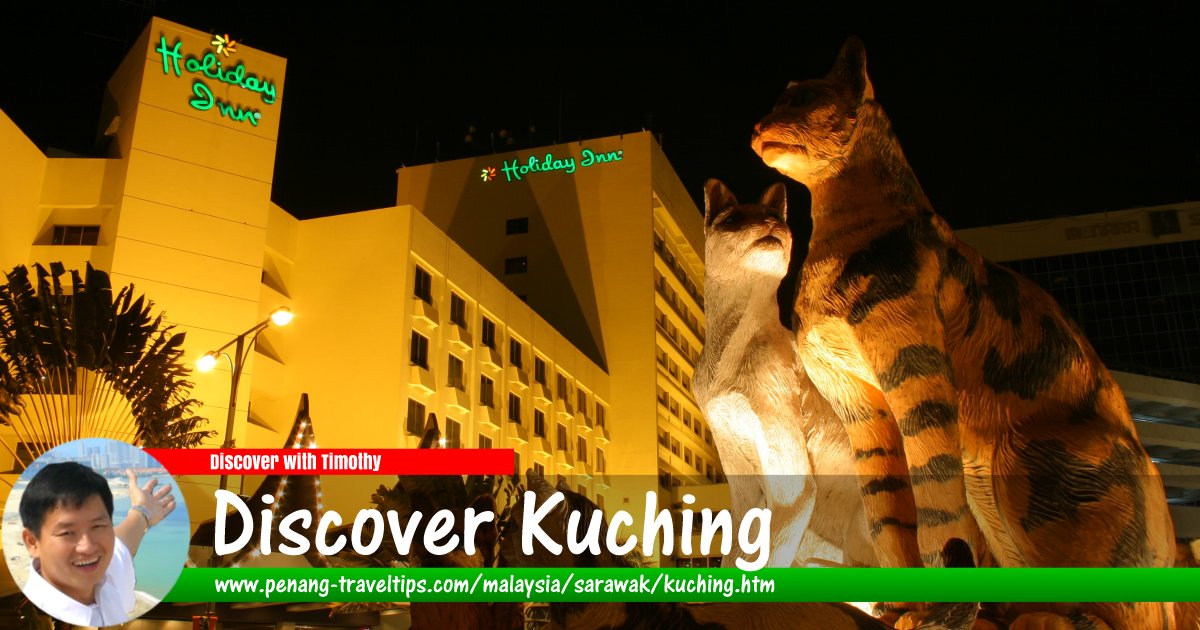 Kuching, Sarawak (1 October 2004)
Kuching, Sarawak is the charming riverside capital of Malaysia’s largest state, known for its rich cultural diversity, historic waterfront, vibrant food scene, and easy access to some of Borneo’s most spectacular rainforests and wildlife.
Quick Facts
Location: Northwest Borneo, on the Sarawak River
State: Sarawak, Malaysia
Nickname: Cat City
Main Language: Bahasa Malaysia (English widely spoken)
Best Time to Visit: March to October
Key Attraction: Kuching Waterfront & Sarawak Cultural Village
Airport: Kuching International Airport (KCH)
Map of Kuching, Sarawak
Sights in Kuching
- Astana (GPS: 1.56361, 110.34555)

- Bako National Park
- Bangunan Mahkamah Syariah (GPS: 1.55339, 110.3395)

- Borneo Convention Centre Kuching (GPS: 1.56269, 110.40572)

- Brooke Memorial (GPS: 1.55966, 110.34498)

- Carmelite Monastery (GPS: 1.53992, 110.34084)

- Cat Museum (GPS: 1.58662, 110.33431)

- Chinese History Museum (GPS: 1.55762, 110.34873)

- Fort Margherita (GPS: 1.56055, 110.34944)

- General Post Office (GPS: 1.55831, 110.34507)

- Gurdwara Sahib Sikh Temple (GPS: 1.55767, 110.342)

- Hiang Thian Siang Ti Temple (GPS: 1.55842, 110.34556)

- Hong San Si Temple (GPS: 1.55745, 110.34784)

- Japanese Building (GPS: 1.55924, 110.34455)

- Kuching Civic Centre (GPS: 1.54744, 110.34419)

- Kuching Waterfront (GPS: 1.56003, 110.34628)

- Masjid Bandaraya Kuching (GPS: 1.55874, 110.34059)

- Medan Niaga Satok (GPS: 1.55574, 110.32222)
 (formerly Satok Sunday Market)
 - Muzium Islam Sarawak (GPS: 1.55519, 110.34153)

- Old Fire Bridge Station Lookout Tower (GPS: 1.55907, 110.34246)

- Riverside Kampung (GPS: 1.56071, 110.35188)

- Riverside Shopping Complex (GPS: 1.55771, 110.35188)

- Sarakraf Pavilion (GPS: 1.54315, 110.35419)

- Sarawak Museum (GPS: 1.55479, 110.34336)

- Sarawak Plaza (GPS: 1.55779, 110.35341)

- Sarawak State Legislative Assembly Building (GPS: 1.56193, 110.34797)

- Sarawak Textile Museum (GPS: 1.74917, 110.31608)

- Sarawak Steamship Company Building (GPS: 1.55975, 110.34599)

- Semenggoh Wildlife Rehabilitation Centre
- Square Tower (GPS: 1.56026, 110.34559)

- Sri Srinivasagar Kaliamman Temple (GPS: 1.55277, 110.35303)

- St Peter's Church (GPS: 1.55177, 110.35947)

- Sungai Jaong Rock Carvings
- The Old Courthouse (GPS: 1.55966, 110.34498)
- The Round Tower of Kuching (GPS: 1.55874, 110.34493)

- Tua Pek Kong Temple (GPS: 1.5572, 110.34898)

- Tun Jugah Shopping Centre (GPS: 1.55731, 110.35359)

- Warrior Memorial (GPS: 1.55337, 110.34424)

- Wisma Saberkas (GPS: 1.53716, 110.34019)

Categories of sights in Kuching
- Bakeries in Kuching
- Chinese Temples in Kuching
- Churches in Kuching
- Hawker Centres in Kuching
- Hindu Temples in Kuching
- Historic Buildings in Kuching
- Monuments in Kuching
- Mosques in Kuching
- Museums in Kuching
- National Parks in Kuching
- Police Stations in Kuching
- Shopping Malls in Kuching
- Streets in Kuching
- Tourist Attractions in Kuching
Sights in the vicinity of Kuching
- Damai Beach (GPS: 1.74943, 110.31264)

- Gunung Gading National Park
- Gunung Penrissen
- Gunung Santubong (GPS: 1.73333, 110.33333)

- Gunung Serapi
- Kampung Annah Rais (GPS: 1.15705, 110.26537)

- Kubah National Park
- Lundu
- Matang Wildlife Centre
- Santubong
- Sarawak Cultural Village (GPS: 1.74917, 110.31608)
- Sematan
- Serian
- Sungai Jaong Rock Carvings
- Telok Melano
- Talang-Satang National Park
- Tanjung Datu National Park
- Wind Cave & Fairy Cave
Streets in Kuching
- Barrack Road
- Carpenter Street
- Jalan Crookshank
- Jalan McDougall
- Jalan Tun Abang Haji Openg
- Jalan Tunku Abdul Rahman
- Main Bazaar
- Tun Salahuddin Bridge (E24)
Introduction to Kuching
Kuching, Sarawak sits gracefully along the banks of the Sarawak River, blending colonial-era architecture with modern cafes, museums, and a laid-back lifestyle that immediately appeals to travelers. Unlike many bustling Southeast Asian capitals, Kuching moves at a relaxed pace, making it ideal for visitors who want to explore culture, cuisine, and nature without feeling rushed1.
The city is home to a multicultural population, primarily made up of Malay, Chinese, Iban, Bidayuh, and other indigenous groups. This diversity is reflected in everyday life—from religious buildings standing side by side to hawker stalls serving everything from laksa Sarawak to kolo mee. Kuching’s friendly atmosphere has earned it a reputation as one of Malaysia’s most welcoming cities2.
Where Is Kuching Located?
Kuching is located in the southwestern part of Sarawak on the island of Borneo. It lies approximately 30 kilometers from the South China Sea and serves as the main gateway to Sarawak’s national parks and rural interiors. The city’s strategic position along the Sarawak River historically made it an important trading port, which explains its strong Chinese and colonial influences today3.
The Kuching Waterfront
The Kuching Waterfront is the heart of the city and one of its most photographed areas. Stretching for nearly one kilometer along the southern bank of the Sarawak River, it features landscaped walkways, food stalls, public art, and views of historic landmarks such as Fort Margherita and the Astana. In the evening, the waterfront comes alive with lights, street performers, and families enjoying the cool river breeze4.
Sarawak River Cruise
One of the most popular activities in Kuching is the Sarawak River Cruise, which offers a relaxing way to see the city from the water. The cruise typically departs from the Kuching Waterfront Jetty, located near the Main Bazaar and opposite the Old Courthouse.
Price: Approximately RM60–RM70 per adult and RM30–RM35 per child
Duration: About 90 minutes
Operating Time: Usually 5:30 PM to 7:00 PM daily
The cruise often includes light refreshments and commentary on landmarks along the river. Sunset is the most popular time, as passengers can enjoy views of the city skyline transitioning from day to night. Availability and pricing may vary during festive seasons5.
Historical and Cultural Attractions
Sarawak Museum
The Sarawak Museum is one of the oldest museums in Southeast Asia and a must-visit for anyone interested in Borneo’s history. Its exhibits cover indigenous cultures, archaeology, and natural history, providing valuable context for exploring the rest of Sarawak. The museum complex has undergone modernization while preserving its iconic colonial façade6.
Fort Margherita
Located across the river from the city center, Fort Margherita was built in 1879 to protect Kuching from piracy. Today, it houses the Brooke Gallery, which tells the story of the White Rajahs who once ruled Sarawak. Visitors can reach the fort via a short boat ride from the waterfront jetty.
Nature and Wildlife Near Kuching
Kuching is often described as the gateway to Sarawak’s rainforests. Several national parks are located within an hour’s drive from the city, making day trips easy and rewarding.
Bako National Park
Bako National Park is famous for its proboscis monkeys, secluded beaches, and diverse ecosystems. Visitors can reach Bako by driving to Bako Bazaar and then taking a boat from the jetty to the park headquarters. Boat fares typically range from RM40–RM60 depending on group size, and the ride takes about 20 minutes.
Semenggoh Wildlife Centre
Located about 20 kilometers from Kuching, Semenggoh Wildlife Centre is best known for its semi-wild orangutans. Feeding times, usually in the morning and late afternoon, offer the best chance to see these iconic primates up close in a natural forest setting7.
Food and Local Cuisine
Kuching’s food scene is a highlight for many visitors. The city is especially proud of its local specialties, which differ significantly from Peninsular Malaysian cuisine.
- Laksa Sarawak: A spicy noodle soup with sambal, coconut milk, and prawns
- Kolo Mee: Dry noodles topped with minced pork or chicken
- Midin: Wild jungle fern, often stir-fried with garlic or belacan
Popular places to sample local food include the Main Bazaar, Carpenter Street, and various coffee shops scattered throughout the city center.
Festivals and Events
Kuching hosts several annual festivals that reflect its multicultural heritage. The Rainforest World Music Festival, held near Kuching at the Sarawak Cultural Village, attracts international musicians and visitors. Chinese New Year, Hari Gawai, and Hari Raya are also celebrated with open houses and public events throughout the city8.
Fun Facts About Kuching
- The name “Kuching” means “cat” in Malay, and cat statues can be found all over the city.
- Kuching has a Cat Museum, one of the only museums in the world dedicated entirely to cats.
- Despite its capital status, Kuching consistently ranks as one of Malaysia’s cleanest and greenest cities.
Getting Around Kuching
Kuching is relatively compact, and many attractions in the city center are within walking distance. Ride-hailing services and taxis are affordable, while traditional river taxis, known as penambang, provide a quick way to cross the Sarawak River for a small fee.
Conclusion
Kuching, Sarawak offers a rare combination of cultural richness, natural beauty, and relaxed urban living. Whether you are cruising along the river at sunset, sampling local delicacies, or venturing into nearby rainforests, the city provides memorable experiences for both first-time visitors and returning travelers. Its welcoming spirit and diverse attractions make Kuching a destination worth exploring at a leisurely pace9.
References
- Sarawak Tourism Board – Kuching Overview
- Tourism Malaysia – Sarawak
- Encyclopaedia Britannica – Kuching
- Lonely Planet – Kuching
- Sarawak River Cruise Official Site
- Sarawak Museum Department
- Sarawak Forestry – Semenggoh Wildlife Centre
- Rainforest World Music Festival
- Time Out – Kuching Travel Guide
Page Details
This page was created on 29 December 2025. Hi, my name is Timothy and created it from my research, for my own entertainment, knowledge and to satisfy my curiosity. I am providing the information to you in good faith and hope it is useful. I try to get the details as accurate as possible. I also try to update the page whenever I stumble on new details. So this and all my other pages are perpetual work in progress. If you discover any error, please politely inform me, pointing out where the error lies, and I will correct it as soon as possible. Your helpfulness will keep this page accurate, relevant and helpful to those who need the information.Streets of Sarawak Directory
Want to share your Kuching travel experiences or get tips from fellow travellers?
Join the Kuching Travel Tips Facebook GroupBuy Me A Coffee
If you enjoy the information I provide and want to support the work I do, please buy me a coffee! I appreciate it immensely, thank you so much!
