
Jalan Tunku Abdul Rahman, Kuching
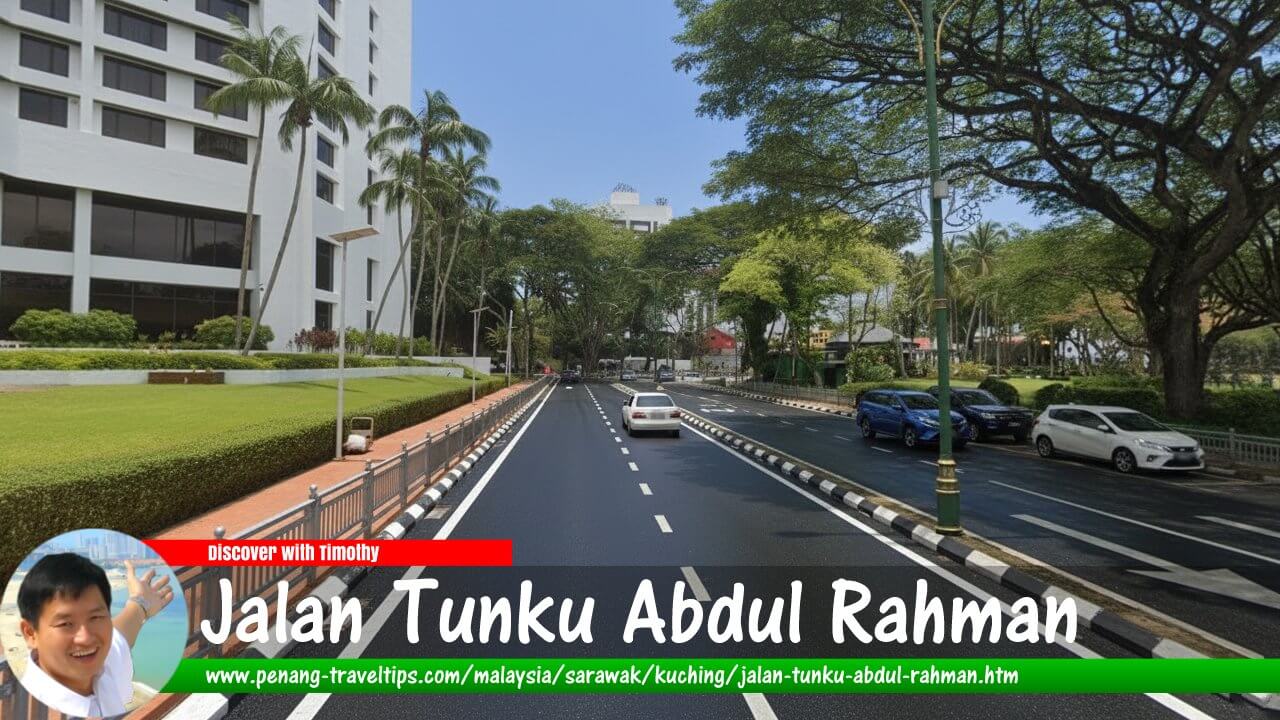 Jalan Tunku Abdul Rahman, Kuching (AI generated on 28 December 2025)
Jalan Tunku Abdul Rahman is a short but historically important road in central Kuching, Sarawak, stretching approximately 687 metres and connecting Jalan Main Bazaar near the Sarawak River in the west to Jalan Abell in the east.
Located within Kuching’s oldest urban core, the road has long functioned as a connector between the riverfront trading zone and the inner town area. Its compact length belies its importance as a corridor shaped by colonial history, post-independence nation-building, and everyday commercial activity1.
Quick Facts
Road Name: Jalan Tunku Abdul Rahman
Length: 687 metres
Location: Central Kuching, Sarawak, Malaysia
Connects: Jalan Main Bazaar and Jalan Abell
Character: Historic, commercial, civic
Nearby Landmark: Kuching Waterfront
Historical Development
The alignment of Jalan Tunku Abdul Rahman dates back to the period when Kuching developed as a river-based trading settlement under the Brooke administration in the 19th century. Roads in this area were laid out to support movement between the Sarawak River and inland administrative and residential quarters2.
Over time, the road evolved from a utilitarian access route into an urban street lined with shophouses, offices, and small businesses. By the mid-20th century, it had become part of the city’s formal road network, serving both pedestrians and vehicles in what was then Kuching’s commercial heart.
Origin of the Name
The road is named after Tunku Abdul Rahman Putra Al-Haj, Malaysia’s first Prime Minister and a central figure in the country’s independence. The naming likely took place after the formation of Malaysia in 1963, when Sarawak joined the federation and many streets were renamed to reflect national identity and unity3.
Streets bearing his name can be found across Malaysia, and in Kuching, Jalan Tunku Abdul Rahman stands as a symbolic link between Sarawak’s local history and the broader national narrative.
Character of the Street
Jalan Tunku Abdul Rahman has a distinctly historic and urban character. Its streetscape is shaped by older shophouses, small offices, and long-established businesses, many of which serve the surrounding city centre.
The road experiences steady foot and vehicle traffic throughout the day, particularly due to its proximity to the Kuching Waterfront and Main Bazaar. Compared to larger arterial roads, it feels intimate and walkable, offering a glimpse into everyday city life rather than large-scale commercial development.
Surrounding Streets and Urban Context
The road sits within a dense network of streets that form Kuching’s historic core. At its western end, it meets Jalan Main Bazaar, a well-known tourist and heritage street running parallel to the Sarawak River. To the east, it connects with Jalan Abell, another established urban road.
Nearby streets include:
- Jalan Carpenter
- Jalan Wayang
- Jalan India
- Jalan Masjid
This cluster of streets forms a compact district where commerce, heritage, and daily urban life intersect.
Nearby Attractions and Points of Interest
Several of Kuching’s most recognisable attractions are located along or within walking distance of Jalan Tunku Abdul Rahman. These include the Kuching Waterfront, the Old Courthouse, and Tua Pek Kong Temple.
The road is also close to Carpenter Street, known for traditional shops and eateries, and India Street, a pedestrian mall famous for textiles and local snacks. Together, these areas make the vicinity one of the most vibrant and visited parts of the city4.
Real Estate and Property Values
Properties along Jalan Tunku Abdul Rahman are predominantly commercial or mixed-use, with residential units typically located above ground-floor shops. Residential units in this area are generally compact, ranging from about 600 to 1,200 square feet (approximately 56 to 111 sq metres).
As of early 2024, residential units in Kuching’s city centre typically sell for around MYR 450,000 to MYR 900,000, depending on size, condition, and heritage value. Monthly rental rates for similar properties range from MYR 1,500 to MYR 3,0005.
When compared to Singapore, where central-area apartments often exceed SGD 2,000 per square foot and rental prices can surpass SGD 4,000 per month for similar-sized units, property values along Jalan Tunku Abdul Rahman remain relatively affordable. This contrast highlights Kuching’s lower cost of living and different urban pressures.
Public Transport and Accessibility
Kuching does not have an MRT or urban rail system like Singapore. As such, there are no Singapore MRT stations or rail lines serving Jalan Tunku Abdul Rahman. Instead, public transport access is provided by local bus services and minibuses.
Bus stops are located along Jalan Main Bazaar, Jalan Abell, and nearby streets such as Jalan Padungan, offering connections to other parts of Kuching. Ride-hailing services are widely used and are often the most convenient way for visitors to reach the area6.
Fun Facts
- The road is named after Malaysia’s first Prime Minister, linking Kuching’s streetscape to national history.
- Despite being less than 700 metres long, it sits at the crossroads of several of Kuching’s most visited streets.
- Many buildings along the road have been continuously used for decades, reflecting the area’s long commercial life.
Conclusion
Jalan Tunku Abdul Rahman may be short in length, but it occupies an important place in Kuching’s historical and urban landscape. Connecting the riverfront with the inner city, the road reflects layers of colonial heritage, post-independence identity, and everyday commerce. Its enduring relevance makes it a small yet significant part of Kuching’s evolving story7.
Map of Kuching, Kuching
References
- Sarawak Tourism Board – Kuching Overview
- Encyclopaedia Britannica – Kuching
- Prime Minister’s Office Malaysia – Tunku Abdul Rahman
- Lonely Planet – Kuching
- iProperty Malaysia – Kuching Listings
- Sarawak Transport Company
- Time Out – Kuching City Guide
Page Details
This page was created on 28 December 2025. Hi, my name is Timothy and created it from my research, for my own entertainment, knowledge and to satisfy my curiosity. I am providing the information to you in good faith and hope it is useful. I try to get the details as accurate as possible. I also try to update the page whenever I stumble on new details. So this and all my other pages are perpetual work in progress. If you discover any error, please politely inform me, pointing out where the error lies, and I will correct it as soon as possible. Your helpfulness will keep this page accurate, relevant and helpful to those who need the information.Streets of Kuching Directory
Want to share your Kuching travel experiences or get tips from fellow travellers?
Join the Kuching Travel Tips Facebook GroupBuy Me A Coffee
If you enjoy the information I provide and want to support the work I do, please buy me a coffee! I appreciate it immensely, thank you so much!
