
National Maritime Museum, London
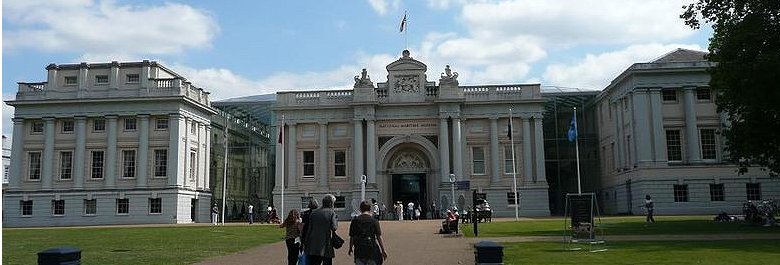 National Maritime Museum
Source: https://commons.wikimedia.org/wiki/File:Londres_383..jpg
Author: Simdaperce

The National Maritime Museum is part of the World Heritage Site of Maritime Greenwich.
The National Maritime Museum (NMM) in Greenwich, England is the leading maritime museum of the United Kingdom. It was created by the National Maritime Act of 1934, through the generous donations of Sir James Caird (1864 - 1954). King George VI formally opened the Museum in April 27, 1937 accompanied by his daughter Princess Elizabeth, the present Queen Elizabeth II, taking a journey down the Thames from London.
Greenwich has always had an association with the sea and with navigation. The Romans landed there, King Henry VIII lived there, the navy is stationed at the waterfront, and King Charles II founded the Royal Observatory there in 1675 to locate the longitude of places. Greenwich is the home of the Greenwich Mean Time and the Prime Meridian since 1884, and has long been a centre for astronomical study, and navigators across the world have set their clocks according to its time of day.
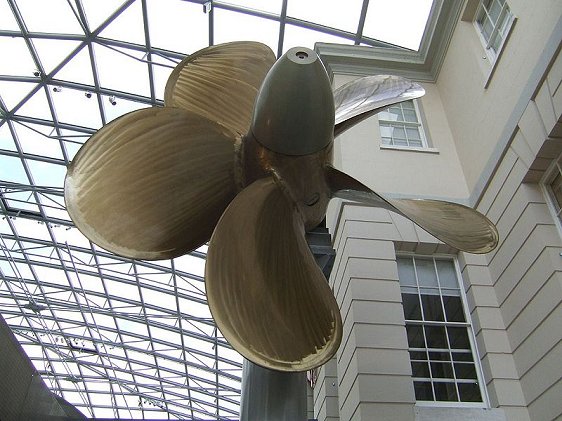 Propeller exhibited at the National Maritime Museum
Source: https://commons.wikimedia.org/wiki/File:Propeller,_National_Maritime_Museum.jpg
Author: Sue Wallace

The Museum has the most important collection in the world on Britain's role at sea. It contains more than two million items including including maritime art (both British and 17th-century Dutch), cartography, manuscripts including official public records, ship models and plans, scientific and navigational instruments, instruments for time-keeping and astronomy (based at the Observatory). The National Maritime Museum's British portraits collection is exceeded in size only by that of the National Portrait Gallery and its collection on Vice-Admiral Horatio Nelson and Captain James Cook, among many other individuals, is simply the best anywhere.
The National Maritime Museum has the world's largest maritime historical reference library - 100,000 volumes strong - including books dating back to the 15th century. An active loans programme ensures that items from the collection are seen in the UK and abroad. Pairing with the Royal Observatory, it enjoys a unique blend of subjects covering history, science and the arts.
The National Maritime Museum is located within the 200-acre Greenwich Royal Park in the buildings previously occupied by the Royal Hospital School (or Royal Naval School). It includes the Queen's House, part of the historic site of Maritime Greenwich, which was made a World Heritage Site in 1997, and the Royal Observatory, Greenwich.
Getting there
The National Maritime Museum is located in Greenwich, about 11km (7 miles) from Trafalgar Square.Nearest National Rail / DLR station: Greenwich
Docklands Light Railway: Take train to Island Gardens station, then walk through the tunnel to Greenwich Buses: No. 188
River Boats: Take ferry boat from Westminster Millennium Pier. Journey takes about 1 hour 10 minutes.
What to see
The National Maritime Museum comprises a collection of buildings, the most significant is the Queen's House, the first neoclassical Palladian style building in England. Also under the National Maritime Museum is the Old Royal Observatory.List of Museums in London
Want to share your London travel experiences or get tips from fellow travellers?
Join the London Travel Tips Facebook GroupMore information for visiting London
Here are some related articles to help you get to know London better.- Cost of Living in London: Discover the true cost of living in London, including housing, transport, groceries, and more - plus tips for budgeting in one of the world's most expensive cities.
- Driving in London: Planning to drive in London? Learn about roads, car rentals, parking, tolls, and key tips for tourists and visitors from outside the capital.
- Driving Tips for Visiting London: Thinking of driving to London? Discover the best times to travel, congestion tips, parking apps, breakdown help, and petrol advice for a smoother journey.
- Evolution of London's Streets: Discover the fascinating history of how London's streets developed from ancient footpaths to today's complex network of roads across the capital.
- History of Immigration to London: Discover the rich history of immigration to London, from Huguenots to Bangladeshis, and how diverse communities have shaped the city's vibrant identity.
- How Big Is London Compared to Other World Cities?
- How London's Streets Measure Up: A Global Comparison of Road Widths
- How Streets of London are Named: Discover how London streets get their names, who decides them, and how historic, political, and public influences shape street naming in the capital.
- How the Grosvenor Family Came to Own Much of Mayfair, Belgravia and Pimlico: Explore how the Grosvenor family came to own much of Mayfair, Belgravia, and Pimlico, and learn about their historical connection (or lack thereof) with the British royal family and government.
- Living and working in London
- London's Quiet Collapse: How Living Standards Fell as Costs Skyrockted (1975-2025): Explore how London residents endured rising costs and falling living standards from 1975 to 2025 - from rocketing rents to wage stagnation and inflation.
- Marvel of the London Underground: Discover the history, challenges, and triumphs of the London Underground - the world's first underground railway and a vital transport lifeline for the UK capital since 1863.
- Moving to London: Expat Tips for Settling in Westminster: Essential advice for expats moving to London's Westminster: neighborhood insights, cost of living, transportation, housing, healthcare, schools, and tips to help you feel at home in the heart of the city.
- Places in London that aren't pronounced the way they're spelled
- Shopping in London: Discover London's diverse shopping scene
- Taking the bus in London: This is your complete guide to taking the bus when in London.
- The Anglican Faith: A Visitor's Guide to the Church of England: Learn about the Anglican faith and its deep ties to London's landmarks like Westminster Abbey and St Paul's Cathedral.
- Top 10 London Streets Every Visitor Must See: Discover London through its most iconic thoroughfares - 10 streets every visitor must experience. From historic Abbey Road to vibrant Camden High Street, explore culture, shopping, and hidden gems.
- Why are most roads in Central London so narrow? Learn why there are so few multi-lane roads and elevated highways in the heart of the city.
 Latest Pages & Updates
Buy Me A Coffee
If you enjoy the information I provide and want to support the work I do, please buy me a coffee! I appreciate it immensely, thank you so much!
