
Canals of London
London's Canals: A Forgotten Artery of the City
The canals of London are among the city’s most fascinating and underrated features. Once vital transport routes, these historic waterways are now tranquil corridors lined with houseboats, wildlife, and footpaths that offer a peaceful contrast to the bustle of London streets.
While they no longer serve the industrial purposes for which they were originally designed, London's canals have become places of leisure, heritage, and ecological importance. In this guide, we take a journey through their history, evolution, and present-day role in the life of the city.
The Origins and Purpose of London's Canals
Before the advent of the railways, canals were the most efficient way to transport heavy goods across Britain. They were essentially the motorways of the Industrial Revolution, linking towns, cities, rivers, and ports. Designed for barges pulled by horses, these canals transformed the transport of coal, bricks, building materials, and food supplies.
In London, the canal network was developed in the late 18th and early 19th centuries as part of a wider boom in canal construction across the country. As the capital grew in size and economic importance, it needed a better way to manage cargo entering and exiting the city—canals were the solution.
London’s First Canal: The Limehouse Cut
The earliest canal in London is the Limehouse Cut, opened in 1770. It was built to connect the River Lee (or Lea) to the Thames more directly, bypassing the winding lower reaches of the Lea through Bow Creek. This short canal greatly improved the efficiency of shipping goods to the Thames and London Docks.
The Limehouse Cut set the stage for further canal development in the capital, with major projects following in the decades to come.
The Visible Canals of London Today
While many British canals were filled in or abandoned, several of London's canals are still visible and navigable today. These form a beautiful and historic network through various parts of the city.
Regent’s Canal
Perhaps the best-known of London's canals, the Regent’s Canal opened in 1820 and stretches from Little Venice in Paddington to the Limehouse Basin in East London. This 8.6-mile canal was originally built to link the Grand Junction Canal with the Thames, facilitating goods transport across the city. Today, it’s a popular walking and cycling route, especially near Camden, where it passes the famous market.
Grand Union Canal
The Grand Union Canal is a much larger waterway that links London to Birmingham. Its branch in London enters at Paddington Basin and heads northwest. The canal is still in use today and forms part of the picturesque Little Venice area, known for its moored houseboats and leafy towpaths.
Hertford Union Canal
Sometimes referred to as Duckett’s Cut, the Hertford Union Canal is a short link between the Regent’s Canal and the River Lee Navigation. Opened in 1830, it provided a shortcut for barges traveling east from the Regent’s Canal. Today, it's a quiet walking route near Victoria Park in Hackney.
Paddington Basin
Technically a part of the Grand Union Canal, Paddington Basin has undergone significant regeneration in the 21st century. Once an industrial dock, it is now surrounded by modern office buildings, luxury flats, and restaurants. It represents one of the best examples of how former industrial canals have been repurposed for contemporary use.
The Changing Role of Canals in Modern London
With the rise of railways and later motor transport, the importance of canals as cargo routes rapidly declined. By the mid-20th century, many canals had become neglected or filled with debris, with some even being filled in completely. However, from the late 20th century onward, there was a revival of interest in canals, not as transport arteries but as heritage and leisure sites.
Today, London's canals have found new life in various forms:
- Leisure and Recreation: The towpaths are popular for walking, cycling, and jogging. Canal boats now host cafes, bookshops, and even theatres.
- Residential Use: Houseboats and narrowboats are a common sight, particularly in areas like Little Venice, Camden, and Hackney Wick.
- Urban Development: Areas such as King’s Cross and Paddington Basin have seen the canals integrated into urban regeneration projects.
- Nature and Ecology: The canals have become vital green corridors, home to swans, herons, ducks, and various plant species.
Some sections remain underused or semi-abandoned, but even these are increasingly being reclaimed for public or conservation use.
The London Canal Museum
Located in King’s Cross, the London Canal Museum offers a fascinating glimpse into the history and engineering of London’s canal system. Housed in a former Victorian ice warehouse, the museum covers the life of canal boat families, the role of horses in canal work, and the importance of the waterways in London’s development.
You can also see the preserved interior of an old canal boat, learn about the ice trade, and even take a short guided boat trip through the Islington Tunnel on the Regent’s Canal.
Fun Facts About London’s Canals
Here are a few intriguing facts that might surprise both locals and tourists:
- Islington Tunnel on the Regent’s Canal is over 800 metres long—and has no towpath. Originally, boats had to be “legged” through by people lying on their backs and pushing against the tunnel walls with their feet!
- Little Venice got its nickname from the poet Robert Browning, who lived nearby in the 19th century and likened the spot to the famous Italian city.
- Canal Boats as Businesses: In recent years, a trend has emerged of using moored canal boats as floating businesses—everything from coffee shops and gin bars to yoga studios and hair salons.
- Camley Street Natural Park, a peaceful wildlife reserve beside the Regent’s Canal, is a great example of canalside land being returned to nature in the heart of the city.
Why Explore London's Canals?
For visitors looking to see a different side of London, the canals offer a serene and surprising alternative. Whether you're taking a boat trip, strolling along the towpaths, or simply sitting by the water with a cup of coffee, the canals remind us that London is more than just roads, railways, and skyscrapers—it’s a city of hidden depths and stories.
Locals, too, are rediscovering these spaces, not only as routes to get around but also as quiet sanctuaries that feel a world away from urban noise. The contrast between old and new—brick warehouses and gleaming office blocks, working locks and restored marinas—makes London’s canals an enduring part of the city’s identity.
Quick Facts About London’s Canals
- Oldest Canal: Limehouse Cut (1770)
- Main Historic Canals: Regent’s Canal, Grand Union Canal, Hertford Union Canal
- Original Purpose: Transporting goods during the Industrial Revolution
- Present Use: Leisure, housing, tourism, ecology, urban development
- Key Landmark: London Canal Museum, King’s Cross
- Fun Fact: Boats were once legged through the Islington Tunnel by workers using their feet against the walls
- Modern Redevelopment: Paddington Basin and King’s Cross integrate canals into business and leisure districts
- Canal Hotspots: Little Venice, Camden Lock, Hackney Wick, Limehouse Basin
Map of Canals of London
List of Canals of London
- Grand Union Canal (GPS: 51.52232, -0.18734)

- Grosvenor Canal (GPS: 51.48637, -0.14918)

- Hertford Union Canal (GPS: 51.53534, -0.03549)

- Limehouse Cut (GPS: 51.51116, -0.03269)

- Paddington Basin (GPS: 51.51845, -0.17348)

- Regent's Canal (GPS: 51.53309, -0.10253)

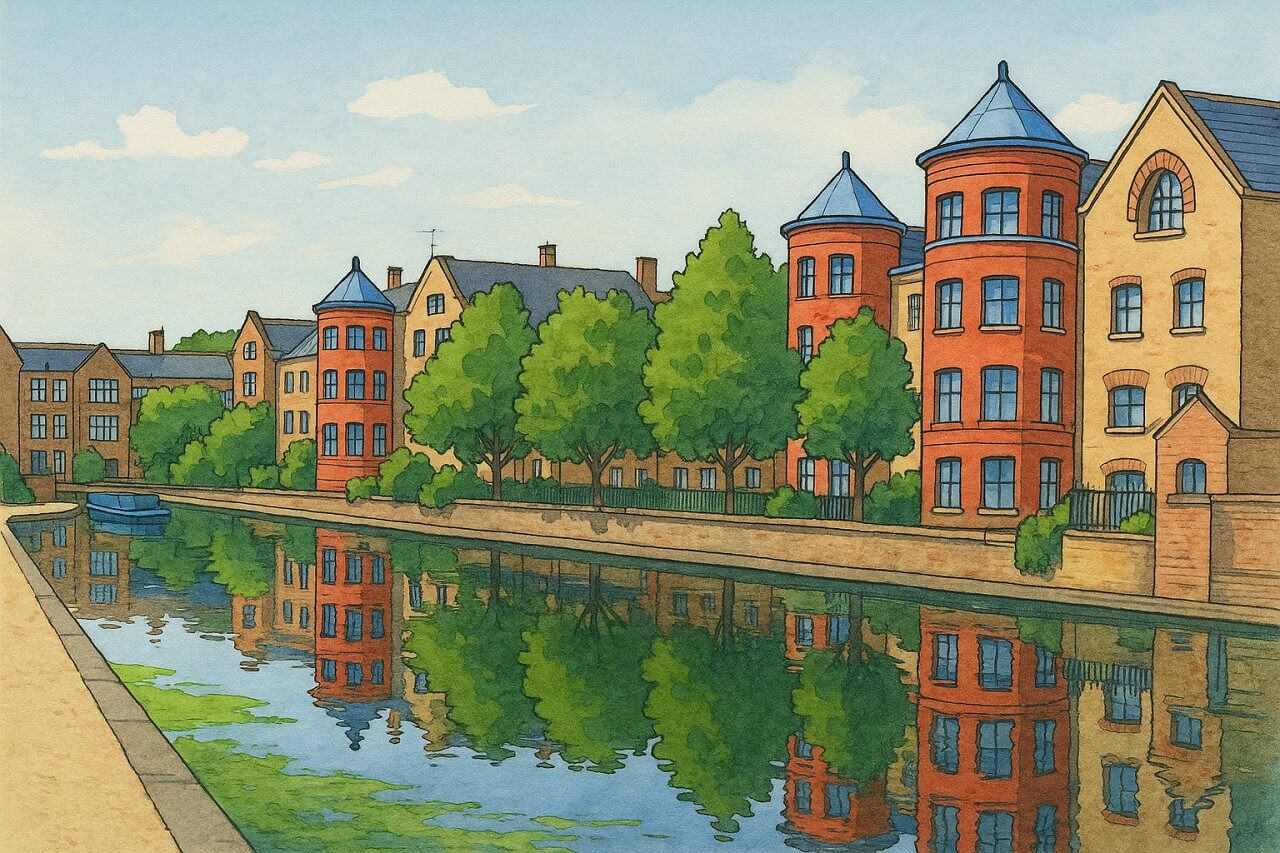
Painting of Canals of London (View image in full size)

Page Details
This page was created on 3 May 2025. Hi, my name is Timothy and created it from my research, for my own entertainment, knowledge and to satisfy my curiosity. I am providing the information to you in good faith and hope it is useful. I try to get the details as accurate as possible. I also try to update the page whenever I stumble on new details. So this and all my other pages are perpetual work in progress. If you discover any error, please politely inform me, pointing out where the error lies, and I will correct it as soon as possible. Your helpfulness will keep this page accurate, relevant and helpful to those who need the information.Moving to London?
New to London and need a place to live? Read our Renting A Flat Guide. This guide covers everything you need to know about renting a flat in London, from viewing to signing.Streets of London
Come, let's explore and discover the streets of London together! Listed here afre the Streets of London that I have documented. Dive in and discover!Map of Streets in London
View all the streets that I have documented on Google Maps in this Map of Streets in London.Want to share your London travel experiences or get tips from fellow travellers?
Join the London Travel Tips Facebook GroupMore information for visiting London
Here are some related articles to help you get to know London better.- Cost of Living in London: Discover the true cost of living in London, including housing, transport, groceries, and more - plus tips for budgeting in one of the world's most expensive cities.
- Driving in London: Planning to drive in London? Learn about roads, car rentals, parking, tolls, and key tips for tourists and visitors from outside the capital.
- Driving Tips for Visiting London: Thinking of driving to London? Discover the best times to travel, congestion tips, parking apps, breakdown help, and petrol advice for a smoother journey.
- Evolution of London's Streets: Discover the fascinating history of how London's streets developed from ancient footpaths to today's complex network of roads across the capital.
- History of Immigration to London: Discover the rich history of immigration to London, from Huguenots to Bangladeshis, and how diverse communities have shaped the city's vibrant identity.
- How Big Is London Compared to Other World Cities?
- How London's Streets Measure Up: A Global Comparison of Road Widths
- How Streets of London are Named: Discover how London streets get their names, who decides them, and how historic, political, and public influences shape street naming in the capital.
- How the Grosvenor Family Came to Own Much of Mayfair, Belgravia and Pimlico: Explore how the Grosvenor family came to own much of Mayfair, Belgravia, and Pimlico, and learn about their historical connection (or lack thereof) with the British royal family and government.
- Living and working in London
- London's Quiet Collapse: How Living Standards Fell as Costs Skyrockted (1975-2025): Explore how London residents endured rising costs and falling living standards from 1975 to 2025 - from rocketing rents to wage stagnation and inflation.
- Marvel of the London Underground: Discover the history, challenges, and triumphs of the London Underground - the world's first underground railway and a vital transport lifeline for the UK capital since 1863.
- Moving to London: Expat Tips for Settling in Westminster: Essential advice for expats moving to London's Westminster: neighborhood insights, cost of living, transportation, housing, healthcare, schools, and tips to help you feel at home in the heart of the city.
- Places in London that aren't pronounced the way they're spelled
- Shopping in London: Discover London's diverse shopping scene
- Taking the bus in London: This is your complete guide to taking the bus when in London.
- The Anglican Faith: A Visitor's Guide to the Church of England: Learn about the Anglican faith and its deep ties to London's landmarks like Westminster Abbey and St Paul's Cathedral.
- Top 10 London Streets Every Visitor Must See: Discover London through its most iconic thoroughfares - 10 streets every visitor must experience. From historic Abbey Road to vibrant Camden High Street, explore culture, shopping, and hidden gems.
- Why are most roads in Central London so narrow? Learn why there are so few multi-lane roads and elevated highways in the heart of the city.
 Latest Pages & Updates
Buy Me A Coffee
If you enjoy the information I provide and want to support the work I do, please buy me a coffee! I appreciate it immensely, thank you so much!
