
Zhenjiang, China
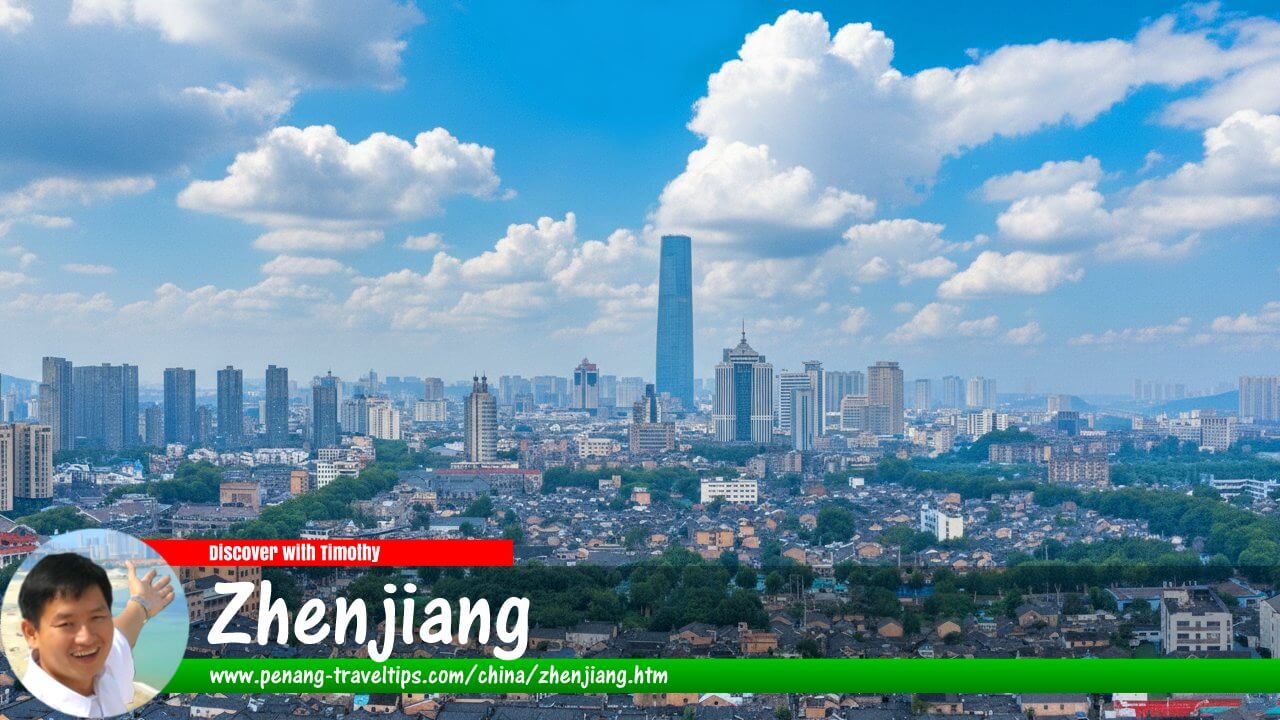 Zhenjiang, China (Photo edited with AI on 18 June 2026)
Zhenjiang (镇江, Zhènjiāng) is a prefecture-level city in Jiangsu Province, China, located on the southern bank of the Yangtze River between Nanjing and Changzhou. As one of the oldest cities in the lower Yangtze region, Zhenjiang has played an important role in Chinese history, commerce, transportation, and culture for more than two thousand years.1 Its strategic position at the intersection of the Yangtze River and the Grand Canal made it one of China's most significant river ports and trading centres. Today, Zhenjiang is known for its historical sites, scenic hills, famous black vinegar, educational institutions, and growing modern economy.
The name "Zhenjiang" literally means "Guarding the River" or "Garrison of the River." The character 镇 (zhèn) means "to guard," "garrison," or "town," while 江 (jiāng) means "river." The name reflects the city's historical role as a strategic military and transportation centre controlling an important section of the Yangtze River. Throughout its long history, the city was known by several names, including Jingkou (京口), before officially becoming known as Zhenjiang during imperial times.2
Quick Facts
- Chinese Name: 镇江
- Pinyin: Zhènjiāng
- Province: Jiangsu
- Location: Southern bank of the Yangtze River
- Area: Approximately 3,847 square kilometres
- Population: About 3.2 million
- Administrative Centre: Runzhou District
- Main Languages: Mandarin, Zhenjiang dialect (Jianghuai Mandarin), Wu dialect influences
- Climate: Humid subtropical climate
- Main Industries: Manufacturing, chemicals, food processing, logistics
- Famous Products: Zhenjiang black vinegar, silk, agricultural products
- Nearest Airport: Changzhou Benniu International Airport
- Major Attractions: Jinshan Temple, Beigu Mountain, Jiaoshan, Xijin Ferry
Geography
Zhenjiang is situated in southern Jiangsu Province, approximately 70 kilometres east of Nanjing and about 220 kilometres west of Shanghai. The city occupies a strategic location where the Yangtze River intersects with the historic Grand Canal, making it an important transportation and commercial hub.3
The terrain consists primarily of river plains interspersed with low hills and small mountains. Unlike many cities in the Yangtze Delta, Zhenjiang is famous for its three scenic hills—Jinshan, Jiaoshan, and Beigushan—which rise prominently from the surrounding landscape and have become symbols of the city.
The Yangtze River forms the city's northern boundary and has played a crucial role in its historical development. Numerous waterways, canals, and lakes contribute to the region's fertile agricultural land and scenic beauty.
Zhenjiang experiences a humid subtropical climate characterised by four distinct seasons. Summers are hot and humid, while winters are cool and occasionally damp. Spring and autumn are generally mild and pleasant, making them the best seasons for sightseeing.4
Languages and Dialects
Mandarin is the official language used in education, government, and public life. However, Zhenjiang's linguistic environment reflects its location between the Jianghuai Mandarin and Wu Chinese cultural regions.
- Zhenjiang Dialect: Traditionally classified as part of Jianghuai Mandarin, with distinctive pronunciation and vocabulary.
- Standard Mandarin: Widely spoken and understood throughout the city.
- Wu Chinese Influences: Due to proximity to Changzhou, Wuxi, and Suzhou, some residents are familiar with Wu dialect varieties.
- Other Chinese Dialects: Migration has brought speakers of Cantonese, Hakka, Min, and other regional dialects.
The traditional Zhenjiang dialect remains part of local cultural identity, although Mandarin has become increasingly dominant among younger generations.
History
Zhenjiang's history stretches back more than 3,000 years. Archaeological evidence indicates that the region was inhabited during the Zhou Dynasty. Due to its strategic location on the Yangtze River, it became an important military and trading centre from an early period.5
During the Three Kingdoms period (220–280 AD), the city, then known as Jingkou, gained military significance as a key defensive position for the Kingdom of Wu. The famous ruler Sun Quan is closely associated with the region.
The construction and expansion of the Grand Canal during the Sui Dynasty greatly enhanced Zhenjiang's importance. The city became a major point where river and canal transportation networks intersected, facilitating the movement of grain, silk, tea, and other commodities between northern and southern China.6
During the Tang, Song, Ming, and Qing dynasties, Zhenjiang flourished as a commercial and cultural centre. Numerous scholars, poets, and officials visited the city, leaving behind literary works and historical monuments.
The city also played an important role during the Opium Wars of the nineteenth century. In 1842, British forces captured Zhenjiang during the First Opium War, an event that contributed to the signing of the Treaty of Nanjing.7
In the twentieth century, industrialisation and modern transportation transformed Zhenjiang into an important manufacturing and logistics centre. Today, it remains one of Jiangsu Province's key economic and cultural cities.
Economy and Products
Zhenjiang possesses a diversified economy that includes manufacturing, food processing, chemicals, logistics, education, and tourism. Its location along the Yangtze River and proximity to major cities such as Nanjing, Shanghai, and Suzhou have contributed significantly to its economic development.8
The city's most famous product is Zhenjiang black vinegar (镇江香醋), one of China's four most famous vinegars. Produced using traditional fermentation methods, it is known for its rich aroma, balanced acidity, and slightly sweet flavour. Zhenjiang vinegar has become synonymous with the city and is exported throughout China and overseas.9
Manufacturing industries include machinery, electrical equipment, automotive components, shipbuilding materials, chemicals, and new technologies. Industrial parks throughout the municipality attract domestic and foreign investment.
Agriculture remains important in surrounding rural areas, producing rice, wheat, rapeseed, vegetables, and freshwater fish. The fertile lands of the Yangtze Delta support intensive agricultural production.
Tourism also contributes significantly to the economy, with visitors attracted by the city's historical landmarks, temples, scenic hills, and cultural heritage.
How to Go There
By Air
Zhenjiang does not have its own major commercial airport. The nearest airport is Changzhou Benniu International Airport, located approximately 60 kilometres southeast of the city centre.
The airport offers flights to major Chinese cities including Beijing, Guangzhou, Shenzhen, Chengdu, Chongqing, Xi'an, Kunming, and Harbin. Airlines serving the airport include Air China, China Eastern Airlines, China Southern Airlines, Shenzhen Airlines, Spring Airlines, and other domestic carriers.10
Additional options include Nanjing Lukou International Airport, approximately 100 kilometres west of Zhenjiang, offering extensive domestic and international connections.
By Train
Zhenjiang is well connected by both conventional and high-speed rail services.
- Zhenjiang Railway Station – located near the city centre and serving conventional and high-speed trains.
- Zhenjiang South Railway Station – located in Dantu District and serving high-speed services on the Beijing–Shanghai High-Speed Railway.
- Danyang Railway Station – serving the city's Danyang area.
- Danyang North Railway Station – an important high-speed rail station.
Frequent train services connect Zhenjiang with Shanghai, Nanjing, Suzhou, Wuxi, Changzhou, Hangzhou, Beijing, Tianjin, Wuhan, and many other cities.
By Long-Distance Bus
Major bus terminals include Zhenjiang Passenger Transport Centre and South Bus Station. Long-distance coaches operate throughout Jiangsu Province and neighbouring regions.
Local Transportation
Zhenjiang offers a variety of transportation options for residents and visitors.
- Taxis: Widely available throughout the city.
- E-hailing Services: Didi Chuxing is commonly used for convenient transportation.
- Public Buses: Extensive bus networks connect urban districts and suburban areas.
- Public Bicycles: Bicycle-sharing systems are available in many locations.
- E-bikes: Popular for short-distance travel.
- Ferries: Ferry services across sections of the Yangtze River remain available in certain areas.
Zhenjiang currently does not have a metro, MRT, LRT, or subway system. Traditional trishaws, rickshaws, and tuk-tuks are generally not part of the city's transportation network.
Tourist Attractions
1. Jinshan Temple (金山寺)
The most famous landmark in Zhenjiang, Jinshan Temple is a historic Buddhist temple associated with the legendary tale of the White Snake. The temple sits atop Jinshan Hill and offers panoramic views of the city and river.11
2. Beigu Mountain (北固山)
This scenic hill overlooking the Yangtze River is famous for its historical significance and literary associations. It was celebrated in the writings of many classical Chinese poets.
3. Jiaoshan (焦山)
Located on an island in the Yangtze River, Jiaoshan features temples, gardens, calligraphy collections, and peaceful natural scenery.
4. Xijin Ferry Ancient Street
This well-preserved historic district showcases traditional architecture, stone-paved streets, cultural relics, and museums reflecting Zhenjiang's commercial history.
5. Zhenjiang Museum
Housed in former British consular buildings, the museum displays archaeological artefacts, local history exhibits, and cultural treasures.
6. Mengxi Garden
This historic garden is associated with the renowned Song Dynasty scientist Shen Kuo, author of the influential work Dream Pool Essays.
7. Nanshan Scenic Area
A large natural park featuring forests, temples, lakes, hiking trails, and scenic viewpoints.
8. Danyang Glasses City
Located within Zhenjiang Municipality, Danyang is famous as one of the world's largest centres for eyeglass manufacturing and retailing.
9. Yangtze River Riverside Park
This modern waterfront area offers walking paths, recreational facilities, gardens, and excellent river views.
10. Chinese Vinegar Culture Museum
Dedicated to Zhenjiang's most famous product, the museum explains the history, production methods, and cultural significance of Chinese vinegar-making traditions.
Zhenjiang, China is  the Map of Cities in China
References
- Encyclopaedia Britannica – Zhenjiang
- Wikipedia – Zhenjiang
- Travel China Guide – Zhenjiang
- Climate Information for Zhenjiang
- Encyclopaedia Britannica – Jiangsu History
- UNESCO – Grand Canal
- Encyclopaedia Britannica – First Opium War
- Zhenjiang Municipal Government
- Zhenjiang Vinegar
- Changzhou Benniu International Airport
- Historic Sites of Zhenjiang
Page Details
This page was created/modified on 18 June 2026. Hi, my name is Timothy and created it from my research, for my own entertainment, knowledge and to satisfy my curiosity. I am providing the information to you in good faith and hope it is useful. I try to get the details as accurate as possible. I also try to update the page whenever I stumble on new details. So this and all my other pages are perpetual work in progress. If you discover any error, please politely inform me, pointing out where the error lies, and I will correct it as soon as possible. Your helpfulness will keep this page accurate, relevant and helpful to those who need the information.