
Changzhou, China
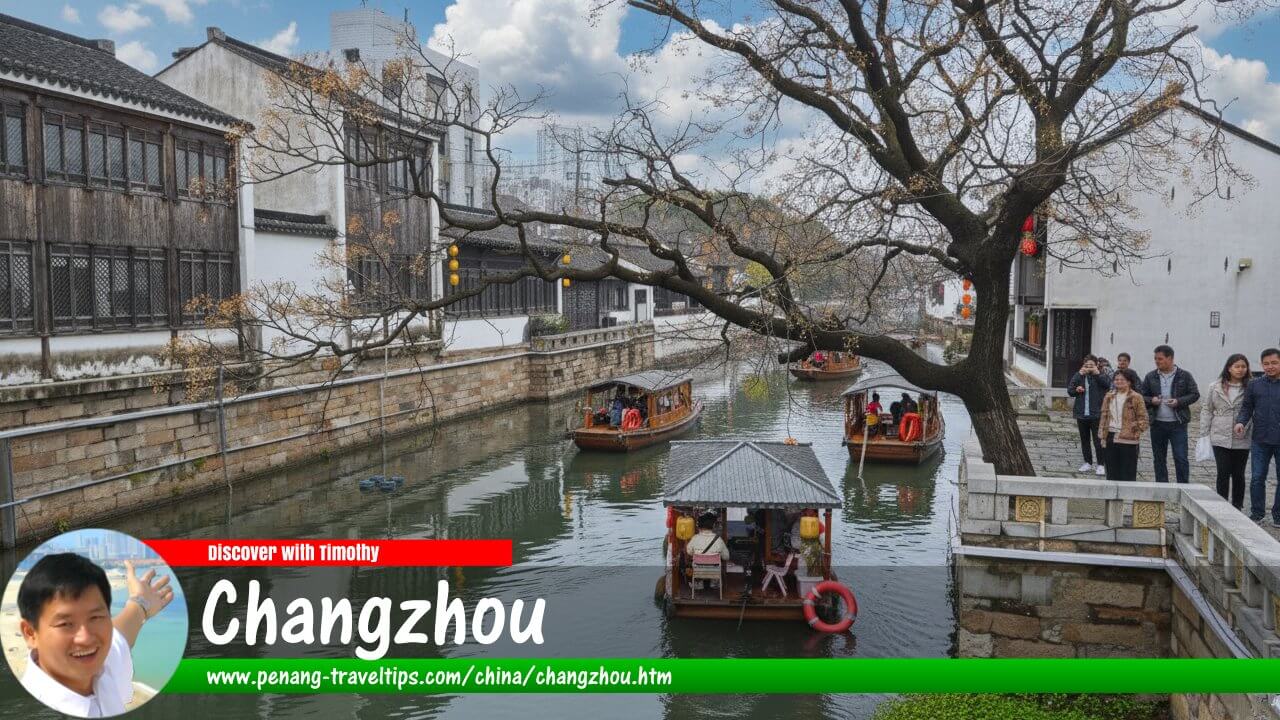 Changzhou, China (Photo edited with AI on 18 June 2026)
Changzhou (常州, Chángzhōu) is a prefecture-level city in southern Jiangsu Province, China, situated in the heart of the Yangtze River Delta between Nanjing and Shanghai. Renowned for its long history, strategic location along the Grand Canal, and strong manufacturing sector, Changzhou has evolved from an ancient canal city into one of China's most prosperous and technologically advanced urban centres.1 Today, the city is known for its modern industries, educational institutions, cultural heritage, and high quality of life.
The name "Changzhou" literally means "Regular Prefecture" or "Constant Prefecture." The city acquired the name during the Sui Dynasty when administrative reforms reorganised territories across China. The character 常 (cháng) means "constant" or "regular," while 州 (zhōu) refers to a prefecture or administrative region. Over the centuries, the name remained unchanged, reflecting the city's long-standing importance as an administrative and commercial centre in the lower Yangtze region.2
Quick Facts
- Chinese Name: 常州
- Pinyin: Chángzhōu
- Province: Jiangsu
- Location: Southern Jiangsu, Yangtze River Delta
- Area: Approximately 4,385 square kilometres
- Population: About 5.4 million
- Administrative Centre: Xinbei District
- Main Languages: Mandarin, Changzhou Wu dialect
- Climate: Humid subtropical climate
- Main Industries: Manufacturing, renewable energy, electronics, machinery
- Famous Products: Solar panels, machinery, textiles, combs
- Airport: Changzhou Benniu International Airport
- Major Attractions: China Dinosaur Park, Tianning Temple, Hongmei Park, Grand Canal
Geography
Changzhou is located in southern Jiangsu Province within the highly developed Yangtze River Delta region. It lies approximately midway between Nanjing and Shanghai and borders Wuxi to the east, Nanjing to the west, and the Yangtze River to the north.3
The city occupies a largely flat alluvial plain formed by the Yangtze River and its tributaries. Numerous rivers, lakes, canals, and waterways crisscross the landscape, contributing to the region's agricultural productivity and transportation network.
One of the city's most important geographical features is the ancient Grand Canal, which passes through Changzhou and has facilitated trade and transportation for more than a thousand years. The canal remains a significant cultural and economic landmark.4
Changzhou experiences a humid subtropical climate characterised by four distinct seasons. Summers are hot and humid, while winters are cool and occasionally damp. Spring and autumn are generally mild and pleasant, making them popular seasons for tourism.5
Languages and Dialects
Mandarin is the official language used in education, government, media, and public life. However, many local residents also speak the traditional Changzhou dialect.
- Changzhou Dialect (常州话): A variety of the Wu Chinese language family, closely related to dialects spoken in Suzhou, Wuxi, and Shanghai.
- Standard Mandarin: Widely spoken and understood throughout the city.
- Other Chinese Dialects: Due to migration and economic development, dialects such as Cantonese, Hakka, and Min may also be heard among migrant communities.
The Changzhou dialect remains an important part of local cultural identity, although Mandarin has become increasingly dominant among younger generations.
History
The area around Changzhou has been inhabited for more than 3,000 years. Archaeological discoveries indicate that ancient settlements existed here during the Zhou Dynasty. The city's strategic location along waterways contributed to its early development as a trading centre.6
During the Qin and Han dynasties, the region became integrated into China's imperial administrative system. Agriculture, trade, and handicrafts flourished due to fertile land and access to river transportation.
The construction and expansion of the Grand Canal during the Sui and Tang dynasties transformed Changzhou into a major commercial hub. Goods such as grain, silk, tea, and ceramics were transported through the city, linking northern and southern China.4
Throughout the Song, Yuan, Ming, and Qing dynasties, Changzhou became known for scholarship, education, and commerce. Numerous scholars, officials, and intellectuals originated from the city, contributing to its reputation as a centre of learning.
During the nineteenth and twentieth centuries, Changzhou experienced industrialisation and modernisation. Textile mills, machinery factories, and transportation infrastructure stimulated economic growth. Following China's economic reforms beginning in 1978, the city emerged as one of Jiangsu's most important manufacturing centres.7
Today, Changzhou is a modern city with a diversified economy, advanced infrastructure, and strong connections to the broader Yangtze River Delta economic region.
Economy and Products
Changzhou is one of China's leading manufacturing centres and plays an important role in Jiangsu Province's economy. The city specialises in machinery, electronics, transportation equipment, new materials, and industrial technology.8
In recent years, Changzhou has gained international recognition for its renewable energy sector, particularly solar photovoltaic manufacturing. Several major solar technology companies operate production facilities in the city, making it an important hub for China's green energy industry.
Advanced manufacturing industries include robotics, precision machinery, rail transportation equipment, medical devices, and automotive components. Industrial parks throughout the city attract domestic and international investment.
Traditional industries remain important as well. Changzhou has long been known for textile production, silk products, and decorative combs. Changzhou combs are considered one of the city's traditional handicrafts and are popular souvenirs.9
The service sector, including finance, logistics, education, healthcare, and tourism, continues to expand alongside industrial development.
How to Go There
By Air
Changzhou is served by Changzhou Benniu International Airport, located approximately 18 kilometres northwest of the city centre. The airport provides domestic flights to major Chinese cities including Beijing, Guangzhou, Shenzhen, Chengdu, Chongqing, Xi'an, Kunming, and Harbin.
Airlines operating at the airport include China Eastern Airlines, China Southern Airlines, Air China, Shenzhen Airlines, Sichuan Airlines, and Spring Airlines. International and regional services may also operate depending on seasonal schedules.10
By Train
Changzhou is well connected by China's extensive railway network.
- Changzhou Railway Station – located near the city centre and serving both conventional and high-speed rail services.
- Changzhou North Railway Station – located in Xinbei District and serving high-speed trains on the Beijing–Shanghai High-Speed Railway.
- Qishuyan Railway Station – serving regional passenger and freight traffic.
High-speed trains connect Changzhou with Shanghai, Nanjing, Suzhou, Wuxi, Hangzhou, Beijing, Tianjin, Wuhan, and many other major cities.
By Long-Distance Bus
Major bus terminals include Changzhou Passenger Transport Centre, Wujin Bus Station, and Jintan Bus Station. Long-distance coaches connect the city with destinations throughout Jiangsu Province and neighbouring regions.
Local Transportation
Changzhou has a comprehensive public transportation system that makes travelling around the city convenient and efficient.
- Metro: Changzhou Metro currently operates multiple subway lines connecting major districts, commercial centres, and transportation hubs.
- Taxis: Widely available throughout the city.
- E-hailing Services: Didi Chuxing is the most commonly used ride-hailing platform.
- Public Buses: Extensive bus routes cover urban and suburban areas.
- Public Bicycles: Bicycle-sharing systems are available in many districts.
- E-bikes: Popular for short-distance travel.
Traditional trishaws, rickshaws, and tuk-tuks are generally not part of Changzhou's modern transportation network.
Tourist Attractions
1. China Dinosaur Park
This large theme park is one of Changzhou's most famous attractions. It combines amusement rides, educational exhibits, dinosaur-themed entertainment, and family-friendly activities.11
2. Tianning Temple
One of China's most important Buddhist temples, Tianning Temple features impressive architecture, beautiful gardens, and the towering Tianning Pagoda, one of the tallest Buddhist pagodas in the world.
3. Hongmei Park
Located adjacent to Tianning Temple, Hongmei Park is known for its lakes, pavilions, gardens, and seasonal flowers. It is one of the city's most popular recreational areas.
4. Changzhou Grand Canal Section
The city's section of the Grand Canal showcases centuries of commercial history and cultural heritage associated with China's famous waterway.
5. Yancheng Archaeological Site
This ancient city site dates back more than 2,500 years and preserves important remains from the Spring and Autumn Period.
6. Yancheng Wild Animal World
A large wildlife park featuring animals from around the world, safari experiences, and educational programmes.
7. Chunqiu Yancheng Tourist Area
This cultural theme park recreates aspects of life during the Spring and Autumn Period through historical exhibits and performances.
8. Dongpo Park
Named after the famous Song Dynasty poet Su Dongpo, this scenic park features historical monuments, gardens, and waterways.
9. Tianmu Lake Scenic Area
Located in nearby Liyang, Tianmu Lake offers beautiful freshwater scenery, forested hills, hot springs, and outdoor recreation opportunities.
10. Nanshan Bamboo Sea
This vast bamboo forest in Liyang County is famous for its natural beauty, hiking trails, mountain scenery, and tranquil environment.
Changzhou, China is  the Map of Cities in China
References
- Encyclopaedia Britannica – Changzhou
- Wikipedia – Changzhou
- Travel China Guide – Changzhou
- UNESCO – Grand Canal
- Climate Information for Changzhou
- Encyclopaedia Britannica – Jiangsu History
- China Daily – Changzhou Development
- Changzhou Municipal Government
- Changzhou Comb Tradition
- Changzhou Benniu International Airport
- China Dinosaur Park
Page Details
This page was created/modified on 18 June 2026. Hi, my name is Timothy and created it from my research, for my own entertainment, knowledge and to satisfy my curiosity. I am providing the information to you in good faith and hope it is useful. I try to get the details as accurate as possible. I also try to update the page whenever I stumble on new details. So this and all my other pages are perpetual work in progress. If you discover any error, please politely inform me, pointing out where the error lies, and I will correct it as soon as possible. Your helpfulness will keep this page accurate, relevant and helpful to those who need the information.