
Wuxi, China
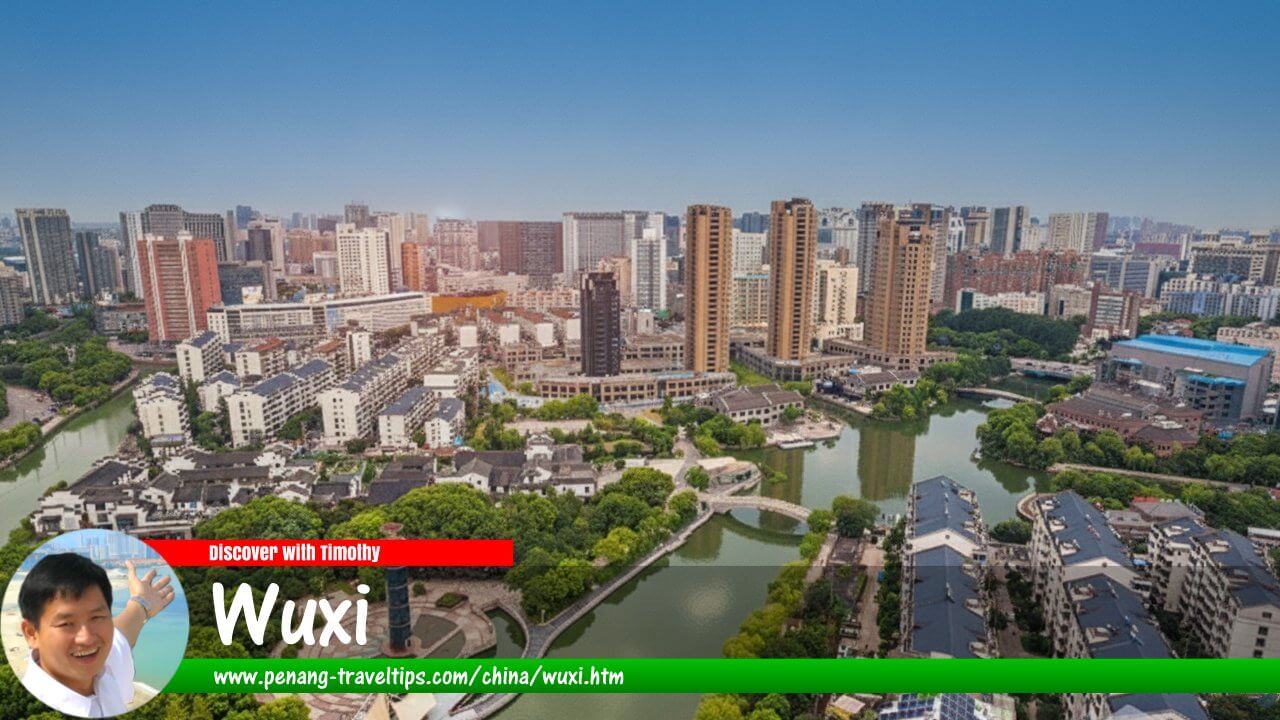 Wuxi, China (Photo edited with AI on 18 June 2026)
Wuxi (无锡, Wúxī) is a major prefecture-level city in southern Jiangsu Province, China, located in the heart of the Yangtze River Delta. Situated on the shores of Lake Tai (Taihu) and along the ancient Grand Canal, Wuxi has long been an important cultural, commercial, and industrial hub in eastern China. Today, it is known for its strong manufacturing base, scenic waterways, historic towns, and proximity to Shanghai, making it one of the most developed and livable cities in the region.1
Quick Facts
- English Name: Wuxi
- Chinese Name: 无锡
- Pinyin: Wúxī
- Province: Jiangsu
- Location: Southern Jiangsu, China
- Area: Approximately 4,600 square kilometres
- Population: About 7.5 million
- Major Lake: Lake Tai (Taihu)
- Main River: Grand Canal (Beijing–Hangzhou)
- Administrative Status: Prefecture-level city
- Known For: Industry, canals, Taihu Lake scenery, silk production
- Main Dialect: Wu Chinese (Wuxi dialect)
- Major Airport: Sunan Shuofang International Airport
- Major Railway Stations: Wuxi Railway Station, Wuxi East Station
Name and Etymology
The name Wuxi is written as 无锡 in Chinese and pronounced Wúxī in Mandarin. The literal meaning of the name is “without tin.” According to historical accounts, the region was once believed to have had tin deposits during ancient times, but these were eventually exhausted. When the tin resources were depleted, the area was renamed “Wuxi,” symbolising the absence of tin.2
Although the name refers to mineral resources, Wuxi’s historical importance is far more closely tied to agriculture, waterways, trade, and cultural development than mining. Its position along the Grand Canal helped shape its identity as a prosperous and connected city.
Geography
Wuxi is located in the southern part of Jiangsu Province, bordering Suzhou to the east, Changzhou to the west, and Lake Tai (Taihu) to the south. It lies within the Yangtze River Delta, one of the most economically developed regions in China.3
The city’s geography is characterised by flat plains, dense river networks, and abundant waterways. The Grand Canal, one of the world’s oldest and longest man-made waterways, passes directly through Wuxi, connecting it historically to Beijing in the north and Hangzhou in the south.
Lake Tai, one of China’s largest freshwater lakes, forms the southern boundary of Wuxi. The lake’s scenic beauty, wetlands, and islands contribute significantly to tourism and ecological diversity in the region.
Wuxi experiences a humid subtropical climate with four distinct seasons. Summers are hot and humid, winters are cool but relatively mild, and rainfall is distributed throughout the year. The climate supports agriculture as well as lush vegetation in parks and surrounding hills.
Languages and Dialects
Mandarin is widely spoken in education, government, and business in Wuxi. However, the traditional local language is the Wuxi dialect, which belongs to the Wu Chinese language family.
The Wuxi dialect is closely related to those spoken in nearby cities such as Suzhou and Shanghai, but it has its own distinctive pronunciation and vocabulary. It is primarily used in informal communication among local residents, especially older generations.4
History
Wuxi has a history spanning more than 3,000 years. Archaeological findings indicate human settlement in the region during the Neolithic period, particularly associated with the Liangzhu culture.
During the Spring and Autumn Period (770–476 BCE), Wuxi was part of the Wu State, a powerful regional kingdom in ancient China. The area developed as an agricultural and strategic region due to its fertile land and access to waterways.
In the Sui and Tang dynasties, the construction and expansion of the Grand Canal significantly boosted Wuxi’s importance as a transportation and trade hub. Goods such as rice, silk, and textiles were transported through the city.
During the Ming and Qing dynasties, Wuxi became one of China’s wealthiest regions, known for its flourishing silk industry, rice production, and merchant families. Many influential business clans emerged from the city during this period.
In the early 20th century, Wuxi was one of the first inland Chinese cities to industrialise. Textile mills, flour mills, and machinery factories were established, laying the foundation for its modern industrial economy.
Since China’s economic reforms beginning in 1978, Wuxi has developed rapidly into a modern manufacturing and technology centre, while also preserving its historical and cultural heritage.
Economy and Products
Wuxi is one of the most economically advanced cities in China, with a diversified economy that includes manufacturing, electronics, biotechnology, finance, and tourism.
The city is part of the Yangtze River Delta economic zone, which is a major driver of China’s industrial and technological development. Wuxi is particularly strong in electronics, precision machinery, and new energy industries such as solar power.5
Traditional industries such as silk production and textiles remain important. Wuxi silk has been known for centuries for its fine quality and craftsmanship.
Agriculture in surrounding rural areas produces rice, freshwater fish, tea, and fruits. Lake Tai is especially famous for its freshwater produce, including whitebait, crab, and shrimp.
The service sector, including finance, tourism, and logistics, has also grown significantly, making Wuxi a well-balanced modern economy.
How to Go There
By Air
Sunan Shuofang International Airport (WUX) serves Wuxi and is located approximately 14 kilometres southeast of the city centre.6 The airport offers domestic and limited international flights.
Airlines operating at Wuxi Airport include China Eastern Airlines, China Southern Airlines, Spring Airlines, and Xiamen Airlines. Common destinations include Beijing, Guangzhou, Shenzhen, Chengdu, Xi’an, and some regional international destinations in East and Southeast Asia.
By Train
Wuxi is well connected by high-speed rail. The main stations are Wuxi Railway Station in the city centre and Wuxi East Railway Station, which handles many high-speed services.
High-speed trains connect Wuxi with Shanghai (about 30 minutes), Nanjing, Hangzhou, Suzhou, Beijing, and other major Chinese cities, making it one of the most accessible cities in the region.
By Bus
Wuxi has several long-distance bus terminals providing regional and interprovincial connections to nearby cities such as Suzhou, Changzhou, Nantong, and Hangzhou.
How to Travel Locally
Wuxi has a modern and efficient urban transportation system.
- Metro: Wuxi Metro system serves major urban districts and continues to expand.
- Buses: An extensive public bus network covers the entire city.
- Taxis: Widely available and metered.
- Ride-hailing: Didi and other apps are commonly used.
- Bicycles: Shared bike systems are popular for short-distance travel.
Unlike some smaller cities, Wuxi does have a modern metro system, making it convenient to travel across the city quickly.
Tourist Attractions
1. Lake Tai (Taihu Lake)
One of China’s largest freshwater lakes, known for its scenic islands, fishing culture, and beautiful sunsets.
2. Yuantouzhu (Turtle Head Isle)
A scenic peninsula on Lake Tai famous for cherry blossoms in spring and panoramic lake views.
3. Lingshan Grand Buddha
A massive bronze Buddha statue and spiritual complex, one of the most important Buddhist sites in China.
4. Nanchan Temple
An ancient Buddhist temple located in the city centre, surrounded by a lively traditional market street.
5. HuiShan Ancient Town
A well-preserved historic town featuring traditional architecture, canals, and cultural relics.
6. Grand Canal Scenic Area
Sections of the historic Beijing–Hangzhou Grand Canal that pass through Wuxi, offering boat rides and cultural views.
7. Meiyuan Garden
A famous plum blossom garden, especially popular during early spring when flowers bloom.
8. Donglin Academy
A historic Confucian academy dating back to the Song Dynasty, associated with scholars and classical learning.
Wuxi, China is  the Map of Cities in China
References
- Encyclopaedia Britannica – Wuxi
- Wuxi Municipal Government
- Jiangsu Provincial Government
- Ethnologue – Wu Chinese dialects
- The State Council of China
- Travel China Guide – Wuxi
Page Details
This page was created/modified on 18 June 2026. Hi, my name is Timothy and created it from my research, for my own entertainment, knowledge and to satisfy my curiosity. I am providing the information to you in good faith and hope it is useful. I try to get the details as accurate as possible. I also try to update the page whenever I stumble on new details. So this and all my other pages are perpetual work in progress. If you discover any error, please politely inform me, pointing out where the error lies, and I will correct it as soon as possible. Your helpfulness will keep this page accurate, relevant and helpful to those who need the information.