
Suzhou, China
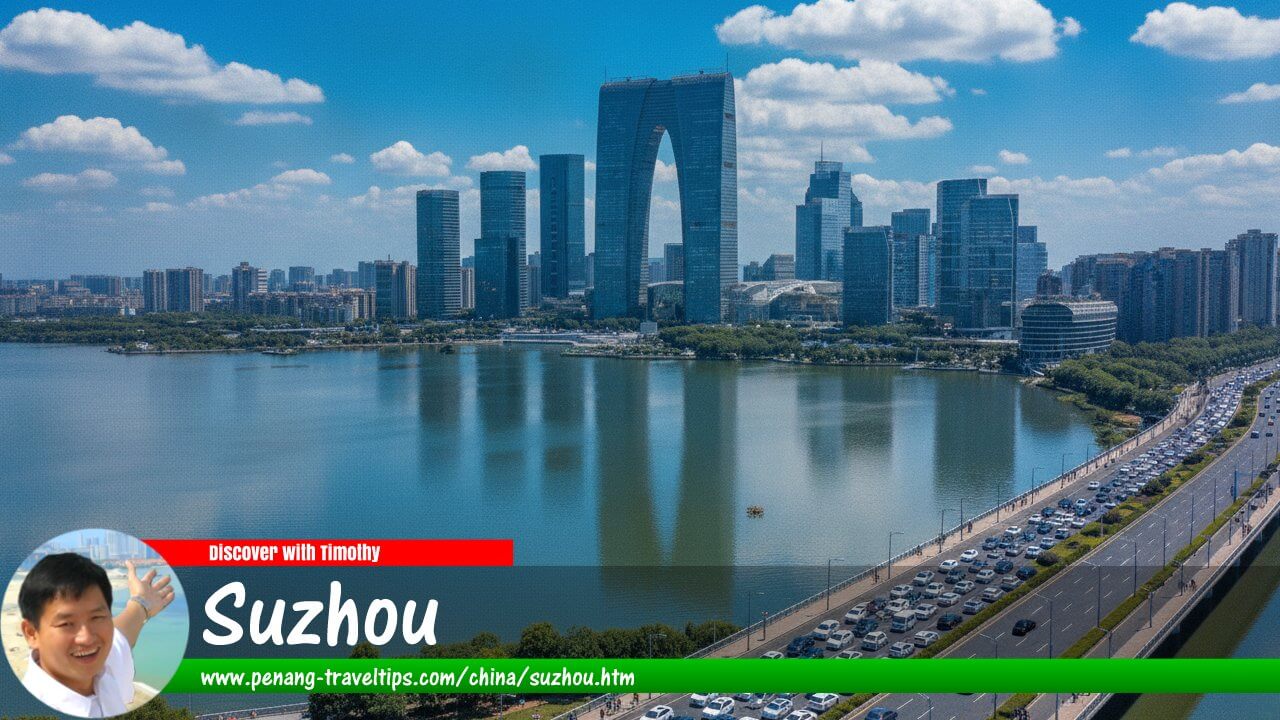 Suzhou, China (Photo edited with AI on 18 June 2026)
Suzhou (苏州, Sūzhōu) is one of China's most famous historic cities, located in southeastern Jiangsu Province near Shanghai. Renowned for its elegant classical gardens, picturesque canals, ancient cultural traditions, and prosperous economy, Suzhou has often been described as the "Venice of the East." For more than 2,500 years, the city has been an important centre of commerce, craftsmanship, culture, and transportation. Today, Suzhou combines its rich historical heritage with modern industrial development, making it one of China's most prosperous and attractive cities.1
Quick Facts
- English Name: Suzhou
- Chinese Name: 苏州
- Pinyin: Sūzhōu
- Province: Jiangsu
- Location: Eastern China
- Population: Approximately 12–13 million
- Area: About 8,657 square kilometres
- Founded: 514 BCE
- Known For: Classical gardens, canals, silk production, and economic development
- UNESCO World Heritage Site: Classical Gardens of Suzhou
- Major Waterway: Grand Canal
- Nearest Major Airport: Sunan Shuofang International Airport
- Climate: Humid subtropical
Name and Origin
The name Suzhou is written in Chinese as 苏州 and romanized in pinyin as Sūzhōu. The city's modern name dates back to the Sui Dynasty when it became the administrative centre of Su Prefecture. The character "Su" is believed to have originated from the ancient state of Wu and local geographical features, while "zhou" means prefecture or administrative region. Throughout history, Suzhou has also been known by poetic names such as "Gusu" (姑苏), which appears frequently in Chinese literature and poetry.2
Geography
Suzhou is situated in the Yangtze River Delta, one of the most economically developed and densely populated regions in China. The city lies approximately 100 kilometres west of Shanghai and about 200 kilometres southeast of Nanjing, the capital of Jiangsu Province.3
The terrain around Suzhou is generally flat, with numerous rivers, lakes, canals, and wetlands. Water has played a defining role in the city's development for centuries. The famous Grand Canal, one of the world's longest man-made waterways, passes through Suzhou and contributed greatly to its historical prosperity.
One of the city's most notable geographical features is Tai Lake (Taihu), one of China's largest freshwater lakes. The lake provides scenic beauty, freshwater resources, and supports local agriculture and tourism. The region experiences a humid subtropical climate characterized by hot, humid summers and cool winters. Rainfall is distributed throughout the year, supporting lush vegetation and productive farmland.
Languages and Dialects
Mandarin Chinese is the official language used in government, education, and business throughout Suzhou. However, many local residents also speak the Suzhou dialect, which belongs to the Wu Chinese language group.
The Suzhou dialect is considered one of the most representative and prestigious varieties of Wu Chinese. Historically, it served as an influential cultural and linguistic standard within the lower Yangtze region. The dialect differs significantly from Mandarin in pronunciation, vocabulary, and grammar.
Other Wu dialects are also spoken in surrounding towns and districts. While younger generations increasingly use Mandarin in daily life, the local dialect remains an important symbol of regional identity and cultural heritage.4
History
Suzhou has a history stretching back more than 2,500 years. The city was founded in 514 BCE by King Helü of the State of Wu during the Spring and Autumn Period. It served as the capital of the Wu Kingdom and became a major political and military centre in ancient China.5
Following the unification of China under the Qin Dynasty, Suzhou continued to develop as an administrative and commercial centre. During the Tang and Song dynasties, improvements to the Grand Canal transformed the city into one of China's wealthiest urban centres.
By the Ming and Qing dynasties, Suzhou had become famous for silk production, scholarship, garden architecture, and artistic achievements. Wealthy merchants and officials built elaborate private gardens that blended architecture, water features, rock formations, and vegetation into harmonious landscapes.
The city also became a centre for literature, painting, embroidery, opera, and handicrafts. During this period, Suzhou earned a reputation as one of the most beautiful and cultured cities in China.
In the modern era, Suzhou underwent rapid industrialization and economic reform. The establishment of the Suzhou Industrial Park in cooperation with Singapore helped transform the city into a major manufacturing and technology hub. Today, Suzhou is among China's most economically successful cities while continuing to preserve its historical heritage.
Economy and Products
Suzhou has one of the strongest economies in China. Its strategic location near Shanghai, extensive transportation infrastructure, and business-friendly environment have attracted substantial domestic and foreign investment.
The city is a major centre for electronics manufacturing, information technology, biotechnology, precision engineering, and advanced manufacturing. Numerous multinational corporations have established facilities in Suzhou's industrial parks and development zones.
Historically, Suzhou was famous for silk production, and silk remains one of its most celebrated traditional products. Suzhou silk has been prized for centuries for its quality, softness, and craftsmanship. The city is also renowned for silk embroidery, known as Su Embroidery, one of China's four great embroidery traditions.6
Other notable products include handicrafts, jade carvings, traditional musical instruments, tea, and specialty foods. Tourism also contributes significantly to the local economy, attracting millions of visitors annually to the city's gardens, canals, and historic districts.
How to Go There
By Air
Suzhou does not have a major international airport within its city centre, but it is served by nearby airports.
- Sunan Shuofang International Airport is located approximately 30 kilometres from central Suzhou in neighboring Wuxi. Airlines operate flights to major Chinese cities as well as selected international destinations.
- Shanghai Hongqiao International Airport is about 80 kilometres east of Suzhou and provides extensive domestic and regional connections.
- Shanghai Pudong International Airport is approximately 120 kilometres away and serves numerous international destinations worldwide.
By Rail
Suzhou is one of the best-connected cities in China by rail. Major railway stations include:
- Suzhou Railway Station – located near the historic city centre.
- Suzhou North Railway Station – serves many high-speed rail services.
- Suzhou Industrial Park Railway Station – located in the eastern part of the city.
- Suzhou New District Railway Station – serves western districts.
High-speed trains connect Suzhou with Shanghai, Nanjing, Beijing, Hangzhou, Wuhan, Guangzhou, and many other cities.
By Long-Distance Bus
Several long-distance bus terminals serve Suzhou. The largest include Suzhou South Bus Station and Suzhou North Bus Station. These provide services to cities and towns throughout Jiangsu Province and neighboring regions.
How to Travel Locally
Suzhou offers a comprehensive transportation network that makes local travel convenient and efficient.
Metro
The Suzhou Rail Transit system consists of multiple subway lines connecting major districts, railway stations, industrial parks, and tourist attractions. The network continues to expand and serves as one of the city's primary transportation modes.
Buses
An extensive public bus network covers virtually all urban and suburban areas. Bus fares are generally affordable and routes are clearly marked.
Taxis
Taxis are widely available throughout the city and can be hailed on the street or booked through mobile applications.
E-Hailing Services
Ride-hailing platforms such as DiDi operate extensively in Suzhou and are popular among residents and visitors.
Bicycles and Bike Sharing
Public bicycle-sharing systems and app-based bike rentals are common. Cycling is particularly enjoyable in historic districts and along canals.
Rickshaws and Tourist Boats
Traditional-style rickshaw tours and canal boat rides are available in some historic areas, providing visitors with a unique perspective of the city's heritage.
Tourist Attractions
Humble Administrator's Garden
The Humble Administrator's Garden is the largest and most famous classical garden in Suzhou. It features elegant pavilions, ponds, bridges, and carefully designed landscapes. It is recognized as a UNESCO World Heritage Site.7
Lingering Garden
The Lingering Garden is celebrated for its sophisticated design, artistic architecture, and harmonious combination of buildings and natural scenery.
Tiger Hill
Tiger Hill is one of Suzhou's most iconic landmarks. The site features historical monuments, ancient tombs, and the leaning Yunyan Pagoda.
Master of the Nets Garden
This compact but beautifully designed classical garden demonstrates the elegance and creativity of traditional Chinese landscape architecture.
Shantang Street
Shantang Street is a historic canal-side district lined with traditional buildings, shops, restaurants, and cultural attractions. It provides visitors with a glimpse into old Suzhou.
Pingjiang Road
Pingjiang Road preserves much of the city's historical atmosphere. Visitors can enjoy canal views, tea houses, traditional residences, and local handicraft shops.
Suzhou Museum
Designed by renowned architect I. M. Pei, Suzhou Museum combines modern architectural elements with traditional Suzhou aesthetics. Its collections include art, archaeology, and cultural artifacts.
Hanshan Temple
Hanshan Temple is one of China's most famous Buddhist temples. It gained literary fame through the Tang Dynasty poem "Mooring by Maple Bridge at Night."
Tongli Water Town
Located within the Suzhou municipality, Tongli is a well-preserved ancient water town featuring canals, stone bridges, and traditional architecture.
Zhouzhuang Water Town
Zhouzhuang is one of China's best-known water towns. Visitors come to admire its ancient canals, Ming- and Qing-era buildings, and picturesque scenery.
Tai Lake Scenic Area
The Tai Lake Scenic Area offers beautiful lake views, islands, gardens, and recreational opportunities. It is particularly popular for sightseeing and photography.
Suzhou, China is  the Map of Cities in China
References
- Encyclopaedia Britannica – Suzhou
- Britannica – History and Name of Suzhou
- Britannica – Geography of Suzhou
- Encyclopaedia Britannica – Wu Language
- UNESCO World Heritage Centre – Classical Gardens of Suzhou
- China.org.cn – Suzhou Embroidery
- UNESCO – Classical Gardens of Suzhou
Page Details
This page was created/modified on 18 June 2026. Hi, my name is Timothy and created it from my research, for my own entertainment, knowledge and to satisfy my curiosity. I am providing the information to you in good faith and hope it is useful. I try to get the details as accurate as possible. I also try to update the page whenever I stumble on new details. So this and all my other pages are perpetual work in progress. If you discover any error, please politely inform me, pointing out where the error lies, and I will correct it as soon as possible. Your helpfulness will keep this page accurate, relevant and helpful to those who need the information.