
Taizhou, Zhejiang Province, China
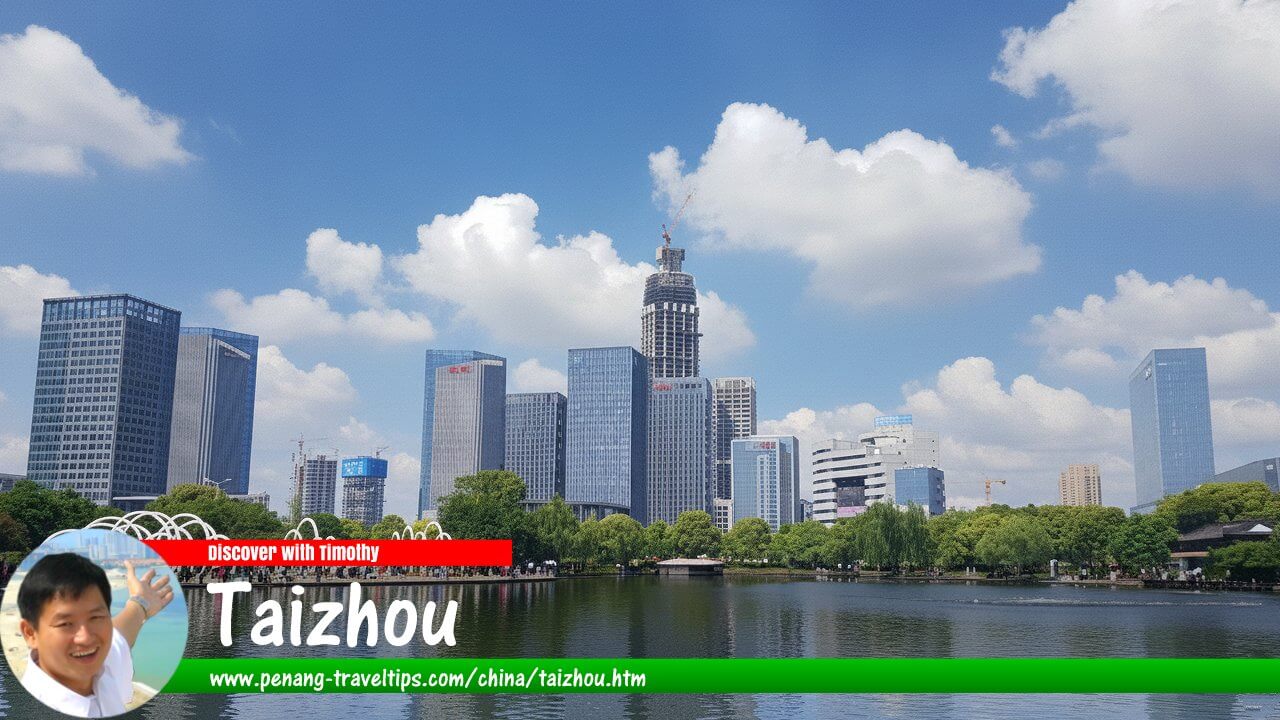 Taizhou, Zhejiang Province, China (Photo edited with AI on 18 June 2026)
Taizhou (台州; Táizhōu) is a prefecture-level city located on the central coast of Zhejiang Province, China. Facing the East China Sea and backed by rugged mountains, Taizhou is one of the most economically dynamic cities in southeastern China. Known for its entrepreneurial culture, manufacturing industries, scenic coastal landscapes, and rich historical heritage, Taizhou has played an important role in maritime trade and regional development for more than a thousand years.1 The city serves as a gateway between Zhejiang’s inland regions and the East China Sea, while its mountains, rivers, islands, and ancient temples attract visitors from across China.
Although it is similarly romanized, Taizhou in Zhejiang Province is written with a different Chinese character from Taizhou (泰州) in Jiangsu Province.
Quick Facts
- English Name: Taizhou
- Chinese Name: 台州
- Pinyin: Táizhōu
- Province: Zhejiang
- Location: Central coast of Zhejiang Province, China
- Population: Approximately 6.6 million
- Area: About 10,050 square kilometres
- Famous For: Manufacturing, entrepreneurship, Tiantai Mountain, coastal scenery
- Climate: Humid subtropical
- Main Industries: Manufacturing, pharmaceuticals, automotive parts, plastics, marine products
- Airport: Taizhou Luqiao Airport
- Major Railway Station: Taizhou Railway Station
Name and Origin
The name Taizhou is written as 台州 in Chinese and romanized as Táizhōu in pinyin. The city's name originated from nearby Tiantai Mountain (天台山), one of China's most famous sacred mountains. Historically, the character "Tai" in the city's name was derived from the mountain's name, while "zhou" refers to an administrative prefecture.2
Taizhou was formally established as an administrative prefecture during the Tang Dynasty. Over time, the city became an important regional centre for trade, agriculture, and maritime activities. The name has remained in use for more than a millennium and reflects the area's close association with Tiantai Mountain and its cultural significance.
Geography
Taizhou occupies a strategic location along the central coastline of Zhejiang Province. It lies south of Ningbo, east of Jinhua, and north of Wenzhou. The city faces the East China Sea and has a coastline stretching hundreds of kilometres, including numerous bays, estuaries, and offshore islands.3
The terrain of Taizhou is highly varied. Mountain ranges dominate much of the western and southern parts of the municipality, while fertile plains and river valleys occupy the central and coastal areas. The Yongning River, Lingjiang River, and several smaller waterways flow through the region before emptying into the sea.
One of the most famous geographical features is Tiantai Mountain, located in Tiantai County. The mountain is renowned for its dramatic peaks, waterfalls, forests, and Buddhist heritage. Other scenic mountain areas include Shenxianju and Kuocang Mountain.
The coastal region contains numerous islands and peninsulas. Yuhuan, now a county-level city under Taizhou's administration, consists partly of islands connected by bridges and causeways. Fishing ports and marine industries contribute significantly to the local economy.
Taizhou experiences a humid subtropical climate. Summers are hot, humid, and influenced by the East Asian monsoon, while winters are generally mild. The city occasionally experiences typhoons during late summer and autumn due to its coastal location.
Languages and Dialects
Mandarin Chinese is the official language used in schools, government offices, and public communications. However, local residents commonly speak dialects belonging to the Wu Chinese language family.4
The Taizhou dialect is part of the Taizhou branch of Wu Chinese and differs significantly from Standard Mandarin in pronunciation, vocabulary, and grammar. Several local variations exist across different districts and counties.
Residents of Tiantai, Linhai, Wenling, Yuhuan, and Sanmen may speak distinct local forms of Wu Chinese. These dialects remain widely used in homes and local communities, although younger generations are increasingly fluent in Mandarin due to education and media exposure.
Because Taizhou is a major manufacturing centre attracting migrants from across China, many other Chinese dialects can also be heard in urban areas.
History
The history of Taizhou dates back more than two thousand years. Archaeological evidence suggests that the region was inhabited during prehistoric times due to its fertile land, abundant water resources, and favourable coastal location.5
During the Qin and Han dynasties, the area became integrated into the imperial administrative system. Agriculture, fishing, and salt production formed the basis of the local economy. The region's rivers and coastline facilitated trade with neighbouring areas.
Taizhou gained greater prominence during the Tang Dynasty when it was established as a prefecture. The city became known for its cultural achievements and religious significance, particularly through the influence of Tiantai Mountain.
Tiantai Mountain is regarded as the birthplace of the Tiantai School of Buddhism, one of the most influential Buddhist traditions in East Asia. Founded by the monk Zhiyi during the sixth century, the school later spread to Korea and Japan, where it influenced the development of Tendai Buddhism.6
During the Song Dynasty, Taizhou prospered through agriculture, maritime trade, handicrafts, and commerce. Ports along the coast connected the city with other parts of China and overseas markets.
The Ming and Qing dynasties saw continued economic development. Defensive structures were constructed to protect coastal communities from pirates, while trade and fishing remained important sources of income.
In modern times, Taizhou underwent industrialization and economic reforms that transformed it into one of China's most successful centres of private enterprise. Local entrepreneurs established thousands of small and medium-sized businesses, creating a unique economic model often referred to as the "Taizhou Model" of development.
Economy and Products
Taizhou is among Zhejiang Province's most prosperous cities and is famous for its entrepreneurial spirit. The city has developed a diversified economy combining manufacturing, services, agriculture, fisheries, and technology industries.7
Manufacturing
Manufacturing forms the backbone of Taizhou's economy. Major products include machinery, automotive components, motorcycles, plastics, moulds, pumps, electrical equipment, and household appliances. Many locally owned companies have achieved national and international success.
Pharmaceutical Industry
Taizhou is one of China's leading pharmaceutical production centres. Numerous companies manufacture medicines, medical equipment, and healthcare products for domestic and international markets.
Marine Products
The city's coastal location supports a thriving fishing industry. Seafood such as fish, shrimp, shellfish, and crabs are harvested from local waters and exported throughout China.
Agriculture
Rice, tea, citrus fruits, vegetables, and bamboo products are important agricultural products. Fertile river valleys and favourable climatic conditions support year-round farming activities.
Private Enterprise
Taizhou is widely recognized for its private-sector economy. Thousands of family-owned businesses and privately operated companies have contributed significantly to local prosperity and innovation.
How to Go There
By Air
Taizhou Luqiao Airport (HYN) serves the city and is located approximately 15 kilometres southeast of the city centre in Luqiao District.8
The airport offers domestic flights operated by airlines such as Air China, China Eastern Airlines, China Southern Airlines, Shenzhen Airlines, XiamenAir, and Sichuan Airlines. Destinations include Beijing, Shanghai, Guangzhou, Shenzhen, Chengdu, Chongqing, Xi'an, Kunming, and many other major Chinese cities.
International travellers typically connect through larger hubs such as Shanghai Pudong International Airport, Hangzhou Xiaoshan International Airport, or Guangzhou Baiyun International Airport.
By Train
Taizhou is connected to China's extensive high-speed railway network. Major railway stations include:
- Taizhou Railway Station – Located in Huangyan District and serving high-speed rail routes.
- Linhai Railway Station – Serving Linhai City and nearby attractions.
- Wenling Railway Station – An important station on the coastal high-speed railway corridor.
- Sanmen County Railway Station – Providing convenient regional connections.
High-speed trains connect Taizhou with Hangzhou, Shanghai, Ningbo, Wenzhou, Fuzhou, Xiamen, Beijing, and many other cities.
By Long-Distance Bus
Several major bus terminals operate throughout Taizhou, including terminals in Jiaojiang, Huangyan, Luqiao, and Wenling. Long-distance services connect the city with destinations across Zhejiang Province and neighboring provinces.
How to Travel Locally
Taxis
Taxis are readily available throughout the urban districts and provide a convenient means of transportation for both residents and visitors.
E-Hailing Services
Ride-hailing platforms such as Didi are widely used. Mobile payment systems make booking and paying for rides simple and efficient.
Public Buses
Taizhou operates an extensive bus network linking residential districts, commercial centres, transportation hubs, and tourist attractions.
Urban Rail Transit
The city operates the Taizhou Rail Transit system, which provides modern urban transportation between key districts. This system supplements the bus network and helps reduce traffic congestion.
Bicycles and Shared Mobility
Shared bicycles and electric scooters are common in urban areas and provide convenient options for short-distance travel.
Rickshaws and Tuk-Tuks
Traditional rickshaws, trishaws, and tuk-tuks are generally not part of Taizhou's modern transportation network.
Tourist Attractions
Tiantai Mountain
Tiantai Mountain is the city's most famous attraction. It features spectacular natural scenery, ancient temples, waterfalls, and hiking trails. The mountain is also regarded as the birthplace of the Tiantai School of Buddhism.
Guoqing Temple
Located on Tiantai Mountain, Guoqing Temple is one of China's most important Buddhist temples. Founded in the sixth century, it attracts pilgrims and tourists interested in religious history.
Shenxianju Scenic Area
Known as the "Abode of the Immortals," Shenxianju features dramatic rock formations, suspension bridges, waterfalls, and breathtaking mountain views.
Linhai Ancient City
Linhai preserves sections of an ancient city wall often compared to a miniature Great Wall. Historic streets, traditional architecture, and cultural sites make it a popular destination.
Changyu Dongtian Scenic Area
This remarkable attraction consists of enormous artificial caves created through centuries of stone quarrying. The caverns feature underground lakes and impressive rock chambers.
Dachen Islands
Located offshore in the East China Sea, the Dachen Islands offer beautiful coastal scenery, fishing villages, beaches, and opportunities for outdoor recreation.
Taizhou Ocean World
This large aquarium showcases marine life from around the world and is a popular family-friendly attraction.
Yuhuan Islands
Yuhuan's coastal scenery includes beaches, fishing harbours, seafood restaurants, and picturesque island landscapes connected by modern bridges.
Taizhou, Zhejiang Province, China is  the Map of Cities in China
References
- Encyclopaedia Britannica – Taizhou
- Wikipedia – Taizhou, Zhejiang
- Zhejiang Provincial Government
- Encyclopaedia Britannica – Wu Language
- China Daily – Taizhou History
- UNESCO – Tiantai Buddhist Heritage Information
- Taizhou Municipal Government
- Taizhou Luqiao Airport
Page Details
This page was created/modified on 18 June 2026. Hi, my name is Timothy and created it from my research, for my own entertainment, knowledge and to satisfy my curiosity. I am providing the information to you in good faith and hope it is useful. I try to get the details as accurate as possible. I also try to update the page whenever I stumble on new details. So this and all my other pages are perpetual work in progress. If you discover any error, please politely inform me, pointing out where the error lies, and I will correct it as soon as possible. Your helpfulness will keep this page accurate, relevant and helpful to those who need the information.