
Ningbo, China
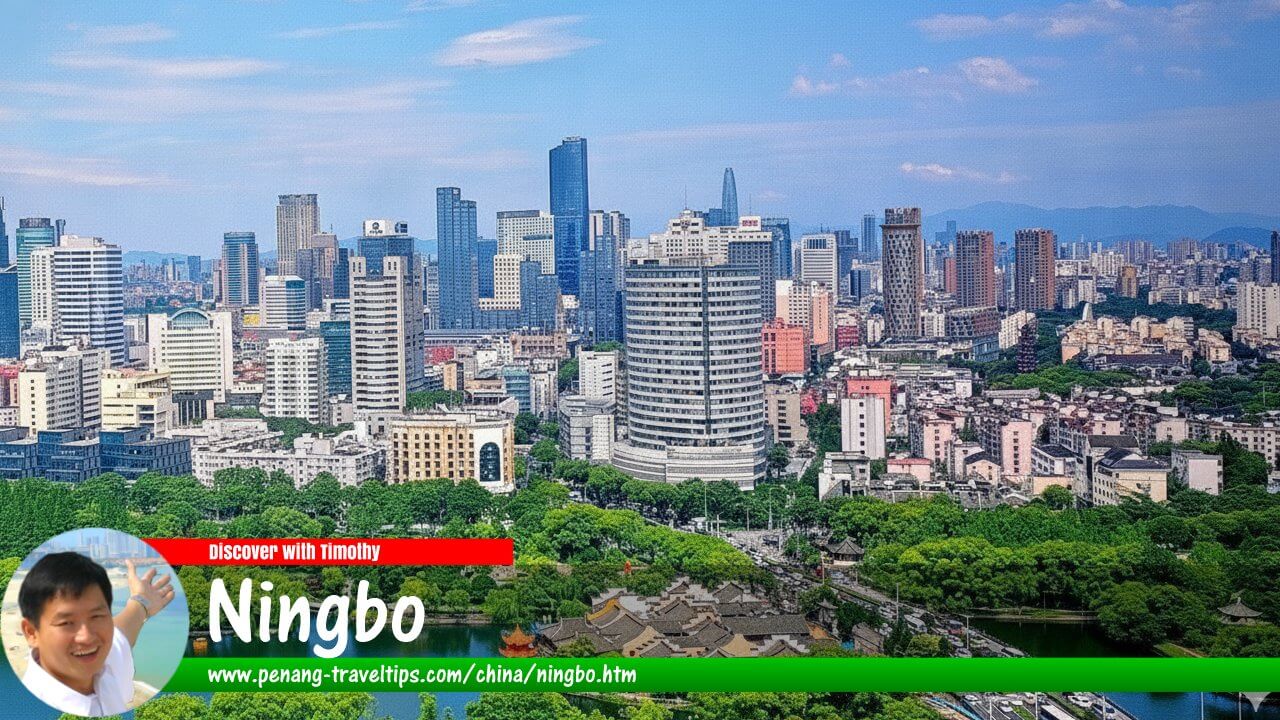 Ningbo, China (Photo edited with AI on 18 June 2026)
Ningbo (宁波, Níngbō) is a major port city in Zhejiang Province on the eastern coast of China. Situated south of Hangzhou Bay and facing the East China Sea, Ningbo has been one of China's most important maritime gateways for more than a thousand years.1 Today, the city is renowned for its world-class port facilities, thriving manufacturing industries, rich cultural heritage, and strategic position within the Yangtze River Delta economic region. As one of China's oldest trading cities, Ningbo successfully combines ancient traditions with modern urban development.
Quick Facts
- Chinese Name: 宁波
- Pinyin: Níngbō
- Province: Zhejiang
- Administrative Status: Sub-provincial city
- Population: Approximately 9.5 million
- Area: About 9,816 square kilometres
- Location: Eastern Zhejiang Province, East China Sea coast
- Major Port: Ningbo-Zhoushan Port
- Airport: Ningbo Lishe International Airport
- Main Dialect: Ningbo dialect (Wu Chinese)
- Major Industries: Shipping, manufacturing, trade, petrochemicals, electronics
- Famous Attractions: Tianyi Pavilion, Xikou, Dongqian Lake
Name and Etymology
The name Ningbo is written as 宁波 in Chinese and romanized as Níngbō in pinyin. The character "Ning" (宁) means "peaceful" or "tranquil," while "Bo" (波) means "waves." Together, the name can be interpreted as "Peaceful Waves" or "Calm Seas."2
The name reflects the city's close relationship with the sea and its historical role as a maritime trading centre. During earlier periods of Chinese history, the city was known by other names, including Mingzhou. The modern name Ningbo was officially adopted during the Ming Dynasty and has remained in use ever since.
Geography
Ningbo occupies a strategic location in northeastern Zhejiang Province, south of Shanghai and east of Hangzhou. The municipality faces the East China Sea and serves as an important link between China's coastal regions and international shipping routes.3
The city covers approximately 9,816 square kilometres and consists of urban districts, coastal plains, river valleys, islands, and mountainous regions. The terrain varies considerably, with hills and mountains dominating the southern and western parts of the municipality while flatter coastal areas support urban development and agriculture.
Ningbo is situated at the confluence of several rivers, including the Yong River, Fenghua River, and Yao River. These waterways have historically facilitated transportation, trade, and settlement.
The city enjoys a humid subtropical climate characterized by hot summers, mild winters, and abundant rainfall throughout the year. The coastal location moderates temperature extremes and contributes to relatively comfortable spring and autumn seasons.
One of the city's most significant geographical assets is Ningbo-Zhoushan Port, located along a deep-water coastline that allows large vessels to dock throughout the year. This natural advantage has contributed significantly to Ningbo's economic development.
Languages and Dialects
Mandarin Chinese serves as the official language used in education, government administration, business, and media throughout Ningbo.
Apart from Mandarin, many local residents speak the Ningbo dialect, which belongs to the Wu Chinese language family.4 The Ningbo dialect differs substantially from Mandarin in pronunciation, vocabulary, and grammar.
Wu Chinese is also spoken in neighbouring areas of Zhejiang Province and parts of Jiangsu Province, including Shanghai. Historically, the Ningbo dialect played an important role in regional commerce and culture.
Due to urbanization, migration, and the nationwide promotion of Mandarin, younger generations increasingly use Standard Mandarin in daily life. Nevertheless, the Ningbo dialect remains an important element of local identity and cultural heritage.
History
The area around Ningbo has been inhabited for thousands of years. Archaeological discoveries indicate that ancient communities lived in the region during the Neolithic period, benefiting from fertile land and access to waterways.5
During the Tang Dynasty (618–907), Ningbo emerged as an important maritime port. The city's harbour facilitated trade between China, Japan, Korea, and Southeast Asia, making it one of the most active ports in East Asia.
Under the Song Dynasty (960–1279), Ningbo became a major centre of overseas commerce. Merchants exported silk, ceramics, tea, and other products while importing goods from across Asia.
During the Ming Dynasty, Ningbo continued to prosper despite periods of maritime restrictions imposed by the imperial government. The city's merchants developed extensive trading networks that contributed to regional wealth.
Following the First Opium War, Ningbo became one of the treaty ports opened to foreign trade under the Treaty of Nanjing in 1842.6 Foreign merchants established commercial operations in the city, increasing its international connections.
In the twentieth century, Ningbo experienced industrialization, urban growth, and modernization. Following China's economic reforms beginning in the late 1970s, the city developed rapidly into one of the country's leading manufacturing and shipping centres.
Today, Ningbo is recognized globally for its modern port facilities, international trade links, and dynamic economy.
Economy and Products
Ningbo possesses one of China's strongest urban economies and serves as a major centre for international trade, logistics, manufacturing, and maritime industries.7
The city's economy is anchored by Ningbo-Zhoushan Port, which consistently ranks among the busiest ports in the world by cargo throughput. The port handles vast quantities of containers, bulk commodities, petroleum products, and manufactured goods.
Manufacturing industries include electronics, automotive components, machinery, petrochemicals, textiles, plastics, and household appliances. Numerous multinational corporations maintain facilities in the city.
Ningbo is also known for traditional products such as handicrafts, textiles, bamboo products, and seafood. The city's coastal waters support a thriving fishing industry.
Financial services, logistics, information technology, renewable energy, and advanced manufacturing have become increasingly important contributors to economic growth.
Tourism also plays a significant role, attracting visitors interested in cultural heritage, religious sites, historical architecture, natural scenery, and coastal attractions.
How to Go There
By Air
Ningbo is served by Ningbo Lishe International Airport, located approximately 12 kilometres southwest of the city centre.8
The airport handles domestic and international flights. Airlines operating there include Air China, China Eastern Airlines, China Southern Airlines, XiamenAir, Shenzhen Airlines, Sichuan Airlines, Spring Airlines, and several international carriers.
Direct flights connect Ningbo with Beijing, Shanghai, Guangzhou, Shenzhen, Chengdu, Xi'an, Kunming, Hong Kong, Seoul, Bangkok, Singapore, and other destinations.
By Rail
Ningbo is connected to China's extensive high-speed railway network through several stations:
- Ningbo Railway Station – the city's principal railway station, located south of the city centre.
- Yuyao North Railway Station – serving high-speed services in northern Ningbo Municipality.
- Fenghua Railway Station – serving southern districts.
High-speed trains provide convenient access to Shanghai, Hangzhou, Nanjing, Beijing, Wuhan, Xiamen, Shenzhen, and many other Chinese cities.
By Long-Distance Bus
Major coach terminals include Ningbo South Bus Station, Ningbo Passenger Transport Centre, and several regional bus terminals. Long-distance buses connect the city with destinations throughout Zhejiang and neighbouring provinces.
How to Travel Locally
Ningbo offers a modern and efficient urban transportation system.
- Metro: Ningbo Rail Transit operates several metro lines connecting major districts, railway stations, business centres, and the airport.
- Buses: An extensive bus network serves urban and suburban areas.
- Taxis: Metered taxis are widely available.
- E-Hailing Services: Didi is the primary ride-hailing platform used throughout the city.
- Bicycle Sharing: Public bicycle and shared-bike services are available in many districts.
- Ferries: Ferry services connect certain coastal and island areas.
Traditional trishaws, rickshaws, tuk-tuks, and LRT systems are generally not part of Ningbo's public transport network. The metro system functions as the city's primary rapid-transit service.
Tourist Attractions
1. Tianyi Pavilion
Tianyi Pavilion is China's oldest surviving private library. Established during the Ming Dynasty, it houses rare books and historical documents and is one of Ningbo's most famous cultural landmarks.
2. Xikou Scenic Area
Located in Fenghua District, Xikou is known for its picturesque mountains, rivers, temples, and historical association with Chiang Kai-shek.
3. Dongqian Lake
Dongqian Lake is the largest freshwater lake in Zhejiang Province. Visitors enjoy boating, cycling, hiking, and lakeside scenery.
4. Ningbo Old Bund
The Old Bund preserves historical architecture dating from the treaty-port era. The waterfront district combines heritage buildings with restaurants, cafes, and cultural venues.
5. Baoguo Temple
Built during the Northern Song Dynasty, Baoguo Temple contains some of China's oldest surviving wooden structures and is renowned for its architectural significance.
6. Tiantong Temple
One of China's most important Buddhist temples, Tiantong Temple has a history spanning more than one thousand years and is surrounded by forested mountains.
7. Moon Lake Park
This scenic urban park features gardens, traditional architecture, museums, and peaceful walking paths in the heart of the city.
8. Ningbo Museum
Designed by renowned architect Wang Shu, the museum showcases the history, culture, archaeology, and development of Ningbo and Zhejiang Province.
9. Mount Jiufeng
This mountain scenic area offers hiking trails, forests, waterfalls, and panoramic views of the surrounding countryside.
10. Ningbo-Zhoushan Port Viewing Areas
Visitors can observe one of the world's busiest ports and gain insight into the scale of modern maritime commerce.
Ningbo, China is  the Map of Cities in China
References
- Encyclopaedia Britannica – Ningbo
- China Daily – Ningbo History and Name
- Travel China Guide – Ningbo Geography
- Encyclopaedia Britannica – Wu Chinese
- UNESCO World Heritage Centre
- Encyclopaedia Britannica – Treaty of Nanjing
- Ningbo Municipal Government
- Ningbo Lishe International Airport
Page Details
This page was created/modified on 18 June 2026. Hi, my name is Timothy and created it from my research, for my own entertainment, knowledge and to satisfy my curiosity. I am providing the information to you in good faith and hope it is useful. I try to get the details as accurate as possible. I also try to update the page whenever I stumble on new details. So this and all my other pages are perpetual work in progress. If you discover any error, please politely inform me, pointing out where the error lies, and I will correct it as soon as possible. Your helpfulness will keep this page accurate, relevant and helpful to those who need the information.